-
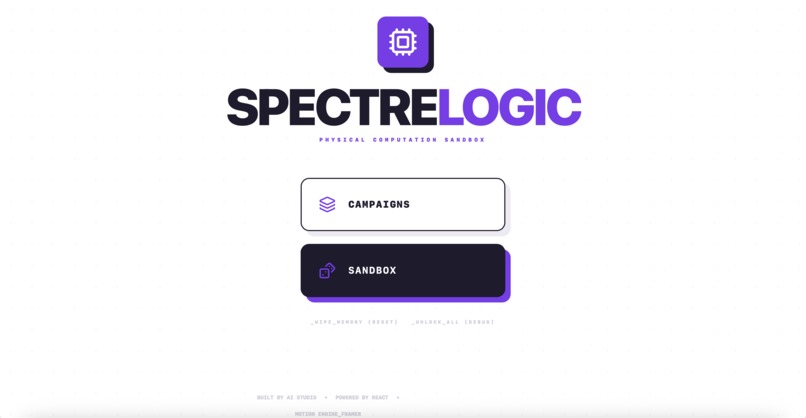
SpectreLogic's Title Screen
-
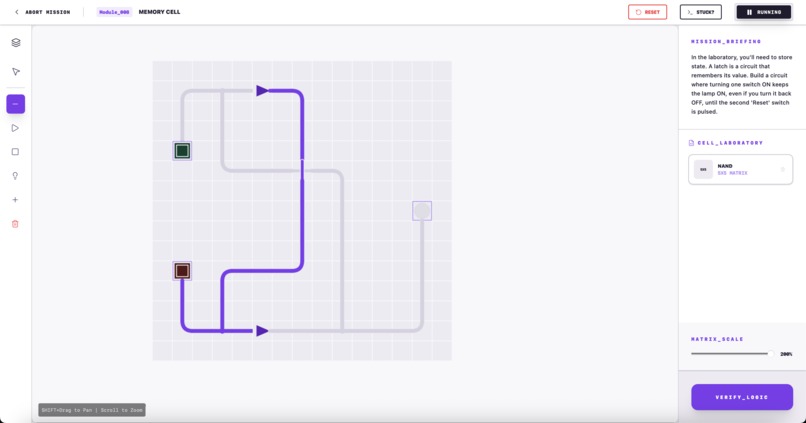
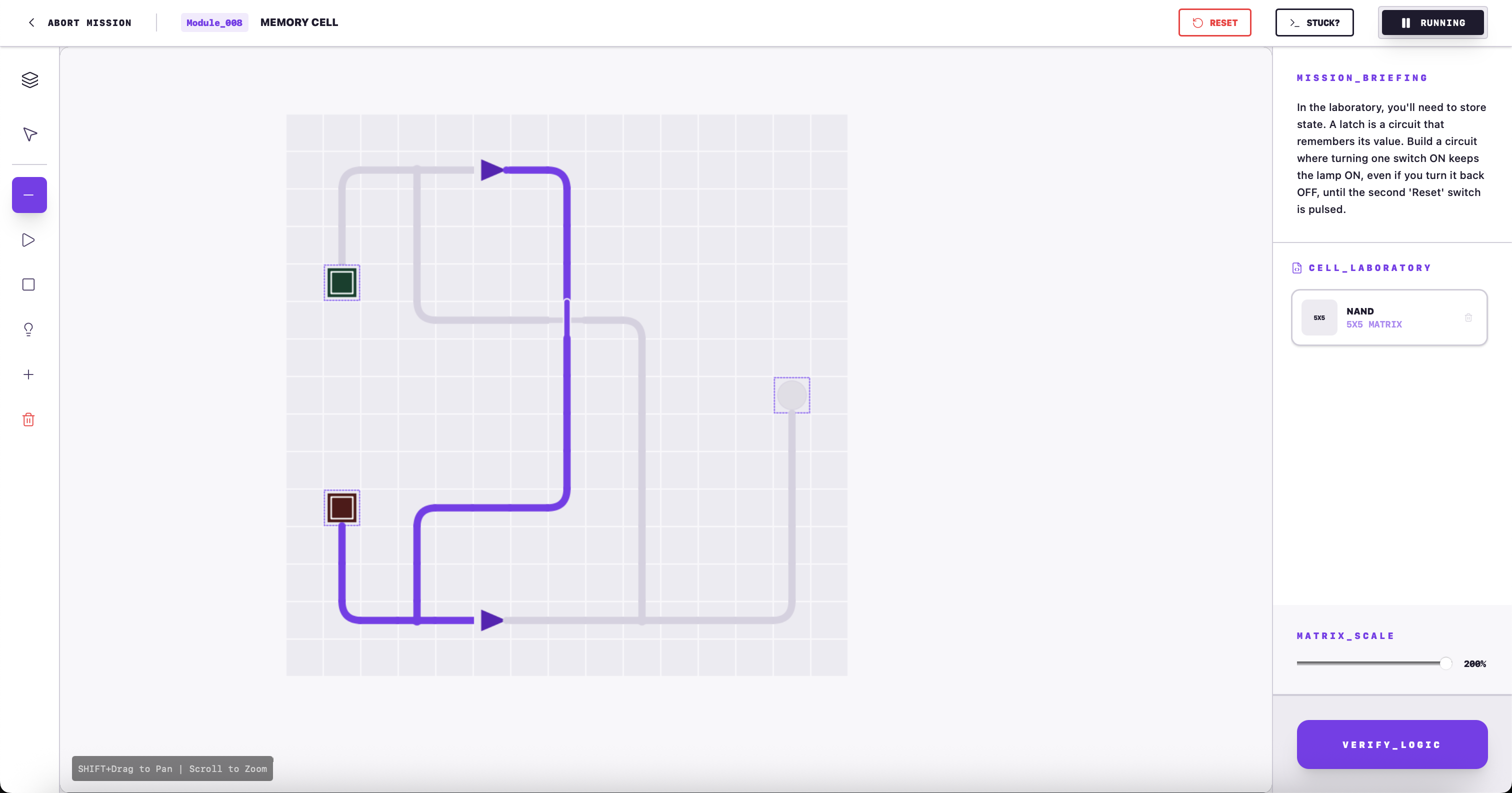
One of the campaign levels in the game: the creation of the Set-Reset Latch (SR Latch)
-
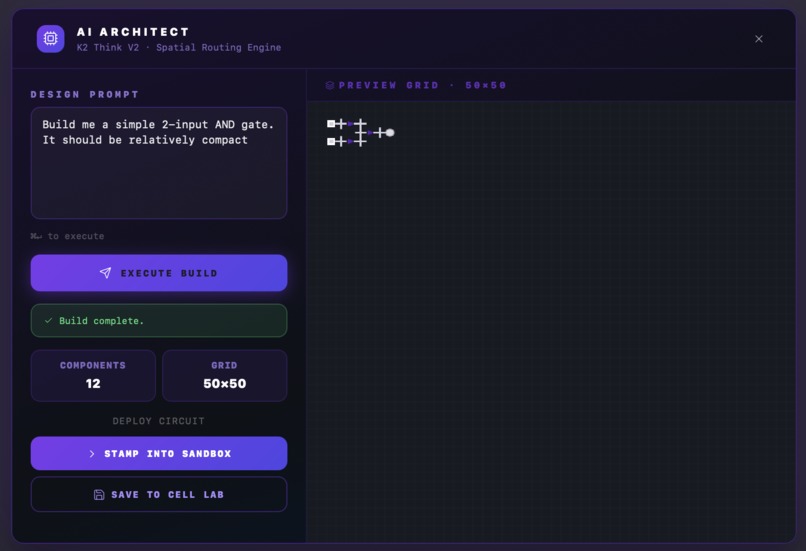
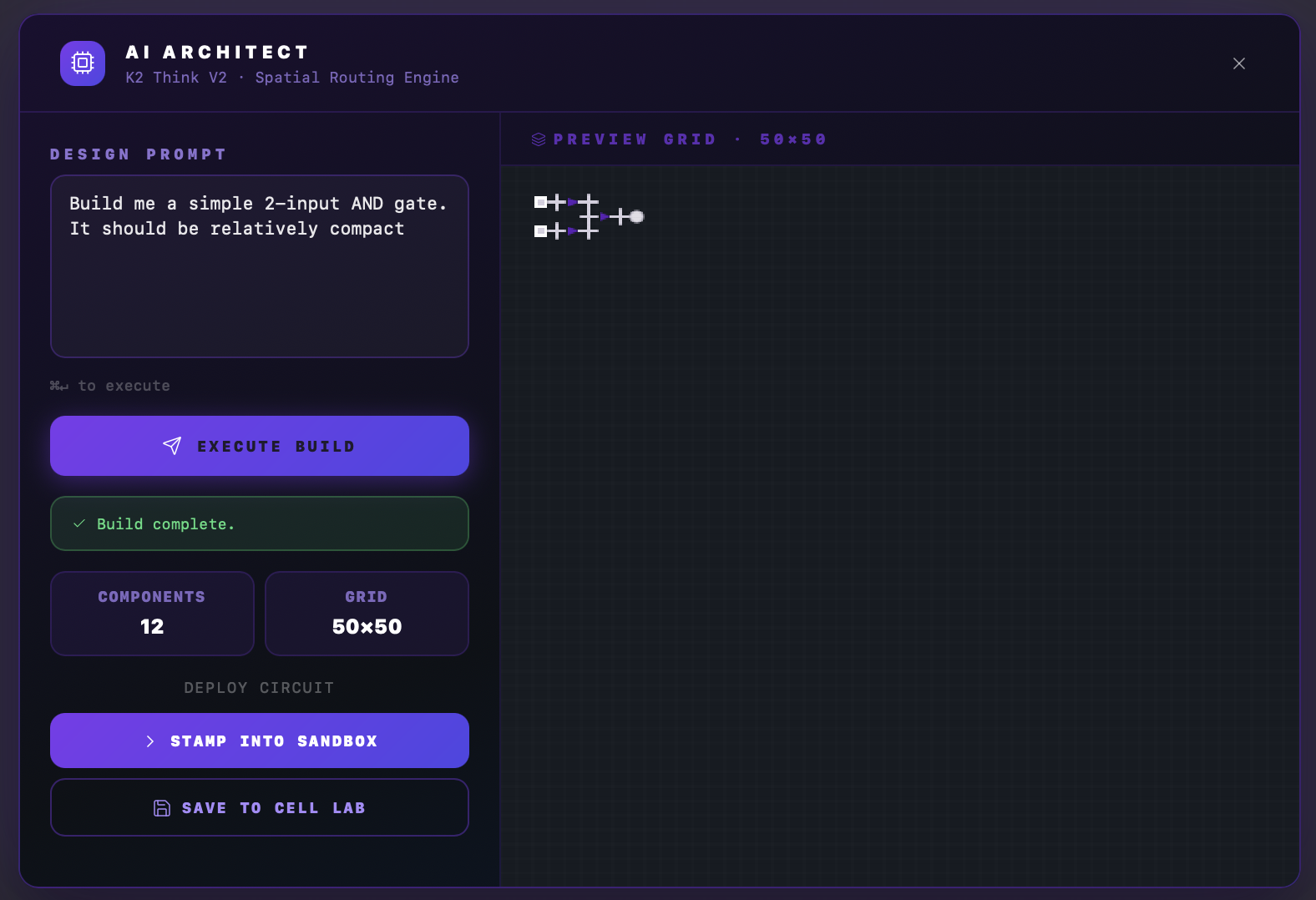
Our AI Architect: powered by K2 Think V2. It is capable of semi-reliably generating simple circuit components.
Inspiration
There exist many IDE's where it is possible to build circuitry. However, not very many are beginner/kid friendly. We want to expose more young children to the basics of computer architecture in a fun and engaging way, which is why we built SpectreLogic.
What it does
Users progress through a Campaign Mode that gamifies foundational computer architecture concepts from simple Inverters to more complex SR-Latches. Beyond the puzzles, the Sandbox Mode features an AI Architect powered by K2 Think V2. Users can prompt the AI to build simple circuit components and watch as the model reasons through spatial routing and physical constraints in real-time. We wanted to emulate the feeling of Minecraft redstone, but without any of the lag, frustration, or unintuitiveness.
How we built it
We used a combination of Google AI Studio and Antigravity to prototype and develop SpectreLogic. The AI integration with K2 Think V2 uses structured JSON outputs, which are then fed into a Procedural Instantiation Pipeline before being drawn on the grid tile-by-tile.
Challenges we ran into
This being our whole team's first experience with a hackathon, we had trouble initially acclimating to the environment. We also noticed that as the program got more and more complex with different components and rules, Google AI studio had more and more trouble fulfilling simple requests. We had to learn how to migrate to Antigravity and how to implement an AI API into our program.
Accomplishments that we're proud of
We successfully linked the K2 Think V2 model to our sandbox, allowing it to create simple circuit components. Given more time, we believe this feature could be developed even further and create even more complex circuits. Our sandbox mode is also capable of hosting complex machines, demonstrating how simple components can be built into complex ones from the ground up.
What we learned
We learned that the quality of an AI's output is highly dependent on the rigor of the constraints provided. When implementing K2 Think V2 into our game, the quality of our output circuits improved with new constraints, despite it being the exact same model. We also learned about autonomous AI agents, where not only is the code written for a feature, but also the logistics of getting there. Finally, we largely improved our resilience under time pressure. We spent the first half of the hackathon barely doing anything, but pulled an all-nighter to finish things up.
What's next for SpectreLogic
We hope to further improve the integration of K2 Think V2 into our sandbox mode, as that is an area which seems to hold a lot of potential. We also want to add all the fun components for the input/output that we didn't have time to add during this hackathon, such as LED lights, pushers, proximity sensors, and audio detectors.
Built With
- antigravity
- k2thinkv2
- react
- tailwind
- typescript

Log in or sign up for Devpost to join the conversation.