-
-
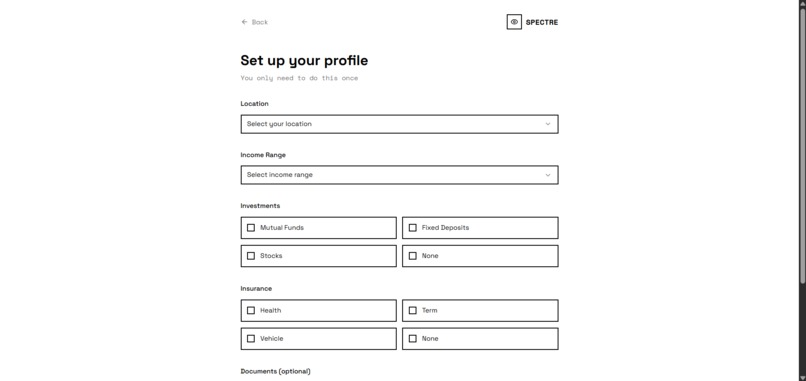
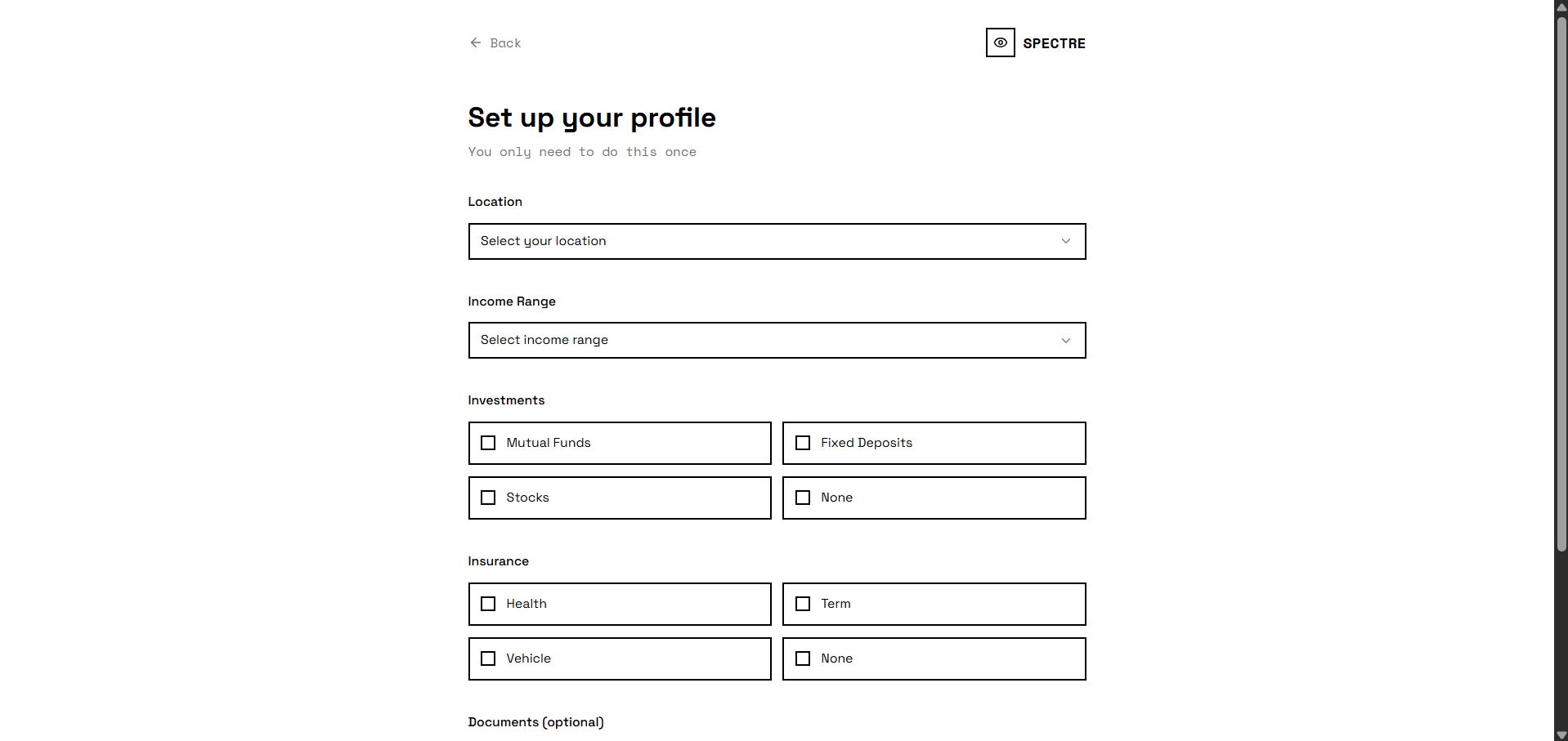
User setup page
-
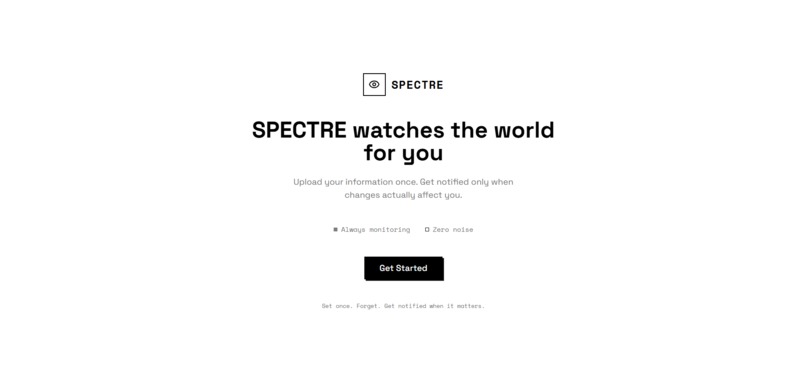
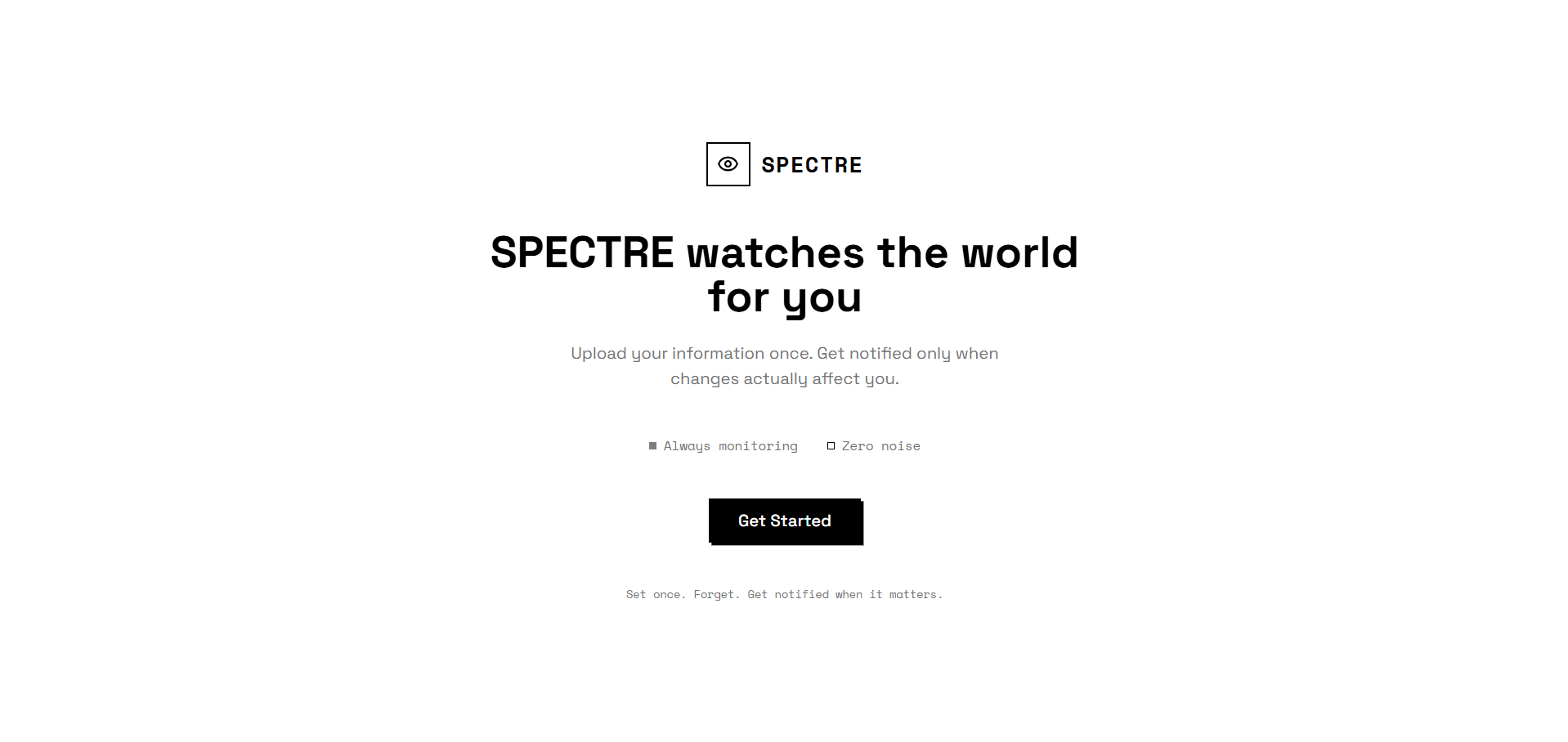
Landing page
-
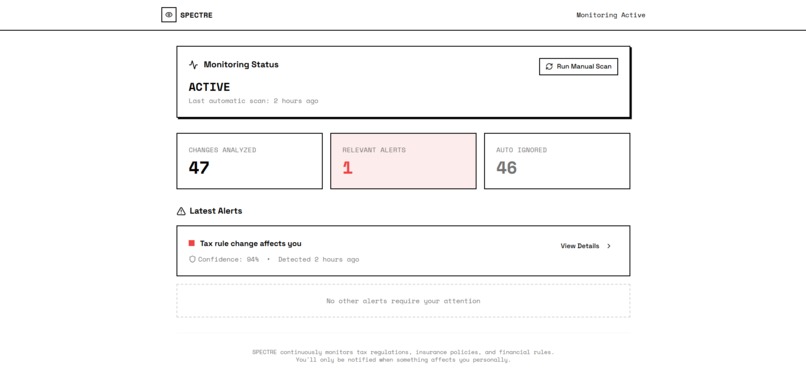
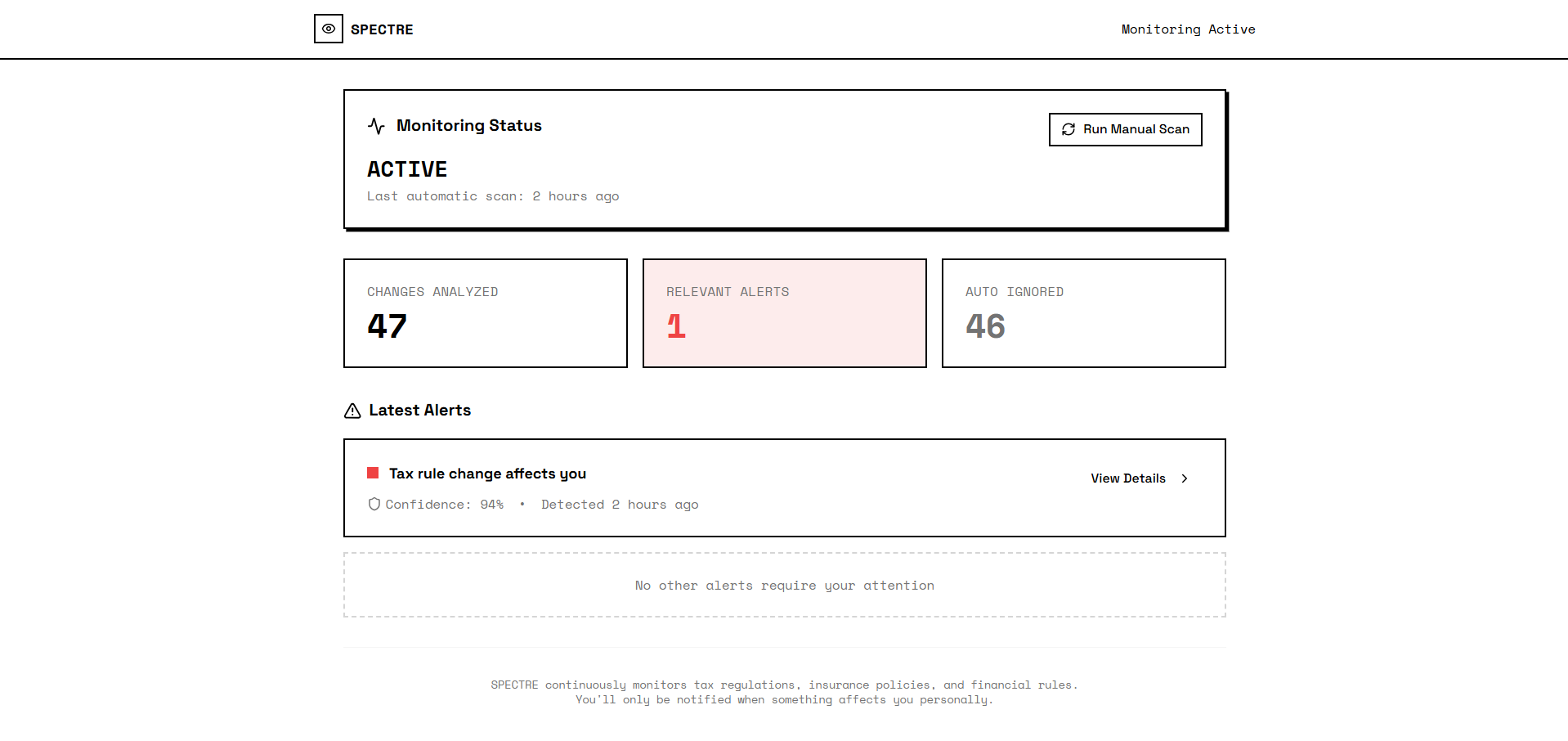
Dashboard page
-
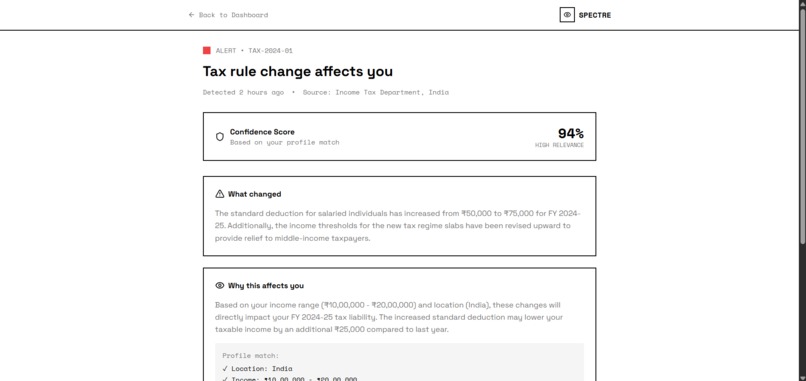
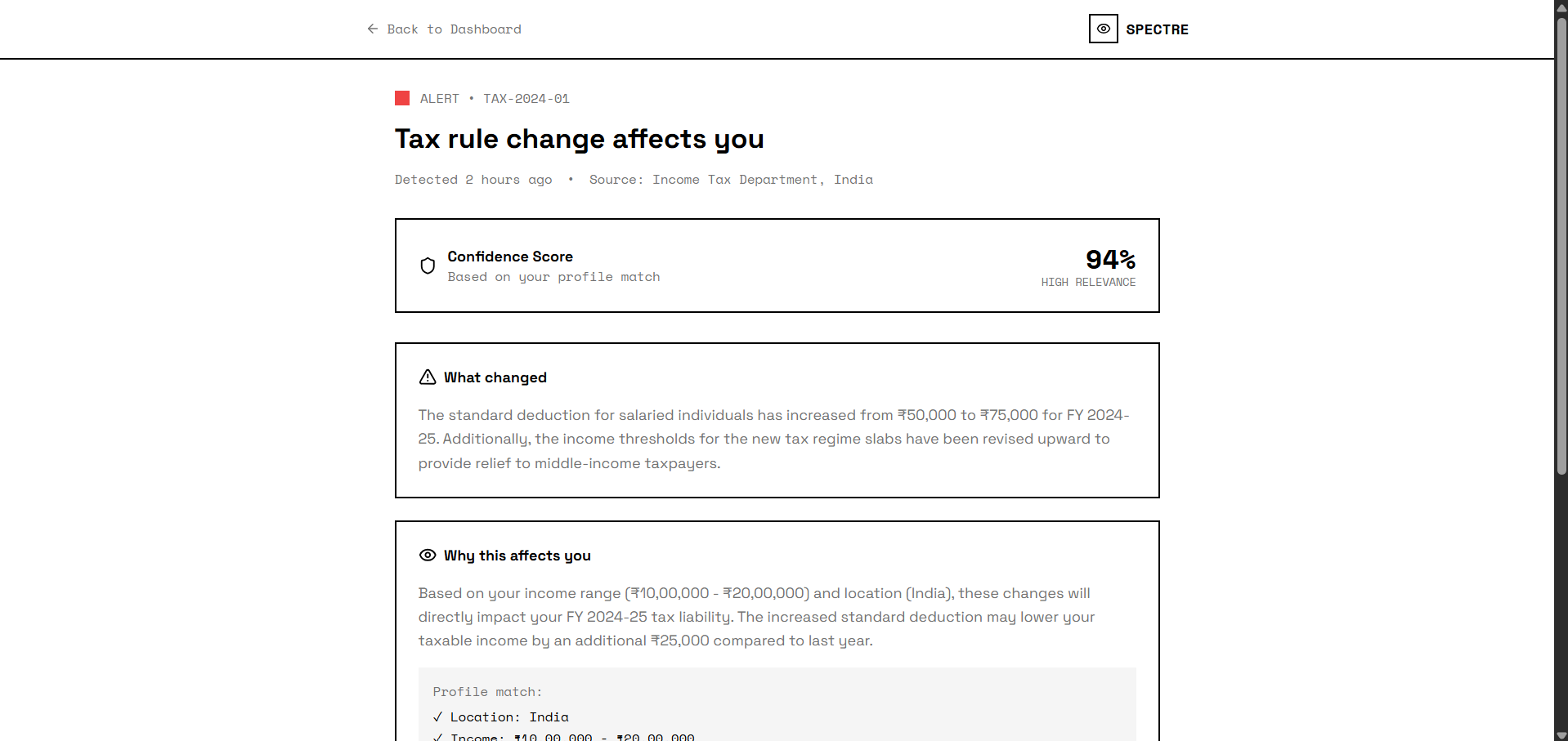
Alert info page
Inspiration
We are constantly exposed to policies, regulations, financial updates, and announcements that are rarely relevant to us personally. The real frustration is not the lack of information, but the effort required to figure out whether something actually affects me.
We wanted to build a system where users don’t need to read news, track policy updates, or manually check changes. Instead, the system should understand the user once and then continuously decide, on their behalf, whether something in the world truly matters to them.
That idea became SPECTRE.
What it does
SPECTRE is a personalized impact intelligence system.
Users provide their personal context (such as income range, investments, insurance, and location) once. After that, SPECTRE runs in the background and evaluates real-world changes—such as tax rules or policy updates—using Gemini’s reasoning capabilities.
Instead of summarizing changes, SPECTRE answers a much harder question:
Does this change materially affect this specific user?
If yes, the user is alerted with a clear explanation and recommended action.
If not, the change is silently ignored.
How we built it
SPECTRE is implemented as a Gemini AI Studio app using a structured system prompt and deterministic reasoning rules.
At its core:
- A user’s information is treated as a personal context graph
- Incoming real-world changes are treated as structured change events
- Gemini performs high-confidence reasoning to decide:
- whether to notify
- why the decision was made
- what action (if any) is recommended
For this prototype, real-world change ingestion is simulated so the focus remains on Gemini’s reasoning and personalization rather than infrastructure.
Challenges we faced
The hardest challenge was not generating text, but deciding when to say nothing.
Most AI systems are optimized to respond to everything. SPECTRE needed to do the opposite: ignore irrelevant information with high confidence while still being transparent and explainable when an alert is generated.
Designing prompts that consistently:
- avoided hallucinations,
- respected missing user data,
- and produced deterministic decisions
was the core technical challenge of the project.
What we learned
We learned that Gemini is especially powerful when used as a decision engine, not just a generator.
By clearly separating:
- data ingestion (out of scope),
- impact reasoning (Gemini’s role),
- and user notification,
we were able to build a system that feels trustworthy, calm, and genuinely useful—rather than noisy or overwhelming.
Built With
- 1.5
- ai
- engineering
- gemini
- pro
- prompt
- studio

Log in or sign up for Devpost to join the conversation.