-
Main Thumbnail
-
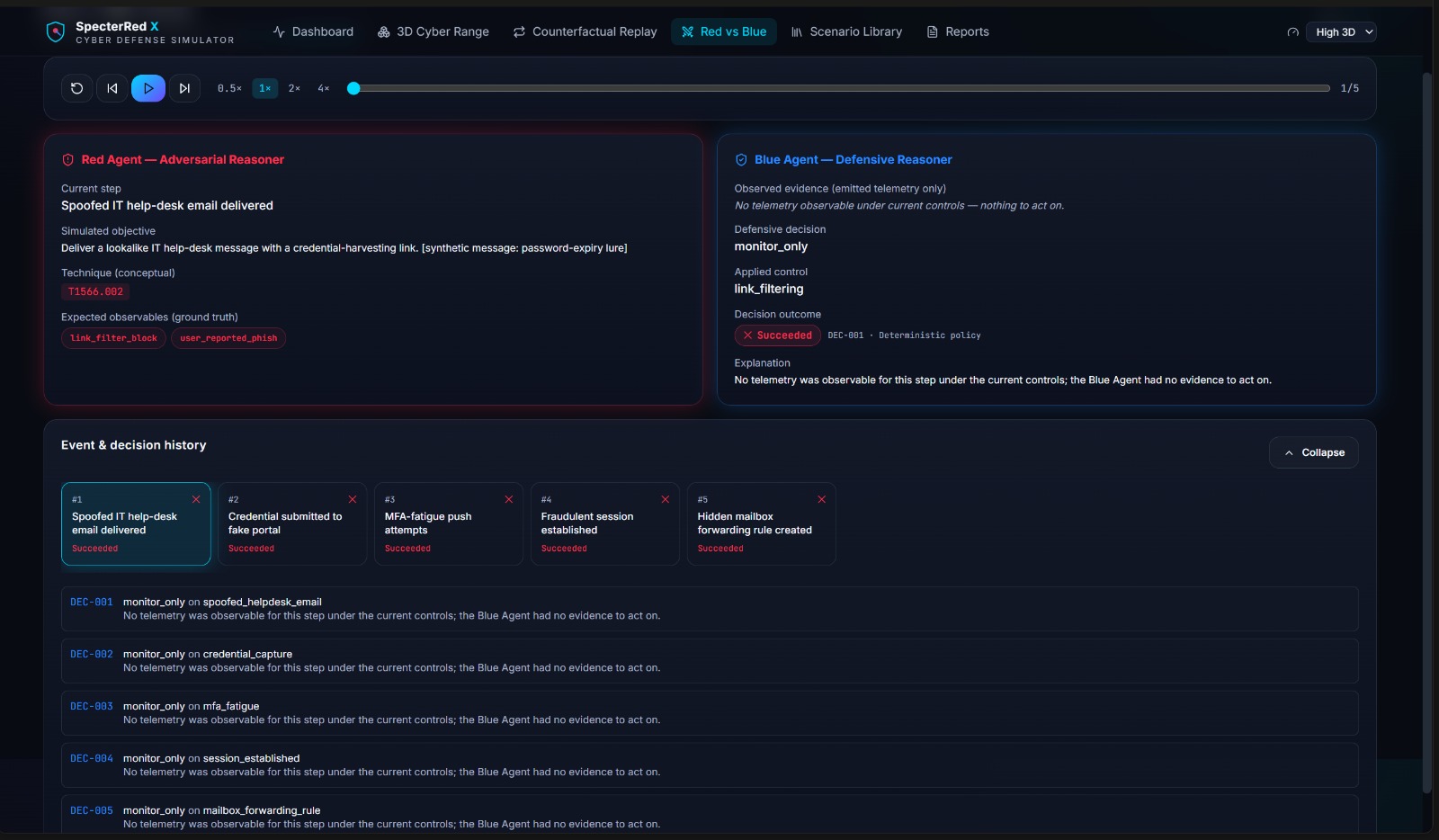
Red vs Blue Simulation
-
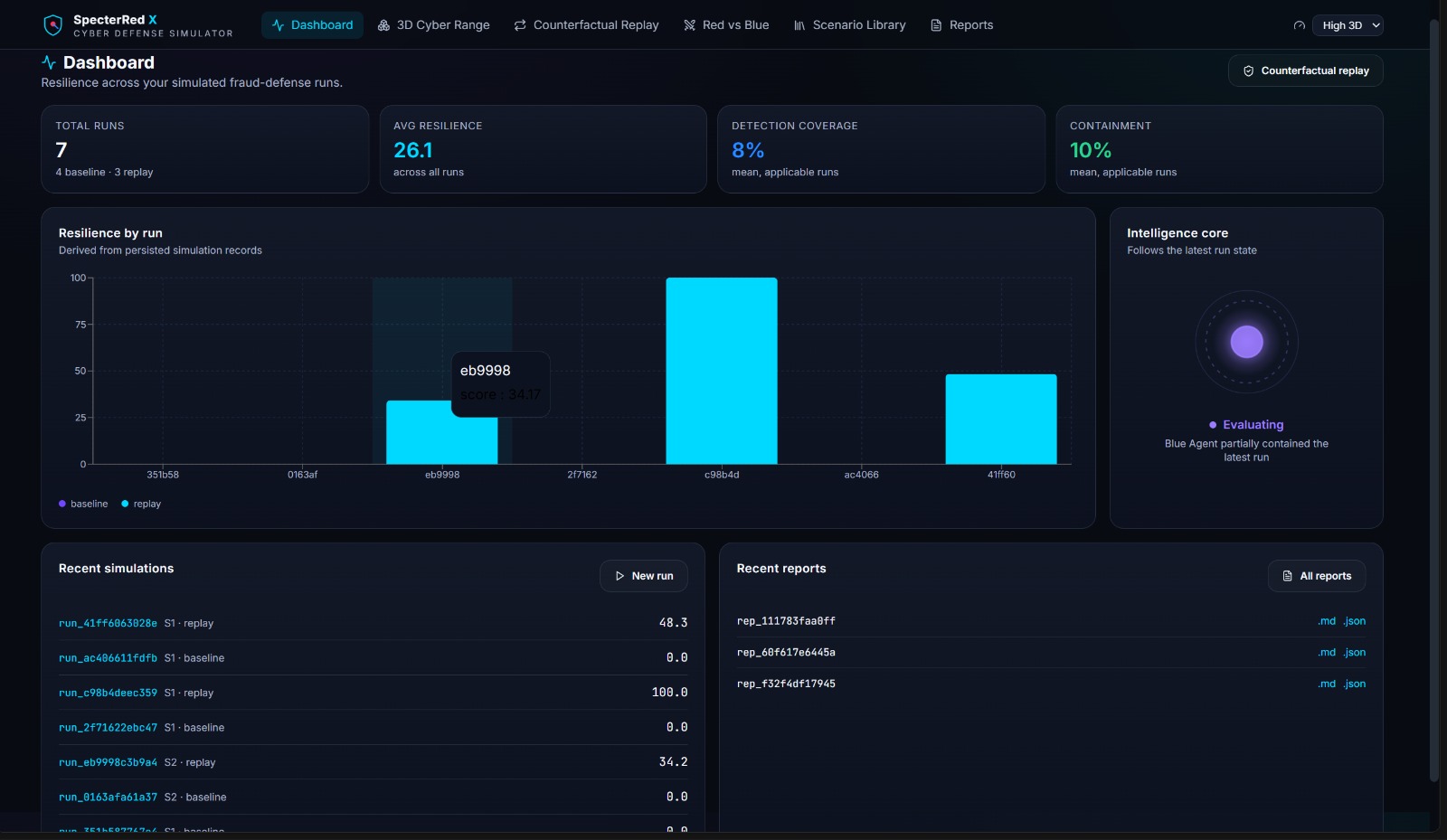
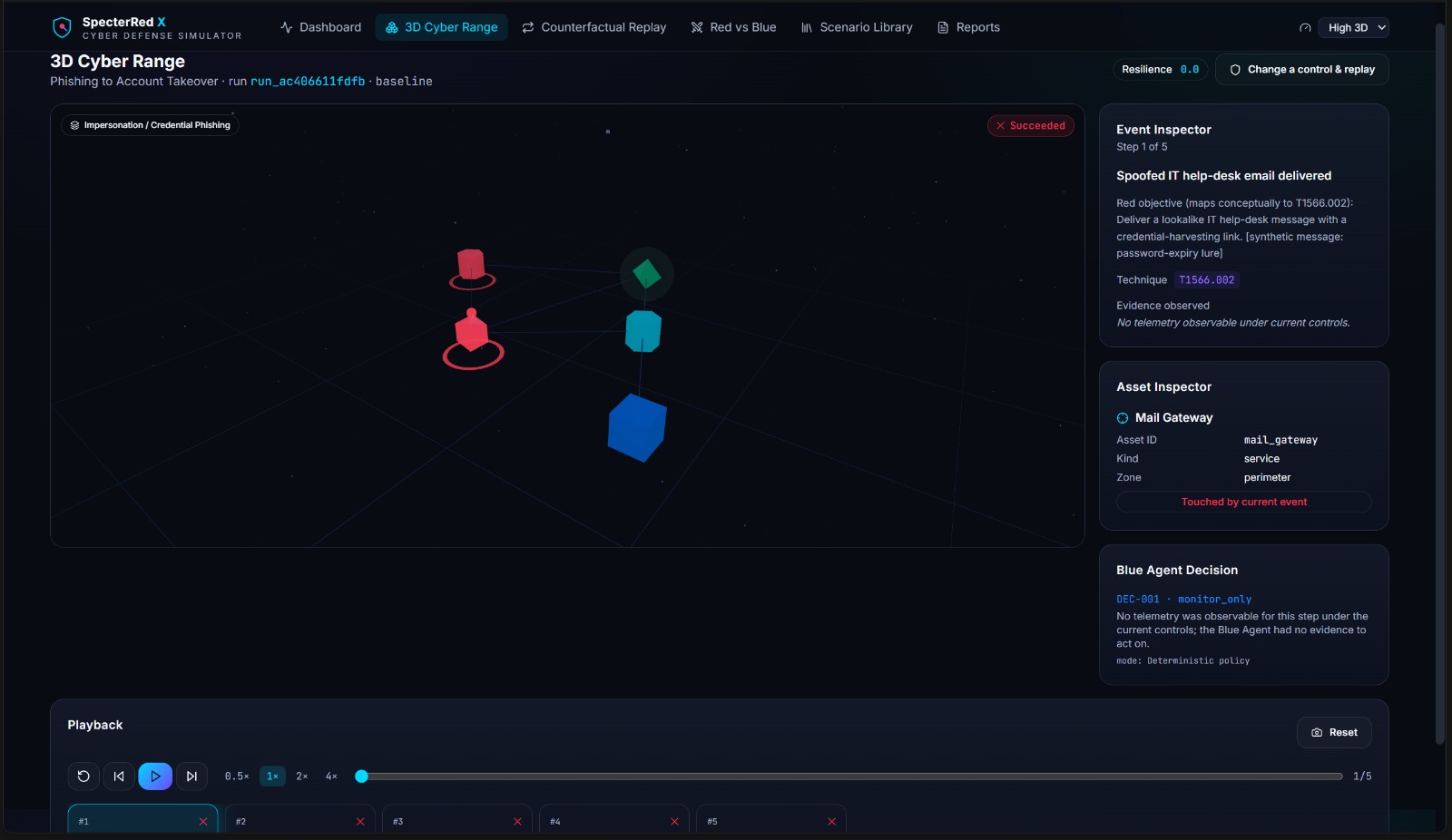
Cyber Range Dashboard
-
Counterfactual Defense Twin
-
Evidence Report
Inspiration
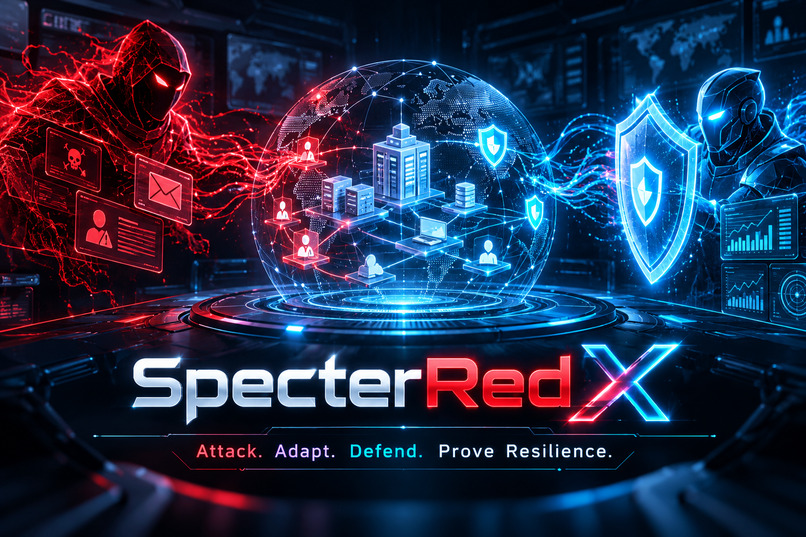
Cyber threats are constantly evolving, while many traditional security tools rely on predefined rules and known attack patterns. We wanted to explore how AI could help security teams understand emerging threats, evaluate defensive strategies, and learn from simulated cyber incidents. This inspired us to build SpecterRed X, an AI-driven cybersecurity simulation platform focused on safe experimentation and evidence-based defense.
What it does
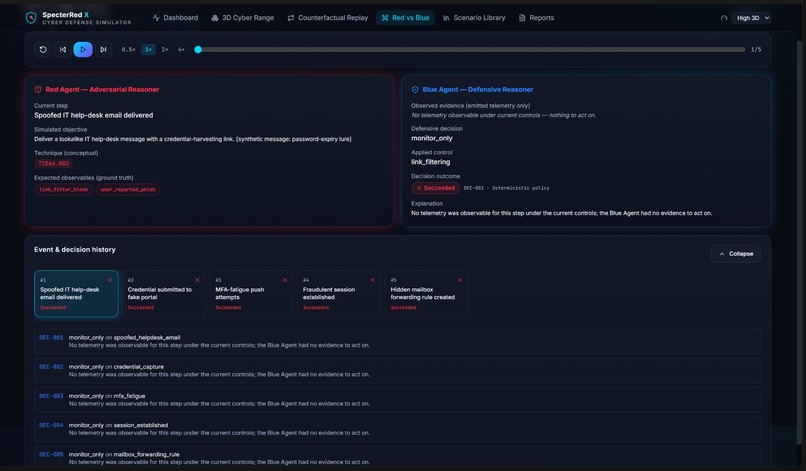
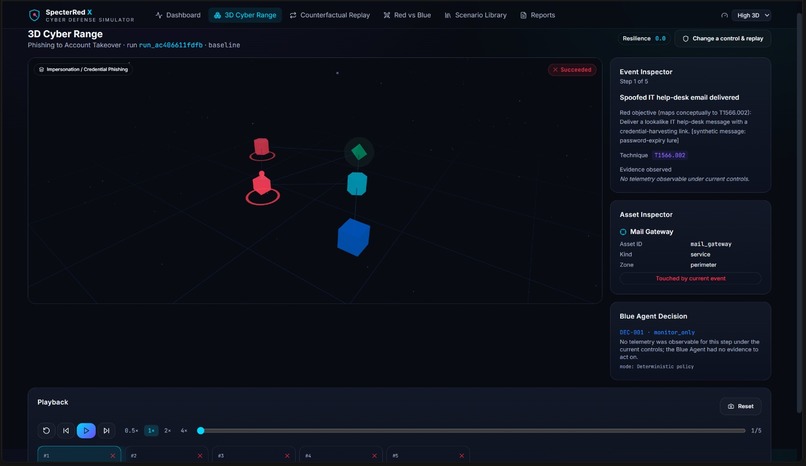
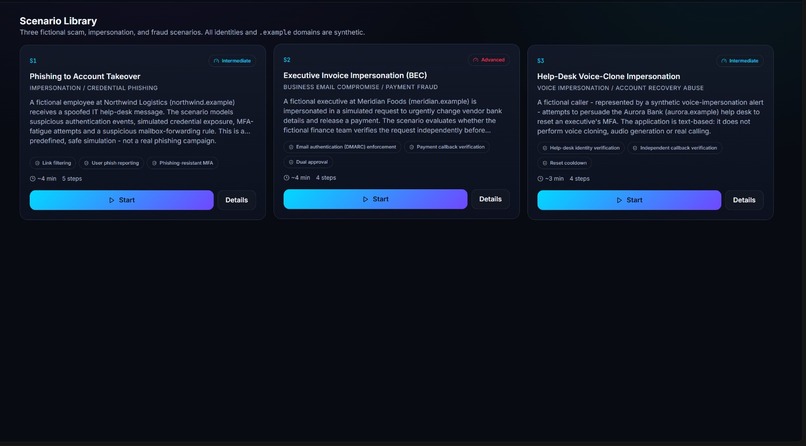
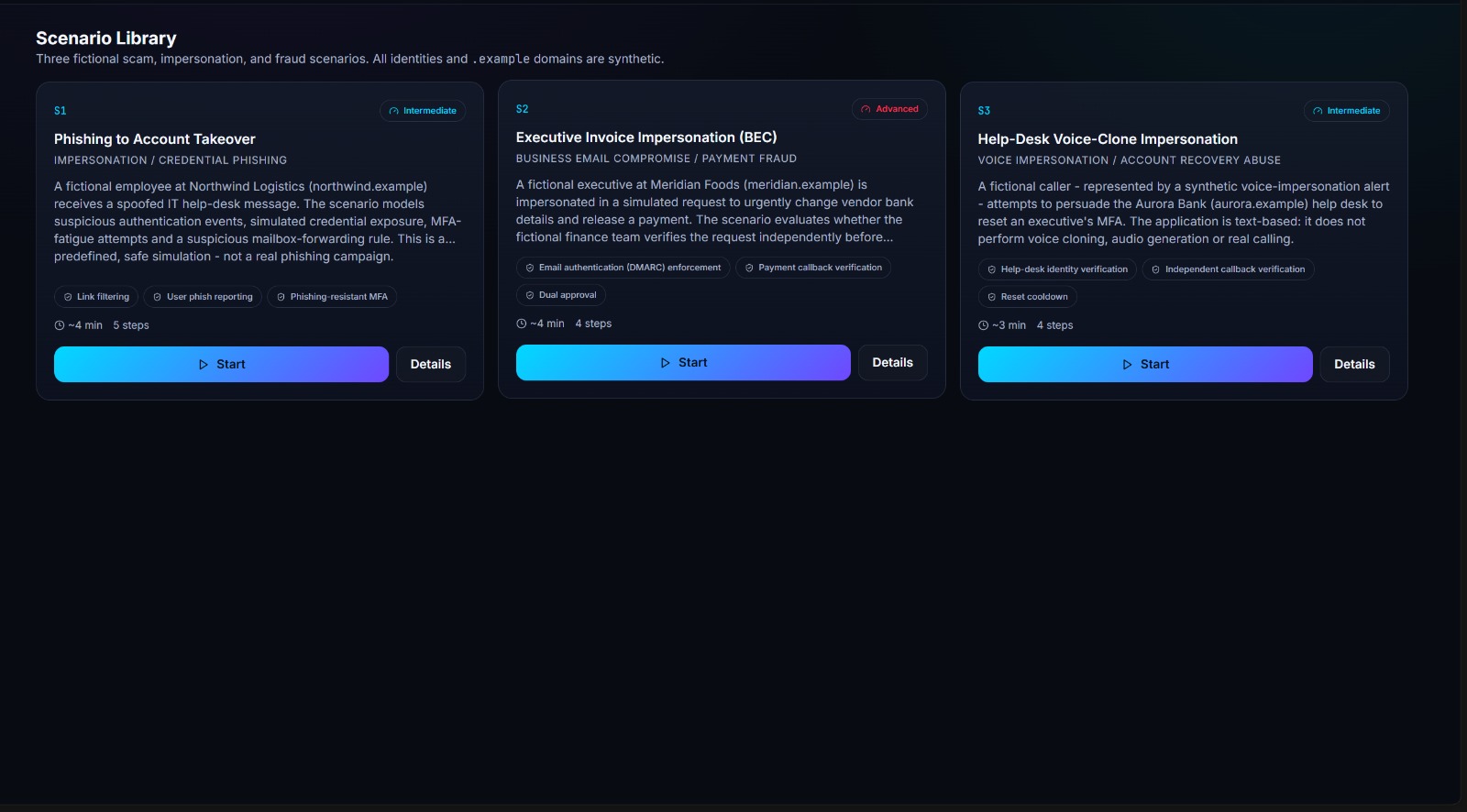
SpecterRed X brings together the concepts of Red Team attack simulation and Blue Team defense. Users can explore controlled scenarios involving phishing, account takeover, invoice impersonation, and help-desk identity fraud using fictional data. The platform aims to show how defensive controls influence incident outcomes and help users understand security weaknesses. Its signature concept is the Counterfactual Defense Twin. It allows users to compare a baseline simulation with a replay using different security controls, examine changes in outcomes, and understand which evidence supports each conclusion.
How we built it
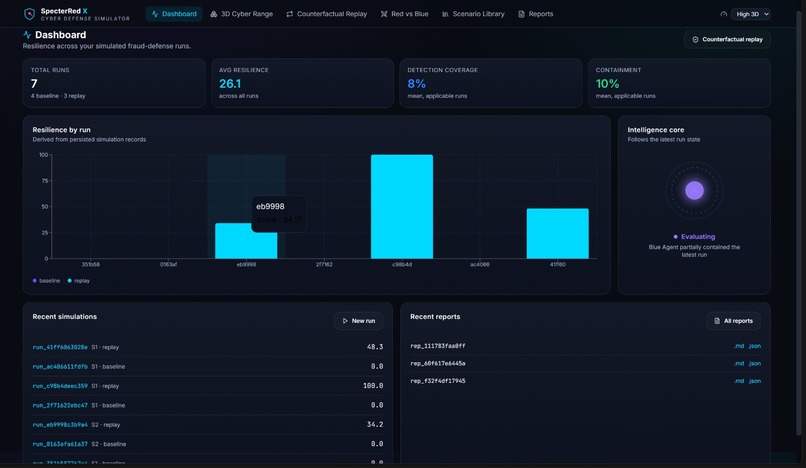
We designed SpecterRed X around a modular architecture with a Python-based backend, FastAPI APIs, persistent scenario and event records, and a React-based interactive frontend. The simulation engine manages scenario state, security controls, event generation, and defensive decisions. The interface presents scenario activity, evidence, results, and comparisons in a futuristic cyber command-center experience. We prioritized deterministic simulations, reproducible results, an immutable baseline, and clear separation between recorded facts and analytical conclusions. The platform is designed to work without requiring a paid AI API, with optional AI-generated explanations considered an additional capability rather than a requirement for the core workflow.
Challenges we ran into
One key challenge was designing meaningful comparisons between simulations while preserving the original baseline. We also needed to ensure that results came from recorded simulation events rather than invented metrics, and that missing evidence was not incorrectly treated as a successful defense. Another challenge was balancing an ambitious, immersive interface with reliability, performance, and accessibility. We addressed these priorities through modular design, safe fictional scenarios, validation, and a focus on the core simulation-and-replay workflow.
Accomplishments that we're proud of
We are proud of designing SpecterRed X around a practical cybersecurity workflow that connects threat simulation, defensive controls, and evidence-based analysis. Our key innovation is the Counterfactual Defense Twin concept, which compares baseline and modified scenarios to make security decisions easier to understand. We also prioritize safe, fictional scenarios and reproducible results over unsupported claims or risky real-world testing.
What we learned
This project helped us explore how AI concepts, cybersecurity principles, system design, and interactive visualization can work together. We learned that useful security simulations must be reproducible, explainable, and grounded in evidence—not just visually impressive.
What's next for SpecterRed X
Our next steps are to expand the scenario library, improve defensive policy evaluation, strengthen evidence-linked reporting, and validate the platform through repeatable tests. Our goal is to make cybersecurity learning more interactive while helping users understand not only whether a defense worked, but also why it worked.
Built With
- artificial
- css
- cybersecurity
- fastapi
- fiber
- intelligence
- lucide
- pytest
- python
- react
- recharts
- sqlalchemy
- sqlite
- tailwind
- three
- three.js
- typescript
- vite


Log in or sign up for Devpost to join the conversation.