SpecLayer
Inspiration
Understanding physical equipment often means searching through long service manuals, scattered product pages, and technical documentation just to answer a simple question: what components are inside this device?
We wanted to make that process much easier.
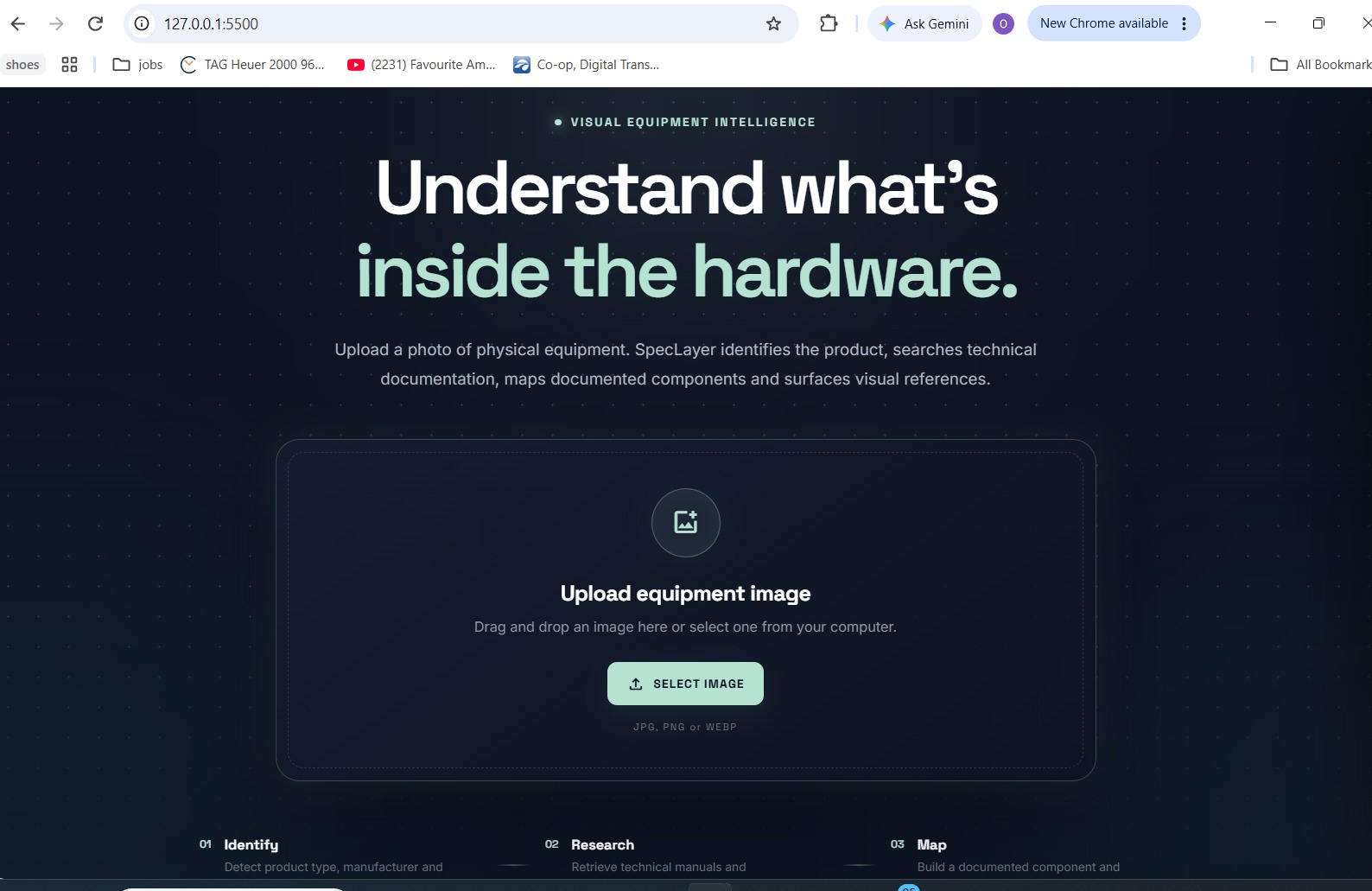
SpecLayer was inspired by the idea that a single photo should be enough to begin exploring a piece of hardware. Instead of manually identifying a product and searching through documentation, a user can upload an image and let SpecLayer build an interactive, evidence-backed view of the equipment and its documented components.
Our goal was not to guess what is inside a device, but to combine computer vision, documentation retrieval, and AI extraction to make existing technical information easier to discover and understand.
What It Does
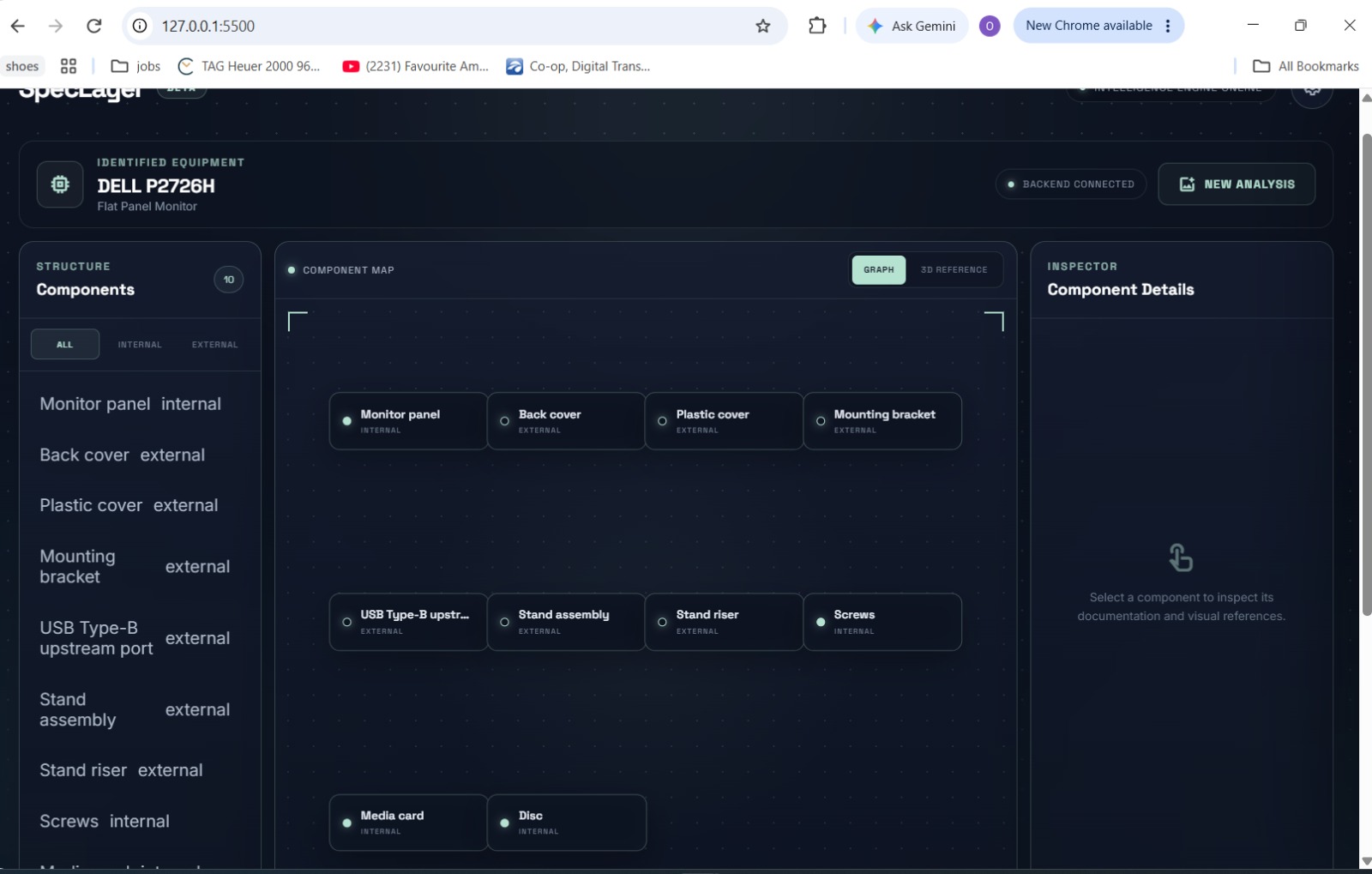
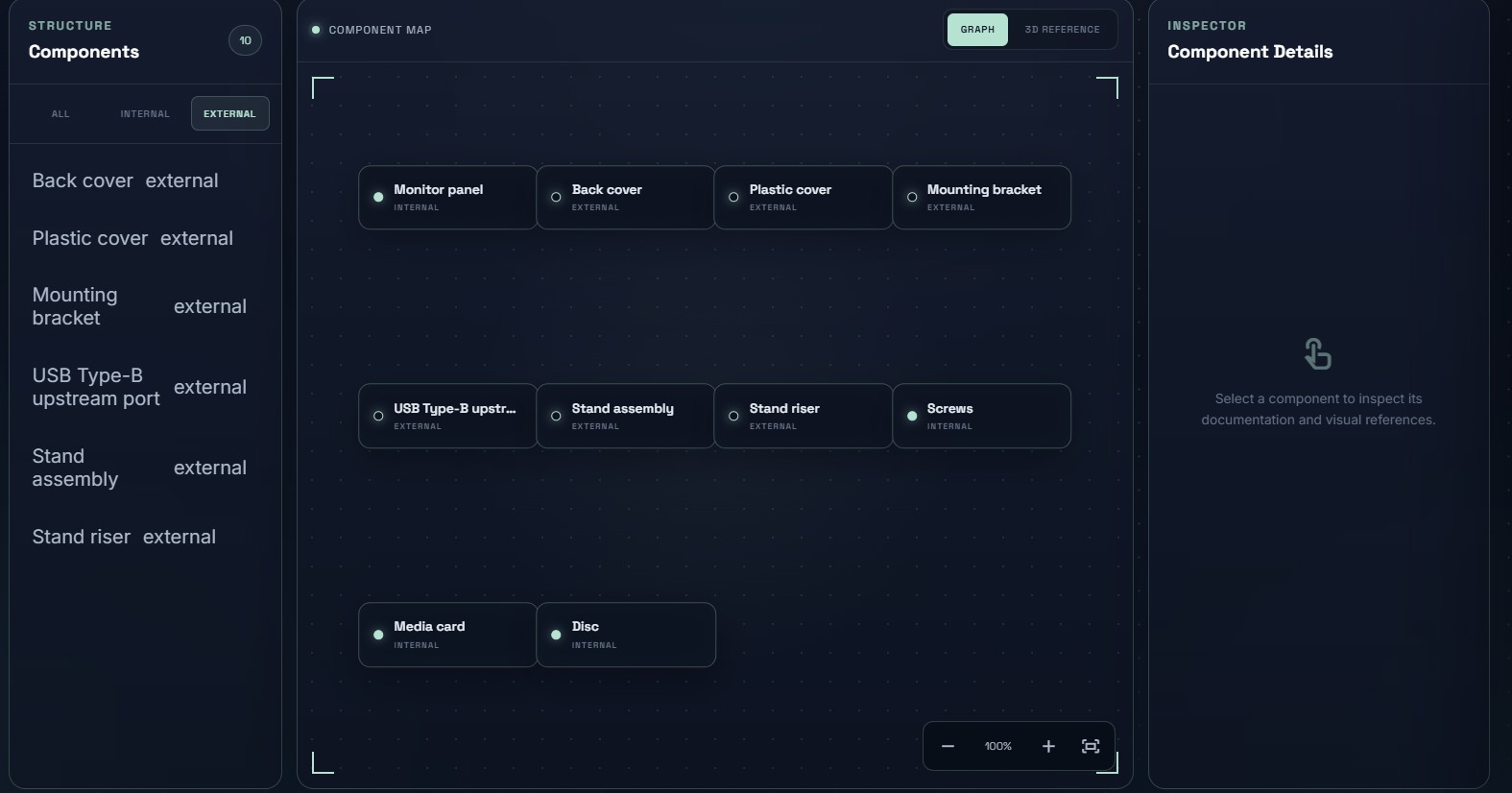
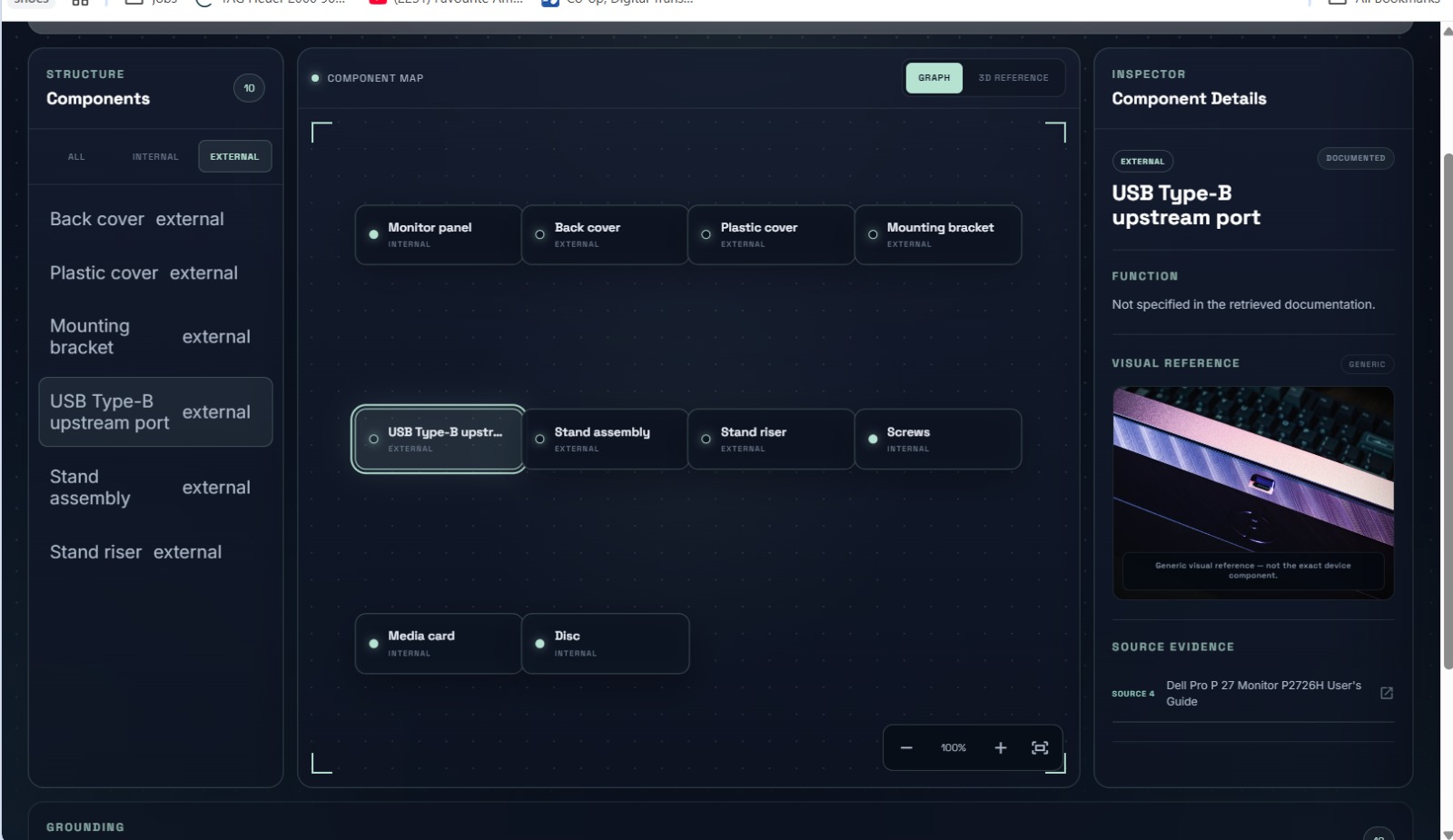
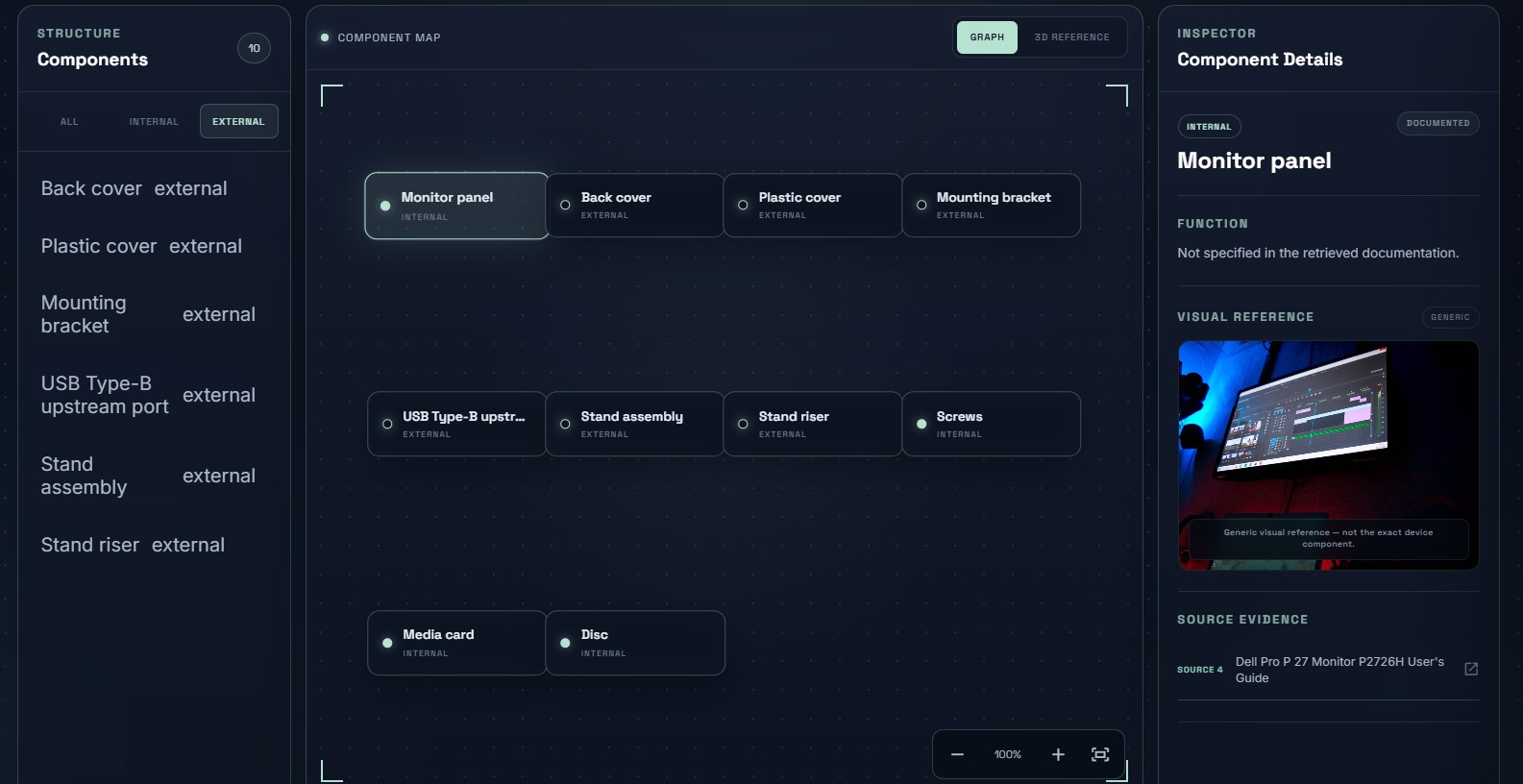
SpecLayer transforms an equipment photo into an interactive component intelligence map.
The workflow can be summarized as:
$$ \text{Photo} \rightarrow \text{Device Identification} \rightarrow \text{Documentation Retrieval} \rightarrow \text{Component Extraction} \rightarrow \text{Interactive Map} $$
After a user uploads an image, SpecLayer:
- Identifies the equipment, manufacturer, and model.
- Searches for relevant technical and service documentation.
- Analyzes the retrieved documentation to extract documented components.
- Classifies components as internal, external, or unknown when supported by the available information.
- Associates components with their documentation sources.
- Searches for generic visual and 3D references when suitable ones are available.
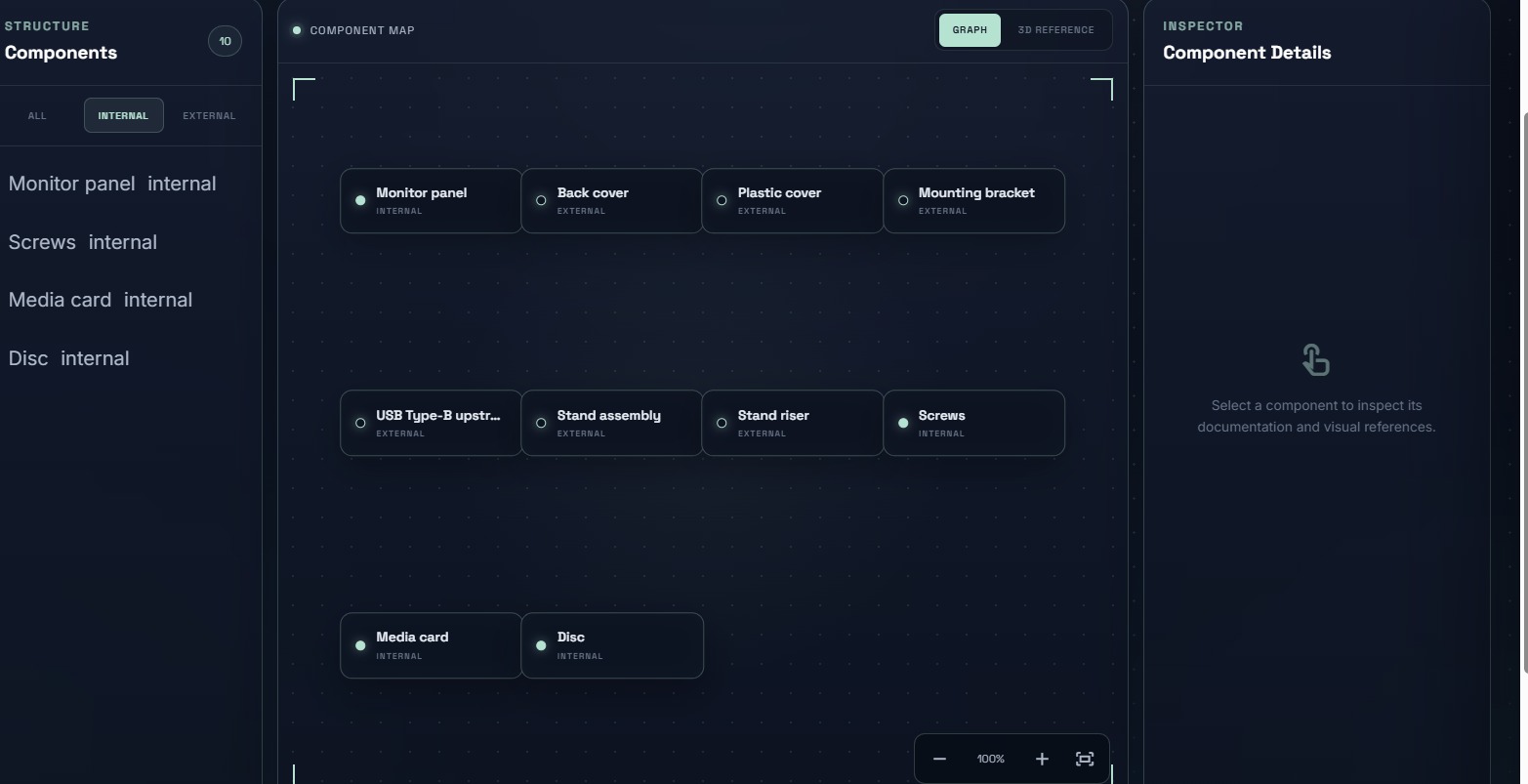
- Presents everything through an interactive component map and inspector.
This allows users to move from seeing a device to exploring its documented structure in one workflow.
How We Built It
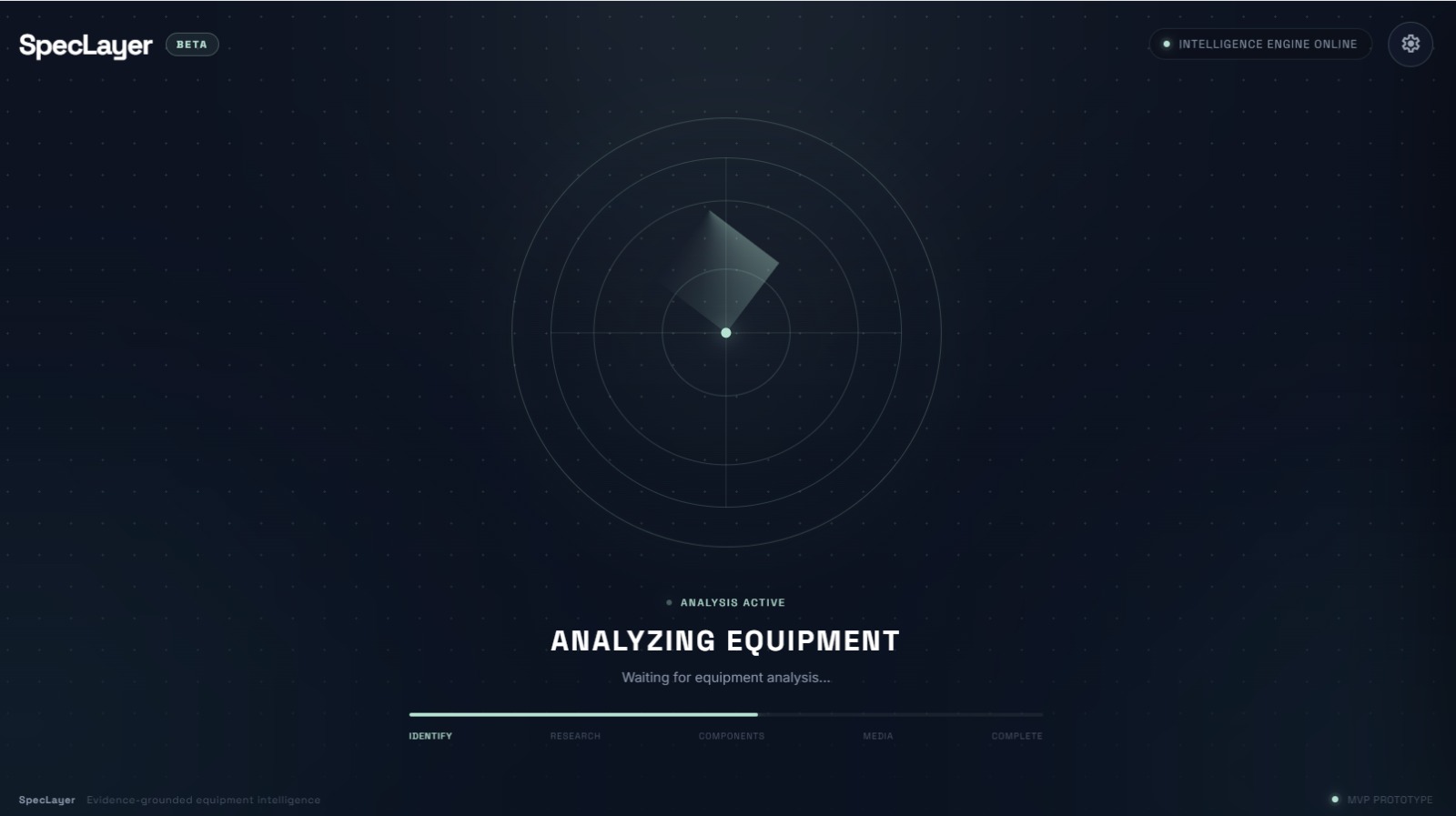
SpecLayer uses a multi-stage AI pipeline rather than relying on a single model call.
The backend is built with Python and FastAPI. A cloud vision model analyzes the uploaded image and produces structured information about the identified equipment.
Once the device has been identified, Tavily is used to retrieve relevant technical documentation. The retrieved material is then processed by a language model to extract components, their scope, relationships when documented, and references to the sources that support them.
We represent the resulting information as a structured component graph:
$$ G = (V,E) $$
where $V$ represents documented components and $E$ represents documented relationships between those components. Importantly, if the available documentation does not establish a relationship, SpecLayer does not invent one.
For additional context, Pexels provides generic visual references and Sketchfab can provide generic 3D references. These are treated as references rather than representations of the exact device component.
The frontend is currently built with HTML, CSS, and JavaScript. It turns the structured backend response into an interactive interface where users can browse components, filter them, select nodes, inspect source evidence, and view available references.
Challenges We Faced
One of our biggest challenges was reliability.
Technical documentation can be inconsistent. Search results may include duplicate manuals, similar product models, retailer pages, or documents for related products. We had to design the pipeline so retrieved information remained connected to its supporting sources instead of allowing the AI to freely generate components.
Another challenge was visual-reference accuracy. Searching an image provider for something like "mounting bracket" can return an object that matches those words but has nothing to do with computer hardware. We introduced relevance filtering and designed the system to prefer showing no image over presenting an obviously misleading reference.
We encountered similar problems with 3D model search, where generic search results do not necessarily correspond to the exact component being analyzed.
Performance was another challenge. Device identification, web retrieval, document analysis, component extraction, and media enrichment all happen as part of the same pipeline. Large technical documents and overlapping search results can significantly increase processing time.
Finally, we had to ensure the interface remained honest about uncertainty. SpecLayer distinguishes between documentation-backed information and generic references rather than presenting generated or approximate information as exact hardware data.
What We Learned
Building SpecLayer taught us that creating a useful AI system is about much more than connecting an LLM to an interface.
We learned how to combine vision models, retrieval, structured LLM output, APIs, and frontend visualization into a single pipeline.
More importantly, we learned how important grounding is. An AI system that confidently provides incorrect hardware information can be less useful than one that simply says that information is unavailable.
That led to one of the main principles behind SpecLayer:
When evidence is insufficient, show uncertainty instead of inventing certainty.
We also learned that external APIs often return technically valid but contextually poor results. Building a good system therefore requires validation and filtering between stages rather than blindly displaying whatever an API returns.
What's Next
We want to continue developing SpecLayer's interactive 3D reference experience, improve component-relationship visualization, strengthen retrieval and relevance filtering, and reduce analysis time.
Longer term, we see SpecLayer as a way to make complex technical documentation significantly more accessible: point at a piece of equipment, identify it, and explore what reliable documentation says about it.

Log in or sign up for Devpost to join the conversation.