-
-
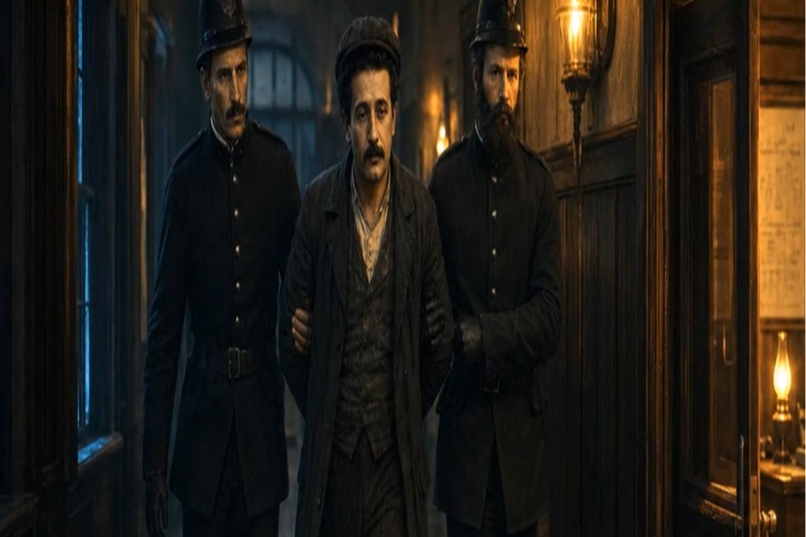
The Arrest
-
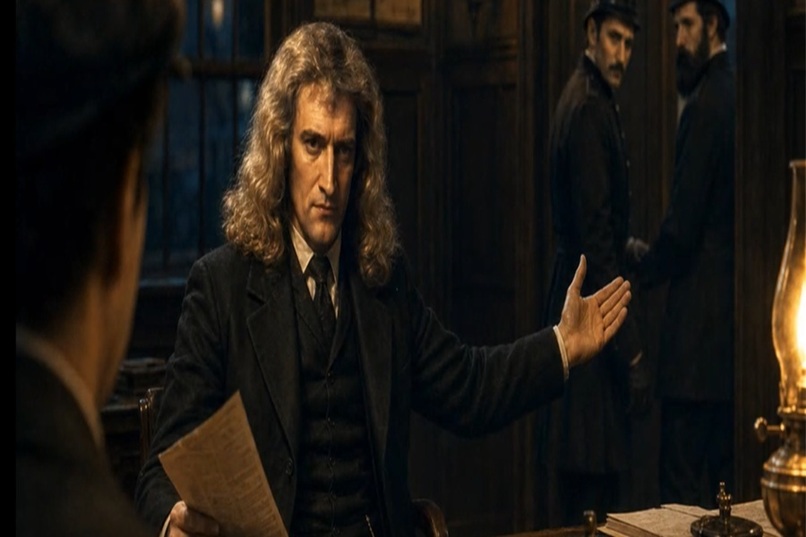
The Interrogation
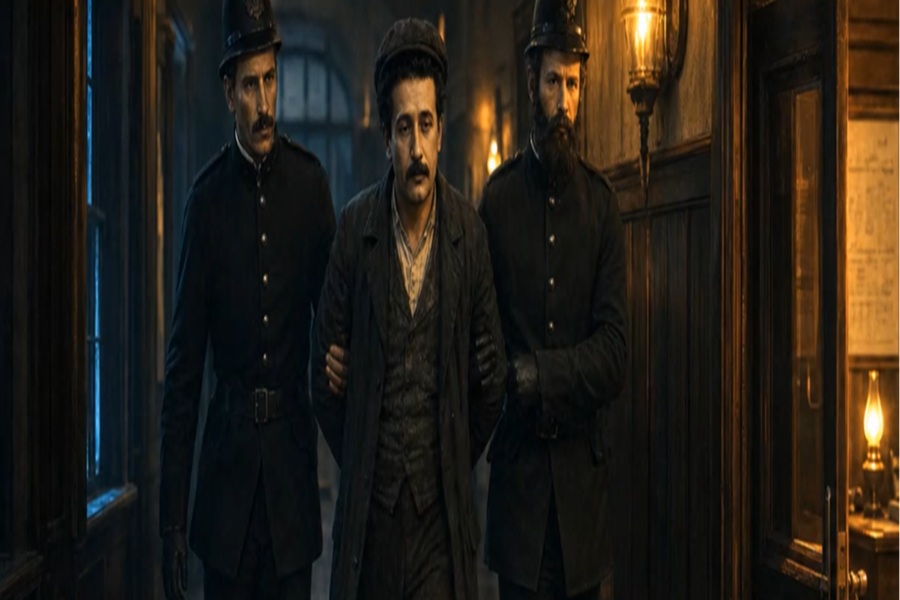
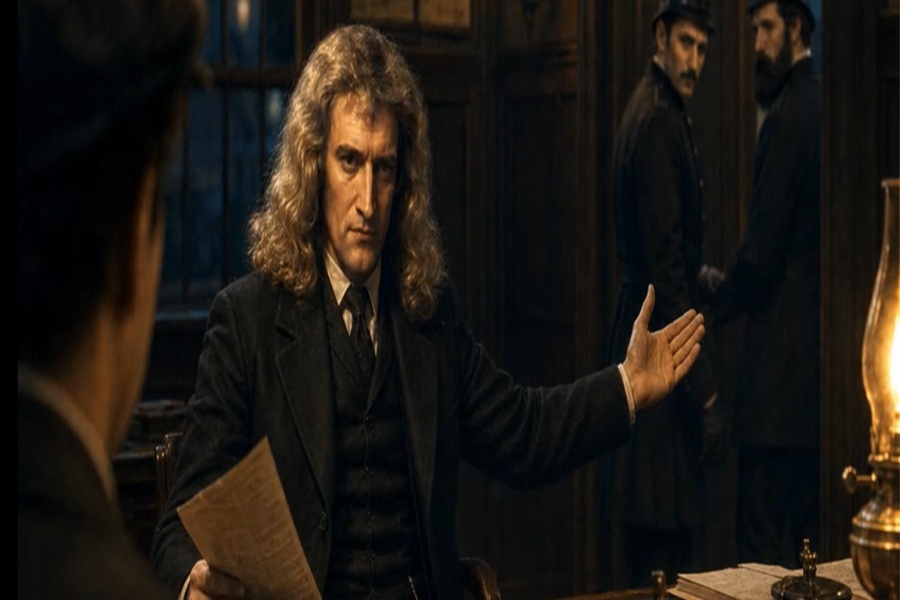
Inspiration
Time dilation is often explained as a formula, but it feels like a crime scene: two clocks begin together, reunite, and one has “lost” time. The Time Thief turns that puzzle into a noir investigation.
What it does
Mr. Einstein steals an atomic clock and flees Earth in a spaceship at a velocity of 0.99c to Plasma Square Station. After enjoying his time there briefly, he returns to Earth at 0.99c, where the police catch him red-handed with the stolen clock. He is brought before Inspector Holmes. The charge: the theft of twelve seconds of time. What follows is a tense exchange between Holmes and Einstein. Holmes grills him about the journey, the missing seconds, the clock readings, relative motion, acceleration, and the signals recorded along the way. The interrogation turns a case of theft into a mystery of time itself.
How I built it
I developed SpatiumTempus as a narrated visual presentation that uses a detective-story format to introduce special-relativistic time dilation. The story follows Inspector Holmes interrogating Mr. Einstein after he is caught on Earth with a stolen atomic clock, following a high-speed journey to Plasma Square Station and back. The presentation combines character dialogue, clock comparisons, simple motion diagrams, and evidence-style visuals to frame the apparent missing twelve seconds as a case of “stolen time.” The physics model uses Special Relativity in flat spacetime, focusing on relative motion, acceleration, signals, and proper time.
Challenges we ran into
A major challenge was translating a complex scientific idea into a short visual detective story. It was difficult to make the narrative dramatic while keeping the distinction clear between the clock Einstein carries, the clock left on Earth, and the apparent missing twelve seconds. Another challenge was making the investigation feel engaging within a presentation format. The dialogue and visuals had to communicate the mystery of “stolen time” quickly, without relying on fully developed character animation or long cinematic scenes.
Accomplishments that we're proud of
• Reframing time dilation as a memorable criminal investigation. • Building a rigorous dialogue framework between classical and modern physics. • Making the travelling-clock puzzle understandable without treating it as magic. • Creating a visual language where clocks, evidence tags, signal trails, and spacetime diagrams all serve the story.
What we learned
We learned that the “missing time” is not hidden anywhere. In Special Relativity, each clock measures the proper time along its own path. When the clocks reunite after different spacetime paths, they can honestly show different elapsed times. We also learned that the most important part of explaining relativity is naming the frame, the event, and the measurement being discussed. .
What's next for The Time Thief
The project may be developed further through an interactive website, expanded visual scenes, and a clock simulation that lets visitors explore different speeds and journeys. A future direction is to extend the investigation beyond Special Relativity and introduce ideas from General Relativity, including gravity and its effect on time. These are planned possibilities rather than confirmed features.
Built With
- codex
- illustrated-evidence-scenes
- motion-graphic
- openai
- scripted-dialogue
- visual-presentation-design
- voice-narration

Log in or sign up for Devpost to join the conversation.