
Inspiration
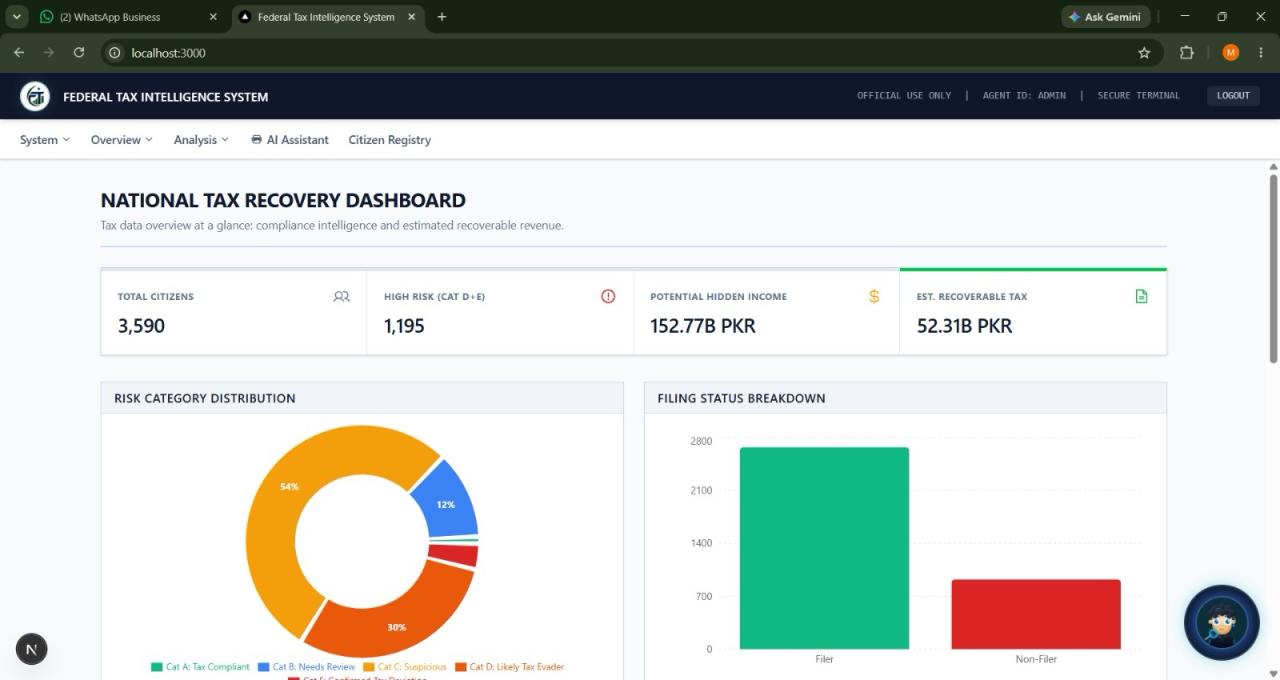
Pakistan faces a major tax compliance challenge, with estimates suggesting its underground economy has historically represented 35–40% of GDP. In 2024–25, the FBR estimated the annual tax gap at approximately Rs 7.1 trillion. These figures inspired us to build TaxIntel AI to help identify potential tax evasion and protect public revenue.
What it does
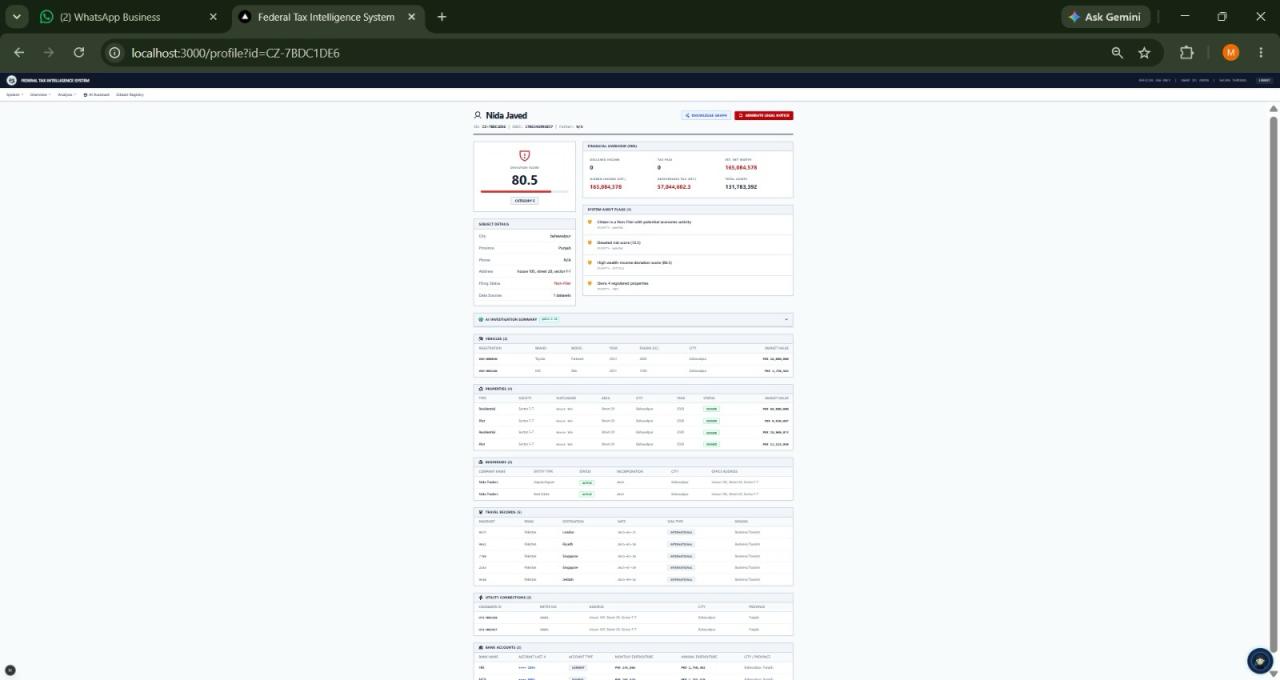
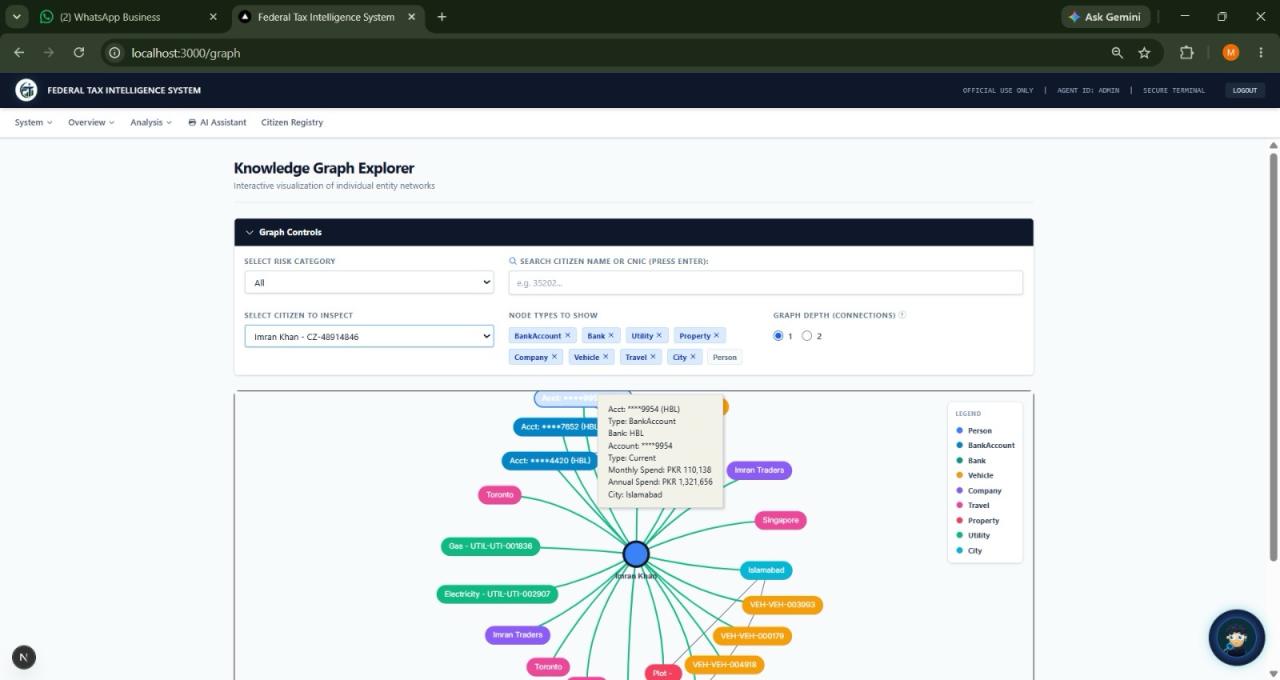
TaxIntel AI connects fragmented financial, property, vehicle, and taxpayer records to identify suspicious patterns. Collects data fom 9 different organiztions. It flags cases where declared salaries or income appear inconsistent with high utility bills, expensive international travel, luxury assets, or property holdings exceeding declared income.
How we built it
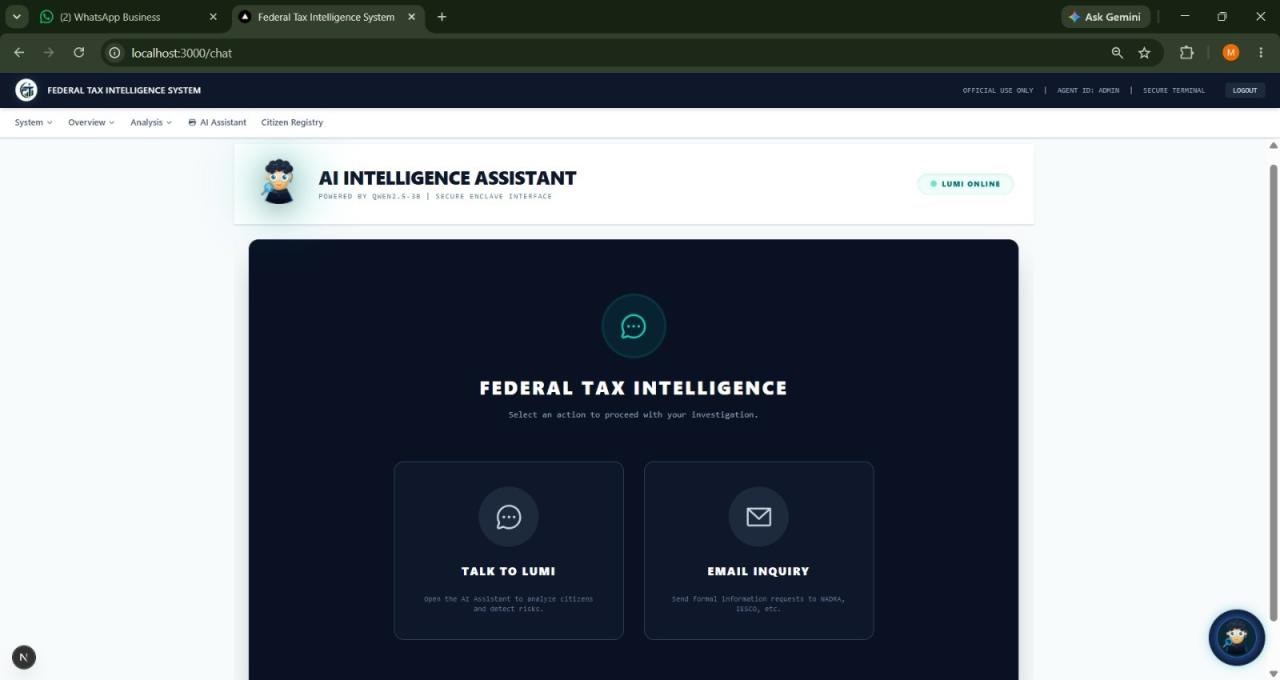
We built TaxIntel AI using Next.js, FastAPI, Python, machine learning, entity resolution, and knowledge graph analytics. It combines data cleaning, anomaly detection, risk scoring, and AI-assisted investigations.
Challenges we ran into
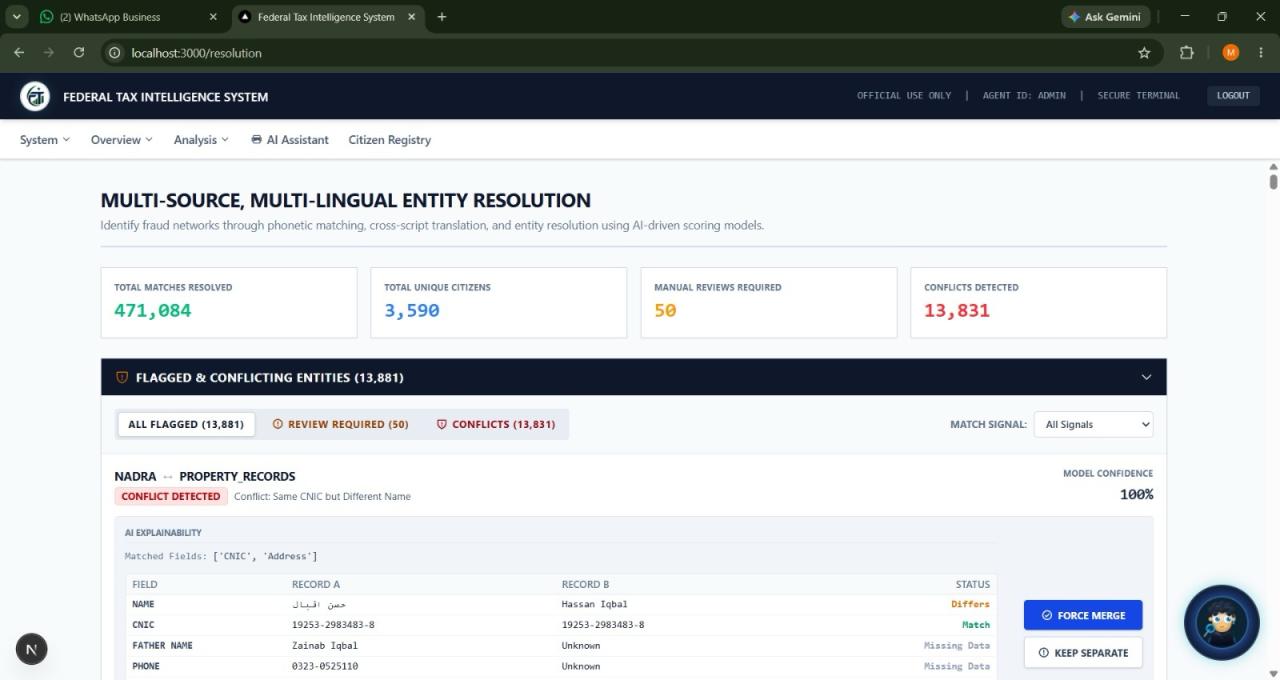
Our main challenges were inconsistent records, matching individuals across datasets, detecting meaningful anomalies, and distinguishing genuine discrepancies from potential tax evasion.
Accomplishments that we're proud of
We developed an integrated platform that connects related entities, visualizes suspicious networks, assesses risk, and helps investigators prioritize cases for further review.
What we learned
We learned how to combine AI, machine learning, and knowledge graphs to uncover patterns that may remain hidden in fragmented datasets.
What's next for TaxIntel AI
We aim to integrate more verified data sources, improve explainable risk detection, and deploy scalable AI models using Nebius infrastructure and NVIDIA open-source models to support smarter, data-driven tax investigations.
Built With
- bgem3
- fastapi
- networkx
- nextjs
- ollama
- python
- qwen
- react
- rerankingmodels
- scikit-learn
- shap
- xgboost

Log in or sign up for Devpost to join the conversation.