Inspiration
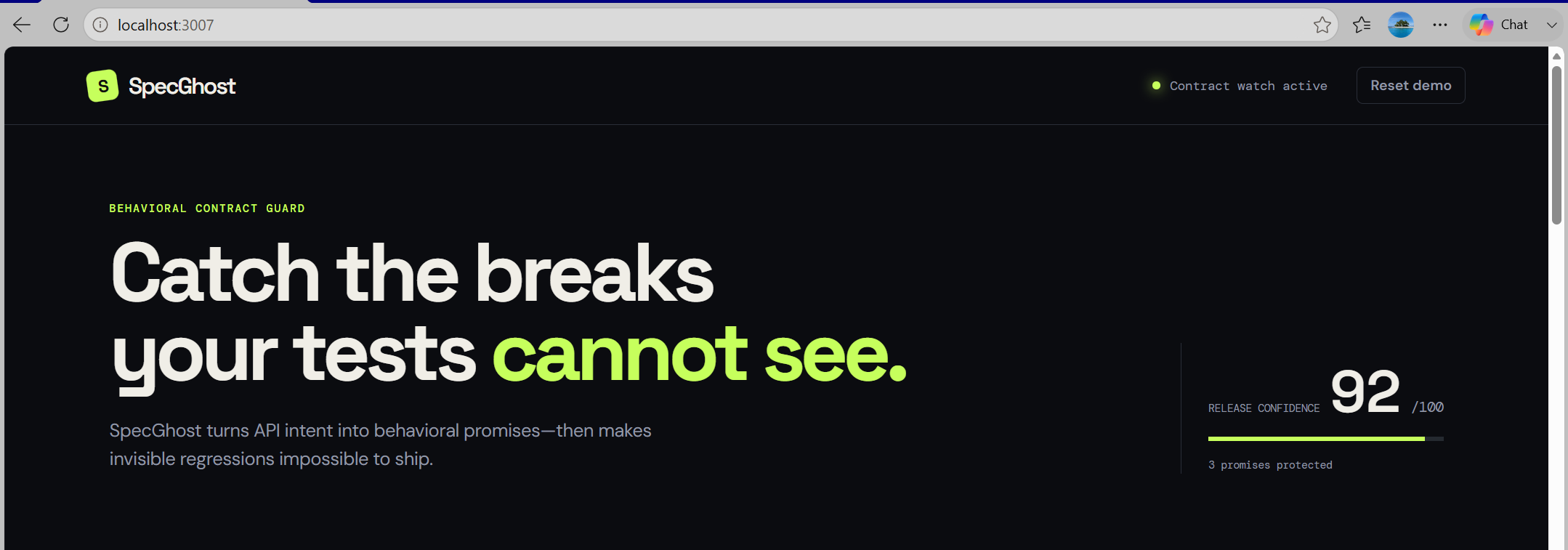
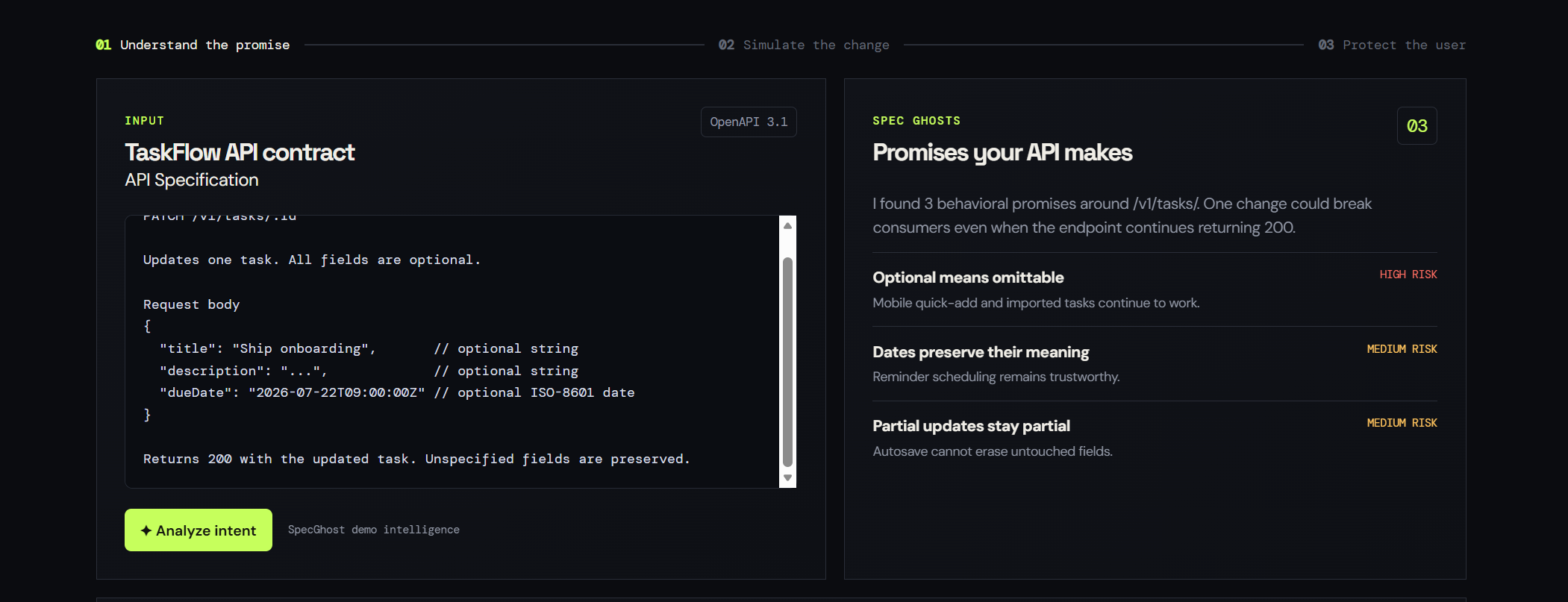
APIs often “work” while quietly breaking users. A 200 OK response does not guarantee that a mobile quick-add flow, CSV import, or calendar sync still works. We wanted to build a tool that understands the behavioral promises an API makes - not only its endpoint shape or status codes.
What it does
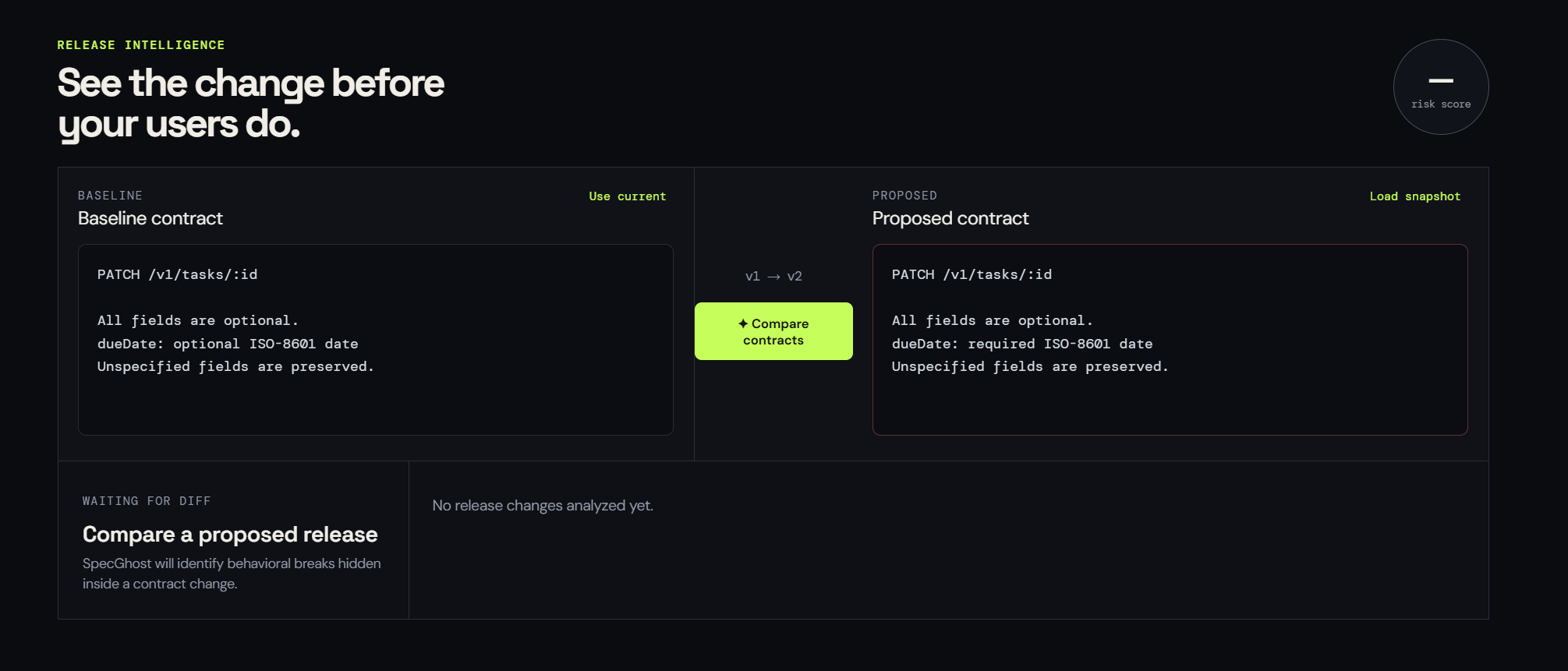
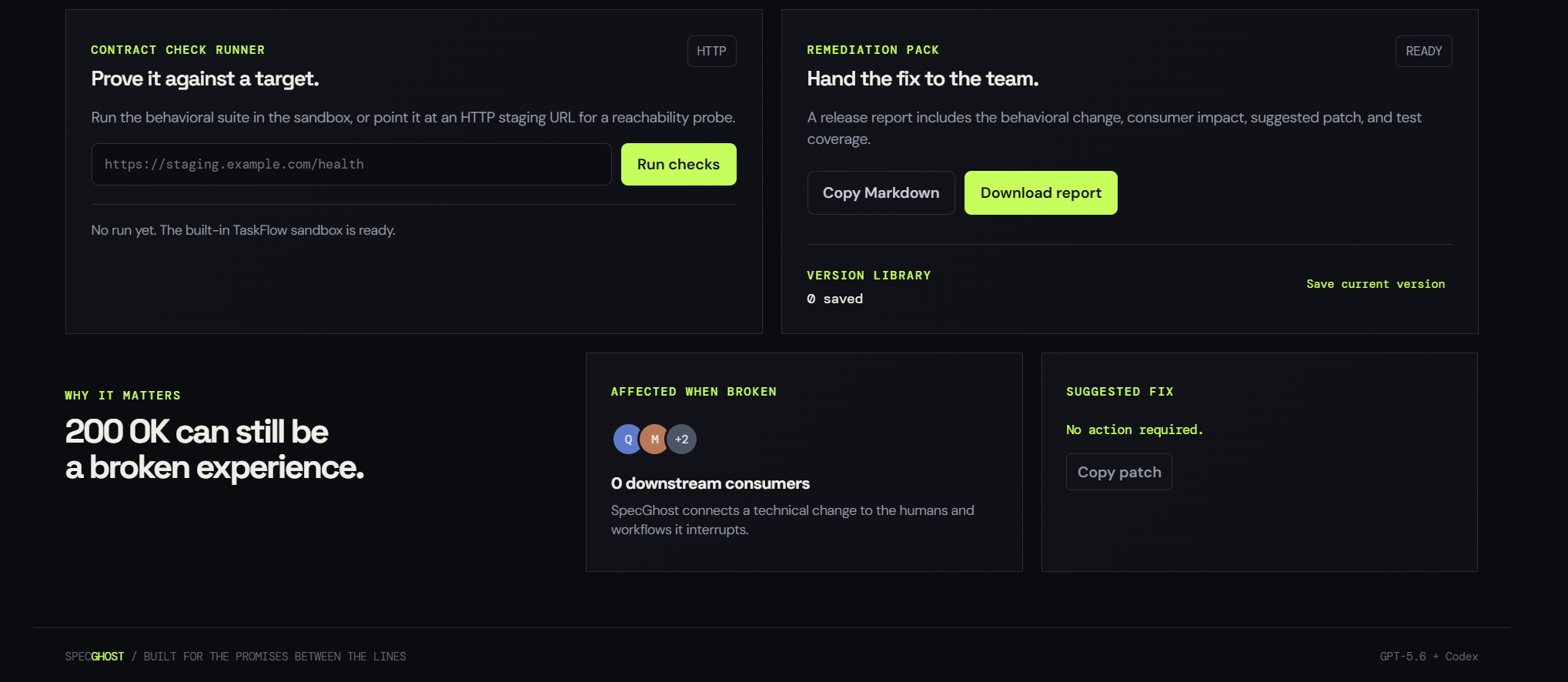
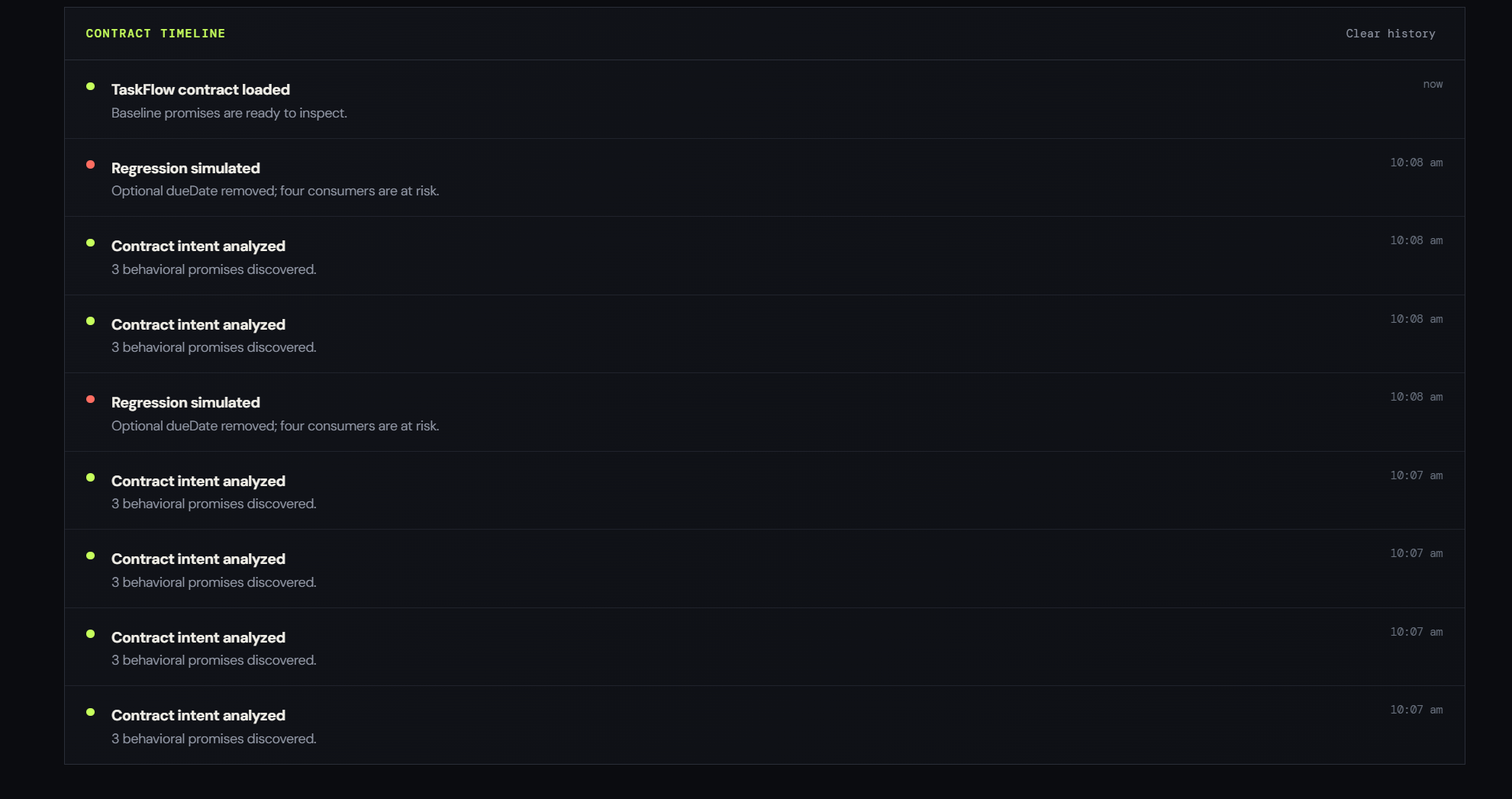
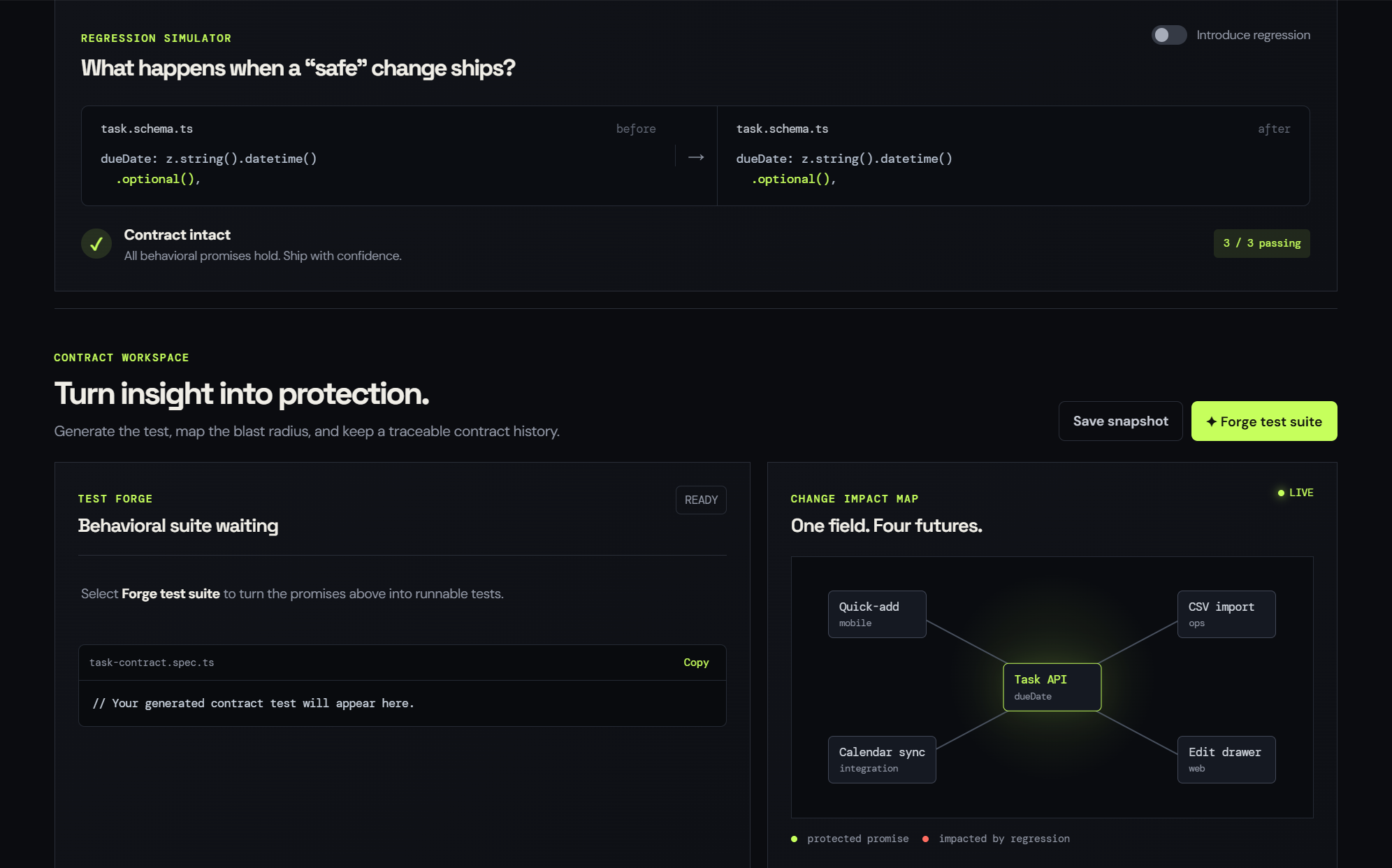
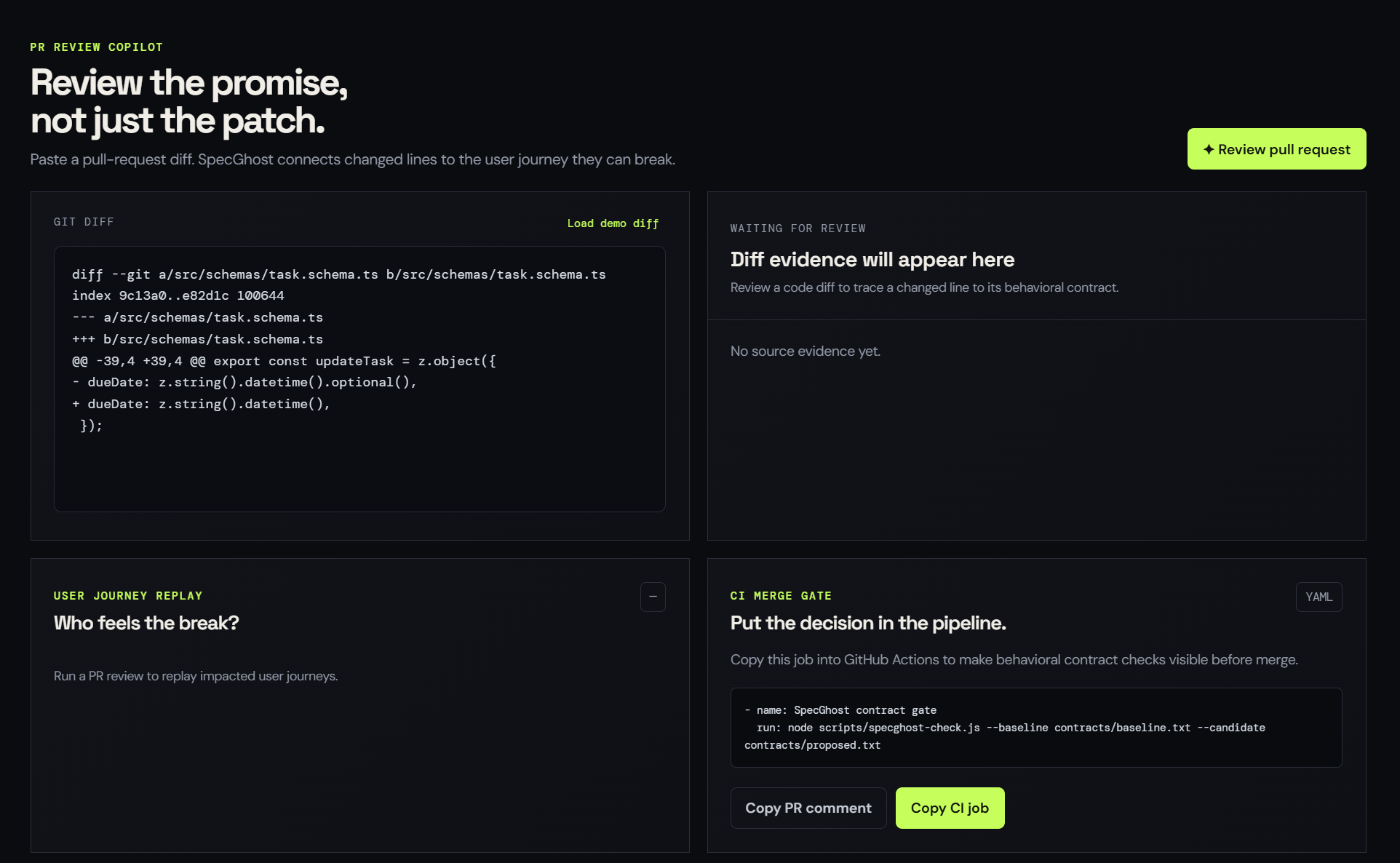
SpecGhost is an API Release Intelligence platform. It analyzes API contracts, identifies hidden behavioral promises, generates contract tests, compares baseline and proposed contracts, and flags release risk. It also reviews Git diffs, connects changed code to broken API promises, replays affected user journeys, generates remediation guidance, exports release reports, and includes a CLI/GitHub Actions merge gate that can block a breaking change in CI.
How we built it
We built SpecGhost as a zero-dependency Node.js web application with a responsive browser-based workspace. Codex helped shape the product scope, implement the Node server, build the interface, create the PR-review and release-intelligence workflows, and add the CLI and GitHub Actions merge gate. GPT-5.6 powers optional live analysis for API intent, behavioral test generation, and PR review reasoning. We also built a deterministic demo mode so judges can use the complete TaskFlow experience without API credentials.
Challenges we ran into
The biggest challenge was making a sophisticated developer-tool concept understandable in a short demo. We had to avoid showing generic AI output and instead make each insight concrete: the changed source line, the broken promise, the users affected, the generated test, and the CI decision. We also wanted the project to remain reliable for judges, so we designed a complete built-in sandbox and a zero-dependency CLI rather than requiring a database, test account, or complex setup.
Accomplishments that we're proud of
We are proud that SpecGhost is more than a visual prototype. It includes: Behavioral API contract analysis. Semantic contract diffs with release-risk decisions. Generated Playwright contract tests. Pull-request diff review with source evidence. User-journey impact replay. Downloadable remediation reports. A working CLI that exits with code 1 for breaking changes. A GitHub Actions merge-gate workflow.
What we learned
We learned that API reliability is fundamentally a product problem as well as an engineering problem. The most useful signal is not simply “the schema changed,” but “this change prevents a real person from completing a workflow.” We also learned that AI is most effective when it is grounded in evidence and connected to a concrete action: a test, a patch, a merge decision, or a release report.
What's next for SpecGhost
Next, we plan to add native OpenAPI JSON/YAML import, GitHub pull-request integration, richer semantic analysis for enums and defaults, real staging-environment test execution, and hosted team workspaces with shared contract history. Our goal is for SpecGhost to become the behavioral release gate teams trust before they ship an API change.
Built With
- actions
- api
- ci/cd
- cli
- codex
- contract
- css
- developer
- github
- gpt-5.6
- html
- javascript
- node.js
- openai
- responses
- security
- testing
- tools

Log in or sign up for Devpost to join the conversation.