SpecForge
Inspiration
Engineering teams rarely struggle with a lack of information. They struggle with overload. Release goals live in one place, bug reports in another, and build notes or QA findings end up buried in chat threads and docs. Under deadline pressure, that turns execution into guesswork. SpecForge is built for that exact moment: take the rough input a team already has and turn it into a plan that can actually ship.
What it does
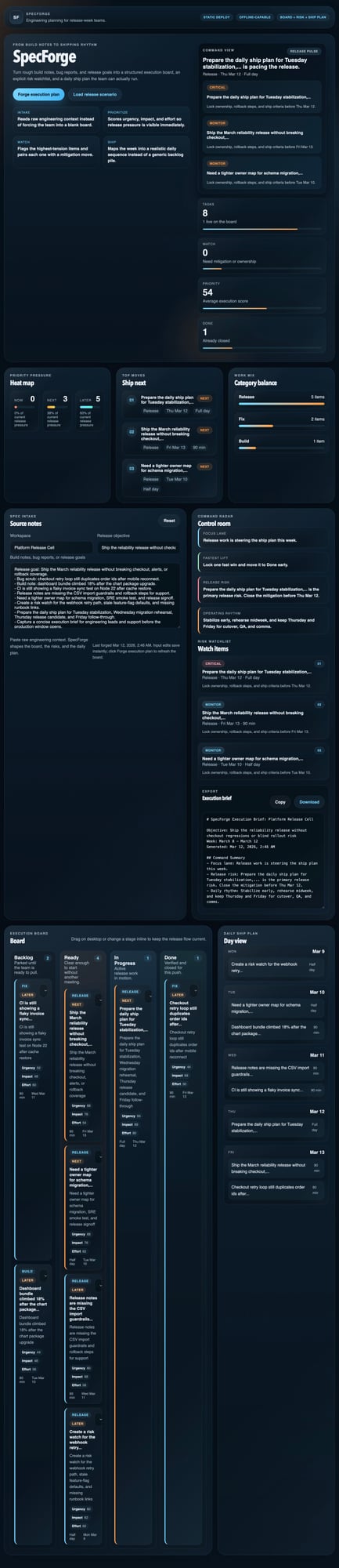
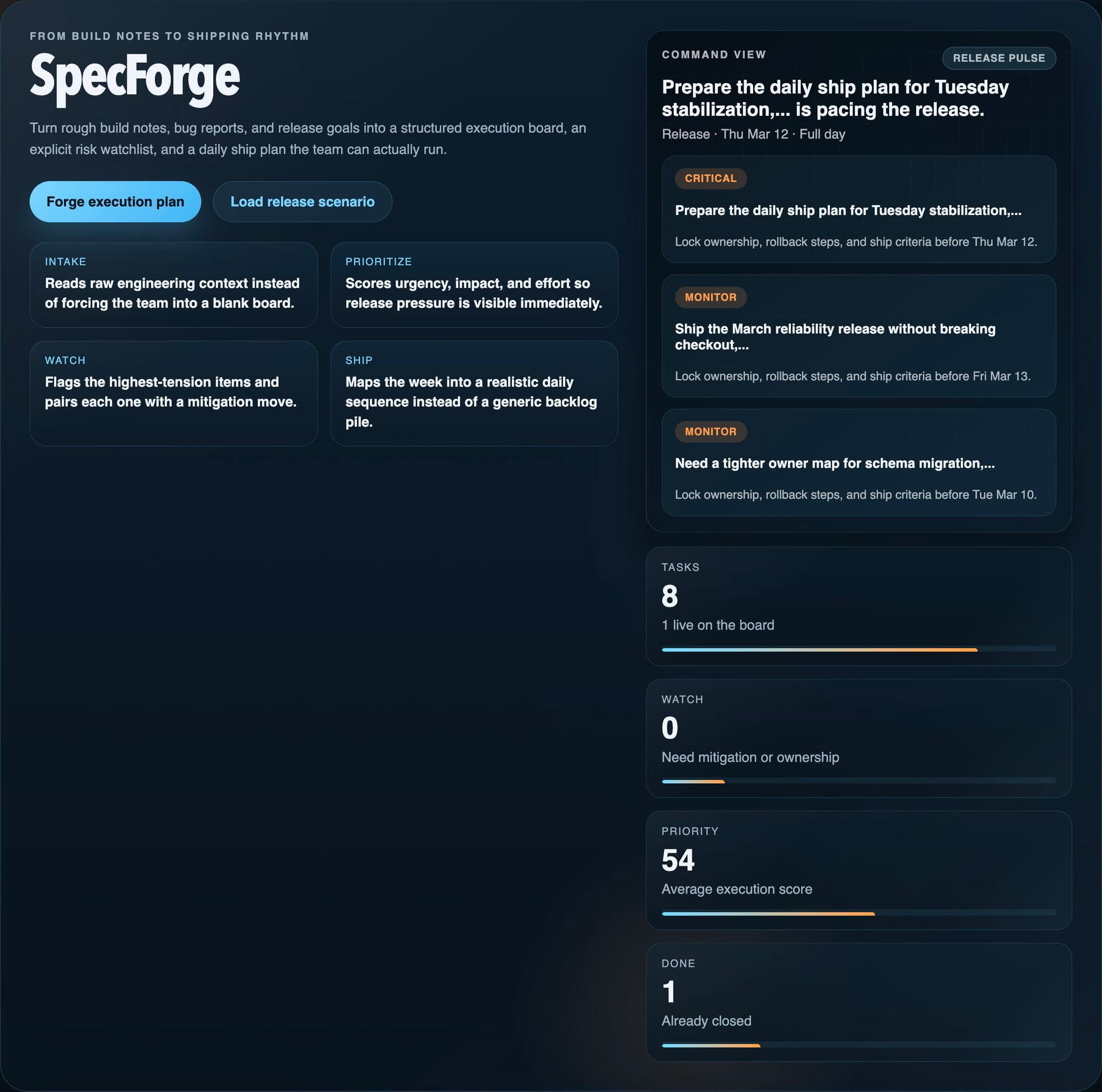
SpecForge turns rough build notes, bug reports, and release goals into three concrete outputs:
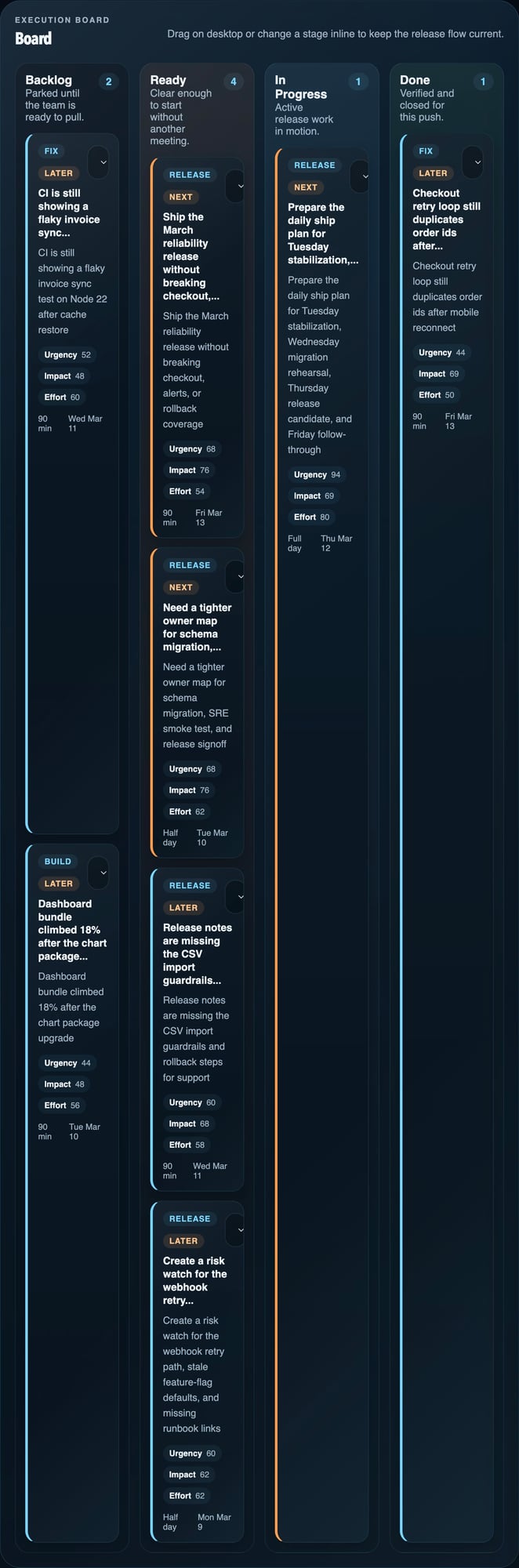
- An execution board with prioritized work
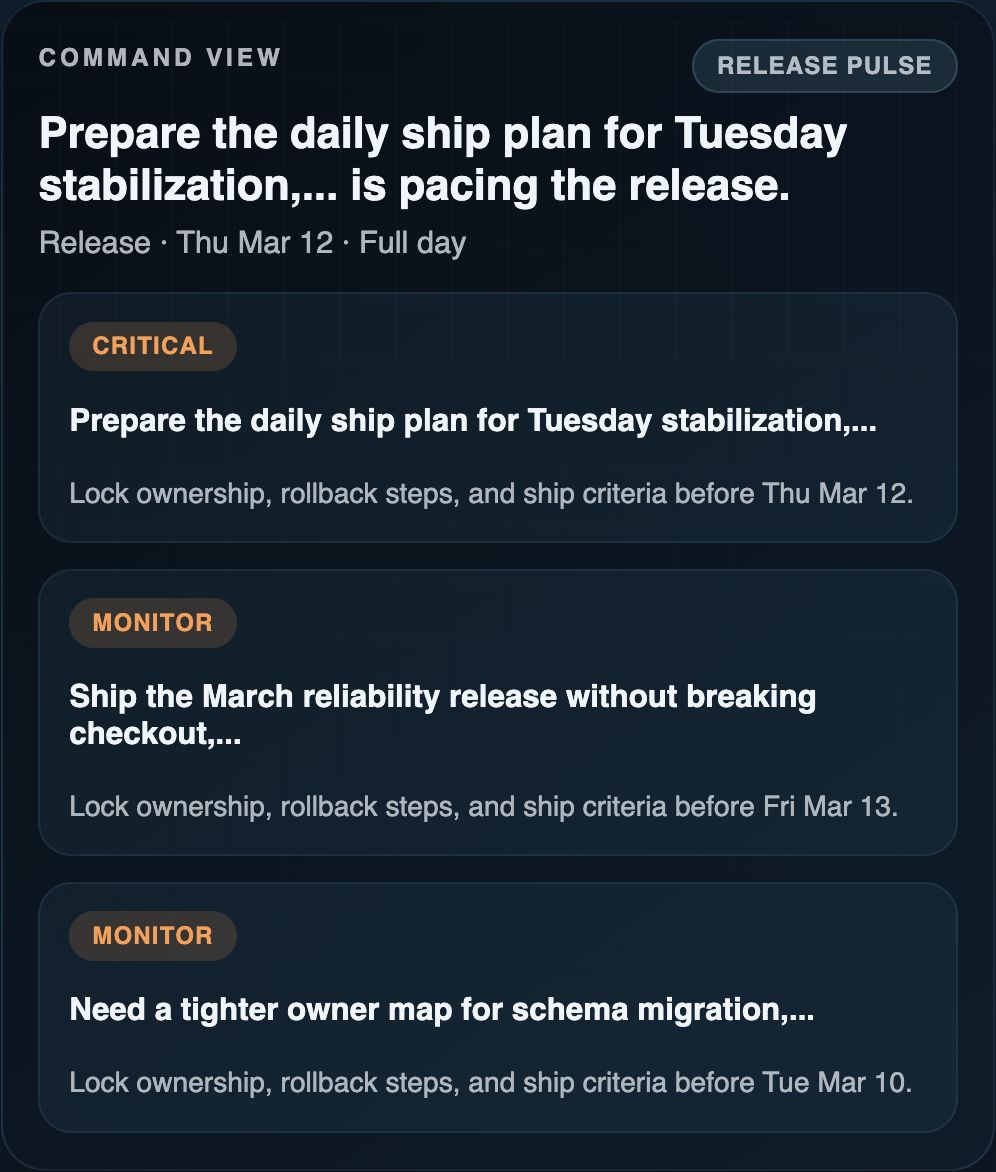
- A risk watchlist with mitigation guidance
- A daily ship plan for the current week
The app also keeps an exportable execution brief ready for engineering leads, QA, and support so the plan can be shared without rewriting it by hand.
How we built it
We built SpecForge as a static web app with a browser-side planning engine. Freeform text is segmented into tasks, scored for urgency, impact, and effort, then placed into execution lanes and mapped across the workweek. The UI keeps the board, risk watchlist, and daily plan in sync while local persistence and offline support keep the workspace usable without infrastructure or secrets.
Challenges we ran into
The hard part was making the app feel like an actual engineering tool instead of a generic task board. That meant tightening the scoring heuristics around release pressure, shaping the interface around risk visibility, and making sure the default scenario felt credible for a real ship week. We also wanted the product to stay fully static so the deployment and judging path would be reliable.
Accomplishments that we're proud of
- A coherent product story from intake through execution
- A sharper, engineering-forward interface instead of generic productivity styling
- A realistic release scenario that makes the demo easy to follow
- A static build that still supports persistence, offline usage, exports, and a narrated walkthrough
What we learned
We learned that planning products become much more convincing when they generate opinionated structure instead of acting like empty containers. We also learned how much credibility comes from small execution details: mitigation copy, believable day-by-day sequencing, and a board that already feels active on first launch.
What's next
Next steps for SpecForge are collaborative workspaces, richer ingestion from issue trackers and release docs, stronger filtering for different roles, and deeper release-readiness scoring for teams that need formal go/no-go checks.
Built With
- css
- html
- javascript
- localstorage
- node.js
- service-worker

Log in or sign up for Devpost to join the conversation.