Inspiration
As developers, we often use AI tools to generate boilerplate code. However, we realized two major pain points: first, translating a complex multi-page Product Requirement Document (PRD) into a consistent codebase requires strict dependency ordering. Second, we lack concrete, empirical data to show where the AI actually saved us time versus where it got stuck in endless retry/refactoring loops.
We built Spec-to-Code Intelligence Platform to not only generate full modules from natural specs but also to measure the exact velocity and acceleration of the AI generation process.
What it does
The platform features an end-to-end spec-to-code pipeline:
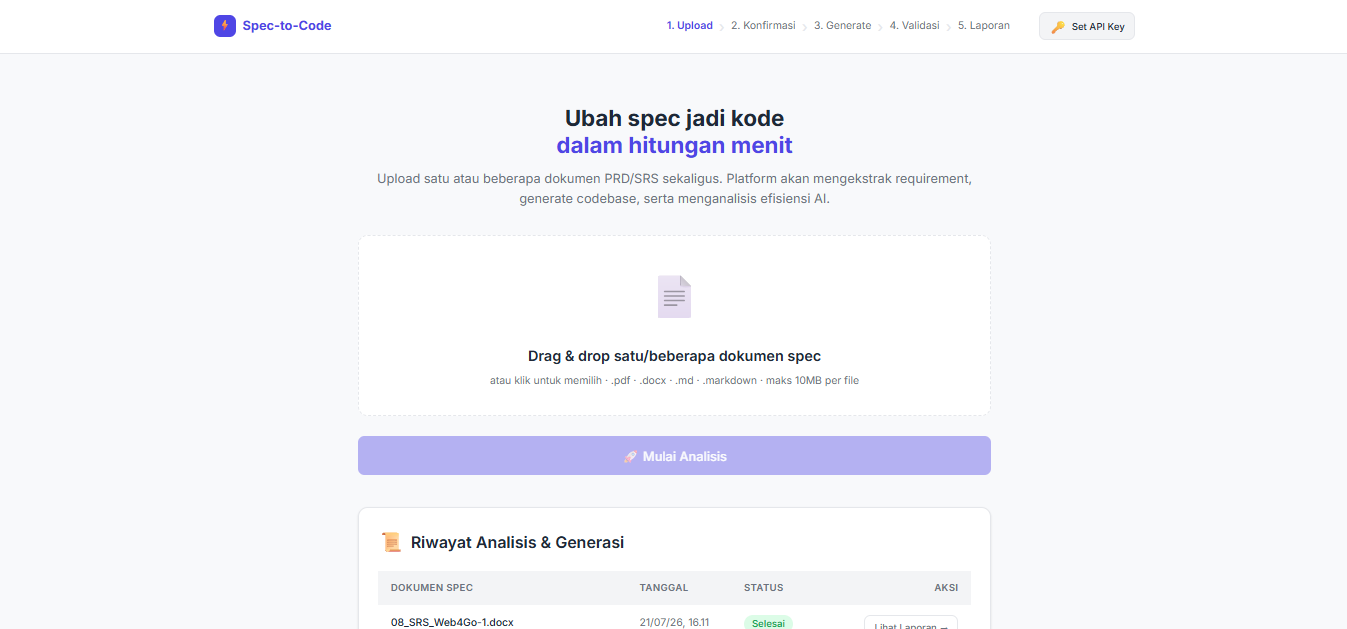
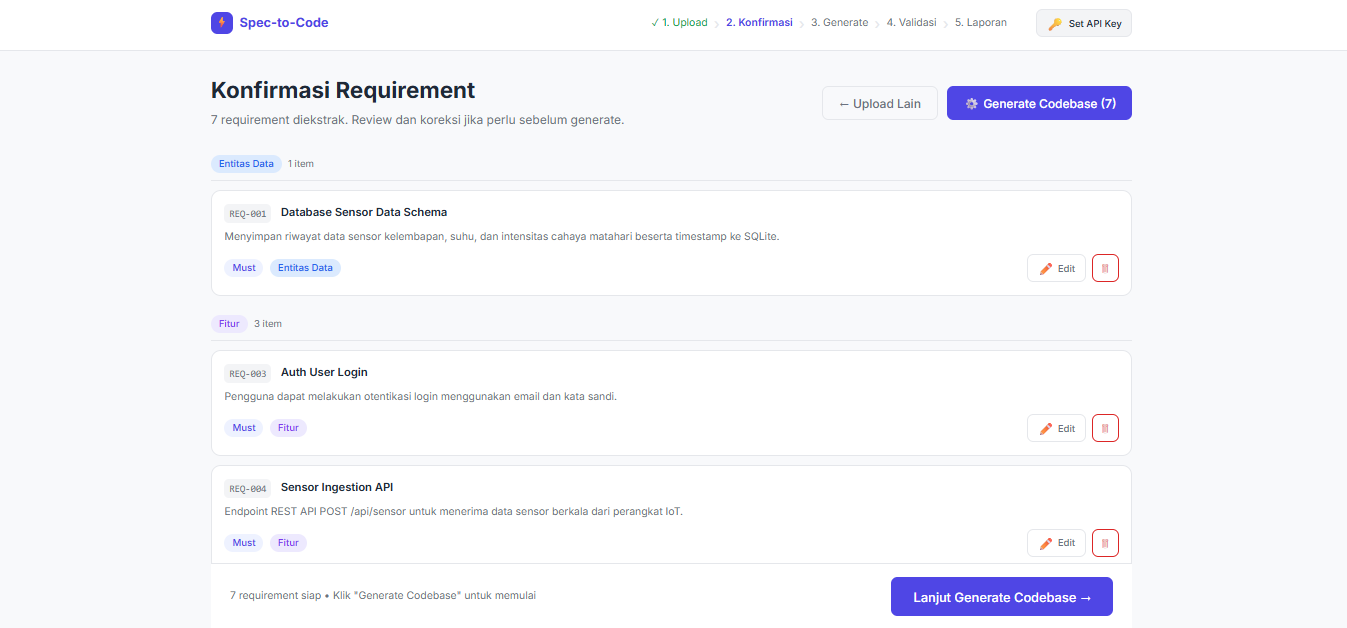
- Spec Ingestion (Multi-file): Developers can drag & drop multiple files (PDF/DOCX/MD) at once. The platform uses GPT to extract structured JSON requirements.
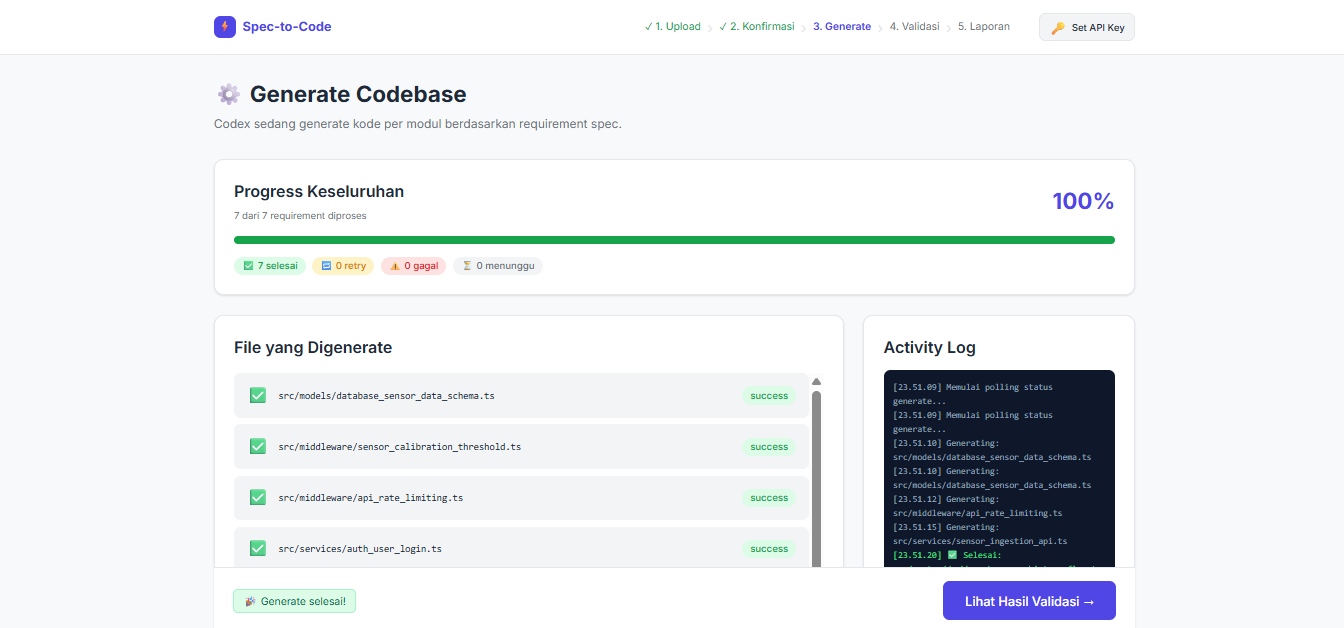
- Dependency-based Code Generation: Uses OpenAI Codex to generate modular code. The Orchestrator enforces a strict generation order (
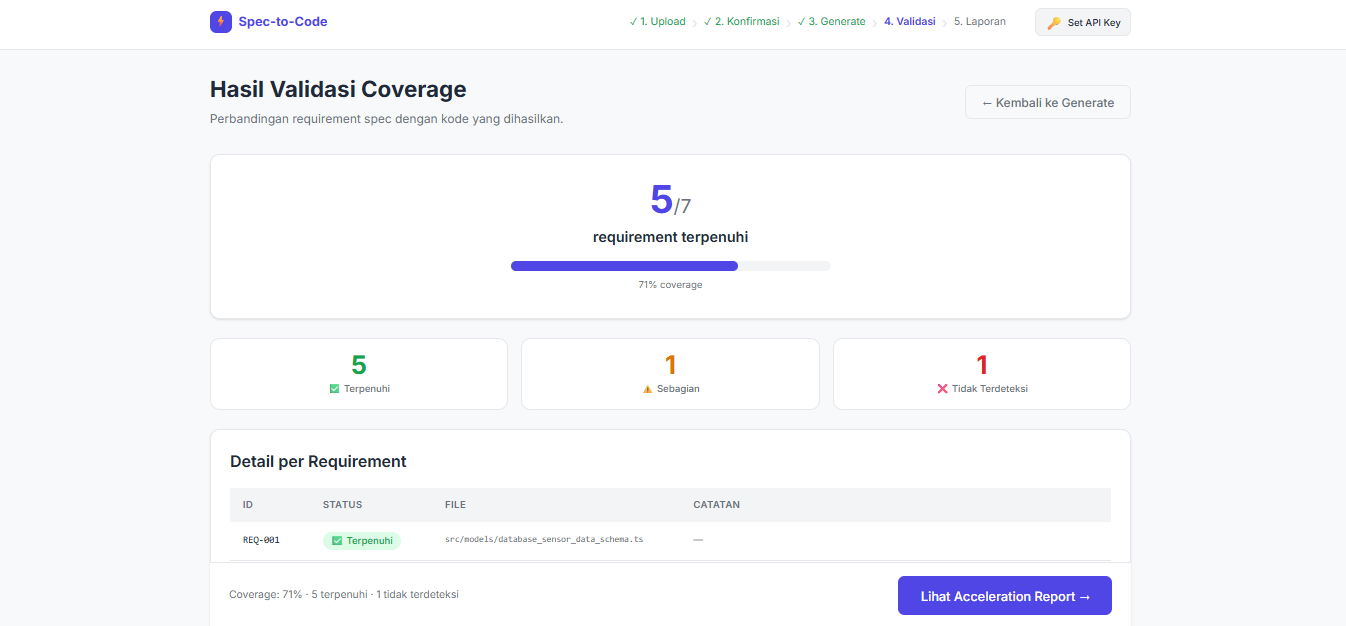
data_entity➔constraint➔feature➔flow) to maintain code integrity. - Auto-Validation: Semantically cross-references generated code with the original requirements, highlighting gaps (fulfilled, partial, or missing features).
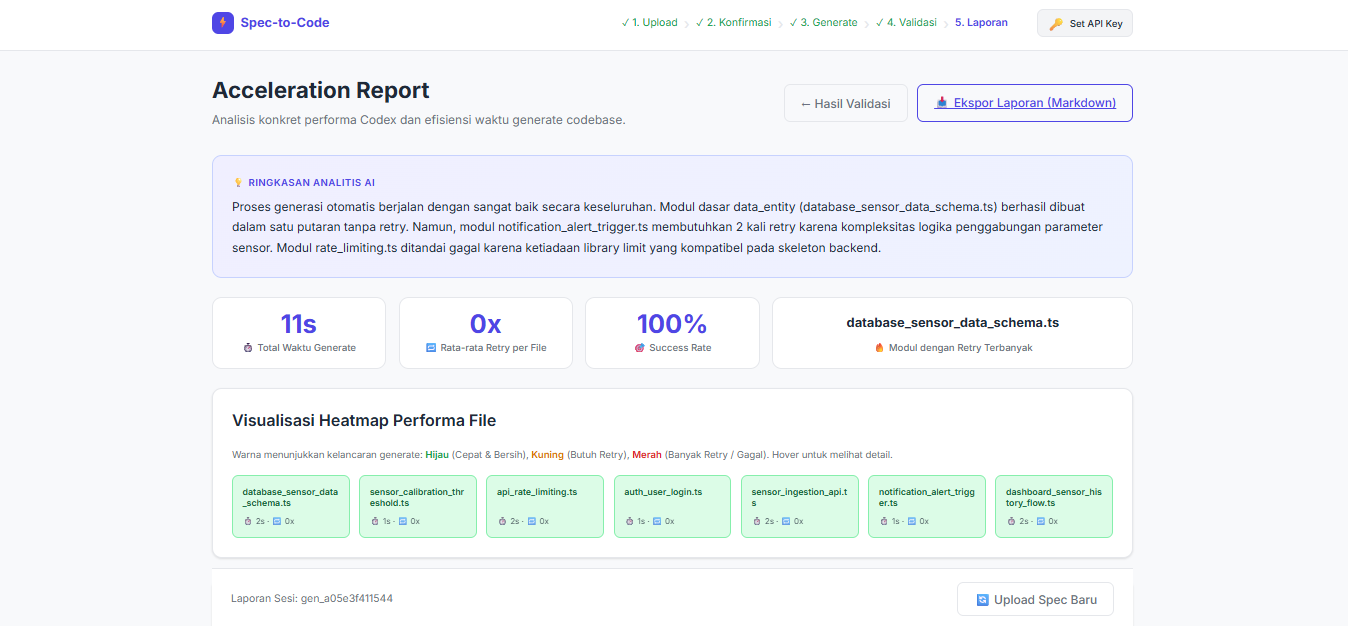
- Acceleration Report: Agregates generation telemetry (duration, tokens, retries) and visualizes it as a color-coded performance Heatmap (Green = Clean/Fast, Yellow = Retried, Red = High Gaps/Failed) alongside an AI-narrated report.
How we built it
We built the application as a monorepo featuring:
- Frontend: React 18, Vite, TypeScript, and customized CSS (featuring HSL color tokens and custom micro-animations).
- Backend: Node.js, Express, TypeScript, and a highly responsive
better-sqlite3database. - AI Integrations: We integrated OpenAI Chat Completions (GPT-4) for spec extraction and validator checking, and the OpenAI Responses API (
codex-mini-latest) for the main code generation tasks. - Architecture: Implemented background queues with live status polling to ensure a lag-free UI experience.
Challenges we ran into
- Context Length Constraints: Feeding full codebases into the Auto-Validator often led to token overflows. We solved this by developing a code-summarizer that extracts only the core structural definitions.
- API Latency and Limits: Running sequential AI generation steps is time-consuming. We addressed this by running the generation tasks asynchronously and caching report narratives to reduce repeat API costs.
- Fallback Mechanisms: We built a hybrid validator that seamlessly falls back to keyword-based syntax matching if OpenAI keys are absent, ensuring the app remains fully functional.
Accomplishments that we're proud of
- Establishing a reliable, dependency-ordered code generation worker that produces coherent multimodule code.
- The visual performance Heatmap that displays real empirical telemetry, helping teams identify which parts of their stack are easiest (or hardest) for AI agents to write.
What we learned
- Structuring AI output is much more reliable when you enforce engineering constraints (like model-first, router-last generation).
- Caching AI analytical results is a must-have for developer-facing tools to avoid high latency.
What's next for Spec-to-Code Intelligence Platform
- Git Integration: Allowing developers to push the generated codebase directly to a GitHub branch.
- Multi-Language Support: Expanding target code output from TypeScript to Python, Go, and Rust.
- AST Parsing: Integrating AST checks into the validator to check syntactic correctness before running semantic validation.
Built With
- better-sqlite3
- codex
- css3
- express.js
- gpt-4
- mammoth
- node.js
- openai
- pdf-parse
- react
- sqlite
- typescript
- vite

Log in or sign up for Devpost to join the conversation.