-
-
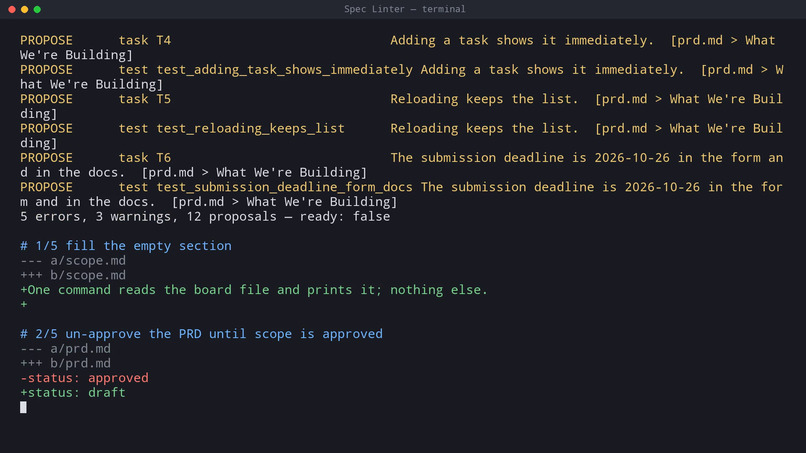
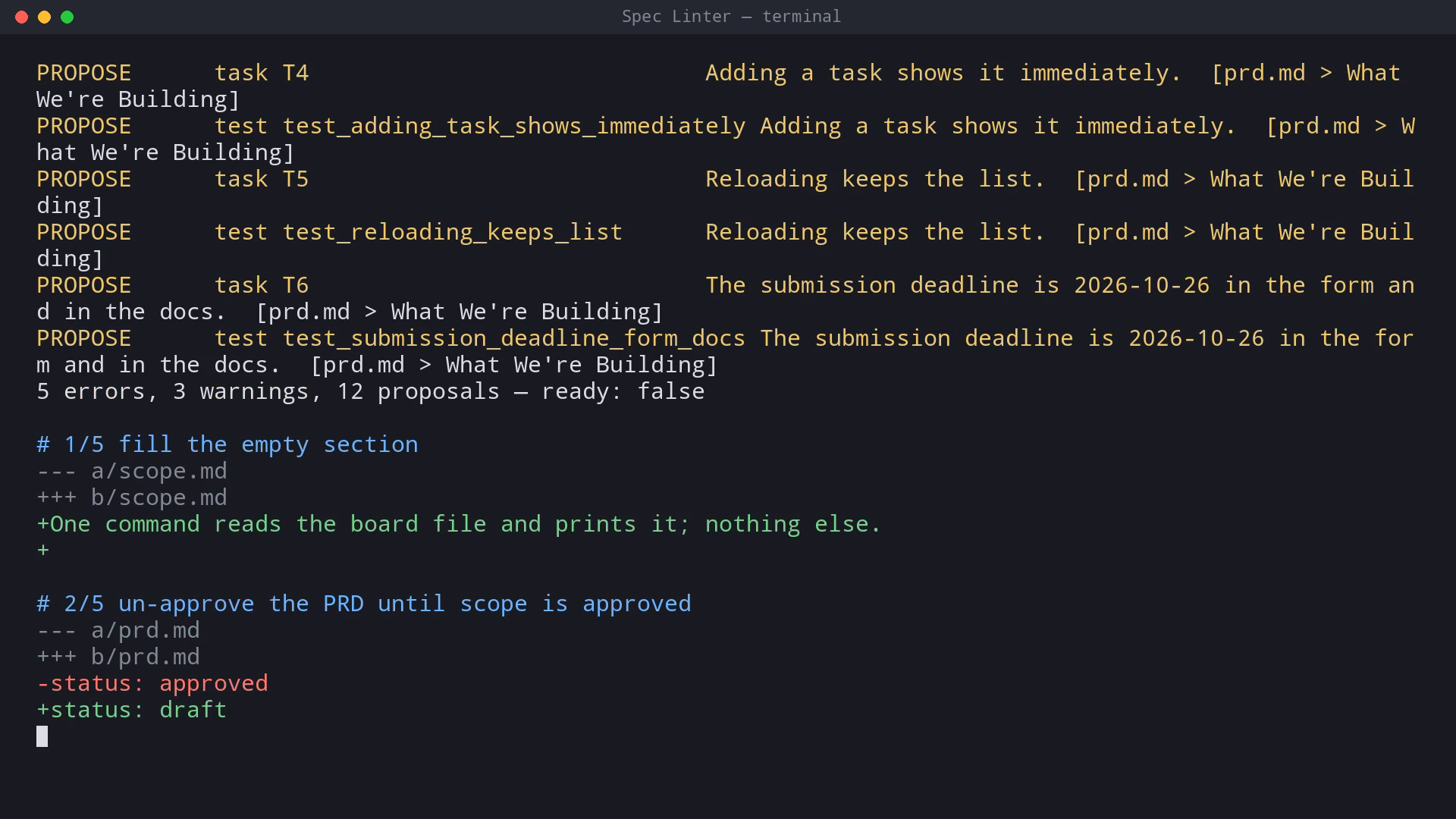
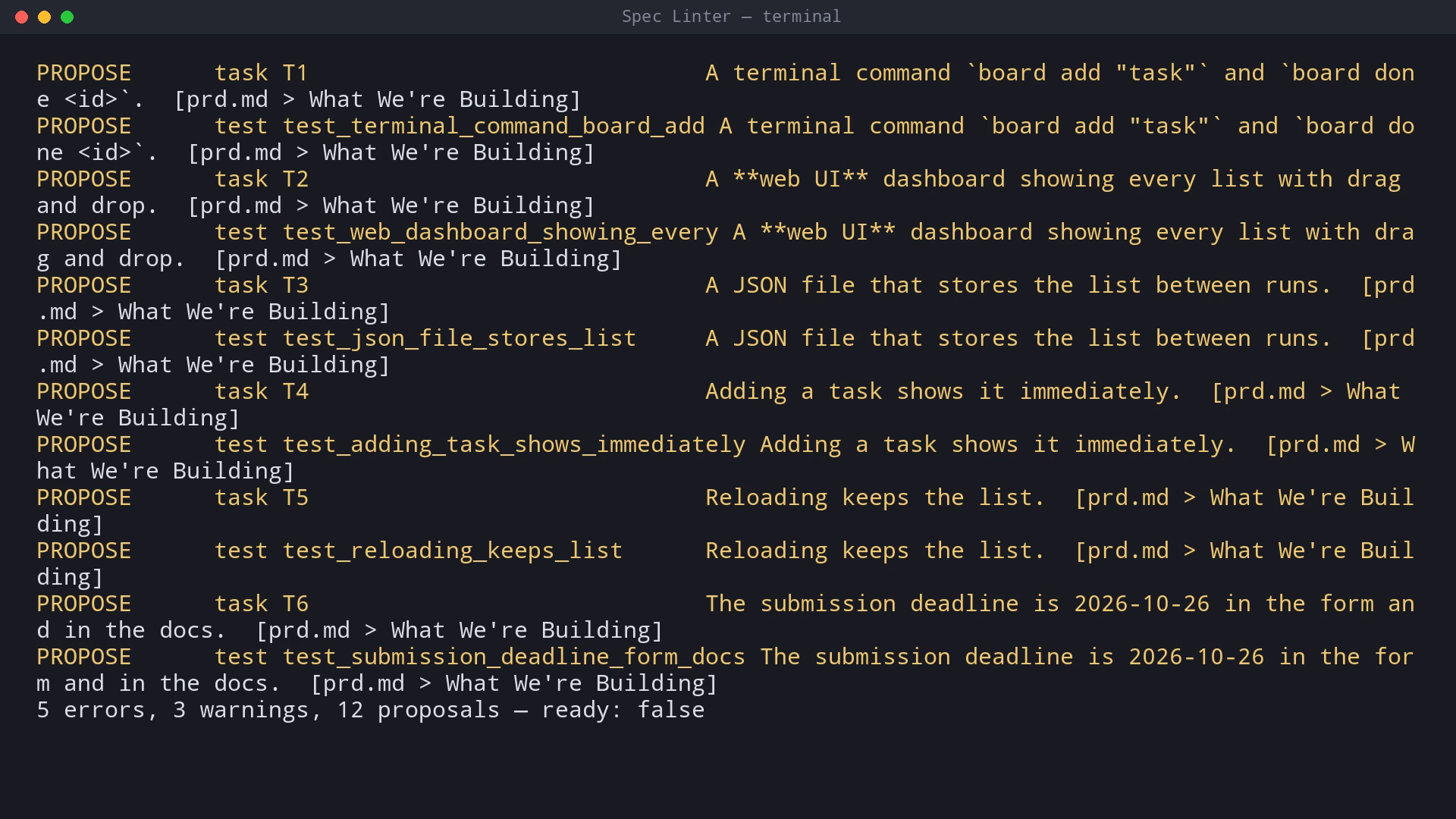
Actionable findings with exact file paths, sections, and implied task/test checks
-
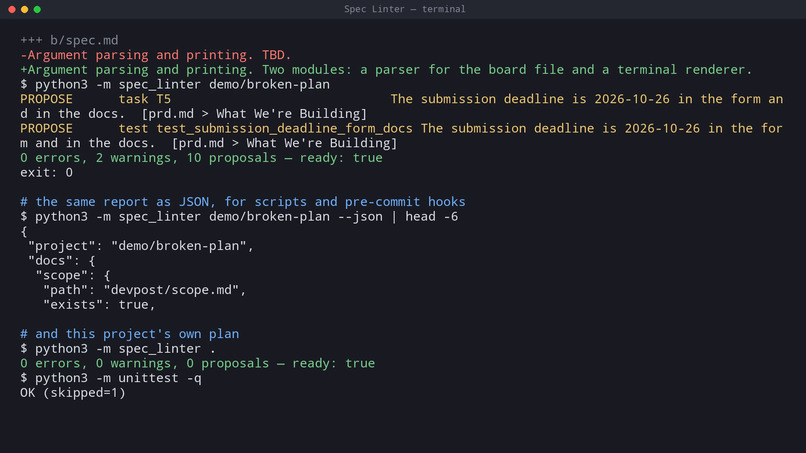
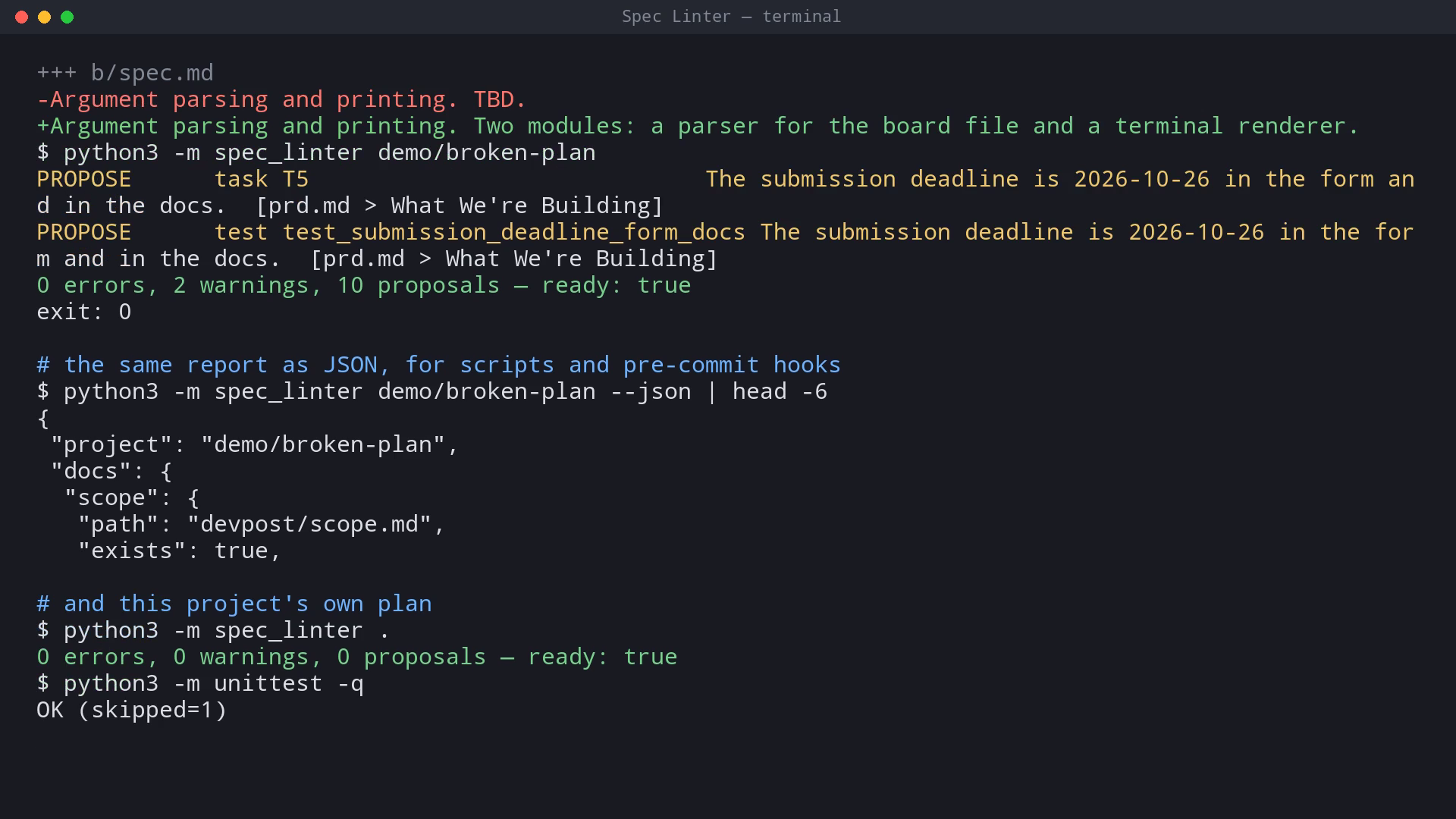
Self-lint JSON output (ready: true, 0 errors) and 47/47 passing unit tests
-
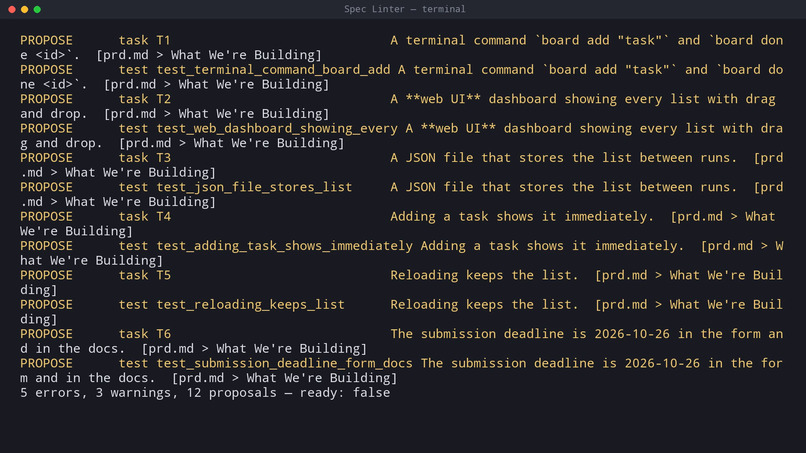
Spec Linter catching cross-document contradictions and gaps on demo/broken-plan
Inspiration
AI-assisted development works best when project requirements are clear and consistent. We built Spec Linter to catch planning mistakes before they turn into coding problems.
What it does
Spec Linter is an offline Python CLI tool that checks scope.md, prd.md, spec.md, and checklist.md for missing information and contradictions. It provides actionable findings with file paths and helps developers validate their plans with one command.
Who it's for
Solo builders and learners who plan software with AI coding agents from a terminal and want deterministic, compiler-style checks on their planning documents before writing or shipping code.
How we built it
We built it with Python and automated tests, using transparent rule-based checks to validate project documents without requiring an internet connection or an AI API.
Challenges
One challenge was identifying inconsistencies across multiple documents while keeping the results clear and actionable. We also added JSON output to make results easier to inspect and automate.
What we learned
We learned how structured validation, clear planning documents, and automated tests can improve reliability in AI-assisted development.
Run It
Python 3.10+ standard library only (zero external packages, fully offline):
python3 -m spec_linter .                  # lint this repo's own plan (0 errors, ready: true, exit 0)
python3 -m spec_linter . --json           # structured JSON output
python3 -m spec_linter demo/broken-plan   # sample broken plan (5 errors, 3 warnings, 12 proposals, exit 1)
python3 -m unittest -q                    # 47 offline unit tests
Pre-Existing Material & License
.claude/skills/contains the unmodified official Devpost Learn Skill Pack (https://github.com/challengepost/learn-ai-basics, MIT License, Copyright (c) 2026 Devpost).- All
spec_linter/code, 47 unit tests (tests/),demo/broken-plan/, planning docs (devpost/), andtools/were newly created during the submission period under the MIT License (LICENSE).

Log in or sign up for Devpost to join the conversation.