SpeakSphere — Project Story
Inspiration
SpeakSphere was inspired by a real and widespread problem among IELTS learners, especially in Uzbekistan. Thousands of motivated students prepare for IELTS to study abroad, particularly in CS and STEM fields, but improving the speaking section is extremely difficult. Most learners can only practice with teachers, and private speaking lessons are expensive and inaccessible for many families.
At the same time, the official IELTS exam costs around $200, which makes students anxious about taking it without knowing whether they are ready. Affordable, realistic speaking mock tests are limited, often offline, and usually available only in city centers.
I wanted to build a solution that allows students to practice speaking realistically, affordably, and anytime, while also making the process engaging and motivating. That idea became SpeakSphere.
What SpeakSphere Does
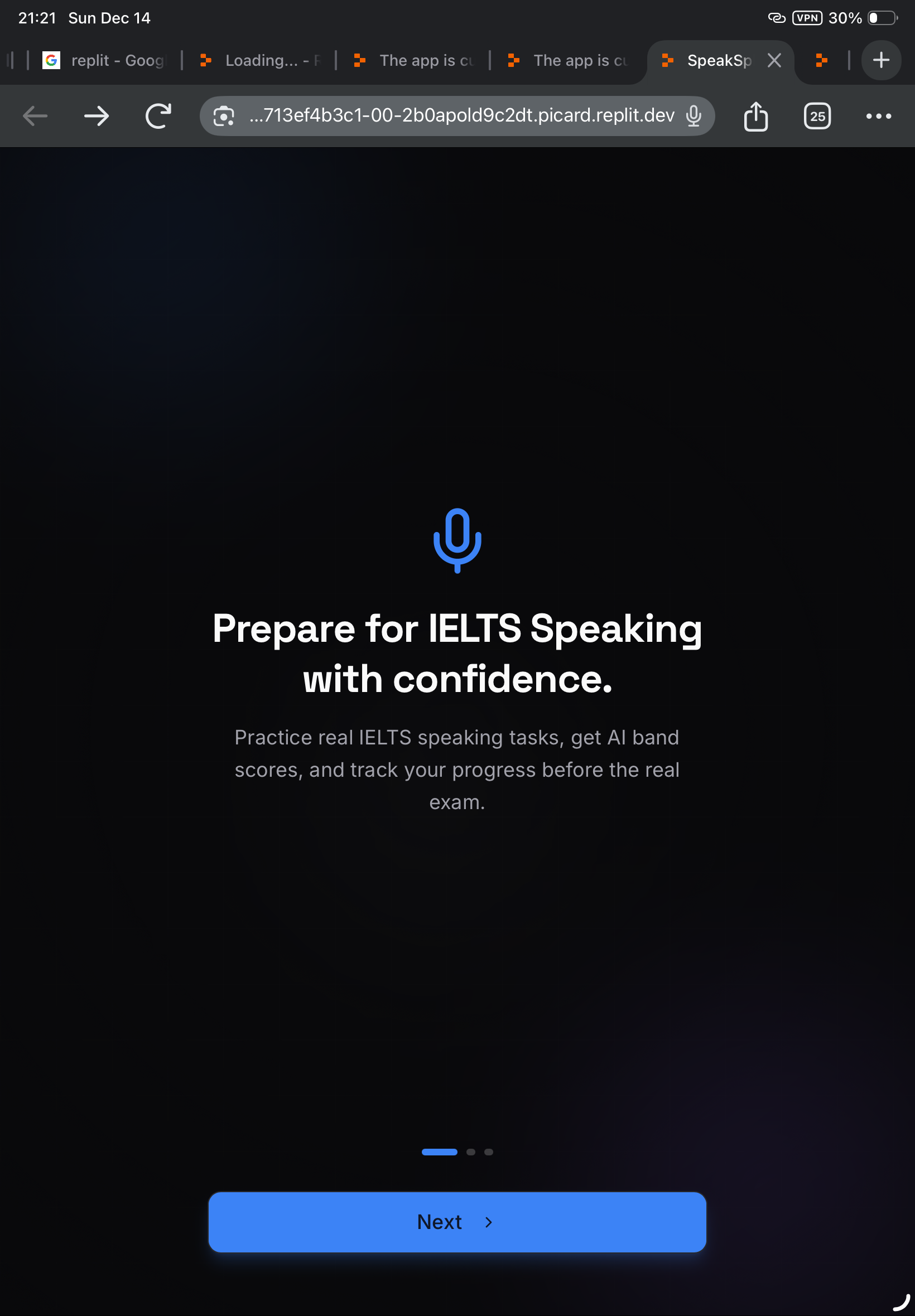
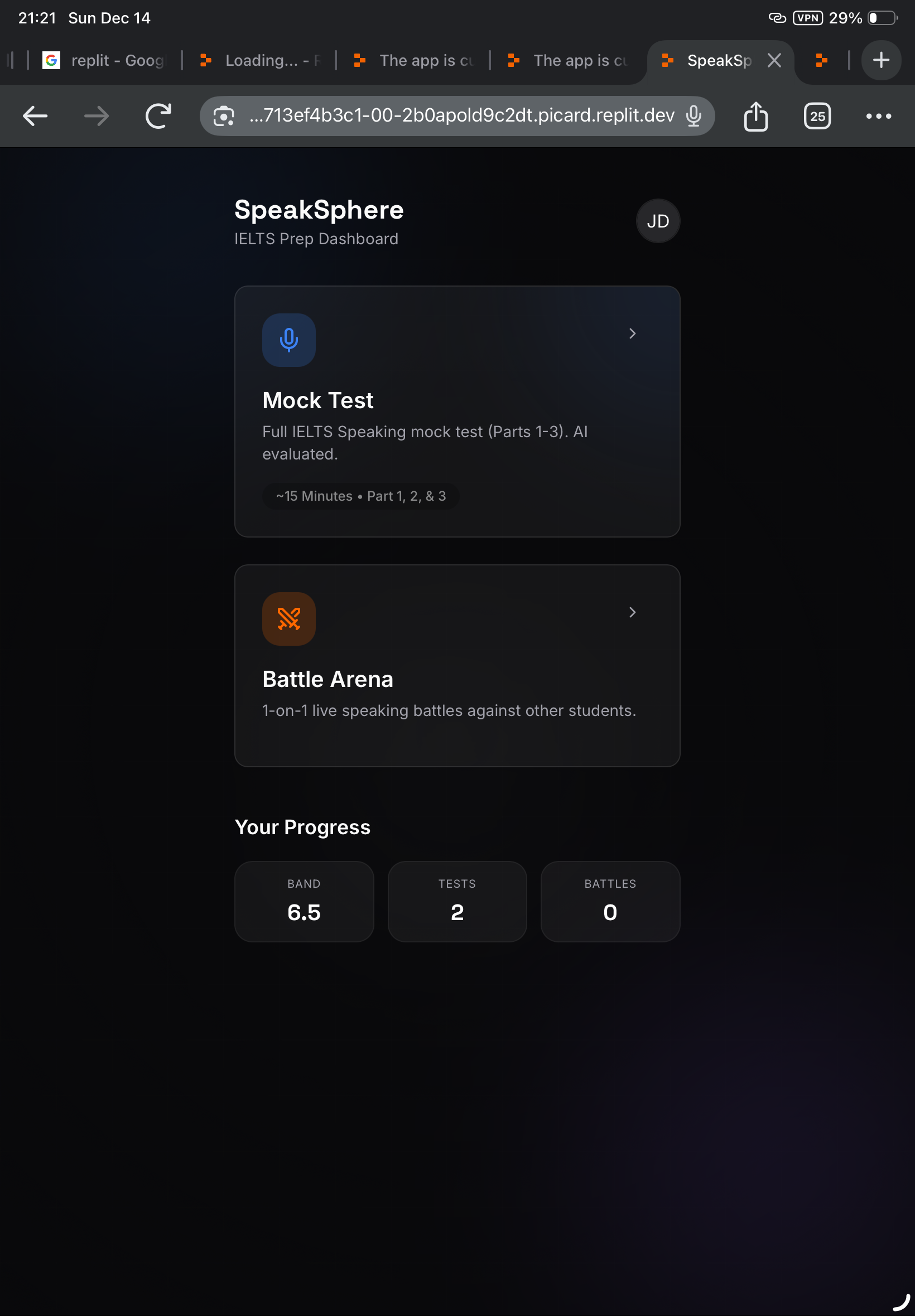
SpeakSphere is an AI-powered IELTS speaking practice platform designed specifically for IELTS test takers.
It offers:
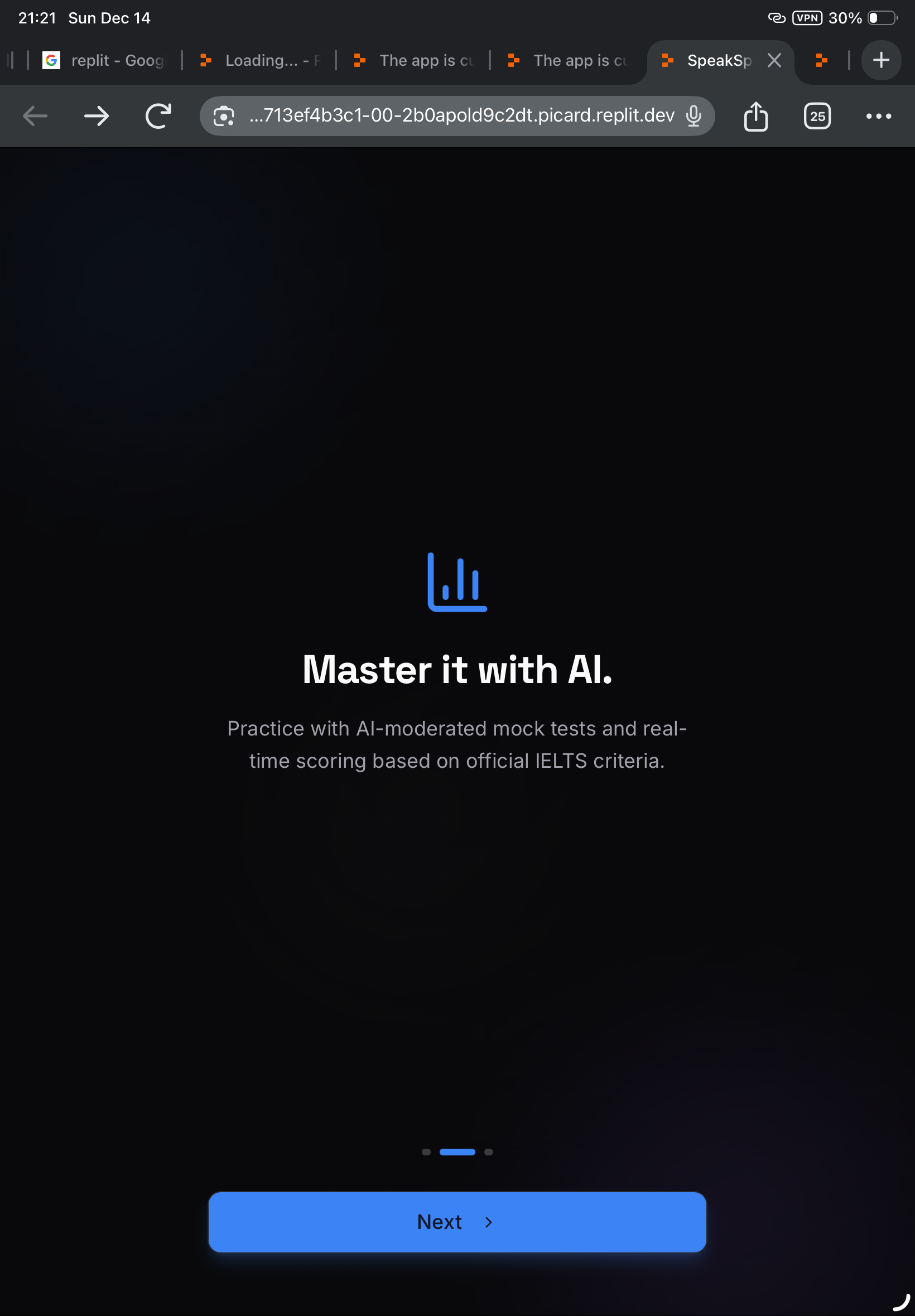
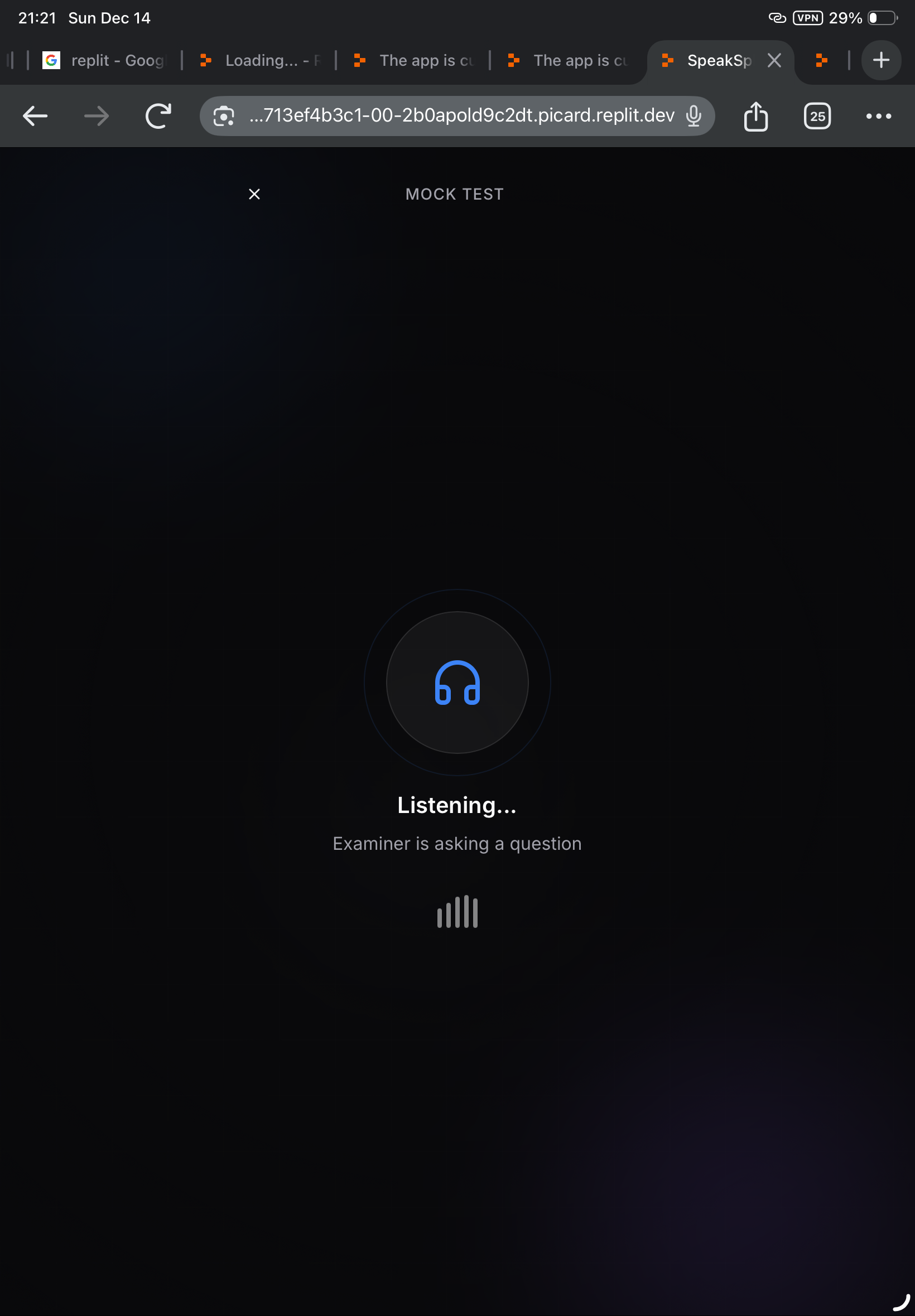
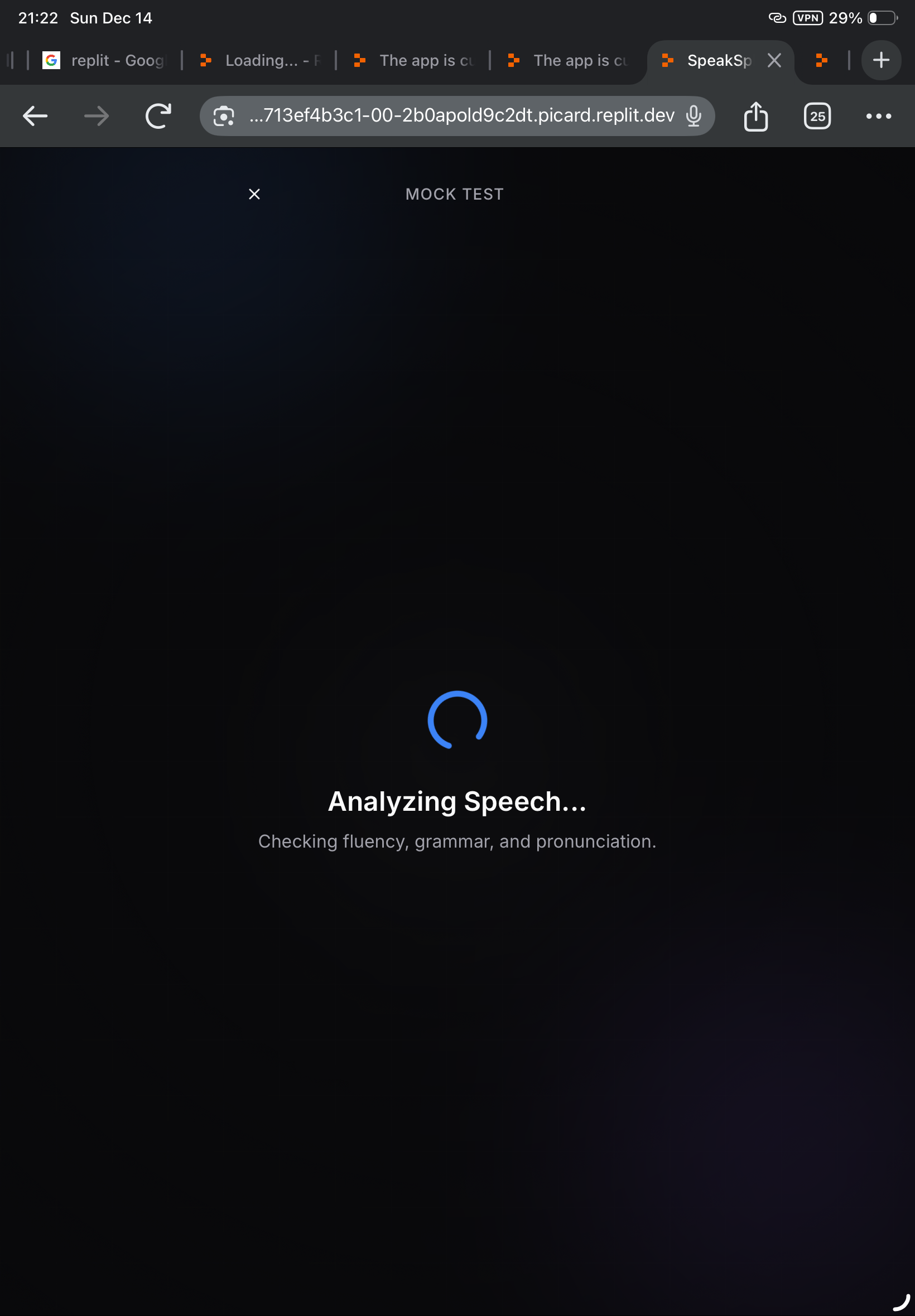
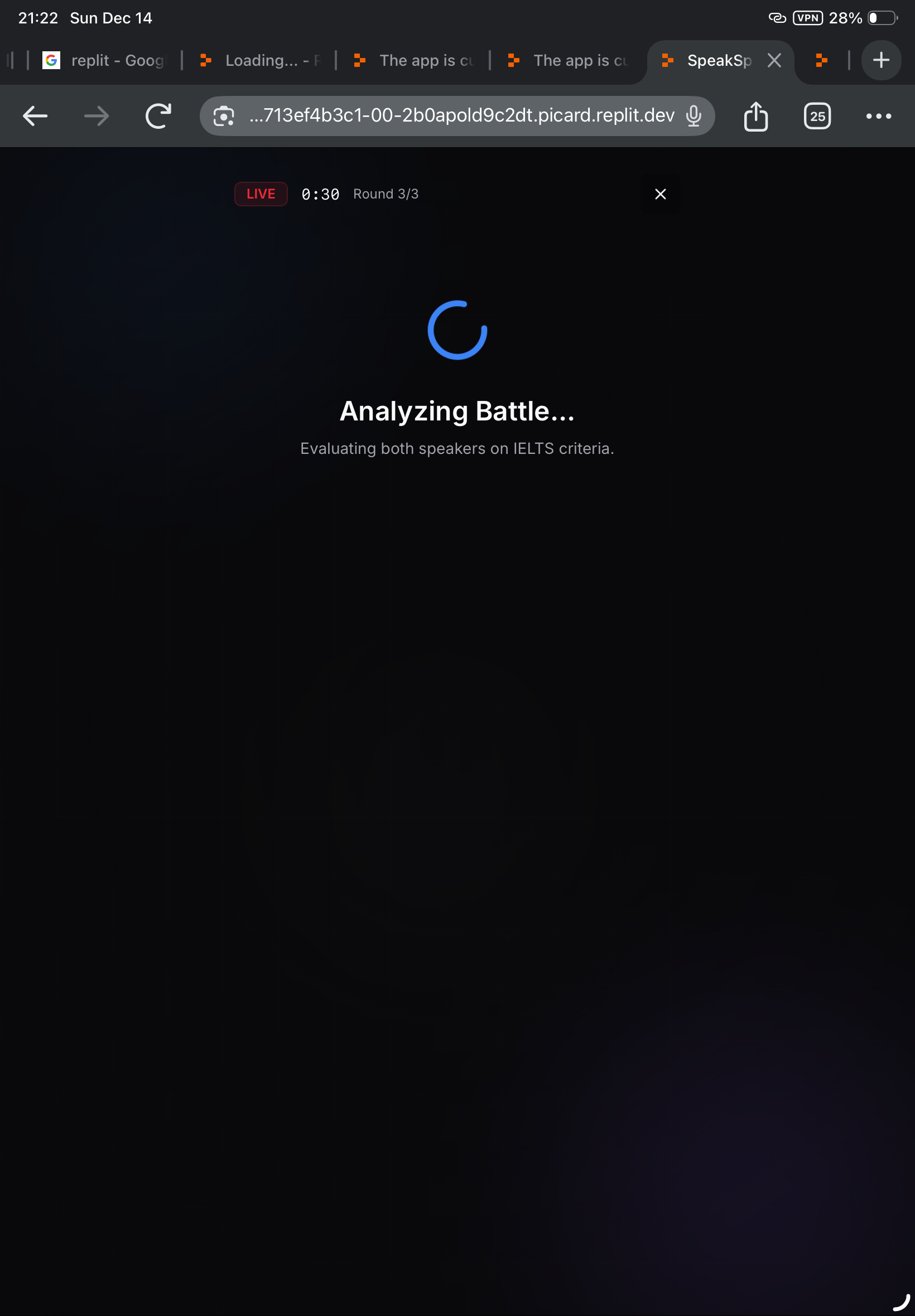
- Full IELTS speaking mock tests with AI-based evaluation
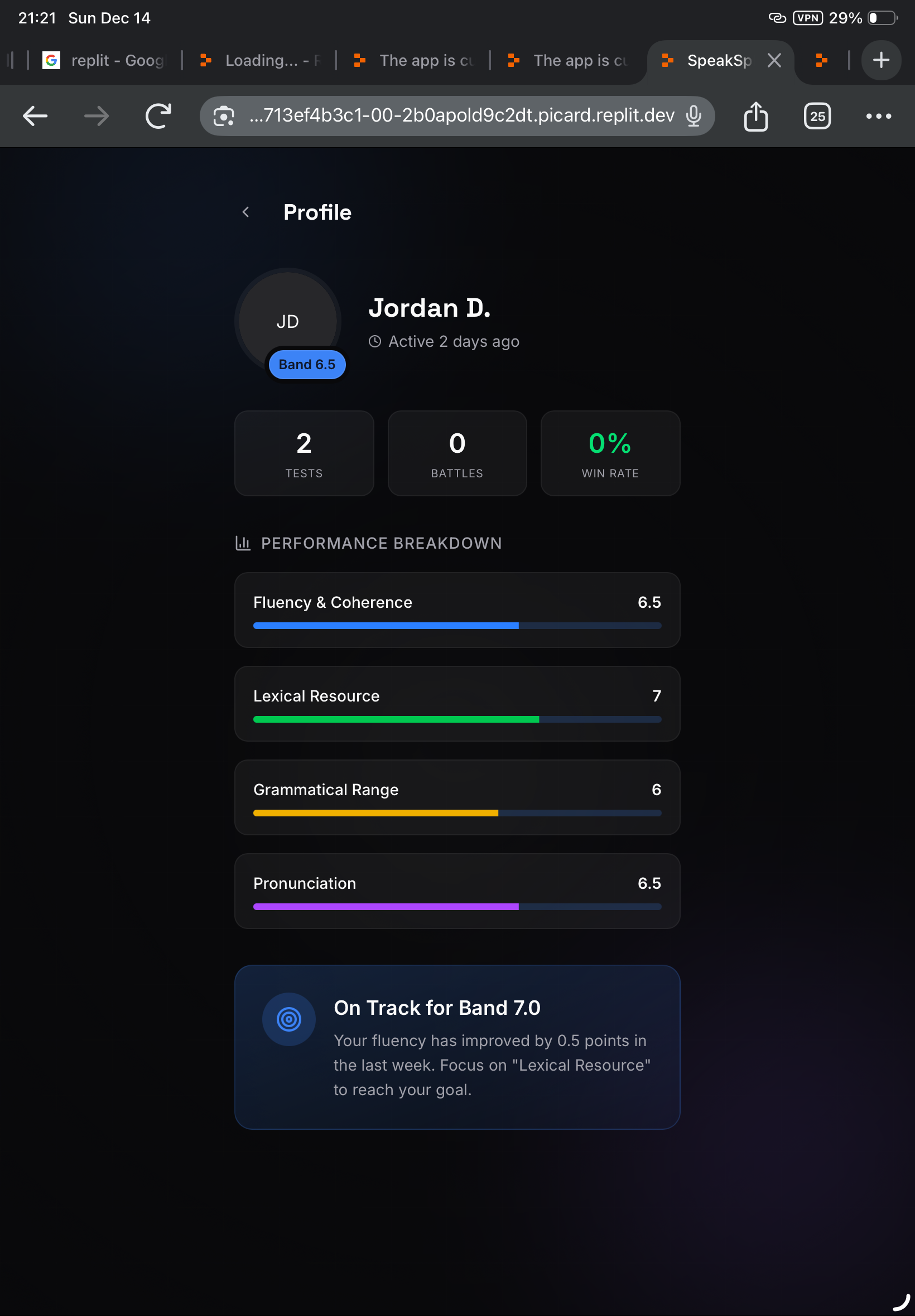
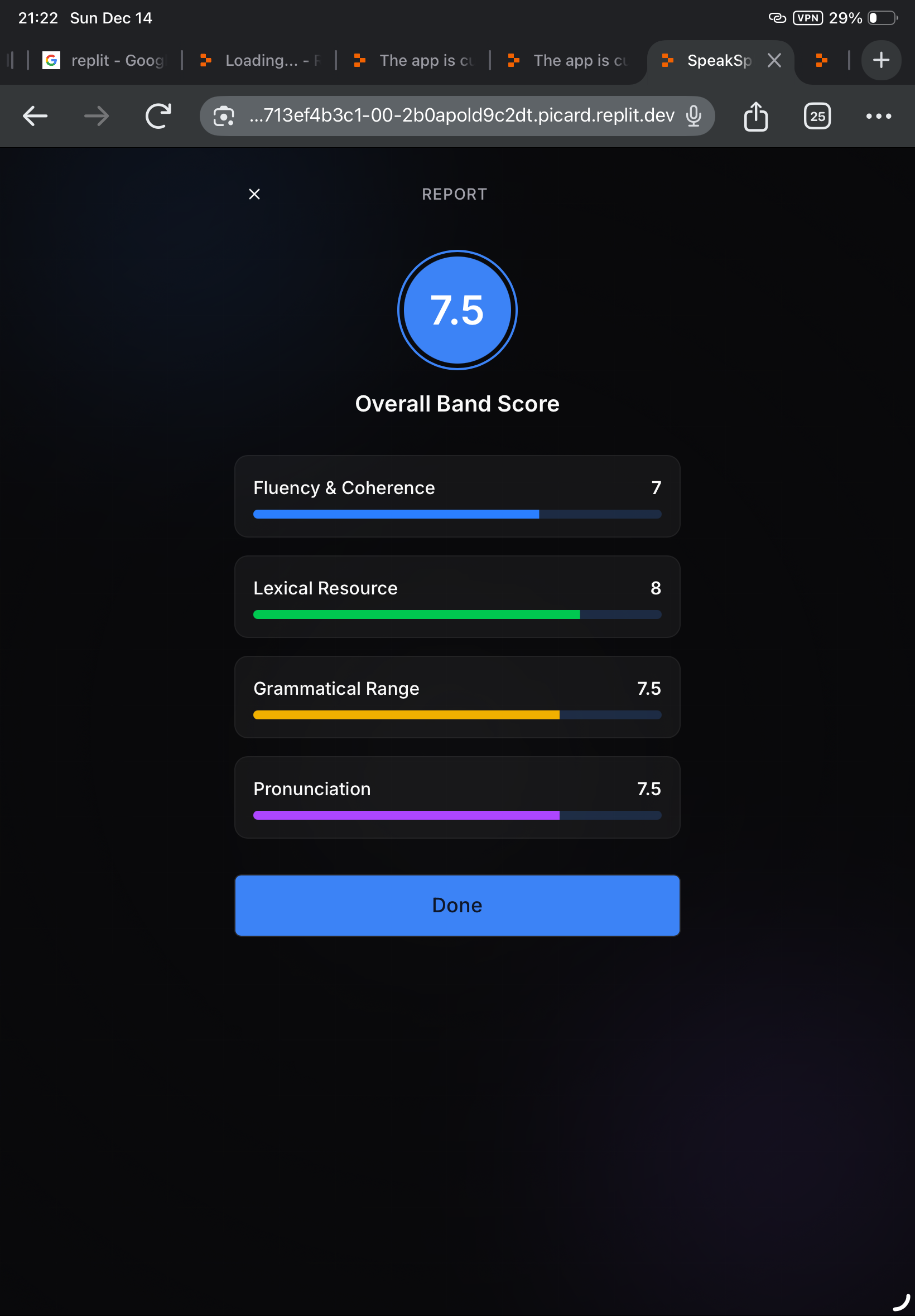
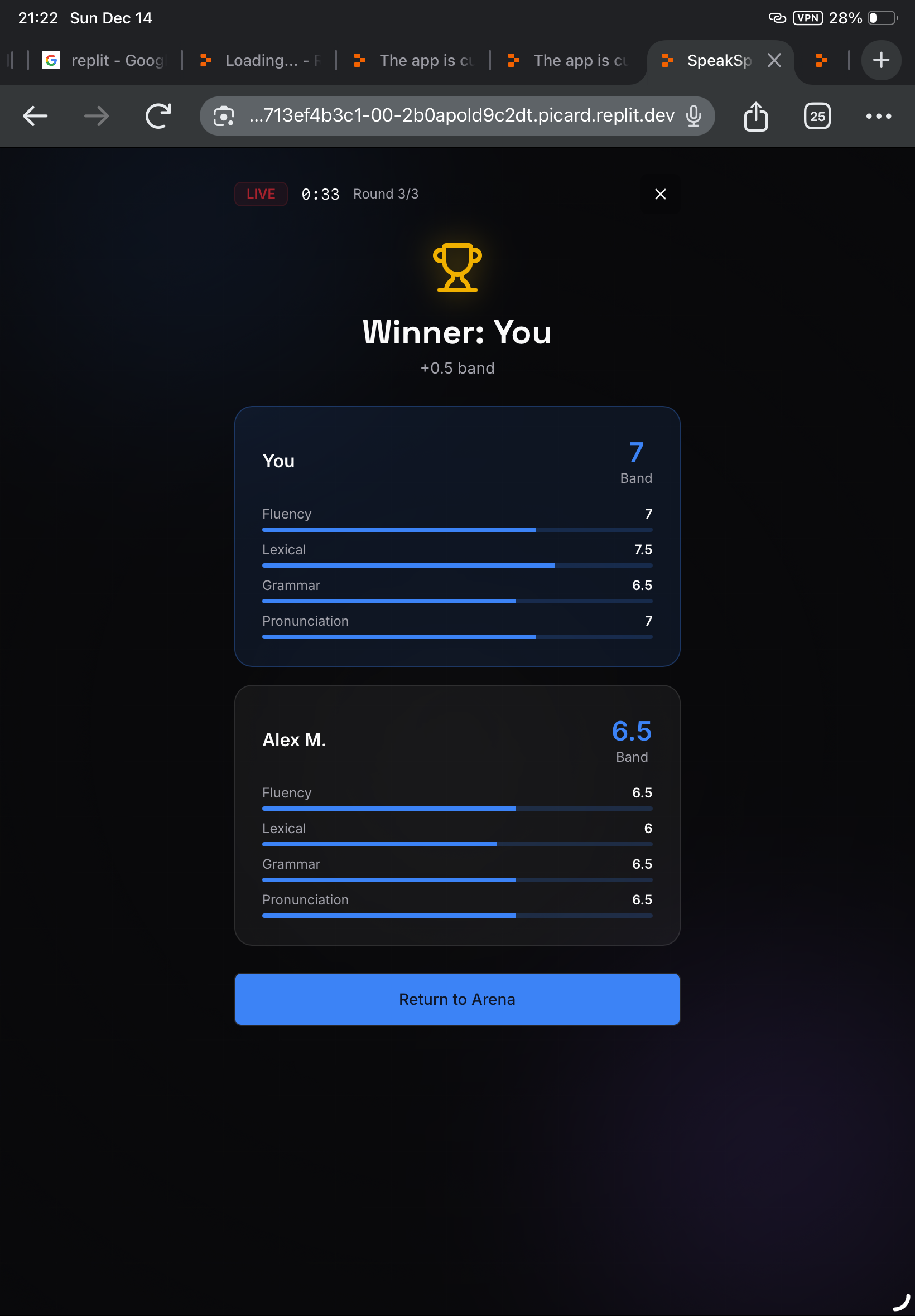
- Instant band scores for all four IELTS speaking criteria:
- Fluency & Coherence
- Lexical Resource
- Grammatical Range & Accuracy
- Pronunciation
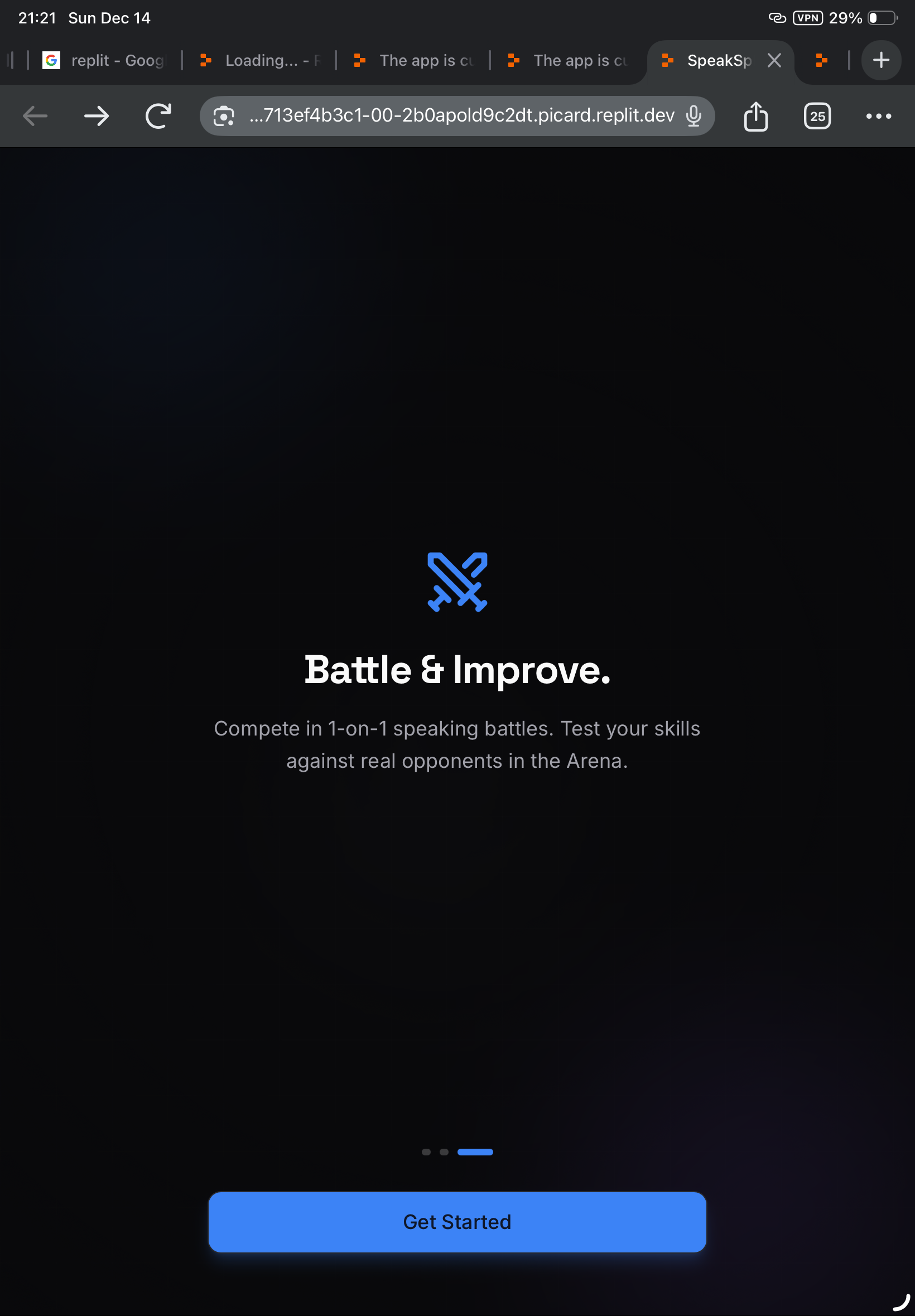
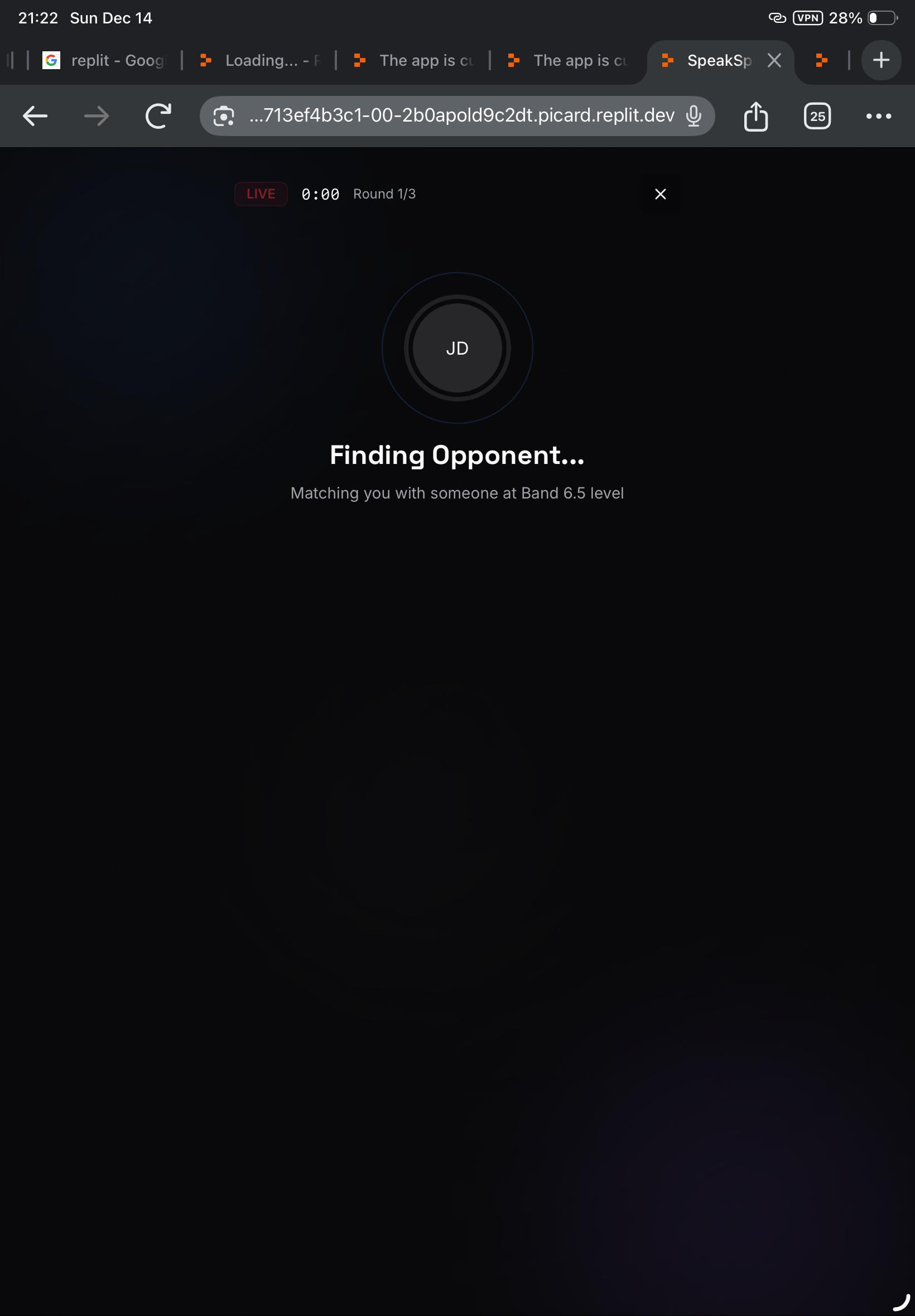
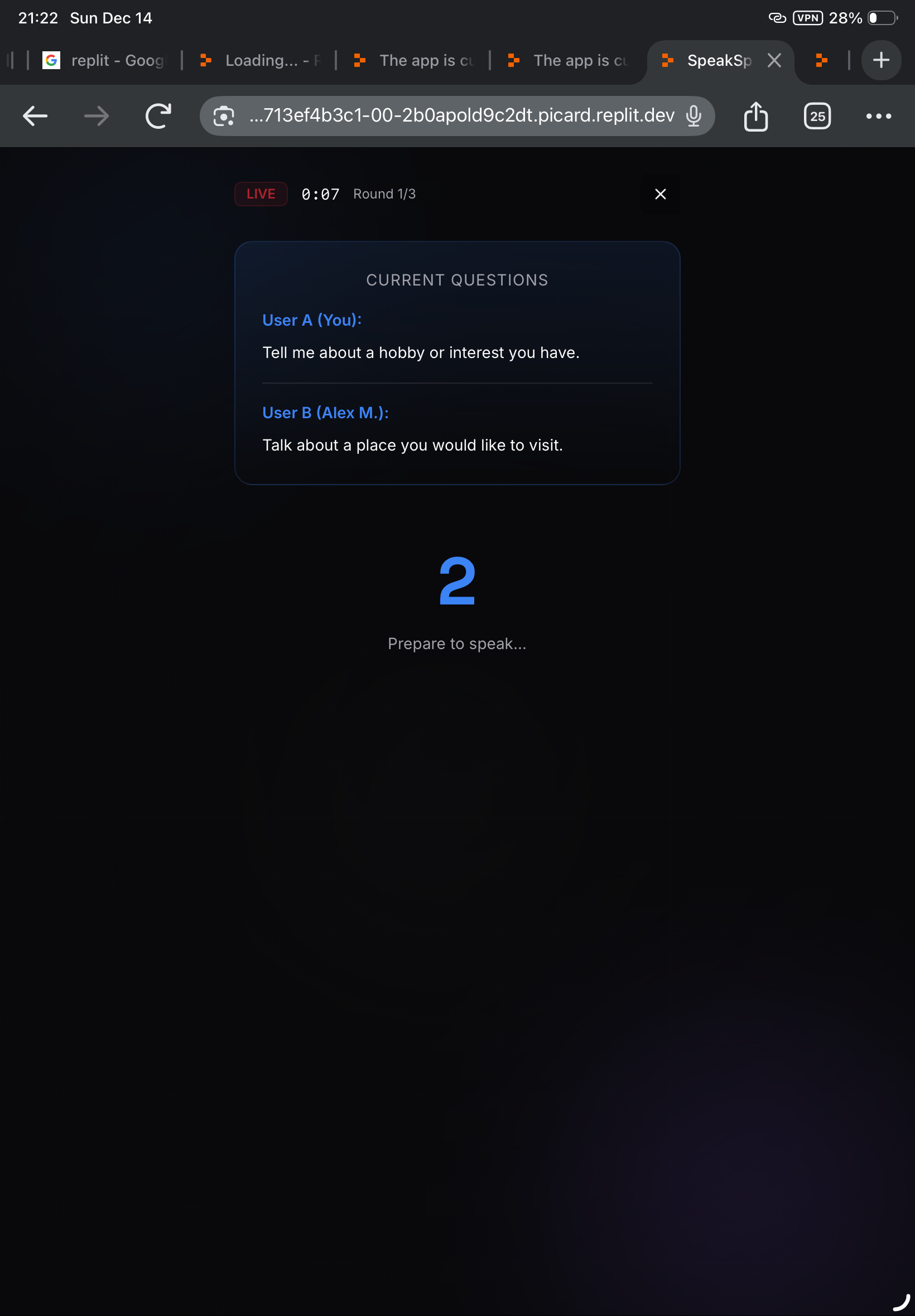
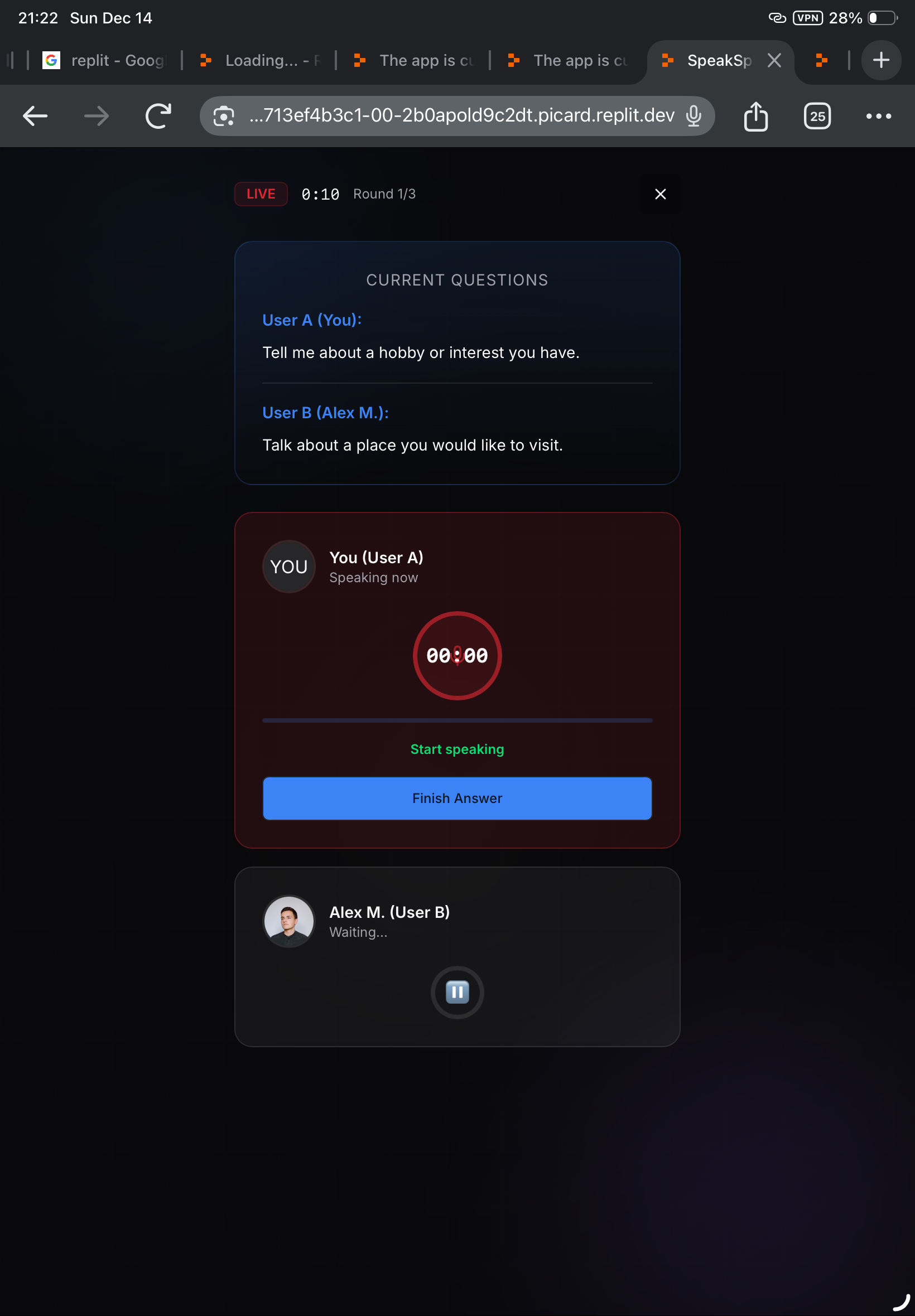
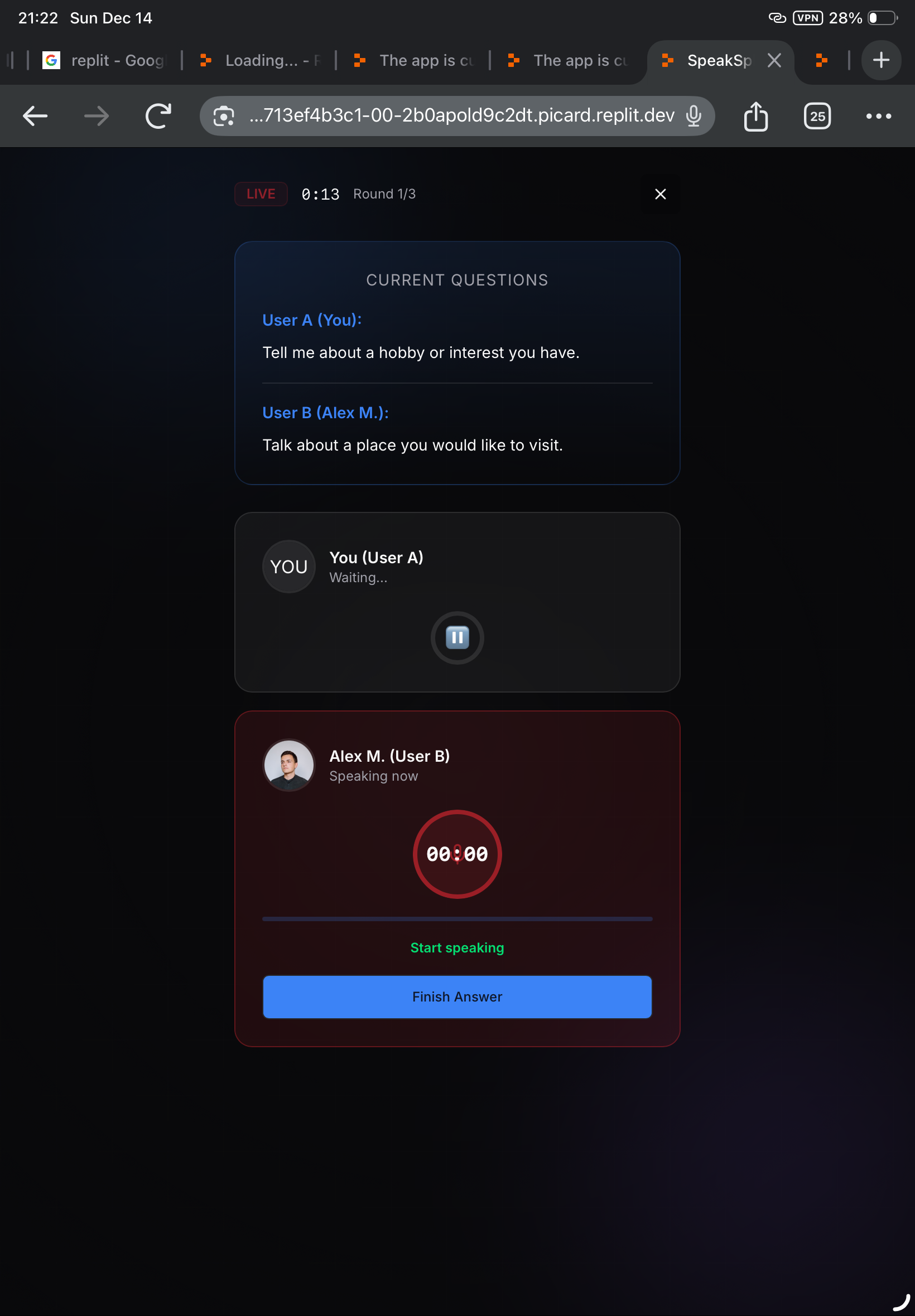
- 1-on-1 live speaking battles, where students with similar band levels compete by answering the same IELTS-style questions in turns
- Smart matchmaking based on previous mock test results
- Affordable mock tests that can be taken anytime and anywhere
By combining realistic practice with competition, SpeakSphere helps learners build confidence and track progress before taking the real exam.
How I Built It
For this hackathon, I focused on building a working demo that clearly communicates the core idea and user experience.
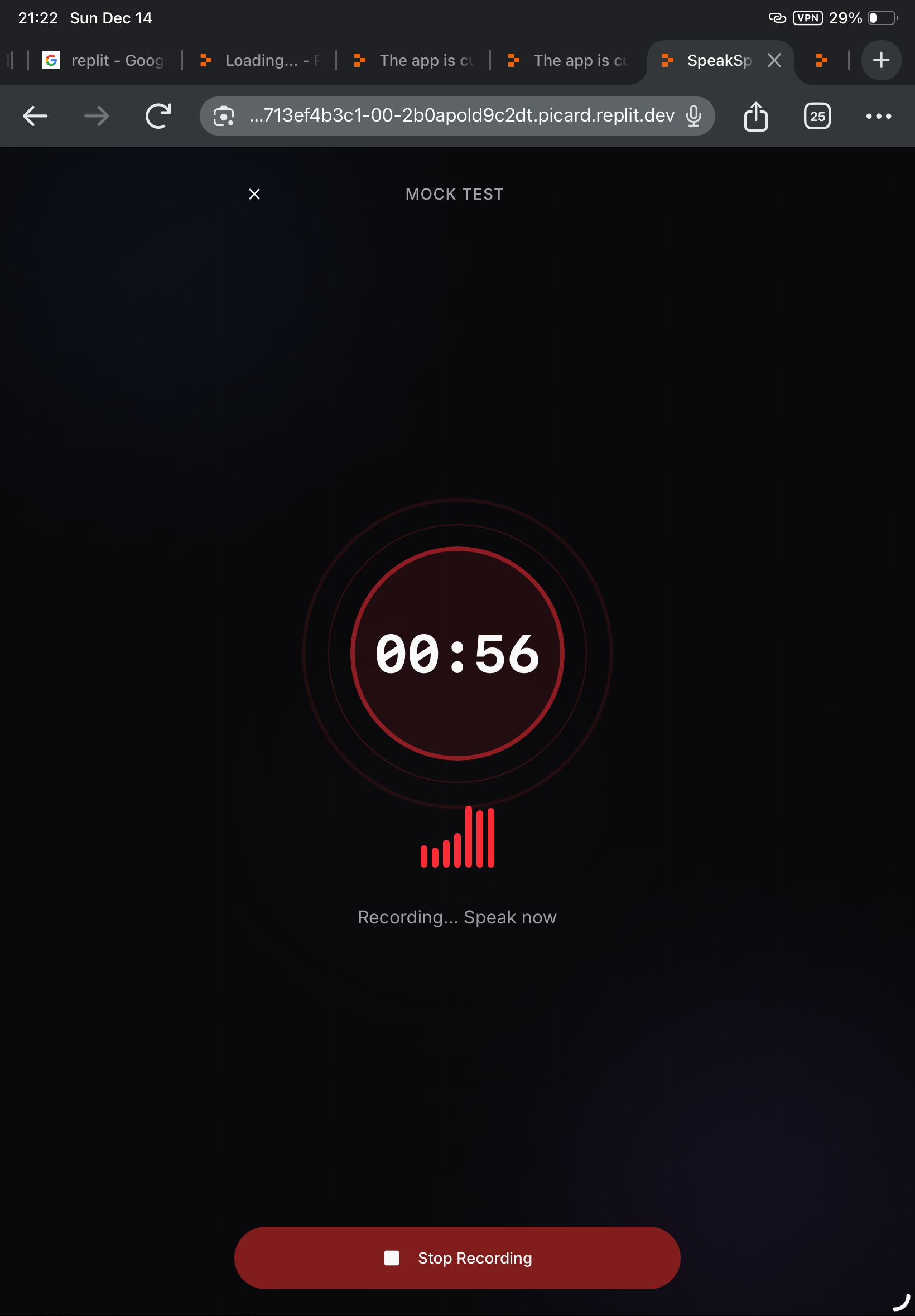
- Figma was used to design the UI and user flow, including onboarding, mock tests, profile pages, and the battle arena
- Replit was used to prototype the interactive logic and simulate AI behavior
- AI components such as speech prompts, scoring, and analysis were mocked to demonstrate how the real system would work in production
- The app was designed with a dark, minimalist interface to feel premium and focused, avoiding distractions
The battle arena was carefully designed to simulate a real IELTS experience:
- Both users see the same question
- Questions are spoken by AI and shown visually
- A countdown signals when to start speaking
- Users take turns answering and control when they finish their response
Challenges Faced
One of the biggest challenges was designing a clear and realistic speaking flow that judges could understand quickly. IELTS speaking is interactive and turn-based, which required careful UI and state management even in a demo environment.
Another challenge was balancing realism and simplicity. Since this was a hackathon project, real speech recognition and scoring were out of scope, but the experience still needed to feel authentic and believable.
Finally, communicating a region-specific problem (limited access to speaking practice in Uzbekistan) in a way that resonates globally was an important challenge.
What I Learned
Through building SpeakSphere, I learned how important clear interaction design is when working with conversational AI products. Even small UI decisions — such as when a question appears or how turns are controlled — have a huge impact on user understanding.
I also learned how to translate a real-world educational problem into a product that is both technically feasible and impactful, even within the constraints of a hackathon.
Future Vision
In the future, SpeakSphere can be expanded with:
- Real-time speech recognition and AI-based scoring
- Detailed feedback and improvement suggestions
- More regional language support
- Community features and long-term progress tracking
SpeakSphere aims to make high-quality IELTS speaking practice accessible to students everywhere, regardless of location or financial background.

Log in or sign up for Devpost to join the conversation.