-
-
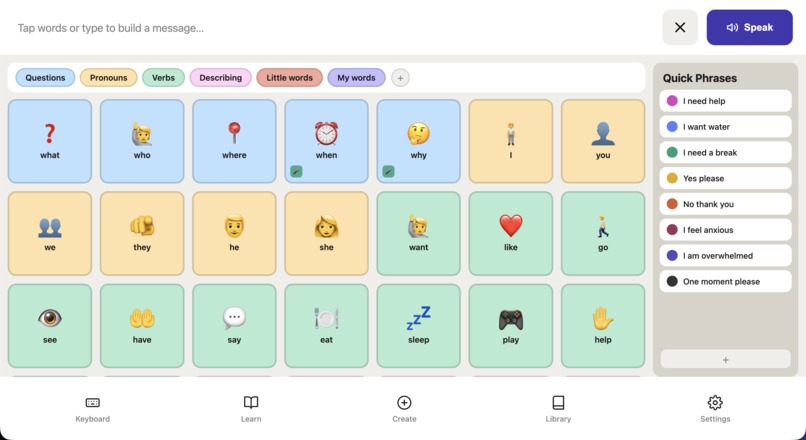
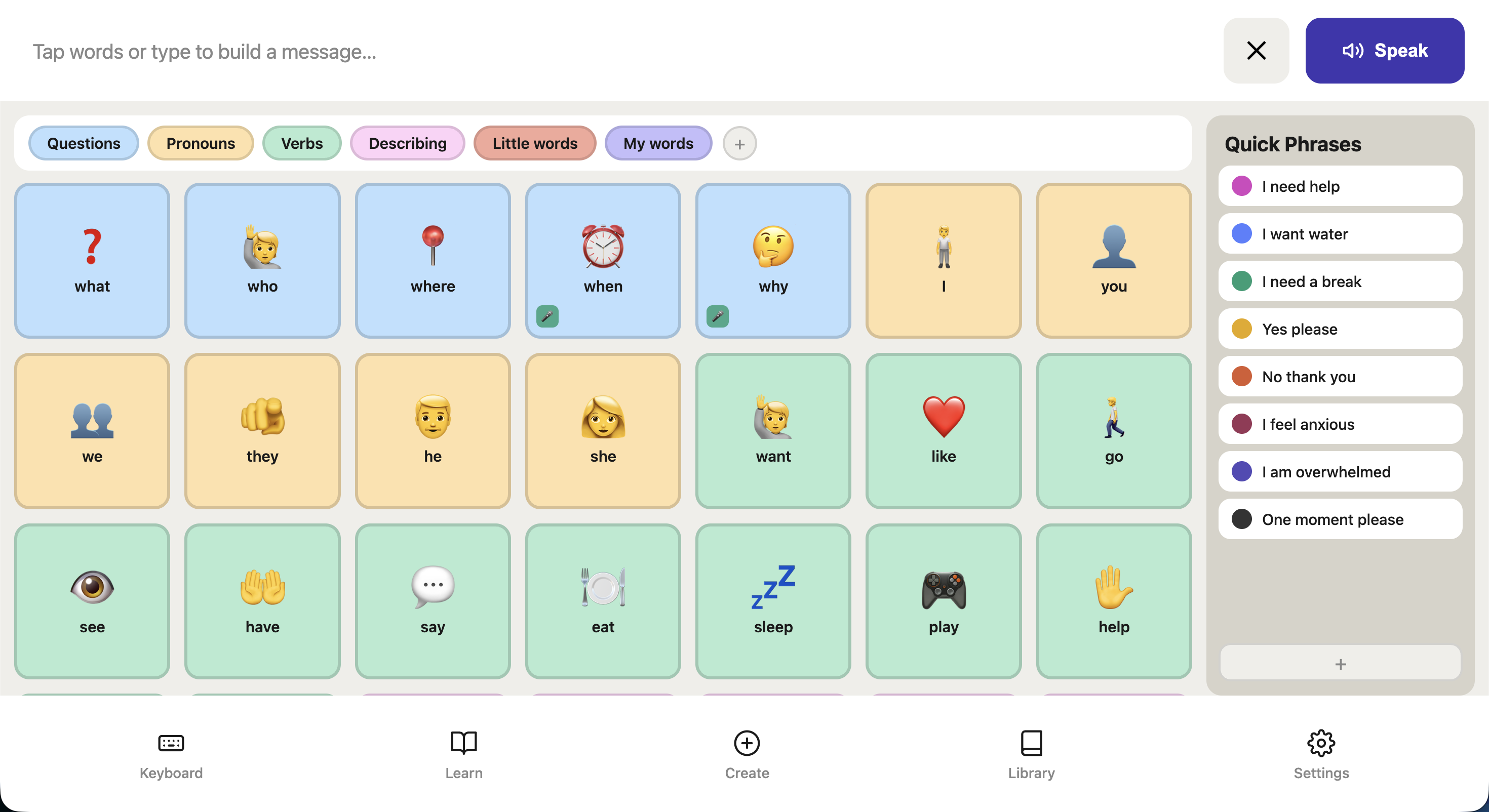
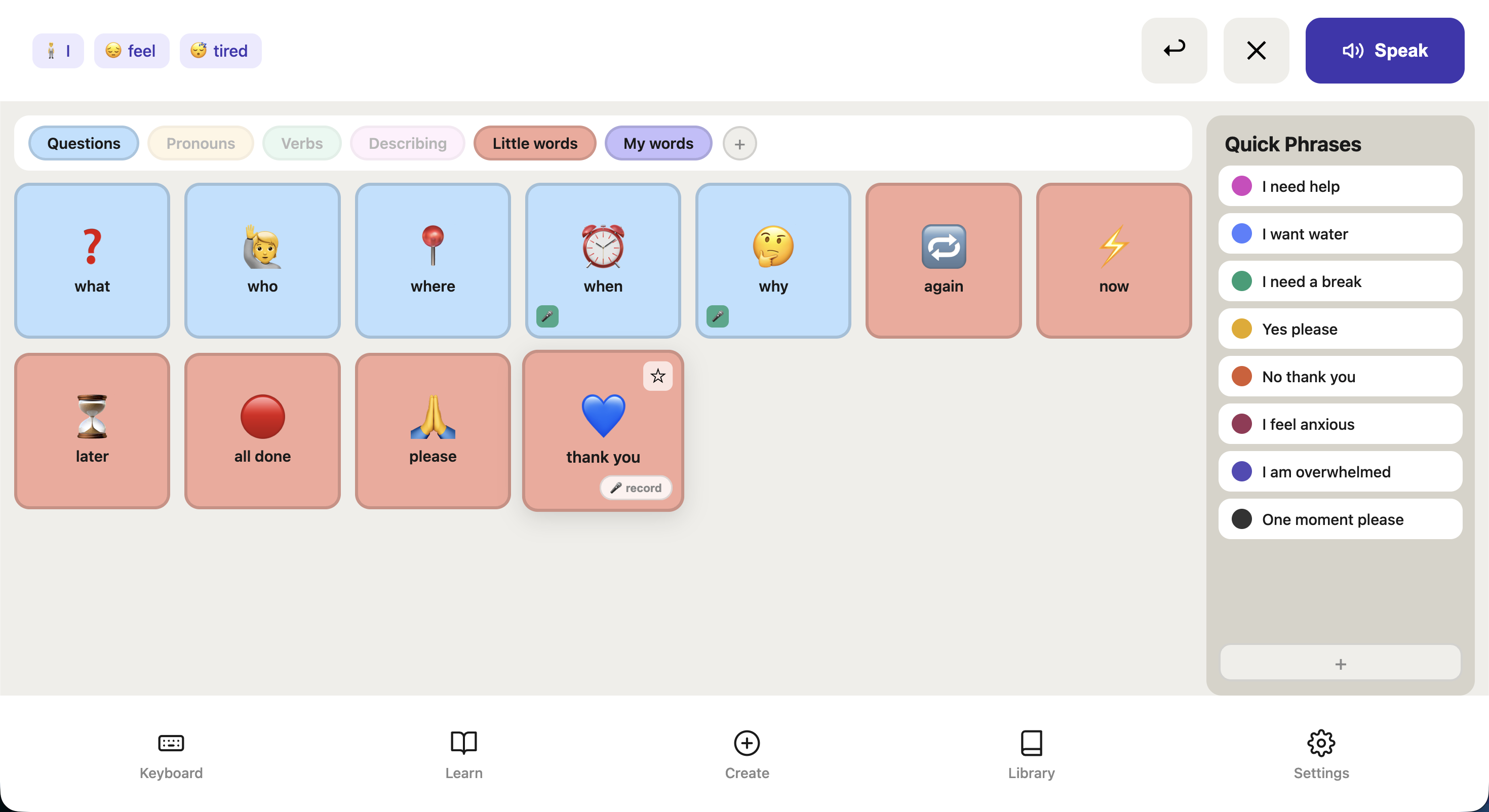
Home Page
-
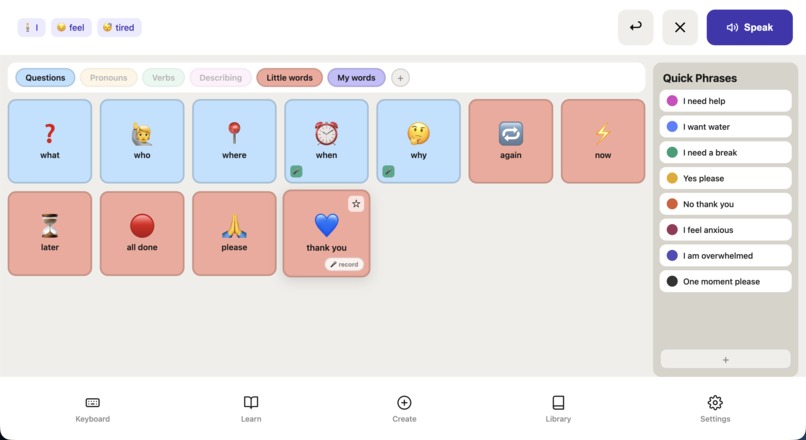
Filters between word cards
-
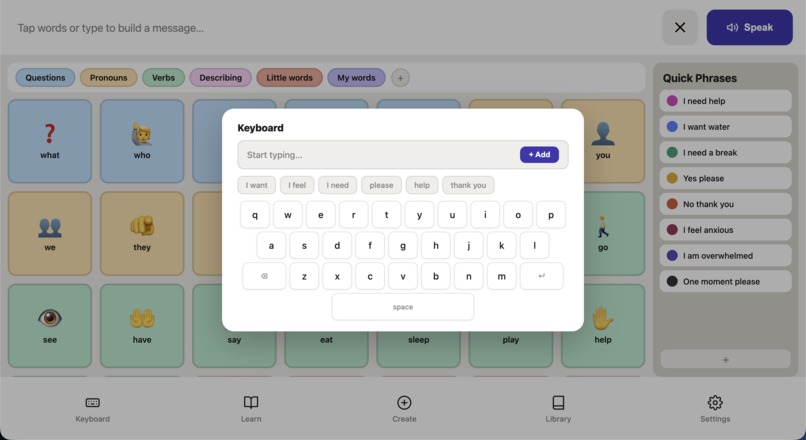
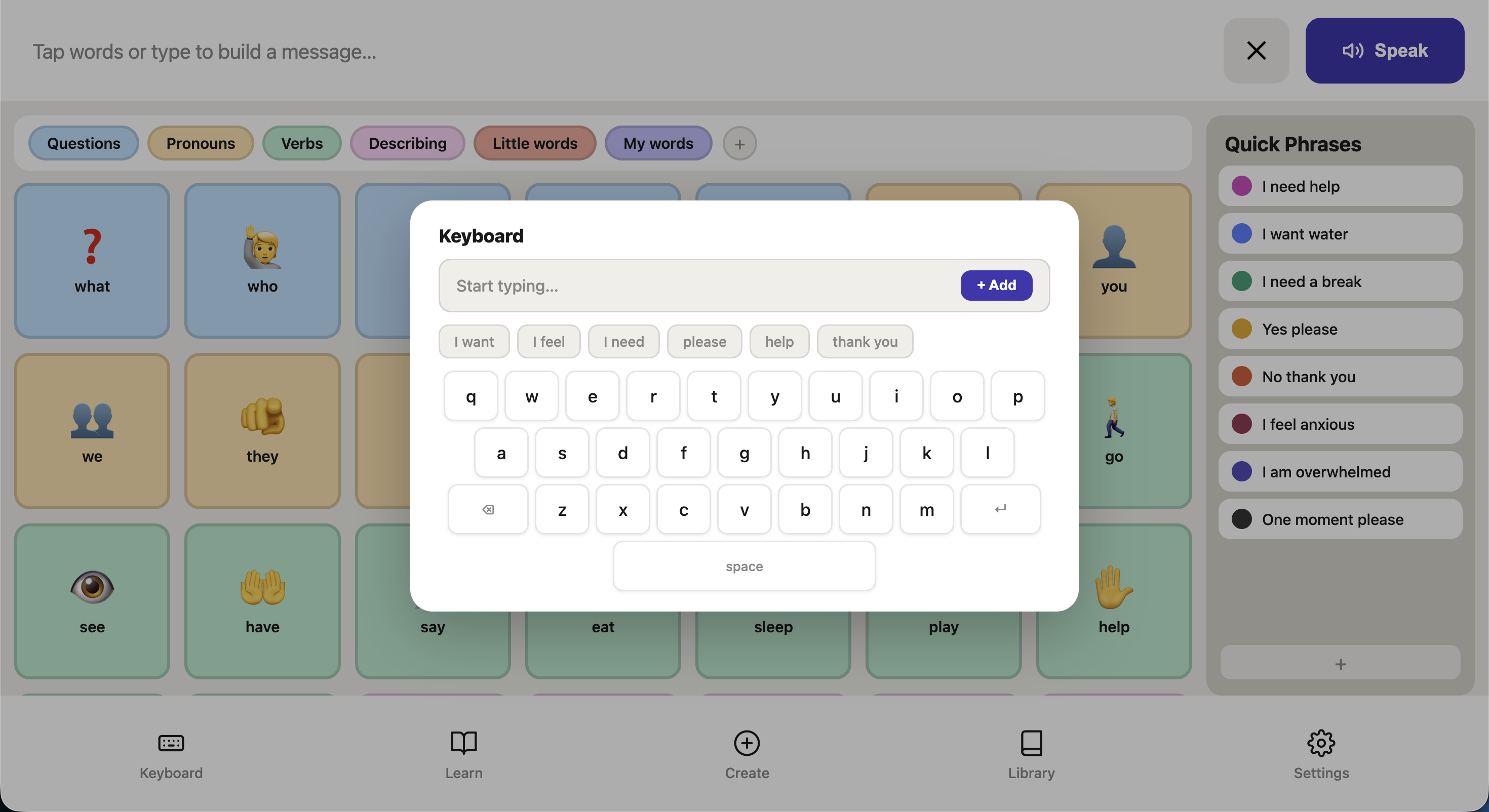
Keyboard Pop Up
-
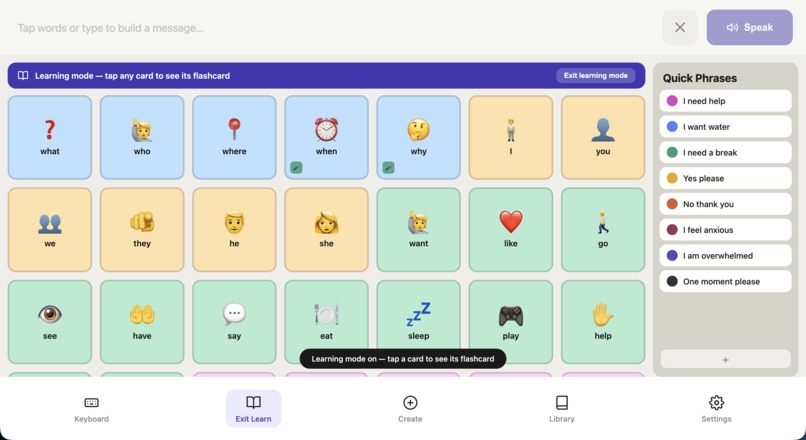
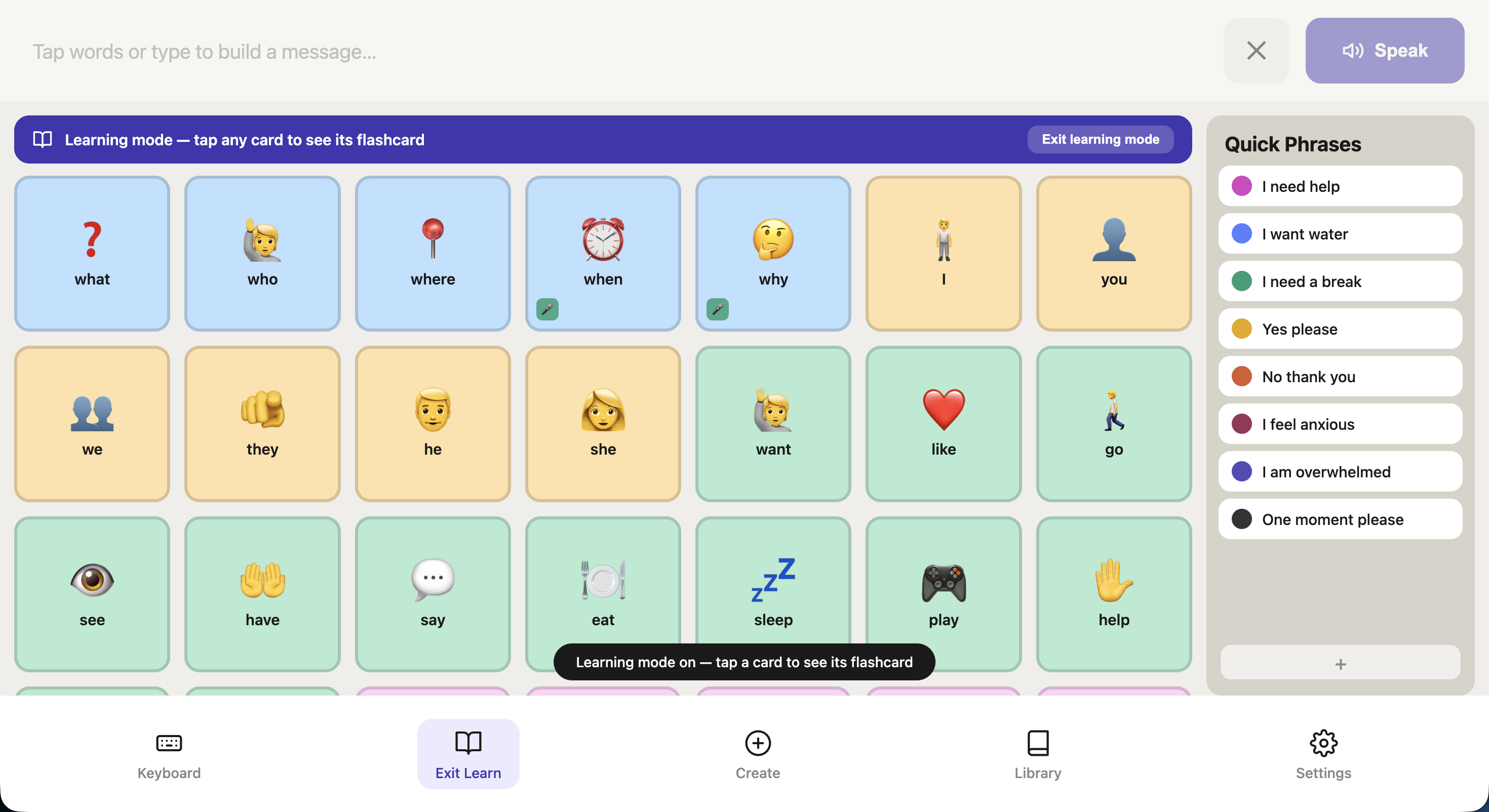
Learning Mode
-
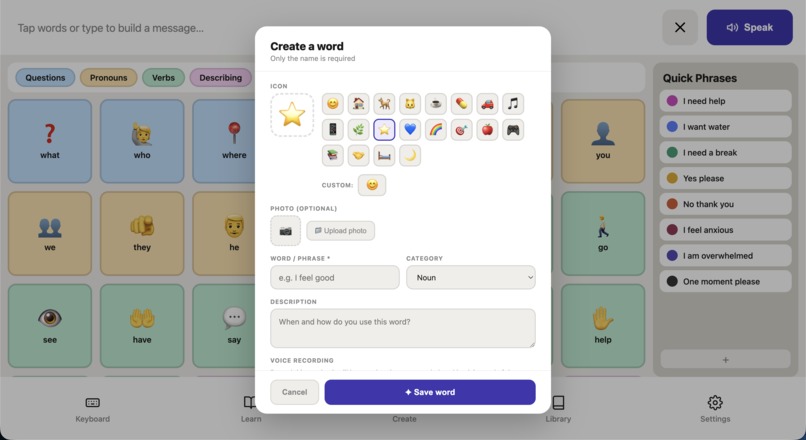
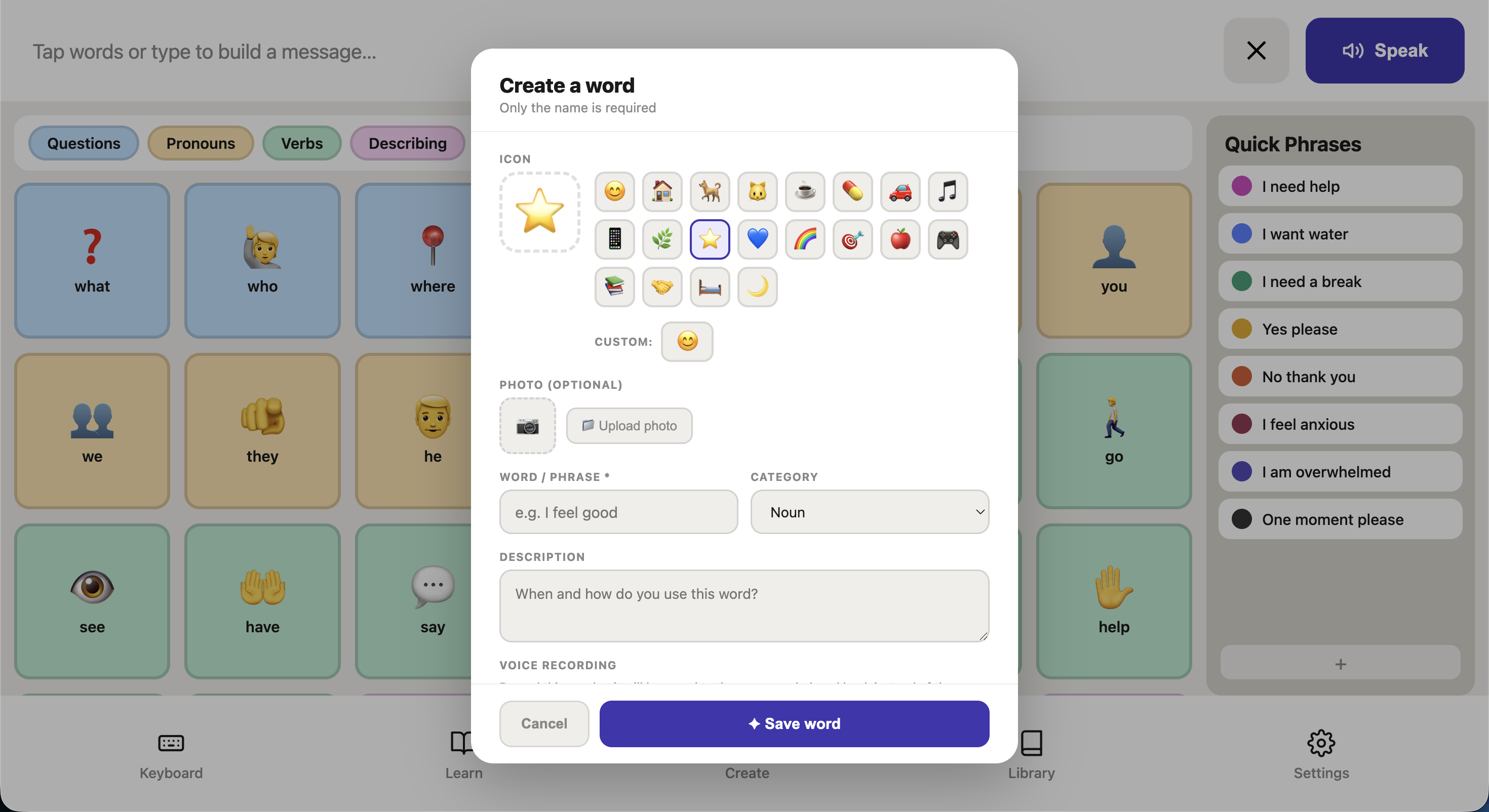
Create New Word
-
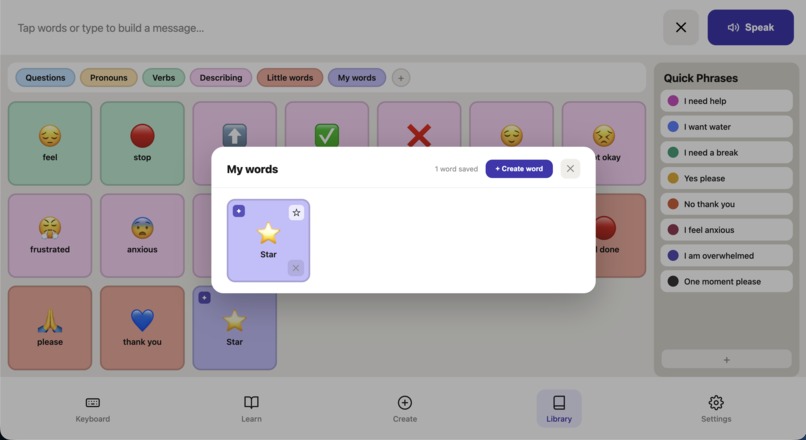
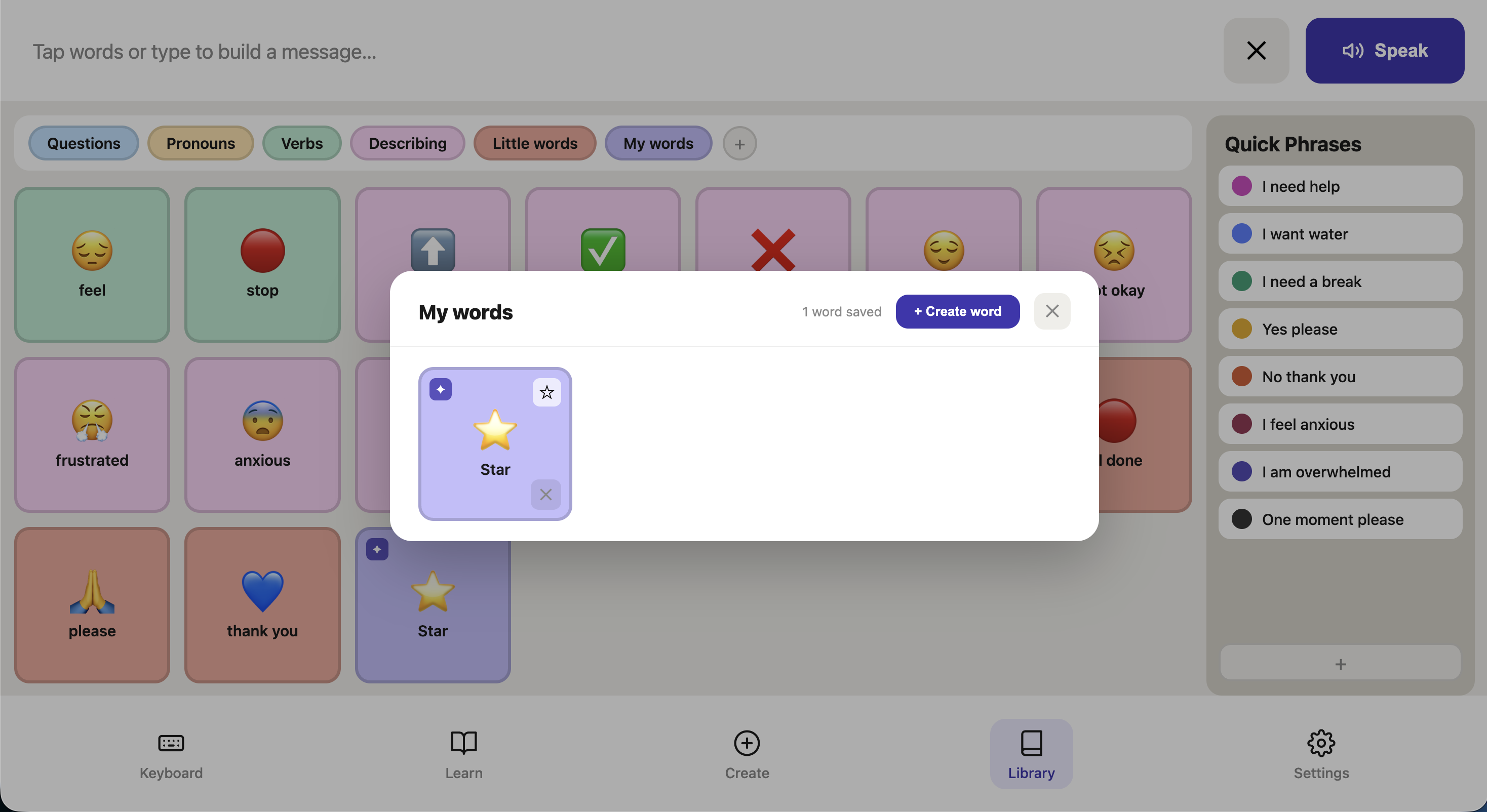
Word Library
-
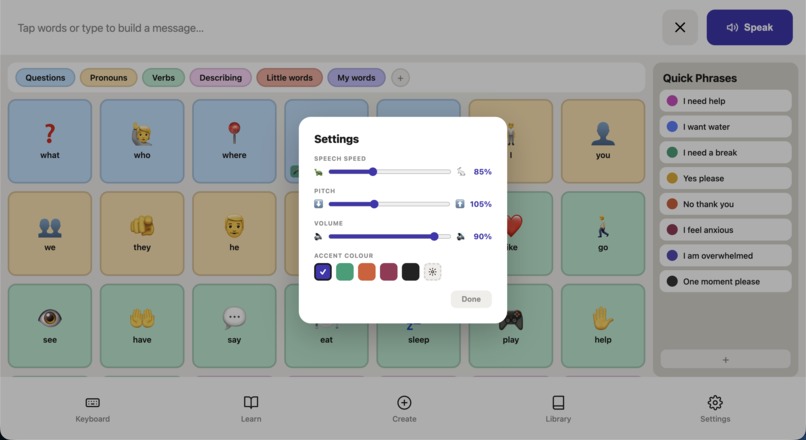
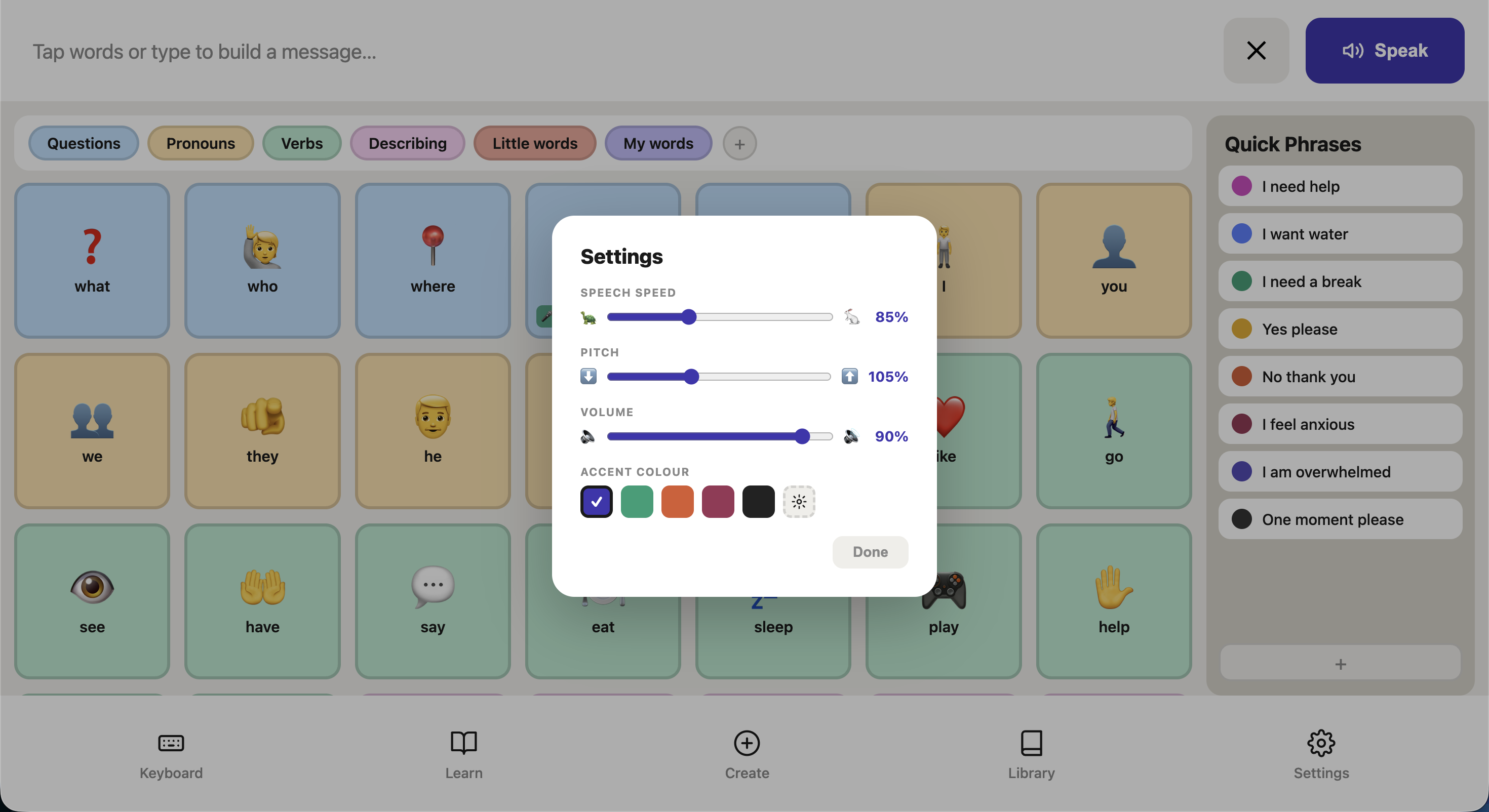
Settings
Inspiration
Inspired by the health theme of this hackathon, we explored the assistive tools that neurodivergent individuals rely on every day. That was where we discovered AAC (Augmentative and Alternative Communication) devices, tools that help individuals with speech impairments express themselves. They can take various forms, with some ranging from low-tech picture boards to high-tech speech-generating apps and dedicated tablets. The more we researched into these devices, the more we realized there was a critical problem with most of them. Firstly, not many apps like this exist, and of the few that do, most look almost identical: a simple, child-like display with word cards just laid out in a classic grid. Buttons fill the screen, strong bold colors clash, and icons/images that haven't changed since the early 2010's. Most of these devices are targeted towards children, and there are major flaws with that. On top of that, most are locked behind steep price tags, often starting at $250 or more. We set out to redesign that old interface, but this time, with an adult neurodivergent person in mind.
What it does
Speakr is an AAC communication tool designed for young adults with speech or language disabilities. It serves as not just an AAC device, but also a learning app, with a learn feature built in, allowing users to learn words through the cards and definitions. Users can tap word cards to build sentences and speak them aloud, browse vocabulary by category, and use the built-in Learn mode to explore words through flashcard-style definitions. Caregivers and family members can record their own voice for any word card, so the app speaks in a familiar, comforting voice rather than a robotic one. Also, because Speakr is a website, users are able to access it everywhere, on any laptop, Chromebook, or tablet, without an install.
How we built it
Speakr is built using a Python (PyAudio) and FastAPI backend which handles storing and serving custom voice recordings uploaded directly from the user's microphone via the browser. Our frontend is built in HTML, CSS, and vanilla JavaScript, which makes it fast and accessible. Audio recordings are saved server-side as .webm files and played back whenever a word card is tapped, falling back to the browser's built-in speech synthesis when no custom recording exists.
What's next for Speakr
In the future, we aim to bring Speakr to mobile, so that more people can access it on the go. Additionally, we aim to add more educational features that will aid with learning, such as gamified vocabulary learning rounds, to help users build and reinforce language in a low-pressure way. We also hope to add AI-assisted word prediction, suggesting what a user might want to say next based on context and usage patterns, to make communication faster and more natural. Longer term, we'd also want to create caregiver dashboards so families and therapists can track progress and add personalized vocabulary remotely.


Log in or sign up for Devpost to join the conversation.