-
-
-
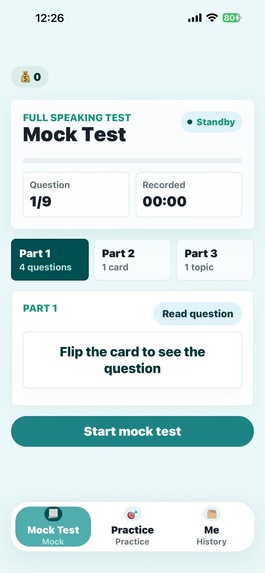
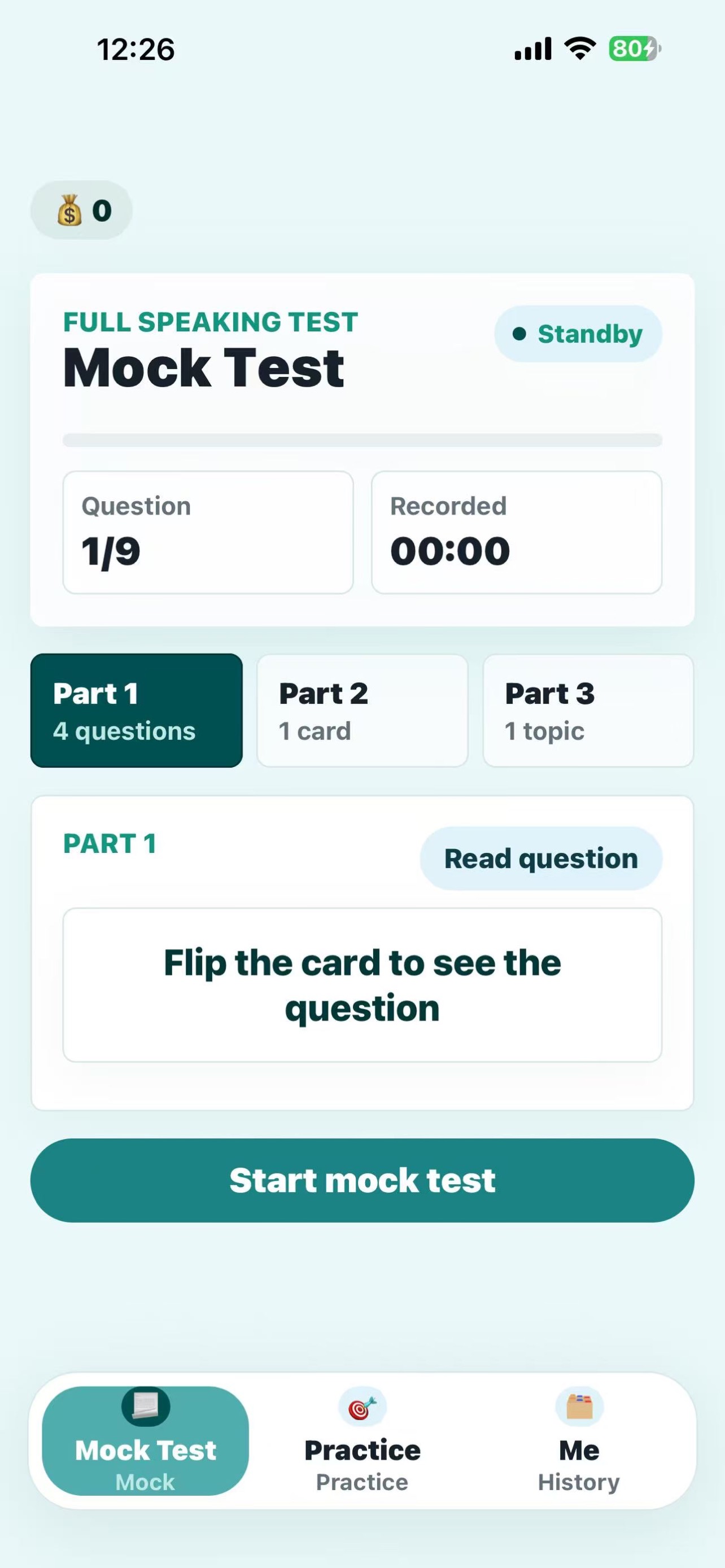
Mock Test Page
-
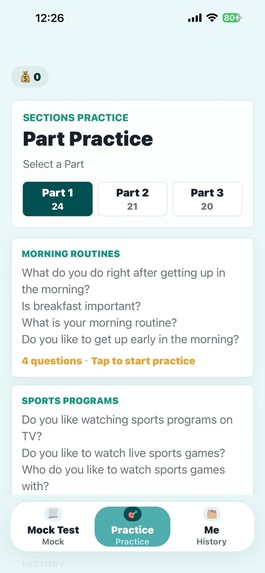
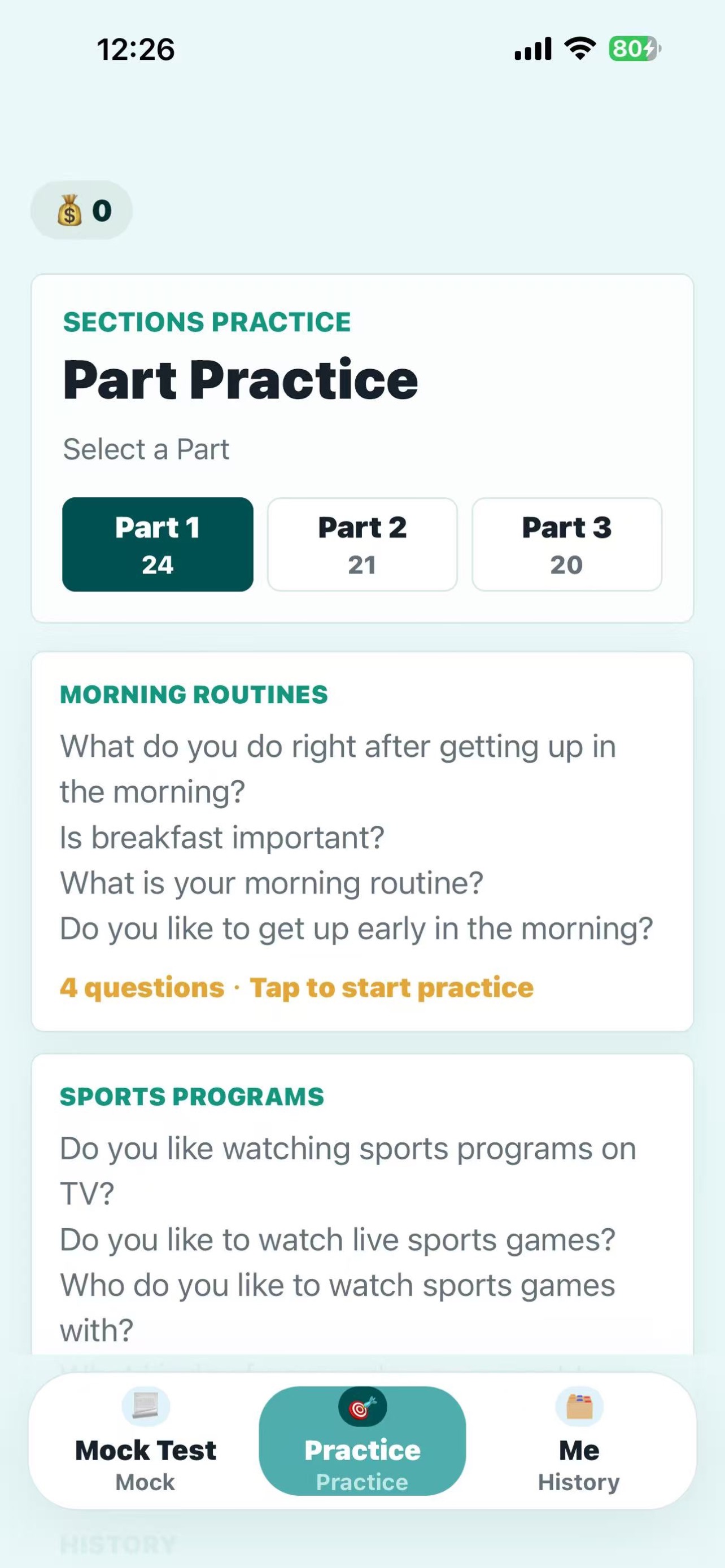
Part Practice Page
-
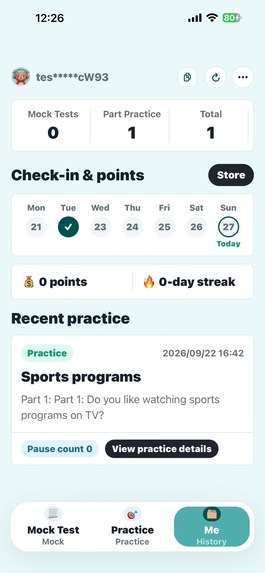
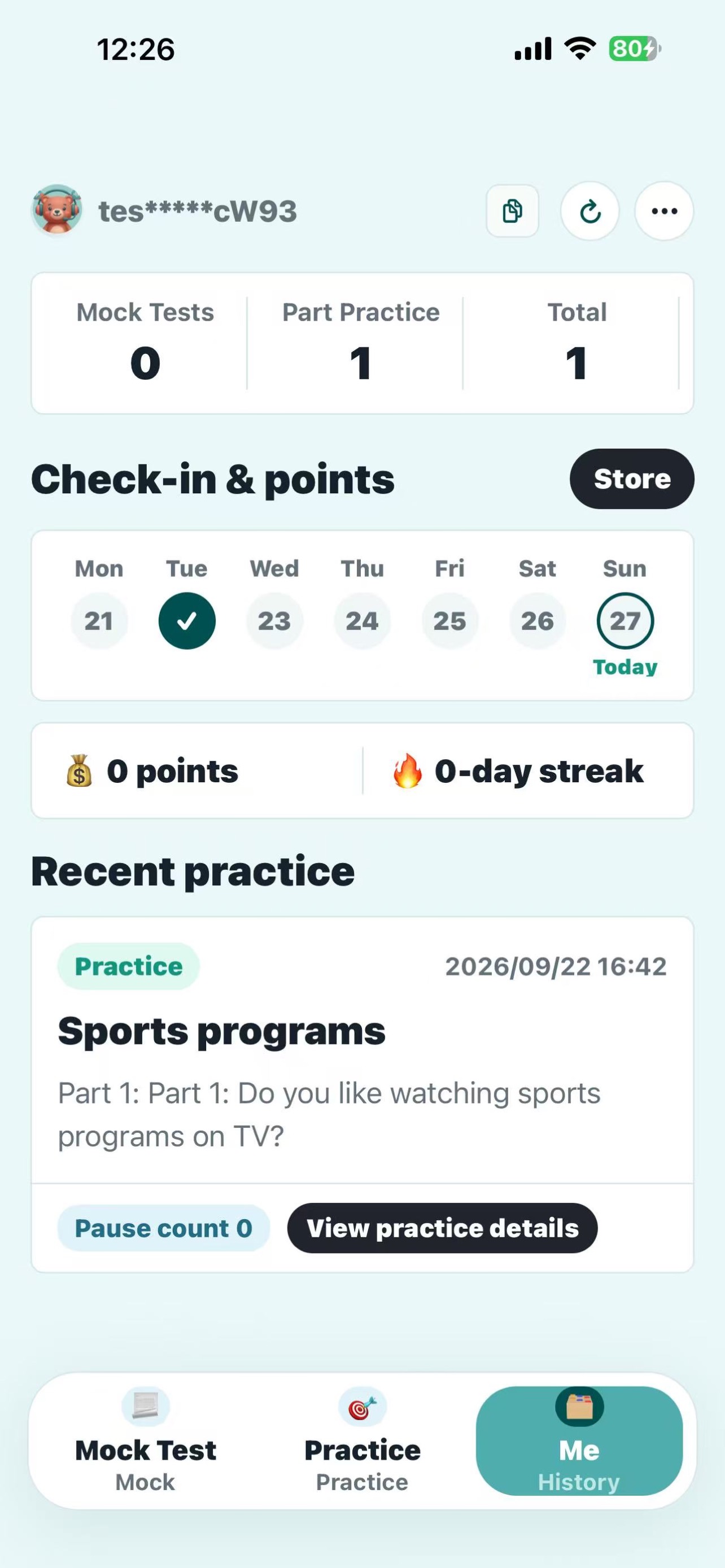
Personal Profile Page
-
App icon
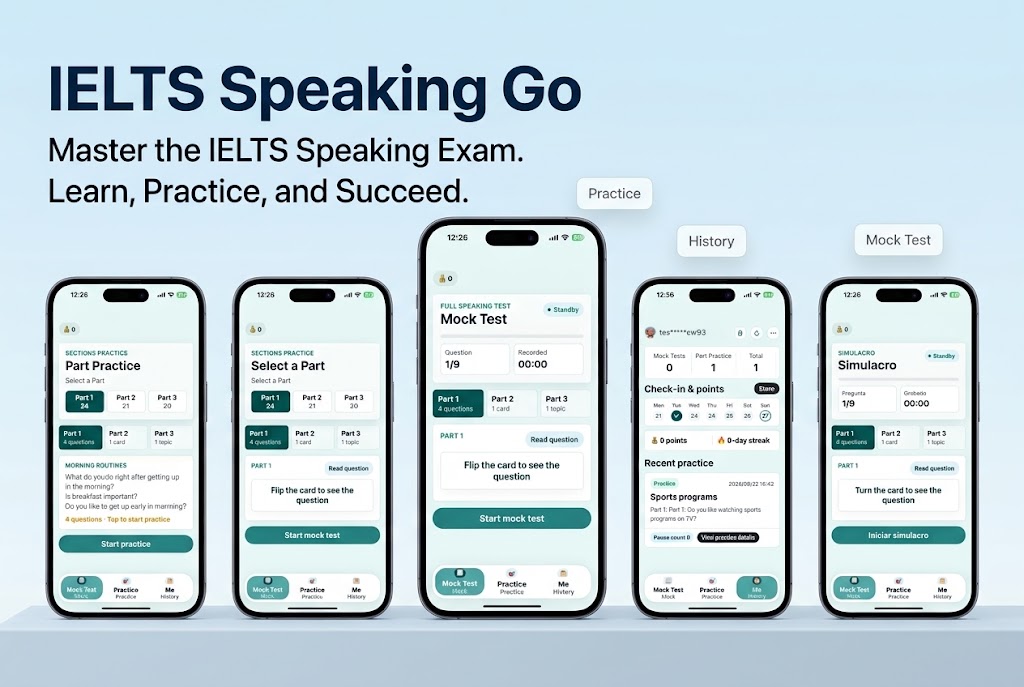
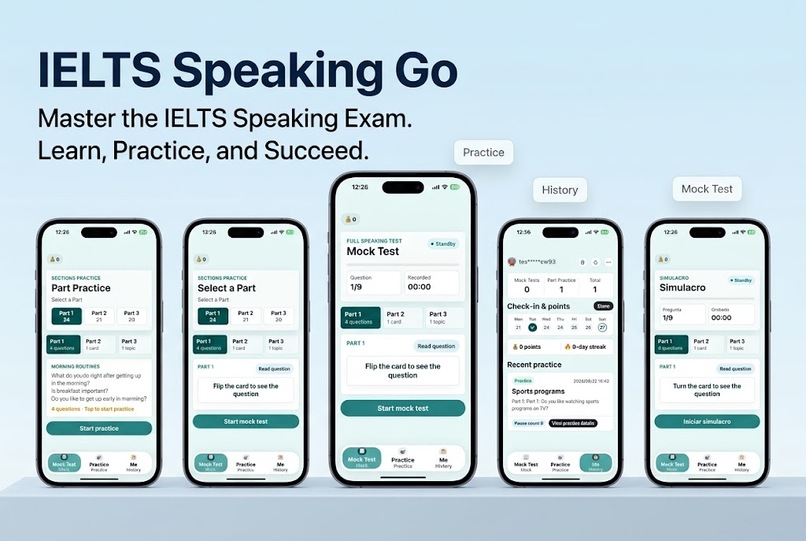
IELTS Speaking Go
Why We Built It
When I first started to look for IELTS Speaking practice materials, I quickly realized that most tutors were far more expensive than I expected.
So I turned to free LLMs like ChatGPT or Qwen, but almost every time they gave me a band 6.0. Why? Because that reflects the average candidate level, and giving a more conservative score is the safest way for an LLM to avoid unreliable results.
So I thought:
Why don't I build the tool I actually need?
Together with one of my best friends, we decided to build IELTS Speaking Go — an AI-powered IELTS Speaking examiner that makes speaking practice more accessible, affordable, and convenient.
What We Built
IELTS Speaking Go lets you practice IELTS Speaking anytime, anywhere with an AI examiner.
It supports more than 5 languages, allowing learners to interact with the app in the language they are most comfortable with.
But it doesn't just give you a score.
It analyzes your speaking performance across areas such as:
- Fluency and coherence
- Vocabulary
- Grammar
- Pronunciation
- Pauses and hesitation
It also identifies grammatical mistakes and provides practical feedback to help you improve.
The goal is simple:
Give IELTS candidates a way to practice speaking without having to pay for a tutor every time they want to practice.
How We Built It
We built IELTS Speaking Go by combining AI, speech recognition, language models, and IELTS-specific evaluation criteria.
The system processes a learner's speech, generates a transcript, analyzes their speaking performance, and produces structured feedback.
Behind the scoring system is an AI pipeline designed around IELTS examiner scoring criteria and high-band speaking samples.
We also built our own evaluation and retrieval system so that the feedback is grounded in IELTS-specific criteria rather than being just a generic AI conversation.
Our goal wasn't simply to make an AI that sounds intelligent.
We wanted to build an AI that actually helps students practice.
The Challenges
One of our biggest challenges was making the AI scoring feel consistent with real IELTS evaluation.
Any AI that supports voice input can easily generate a convincing-looking IELTS score, but that doesn't necessarily mean the score is useful. Most of the LLM models are able to "score" you, but most of them choose to give a band 6.0. This is due to the lack of official scoring materials and reliable data. And since most of the existing online models don't have a word-level timestamp feature, they can not give accurate pronunciation and fluency scores.
So we had to work on how the system interprets:
- Fluency and hesitation
- Grammar mistakes
- Vocabulary usage
- Pronunciation
- Pauses and speaking rhythm
- Differences between IELTS Speaking Parts 1, 2, and 3
Another challenge was making the experience fast enough to feel natural while still providing detailed feedback after each practice session.
We also had to build the entire product experience around speech — from recording and transcription to analysis, scoring, and presenting feedback in a way learners can actually understand.
What We're Proud Of
We're proud that we went from an idea we personally needed to a working app that people can actually use.
We:
- Gathered all the reliable materials online
- Built a database of speaking test mock tests
- Worked on data clustering to better assess fluency and hesitation
- Fine-tuned an LLM model to adapt to the real needs of students
- Reviewed the IELTS official criteria carefully
- Made the LLM assessment more reliable
- Added grammar correction features
- Added multi-language display support
We realized that:
Although AI is strong, there's still a lot of work for us to do. But it truly accelerates our speed of learning.
What We Learned
Building IELTS Speaking Go taught us that building an AI product is about much more than connecting an LLM to an app.
The difficult part is turning a model's general intelligence into something reliable, measurable, and useful for a specific problem.
We learned how important it is to combine AI models with domain-specific knowledge(in this case, linguistics), evaluation criteria, structured data, and real user feedback.
We also learned that sometimes the best product ideas come from a problem you are personally frustrated by.
Instead of asking:
"What can AI do?"
we started with:
"What if I could build the solution I needed—and make it available to others too?"
What's Next for IELTS Speaking Go
IELTS Speaking Go is just the beginning.
In the future, we want to expand beyond IELTS and support more language proficiency and language-learning exams, e.g., TOEFL, DELE, DELF, JLPT, etc., helping learners prepare for different exams with AI-powered practice and personalized feedback.
But our vision goes beyond exam preparation.
We want to build the largest community for language exam learners — a place where learners can practice, share experiences, exchange resources, track their progress, and learn from each other.
Our long-term goal is to build a platform that brings together AI-powered learning and a global community of language learners.
Because everyone deserves access to quality language exam preparation — not just those who can afford it.


Log in or sign up for Devpost to join the conversation.