-
-
Transcript Generation
-
Results
-
Input
Inspiration
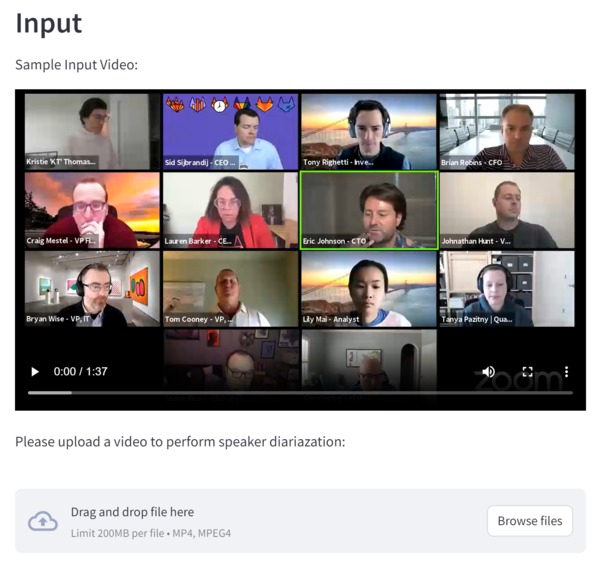
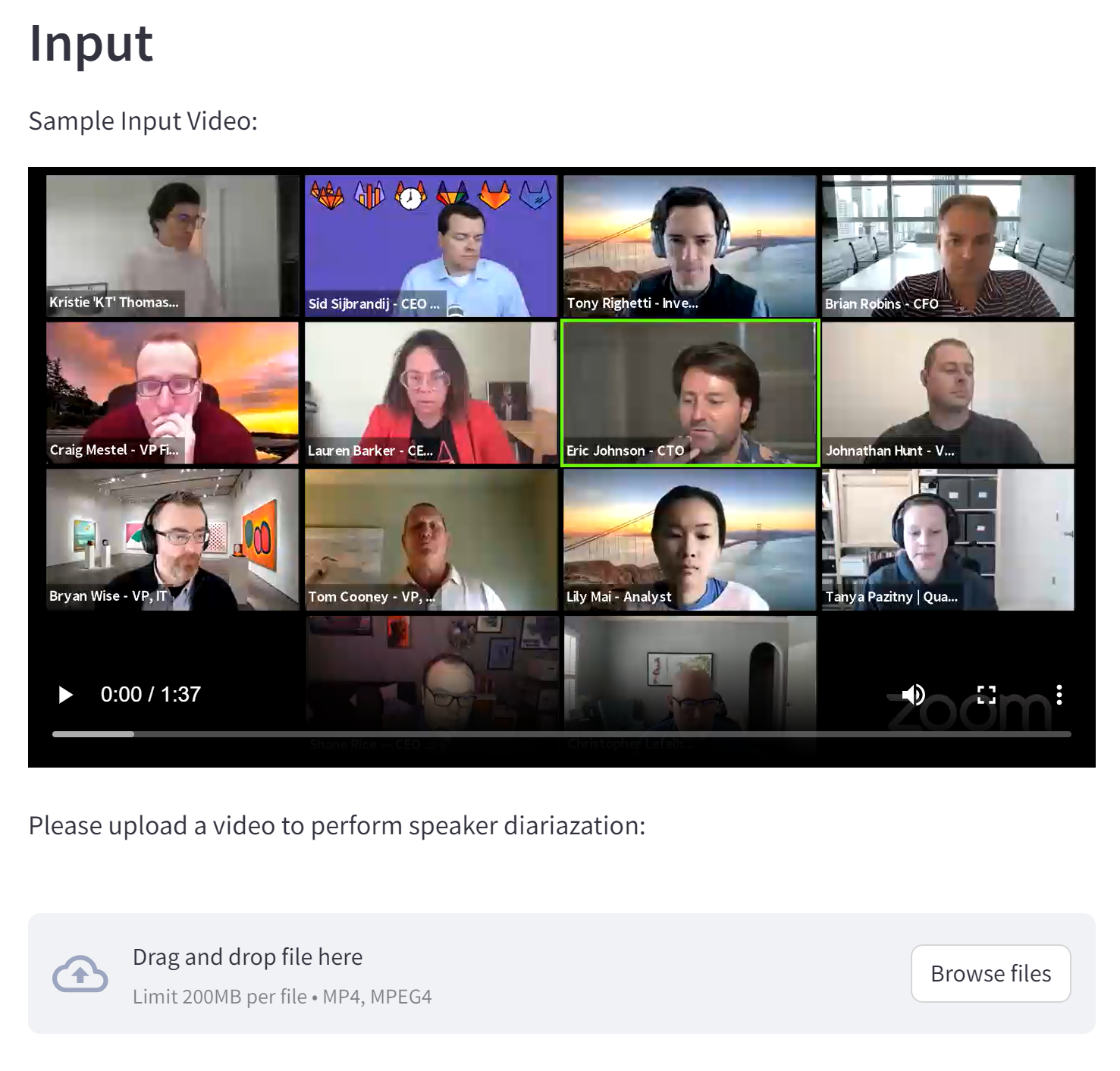
The inspiration for this project stemmed from the desire to enhance the efficiency and utility of virtual meetings, particularly in platforms like Zoom. Recognizing the challenges of tracking speakers in dynamic group discussions, the goal was to leverage computer vision to automate speaker diarization. The visual cue of a green box around the speaker's name in real-time, combined with audio synchronization and transcription, was envisioned as a powerful way to seamlessly organize and summarize virtual conversations. The inspiration lies in facilitating better communication, comprehension, and knowledge retention in the era of remote collaboration.
What it does
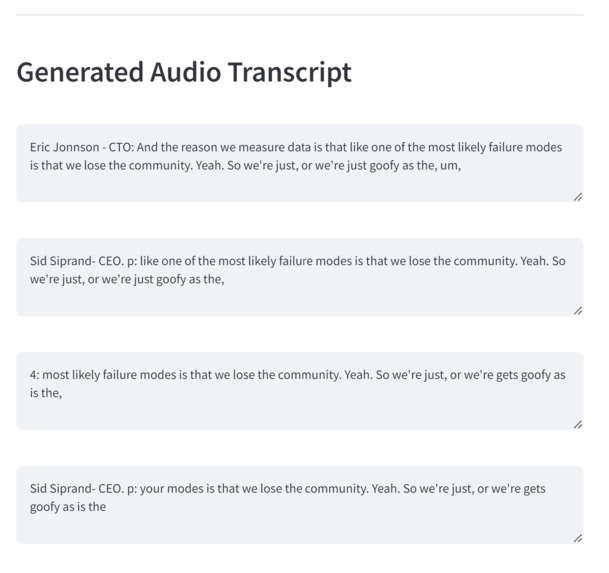
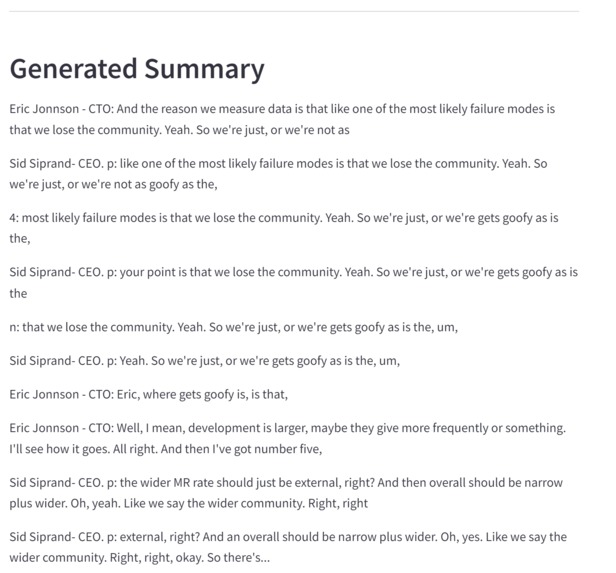
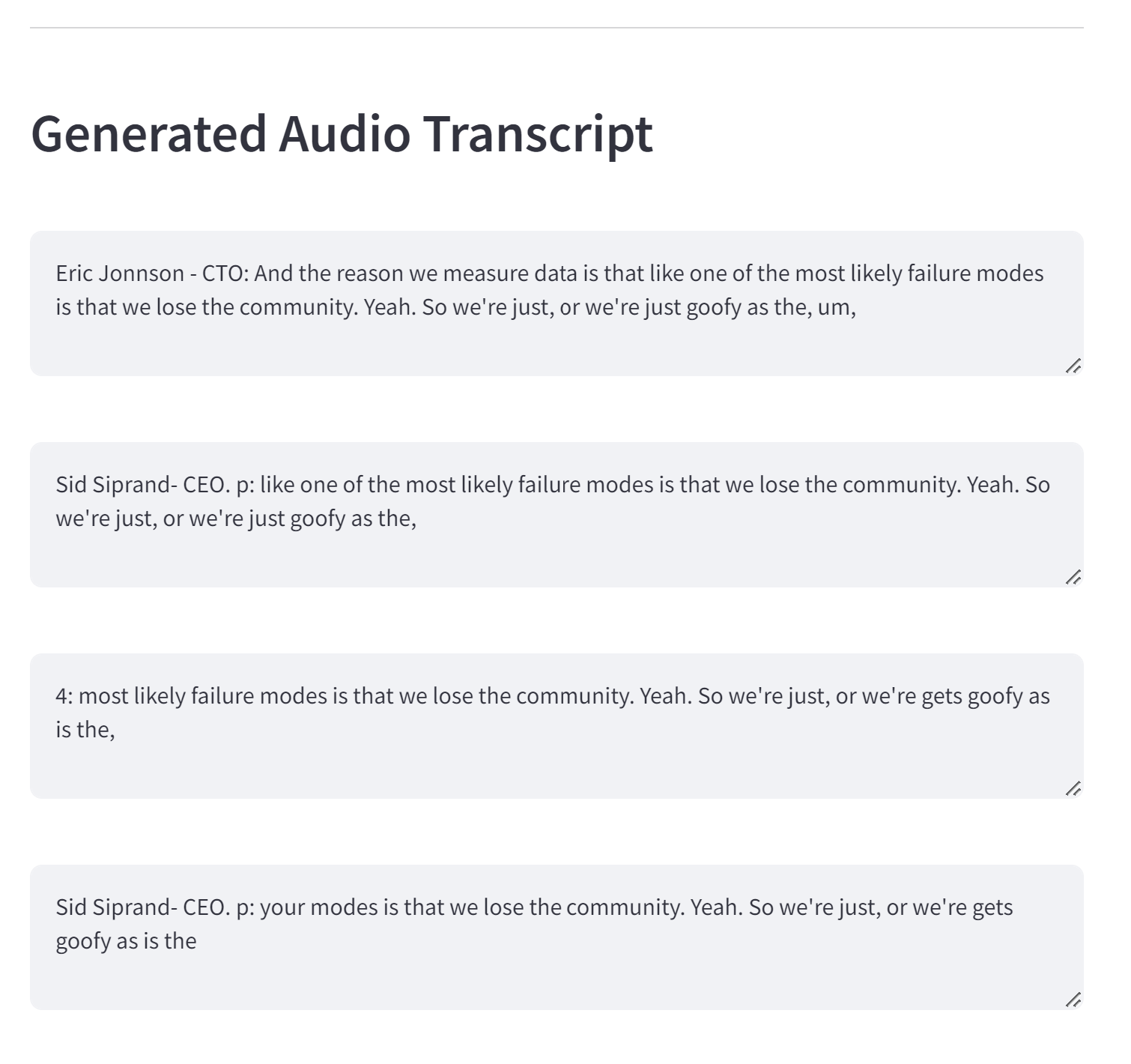
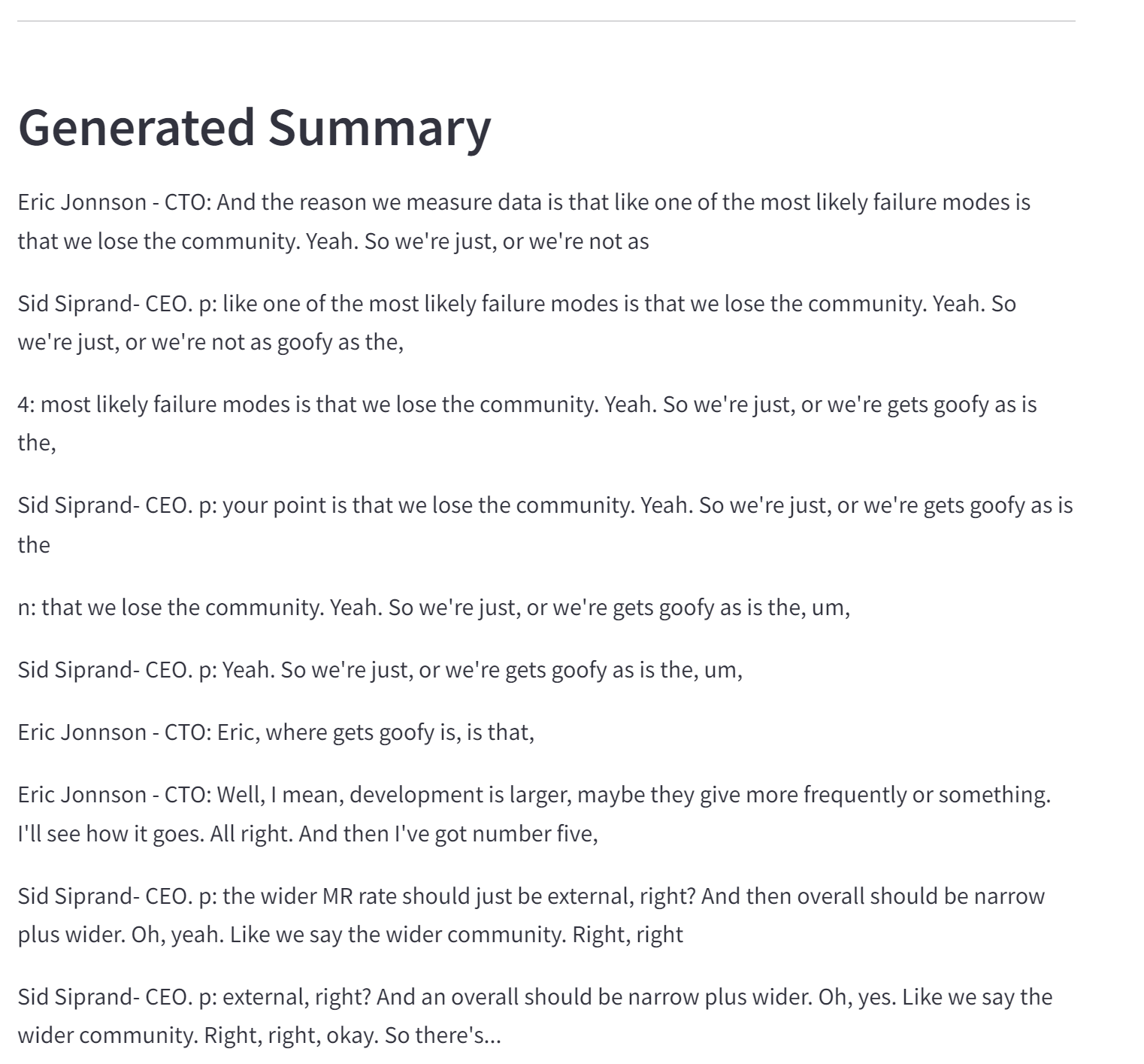
The project focuses on automating the process of speaker diarization in Zoom video calls using computer vision. It employs advanced algorithms to identify and associate each speaker with precise timestamps, visually represented by a dynamic green box around their name during the call. This visual mapping is then synchronized with the corresponding audio, which is subsequently transcribed into text. The end result is a streamlined and automated method of converting virtual conversations into written form. Finally, these transcripts are used to generate insightful summaries, providing a comprehensive and user-friendly approach to understanding and archiving discussions in virtual meetings.
How we built it
The project is a sophisticated integration of computer vision and natural language processing (NLP) techniques to automate speaker diarization in Zoom video calls. The computer vision aspect employs contour detection algorithms, specifically utilizing OpenCV for identifying and tracking speakers in real-time. This is visually represented by a dynamic green box around the speaker's name during the call, establishing a precise timestamp.
Simultaneously, the NLP component leverages the powerful Facebook BART model for audio transcription. The identified speakers are synchronized with the corresponding audio streams, allowing for accurate conversion of spoken content into written text. The BART model excels at generating coherent and contextually relevant text, making it ideal for transcribing the audio and subsequently summarizing the conversation.
The end result is a seamlessly integrated system that combines visual cues with textual representations. Users benefit from an automated and user-friendly solution, facilitating not only speaker identification but also the creation of insightful summaries for efficient comprehension and archival of virtual discussions. The project continuously optimizes accuracy through machine learning algorithms and user feedback, ensuring a robust and evolving solution for speaker diarization in virtual meetings.
Challenges we ran into
In our project, one of the most challenging aspects we encountered was Audio Synchronization, specifically the task of mapping audio to the corresponding speaker using Natural Language Processing (NLP). This proved to be a complex endeavor due to the nuances of varying speaking rates, overlapping speech, and background noise. To tackle this challenge head-on, we decided to capitalize on our knowledge of the video component. By incorporating Computer Vision (CV) techniques into our approach, we sought to enhance the audio analysis with visual information. This dual approach allowed us to successfully address the difficulties associated with NLP-based audio synchronization, resulting in a more robust and accurate system for speaker diarization in virtual meetings.
Accomplishments that we're proud of
Our project achieved significant milestones, starting with the successful implementation of Speaker Diarization through advanced computer vision techniques, allowing precise and real-time tracking of speakers during Zoom calls.
A notable accomplishment is the innovative approach to Audio Synchronization, where the integration of Computer Vision techniques addressed challenges in mapping audio to speakers using NLP, improving overall speaker identification accuracy.
The seamless integration and fine-tuning of the Facebook BART model for audio transcription showcased our ability to leverage cutting-edge NLP technology, contributing to a sophisticated system.
The development of an intuitive user interface enhances the overall user experience, allowing easy interaction with diarization results, transcripts, and summaries.
Achieving real-time processing with low latency during live Zoom calls ensures timely speaker diarization and transcription without compromising performance.
Our commitment to scalability and adaptability is demonstrated by the system's ability to handle varying participant numbers and adapt to different meeting environments and platforms.
Continuous model improvement, driven by user feedback and evolving meeting dynamics, reflects our dedication to enhancing system accuracy and performance over time.
Lastly, our project prioritizes data privacy and security, implementing measures to safeguard audio content and video feeds, ensuring confidentiality and privacy.
What we learned
The project served as a rich learning experience for our team, offering insights into various aspects of interdisciplinary collaboration, adaptive problem-solving, and technology integration. The significance of combining expertise from computer vision, audio processing, and natural language processing became evident as we navigated the complexities of speaker diarization. A key lesson emerged from addressing challenges in audio synchronization, where leveraging knowledge from the video domain to enhance audio processing showcased the need for versatility in problem-solving.
Successfully integrating computer vision techniques with advanced NLP models underscored the power of technological synergy. This integration not only addressed project challenges but also highlighted the potential for comprehensive solutions when different technologies complement each other. The development of an intuitive user interface reinforced the importance of user-centric design principles, emphasizing the need for accessibility and ease of interaction to enhance user satisfaction.
Challenges related to real-time processing illuminated the delicate balance between speed and accuracy. Achieving low latency during live interactions is pivotal for a seamless user experience. The project's emphasis on scalability and adaptability taught us to anticipate future needs, ensuring that the system can accommodate varying participant numbers and adapt to diverse meeting environments.
Implementing mechanisms for continuous model improvement based on user feedback emphasized the iterative nature of projects. Embracing feedback and adapting to evolving requirements contribute to sustained enhancements and long-term success. Additionally, the project brought attention to the critical considerations of data privacy and security, highlighting the need for meticulous measures to safeguard user information and maintain trust.
In essence, the project provided a holistic learning experience, imparting lessons in collaboration, adaptability, technology integration, user-centric design, real-time processing challenges, scalability, continuous improvement, and data privacy considerations. These insights will undoubtedly shape our approach to future projects, contributing to our ongoing growth and development as a team.
What's next for Speaker Diarization
Looking ahead, our vision for the project involves generalizing the current approach to encompass a broader spectrum of videos beyond Zoom calls. We aim to extend the capabilities to diverse video contexts, accommodating various scenarios and platforms. Additionally, we aspire to enhance the summarization process by incorporating information beyond just speech. This includes extracting relevant details from the video content such as presentations, images, and other visual elements. By broadening the scope to incorporate a more comprehensive understanding of video content, we aim to provide richer and more insightful summaries, making the system adaptable to a wide range of video contexts and meeting the evolving needs of users.

Log in or sign up for Devpost to join the conversation.