-
-
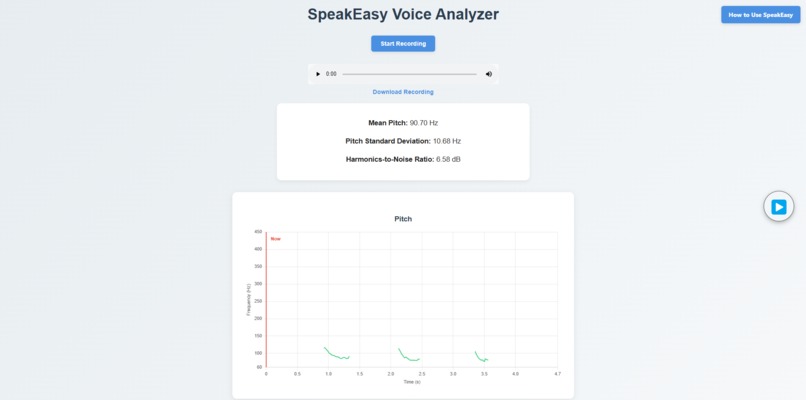
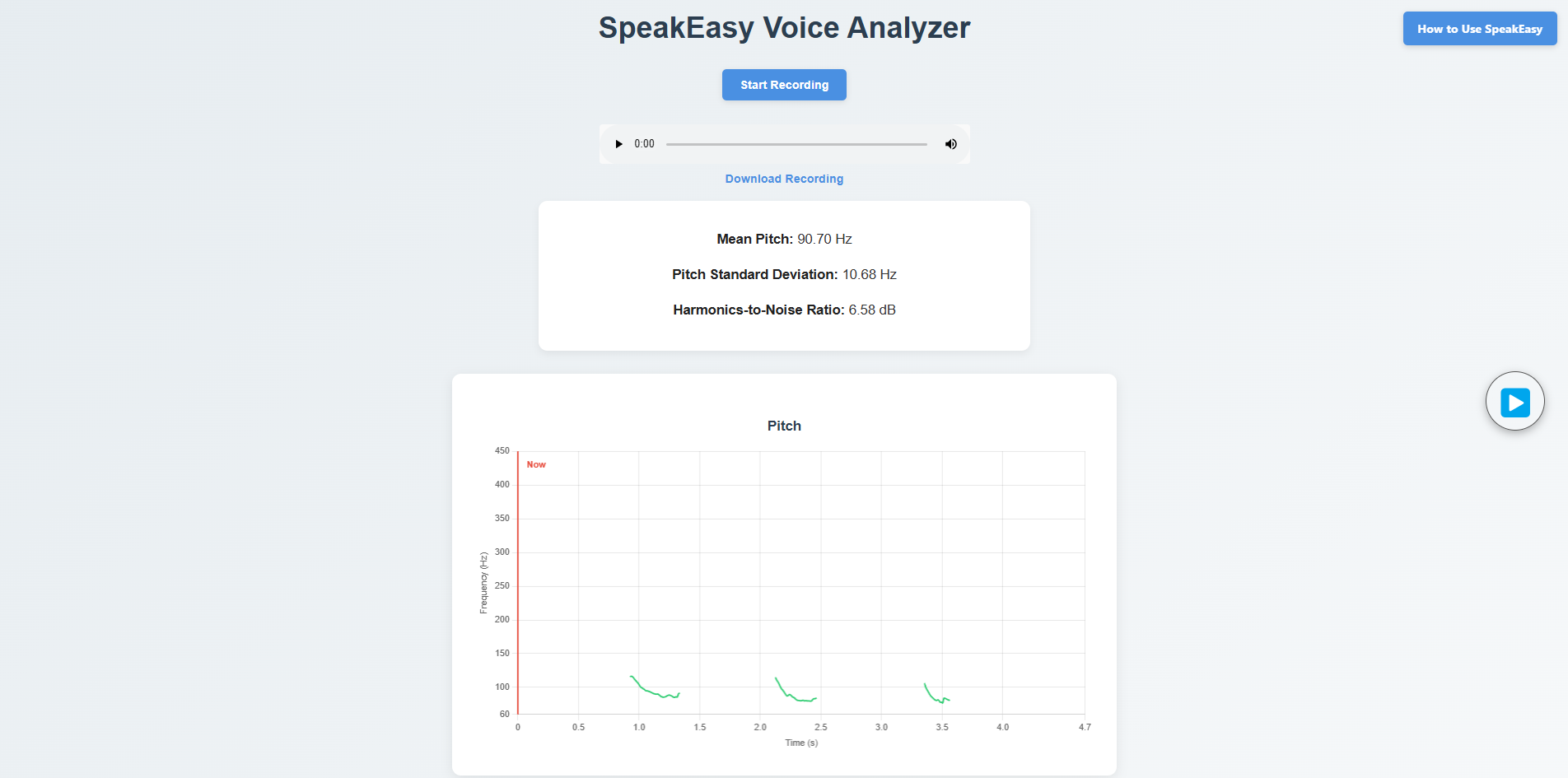
Home page showing summary values and pitch chart
-
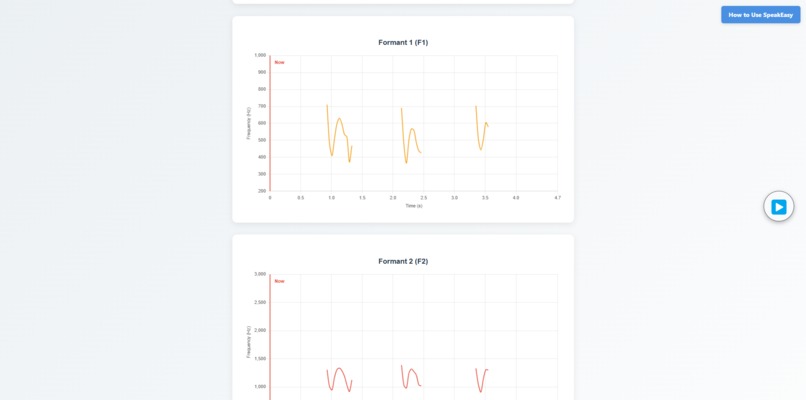
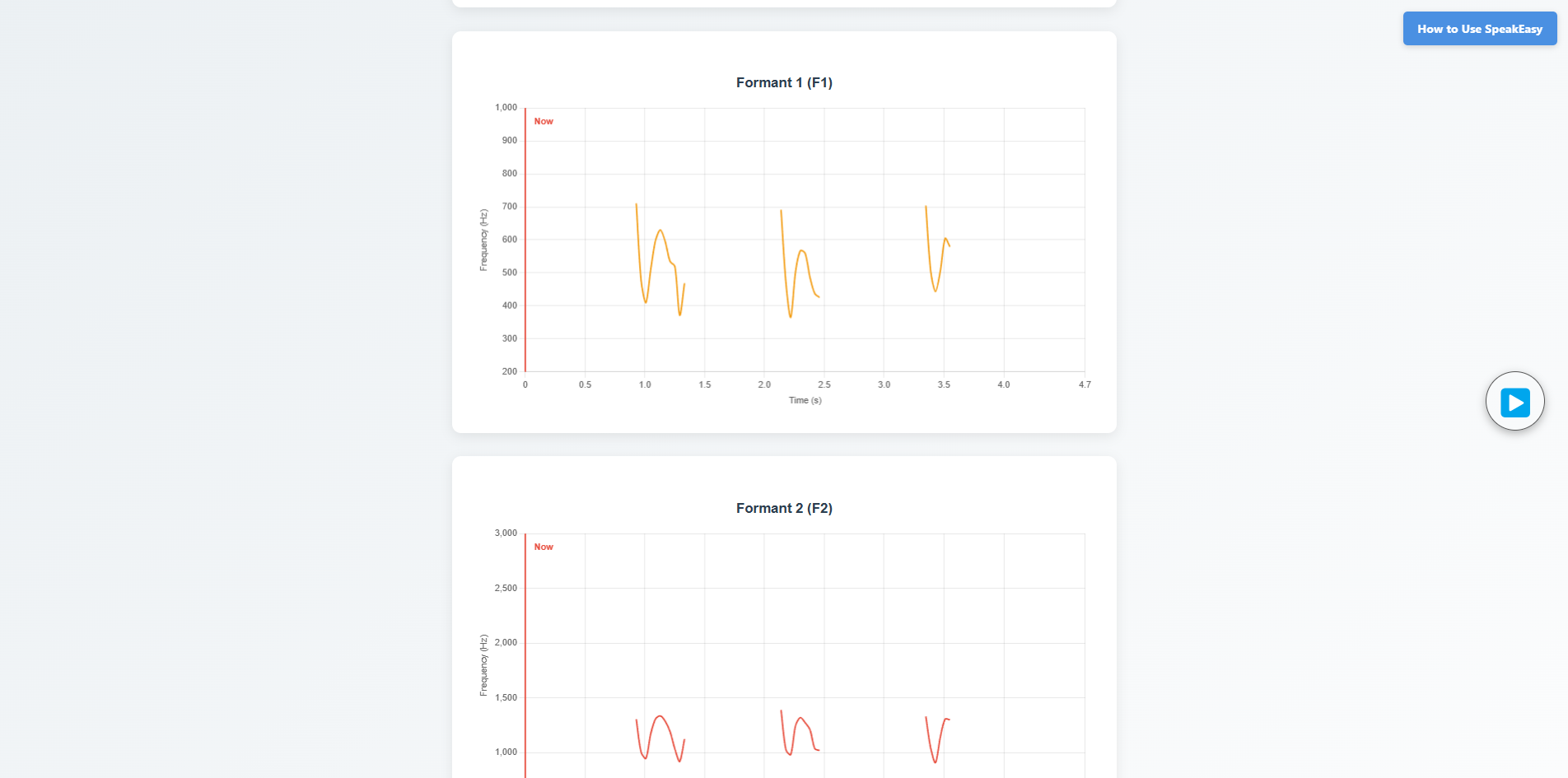
Charts showing Formant 1 and Formant 2
-
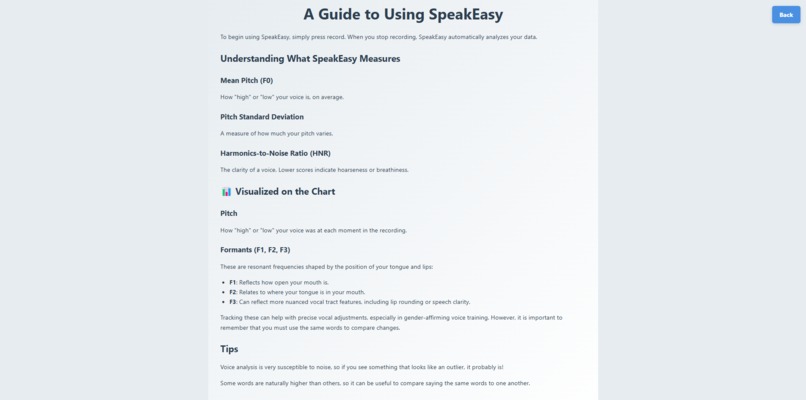
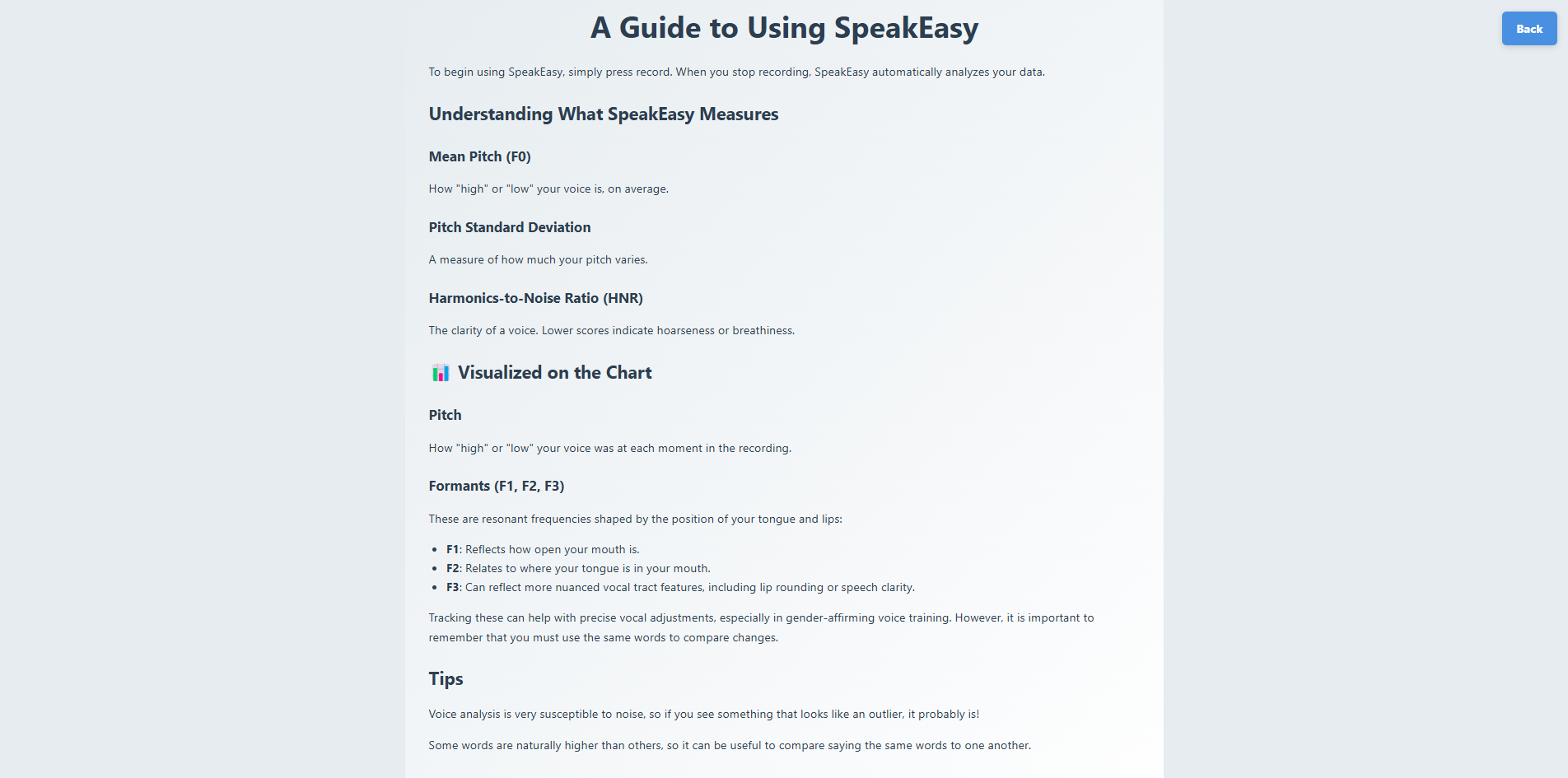
Guide page, explaining how to use SpeakEasy and interpret data
Inspiration
The idea to create a voice analysis tool that goes beyond just “pitch” came from a voice therapist. Existing tools often focus solely on pitch or are too complicated for the average person to install and use.
Aiming for the best of both worlds, we drew inspiration from VoiceLab, a research-focused vocal analysis tool created by Dr. Feinberg. Using this, we built a convenient web-based app that reports multiple measures including pitch, clarity and formant frequencies.
What it does
Just visit the website and make a recording—SpeakEasy will automatically analyze your voice when you stop recording!
You can even play back your recording and see which values correspond to each sound.
Potential Impact
This tool is a unique combination of being user-friendly, privacy-minded and detailed. Any user, especially in partnership with formal voice therapy, would benefit from using it.
We believe this tool will be especially helpful for gender-affirming voice therapy. Formant frequencies are thought to influence the perception of gender in voices (Södersten, M., et al. (2024)), and having quantifiable goals can empower users in their vocal training journey.
The tool also encourages exploration and education, which are critical for helping users build confidence and craft goals.
How we built it
We used React and Chart.js to build a clean, intuitive interface focused on clarity and ease of use—no clutter, no logins, just fast, visual voice feedback.
On the backend, we relied on parselmouth, a library commonly used in voice research. Harnessing a well-known, credible library was crucial, as vocal analysis is highly specialized and complex.
Challenges we ran into
Both of us had limited experience with full-stack development, but by leveraging templates, AI tools, and high-quality libraries, we were able to quickly build and deploy a convenient tool with advanced analysis features.
Ideas to Build on SpeakEasy
One potential next step is enabling users to save their data and track progress over time. However, voice recordings are sensitive since they can be deepfaked or used in scams. Privacy and security must be prioritized.
Another direction is incorporating reference ranges for common gender markers or allowing users could upload clips of voices they admire and compare. This would let users contxtualize their vocal features.
Eventually, we could introduce a chatbot to provide feedback and guidance. This would require a lot of technical knowledge. Additionally, speech professionals would still need to be consulted for any clinical interpretation.
Citations
Scripts
Feinberg, D. R. (2022, January 1). Parselmouth Praat Scripts in Python. https://doi.org/10.17605/OSF.IO/6DWR3
Feinberg, D. (2022). VoiceLab: Software for Fully Reproducible Automated Voice Analysis. Proc. Interspeech 2022, 351-355.
Voice Information
Södersten, M., et al. (2024). Gender-Affirming Voice Training for Trans Women: Acoustic Outcomes and Their Associations With Listener Perceptions Related to Gender. Journal of Voice. https://doi.org/10.1016/j.jvoice.2024.02.003


Log in or sign up for Devpost to join the conversation.