-
-
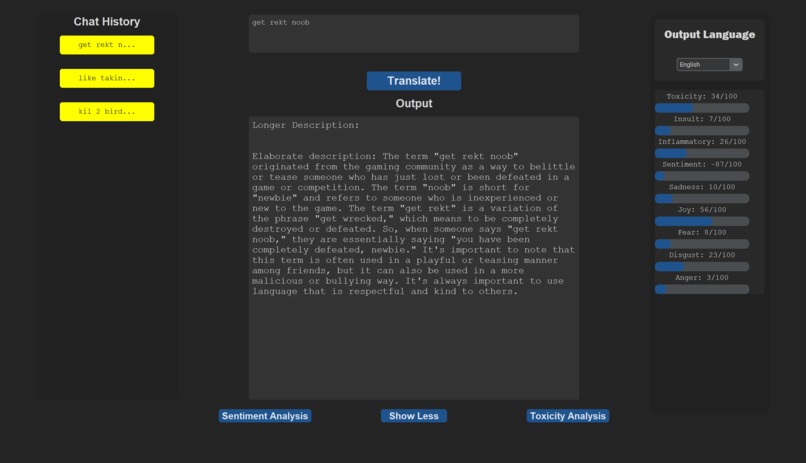
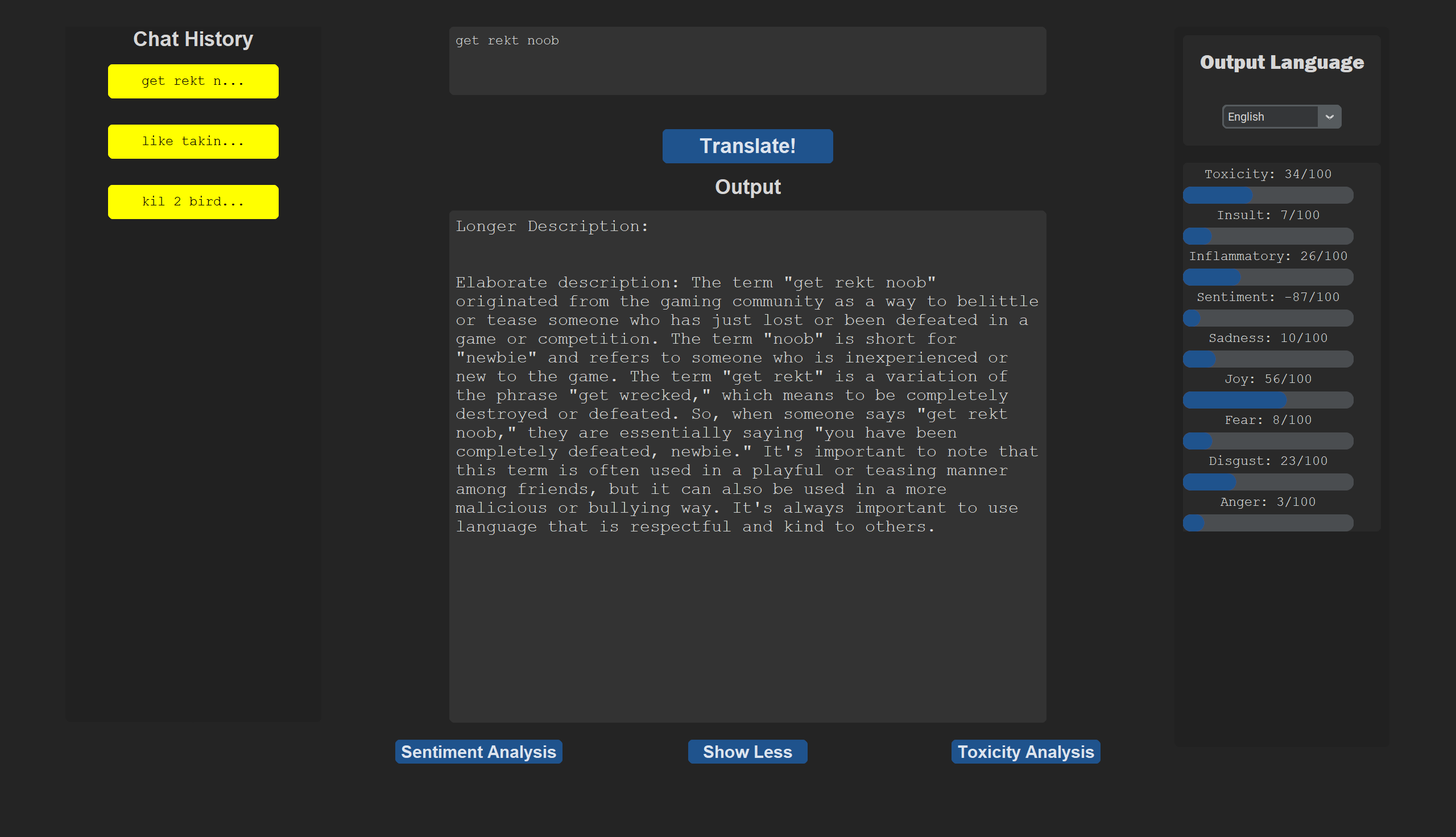
Example usage of toxic internet phrase (show long desc)
-
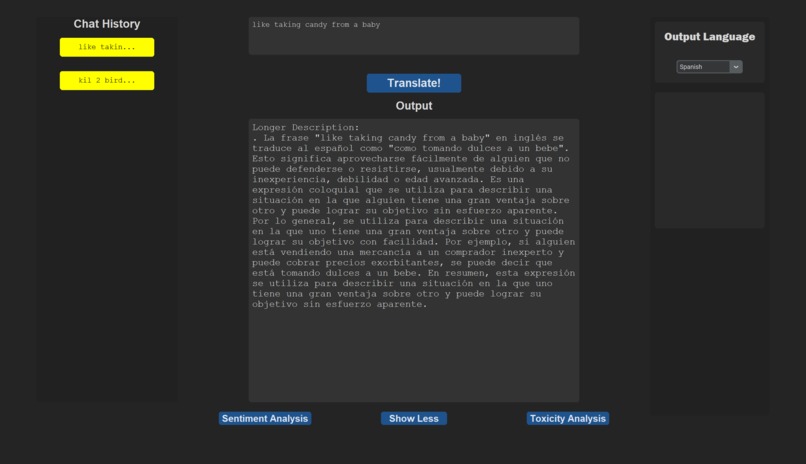
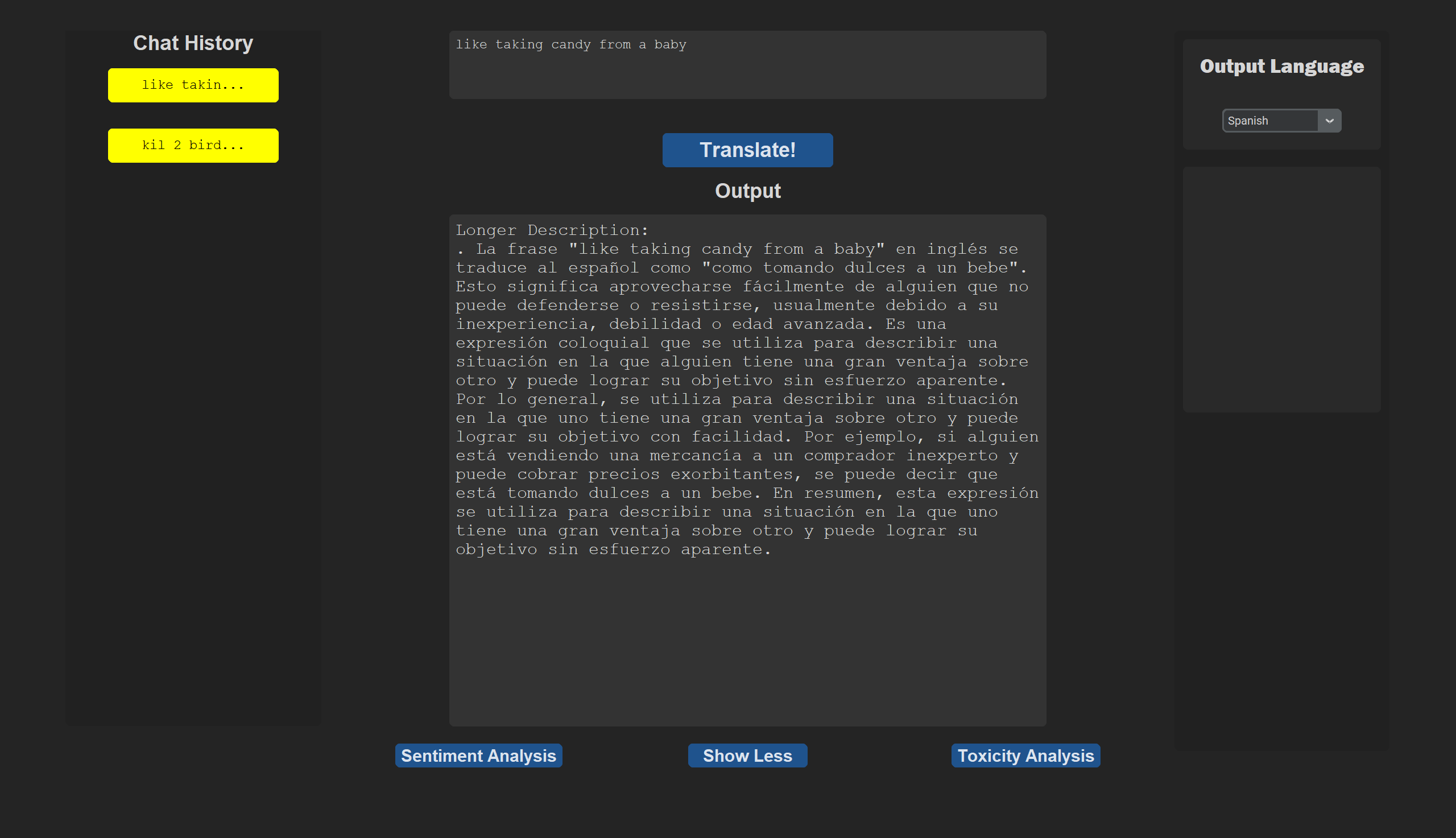
Example usage of making output in spanish (show long desc)
-
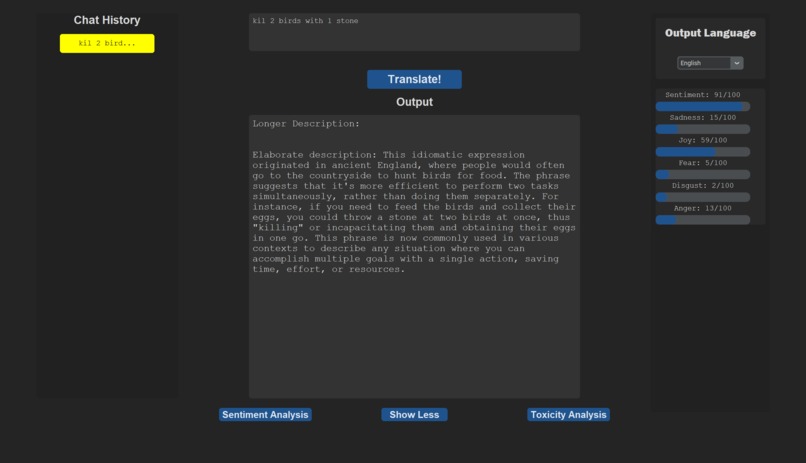
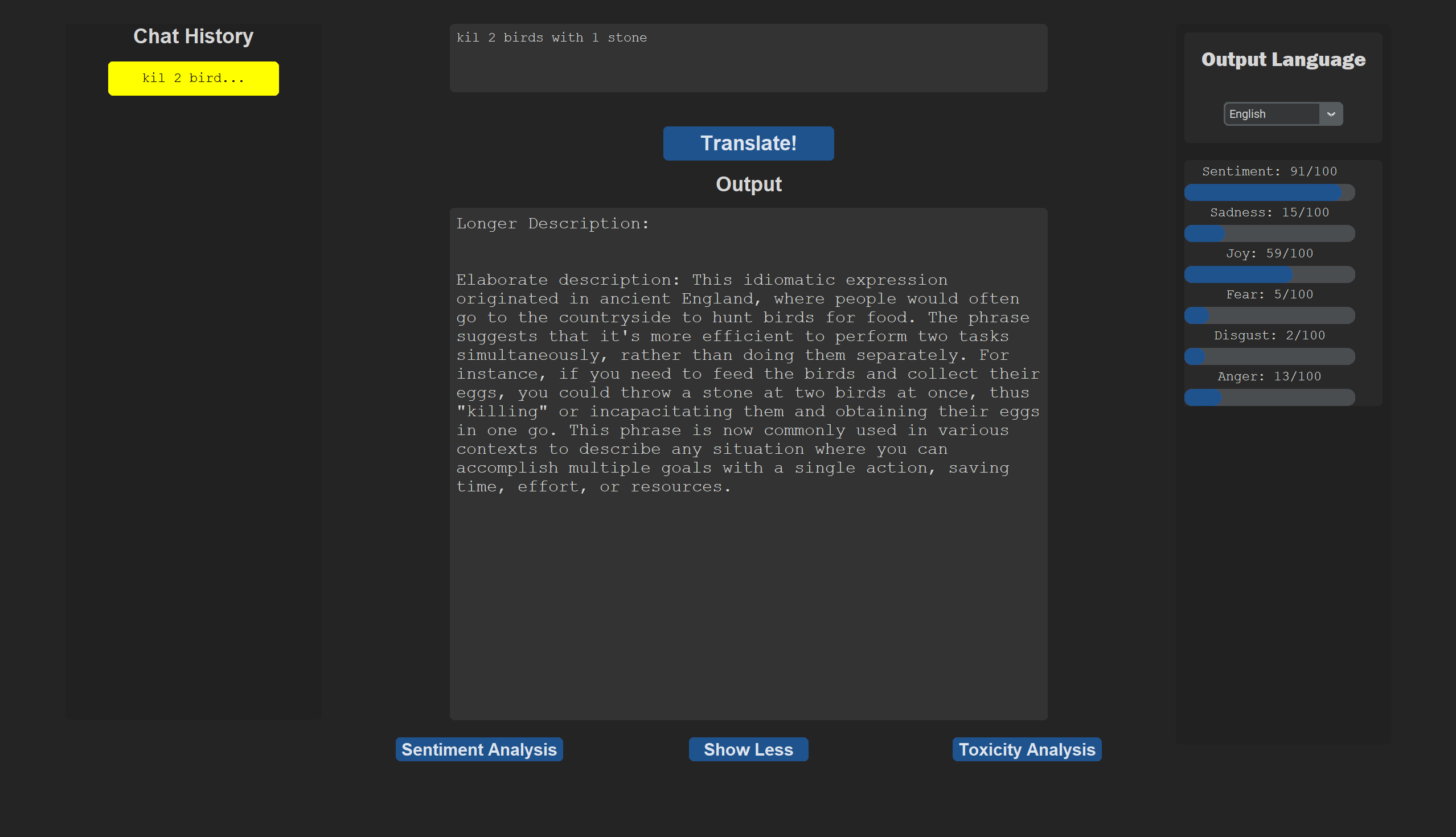
Example usage of idiom (show long desc)
-
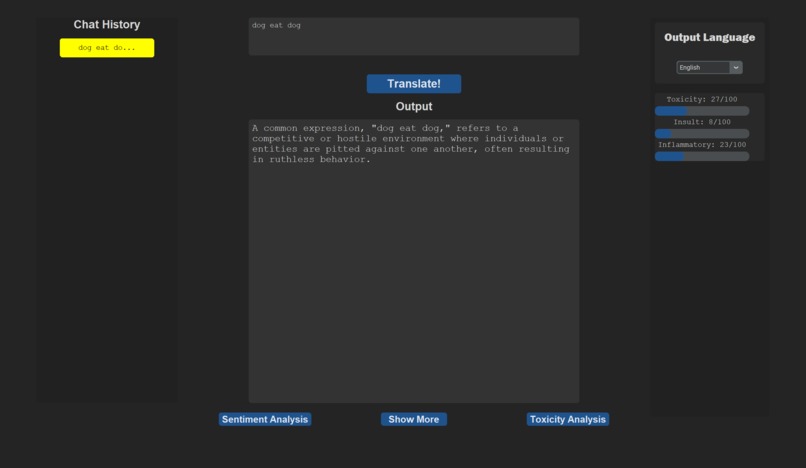
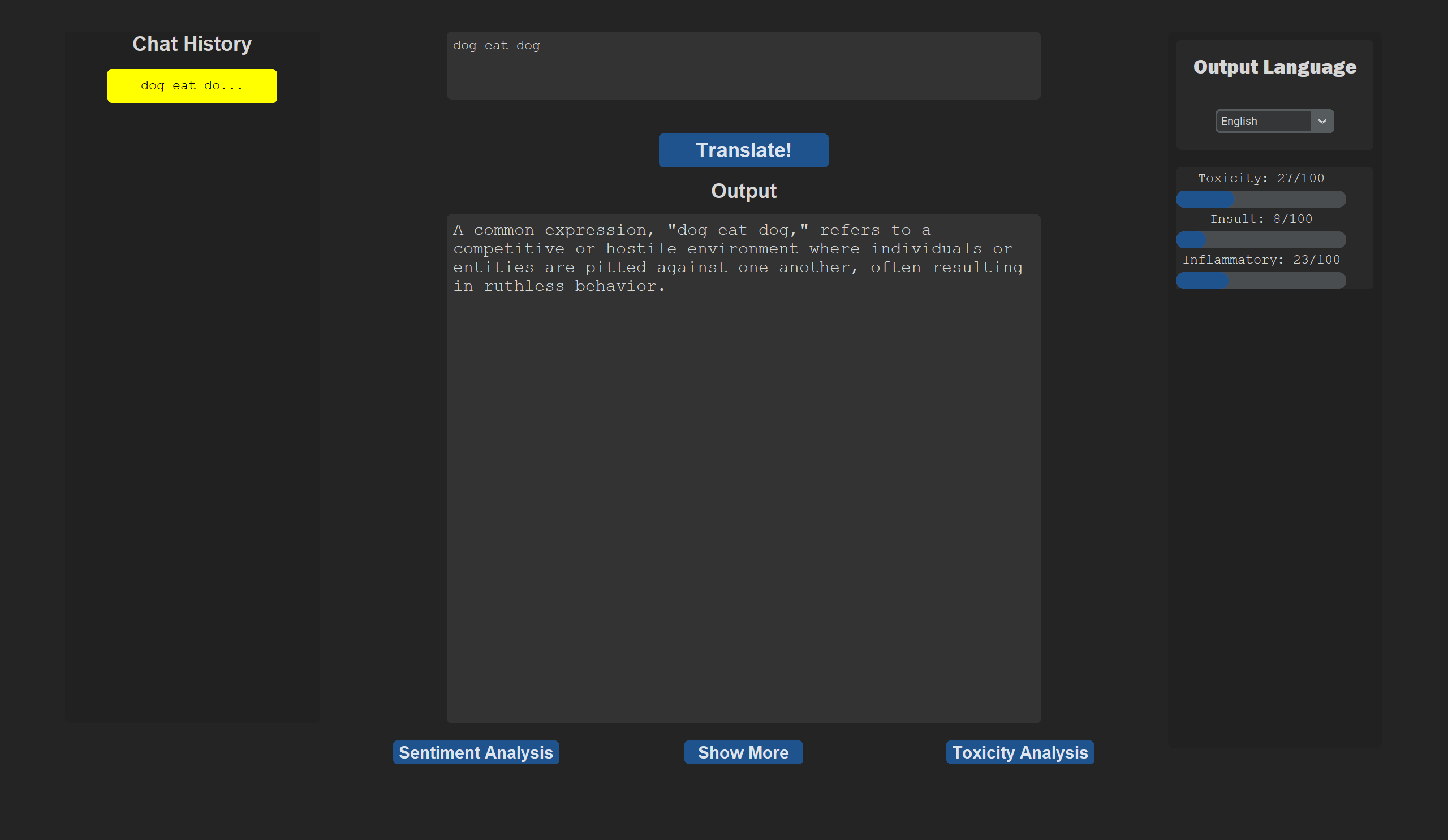
Example usage of idiom (show short desc)
Inspiration
In today’s digital world, the ways in which we connect and communicate are constantly changing. Even amidst this chaos, the ability to communicate clearly and effectively remains as a vital part of human interaction, often dictating how individuals can build relationships, share ideas, and succeed in the workplace.
Speakeasy was created based on the idea that language should not be a barrier to understanding or success. It was designed to improve accessibility, offering instant translations of corporate jargon, internet slang, and odd vernacular into plain English.
This feature was not just for those with limited English proficiency, but for anyone who found themselves intimidated by the evolving lingo of the digital age. Recognizing the emotional nuances of communication, the team integrated sentiment analysis and toxicity warnings into Speakeasy, allowing users to navigate the emotional tone of messages and avoid potential misunderstandings.
What it does
SpeakEasy allows users to enter the text they wish to decode, whether than be an internet slang term, corporate buzzword, or entire email. After selecting an output language and pressing "translate" SpeakEasy will provide the user with a brief summary of what the phrase means, along with basic sentiment analysis (positive/negative tone) and emotions summary.
The user can also click a "show more" button to display a much longer explanation of the phrase, that often includes historical context and analogies to make understanding the phrase even easier. Additionally, the app can output these explanations in over 12 different languages, including but not limited to the top 10 most frequent native languages by bilingual speakers living in the United States.
Lastly, SpeakEasy provides support for toxicity ratings, which analyze a phrase for signs of inflammatory, insulting, or toxic language, in an attempt to reduce the chances of potential conflict or misunderstandings. Users unfamiliar with common social conventions or corporate slang could enter their proposed emails or social media messages into this before sending them to ensure a positive emotional tone.
How we built it
The app is built primarily on Python, utilizing the custom-tkinter library for frontend. For our backend logic, we made use of multiple APIs that were either free or provided by HooHacks sponsors for various features, including phrase translation and explanation (Perplexity API), general sentiment analysis (Google Cloud API), emotion detection (IBM Watson Emotion API), and toxicity analysis (Perspective API).
Challenges we ran into
One of the challenges we faced was finding a good API for language processing that produced accurate and useful data. We conducted lots of testing on various inputs to try and determine which API providers would consistently output correct results, and found that each had different strengths and weaknesses. This is one of the reasons why we are using two natural language APIs, as the Google Cloud API gave accurate sentiment values, but otherwise was not useful, while IBM’s Natural Language API gave emotion values that enhanced our product.
Accomplishments that we're proud of
One thing we are proud of was creating a cohesive user experience with all the data we were spitting out. Our solution included a shorter explanation with options for the user to get more detail without them being overwhelmed since the overall goal for them is to learn at their own pace.
What we learned
One of the big things we learned was how to effectively implement and test APIs. Most of our group only had limited experience with this process, so it involved lots of reading documentation, testing out various inputs, and debugging to ensure we handled various edge cases and our API calls would consistently return accurate results.
Additionally, this was one of the first times many people in our group had worked on such a big project together, so we had to navigate the complexity of using version control and staying organized, ensuring each member had clearly defined goals and we could maximize our team’s efficiency.
What's next for SpeakEasy
Our major goal for improving SpeakEasy is to expand the range and promote even more accessibility for users of our app, which we break down into 3 main categories:
Greater Tech Range: Currently, SpeakEasy is a computer app, designed to be downloaded and run on one's device. In the future, we hope to make a version of this that supports mobile devices, as well as a Google Chrome extension to make it convenient for users to interact with the text they will often be translating (work emails, online chats, social media slang, etc.)
Larger Language Support: As noted, our app currently supports translation from English to over 12 different languages, which was based on support from the APIs we used. In the future we hope to expand and cover additional languages.
Multimedia Support: Currently, users must type in the text they wish to translate, which is fine for most scenarios, but could be expanded upon. In the future, we hope to add a speech-to-text option, where users can record audio being played and have that analyzed, allowing for greater utility and more accurate sentiment analysis/emotion detection.
Built With
- google-cloud
- perplexity
- perspective
- python
- tkinter


Log in or sign up for Devpost to join the conversation.