-
-

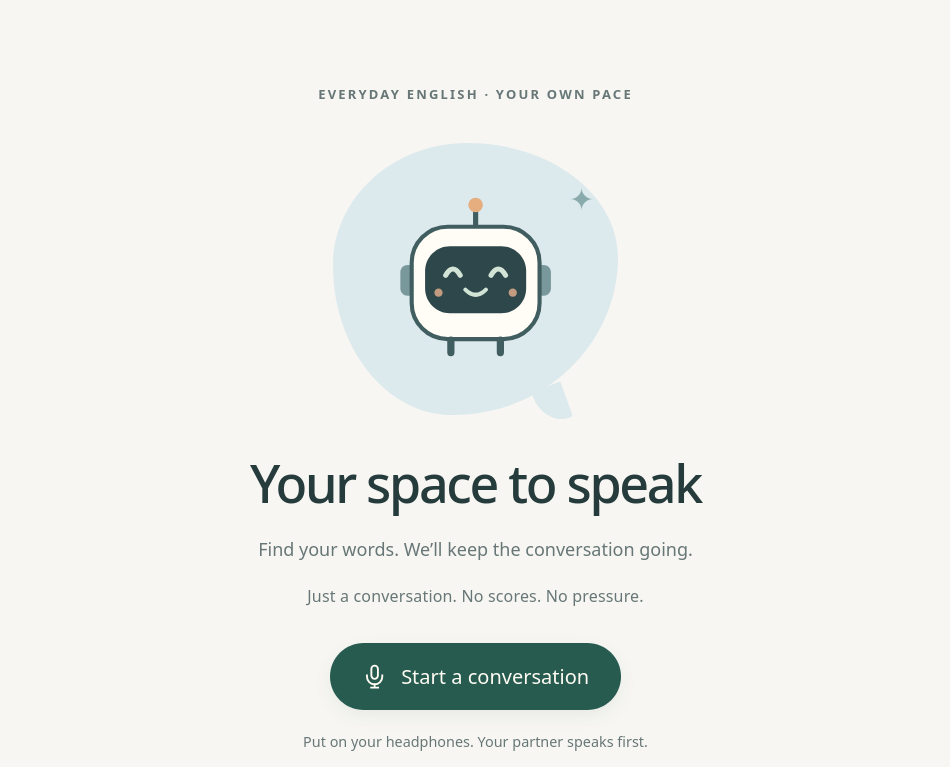
Speak Fluent Avatar
-
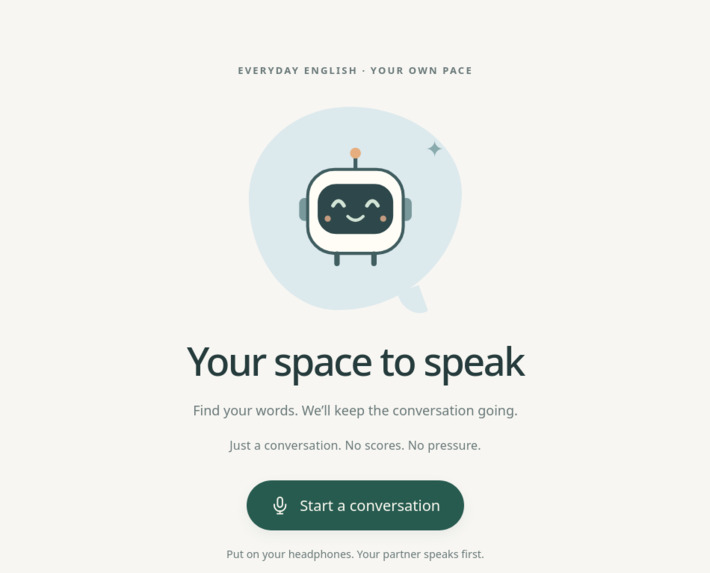
App Page
-
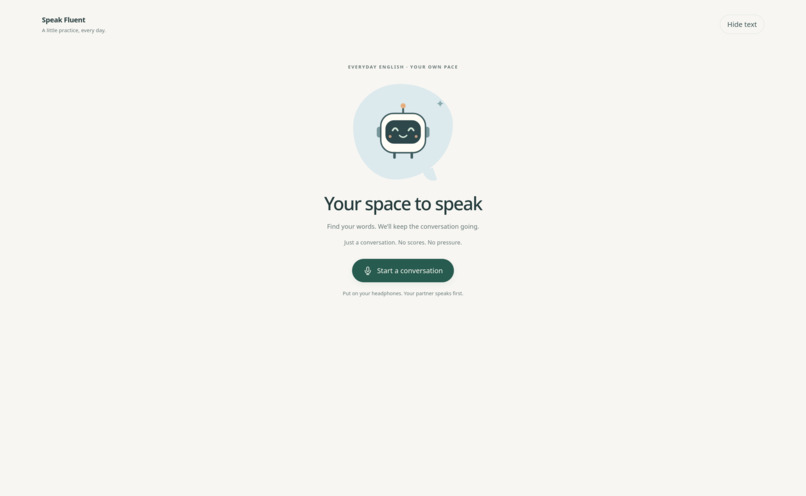
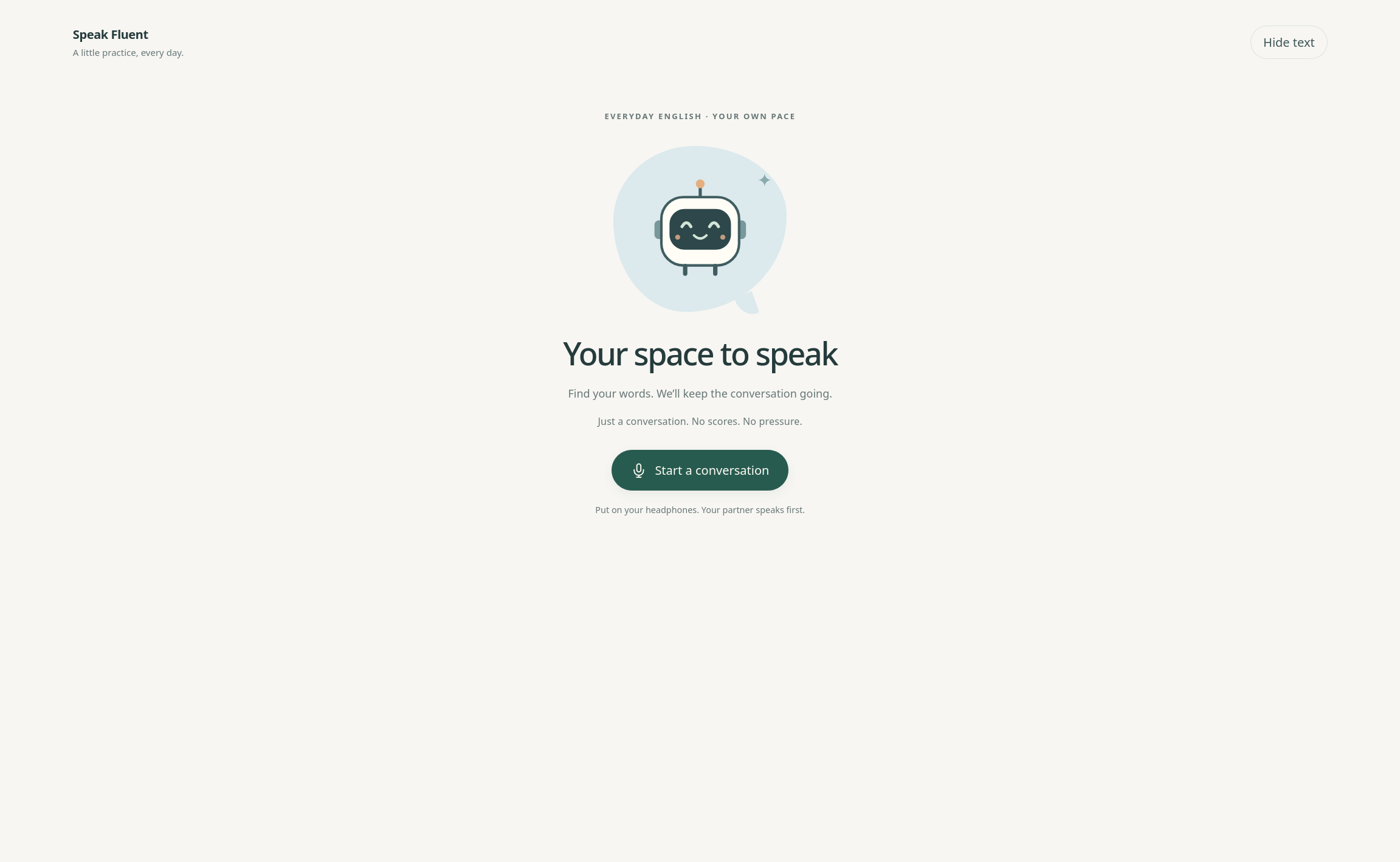
App UI
-

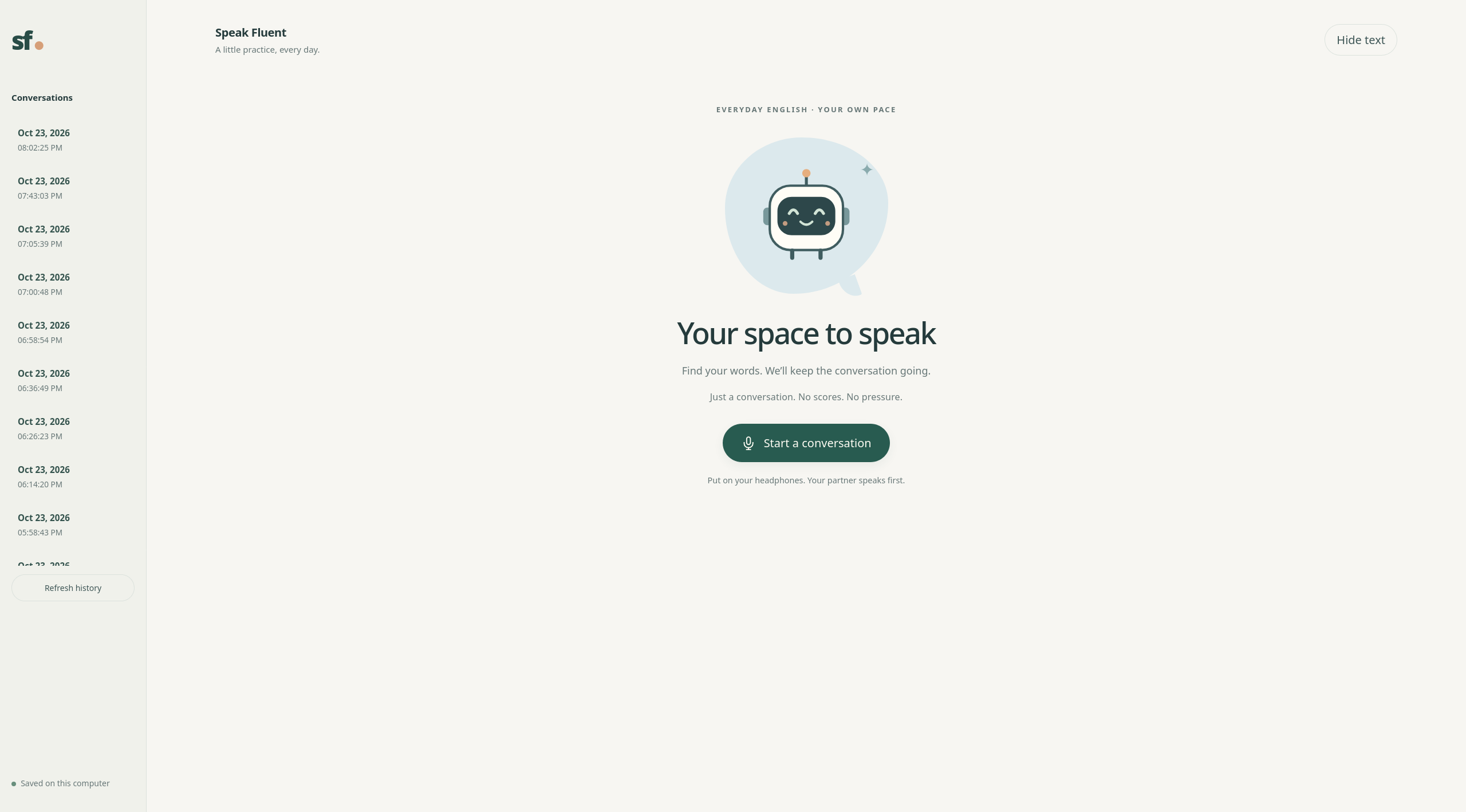
Conversation History
-
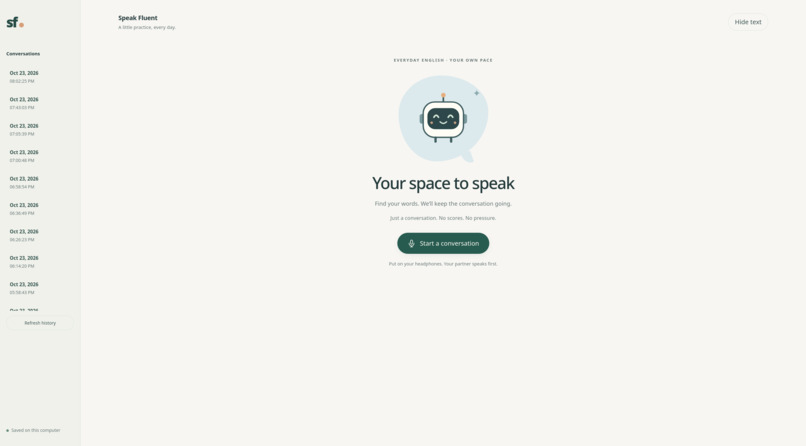
Full Page
-
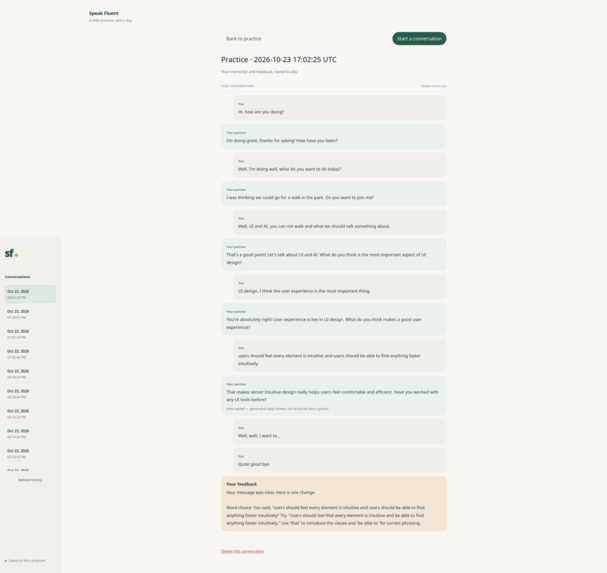
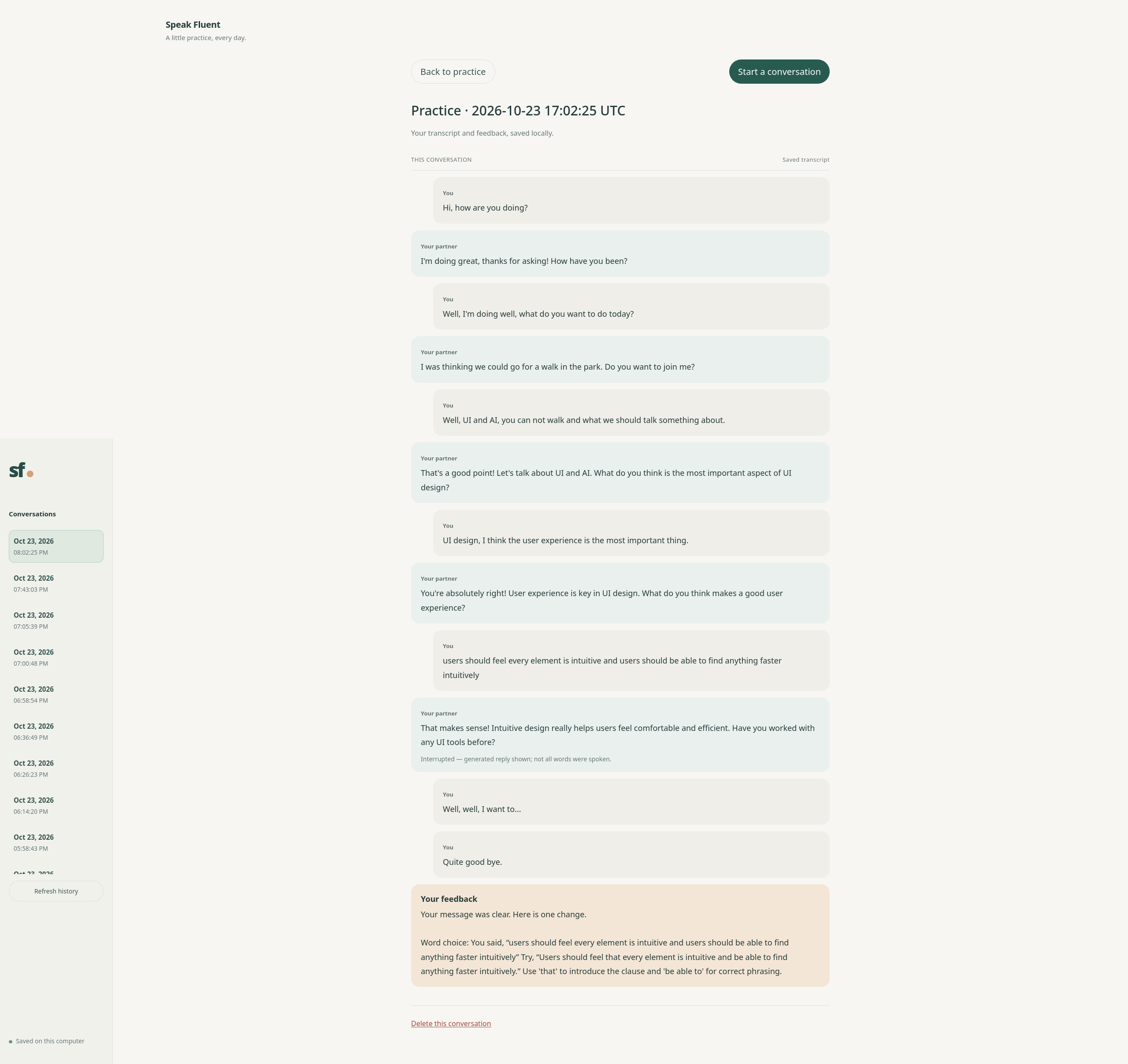
Conversation Example and Feedback


Inspiration
I wanted to improve my English speaking skills, but I realized that knowing vocabulary and grammar is very different from being able to speak naturally.
Practicing with other people isn't always convenient, and many AI-powered speaking applications require subscriptions or constant internet access.
So I decided to build my own solution: a free, private, and fully offline AI conversation partner that I could practice with whenever I wanted.
What it does
Speak Fluent is a local AI-powered English speaking partner designed to make conversation practice feel natural.
Users can:
- Have real-time voice conversations with AI.
- Interrupt the AI while it's speaking, just like in a real conversation.
- Receive personalized feedback on grammar, vocabulary, and more natural expressions.
- Review previous conversations and feedback.
- Practice entirely offline after the initial setup.
The goal is simple: help learners become more confident and fluent through regular conversation.
How I built it
I built Speak Fluent using several open-source technologies:
- React and Vite for the user interface.
- Python and FastAPI for the backend.
- Ollama and Qwen3 for local AI conversations and feedback.
- Whisper for speech recognition.
- Kokoro for natural text-to-speech generation.
- Voice Activity Detection (VAD) for detecting speech and handling interruptions.
The application connects these components into a continuous voice conversation pipeline, running locally without cloud APIs.
Challenges I faced
One of the biggest challenges was making conversations feel natural rather than like a traditional voice assistant.
Handling interruptions, detecting when someone finishes speaking, and avoiding accidental interruptions from background noise required careful coordination.
Another challenge was balancing speech recognition accuracy, response speed, and hardware limitations while keeping everything offline.
I also worked on making feedback useful and ensuring that completed conversations could be saved and reviewed later.
What I learned
This project helped me understand how different AI models can work together to create a complete application.
I learned more about speech recognition, text-to-speech, local LLM inference, asynchronous communication, and real-time audio processing.
Most importantly, I learned that building a useful AI application isn't just about choosing powerful models. It's about integrating them into an experience that feels natural and solves a real problem.
What's next
I want to make Speak Fluent easier to install, improve conversation latency, and explore more personalized learning experiences.
My long-term vision is to make high-quality English speaking practice accessible to anyone, without subscriptions or sacrificing privacy.


Log in or sign up for Devpost to join the conversation.