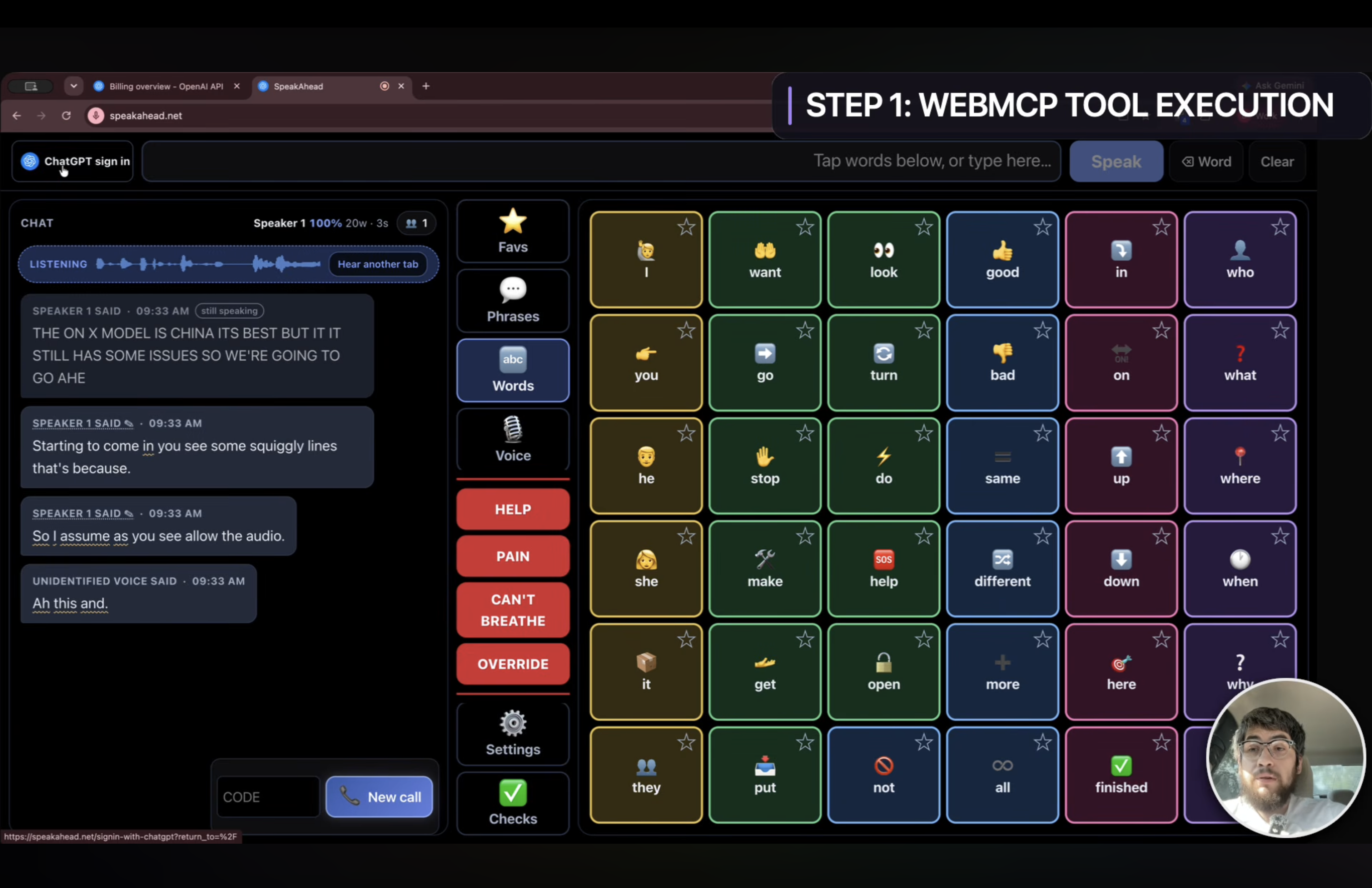
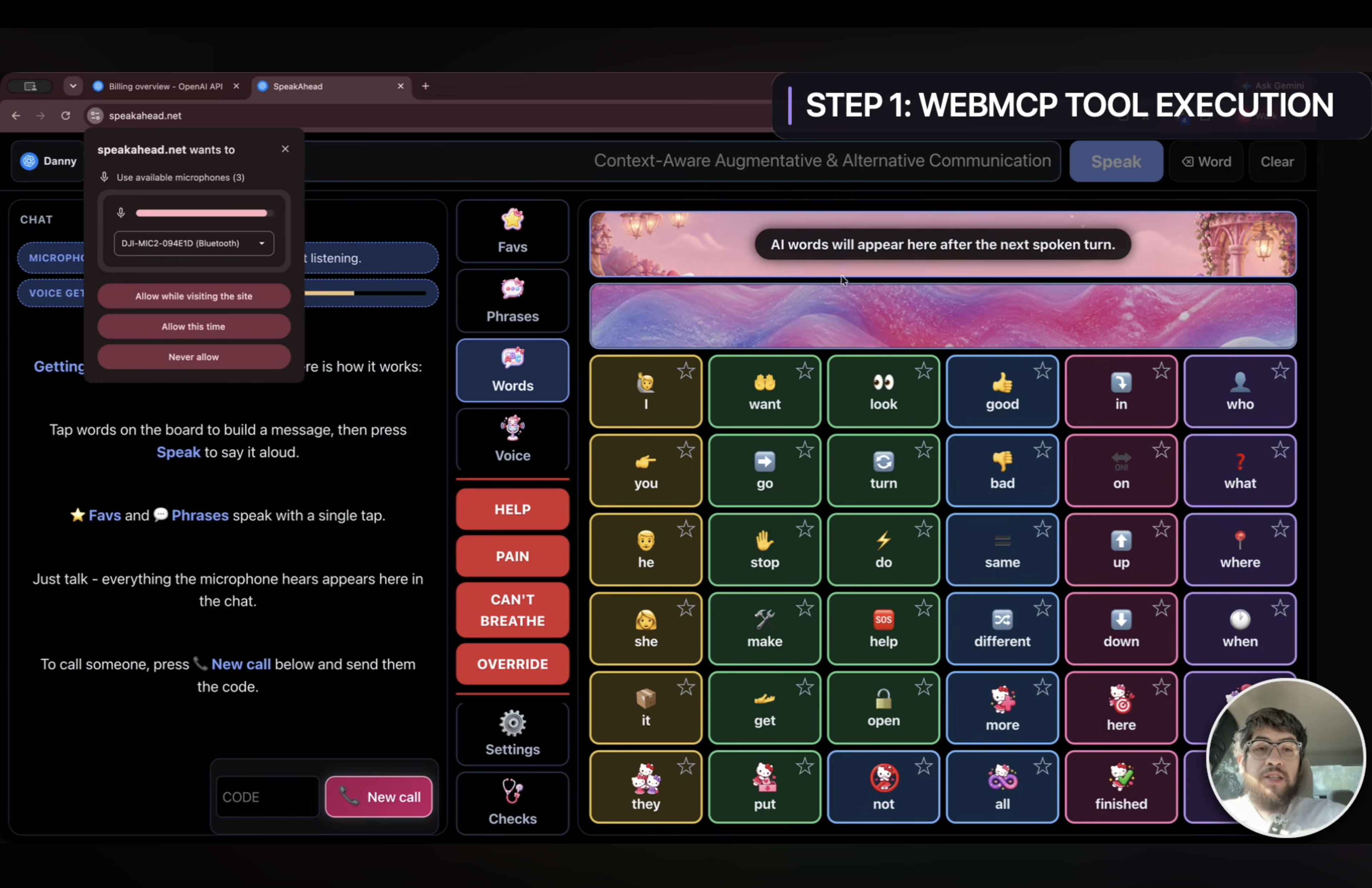
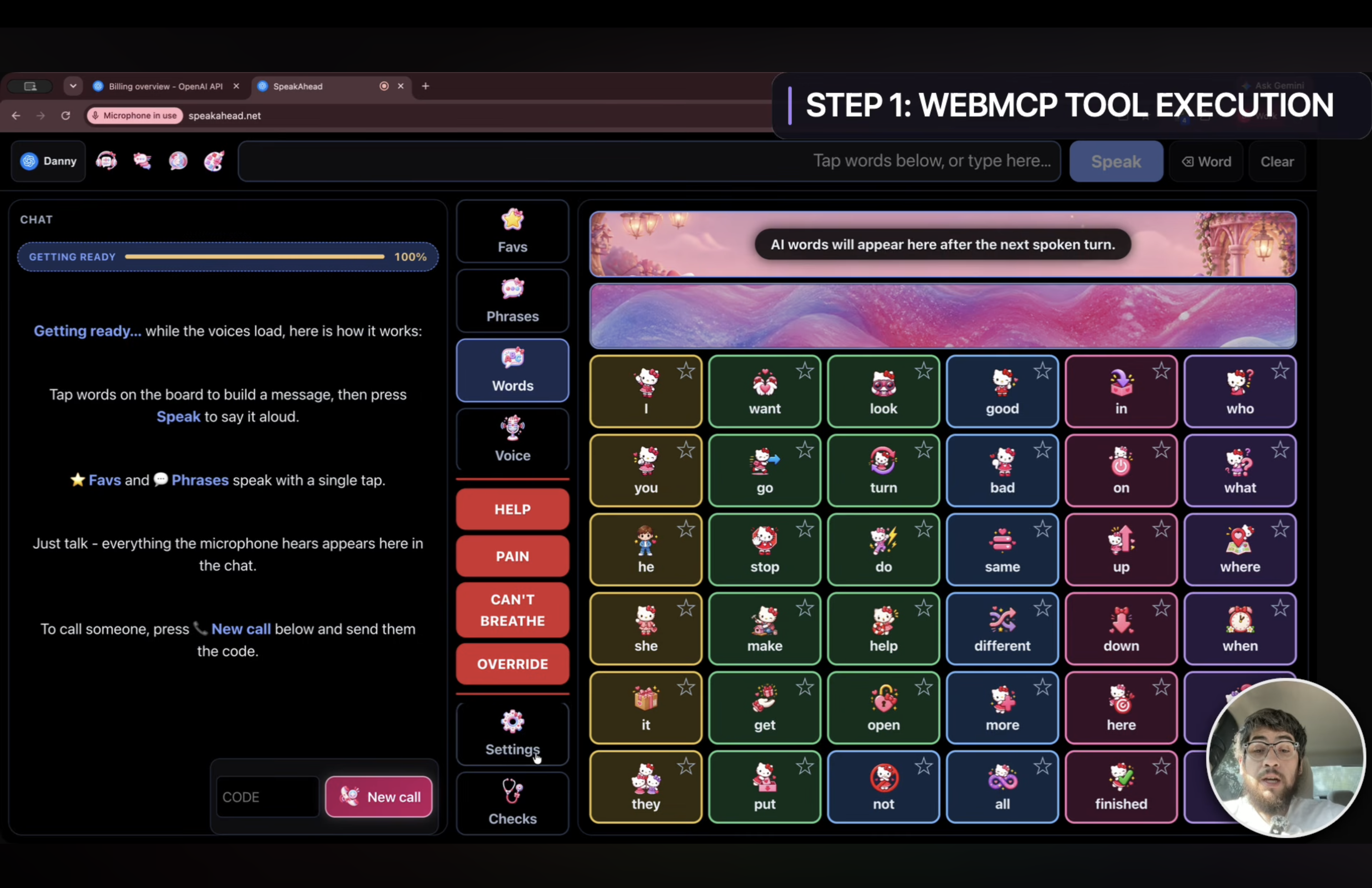
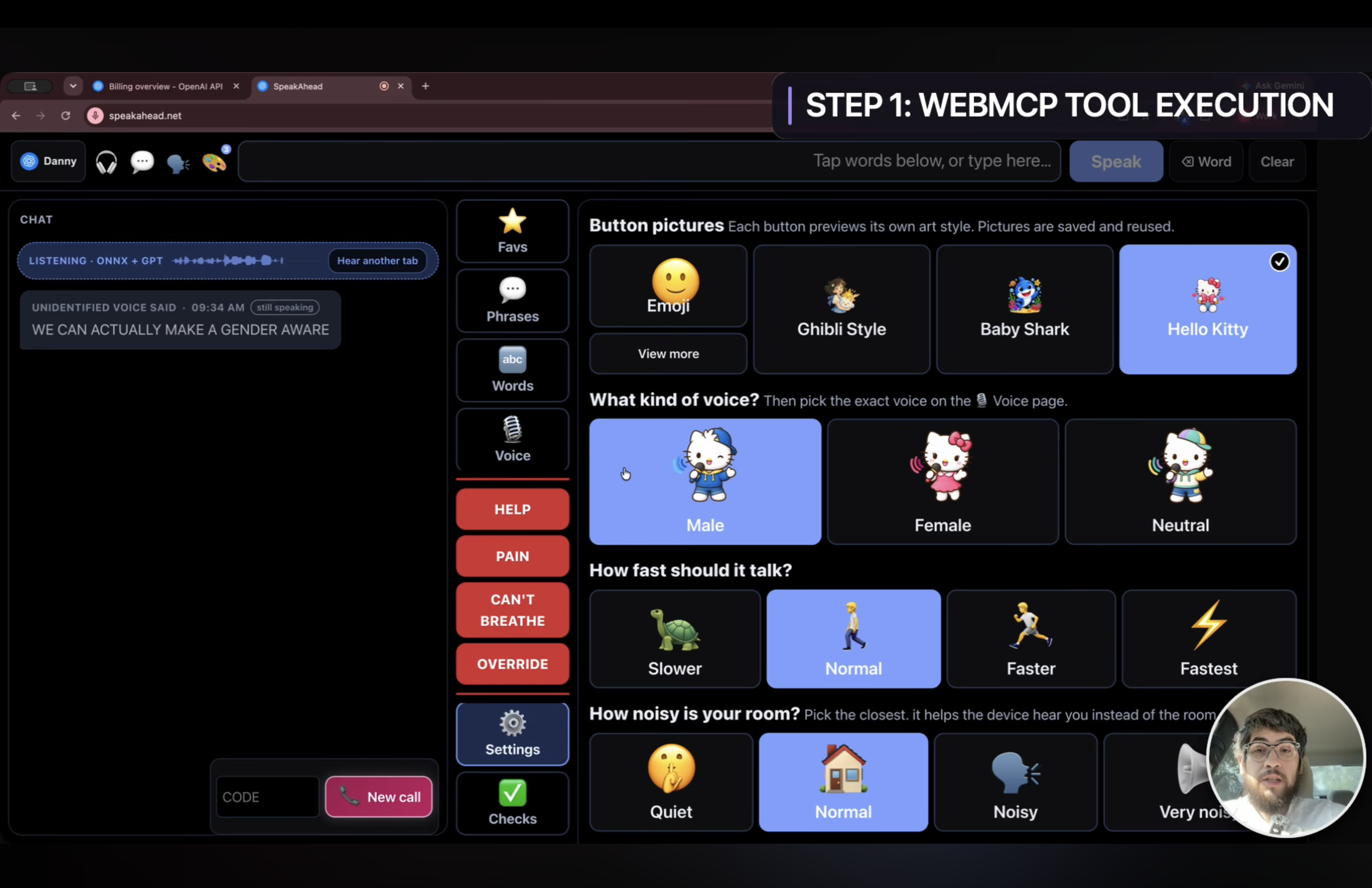
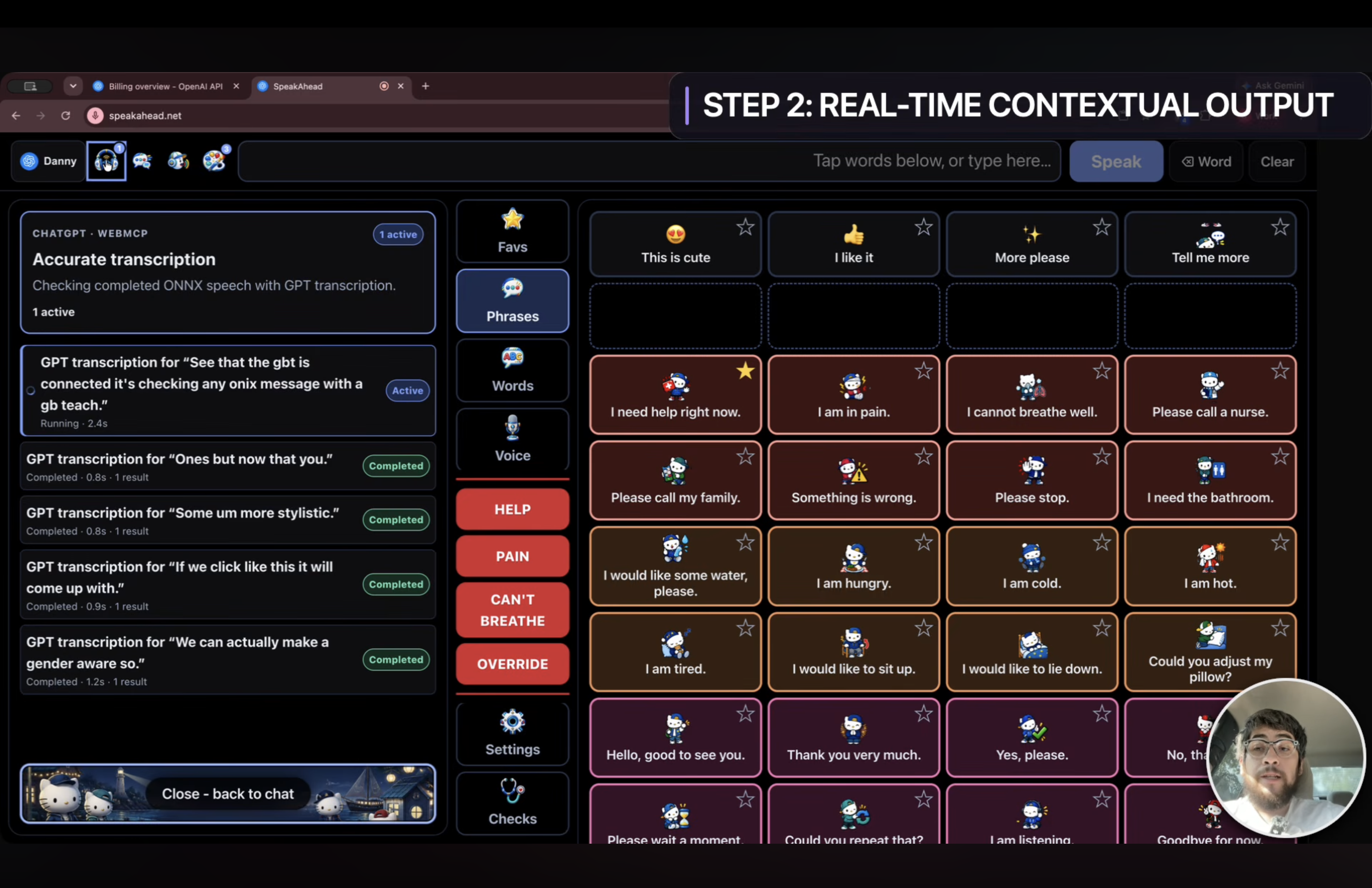
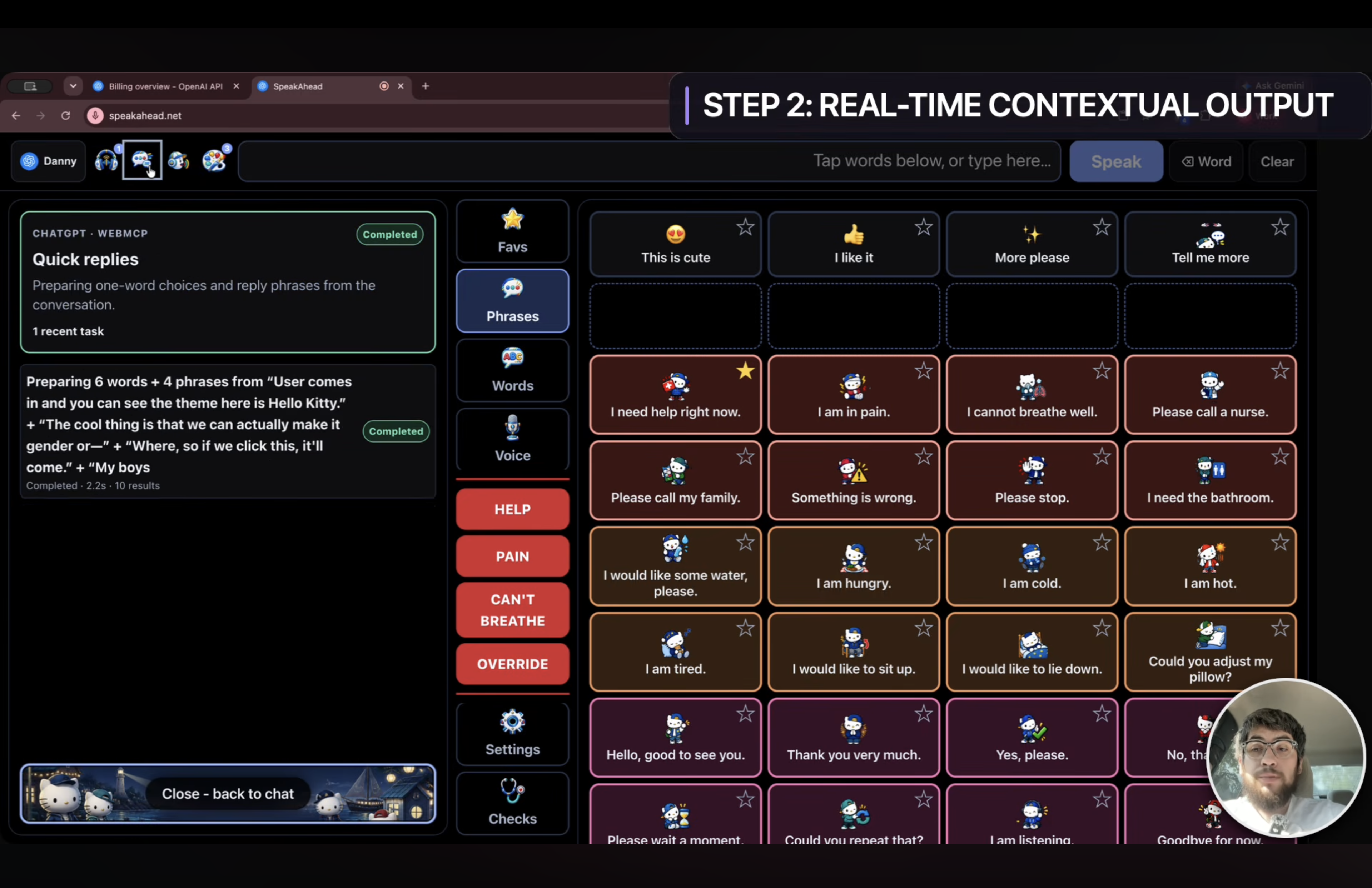
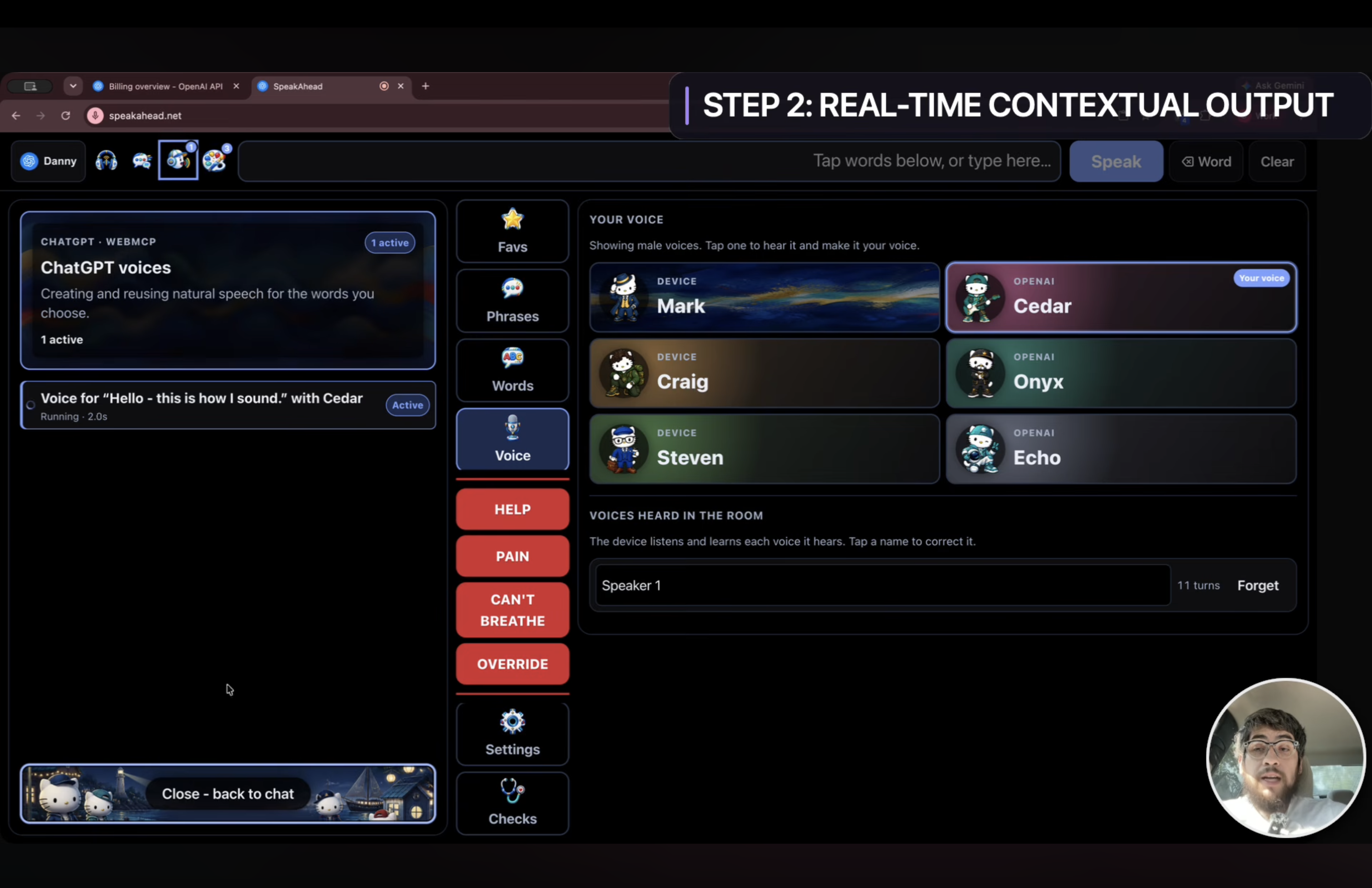
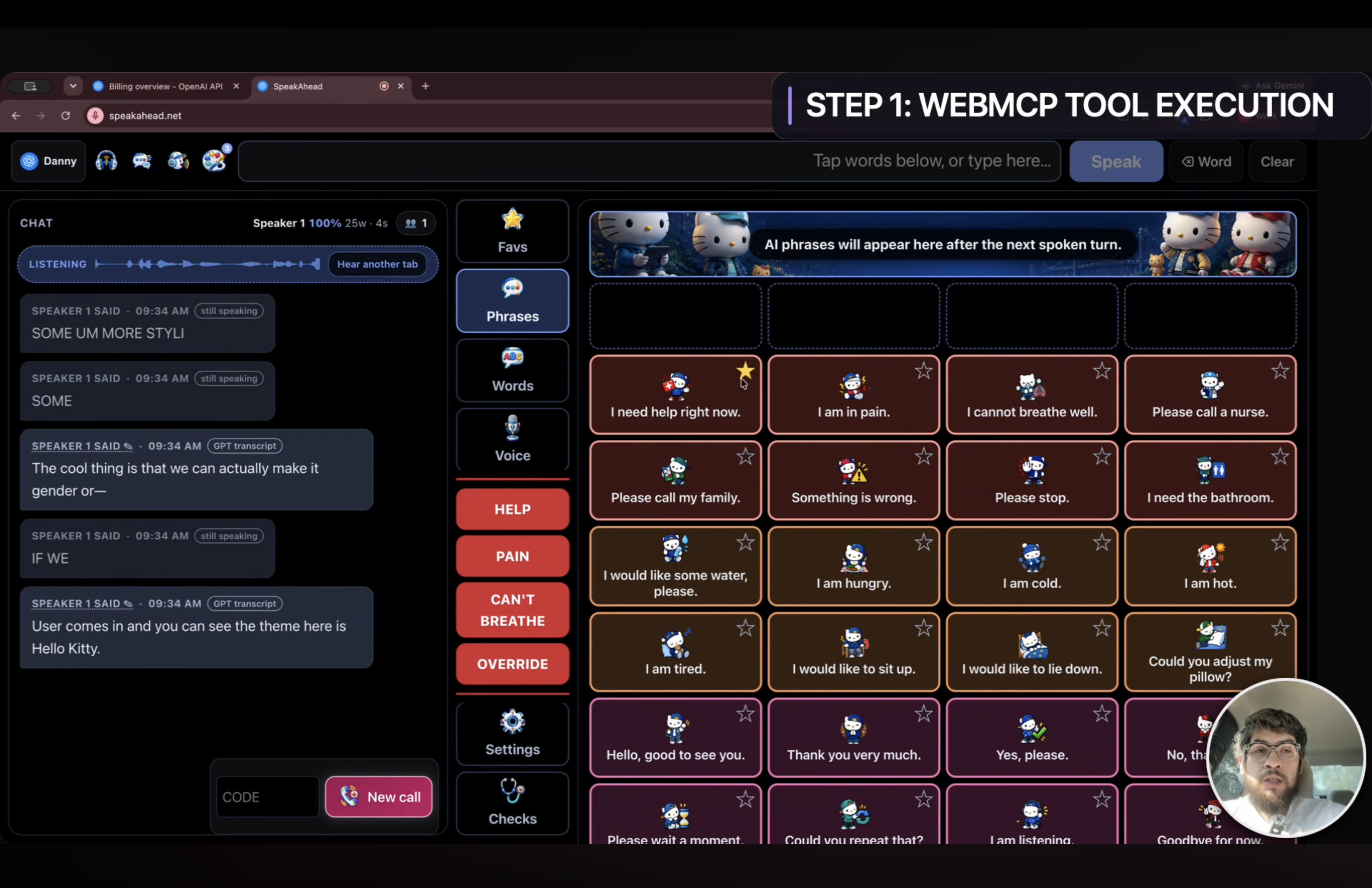
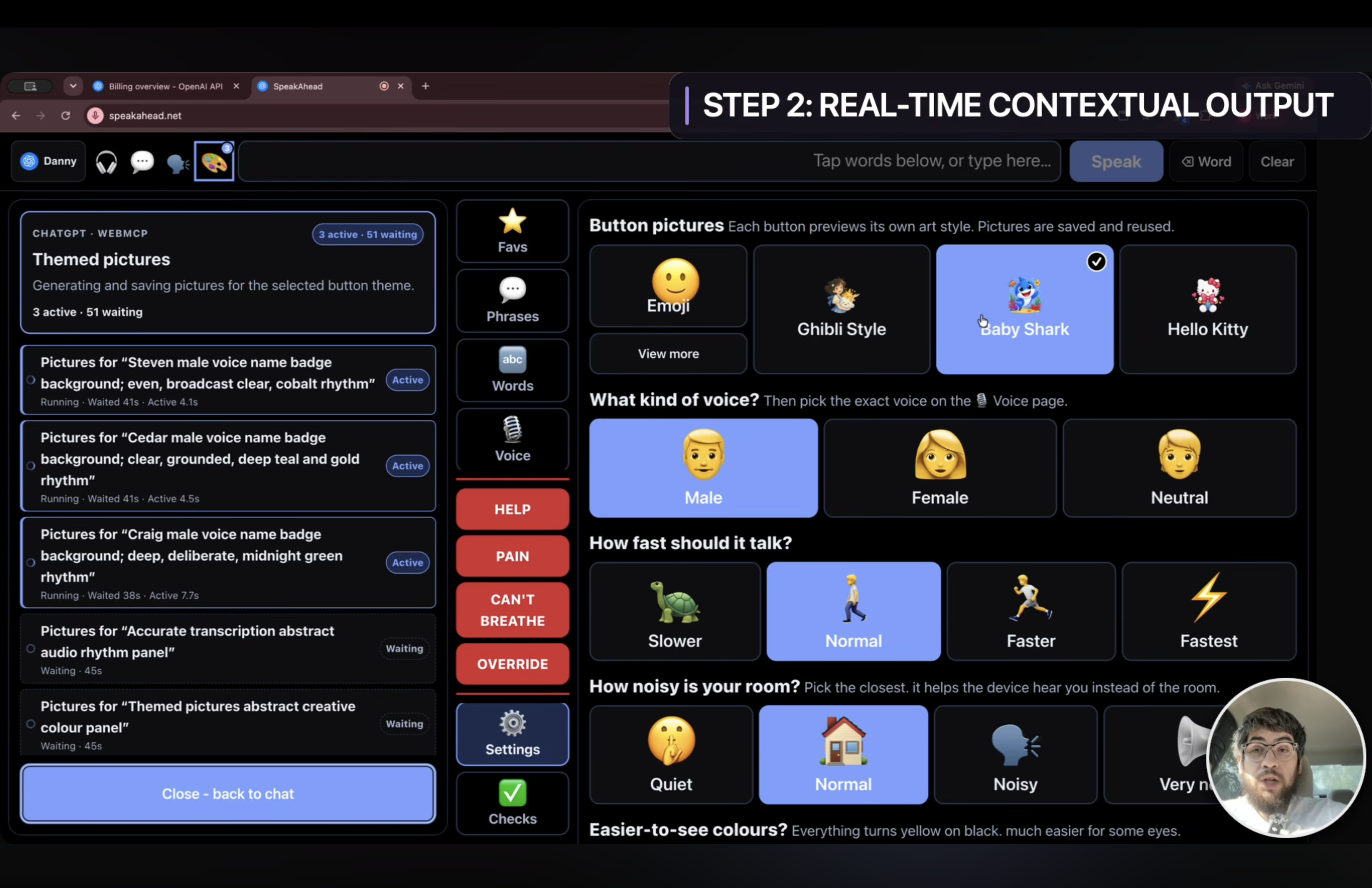
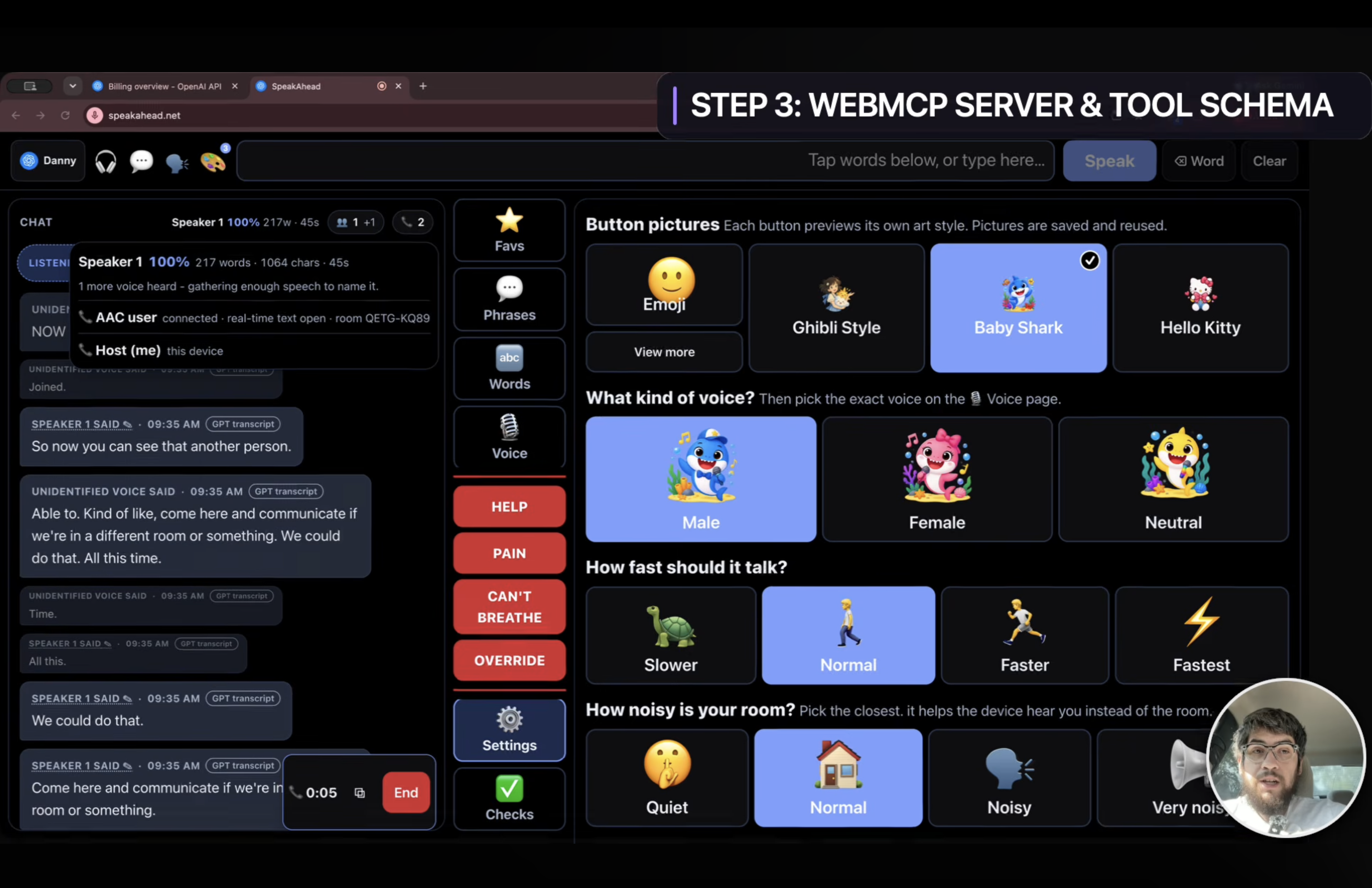
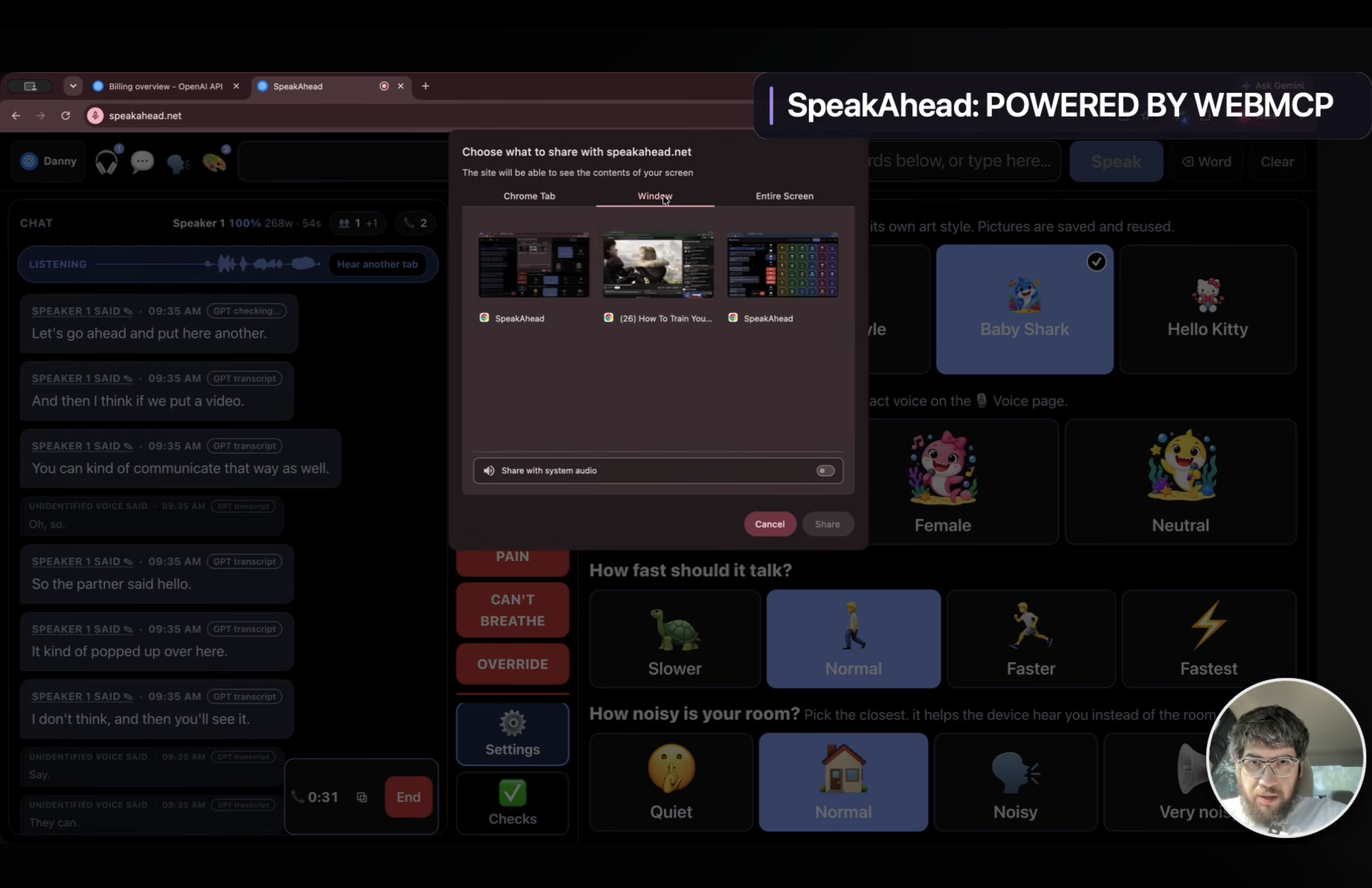
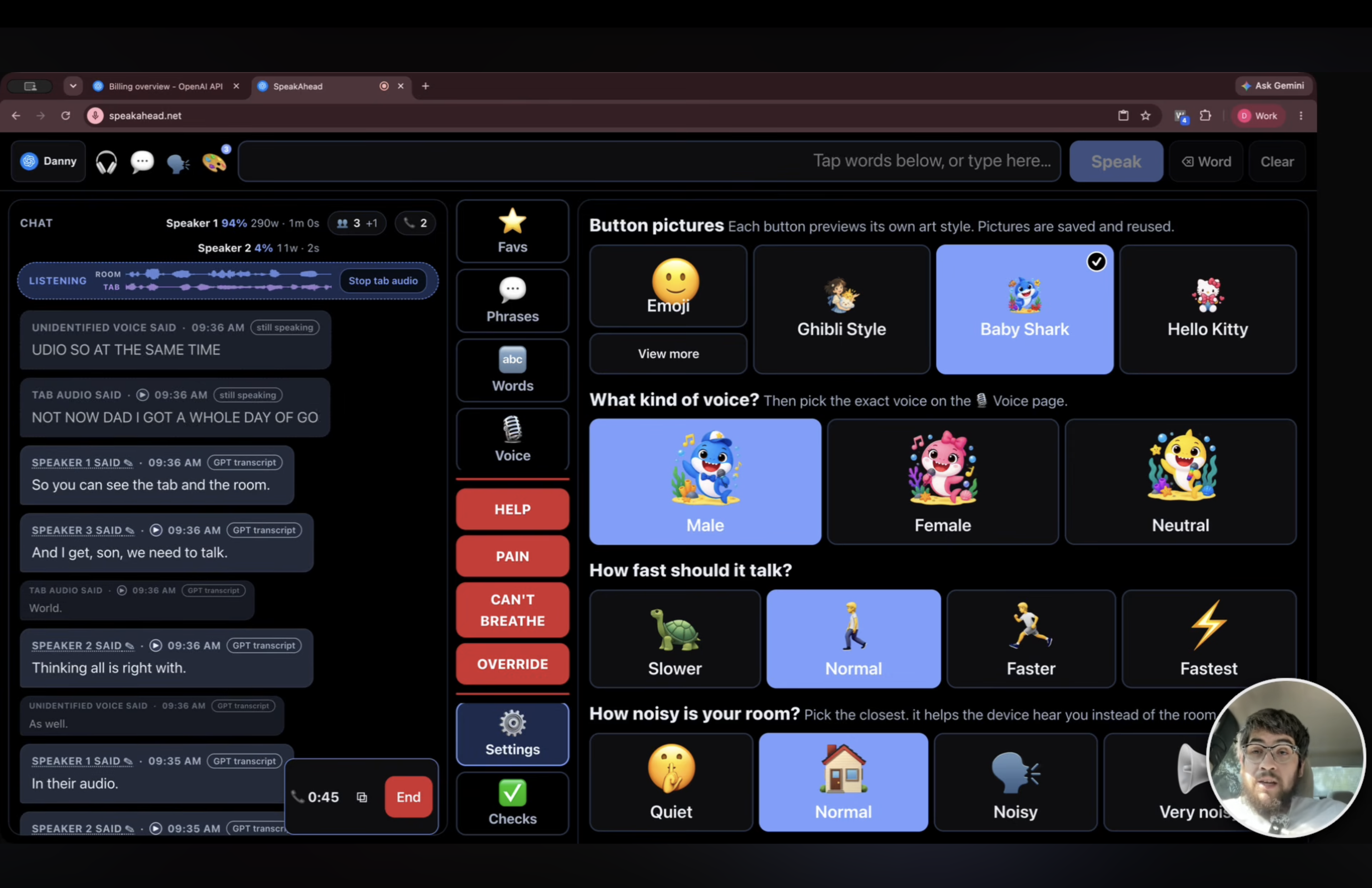
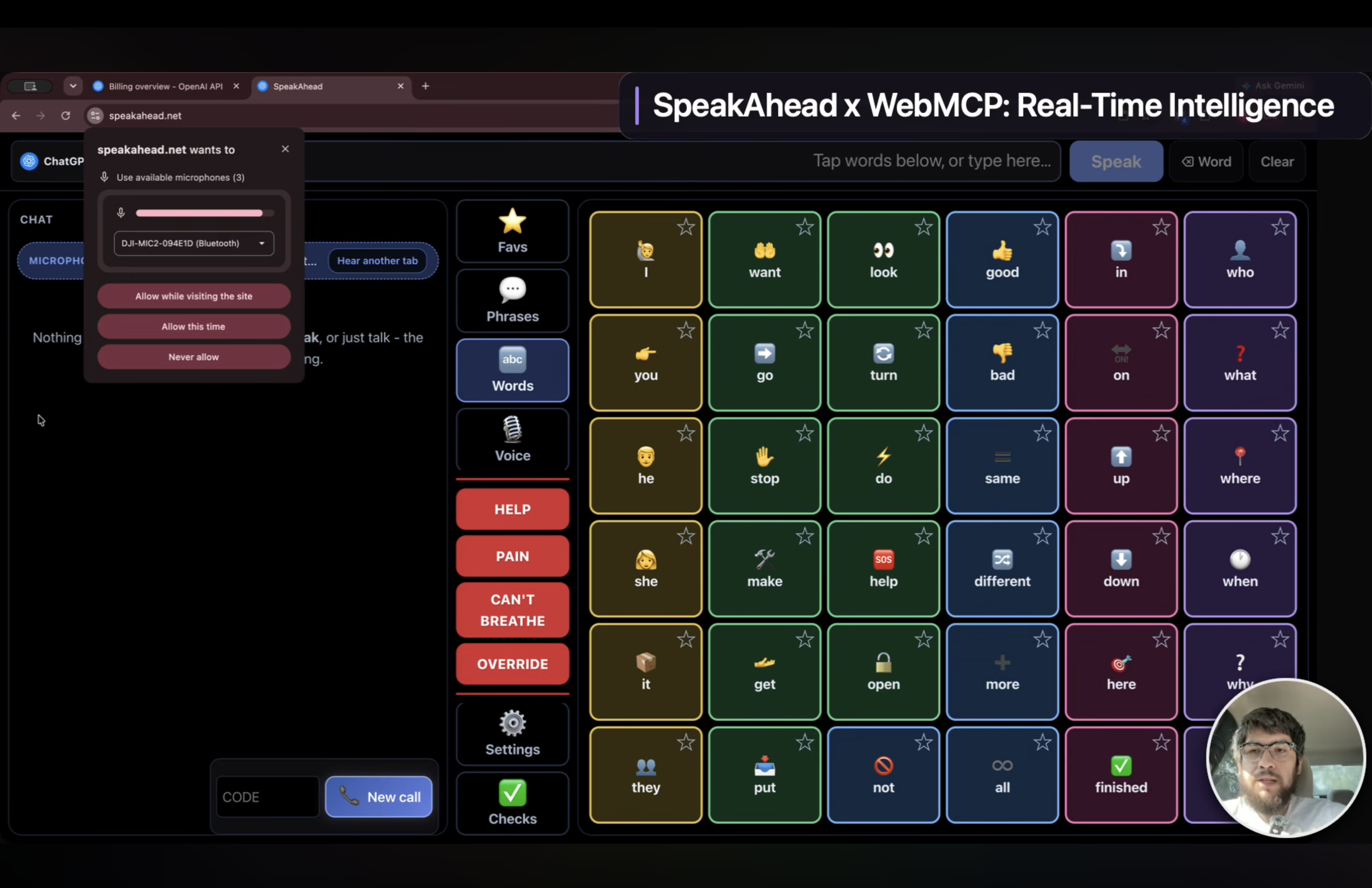
Over 66 million people worldwide live with severe speech and motor disabilities resulting from conditions such as ALS, cerebral palsy, brainstem stroke, and spinal cord injuries. Traditional Augmentative and Alternative Communication (AAC) systems rely on physical switches or eye-gaze tracking to select letters and words one by one. This process is physically exhausting: the average communication rate for non-speaking individuals using switch scanning is just 5 to 15 words per minute.
In everyday life, natural spoken conversation moves at 120 to 160 words per minute. Because of this speed gap, non-speaking individuals are frequently excluded from real-time discussions, work meetings, and phone calls.
We asked a critical question: What if a browser-native AI agent could listen to live multi-party conversation, anticipate context, dynamically adjust vocabulary layouts, and offer instantaneous phrase predictions, all while keeping the human user in full control and protecting their sensitive biometric voice data?
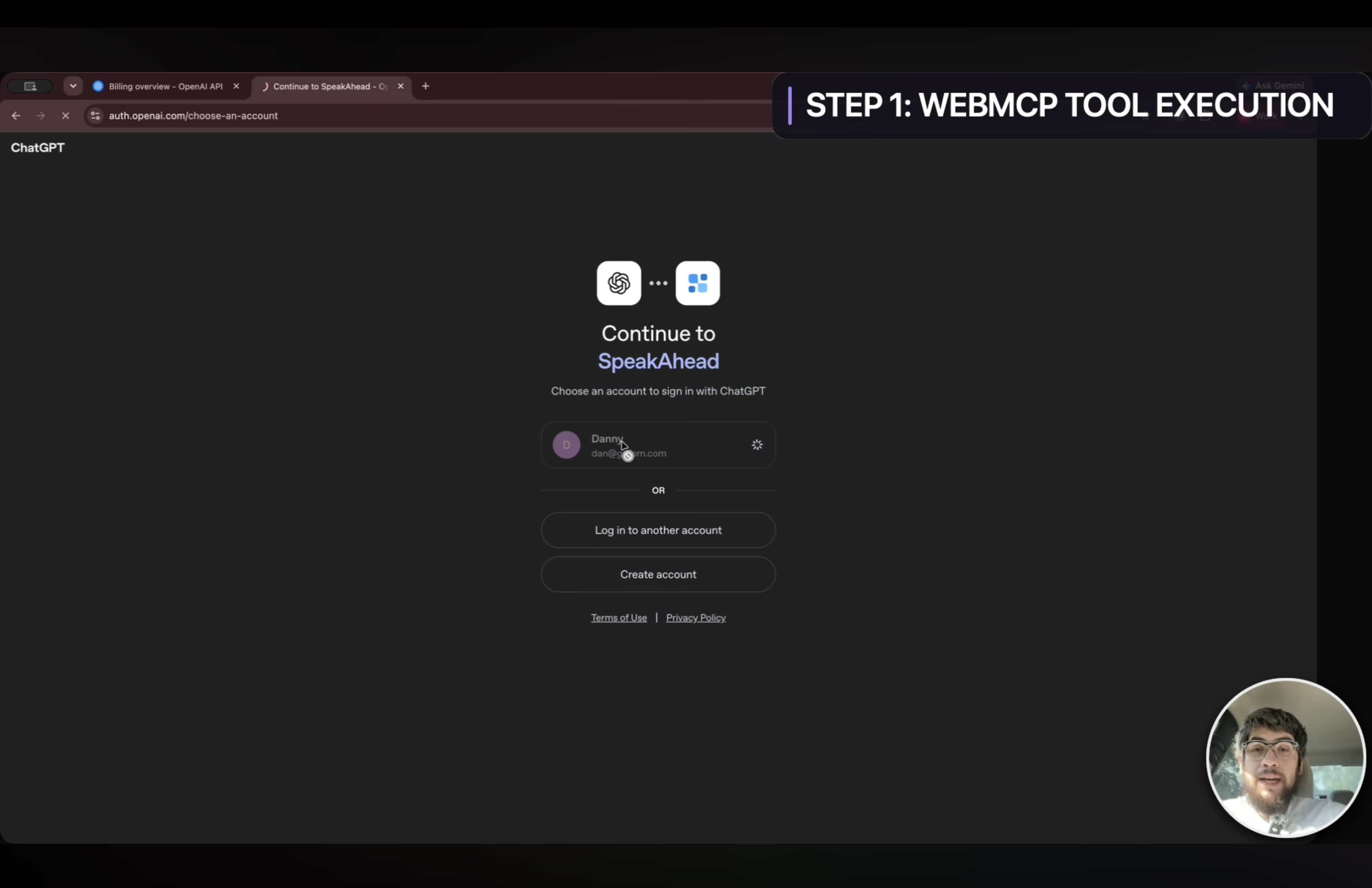
The launch of the WebMCP open standard (navigator.modelContext and document.modelContext) provided the exact missing link. By allowing AI agents to interact directly with web applications in real time, we set out to build SpeakAhead: a neural, privacy-first AAC ecosystem that bridges human intent with autonomous agent assistance.
Built With
- a11y
- accessibility
- ai-agents
- assistive-technology
- audioworklet
- bipa-compliance
- browser-apis
- chrome
- edge-ai
- machine-learning
- onnx
- react
- sherpa-onnx
- speaker-diarization
- speech-recognition
- tailwindcss
- text-to-speech
- typescript
- vite
- vitest
- voice-activity-detection
- web-audio-api
- webassembly
- webmcp
- webrtc

Log in or sign up for Devpost to join the conversation.