-
-
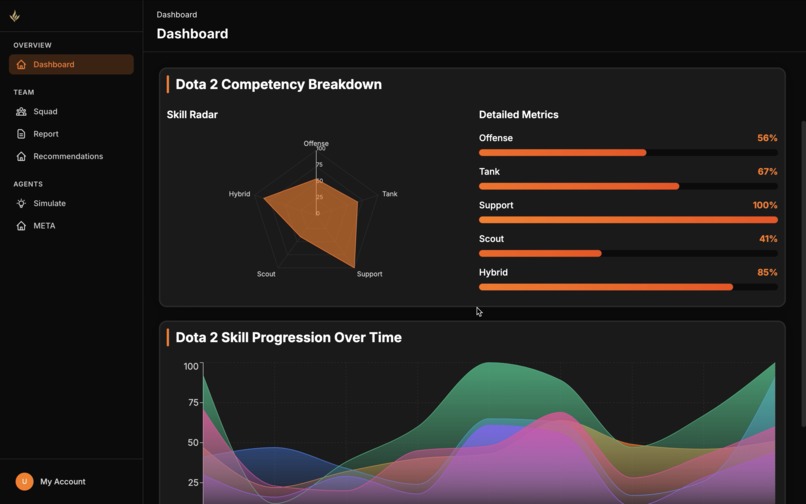
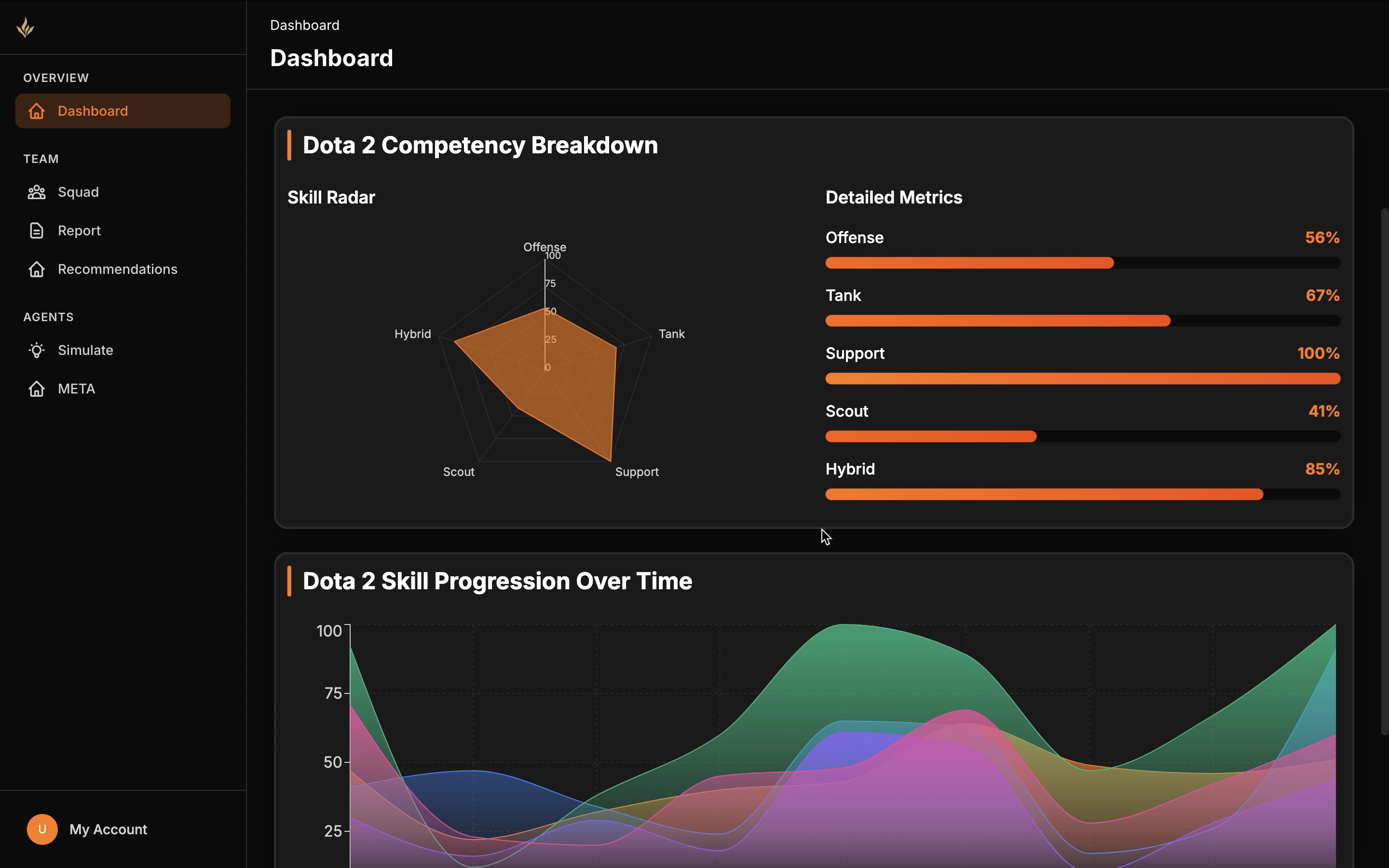
Skills dashboard
-
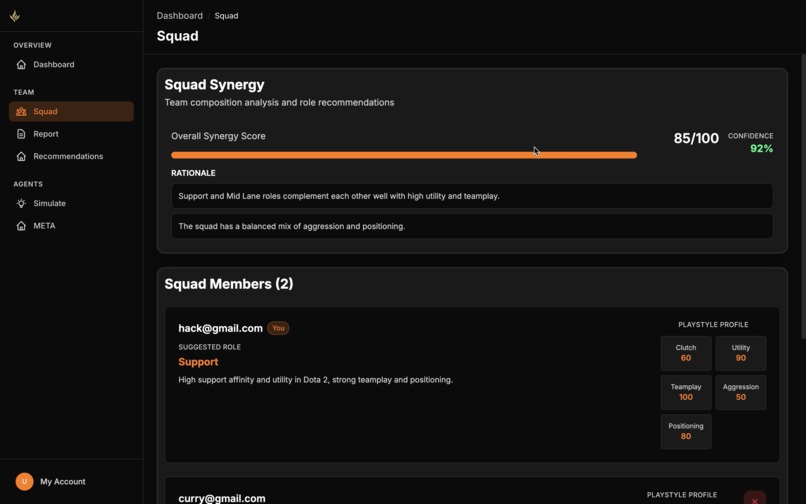
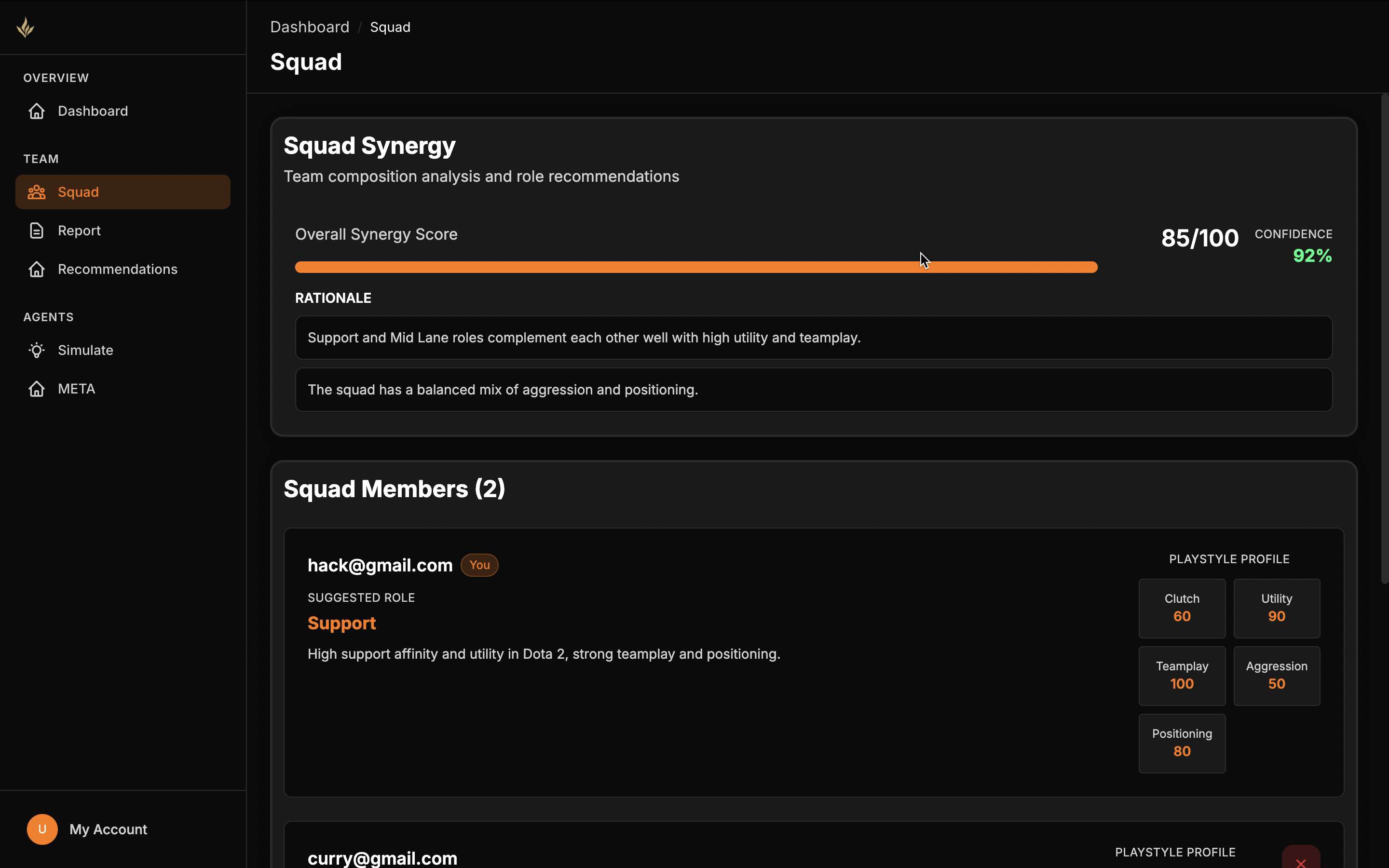
Squad synergy
-
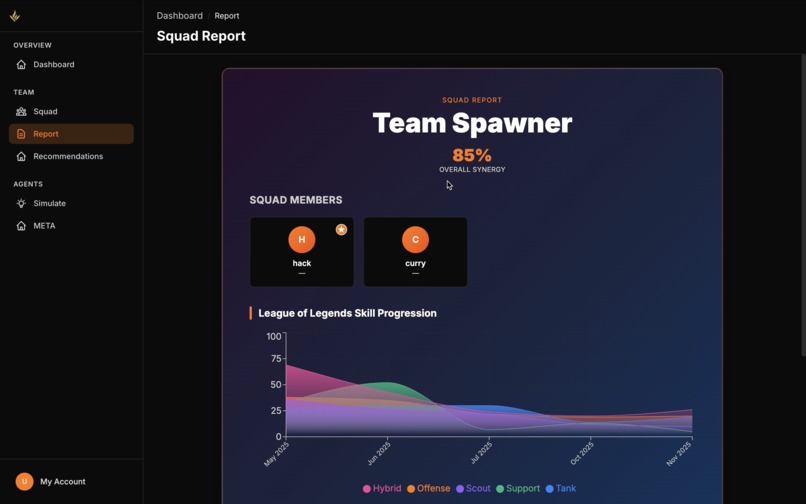
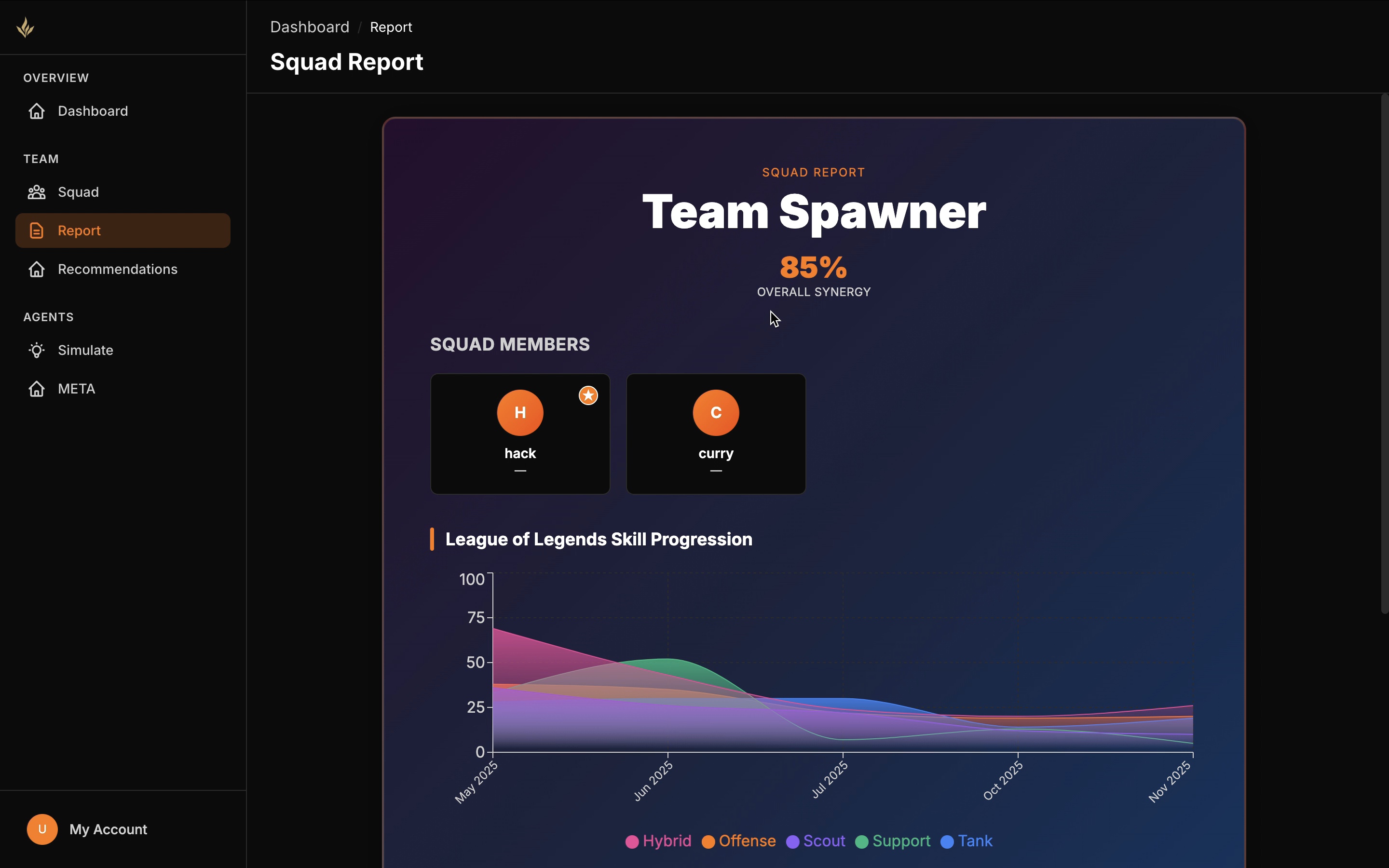
Squad report
-
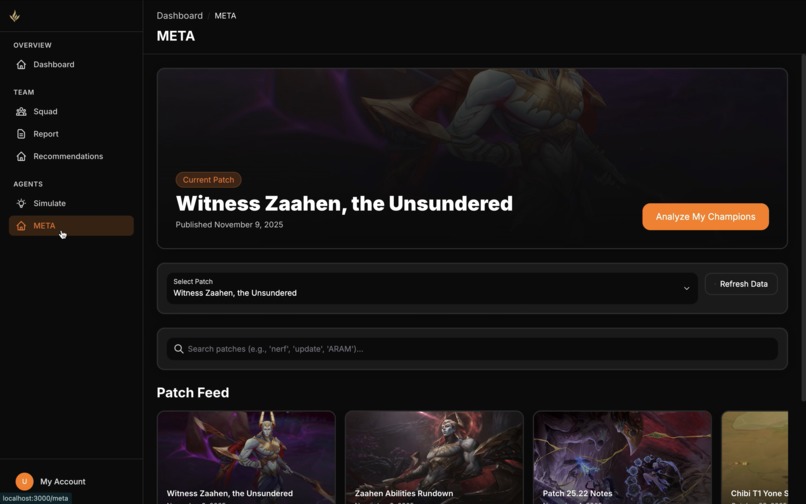
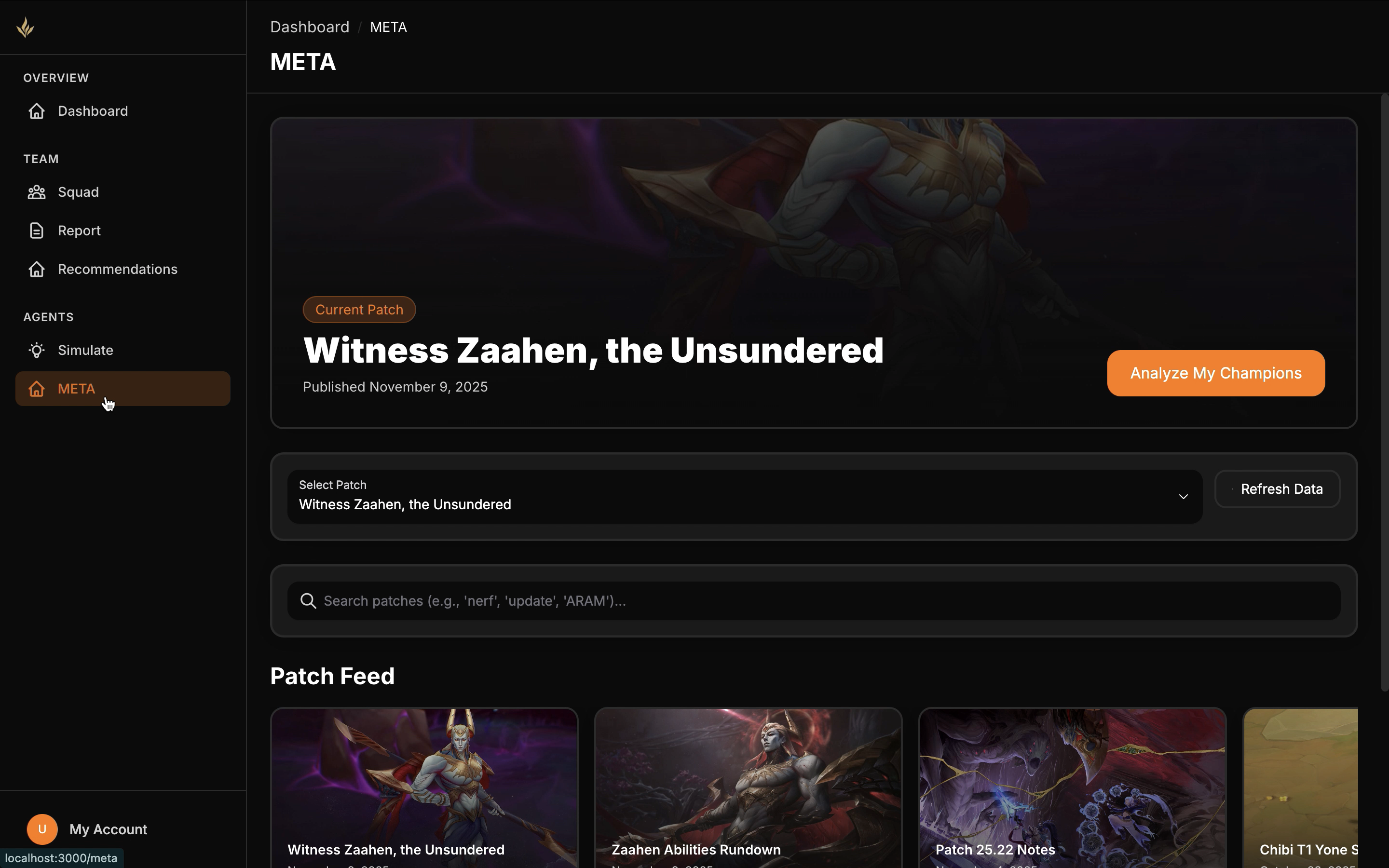
META agent
Inspiration
League of Legends is incredibly confusing to someone just starting out. The new terms and callouts, the 170+ champions, and the 5 different roles to choose from make it seem like a very overwhelming game. In fact, a research paper published in 2020 stated that new league of legends players feel punished due to a “steep learning curve.” So many potential players lose the chance to experience the fun behind League of Legends after this learning curve, so we built Spawner AI as an agentic platform to reduce the friction of up to an entire squad of new League of Legends players.
What it does
After the user inputs their information about the previous games they have played, we use a combination of Tracker.gg and OpenDota to get their match data from these games, including what hero they used, their kills, deaths, and assists, and whether they won or not. This information is fed into our custom trained lightweight CNN model to predict their Offense, Tank, Support, Scout, and Hybrid skills. With these skills, we use Amazon Nova to power our AI recommendations for what to do next to improve at League, as well as the user's recommended League role, champions, and how they play with a team. As the user starts getting into League, we use the Riot API to get their match data for league, splitting it into months and predict their skills for each month to help the user track their persistent weaknesses or strengths, quantitatively telling them what to work on as well as helping them visualize their progress over time.
Spawner AI also helps players discover how well their friend group synergizes in league, using our account creation system to allow users to add their team members, where we will use their skills gathered from the match history of all games to call Amazon Nova through AWS Bedrock to output the teams' synergy score each member's suggested role, and reasonings, so the team can adjust their playstyles to synergize with each other. An end-of-year report feature combines not only this squad data but also the player's skills (offense, tank, ...) over the past year, giving the user a sharable piece of their squad's and their individual growth.
Our META agent also utilizes Amazon Nova to summarize all the new patches, and more importantly how they affect the user's playstyle and top champions.
Spawner AI not only facilitates the process of getting into League, but also makes it fun to track your progress and improve, supporting the best part of League: playing with your friends and socializing. Whether that be seeing how you play and synergize with your friends to a fun visualization of your key skills you can share online, we make the journey of League of Legends a personalized, meaningful experience.
How we built it
We host our database and power our accounts system on Supabase, where we store the user's AI suggestions and insights to reduce costs, updating them when needed.
We used Tracker.gg and OpenDota to get the match histories of games like Dota 2 and Apex Legends, and the Riot API to get data for League of Legends, powering our retrospective reports.
Challenges we ran into
- Gaining access to the API's required to get match data from some games
Accomplishments that we're proud of
- Creating a visually appealing, fun, and useful website, expanding past op.gg
What we learned
Training and using lightweight CNN models
Implementing AWS Bedrock LLM's
What's next for Spawner - The AI Starting Point
Full match history support for more games
Development a mobile app for even easier sharing of stats
Built With
- amazon-web-services
- next.js
- opendota
- riot-games
- supabase
- tensorflow
- tracker.gg


Log in or sign up for Devpost to join the conversation.