-
-
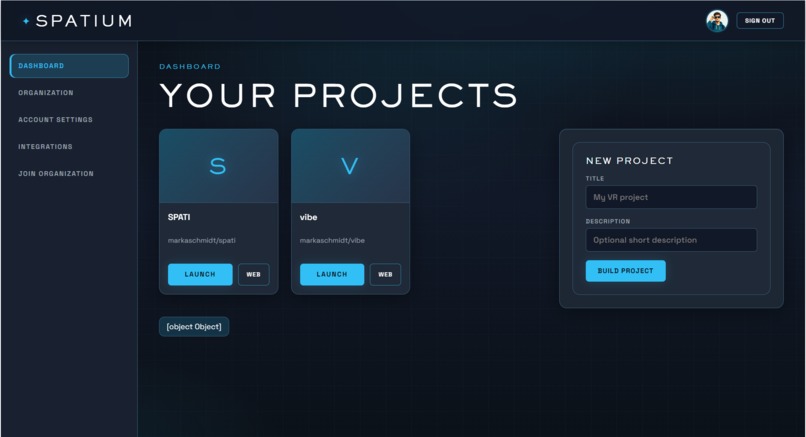
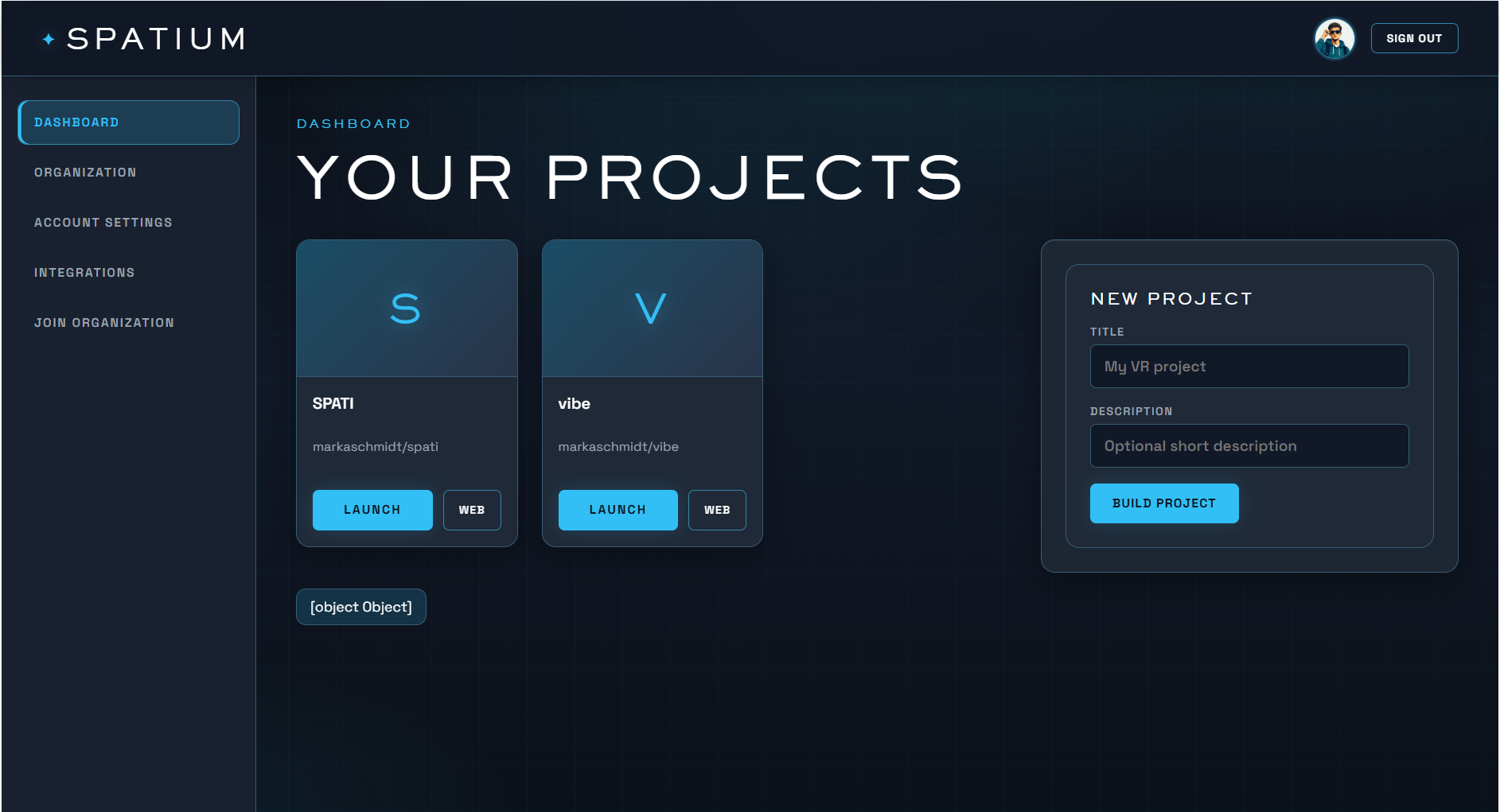
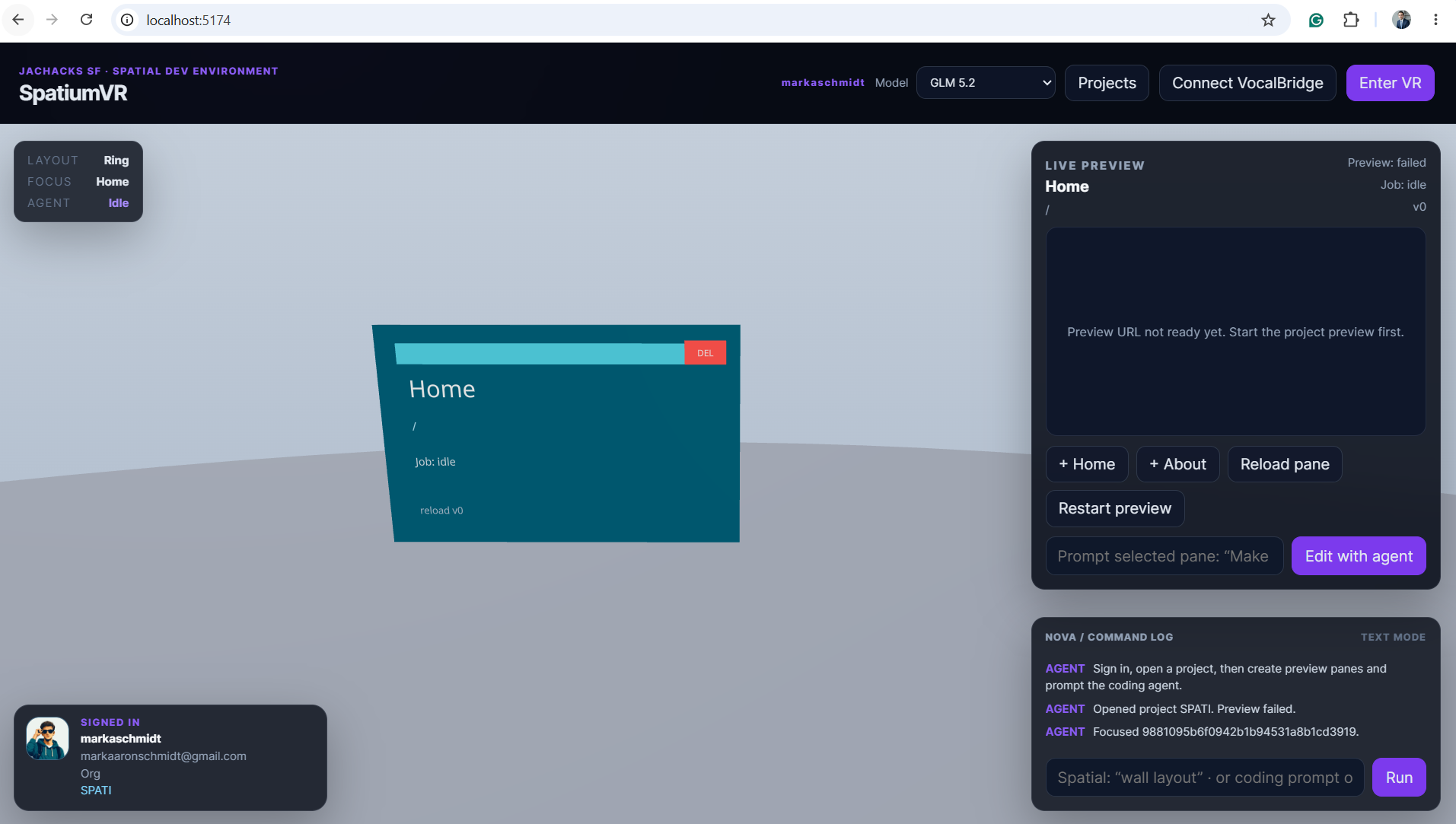
Dashboard
-
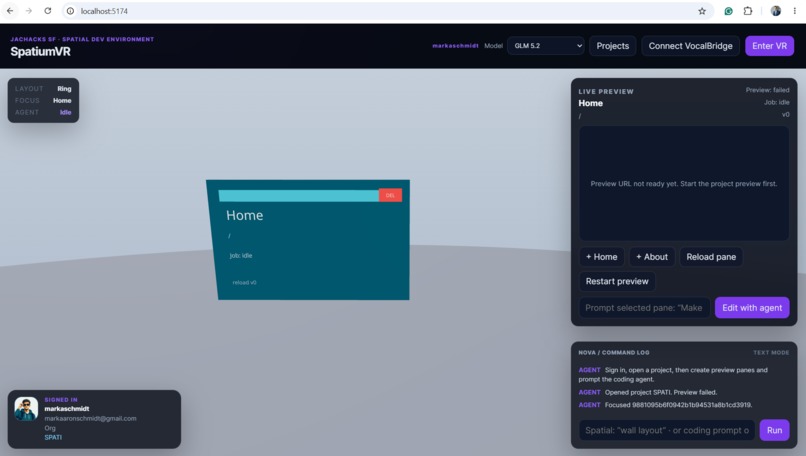
VR environment screen (PC version)
-
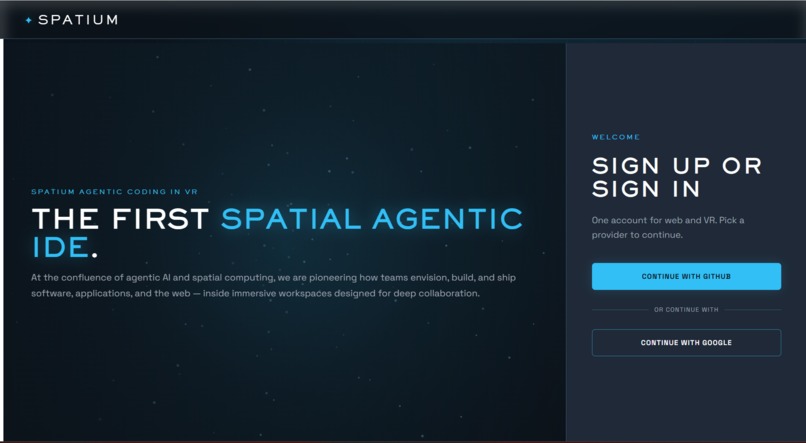
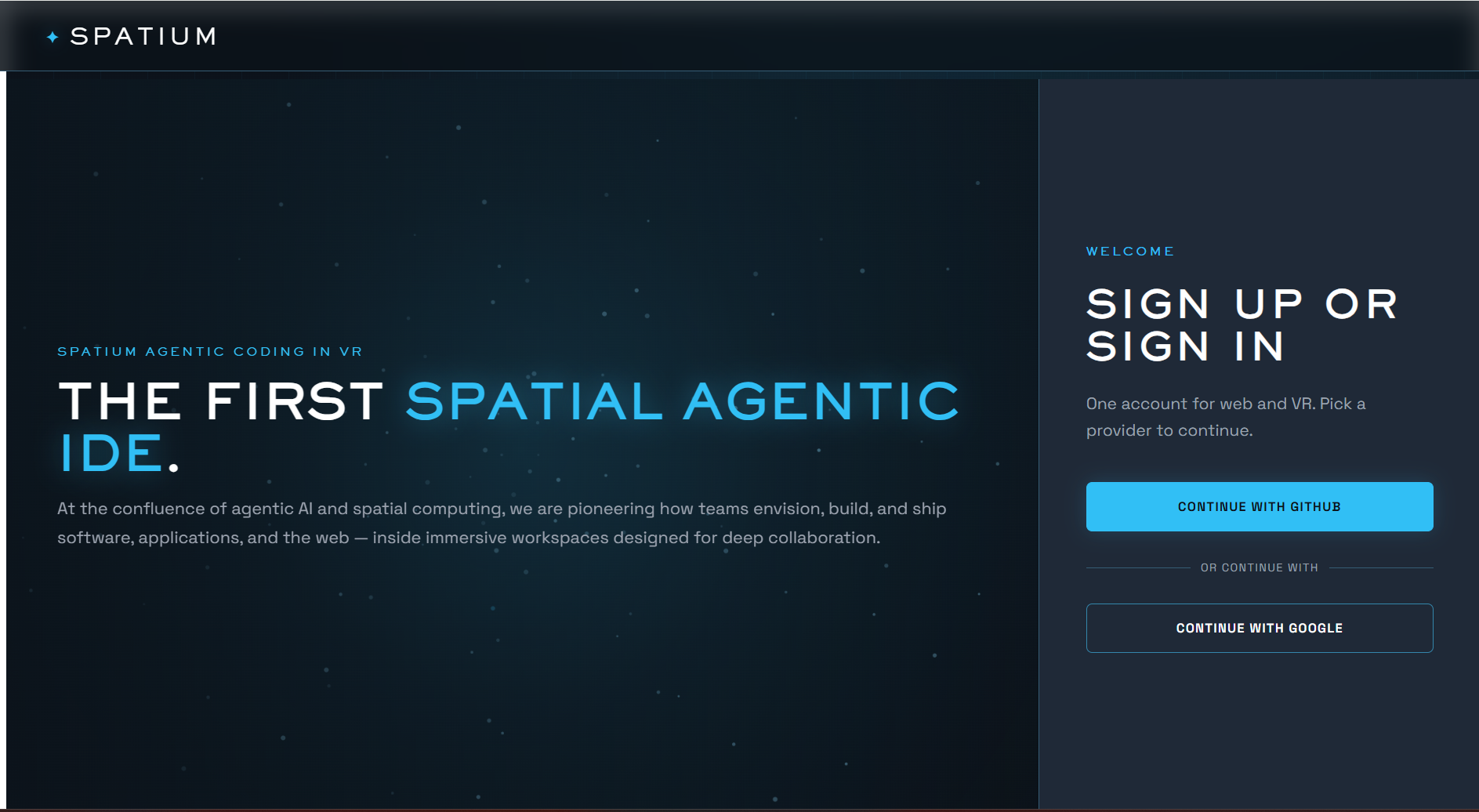
Welcome Login Screen
Inspiration
Despite the emergence of vibe coding, programming itself has not changed behaviorally. We are still looking at the same IDE, except prompting AI agents. Then, on another monitor, we refresh our local or development environment to see changes. I want to evolve the paradigm beyond code output. I decided to find a way to bring vibe coding into 3d spatial environments so that people can truly build new digital experiences collaboratively.
What it does
In a VR environment you can load an application or website, ask your vocal AI agent to make changes, it will kickstart the openrouter requests to make coding changes to your website or app.
How we built it
Jac: Most API and foundational aspects of the codebase. GCP: Bucket Storage (Interoperating with Jac's native GCP feature). Vocal Bridge: Voice AI Agent OpenRouter: Vibe coding models. Several miscellaneous VR libraries fundamental to creating any VR environment.
Challenges we ran into
Getting Jac to interoperate well with VR libraries and vocal bridge. They seem to have some gaps which forced me to have to resort to more traditional frameworks for some aspects of the project.
Accomplishments that we're proud of
You can import a website into a VR environment, then have an AI voice agent vibe code new features or fixes for you.
What we learned
VR environments are still very finnicky and will require quite a bit of work to make AI agents operate smoothly within them. There's little AI infrastructure for the VR space still.
Finishing the ability to manage not just coding new features for a website or app, but updating through connectors project management tools like Linear, Trello, and Jira. Further support of the collaborative environment, and introduction of gamification that rewards people for using AI within the VR space to vibe code so that they can continue to personalize their workspace with cosmetics, skins, companion pets, and furniture.
Built With
- fastapi
- jac
- openrouter
- vocal
- vr

Log in or sign up for Devpost to join the conversation.