-
-
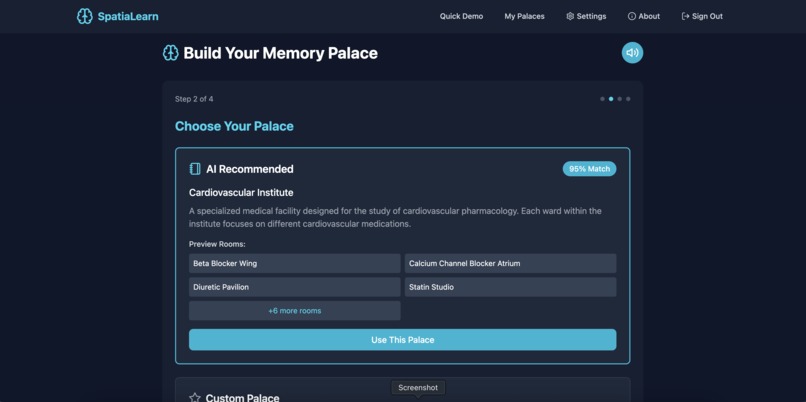
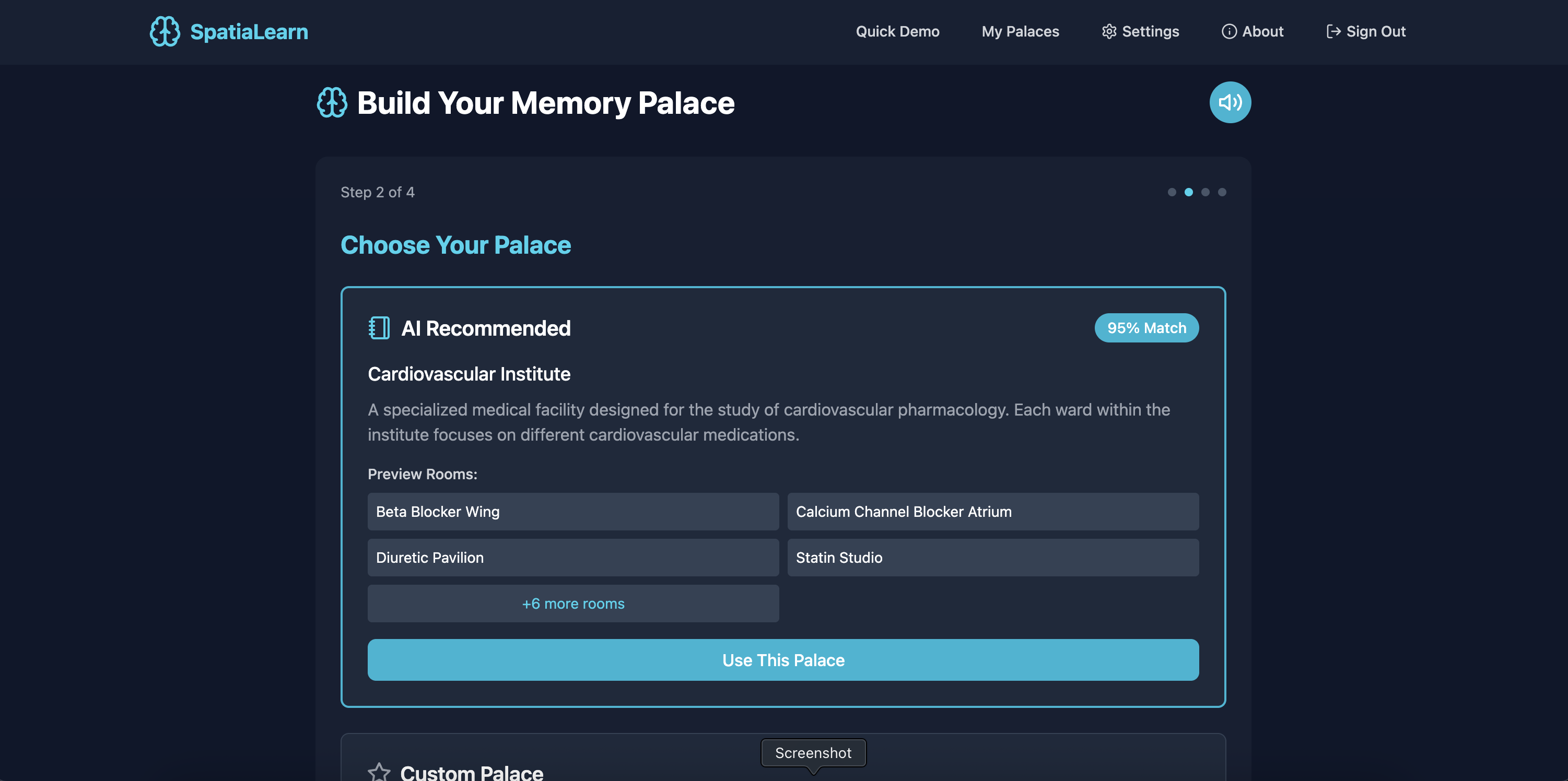
AI recommendation system suggesting "Cardiovascular Institute" with 95% content match, displaying preview rooms for logical organization.
-
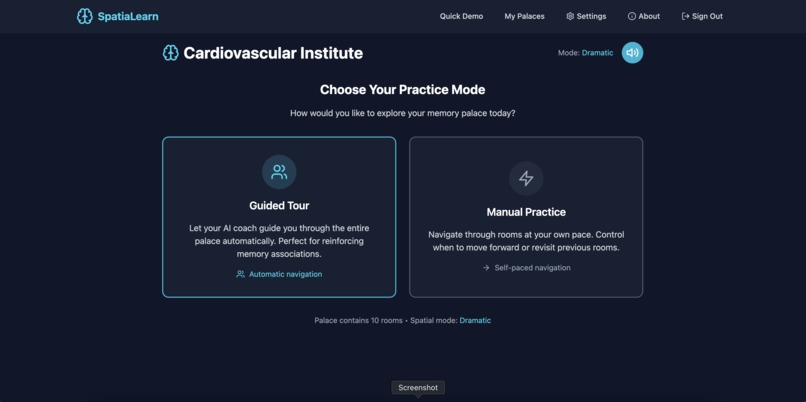
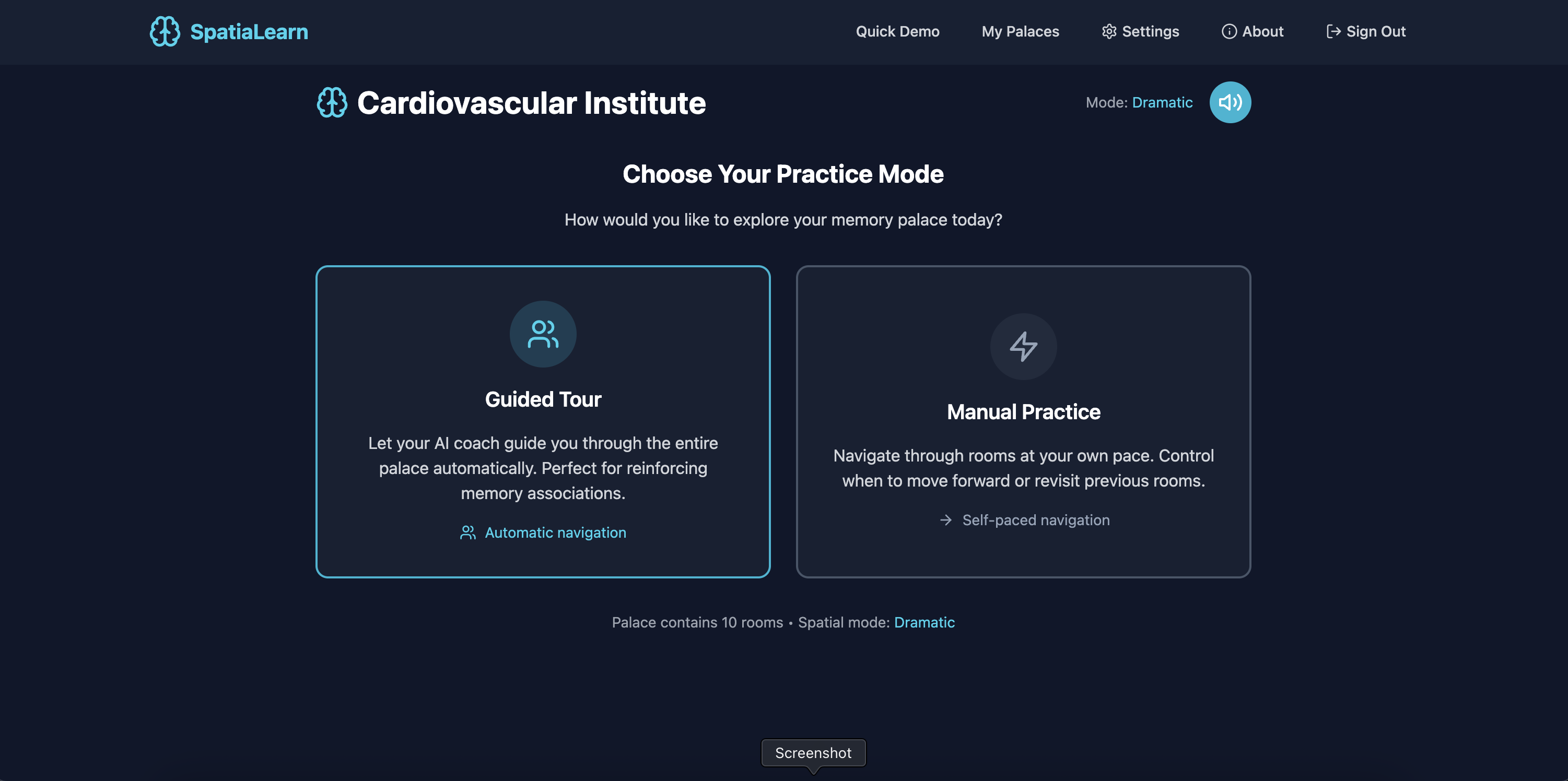
Practice mode selection interface offering guided AI coach tours or self-paced navigation.
-
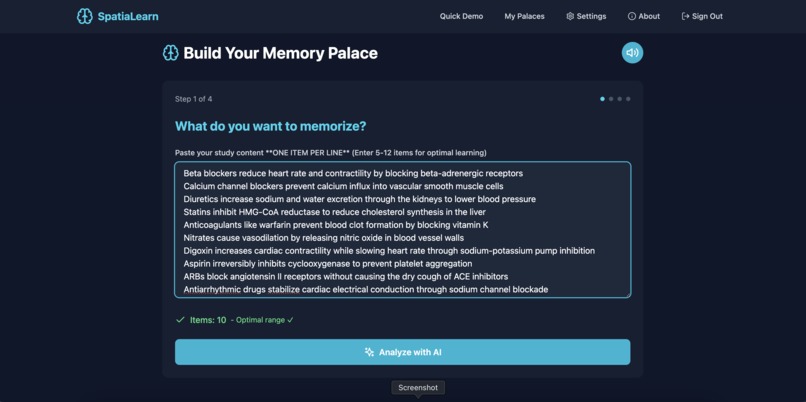
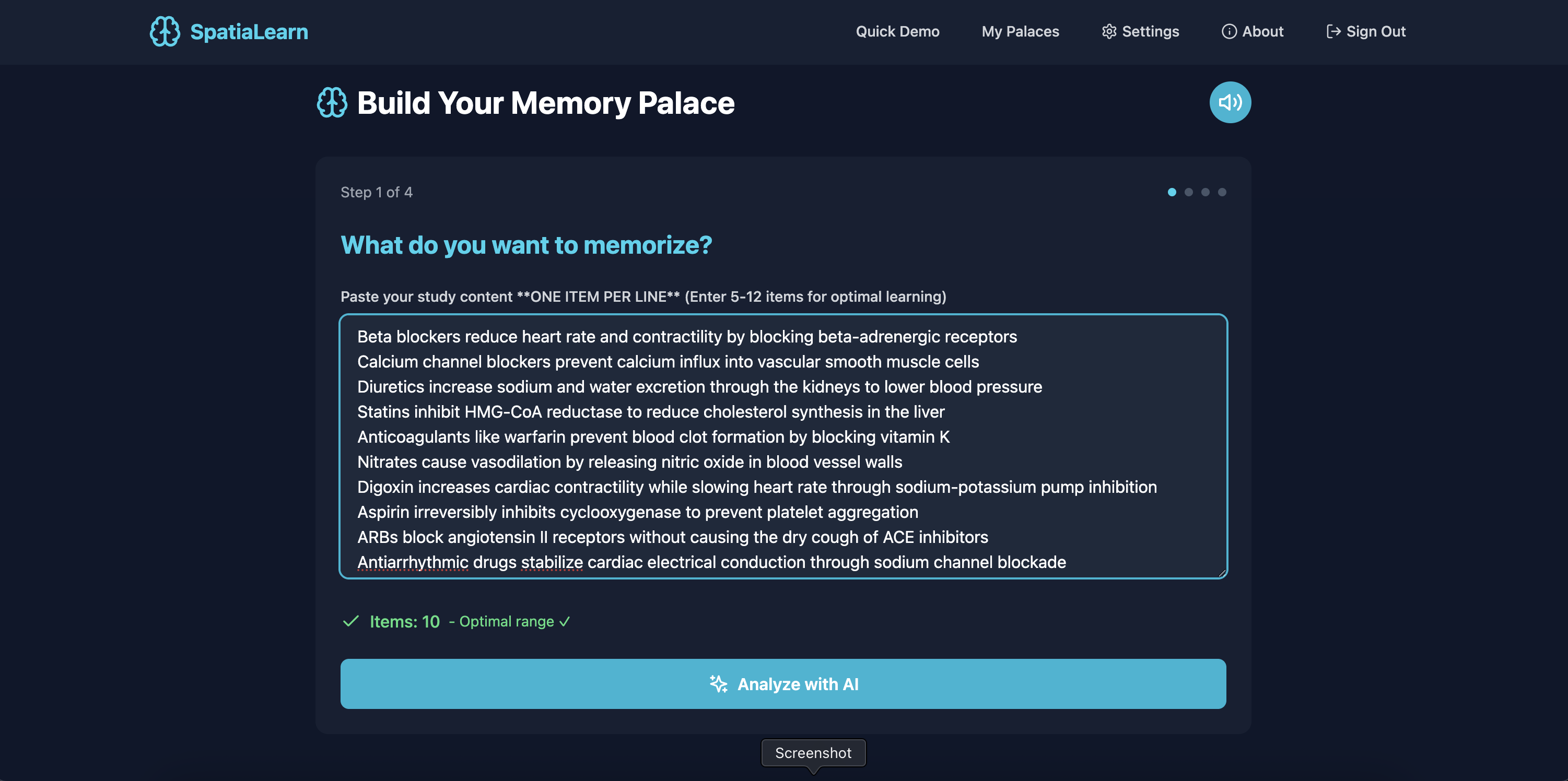
Content input interface where users paste study material.
-
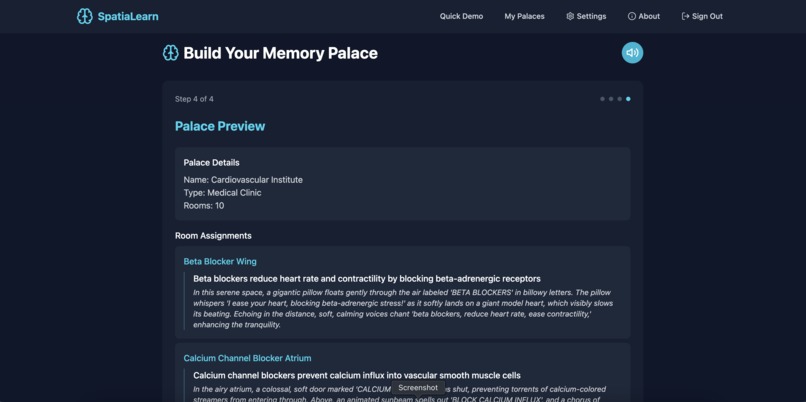
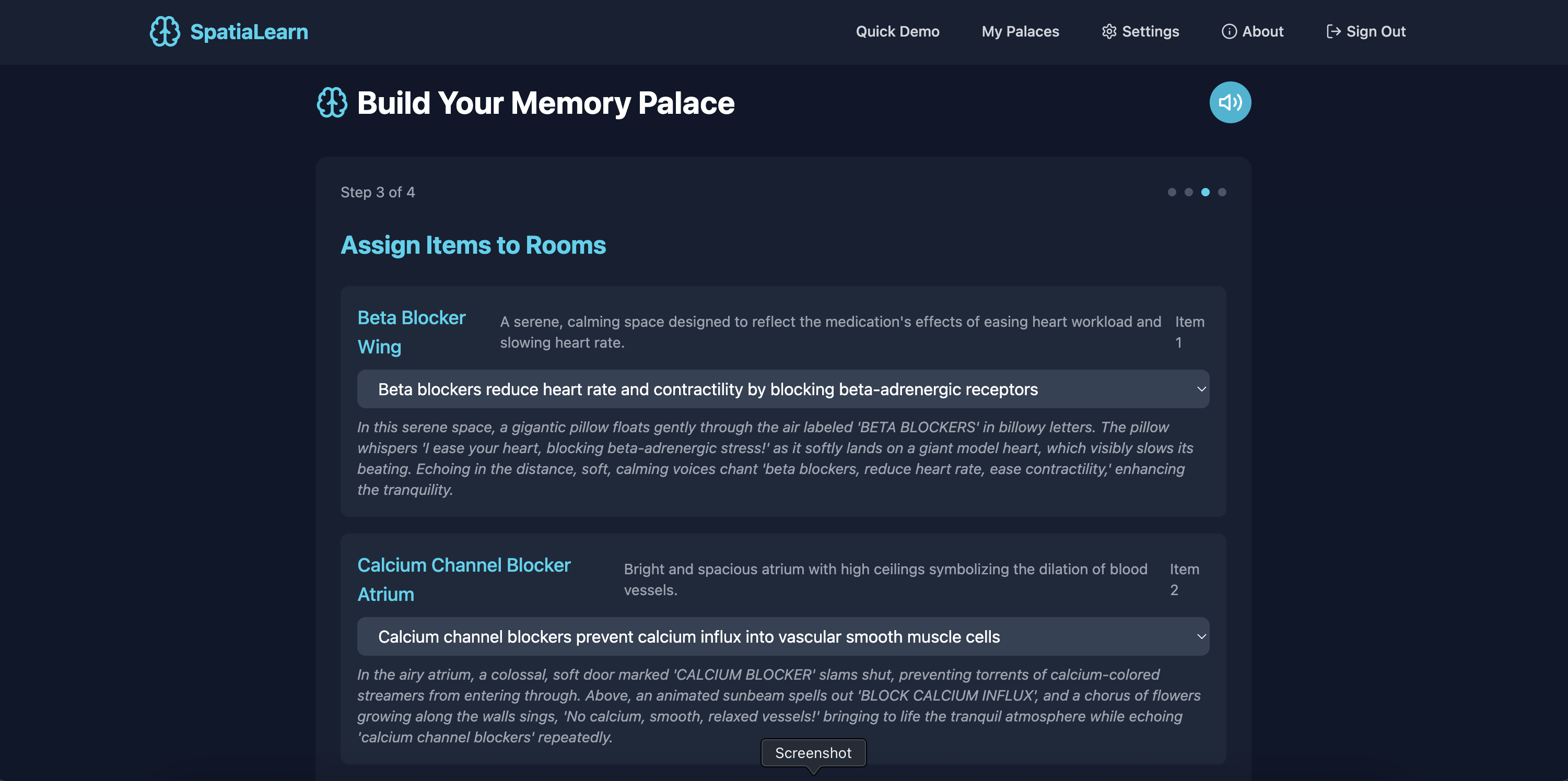
Detailed room assignment view showing how AI creates immersive spatial descriptions.
-
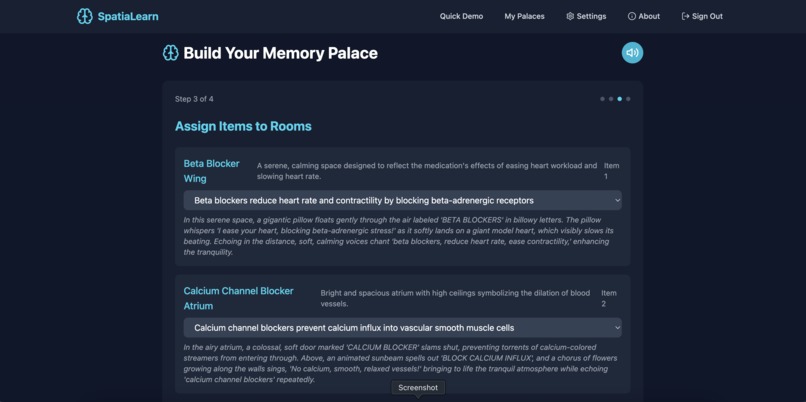
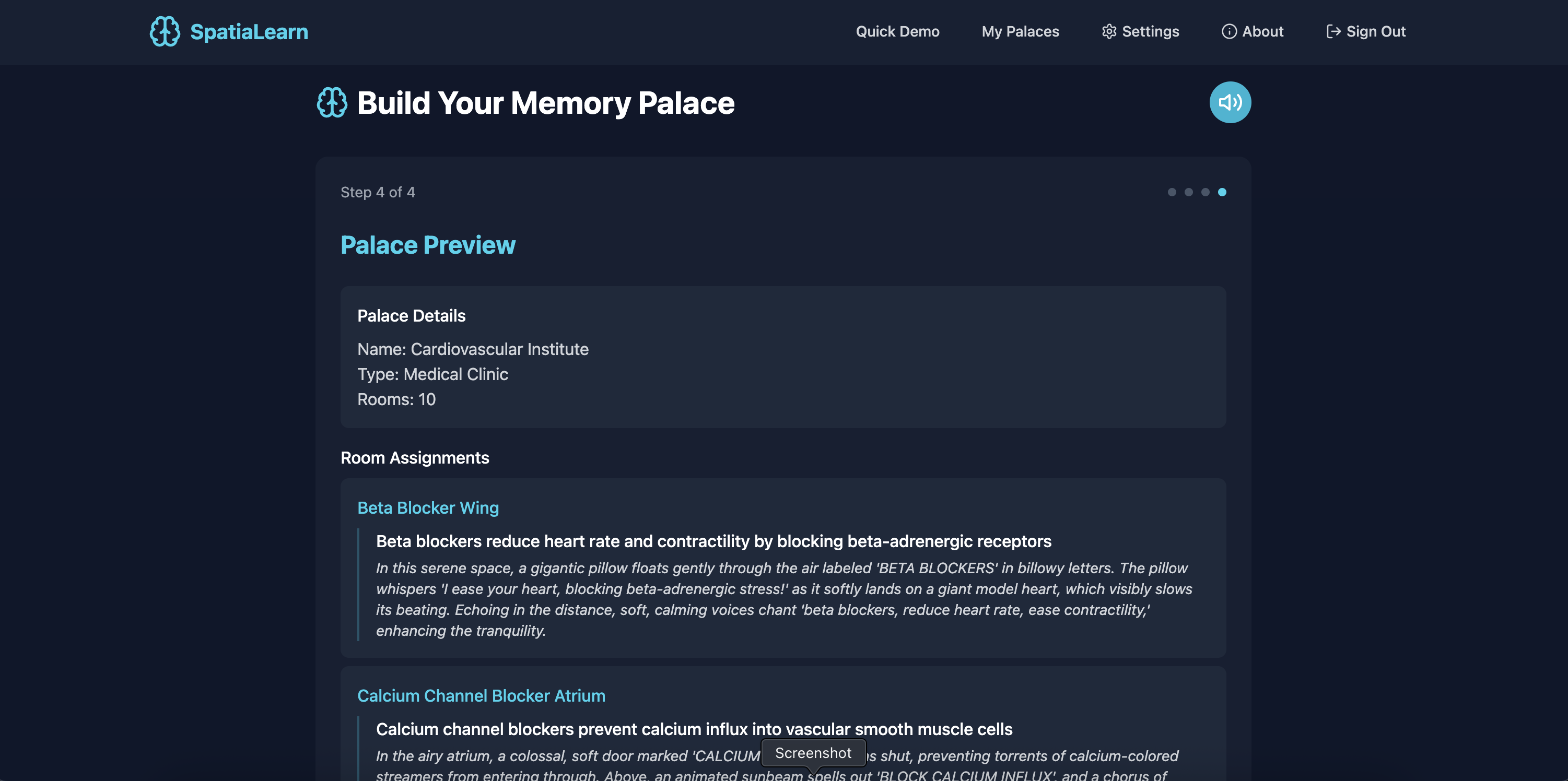
AI-generated palace preview showing intelligent room assignments where items are mapped to thematically appropriate spaces.
-
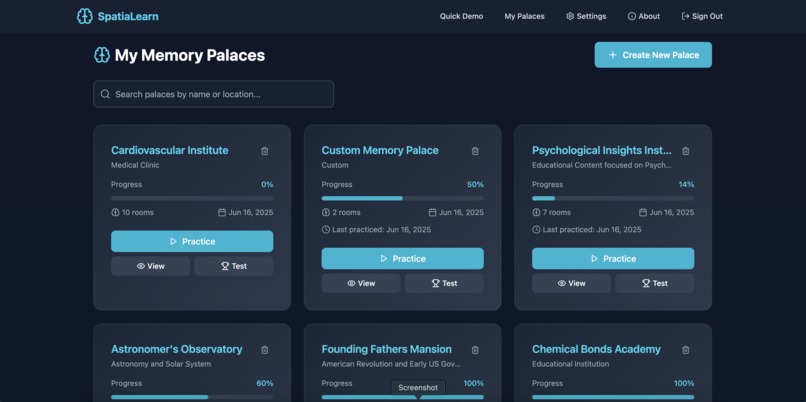
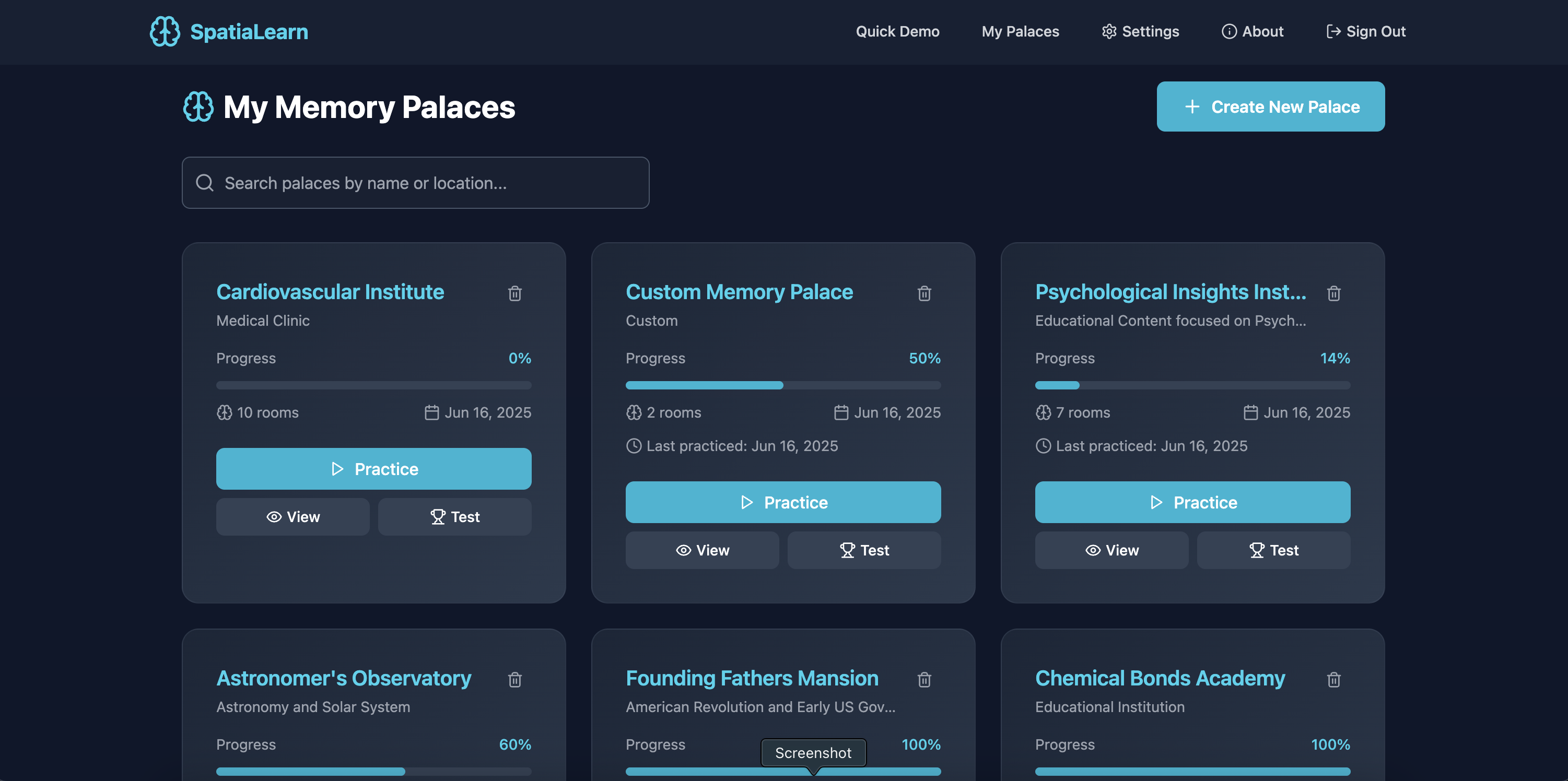
User dashboard displaying multiple memory palaces across diverse topics - with progress tracking and easy access to practice modes.
-
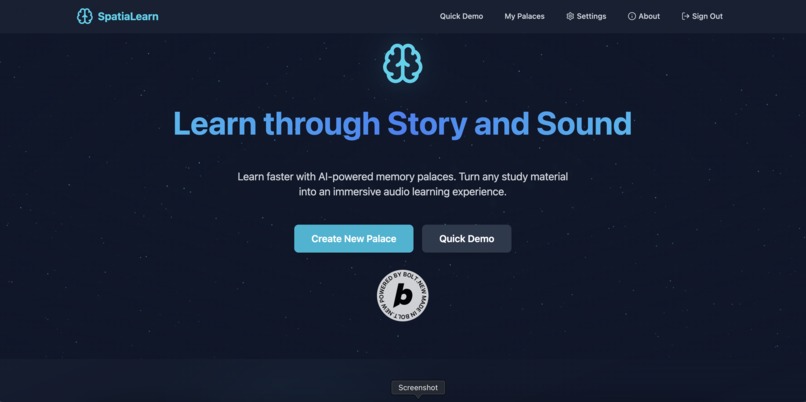
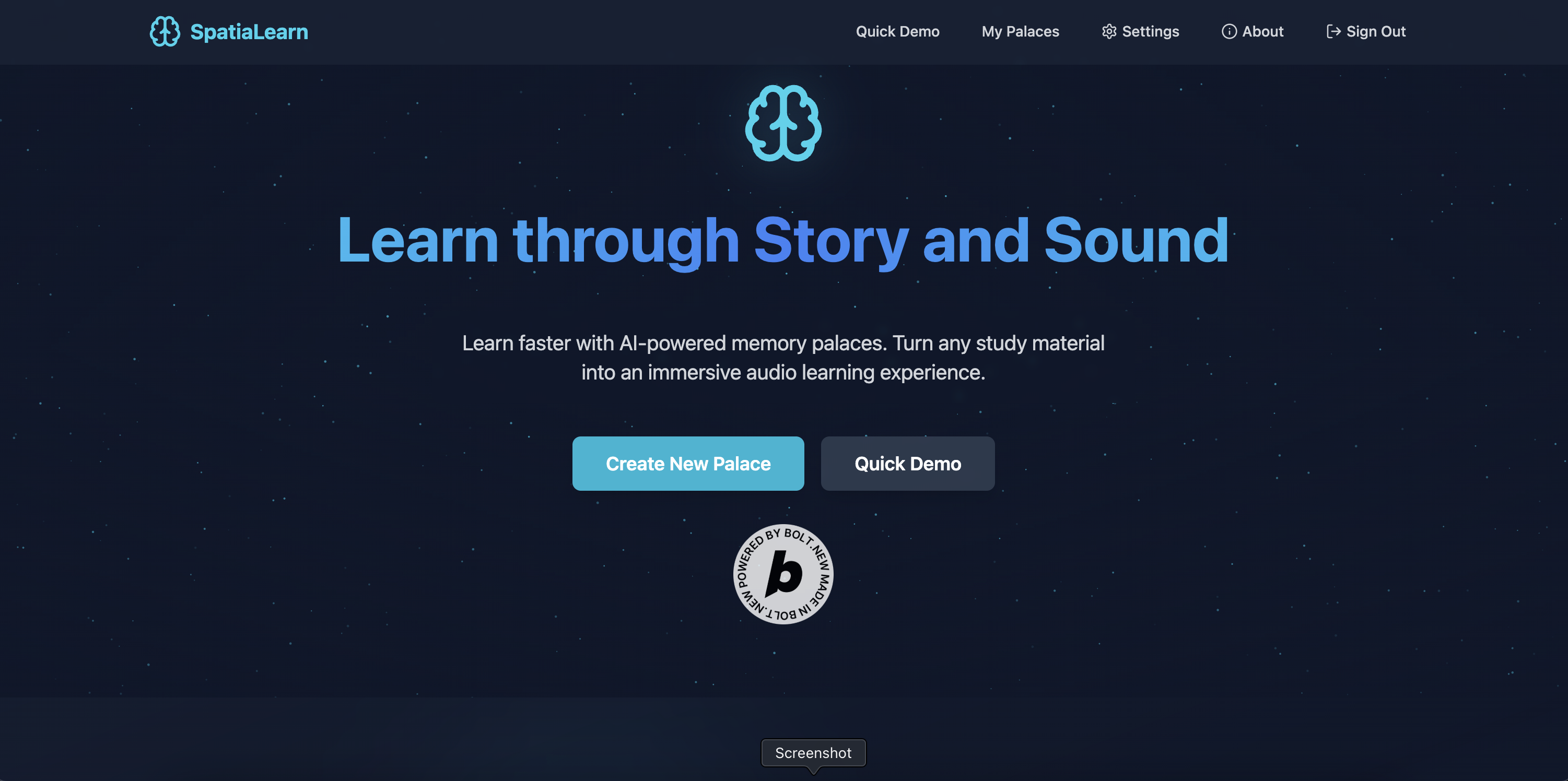
Landing page showcasing SpatiaLearn's "Learn through Story and Sound" tagline with clear call-to-action buttons.
Inspiration
As a parent of two children, I witness firsthand how brilliant students struggle not because they lack intelligence, but because current learning tools are fundamentally broken. While we have AI that can write essays and generate art, students are still stuck with passive study methods from decades ago. I wanted to build the first truly AI-native learning platform that transforms education into a vivid adventure you can escape to.
What it does
SpatiaLearn transforms any study material into personalized, immersive memory palaces using AI technology. Students upload their notes, and our AI creates vivid, themed learning environments with spatial audio narration. A medical student's organ notes become a "Medical Training Center" with specialized wings, complete with 3D positioned audio from Hope & Atlas, our AI coaches. Students then practice by navigating through rooms and test their knowledge with AI-generated questions.
How I built it
Built using React + TypeScript PWA with Supabase backend, integrated with GPT-4 for content analysis, ElevenLabs for voice synthesis, and Tone.js for 3D spatial audio. The app features intelligent audio caching using IndexedDB for persistent storage across sessions. Everything was developed entirely in Bolt.
Challenges I ran into
The biggest challenge was discovering I was burning through 100K+ ElevenLabs API credits daily due to audio regeneration on every interaction. Students were essentially paying for the same audio multiple times. This threatened the potential business model viability.
Accomplishments that I'm proud of
Successfully implemented intelligent IndexedDB caching that reduced long-term API costs by 70%+, enabling possible competitive pricing. Created the first AI-powered memory palace system that works across any subject matter. Built a production-ready PWA that feels like a native app, complete with rapid loading capabilities for returning users.
What I learned
This journey taught me that true innovation isn't about bolting AI onto existing solutions - it's about completely reimagining what an experience could be. Instead of making digital flashcards "smarter," I asked: what if learning felt like exploring a magical place that lives in your mind?
The breakthrough came when I stopped thinking "how do I improve studying?" and started asking "how do I make knowledge unforgettable?" This shift led me to combine 2,500-year-old memory techniques with cutting-edge AI, creating something entirely new rather than incrementally better.
What's next for SpatiaLearn
Post-hackathon plans include adding AI-generated images for each room using GPT-4 Vision, expanding to "Learn through Story, Sound, AND Sight." Long-term vision includes enterprise features for schools, advanced analytics for learning effectiveness, and potential expansion into VR/AR experiences for even more immersive memory palace exploration!
Built With
- bolt.new
- browser-storage-apis
- css3
- elevenlabs-api
- framer-motion
- html5
- indexeddb
- javascript
- openai-gpt-4-api
- postgresql
- pwa
- react
- react-context-api
- react-router
- responsive
- supabase
- supabase-edge-functions
- tailwind-css
- tone.js
- typescript
- vite
- web
- web-audio-api

Log in or sign up for Devpost to join the conversation.