-
-
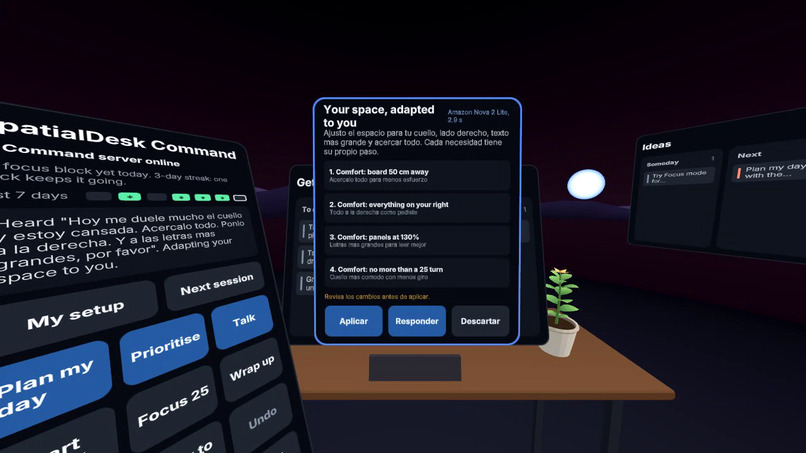
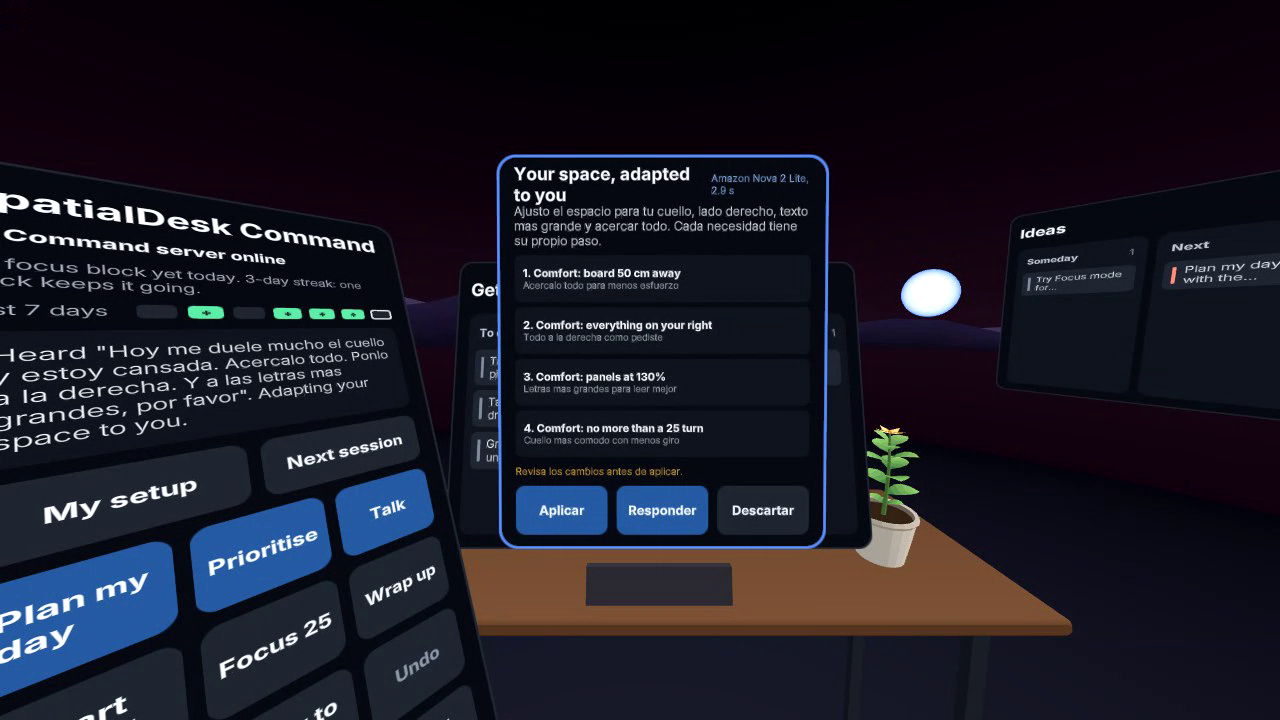
Her request, in Spanish, heard by Amazon Transcribe: Nova 2 Lite answers with comfort changes, each with its reason.
-
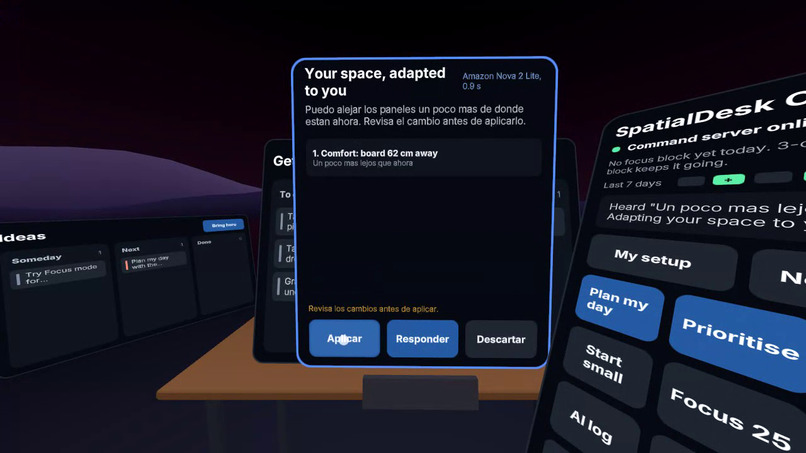
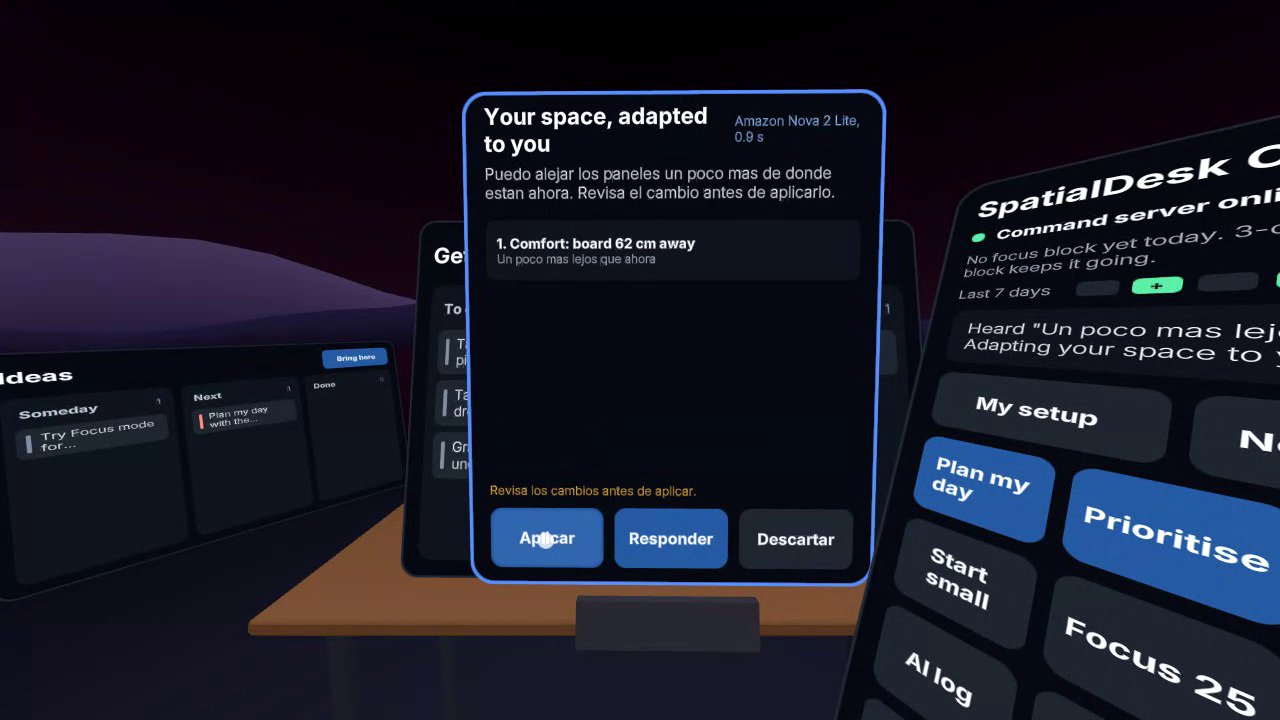
Her companion asks how it feels, and the conversation keeps the context. Nothing moves until she applies it.
-
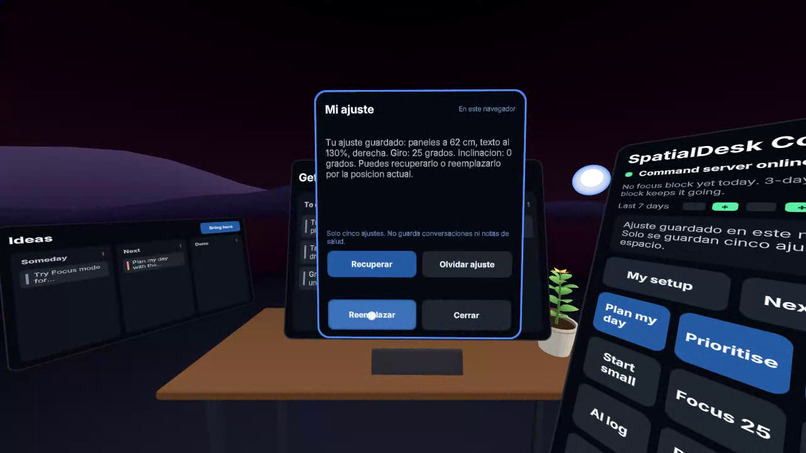
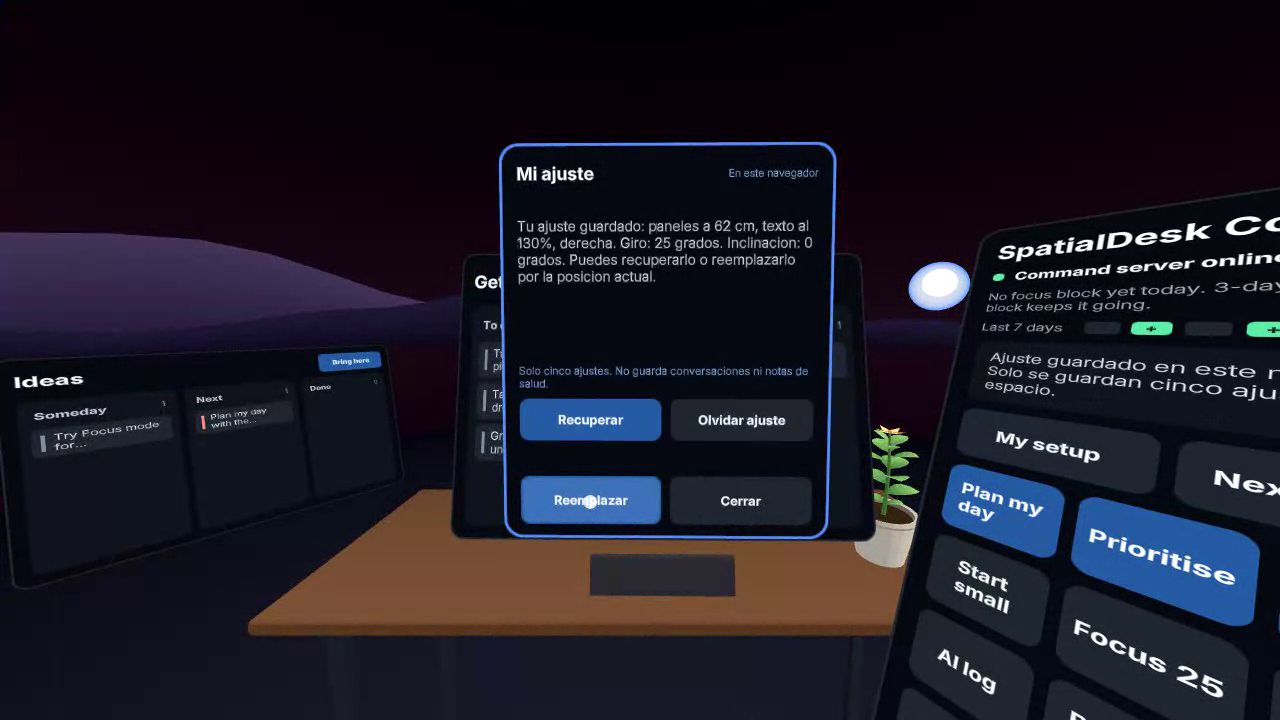
She saves the setup that works: five comfort settings only, kept in this browser, restored with review on another visit.
-
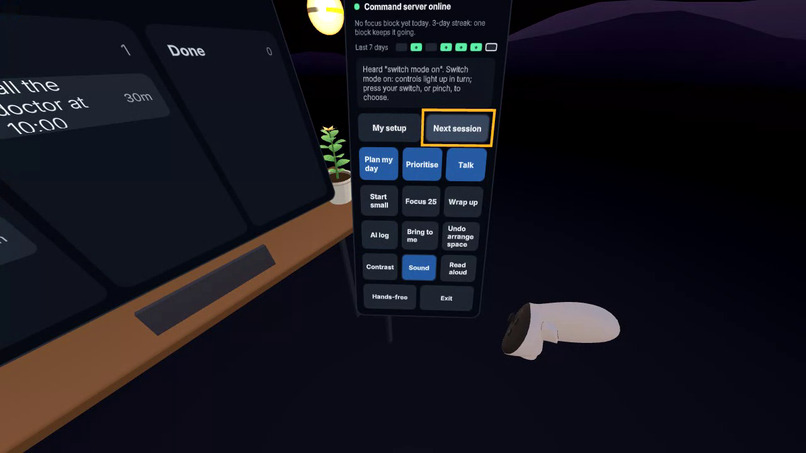
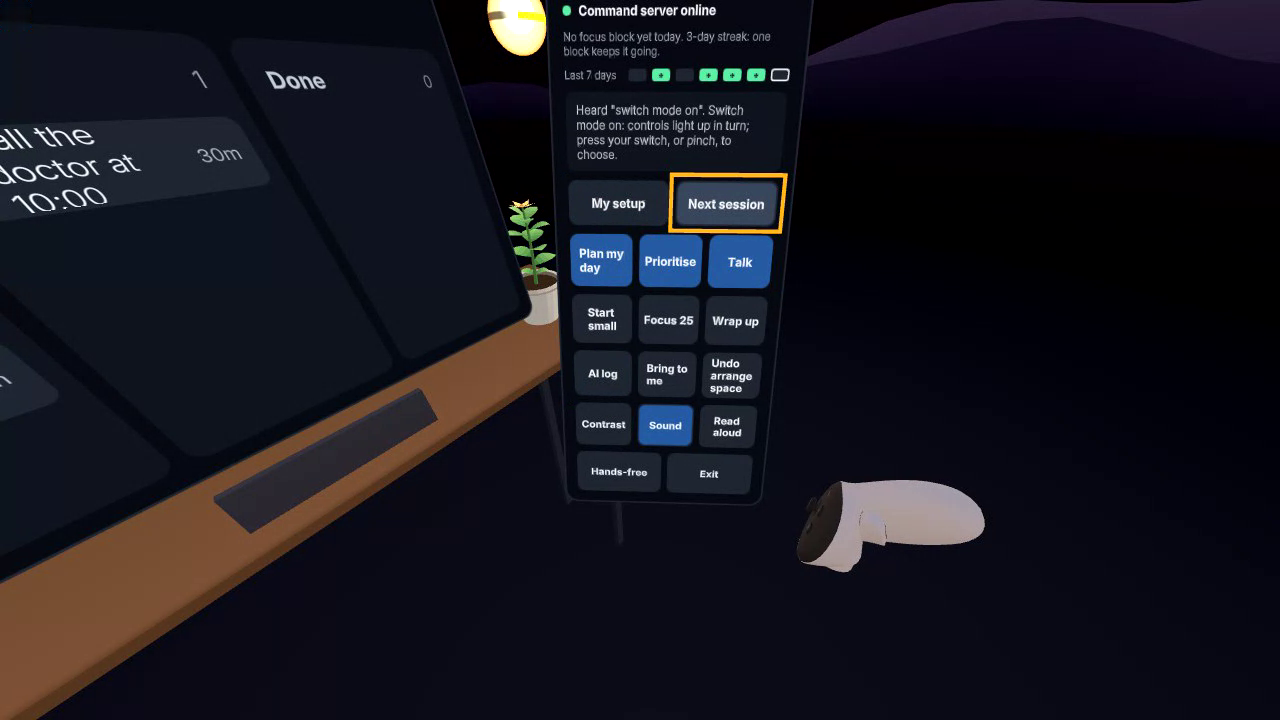
One switch runs every control: the buttons light up in turn, a thick amber frame on the one lit, and one press chooses.
-
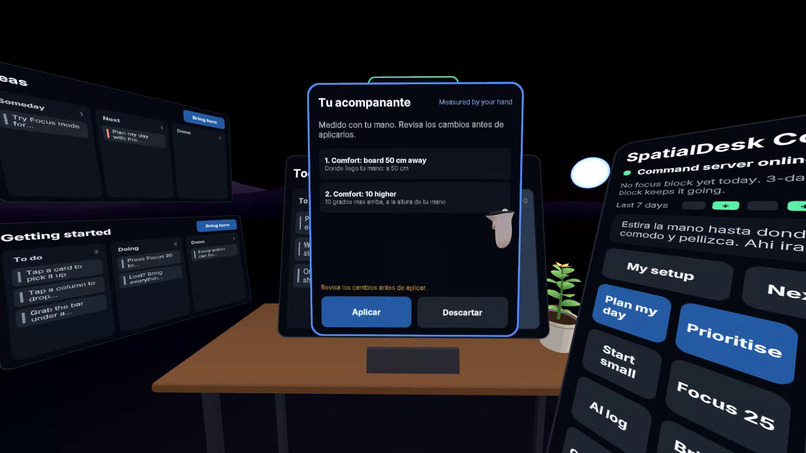
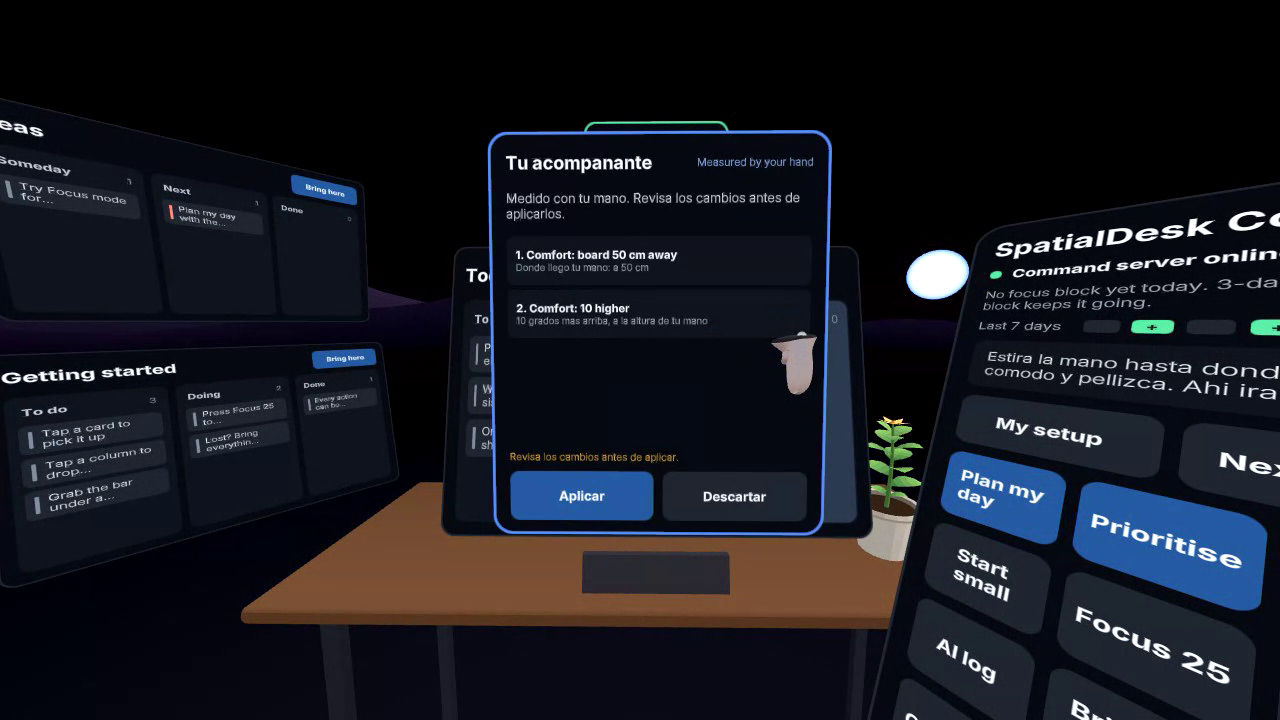
Fit to my reach: one pinch where her hand is comfortable measures distance, height and side. Review, then Apply.
-
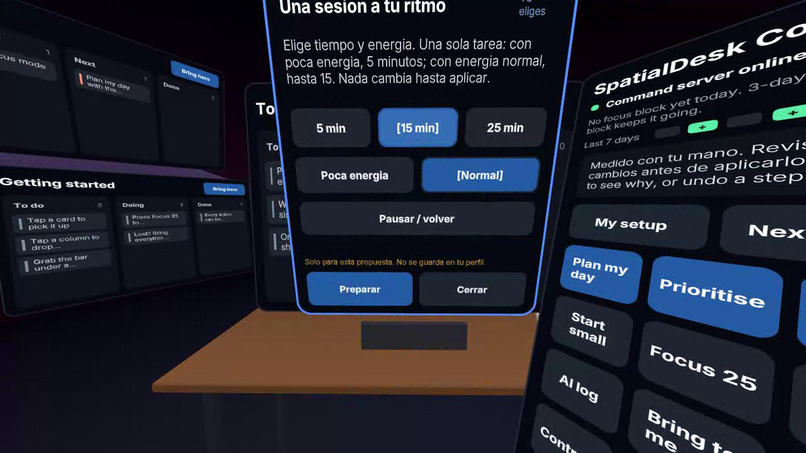
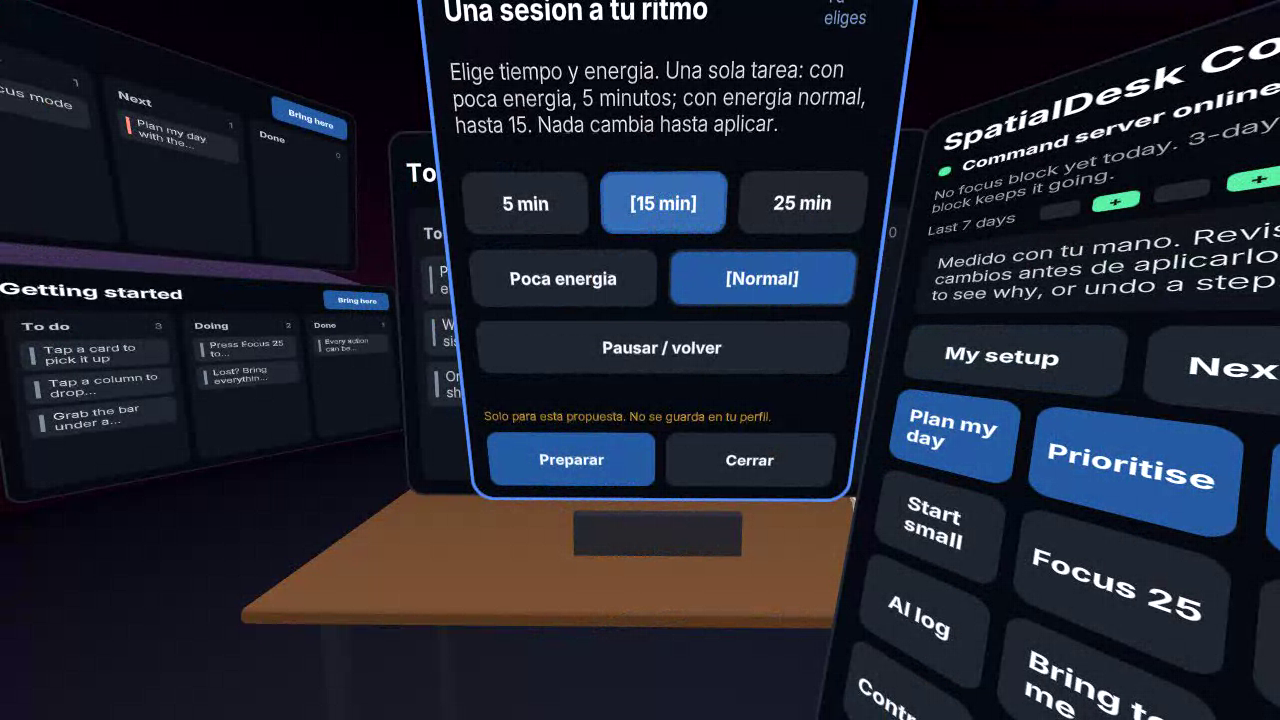
A session at her pace: she chooses her time and her energy, and the agent proposes one task and one short block.
-
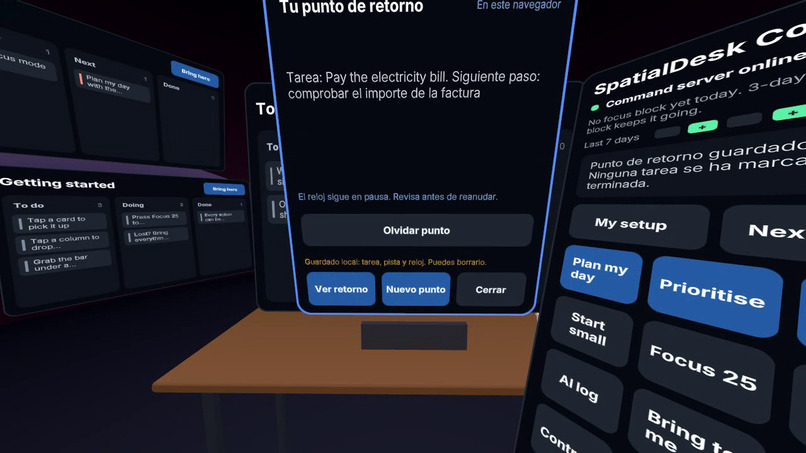
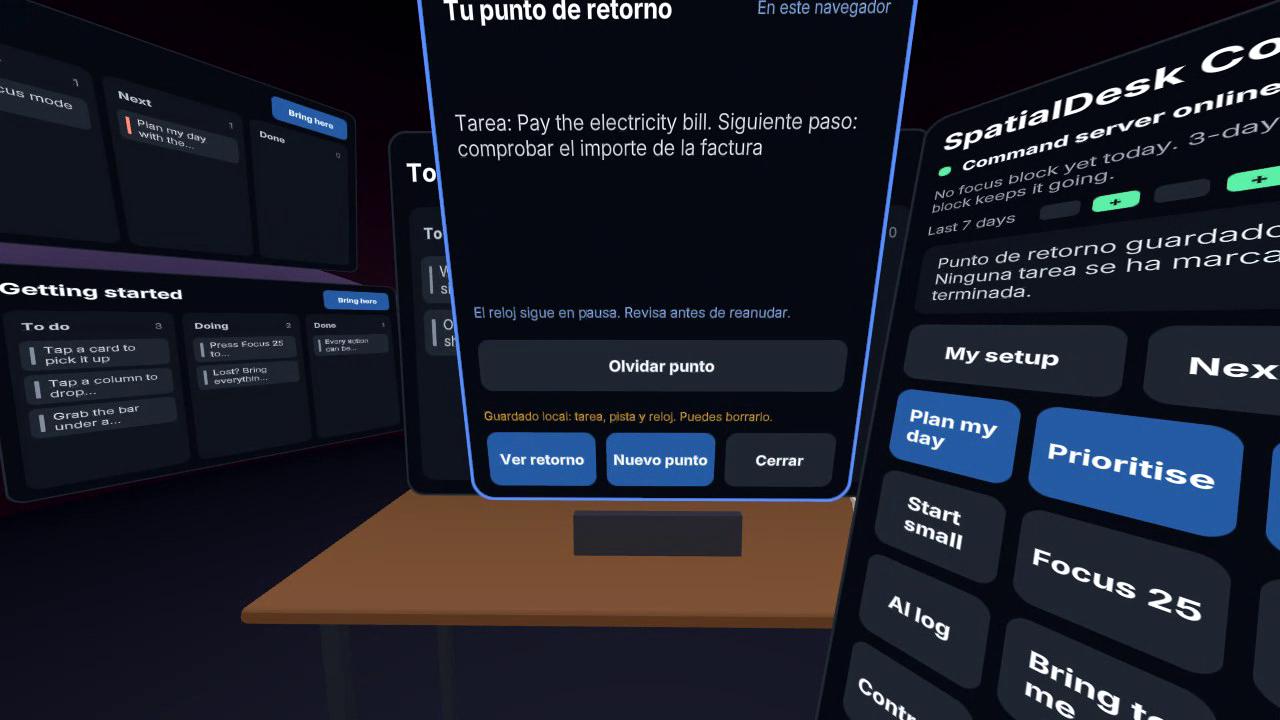
A return point when she has to stop: her own next step, saved locally, ready when she comes back.
-
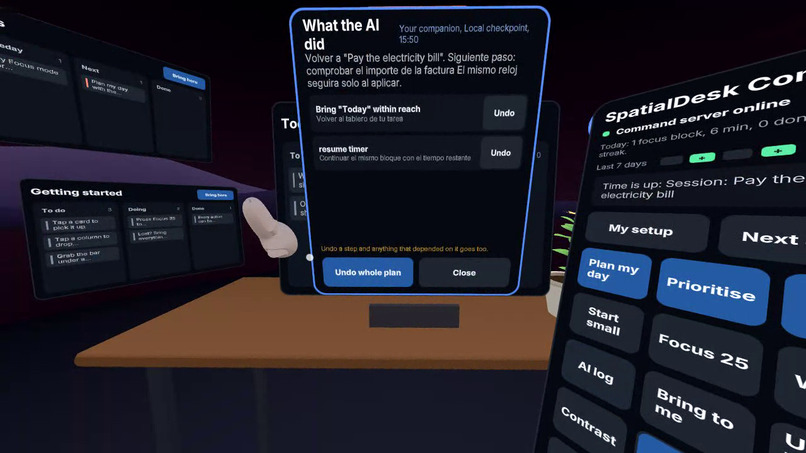
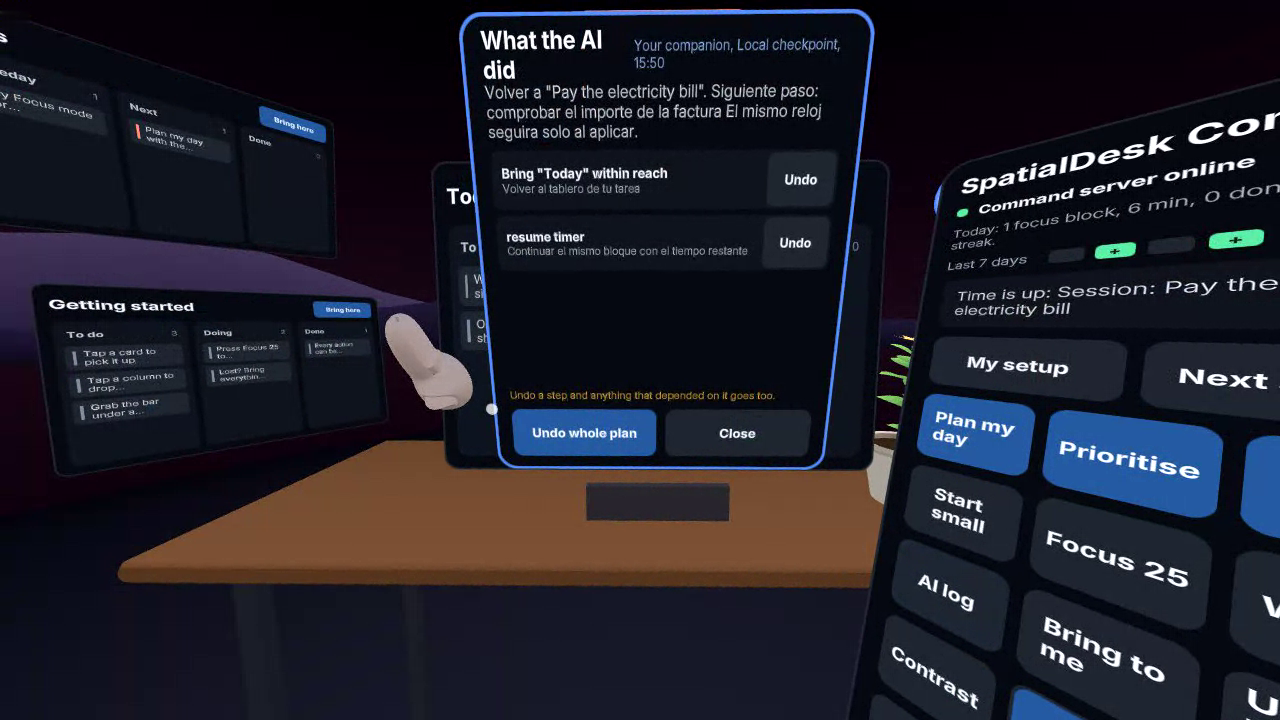
The AI log: every step the agent took, with its reason and its own Undo, even after later changes.
-
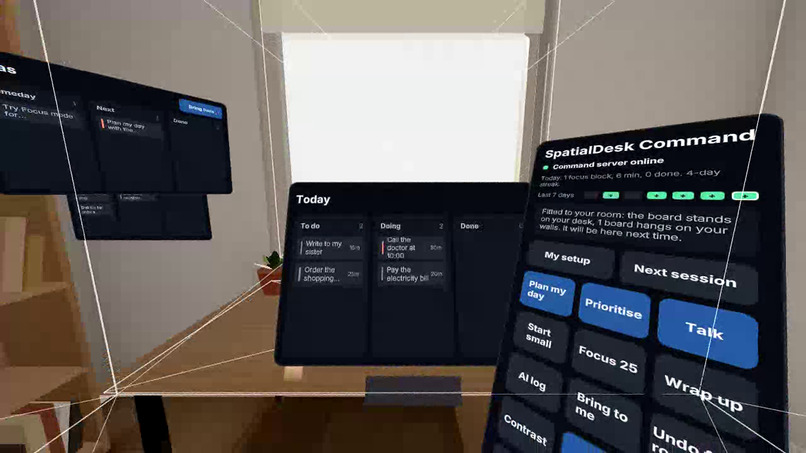
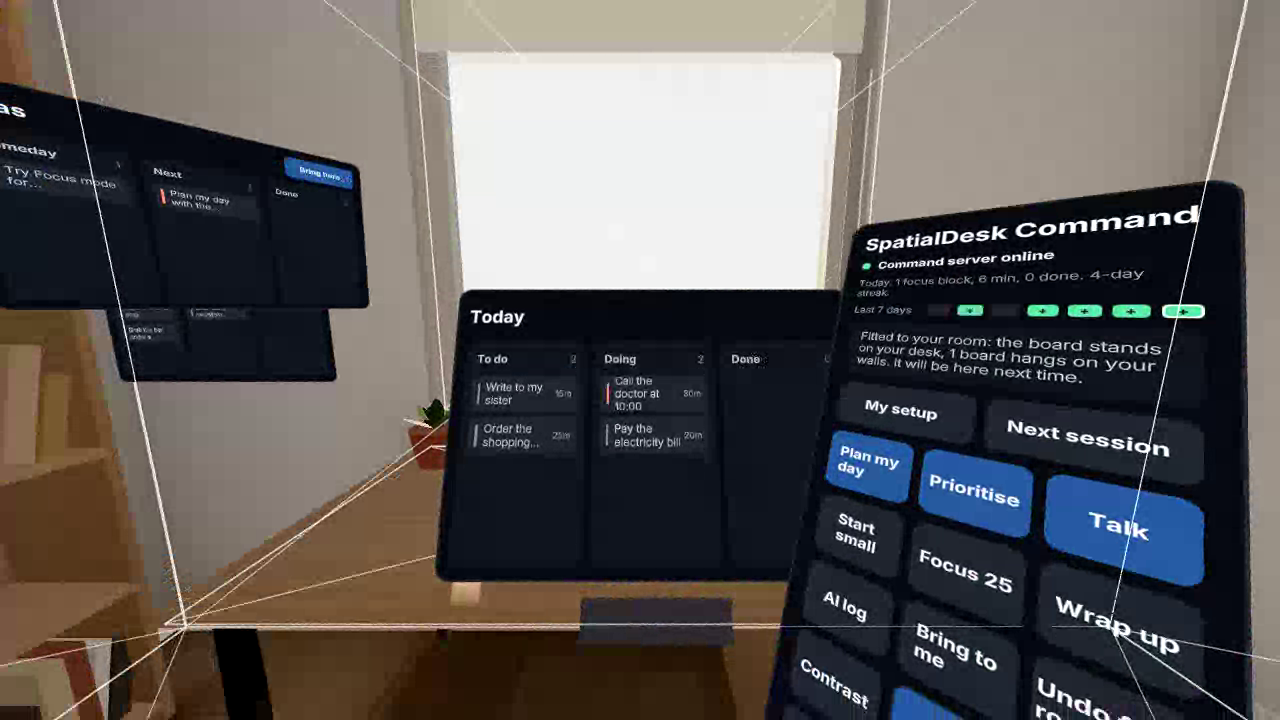
In her room, in passthrough: the board stands on the real desk and the other boards hang on the walls, anchored.
-
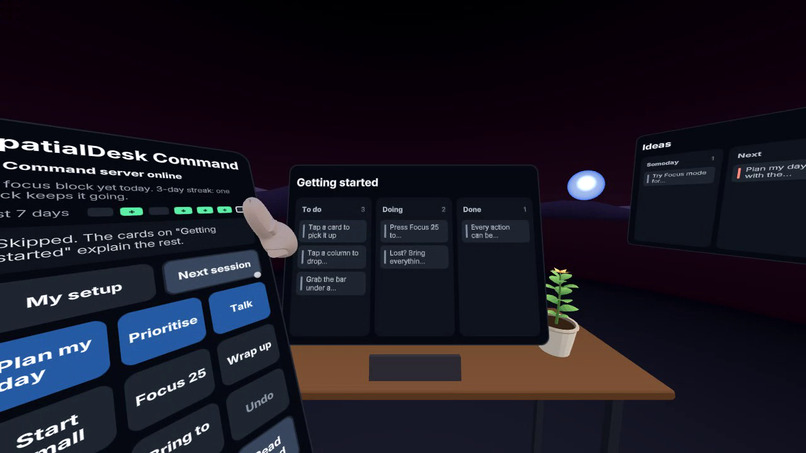
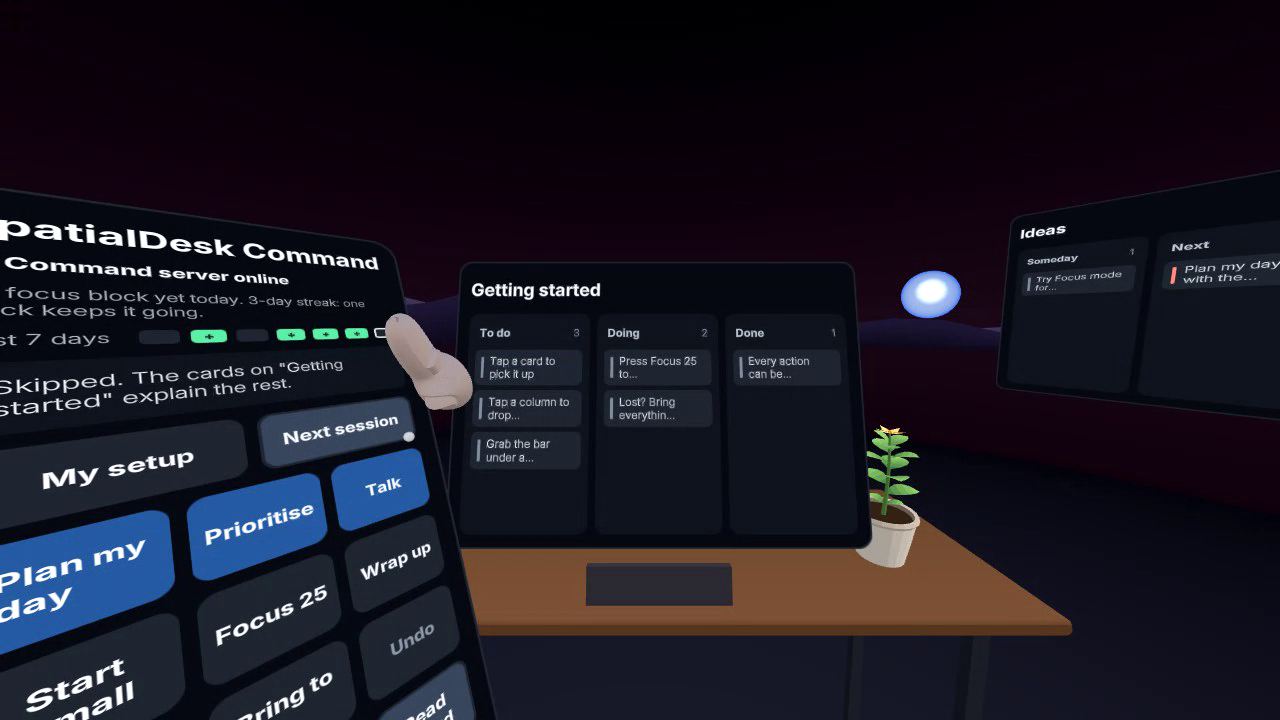
In VR, a calm dusk studio: a walnut desk, a focus plant that grows with every block, and soft spatial sound.
Inspiration
"Hoy es un mal día. Acércalo todo." Today is a bad day. Bring everything closer.
Someone I love, who lives with a disability, said that from her sofa. On a bad day her neck hurts, her arms tire and her aim shakes; spatial apps expect you to turn, reach and pinch the air. Accessibility usually means a menu of toggles, changed on the day you have least to spare. In a headset the room can move, so the room should adapt.
What it does
SpatialDesk is a seated, hands-first workspace: task boards, focus timers and an assistant, arranged around the body you have today.
- It fits you. A one-minute setup asks where you sit and has you pinch where your hand rests; that sets every panel's distance, height and side.
- You say what you need. Amazon Transcribe hears you in English or Spanish; Amazon Nova proposes changes with reasons. Nothing moves until you tap Apply; panels glide, and Undo always works.
- Every way in. Hands (poke, pinch), gaze dwell (eyes where tracked, else head), voice, steady aim for tremor, one-switch scanning. Rest your head on a card and say "move this to done".
- Your real room. In passthrough, Fit room reads the detected planes: your board stands on your real desk, the others on your walls, and a persistent anchor restores them tomorrow. Tested in all 13 rooms of Meta's Synthetic Environment Module.
- Any field of view. The layout reads each eye's projection and keeps essential panels in the comfortable view, down to Meta VR Glasses' 58° × 54°.
- Help from a phone. After you press Allow, a carer's phone shows your Today board and one large button, Help / Recalibrate, that opens the setup in your headset. They ask; you decide.
- A reason to come back. A focus plant grows a leaf with every focus block.
How we built it
Meta's Immersive Web SDK, in TypeScript over WebXR. One Kotlin Multiplatform engine holds the layout and the rules: the headset runs it as JavaScript; the Spring Boot server runs it on the JVM to validate every Nova 2 Lite plan (Bedrock Converse, typed tool) before you see it. Guardrails enforce intent ("closer" must end nearer), and a built-in planner answers when the AI cannot: SpatialDesk works without it. Audio streams from the browser straight to Transcribe.
199 Playwright scenarios drive the production build in Meta's IWER emulator; a CI gate holds frame time (p95 24.6 ms, CPU throttled 3x) under Meta's IWSDK starter scene (29.4 ms), at 78 draw calls.
Challenges we ran into
Turning comfort into geometry: reach, head-turn limit, tilt, side and text size conflict, so one shared engine solves them, and every comfort rule is a test that fails the build.
What's next for SpatialDesk
Target launch date: March 2027, on the Meta Horizon Store as an installable web app, free at launch. Before then: testing on Quest 3 and 3S hardware, sessions with disabled users and carers, and comfort profiles for good and bad days.
Built With
- amazon-bedrock
- amazon-ecs
- amazon-nova
- amazon-transcribe
- amazon-web-services
- aws-cdk
- aws-fargate
- cloudfront
- elastic-load-balancing
- kotlin
- kotlin-multiplatform
- meta-immersive-web-sdk
- meta-iwer
- playwright
- spring-boot
- three.js
- typescript
- vite
- web-audio
- webxr

Log in or sign up for Devpost to join the conversation.