Inspiration
Great products often start with a rough idea, but turning that idea into a reliable plan is hard. People must know what questions to ask, anticipate decisions and edge cases, and keep everything organized. With AI coding agents, those gaps matter even more: an agent can build quickly, but speed doesn't help if it is working from the wrong assumptions.
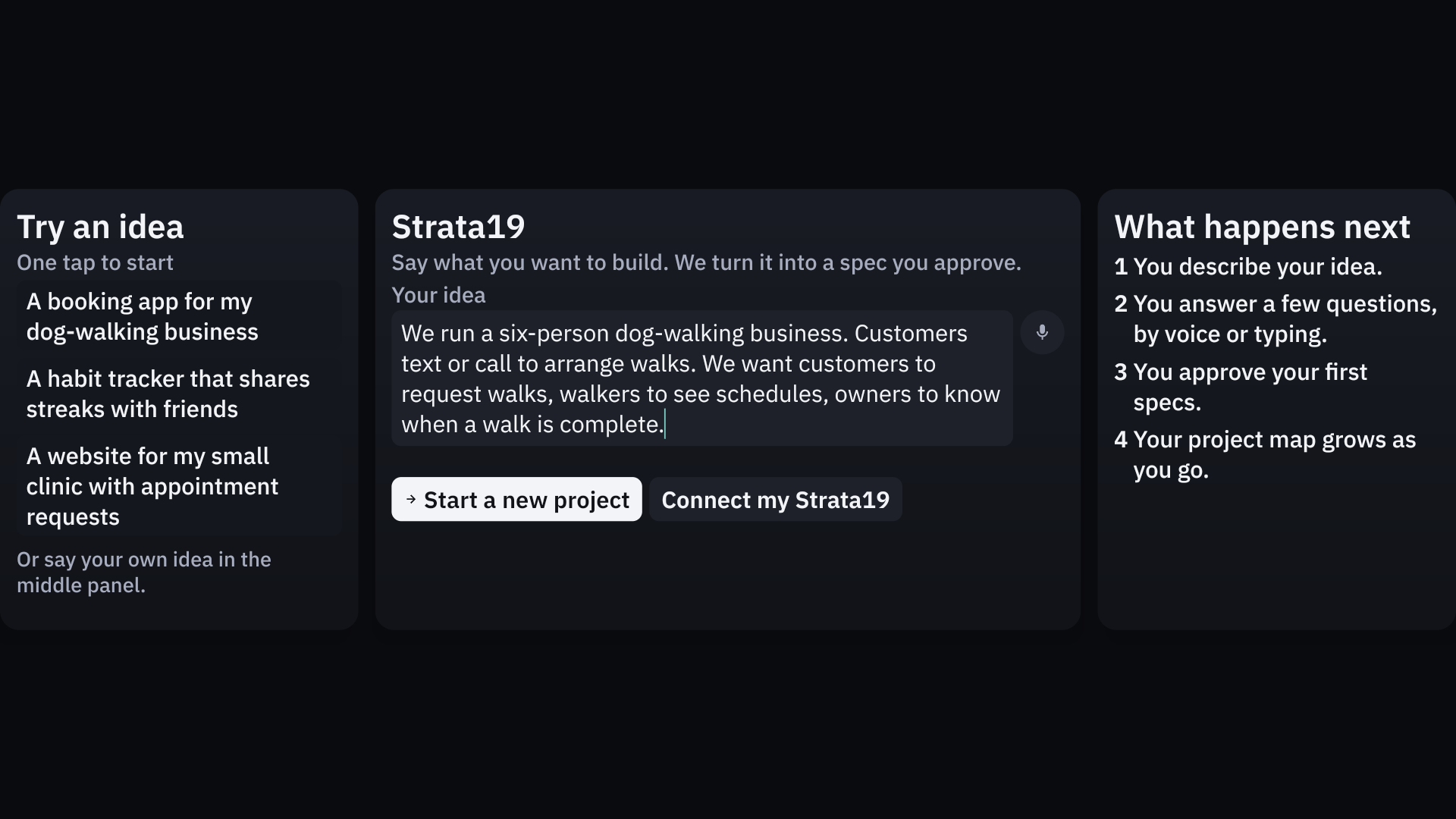
We built Strata19 to make that process approachable, and Spatial Specs brings that vision into VR. Our goal is to make defining a product feel less like wrestling with a blank document and more like working through an idea with a thoughtful guide.
What it does
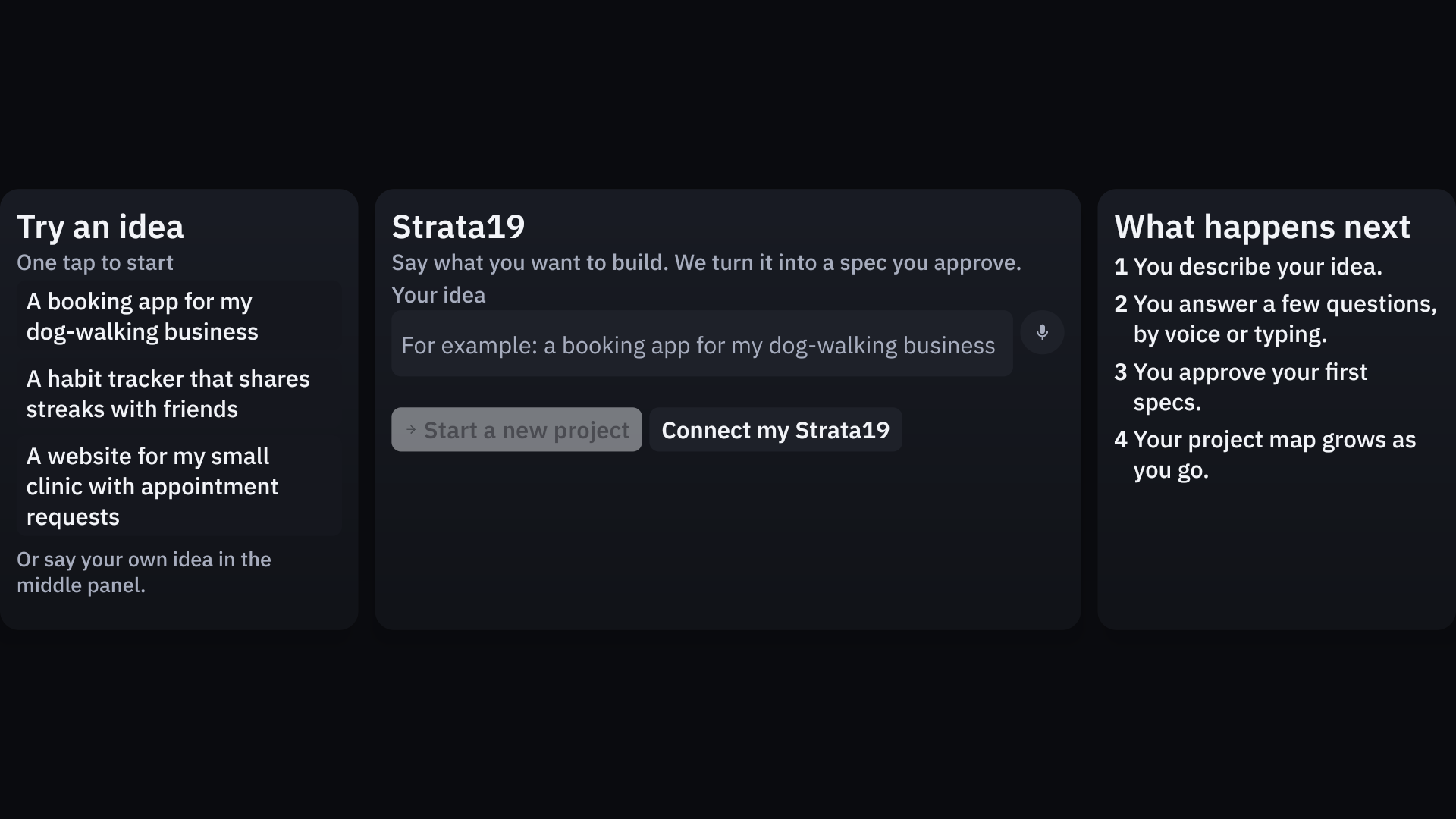
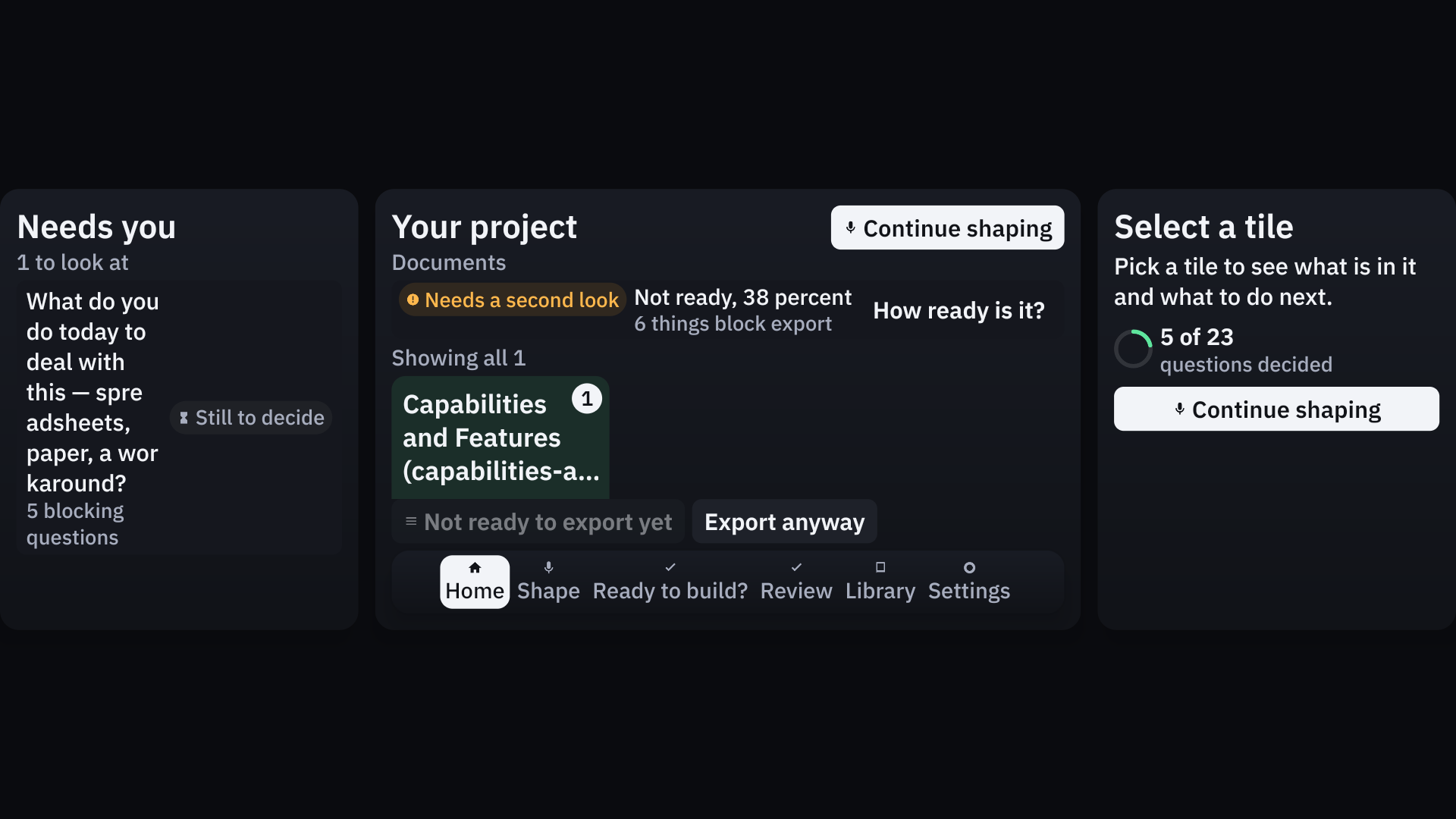
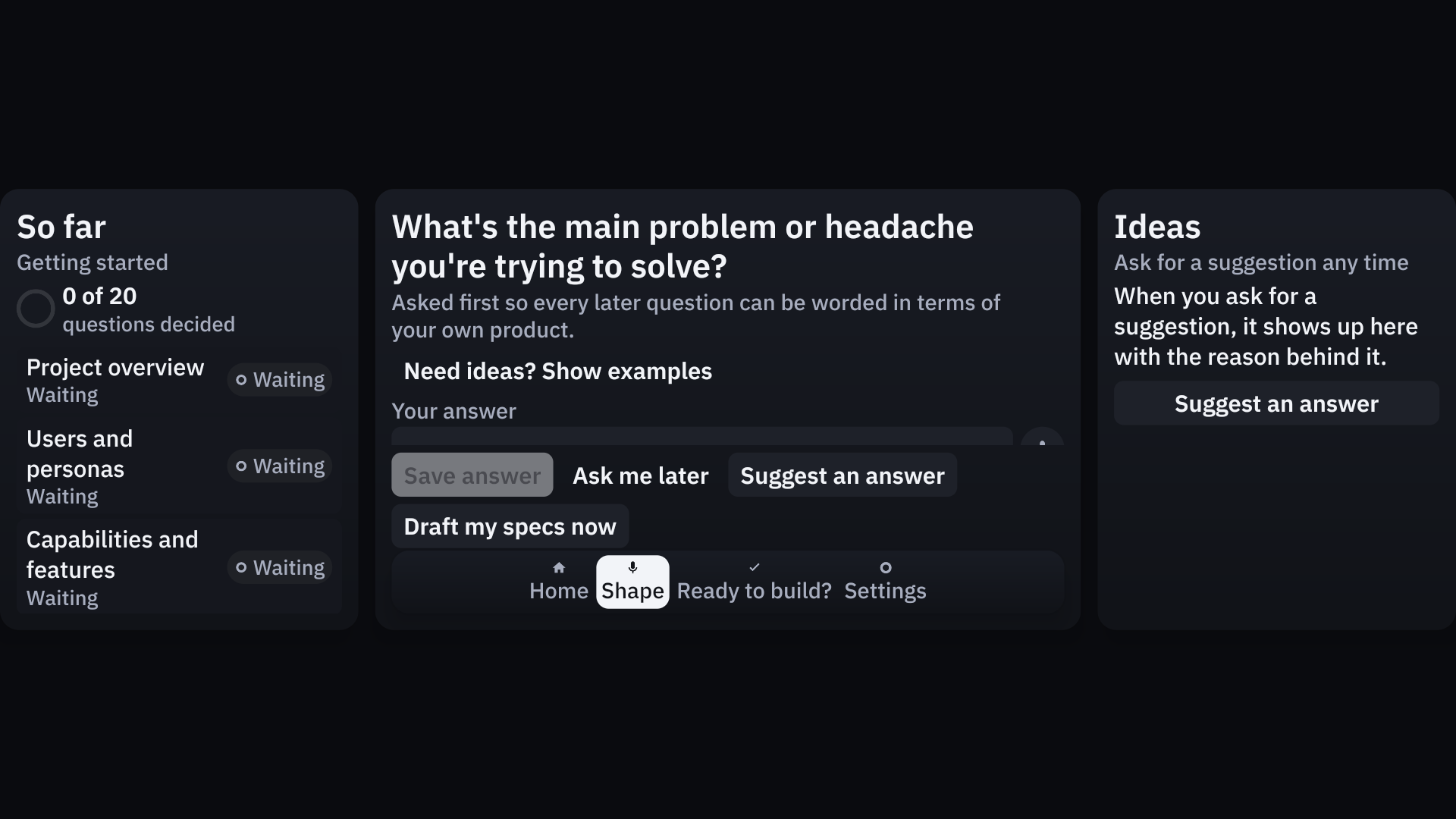
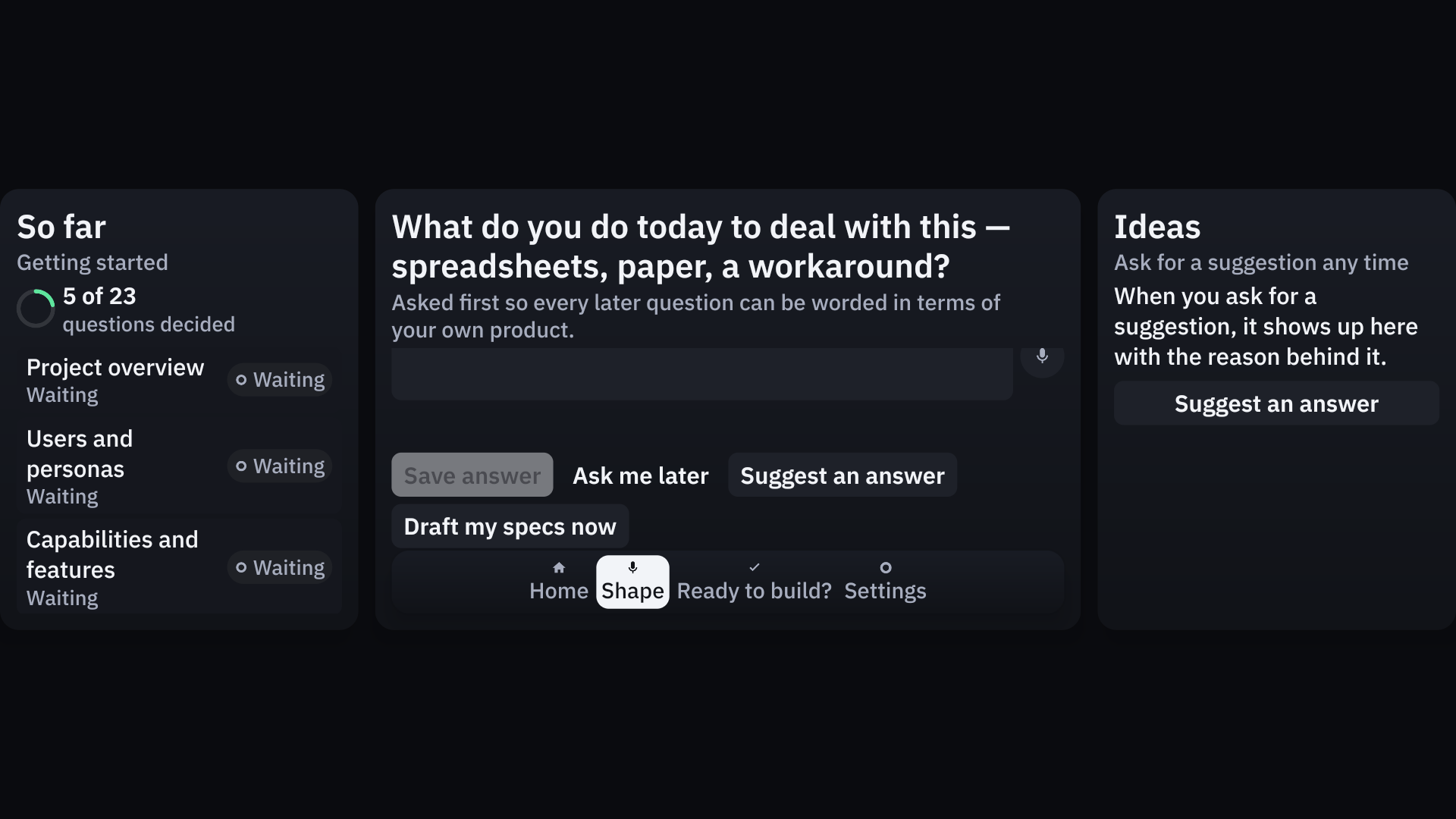
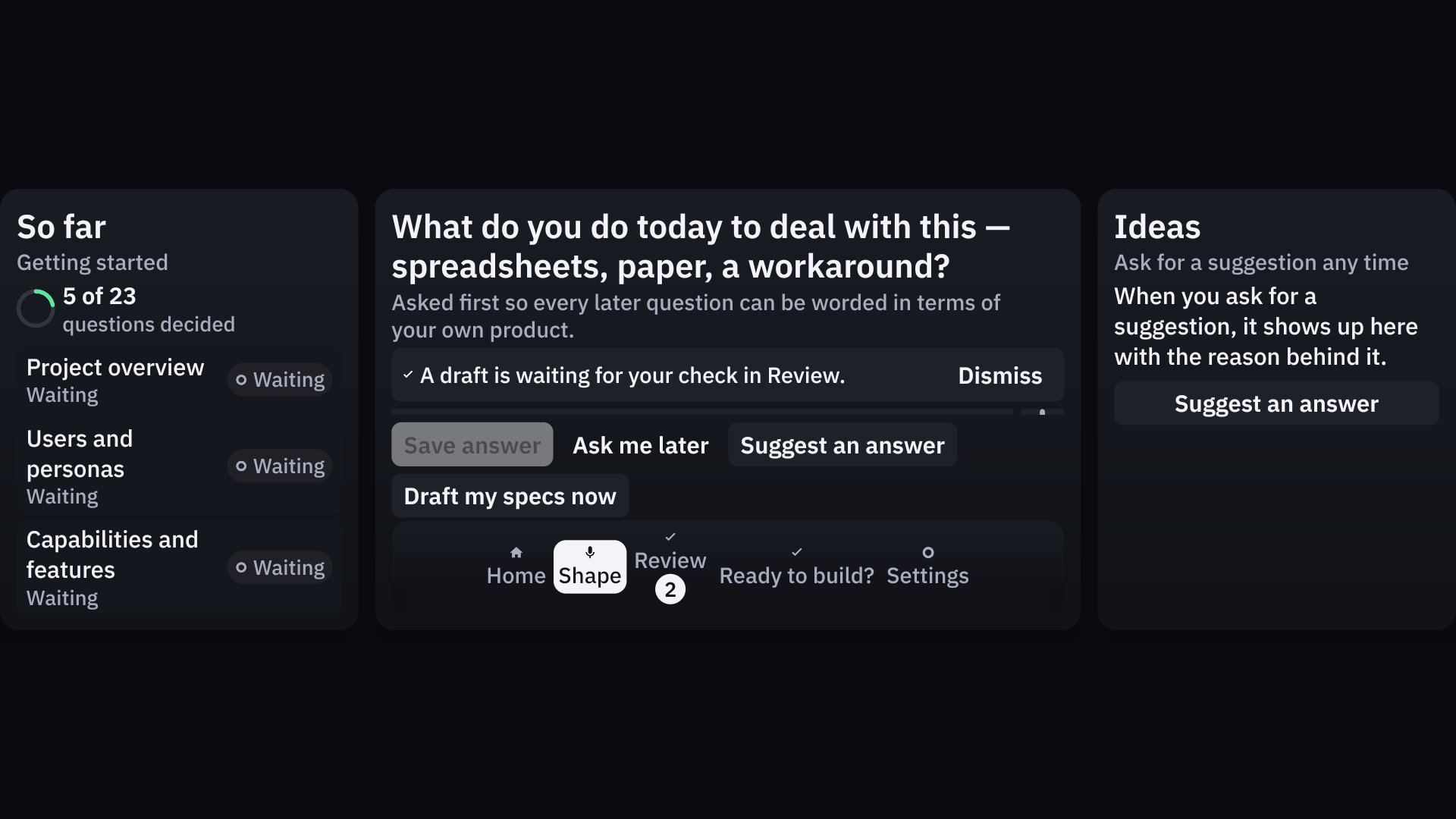
Spatial Specs takes you from an early idea through guided discovery to a Specbook you can review and develop from. Instead of expecting you to write a complete specification up front, the Discovery Engine organizes what needs to be learned, surfaces questions and helps turn answers into a structured product definition. It is designed to use existing context to prefill information and offer suggestions for human review, so people can spend more time on meaningful decisions and less time repeating themselves.
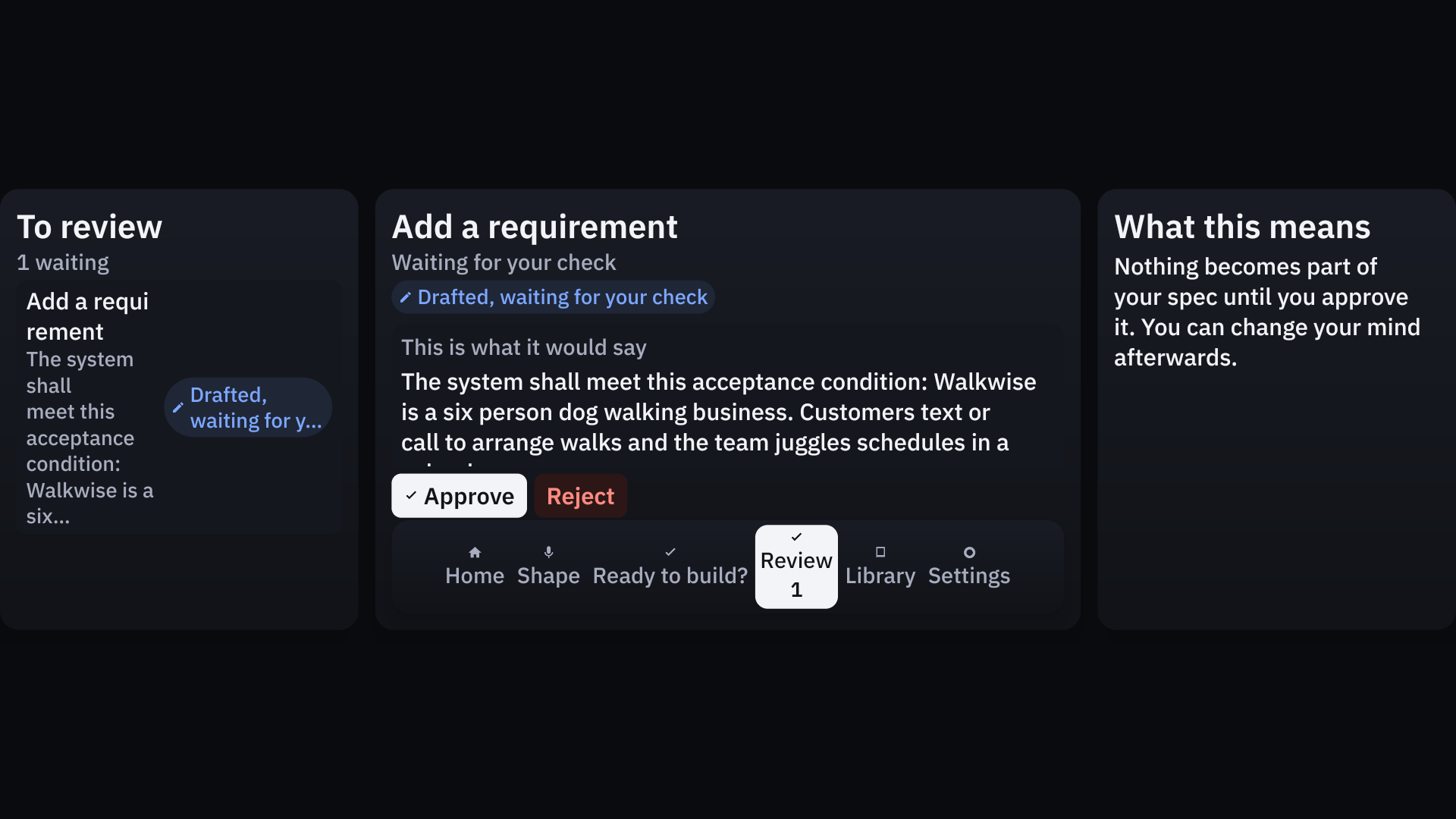
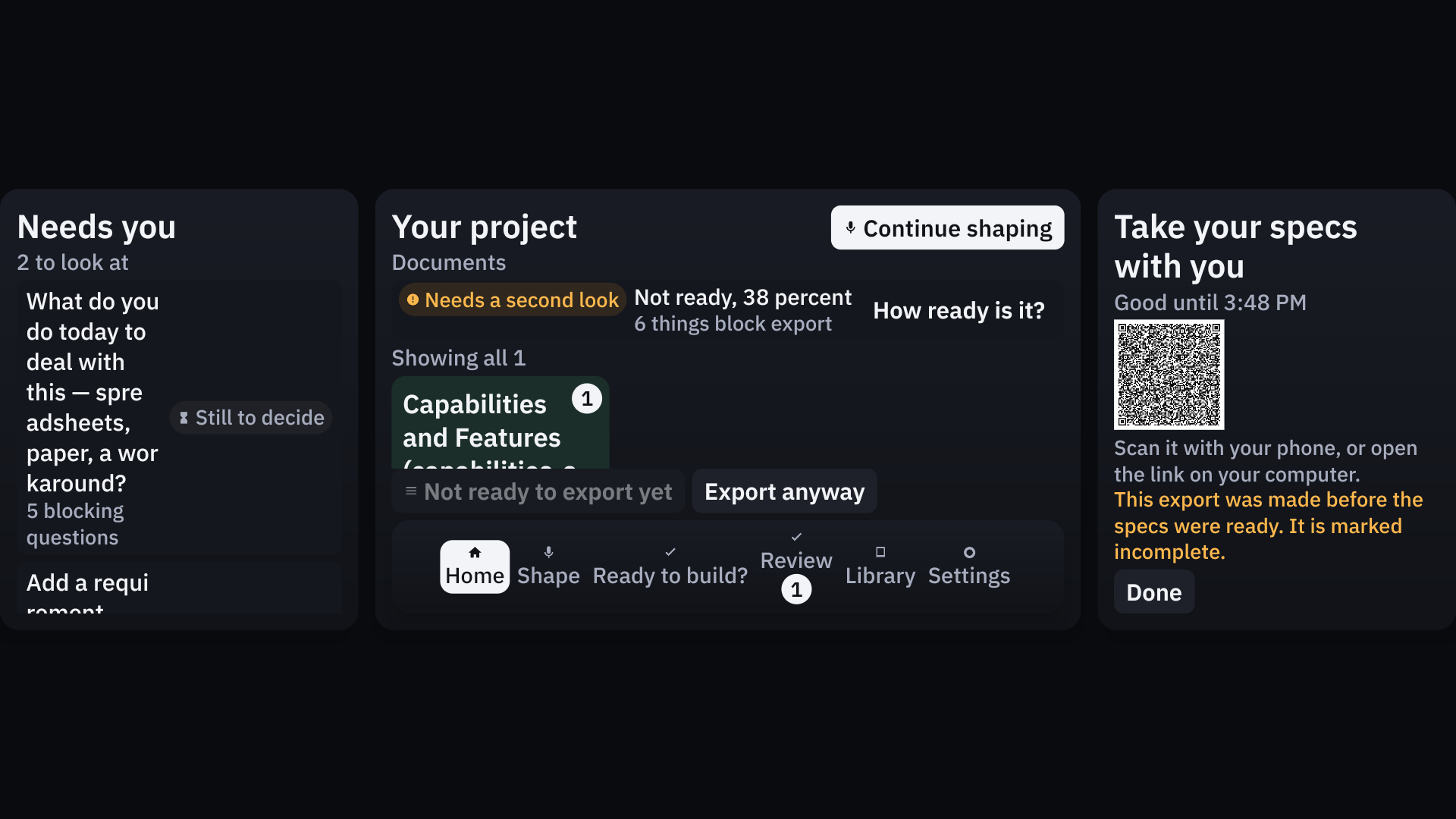
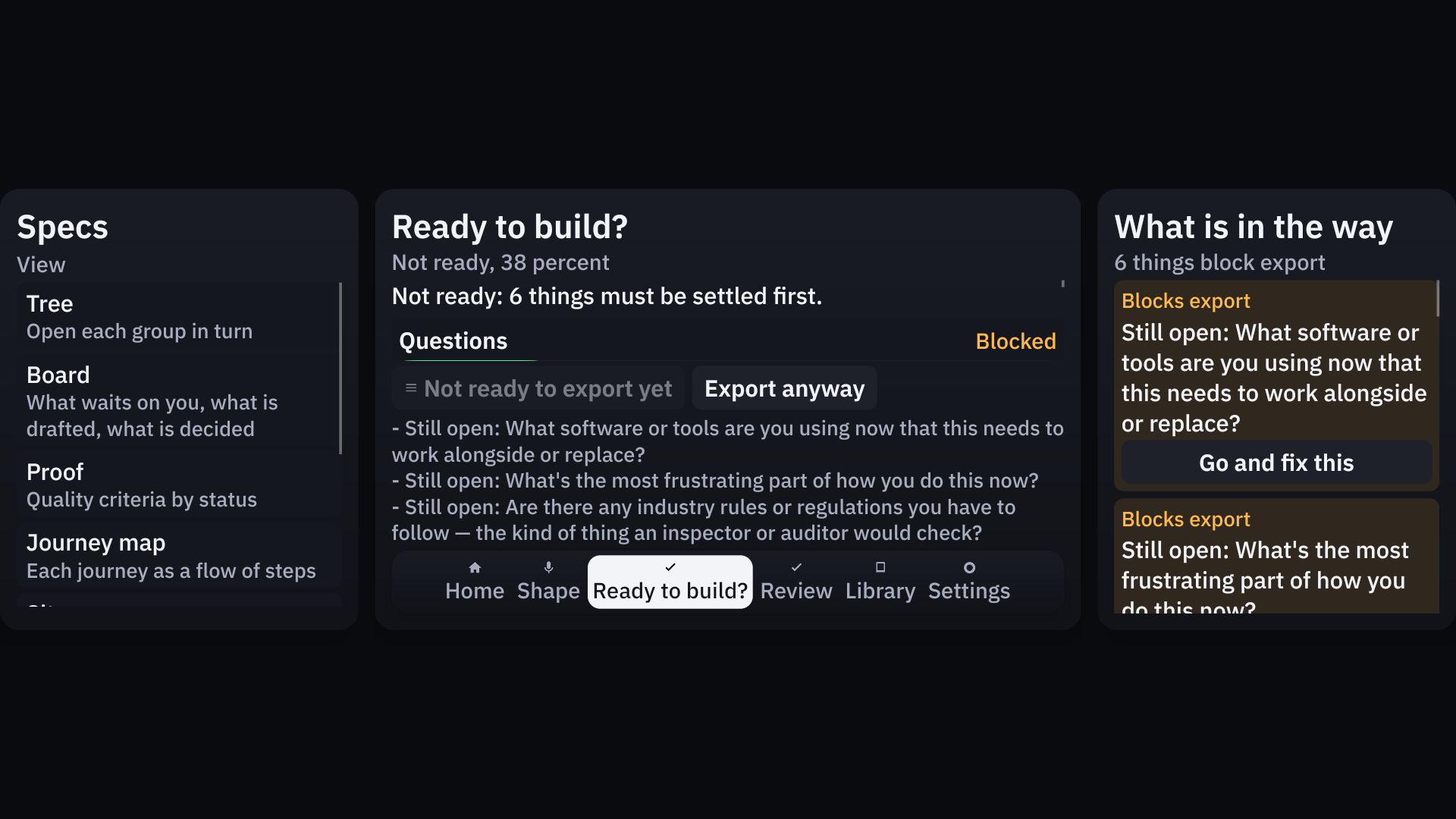
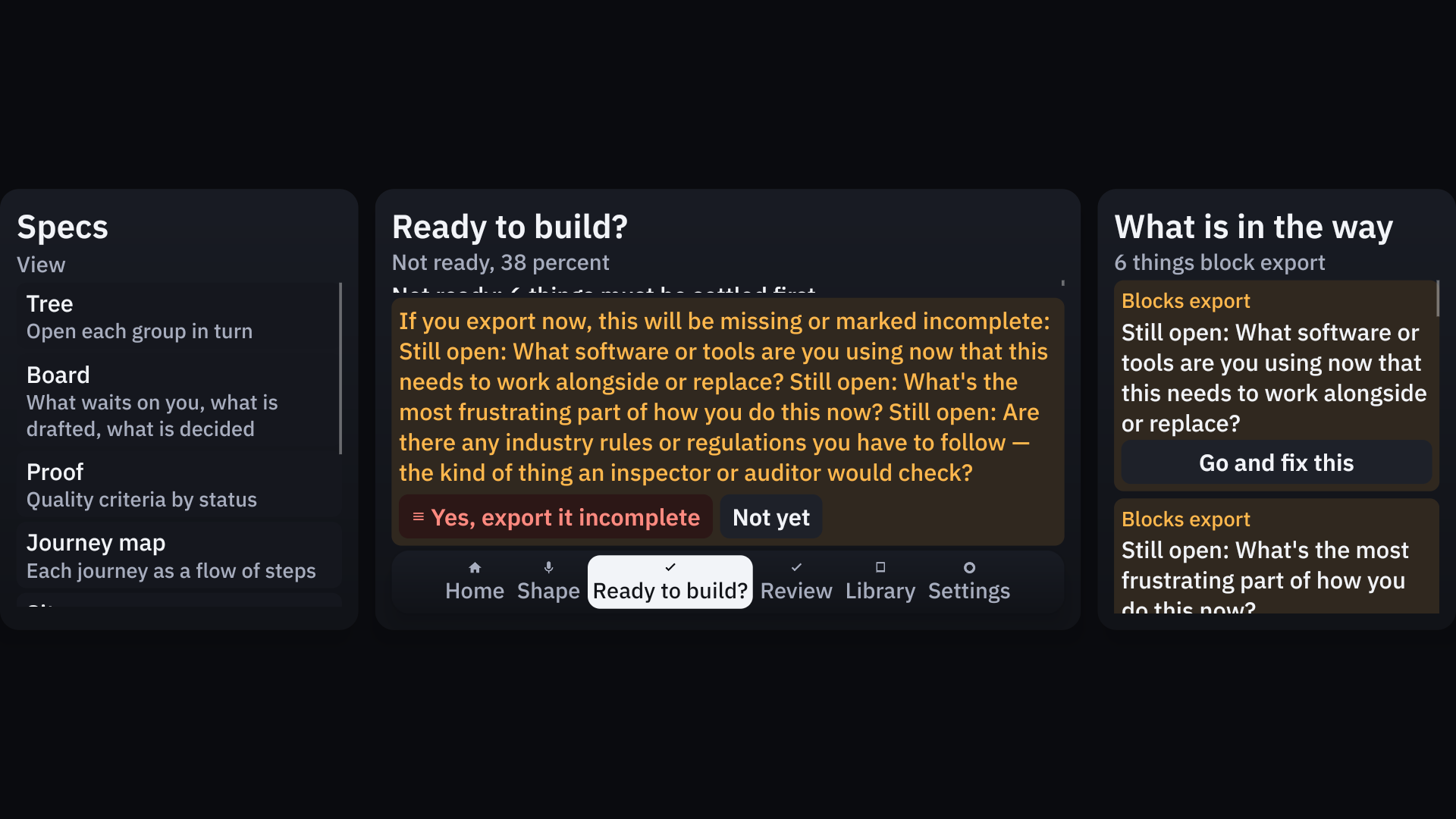
The resulting Specbook brings requirements, journeys and decisions together for continued review and editing. Its export gives developers and coding agents a common starting point, including an implementation brief and agent instructions. The aim is to carry the user's intent forward, rather than leave a developer to guess what a short prompt meant.
Why VR?
Product decisions don't exist in isolation: a single answer can affect a journey, a requirement and the work that follows. Spatial Specs explores a workspace where the active question, project context and Specbook can occupy the same surrounding space. Instead of losing your place across a stack of tabs and documents, you can focus on a decision while keeping the broader product in view. The spatial room and Specbook Board help make that growing picture understandable.
How we built it
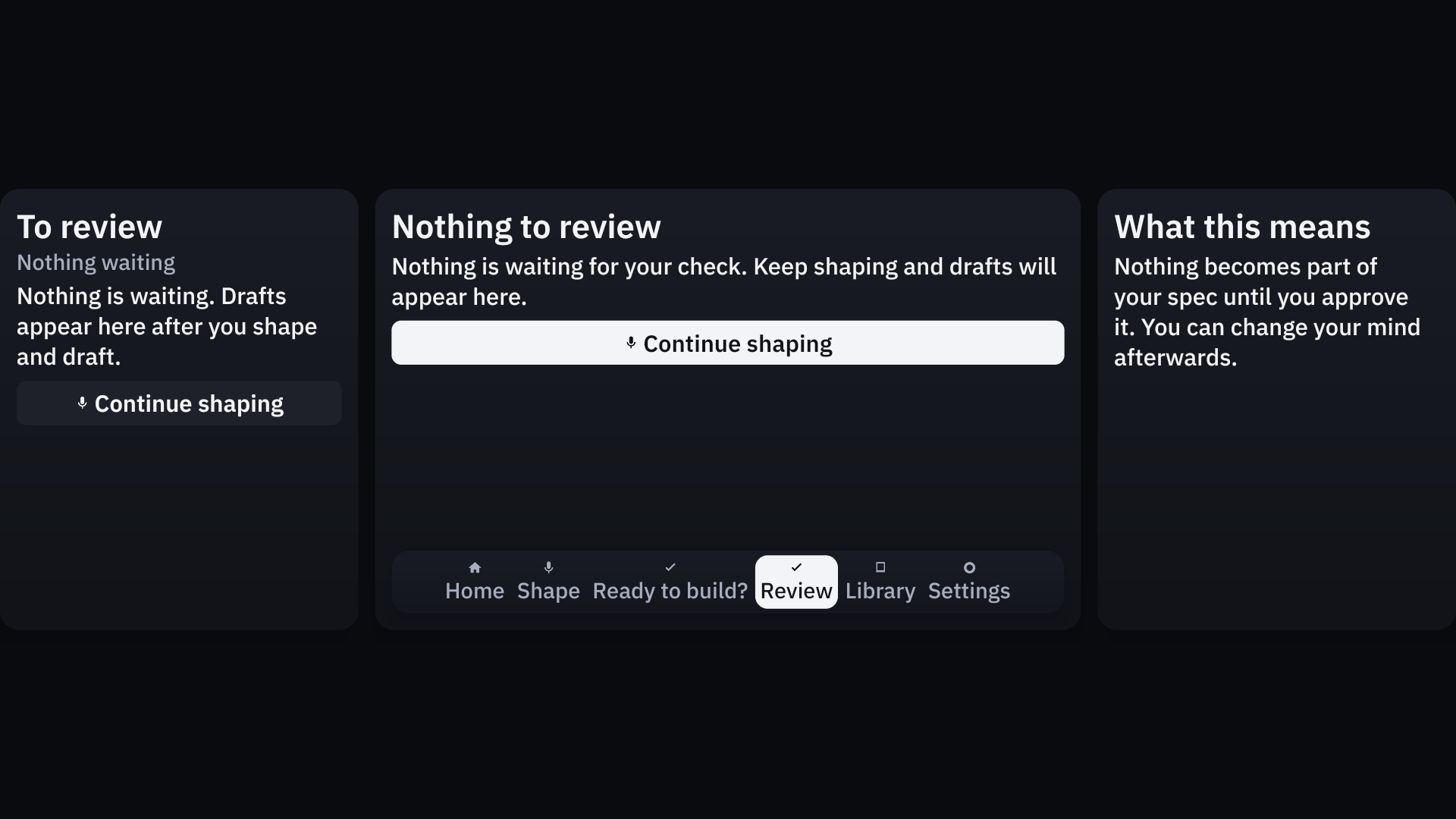
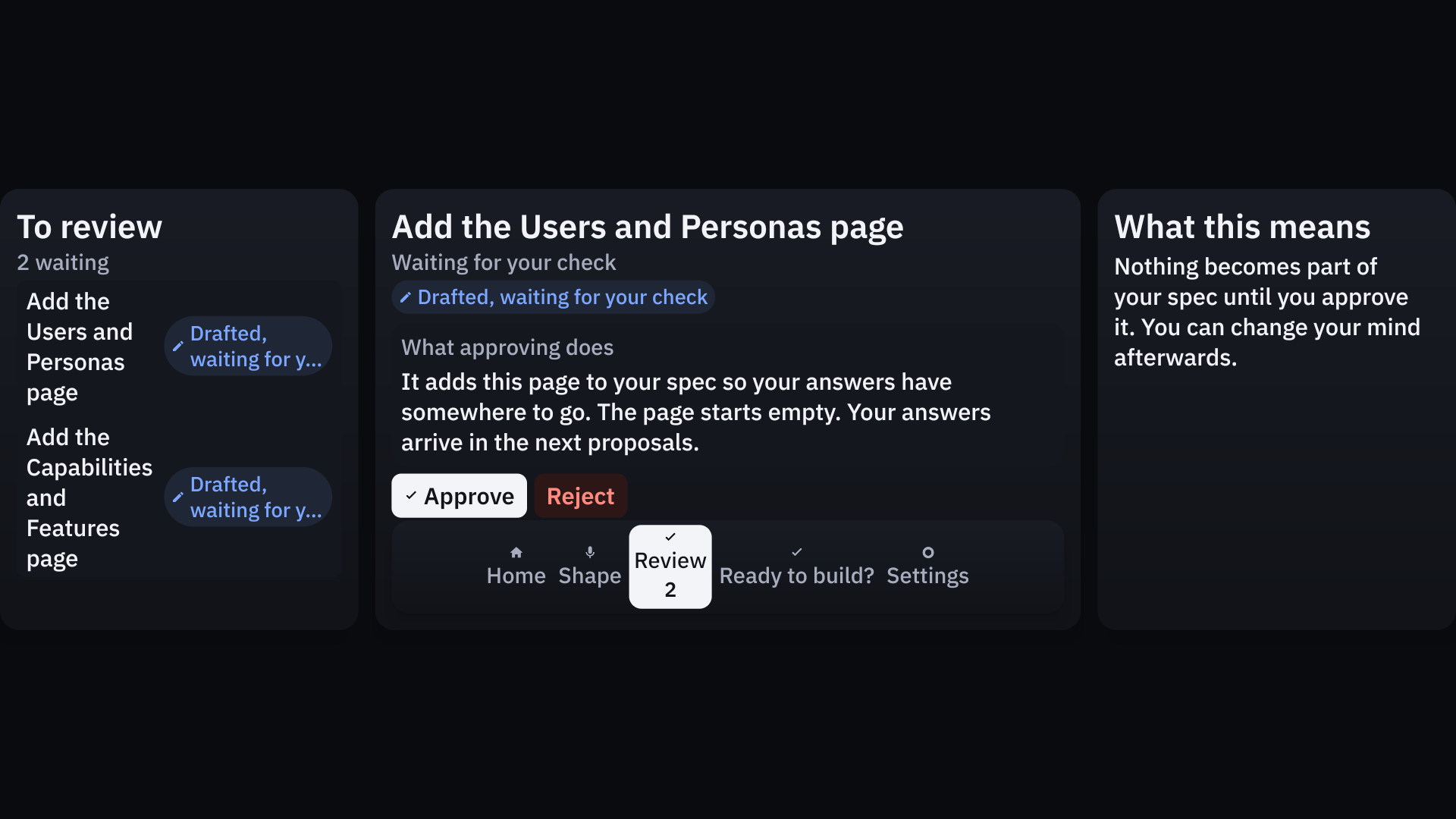
Spatial Specs adapts the existing Strata19 Discovery Engine and Specbook for Quest. We built the client with React Native, Expo and TypeScript, and integrated a native spatial room using Meta Spatial SDK. The VR experience brings focused discovery questions, proposal review, Specbook views and export controls into a new interface while building on the existing shared product runtime.
Challenges, lessons and what's next
The challenge is preserving the meaning of a person's decisions from discovery through the exported specification, while making a complex workflow understandable in VR. Testing reinforced that a useful handoff needs more than a polished document: it must reflect the user's actual answers and make important decisions clear.
Next, we want to strengthen context-driven suggestions and prefills, continue improving the depth of generated specs, and validate the complete spatial and hand interaction experience on Quest. Our goal is to make defining software more manageable—and even enjoyable.
Built With
- kotlin
- react
- spatial
- typescript

