-
-
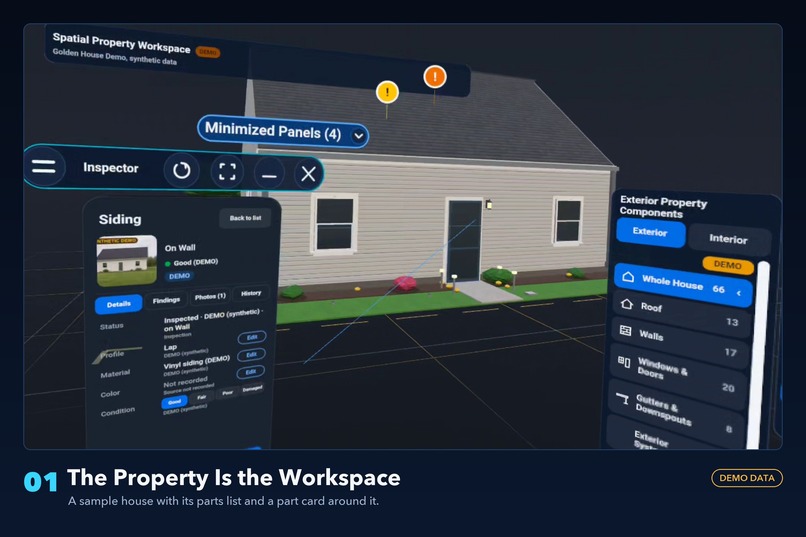
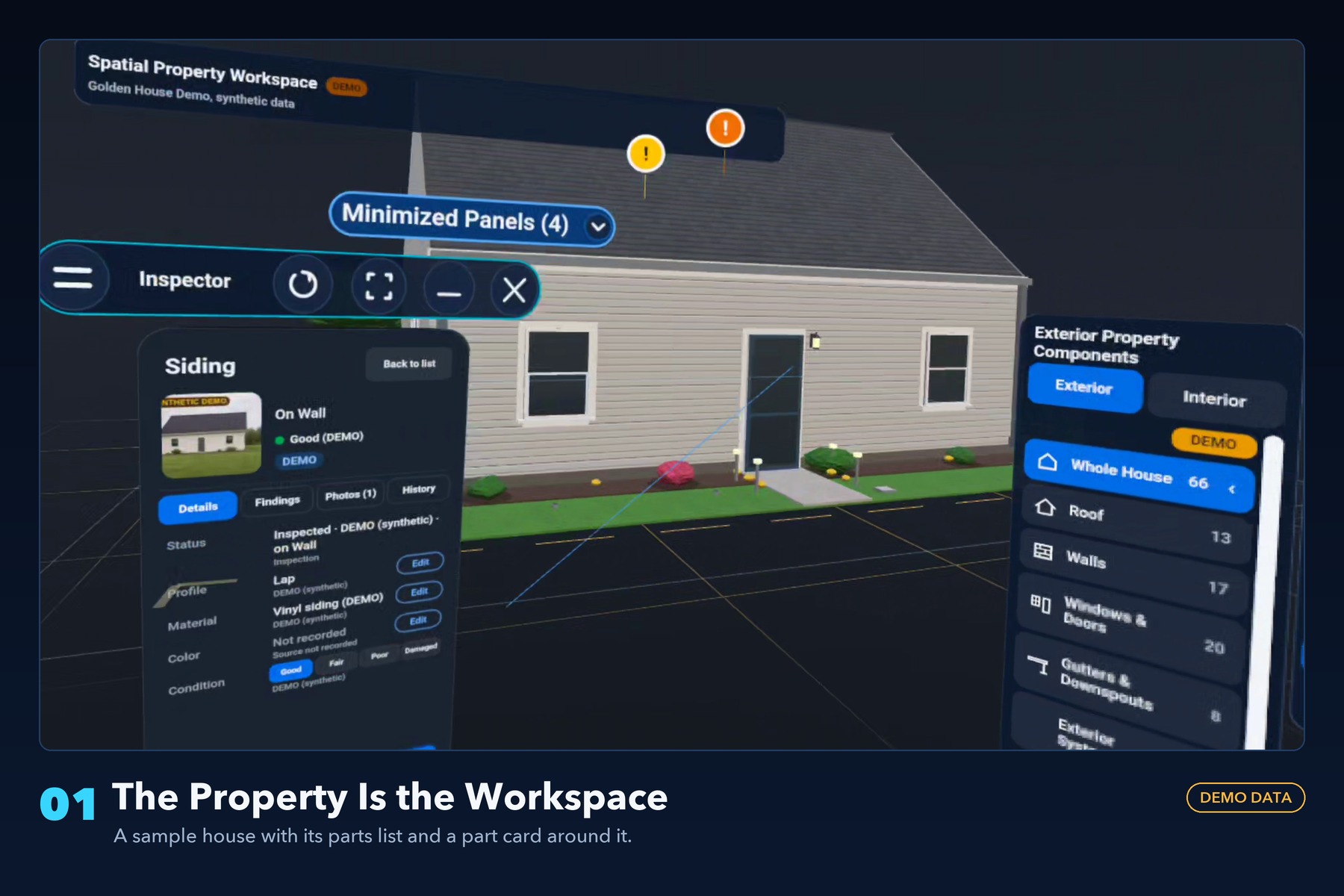
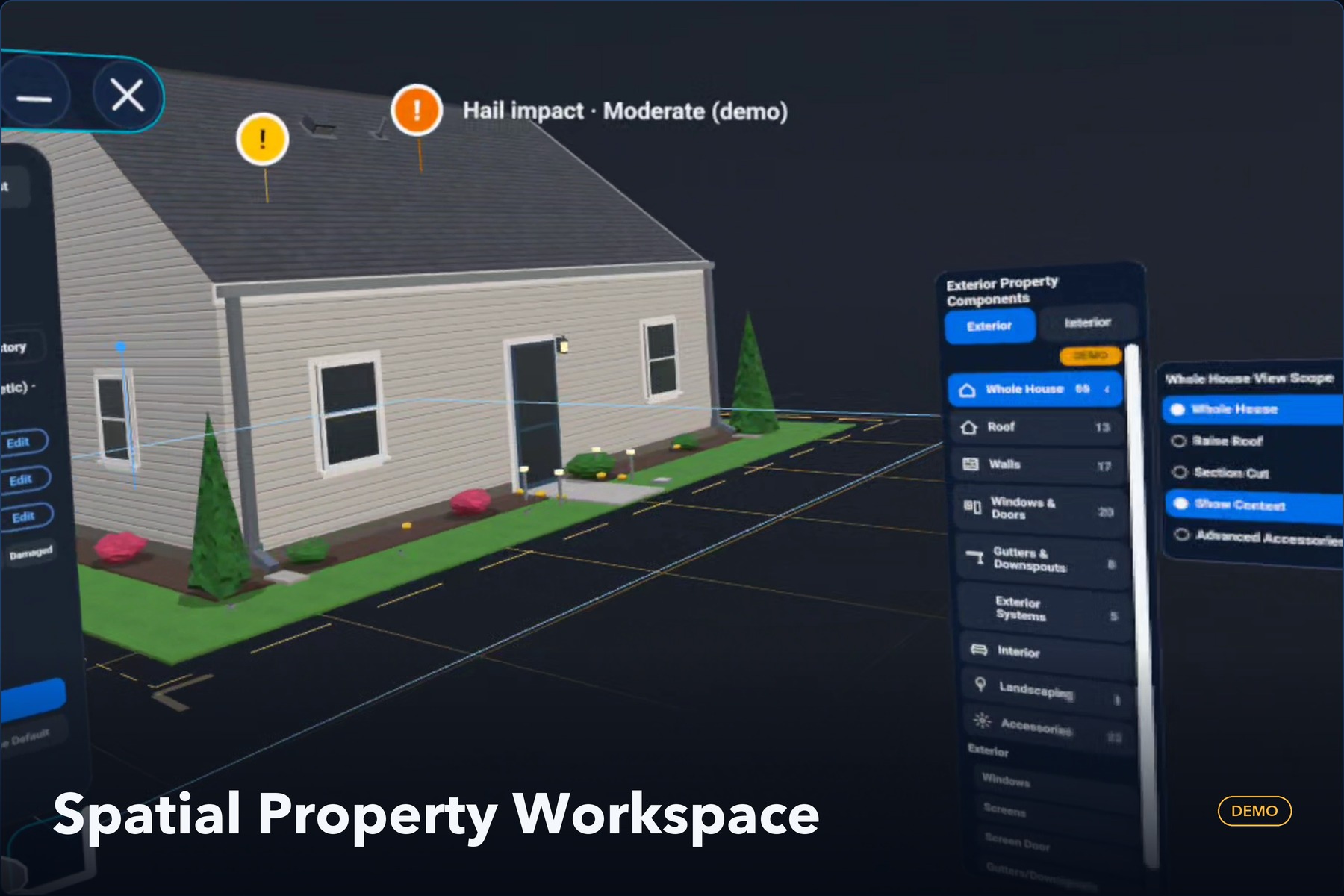
The property is the workspace: a sample house with its parts list and a part card around it. Synthetic demo data.
-
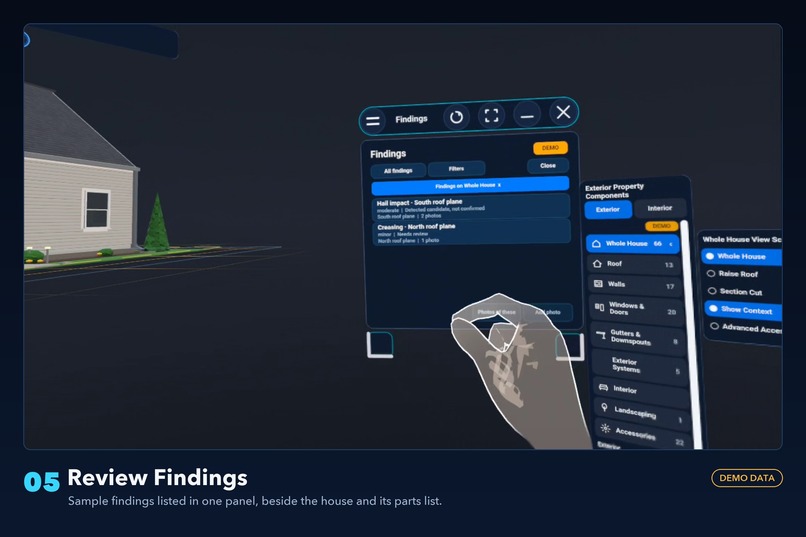
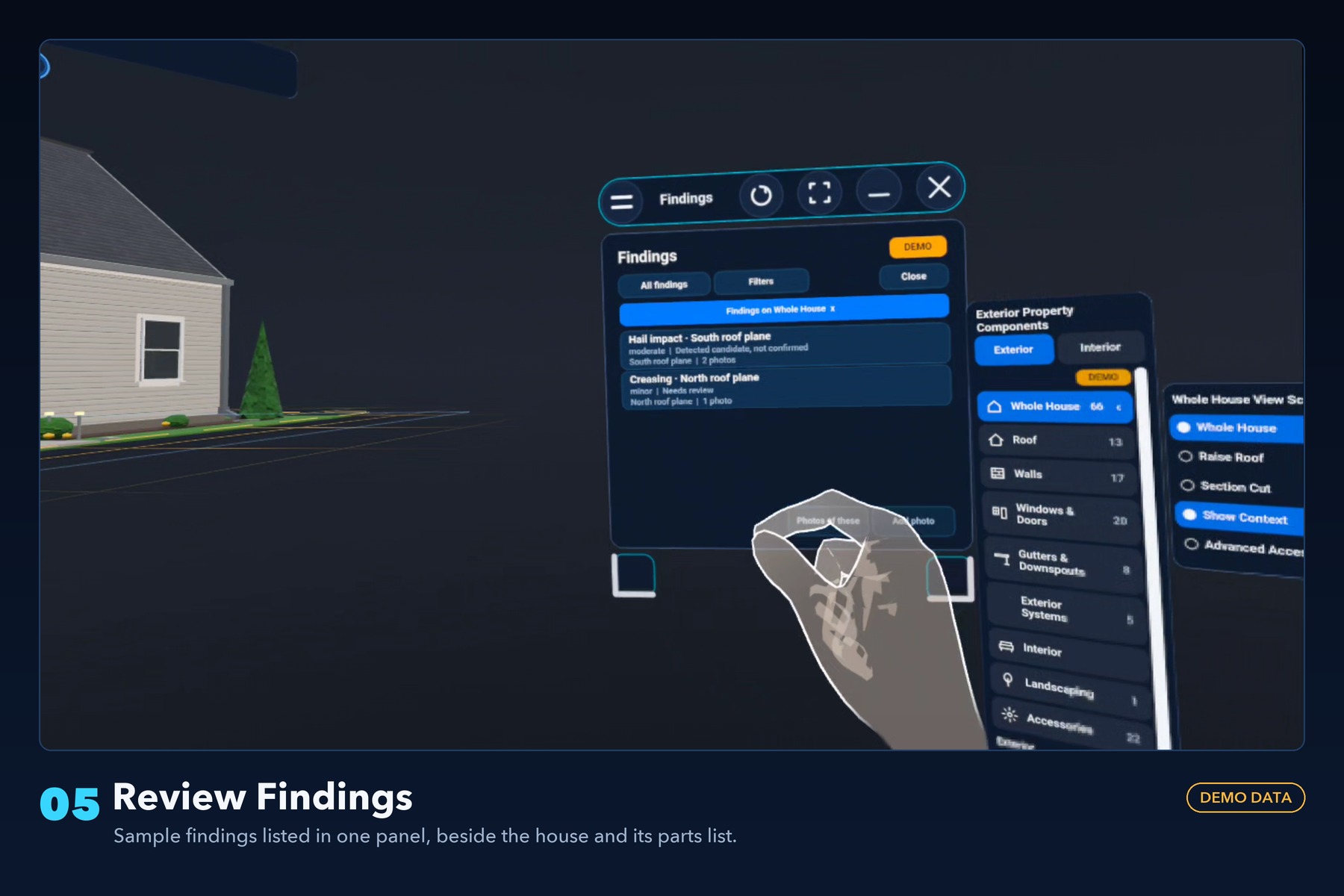
Sample findings listed in one panel beside the house. Synthetic demo data.
-
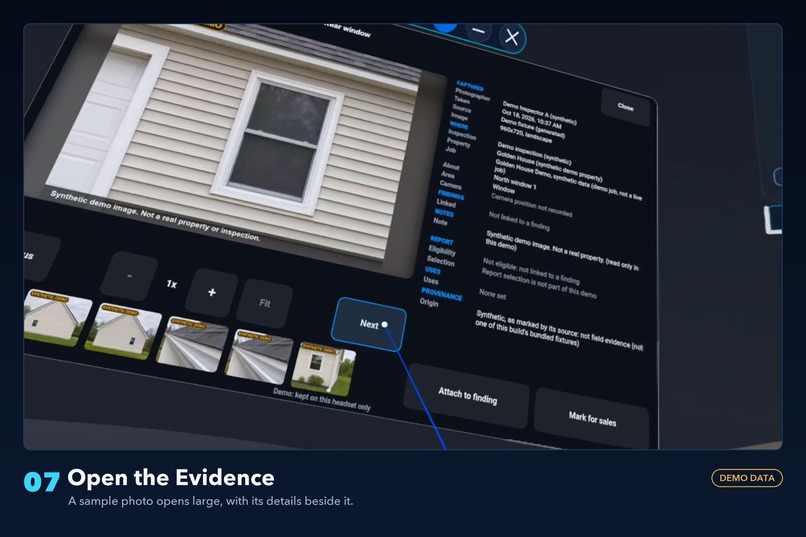
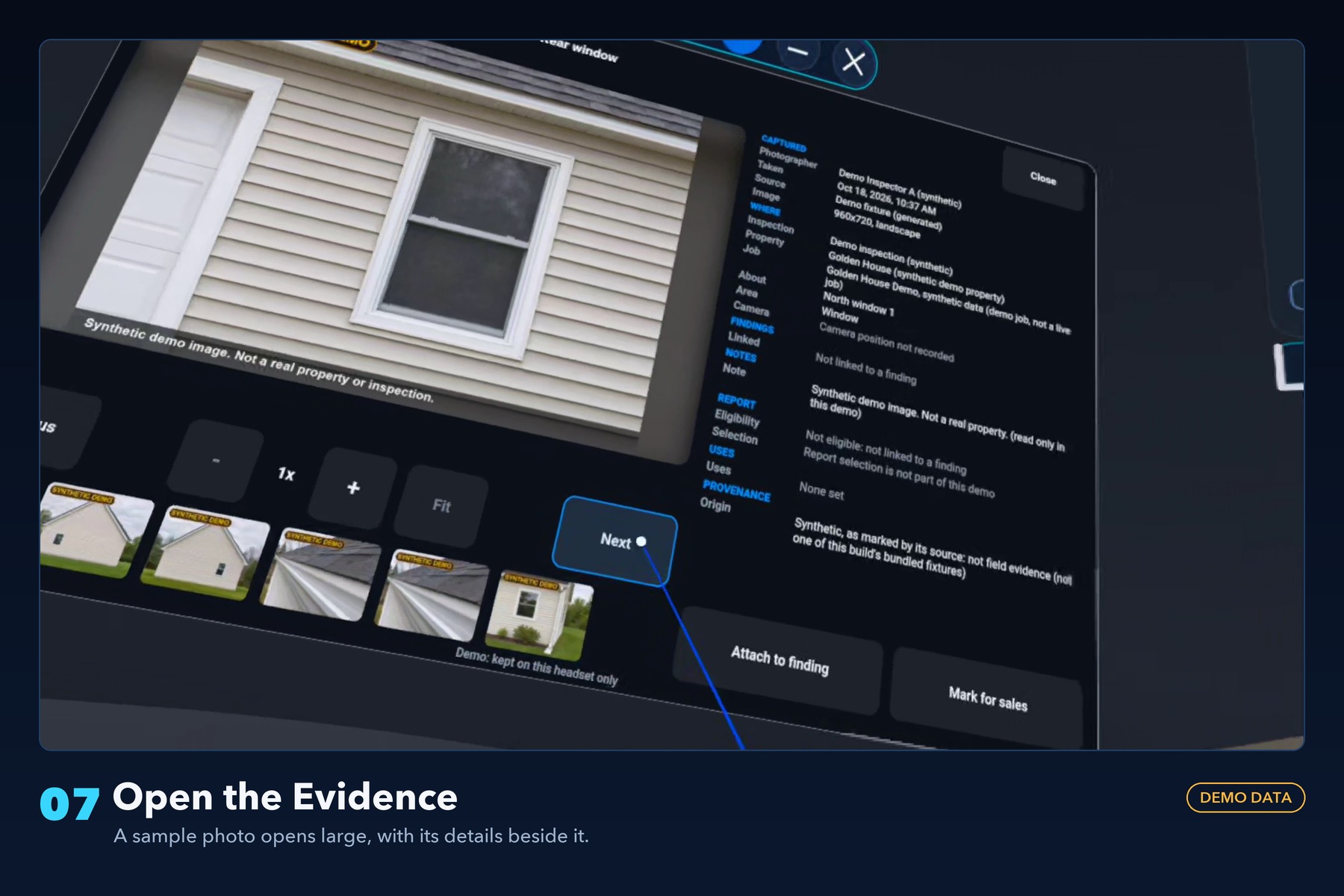
One sample photo opened large, with its details beside it. Synthetic demo image.
-
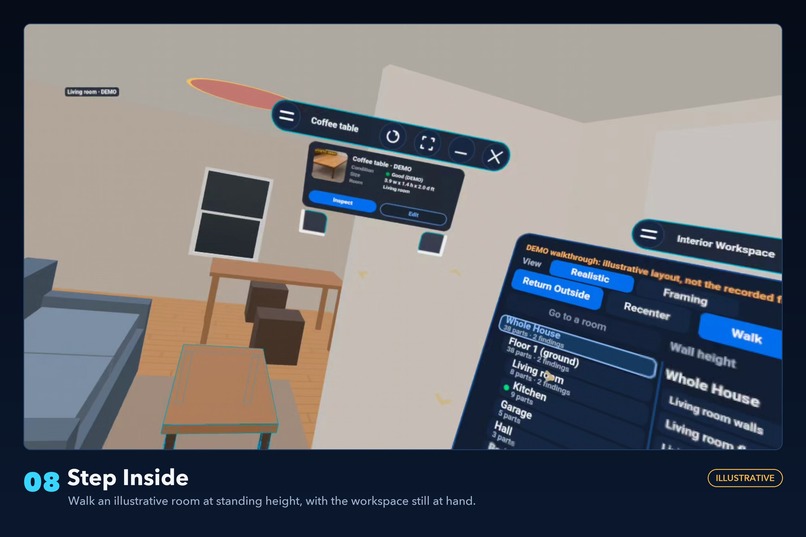
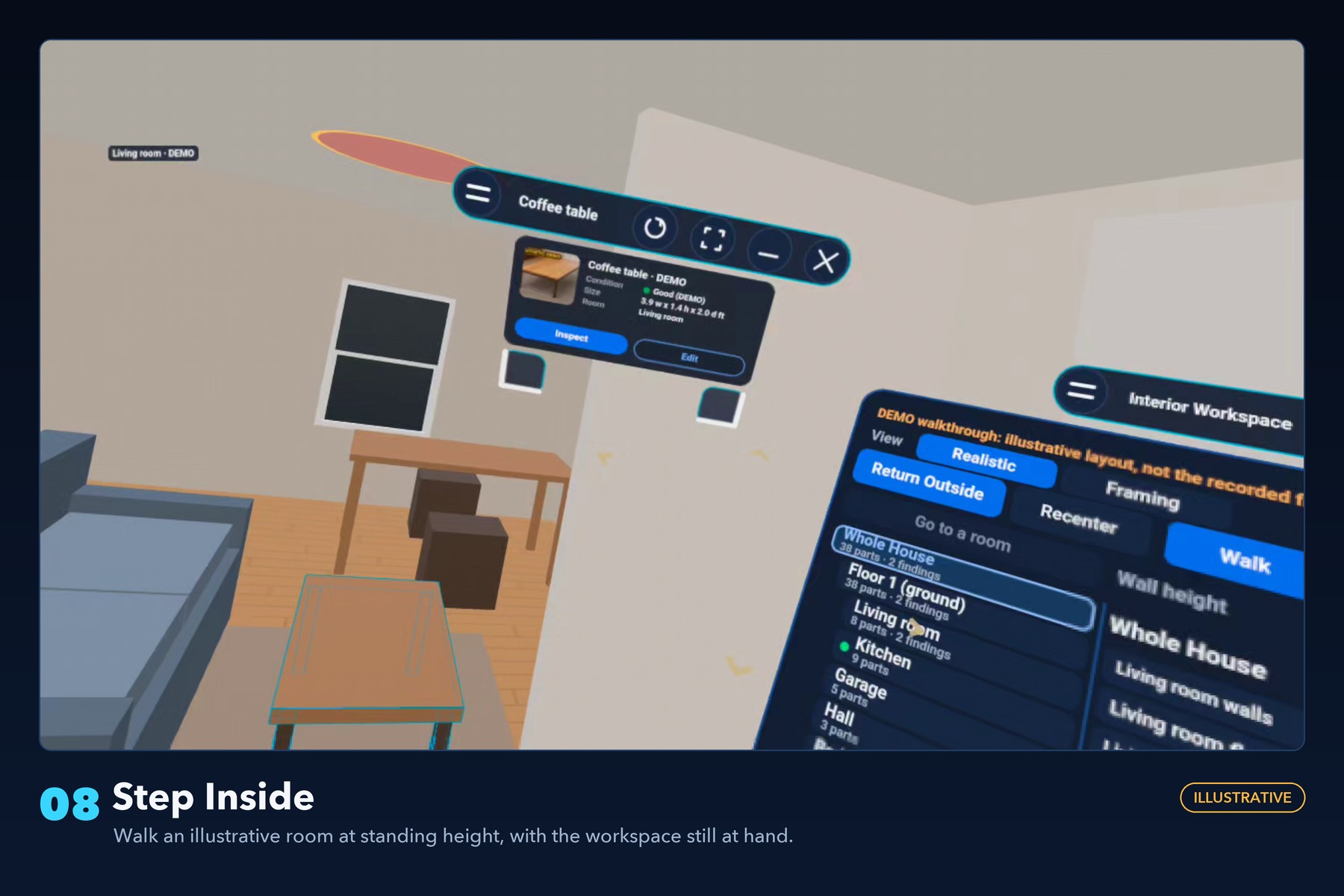
Step inside: an illustrative room at standing height, with the workspace still at hand.
-
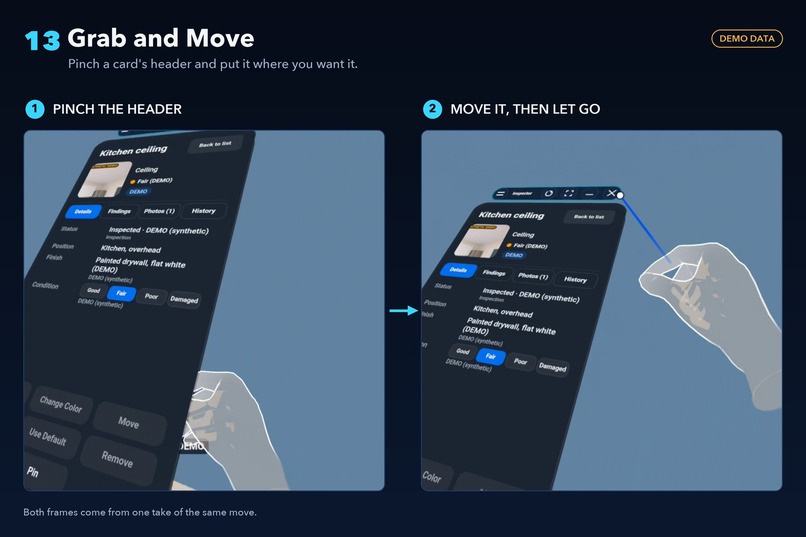
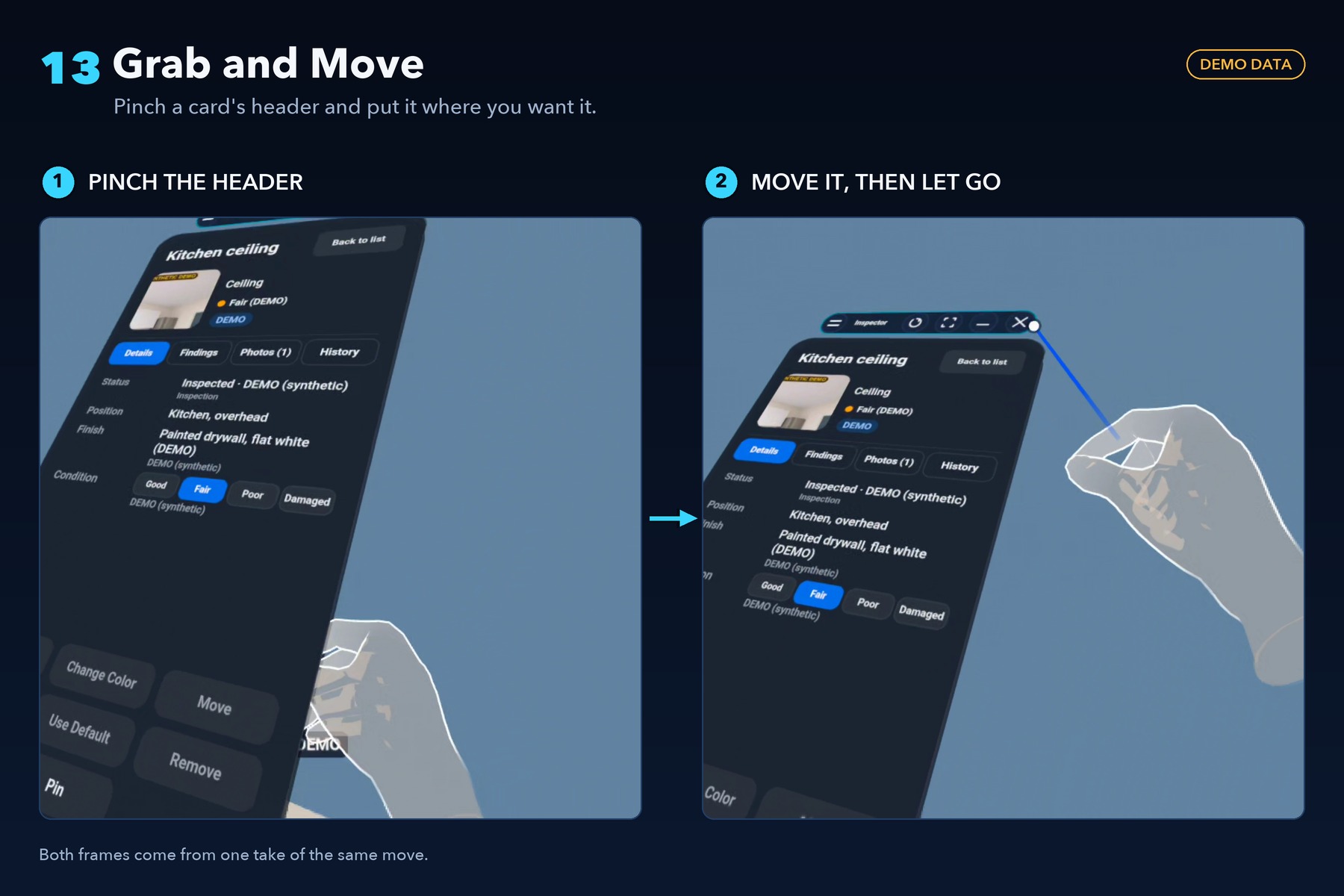
Grab and move: pinch a card's header and place it where you want it.
-
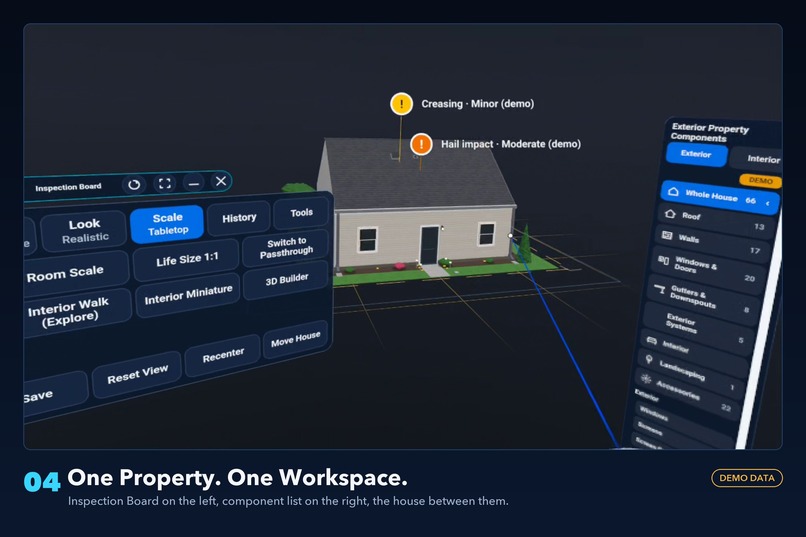
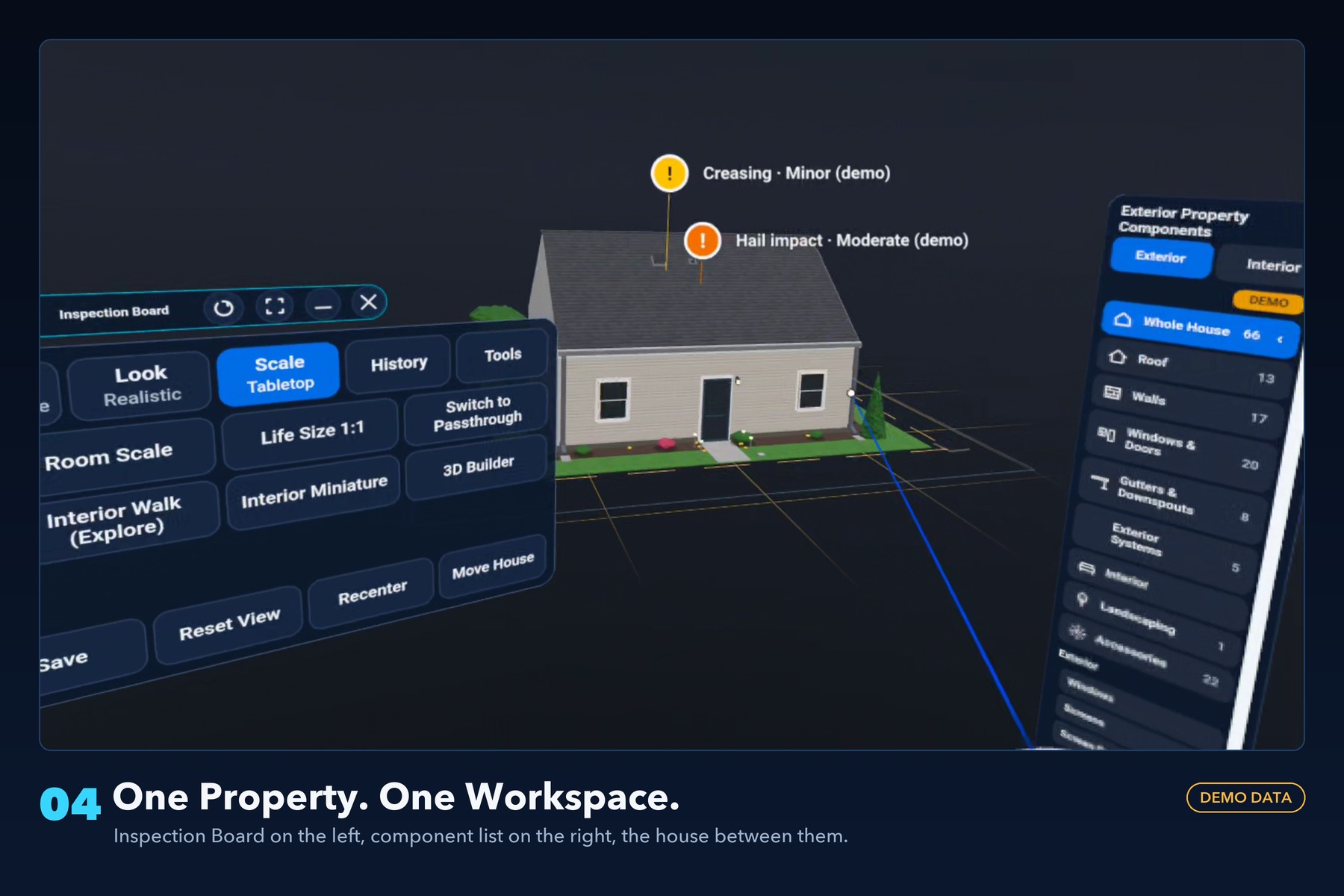
One property, one workspace: the Inspection Board, the house and the component list in one view.
-
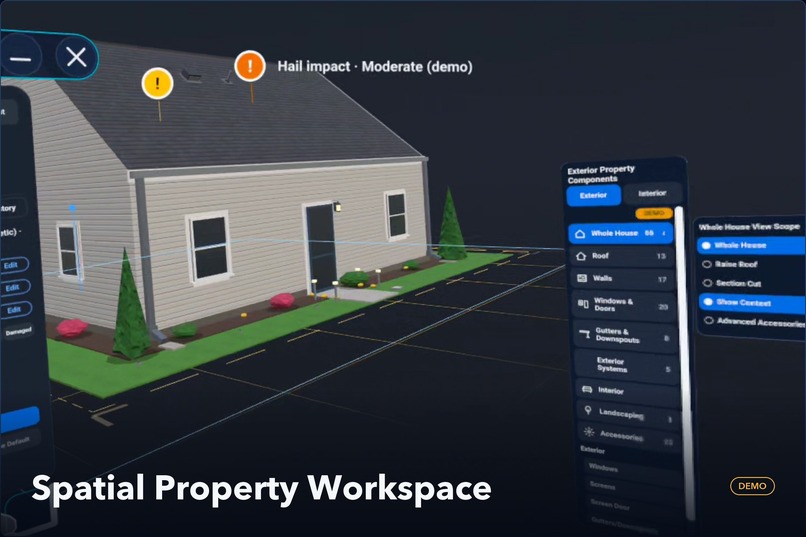
Spatial Property Workspace. Synthetic demo data.
-
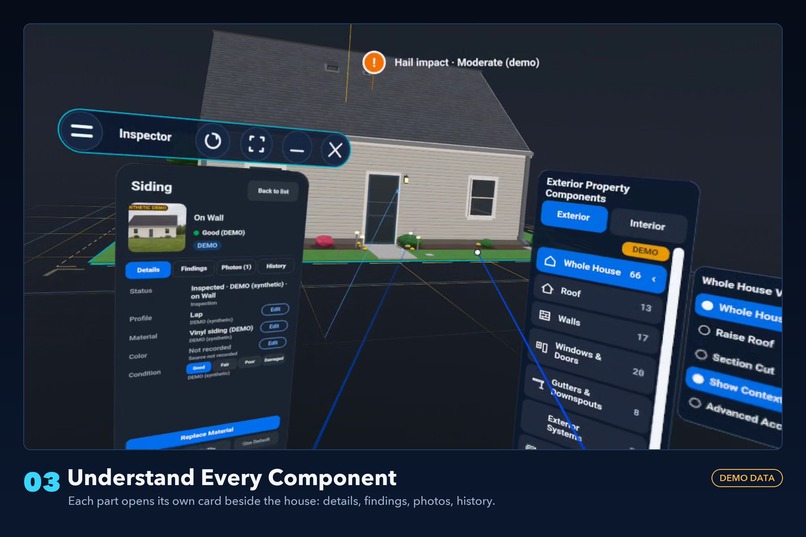
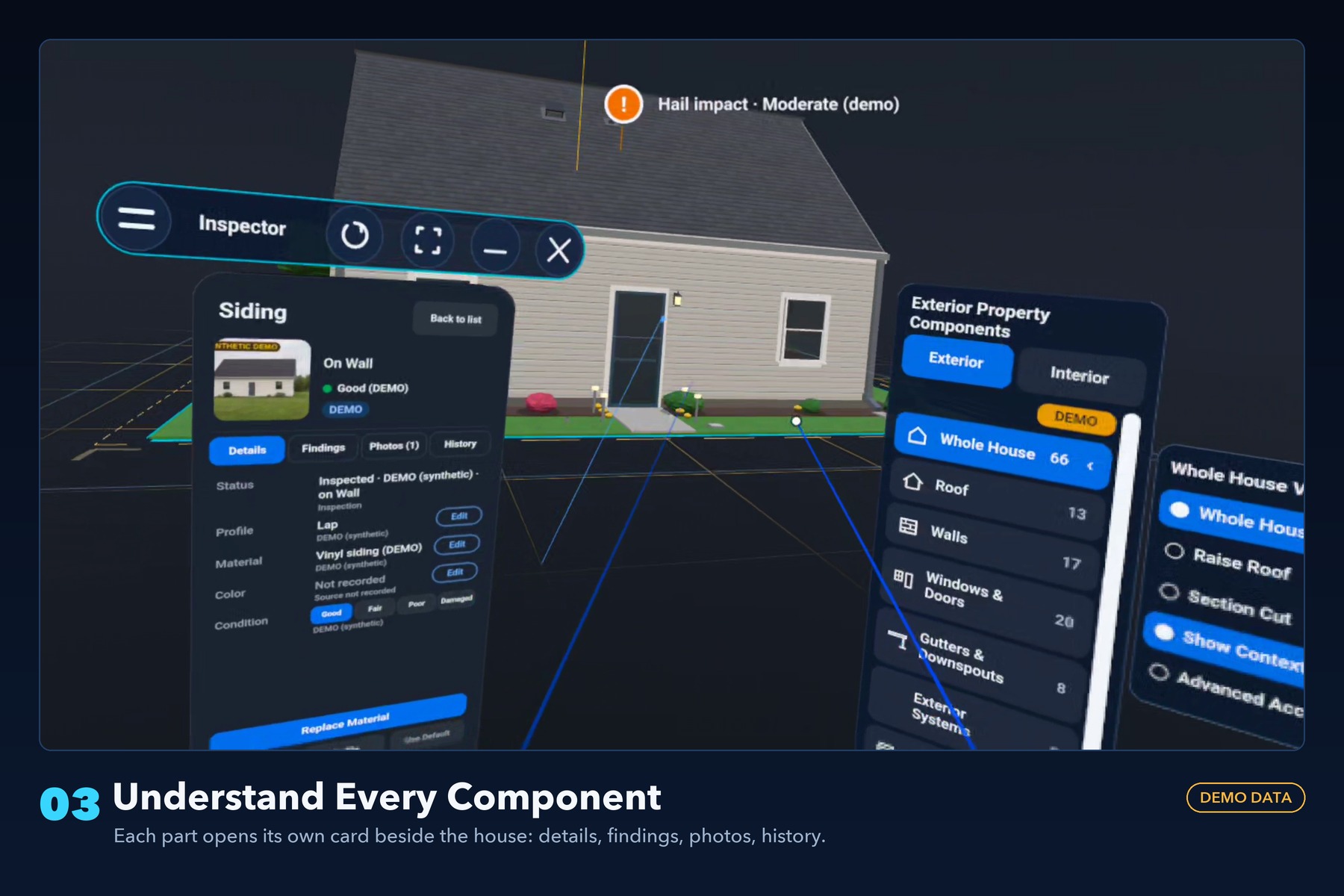
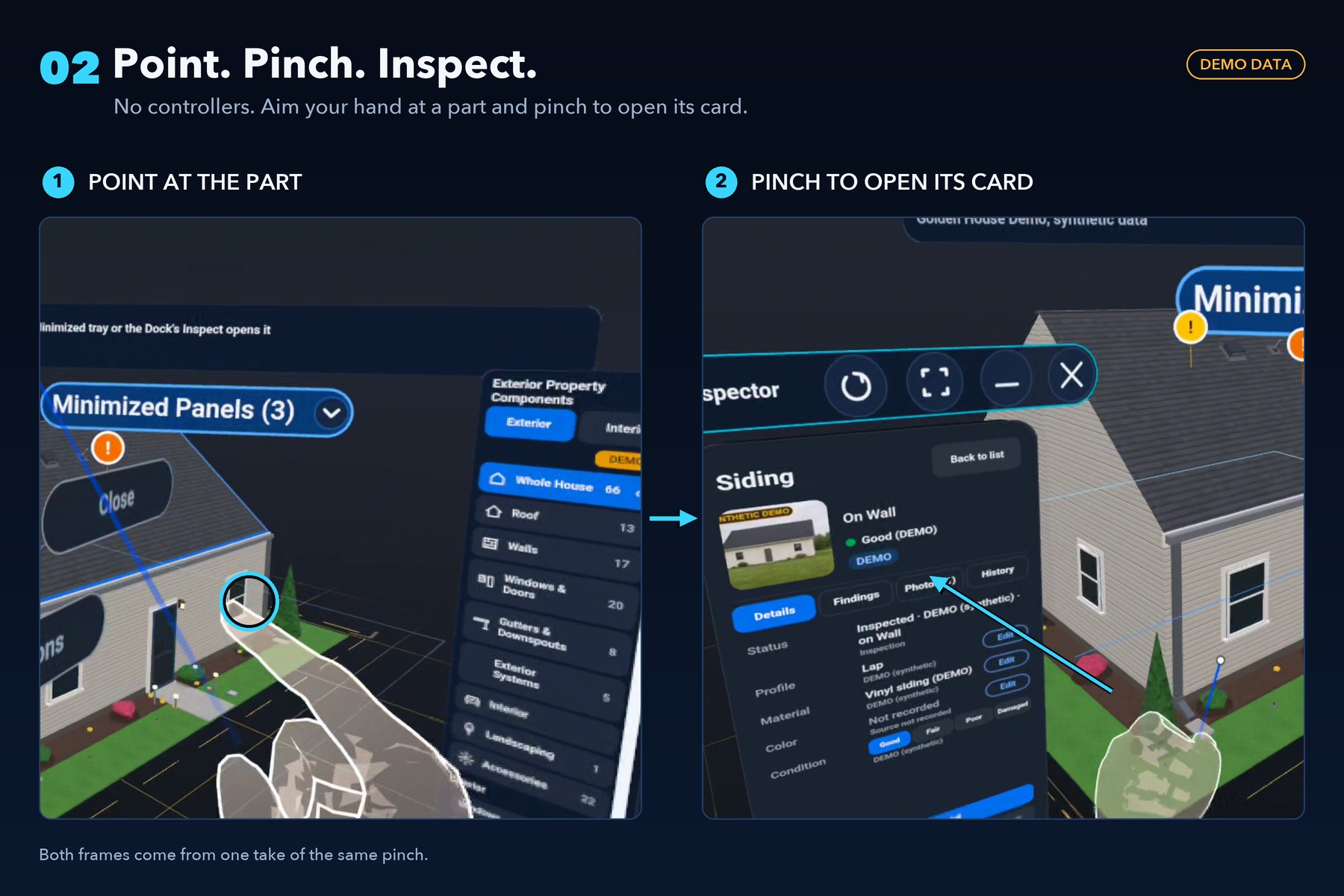
Every part of the house opens its own card with details, findings, photos and history.
-
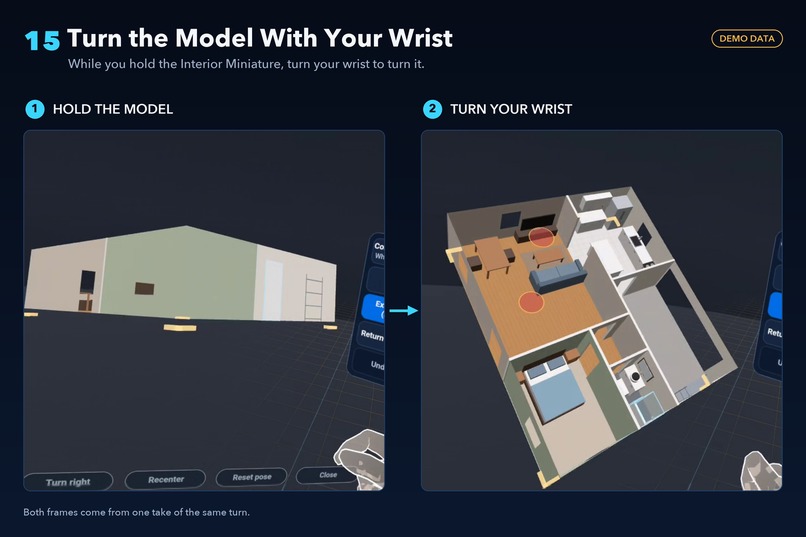
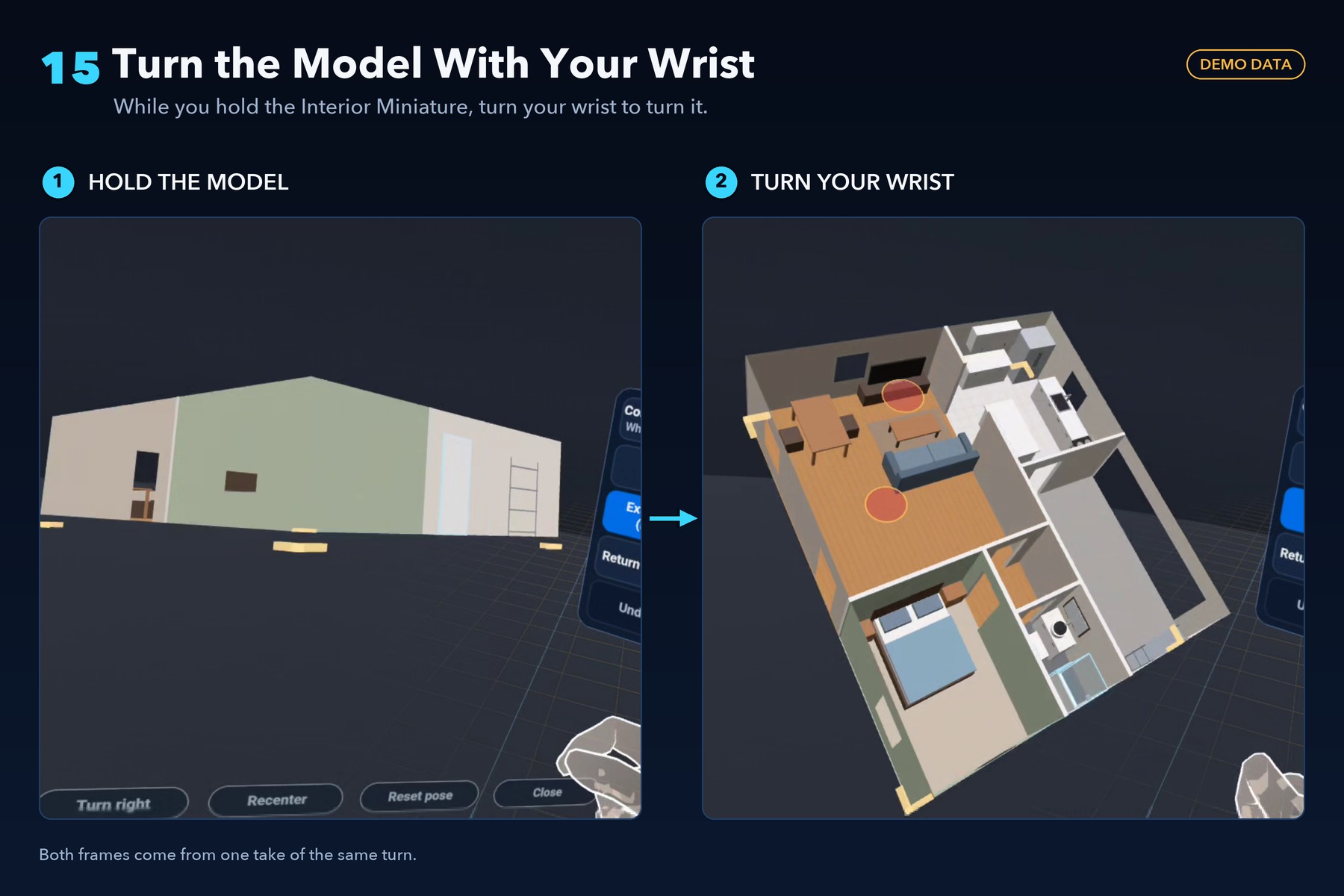
Hold the Interior Miniature and turn your wrist to turn it.
-
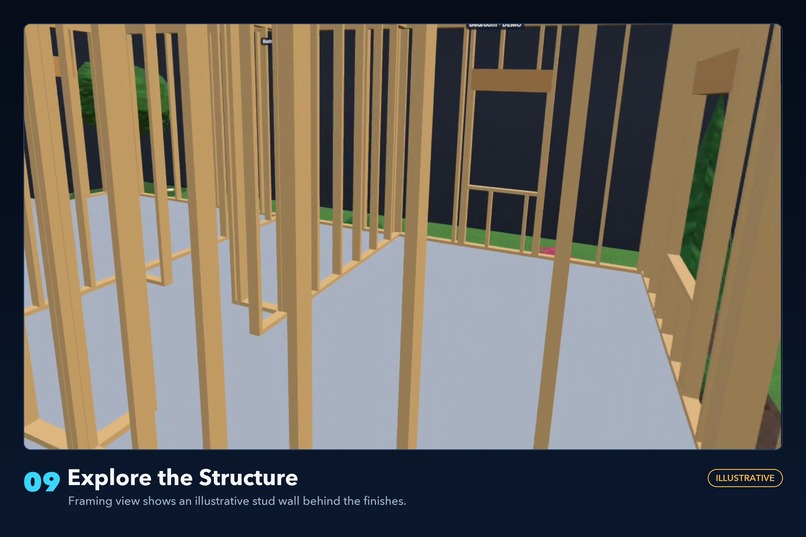
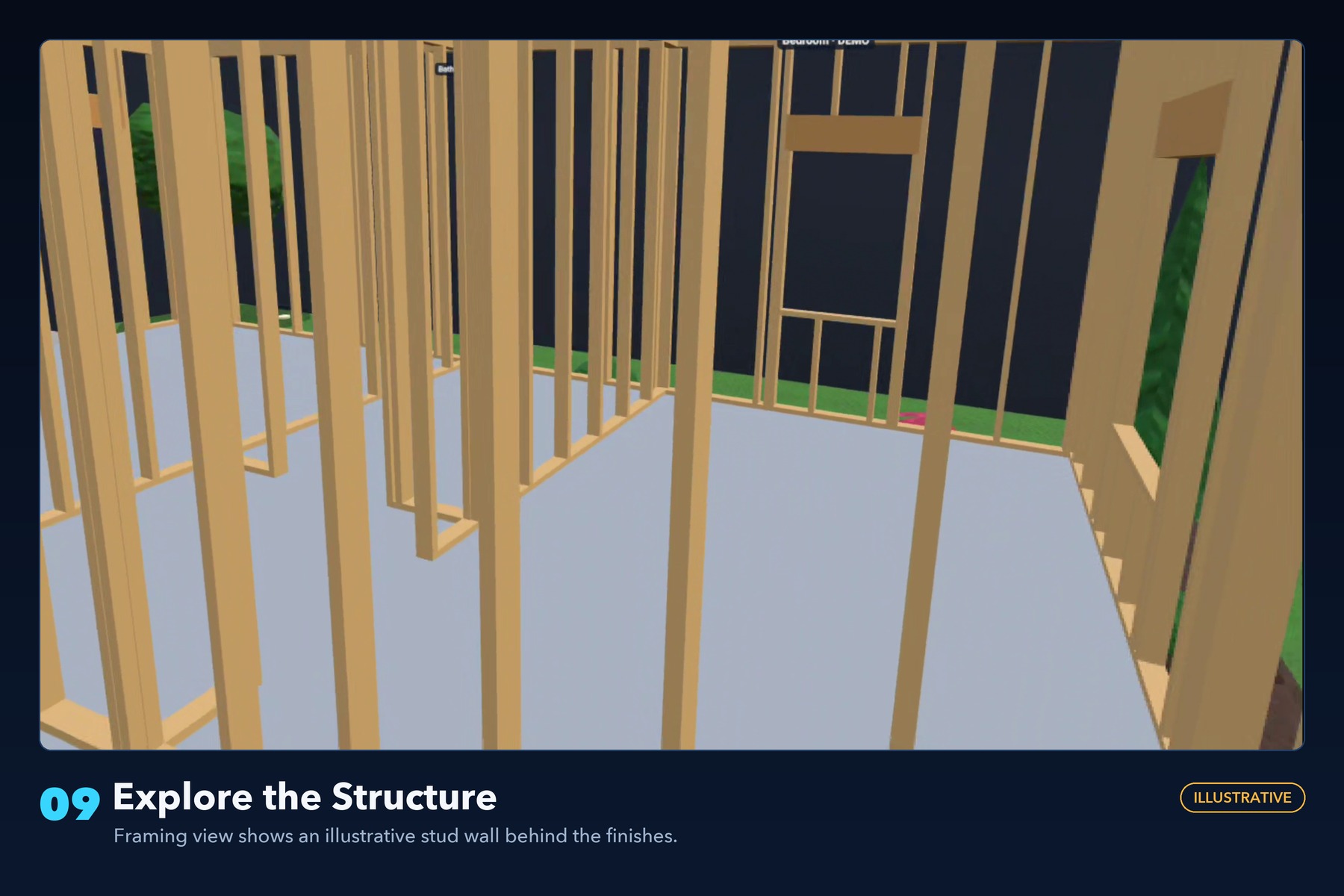
Framing view: illustrative wall studs behind the finishes. Not as built.
-
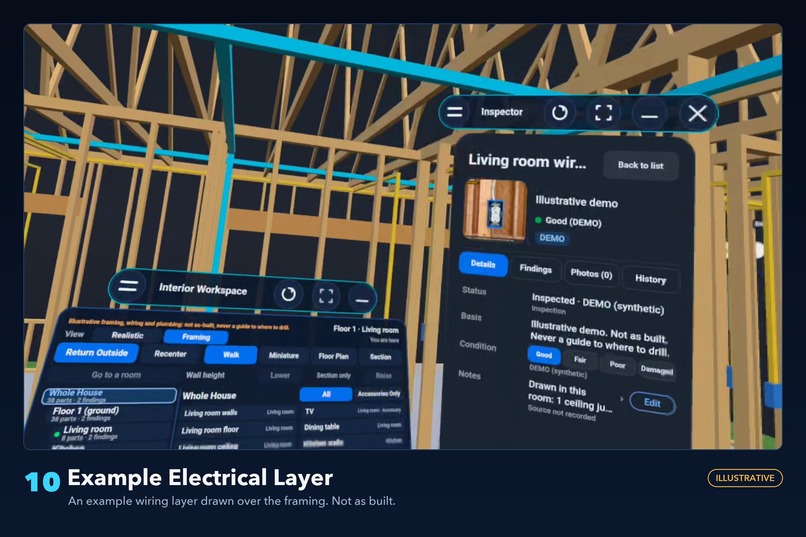
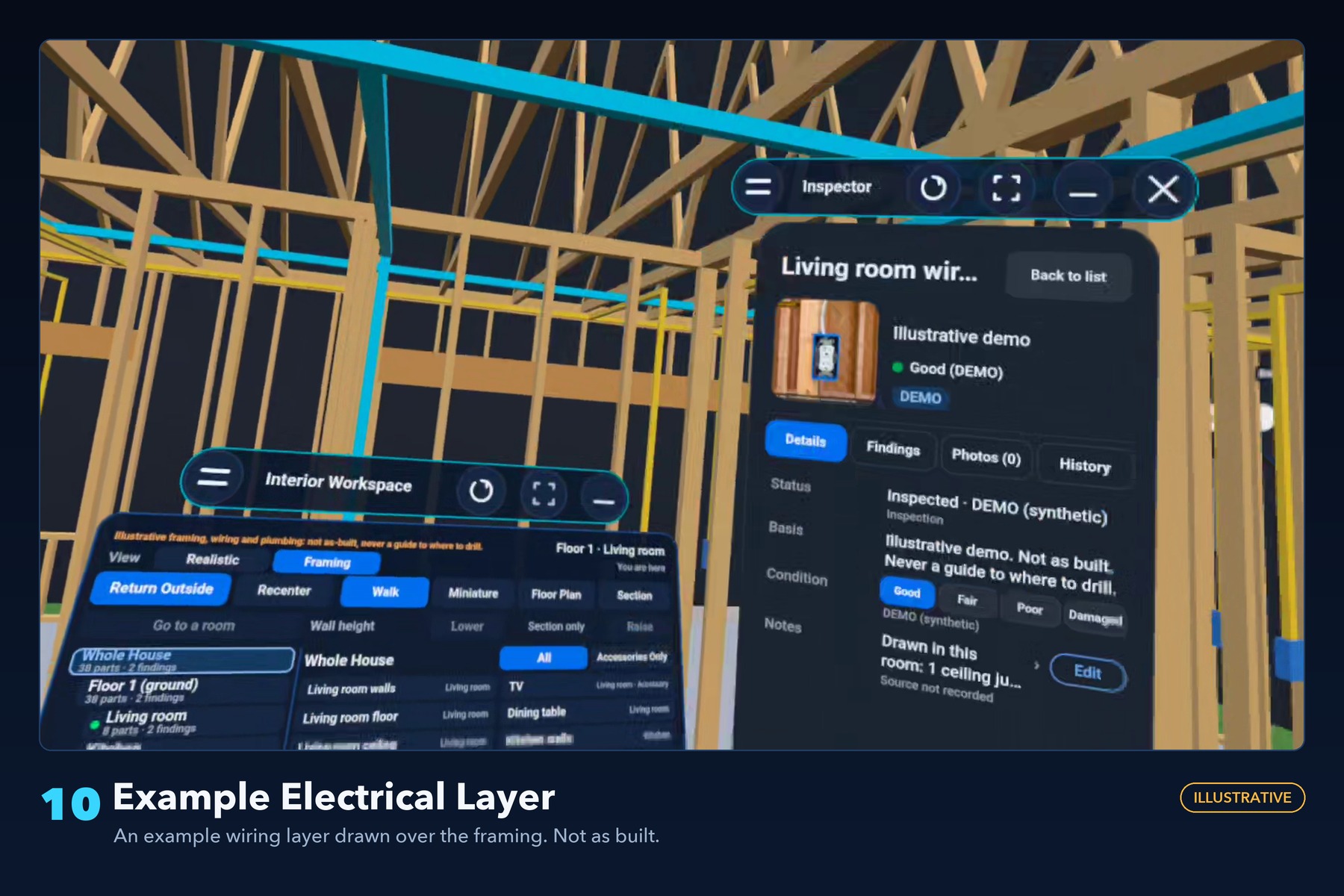
An example wiring layer over the framing. Illustrative, not as built.
-
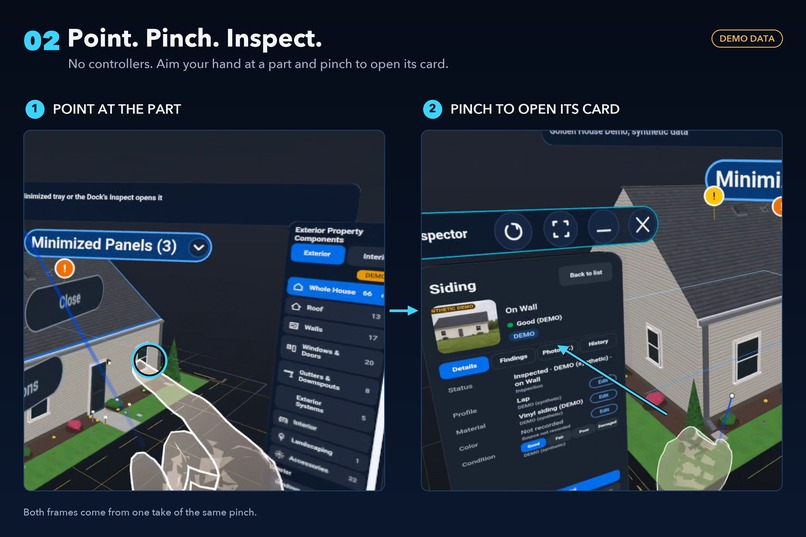
Point, pinch, inspect. No controllers: aim a hand at a part and pinch to open its card.
-
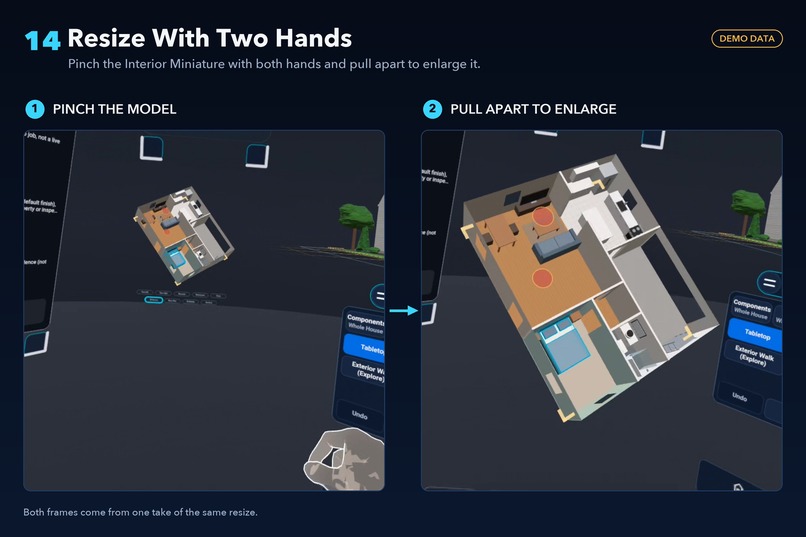
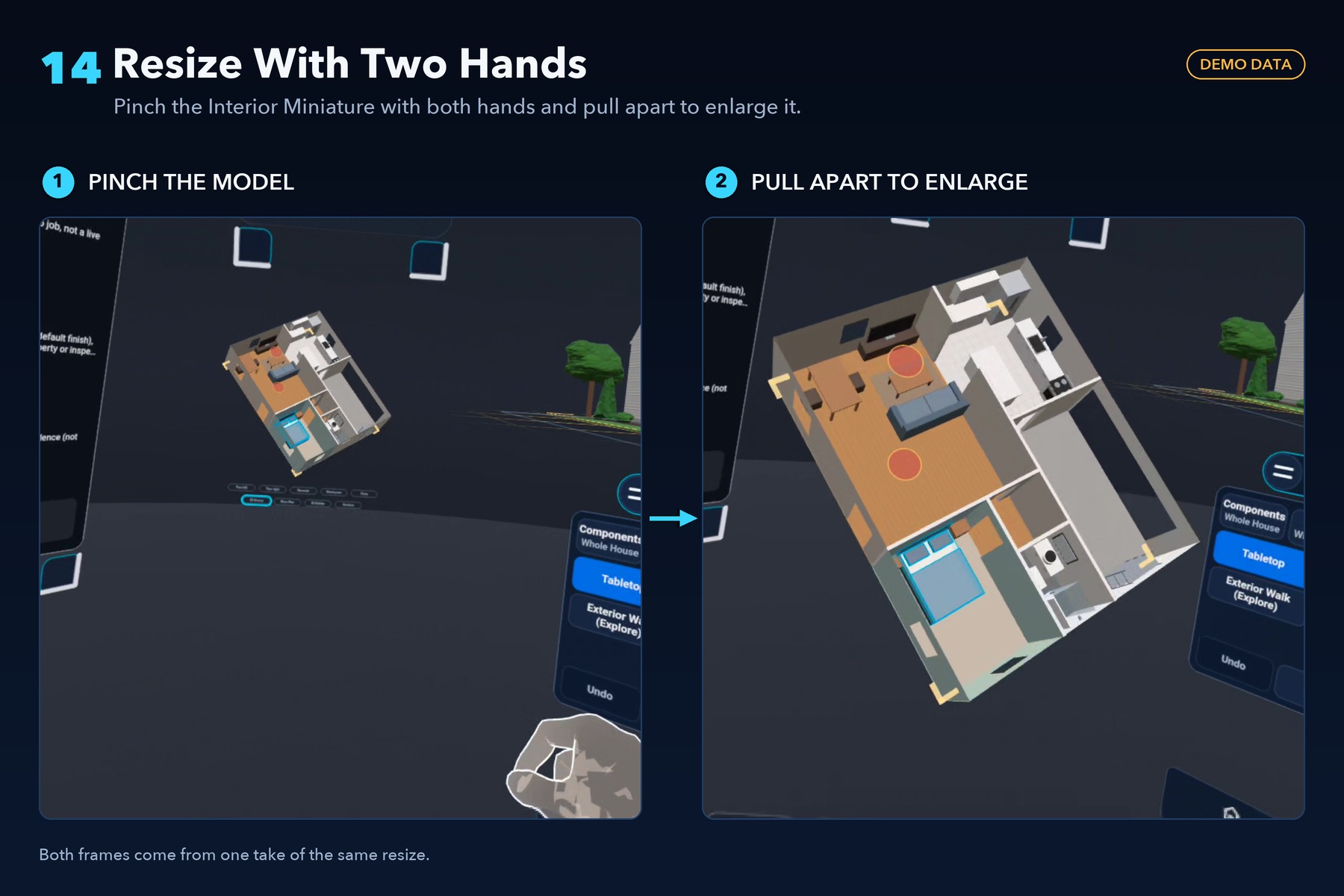
Resize with two hands: pinch the Interior Miniature and pull apart to enlarge it.
-
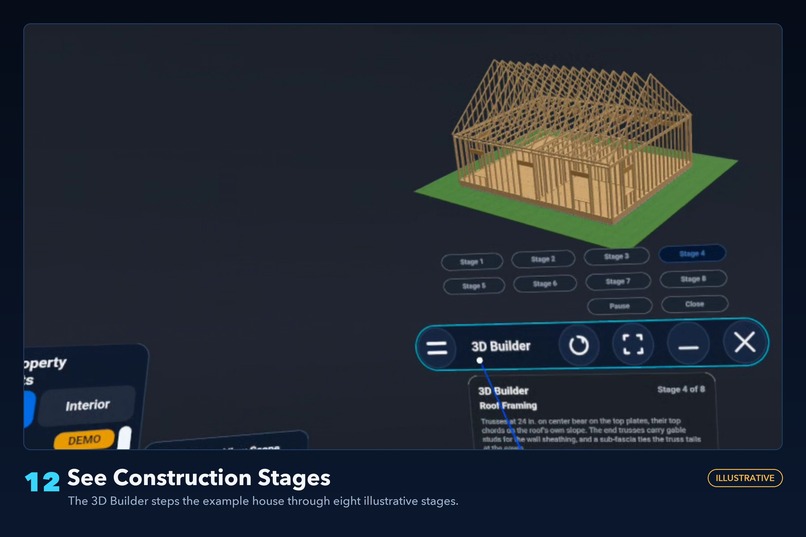
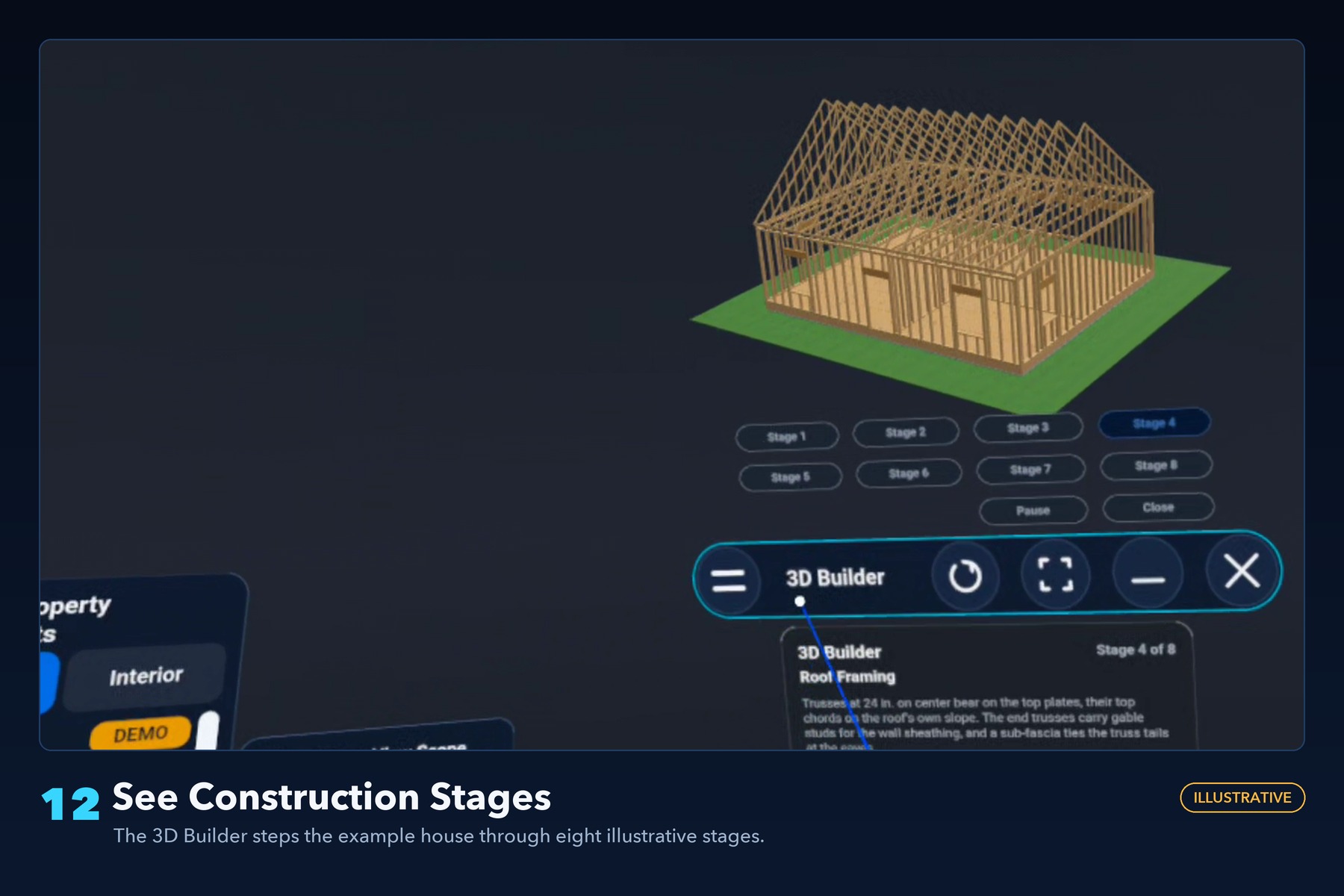
The 3D Builder steps the example house through eight illustrative construction stages.
-
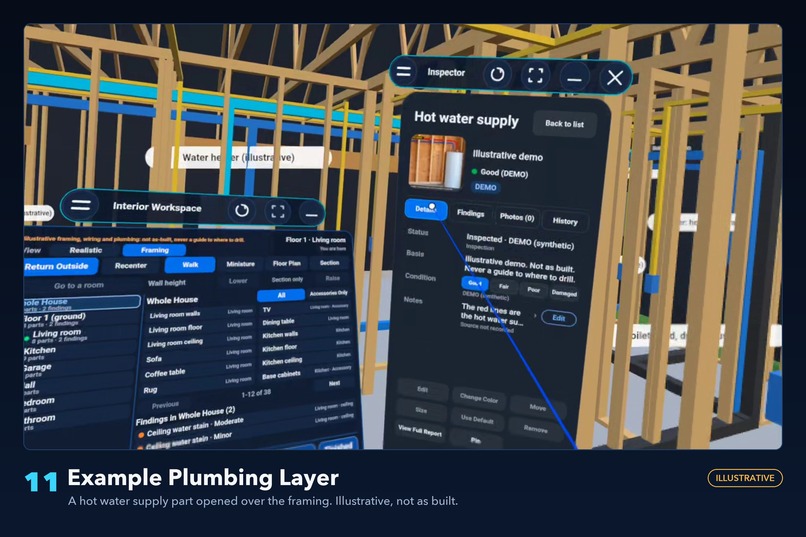
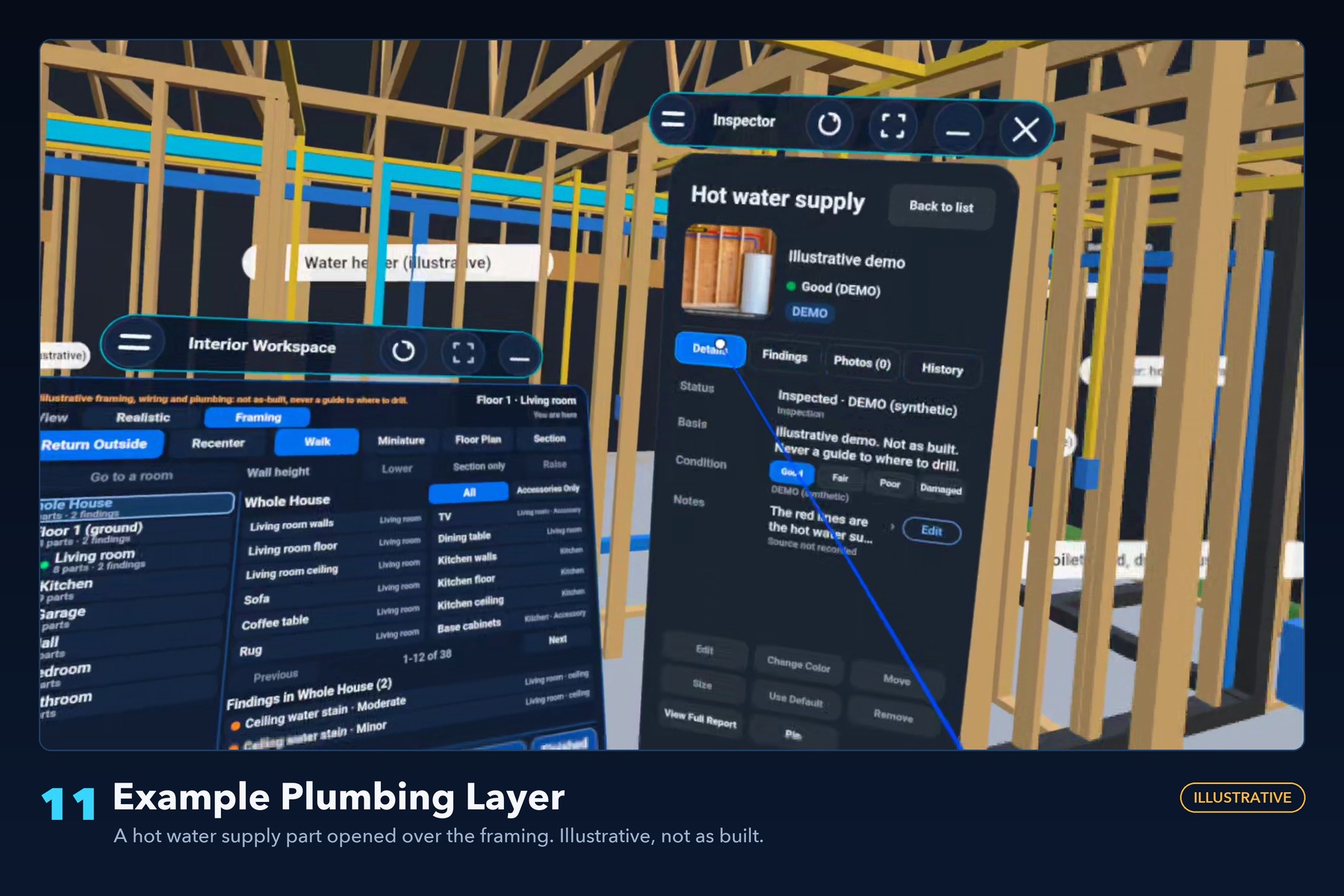
An example plumbing layer over the framing, with the Hot water supply card open. Illustrative, not as built.
-
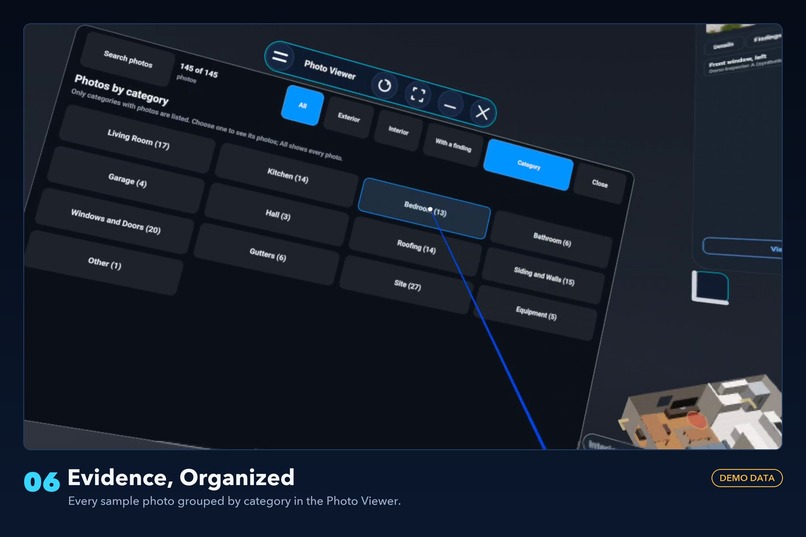
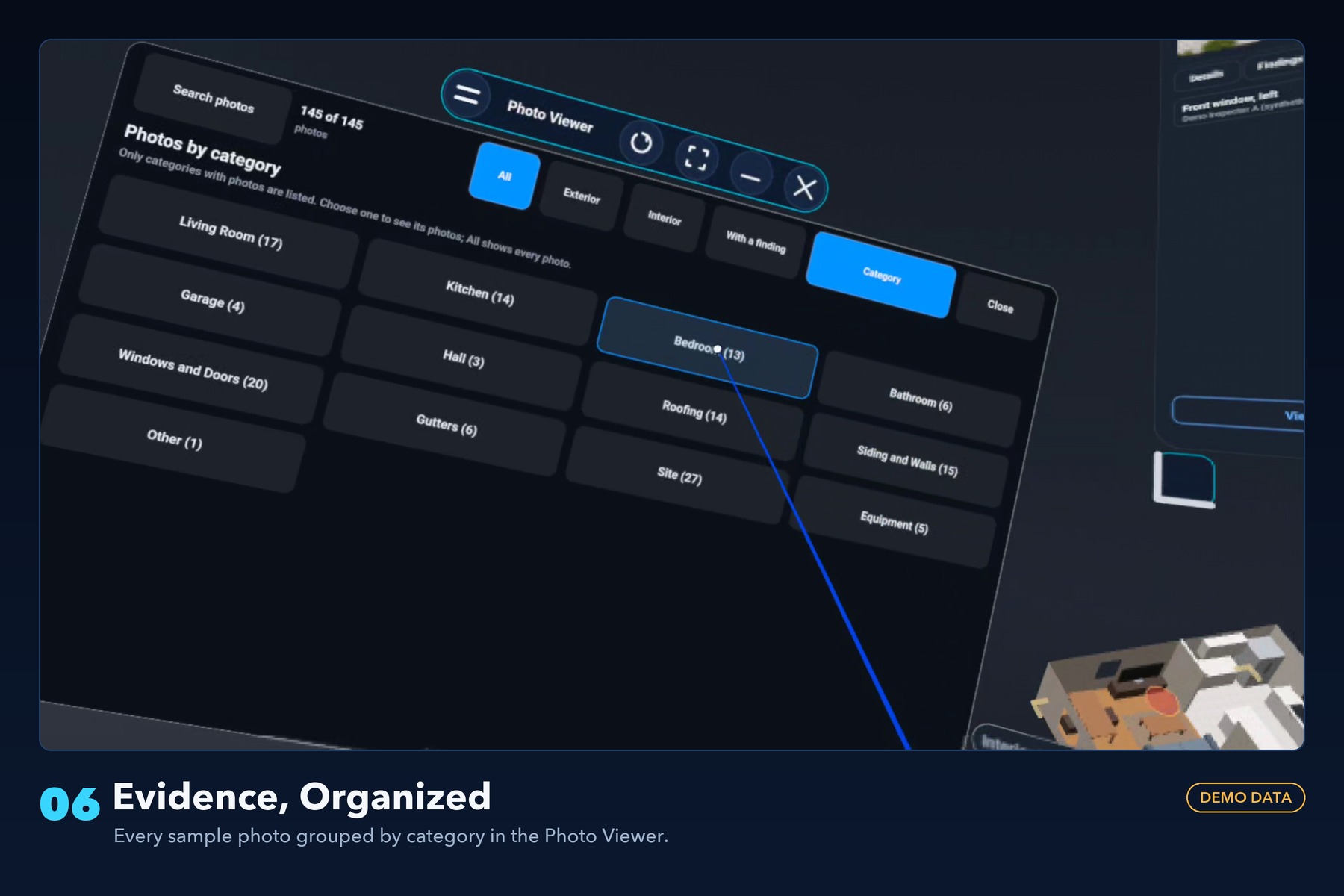
Sample photos grouped by category in the Photo Viewer.
Inspiration
I've spent years working in the trades, and one thing I've learned is that the people doing the work don't always have the technology they deserve.
I've stood on job sites, worked with my hands, and seen how difficult it can be to communicate what's happening with a property. You take photographs, write notes, document damage, and try to explain everything to someone who might be miles away.
An inspector sees one thing. A contractor sees another. The homeowner receives a report and tries to put all the pieces together.
And somehow, we're still trying to explain a three-dimensional world through flat screens and documents.
I kept thinking there had to be a better way.
Over the past year, I've gone from working in the trades to building a technology company around that very problem. What started with an idea has grown into a team, a software platform, and multiple applications for the inspection and construction industries. Two of our mobile applications are currently awaiting review for release.
Along the way, we've brought people together who believe in what we're building, including early investors who see the same opportunity.
One area we've been exploring is hands-free inspection through smart glasses. The more we worked on that technology, the more I started thinking about what spatial computing could eventually make possible.
What if you could be sitting at your desk, standing on a job site, or working from an office hundreds of miles away, and bring an entire building into the space around you?
What if you could pick up that building, examine its roof, look inside its rooms, and understand exactly where a problem exists?
What if the people building, inspecting, repairing, and owning a property could eventually experience the same project without having to be in the same place?
That is the future I believe we're moving toward.
And it's what motivated us to create Spatial Property Workspace.
What it does
Spatial Property Workspace is a hands-first mixed and virtual reality experience that lets you interact with a building in a completely different way.
Instead of looking at a property through a collection of photographs and reports, you can reach out, pick up the house, and explore it with your own hands.
Using a Meta Quest headset, you can:
Pick up the house. Grab, move, and resize a three-dimensional property model with natural hand movements.
Inspect individual components. Select parts of the building and view their details, photographs, and associated findings.
Review inspection information. Open inspection panels, update notes and conditions, and revisit those changes during the demonstration session.
Explore photographic evidence. Examine photographs associated with specific building components.
Step inside the property. Move from viewing the house as a miniature model to exploring its interior at eye level.
Interact with miniature rooms. Pick up and resize a smaller model of the interior using your hands.
Control your workspace naturally. Access tools and bring the workspace back into view through a wrist-based interface.
The experience is designed for seated use and doesn't require physical controllers.
For this competition, we built a standalone demonstration using sample property information. The experience runs in the Quest Browser without an account, pairing process, or connection to our commercial applications.
It's an early demonstration of what happens when the building itself becomes the workspace.
How we built it
We developed Spatial Property Workspace using WebXR, Meta's Immersive Web SDK, Three.js, TypeScript, and JavaScript.
The headset application code was developed during the competition period, building on the experience our team gained creating web and mobile inspection tools.
Our focus was simple. We wanted someone to put on a headset and immediately understand what to do without needing a controller or a lengthy tutorial.
That sounds straightforward until you start building it.
A traditional application relies on buttons, menus, a keyboard, or a touchscreen. In mixed reality, your hands become the interface.
We developed interactions for selecting objects, moving and resizing building models, navigating rooms, manipulating windows, and accessing inspection information.
We also had to rethink how the information appears around the property. An inspection panel needs to be close enough to read but shouldn't block the very thing you're inspecting.
We wanted the technology to feel like part of the workspace, not something that constantly gets in the way.
Challenges we ran into
One of the hardest parts of this project was getting the hand interactions to behave the way a person naturally expects.
Imagine reaching toward a miniature house. Are you trying to pick up the whole building, select a window, or press a button behind it?
The application has to understand that distinction.
We spent a great deal of time refining how hand movements are interpreted, preventing accidental selections, and making sure different interactions don't interfere with one another.
Another challenge was spatial window management.
On a computer, opening another window is simple. In mixed reality, a window can end up outside your view, behind another object, or directly in front of something you're trying to examine.
We developed placement and recovery behavior to make those interactions more predictable.
We also had to consider performance. A three-dimensional property, inspection details, photographs, and multiple interface panels all need to remain responsive on standalone headset hardware.
There were plenty of moments when something worked perfectly in a development environment but needed more refinement before it behaved correctly in the headset.
Every one of those challenges taught us something about designing software for a world beyond traditional screens.
Accomplishments that we're proud of
What makes us proudest isn't just the technology.
It's seeing an idea that came from years of working in the trades become something people can interact with.
A year ago, I was working toward building a company that could bring better technology to an industry I know firsthand.
Today, we've assembled a team, developed software across multiple platforms, earned support from people who believe in our direction, and taken another step toward bringing spatial computing into the trades.
For this competition, we focused on making one part of that larger vision tangible.
A building you can hold in your hands.
A place you can explore.
Information you can examine where it belongs.
There's still a tremendous amount of work ahead, but seeing the idea take shape has made us even more excited about what's possible.
What we learned
This project reinforced something I've believed since I started developing software.
Technology is only valuable if it genuinely makes someone's work easier.
The most impressive feature isn't always the one with the most complicated engineering. Sometimes it's being able to reach toward something, pick it up, and immediately understand it without anyone explaining how.
We've learned how important natural interaction, clear visual feedback, comfortable positioning, and predictable controls are in mixed reality.
We've also learned that building an immersive experience requires a different way of thinking.
You're no longer designing a page someone looks at.
You're designing a space someone works inside.
And that changes everything.
Current Limitations
This competition entry is a standalone demonstration using sample building geometry, photographs, findings, and property information.
It does not represent a verified property survey or provide certified measurements. The interior includes illustrative areas designed to demonstrate spatial navigation.
Changes made within the demonstration are kept locally for the session. The entry does not currently provide live synchronization with external job records, automated reconstruction from real property photographs, or voice-based inspection assistance.
Those capabilities belong to our broader development plans and are not presented as functional features of this submission.
What's next for the Spatial Property Workspace
This is where the bigger vision comes in.
Imagine a future where a contractor can stand in an open field and place a life-sized digital building in front of them before construction begins.
An inspector could examine a property from their office, review photographs captured in the field, and identify where additional work is needed.
A project manager could explore a job remotely, understand its progress, and coordinate the next steps.
And a homeowner could eventually see the same project information the professionals are working with, making it easier to understand what's happening with their property.
We want to explore real property reconstruction, persistent inspection records, live job updates, measurement and estimating workflows, and collaborative experiences that connect the people working on the same building.
The goal isn't to replace the experience and knowledge of skilled tradespeople.
It's to put better tools in their hands.
Why This Matters
I've seen firsthand how hard people in the trades work, and how much skill goes into doing those jobs well.
Those people deserve technology that moves their industry forward.
I didn't start building software because I wanted to make another application. I started because I saw problems that needed solving, and I believed there was an opportunity to do something meaningful about them.
A year of building a company has only strengthened that belief.
Spatial Property Workspace is one step toward a much larger future, where buildings aren't just represented by drawings, pictures, and reports.
They're something we can explore, understand, and work with naturally.
The future of skilled trades shouldn't be something we only talk about. It should be something we can reach out and experience.
And we're excited to help build that future.
Built With
- hand-tracking
- immersive-web-sdk
- javascript
- mixed-reality
- three.js
- typescript
- webxr