-
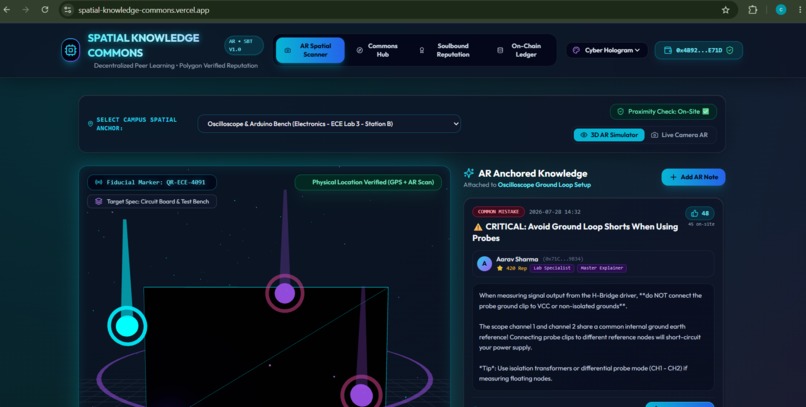
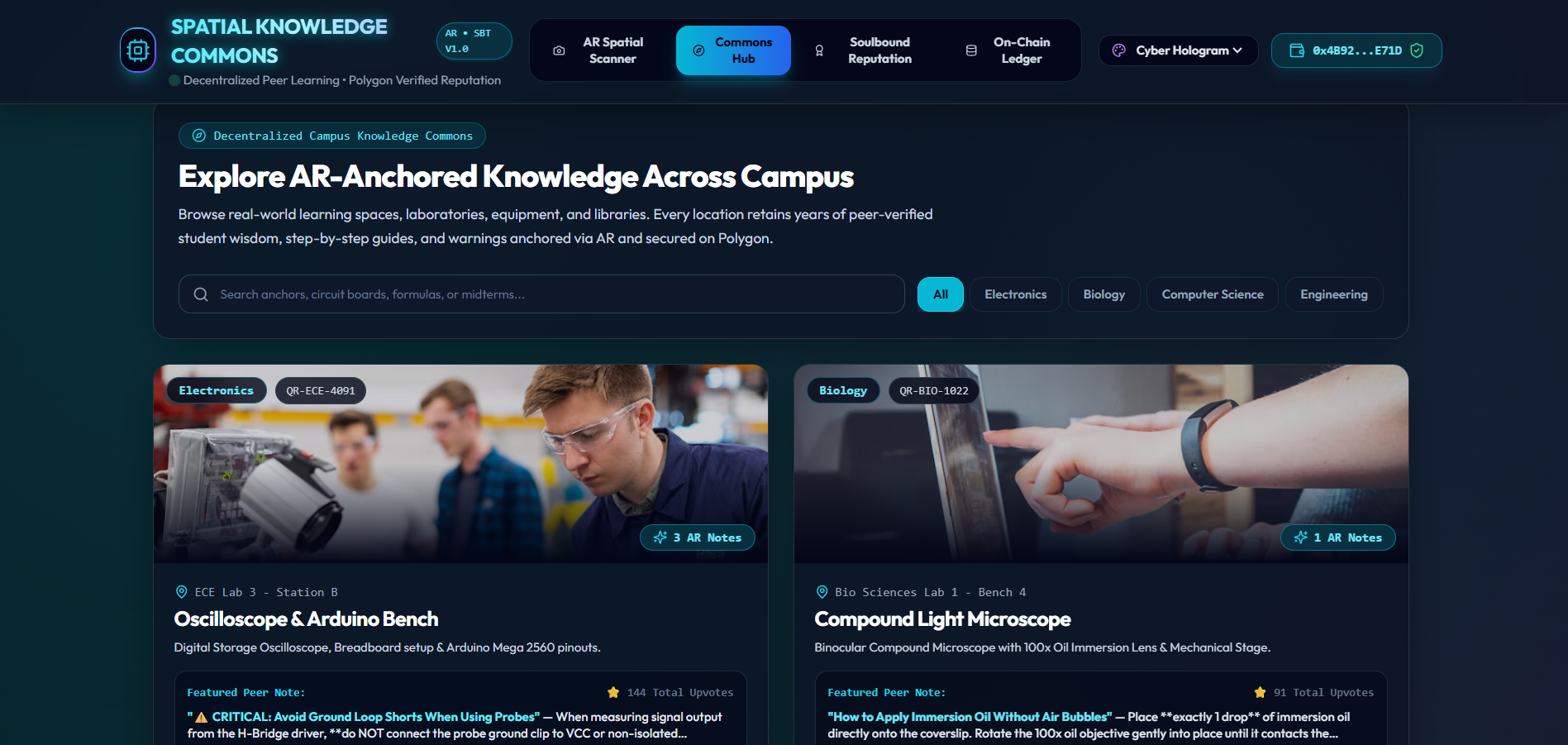
Scanning a textbook diagram to unlock AR-powered peer explanations and contextual learning resources.
-
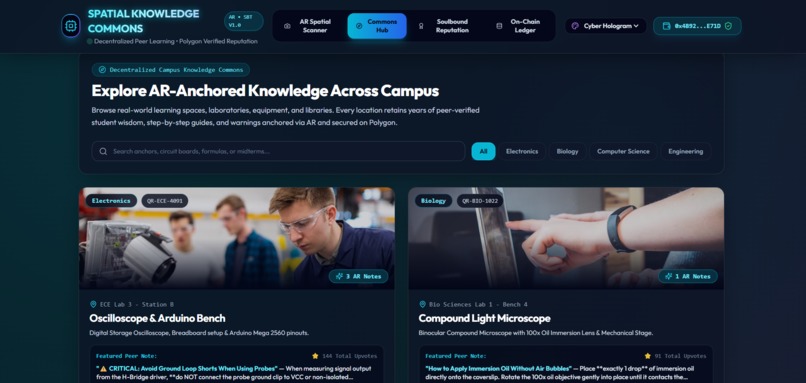
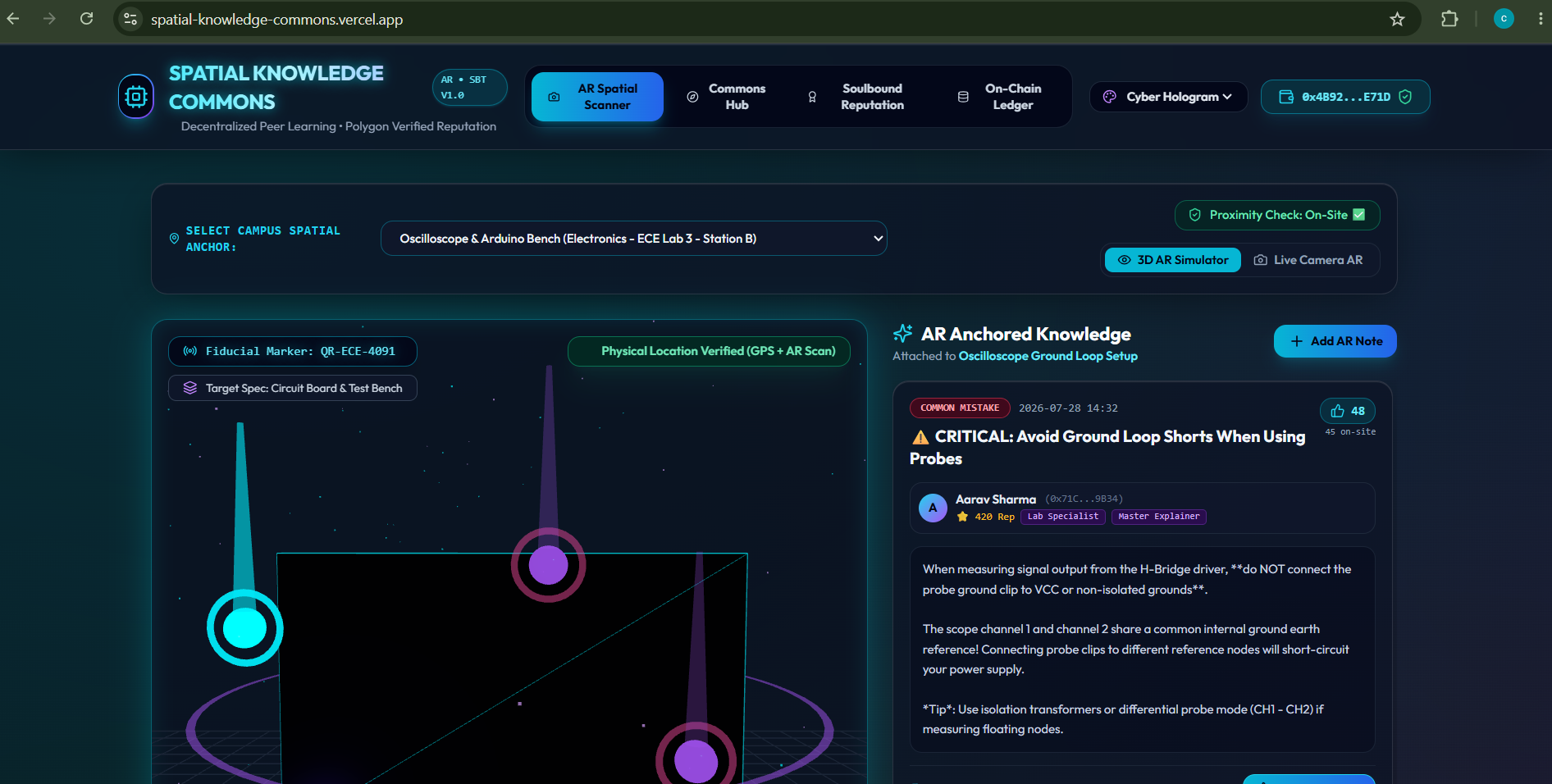
Interactive AR knowledge overlays attached directly to real-world educational objects and laboratory equipment.
-
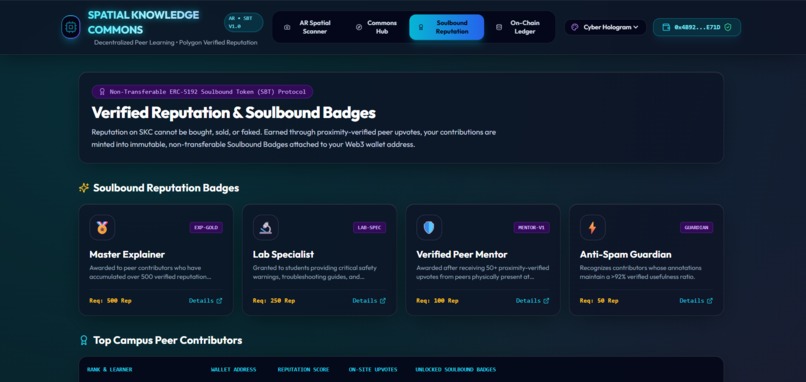
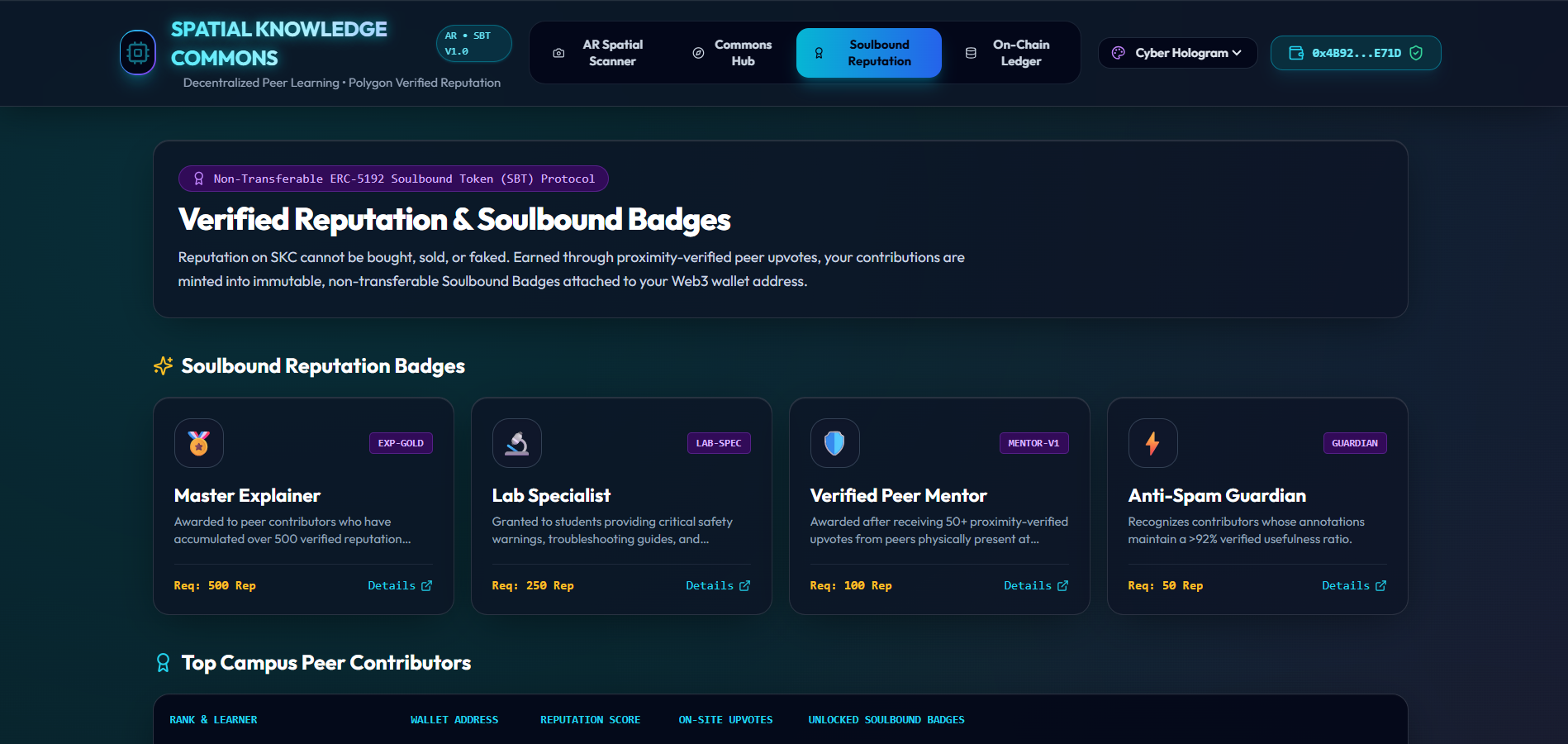
Blockchain-backed reputation system rewarding students for creating trusted, high-quality learning content.
-
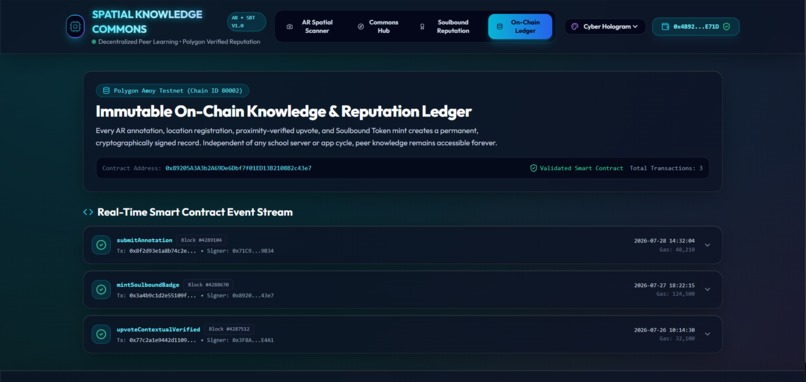
Building a persistent community knowledge network where every learning space remembers and teaches.
## Inspiration
Knowledge is often created in specific places—a laboratory bench, a textbook page, a workshop station, or a classroom whiteboard. Unfortunately, these valuable insights disappear once the lesson ends. Students repeatedly struggle with the same concepts because explanations, shortcuts, and practical tips are never preserved in the context where they were learned.
We were inspired by a simple question:
What if every learning space could remember the knowledge shared within it?
This led us to create Spatial Knowledge Commons (SKC), a platform that combines Augmented Reality and Blockchain to transform physical learning environments into living repositories of knowledge.
## What it does
Spatial Knowledge Commons allows students to scan real-world learning objects such as textbooks, laboratory equipment, diagrams, models, or library resources using their smartphones.
When an object is recognized, AR-powered annotations appear directly on top of it, displaying:
- Explanations
- Study tips
- Worked examples
- Common mistakes
- Audio or video resources
- Peer-generated insights
Students can contribute their own knowledge and help future learners. Every contribution is recorded with verifiable ownership, while community feedback helps identify the most valuable content.
The result is a persistent educational knowledge layer attached directly to the real world.
## How we built it
We built SKC using a combination of modern web, AR, and blockchain technologies.
Frontend
- React.js
- Tailwind CSS
Augmented Reality
- WebXR
- AR.js
- Three.js
Backend
- Node.js
- Express.js
Blockchain
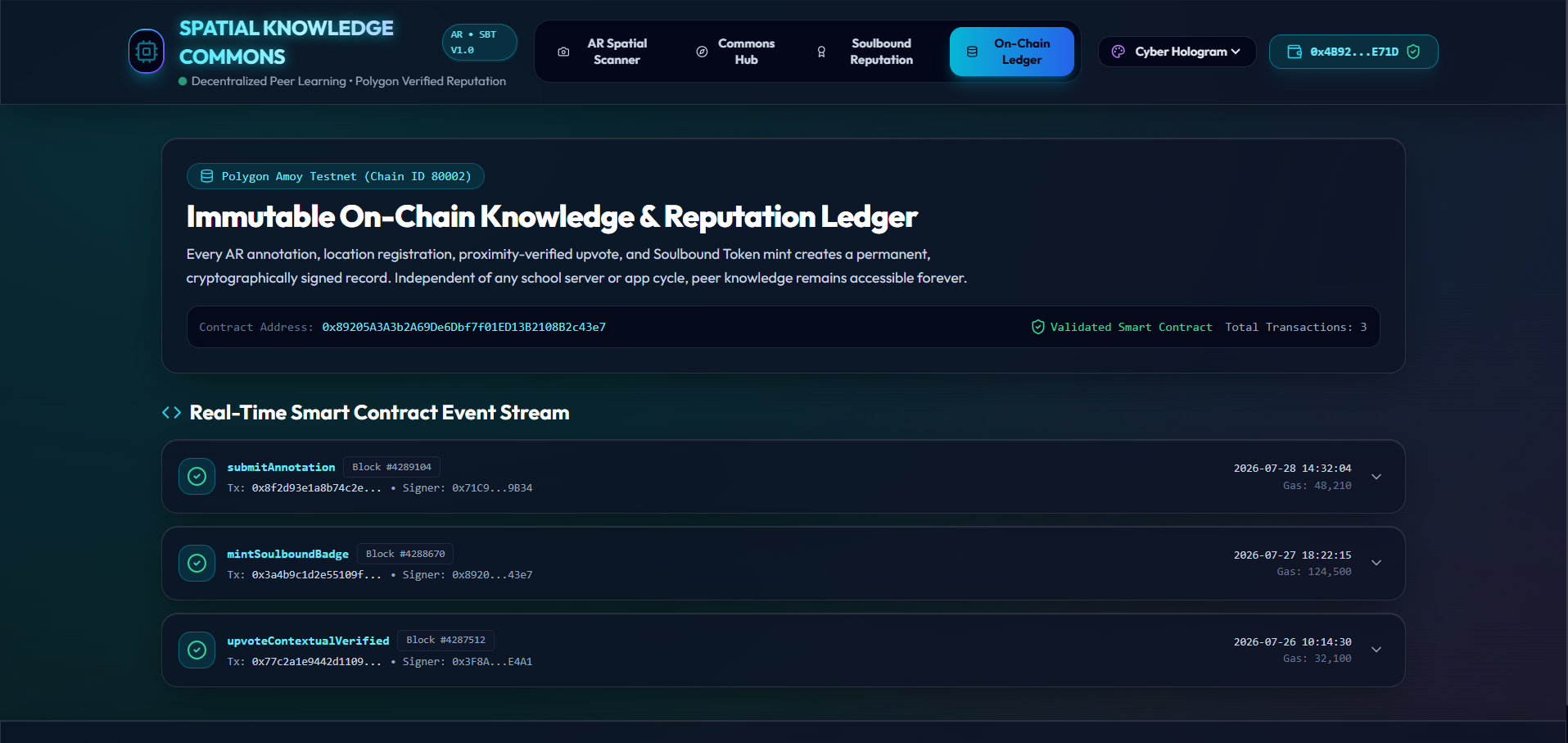
- Solidity Smart Contracts
- Polygon Network
- Soulbound Reputation Tokens
Storage
- Firebase
- IPFS for decentralized content storage
The system uses image recognition and spatial anchors to identify learning objects and retrieve associated knowledge. Smart contracts maintain contributor reputation and verify ownership of educational content.
## Challenges we ran into
Accurate AR Anchoring
Ensuring digital annotations remain attached to the correct physical object was one of the biggest technical challenges. Different lighting conditions, camera angles, and environments can affect tracking reliability.
Preventing Low-Quality Content
An open contribution system can easily become cluttered with spam or inaccurate information. We addressed this challenge through a blockchain-based reputation mechanism that rewards quality contributions rather than quantity.
Meaningful Blockchain Integration
We wanted blockchain to solve a real problem rather than being included as a trend. Designing a decentralized reputation and ownership system that genuinely improves trust required careful planning.
Scalability
As the number of knowledge anchors grows, retrieving and displaying information efficiently becomes increasingly important. We explored decentralized storage and optimized retrieval methods to ensure long-term scalability.
## Accomplishments that we're proud of
- Created a unique combination of AR and blockchain for education.
- Designed a decentralized reputation system for peer learning.
- Built a concept where knowledge remains attached to physical learning spaces.
- Developed a solution that can help under-resourced schools and institutions.
- Encouraged students to become both learners and contributors.
- Created a vision for preserving educational knowledge across generations.
Most importantly, we transformed the idea of a classroom from a temporary learning space into a permanent knowledge ecosystem.
## What we learned
Through this project, we gained valuable experience in:
- Augmented Reality development
- Spatial computing concepts
- Smart contract development
- Decentralized storage systems
- Reputation and trust mechanisms
- Educational technology design
We also learned that technology is most impactful when it enhances collaboration and knowledge sharing rather than simply delivering information.
## What's next for Spatial Knowledge Commons (SKC)
Our future roadmap includes:
- AI-powered summaries of community annotations
- Multilingual translation of learning content
- Voice-based AR explanations
- Gamified contributor rewards
- Cross-school and cross-university knowledge sharing
- Advanced reputation analytics
- Offline-first support for low-connectivity regions
- Global decentralized learning communities
Our long-term vision is to create a world where every classroom, laboratory, library, and workshop becomes part of a shared global knowledge network.
Spatial Knowledge Commons aims to ensure that valuable knowledge is never lost—it stays exactly where learning happens.
Built With
- ai/ml
- ar.js
- augmented-reality
- blockchain
- computer-vision
- decentralized
- express.js
- firebase
- github
- image-recognition
- ipfs
- javascript
- metamask
- mongodb
- node.js
- polygon
- react.js
- rest-api
- smart-contracts
- solidity
- tailwind-css
- three.js
- vercel
- web3.js
- webxr

Log in or sign up for Devpost to join the conversation.