-
-
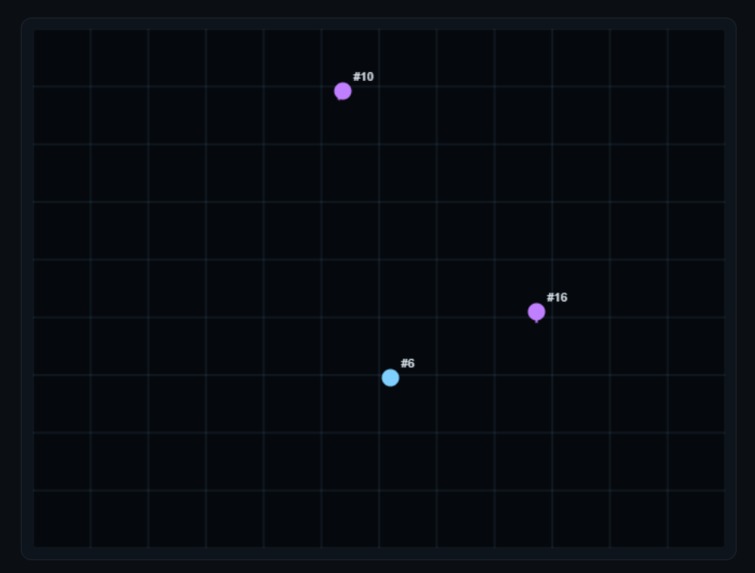
Real Time Spatial Digital Twin Display
-
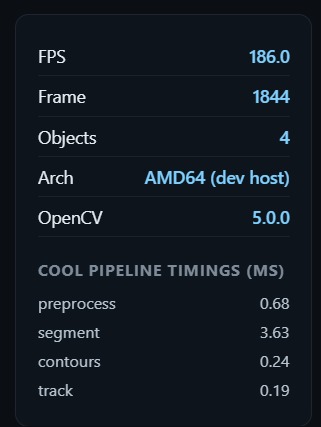
Analytics Dashboard
-

Operational Status Badges

Inspiration
I wanted to bridge the gap between physical infrastructure and virtual simulation by creating a real-time system that can track entities and map their positions onto a live spatial matrix without relying on heavy external hardware dependencies.
What it does
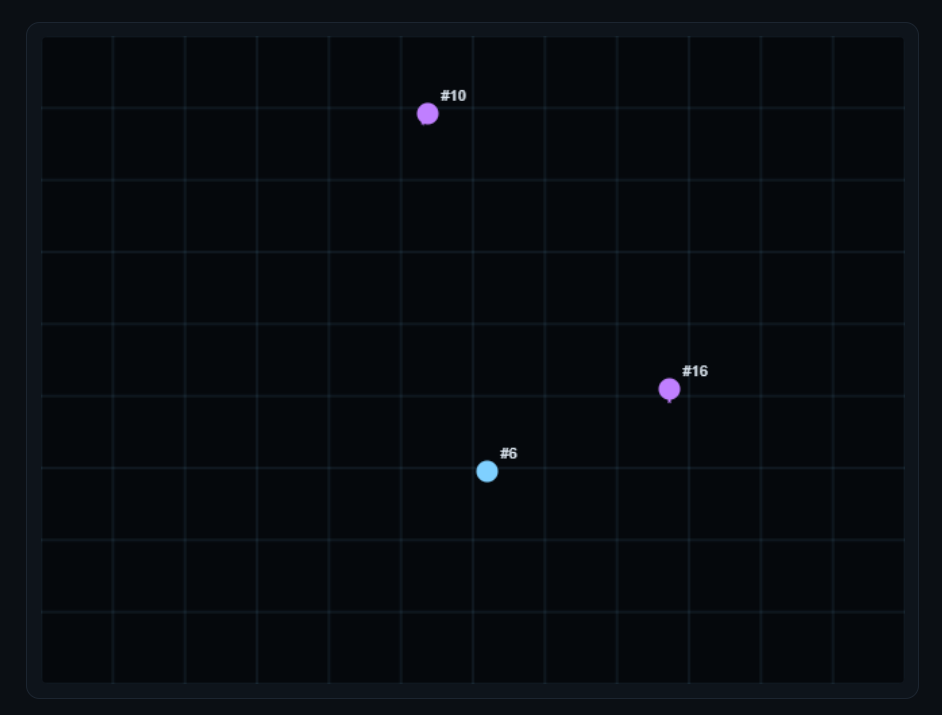
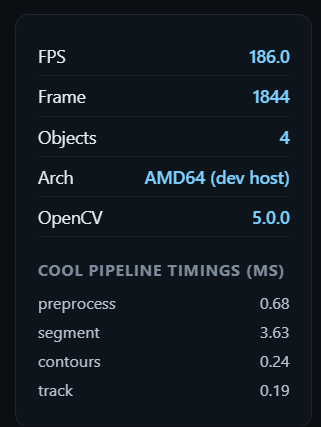
Spatial Digital Twin is a real-time spatial intelligence platform that ingests video or procedural streams, processes them through an OpenCV tracking pipeline, and streams live telemetry, object coordinates, and frame metrics directly to a web-based dashboard via WebSockets.
How I built it
- Backend: Built on a multi-threaded Python architecture using FastAPI and WebSockets to serve live metrics concurrently at
http://localhost:8000. - Computer Vision & Pipeline: Utilizes the custom COOL pipeline for preprocessing, segmentation, contour detection, and object tracking, mapped via a Spatial Matrix.
- Robustness & Simulation: Engineered a built-in
SyntheticStreamGeneratorfallback andMockAWSClientto enable full, zero-dependency execution and local telemetry tracking when hardware or cloud credentials are unavailable.
Challenges I faced
Overcoming hardware constraints when dealing with physical camera limitations during development, which I solved by building a robust procedural simulation mode that ensures seamless, high-performance execution.
Accomplishments
- Engineered a fully functional real-time computer vision and spatial mapping pipeline using OpenCV and the custom COOL architecture.
- Developed a multi-threaded Python backend powered by FastAPI and WebSockets, streaming live telemetry and metrics to a browser dashboard at
http://localhost:8000. - Implemented a robust
SyntheticStreamGeneratorsimulation mode andMockAWSClientlayer to bypass physical hardware limitations and cloud credential dependencies. - Successfully built a complete, hackathon-ready presentation deck and script showcasing live spatial tracking and system resilience.
What I learned
I gained deep experience in asynchronous Python web frameworks, real-time WebSocket communication, multi-threaded computer vision processing with OpenCV, and designing fault-tolerant fallback architectures for live demos.
What's Next
- Integrating physical IoT sensors or live IP camera streams to transition from synthetic simulation to fully deployed physical environments.
- Expanding the cloud integration layer from local mock storage to live boto3 S3 buckets and AWS CloudWatch production metrics.
- Enhancing the frontend spatial matrix interface with richer 3D visualizations and advanced anomaly detection alert triggers.


Log in or sign up for Devpost to join the conversation.