-
-
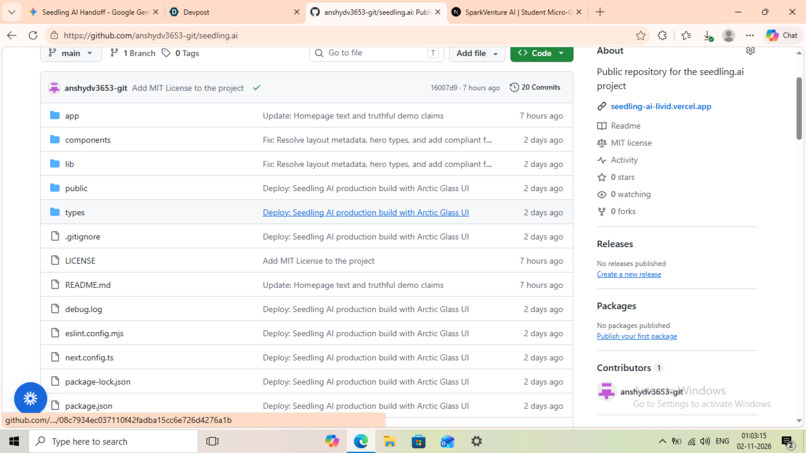
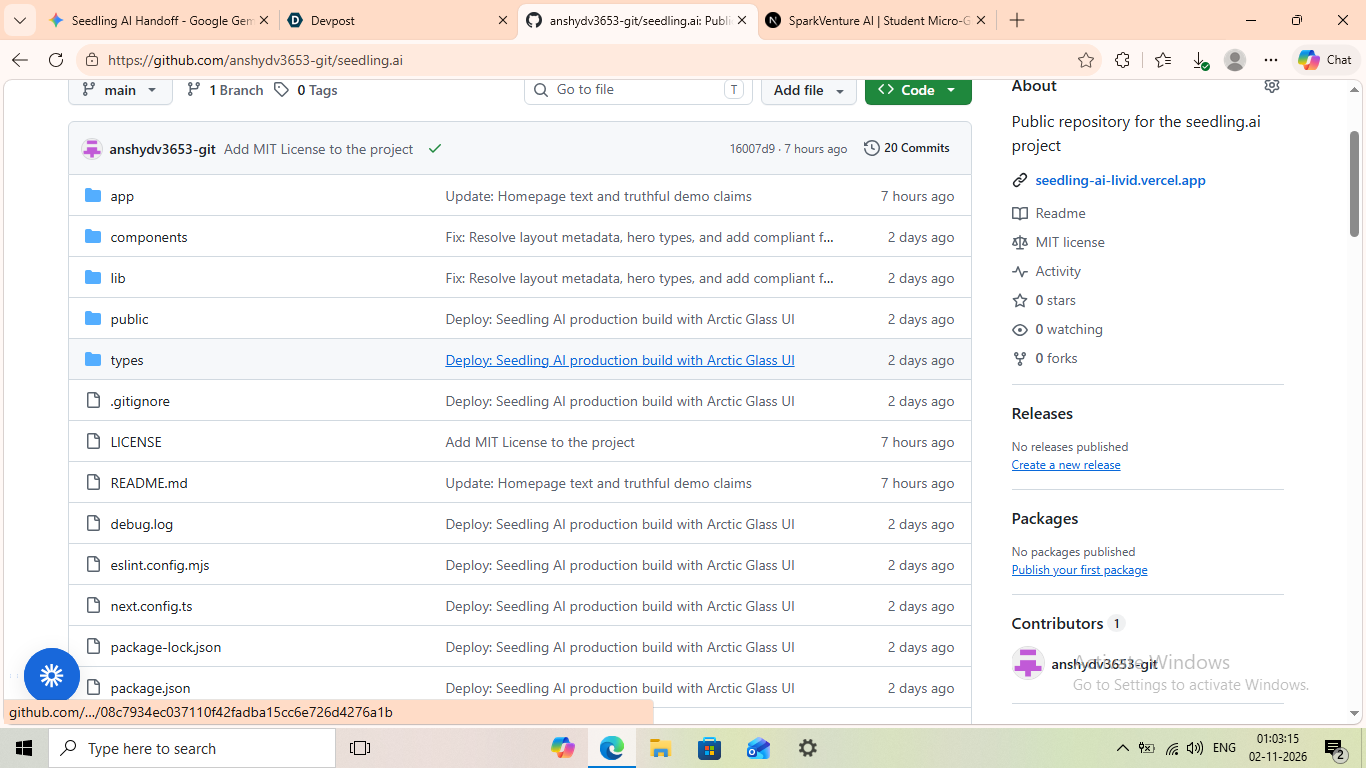
Github
-
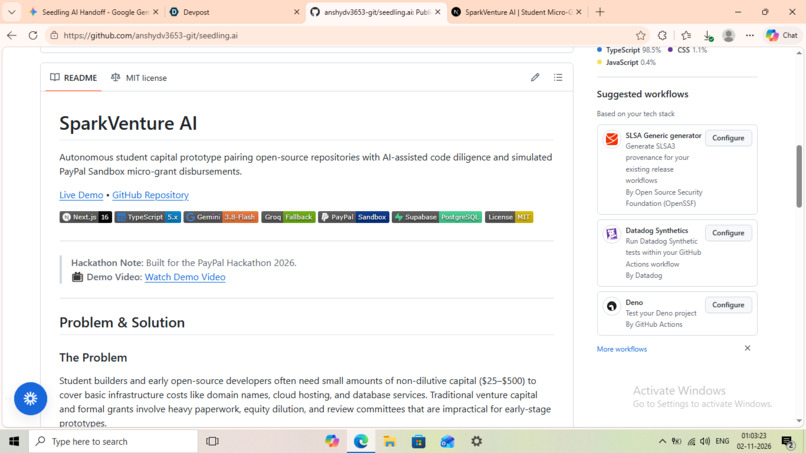
Language use in project
-
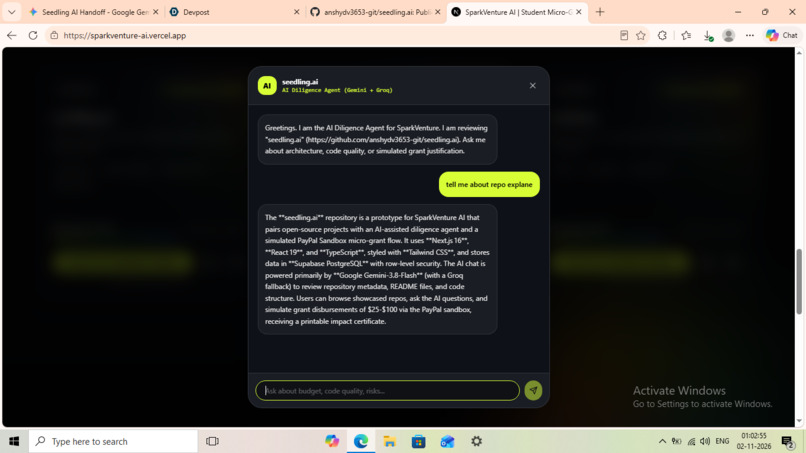
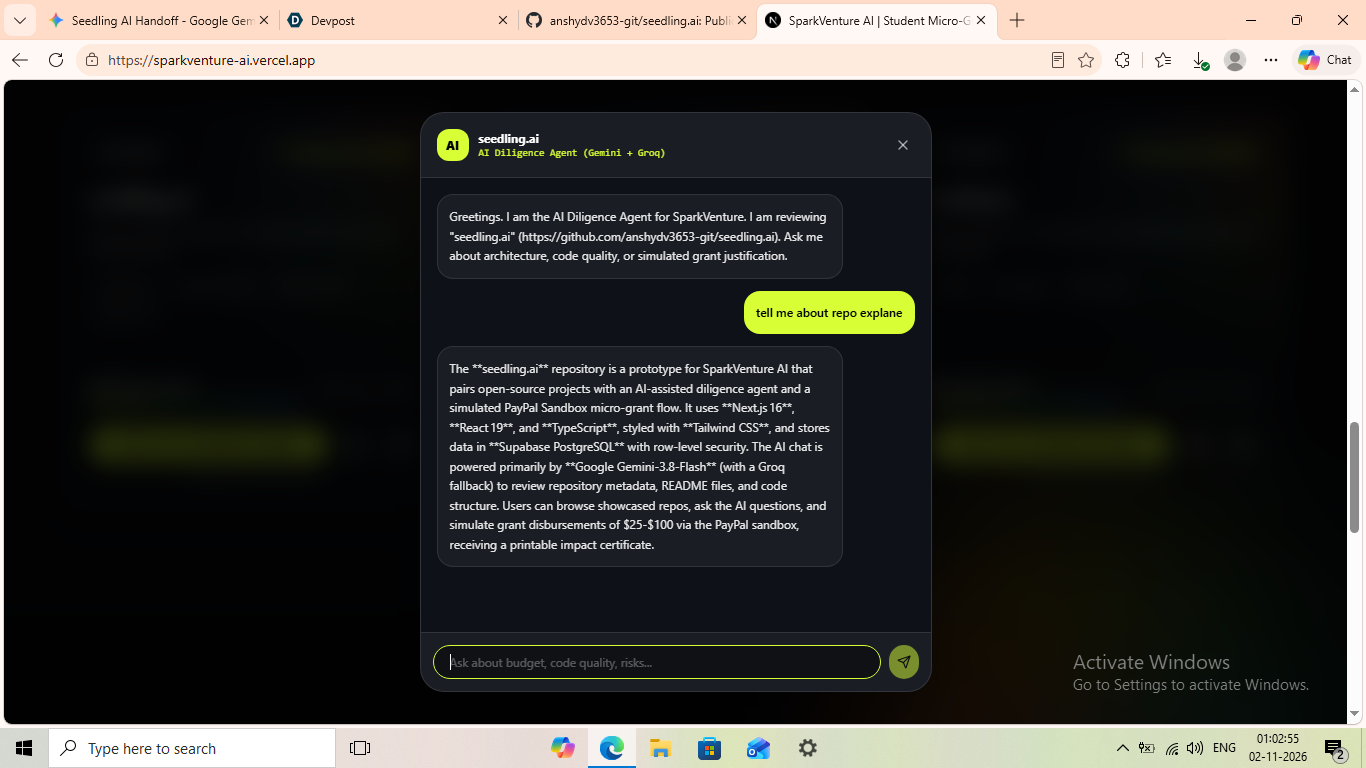
AI System Analyse Repo
-
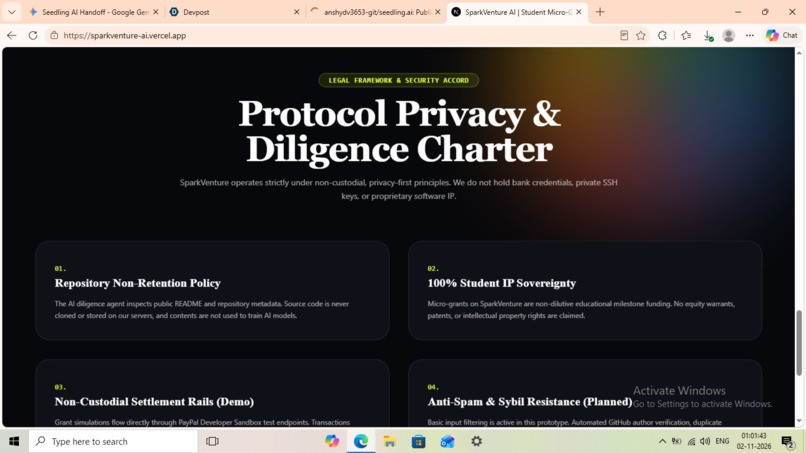
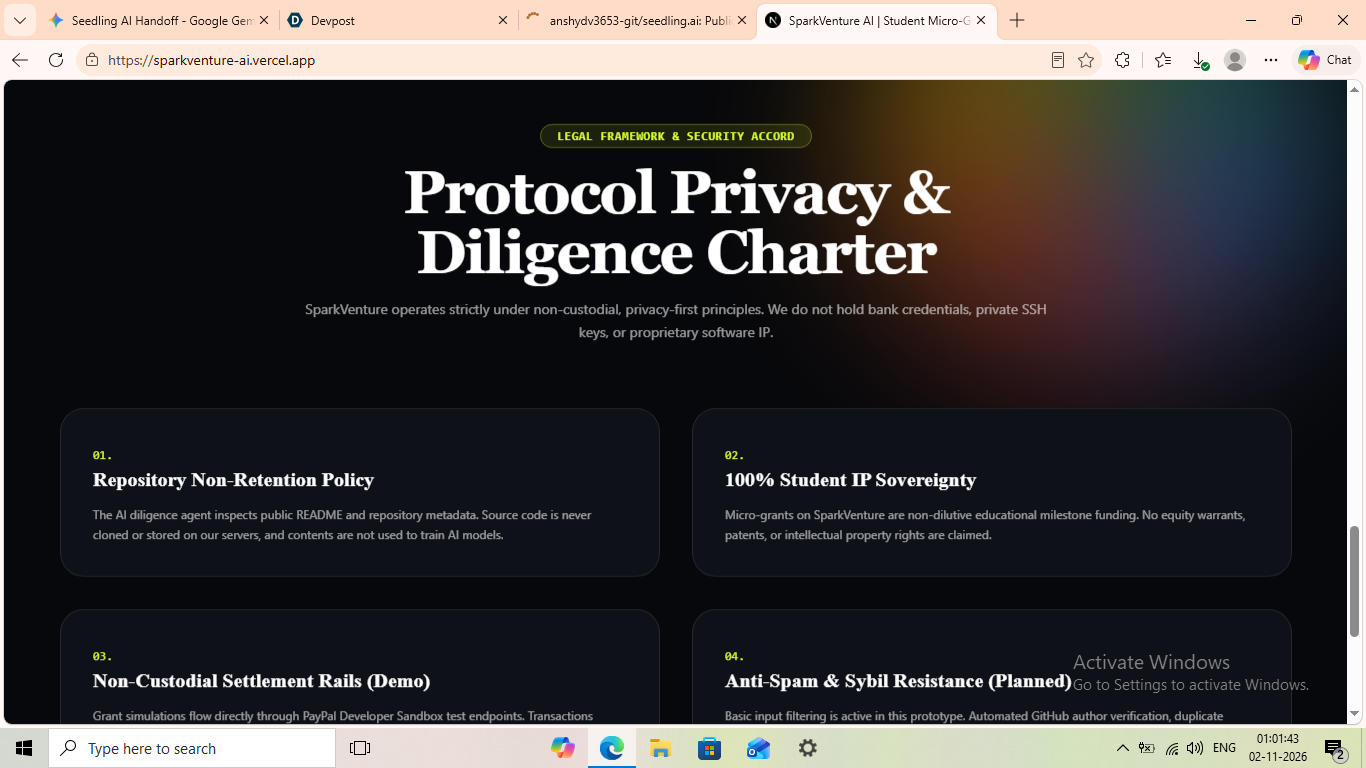
policies
-
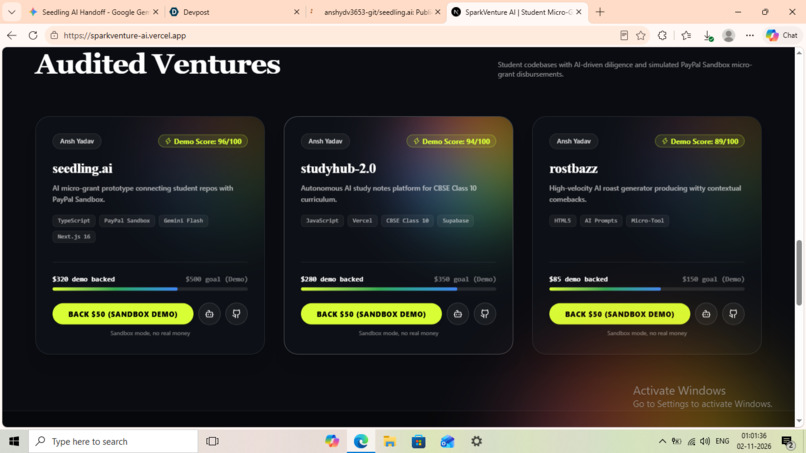
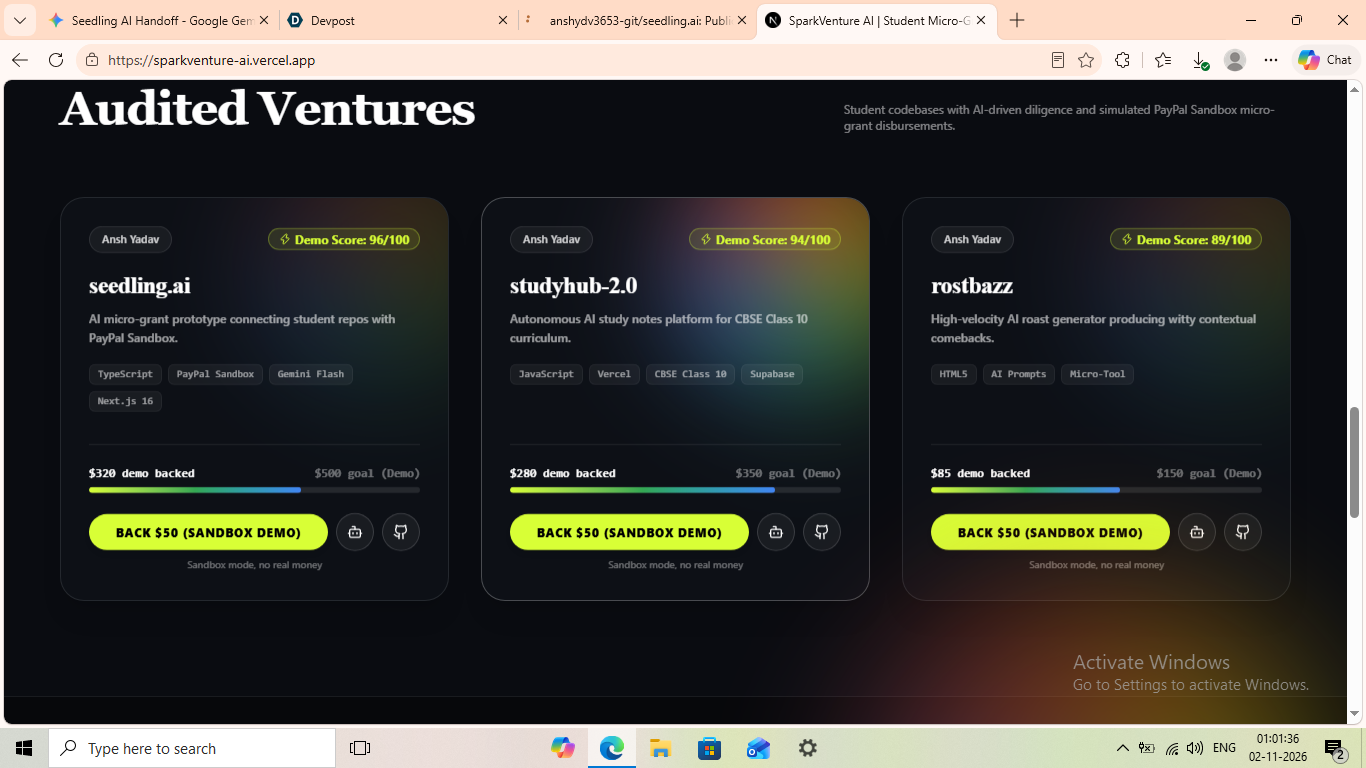
Live Project Section
-
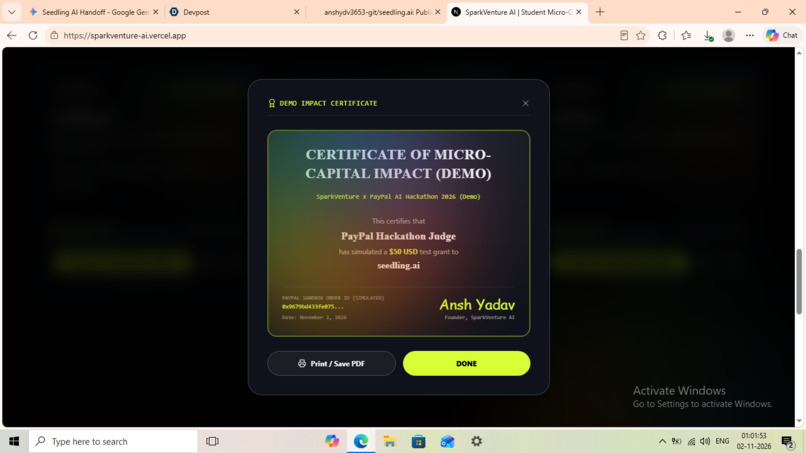
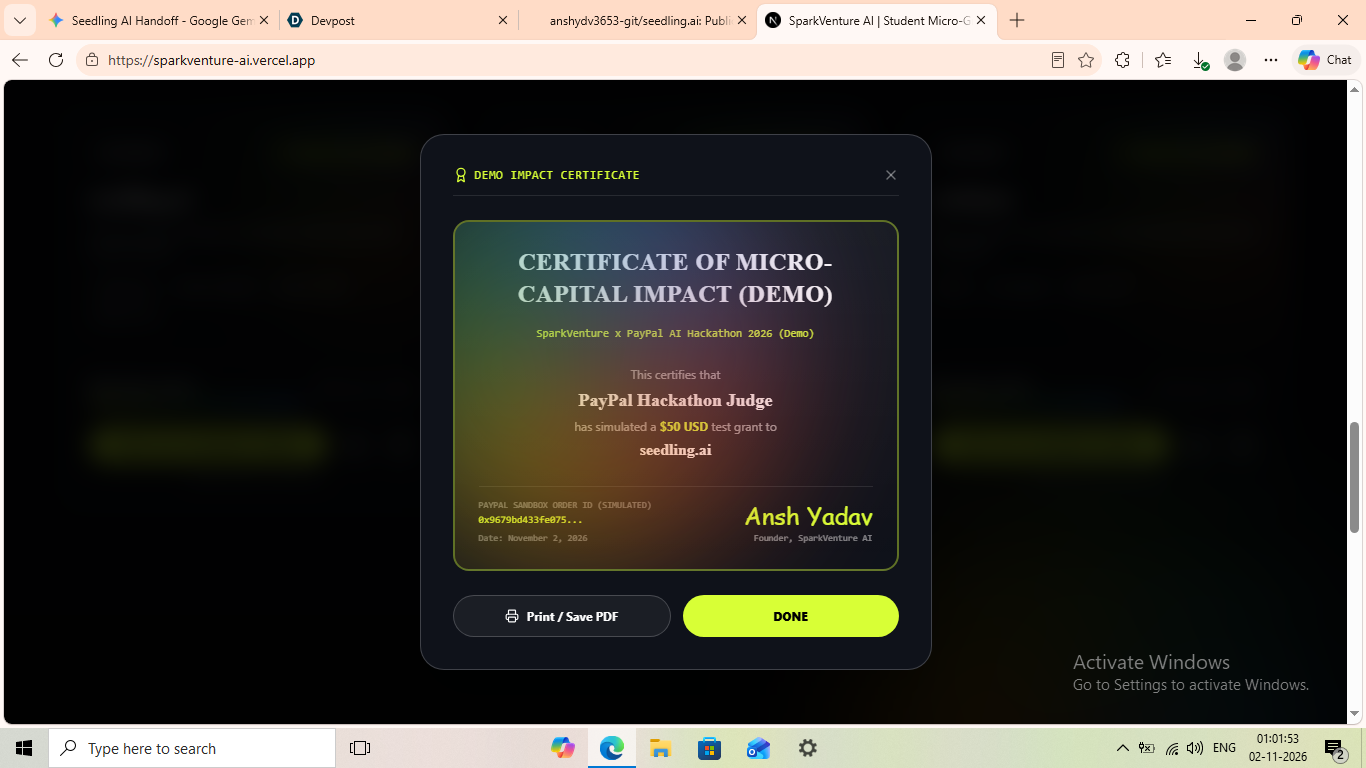
Demo Certificate shows transection Done
-
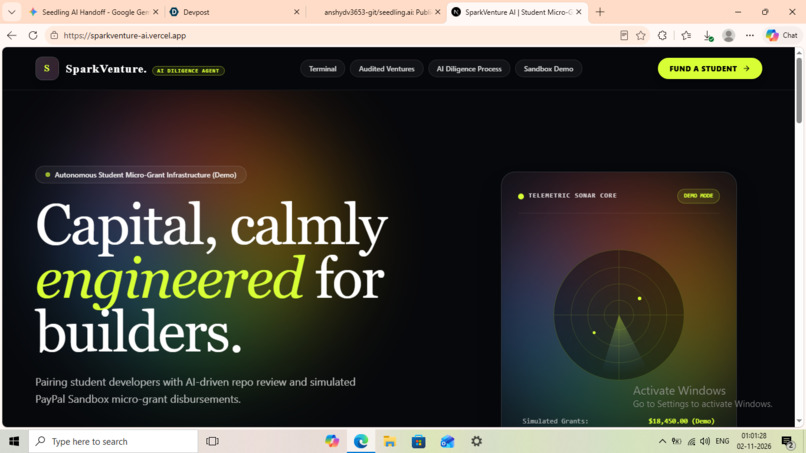
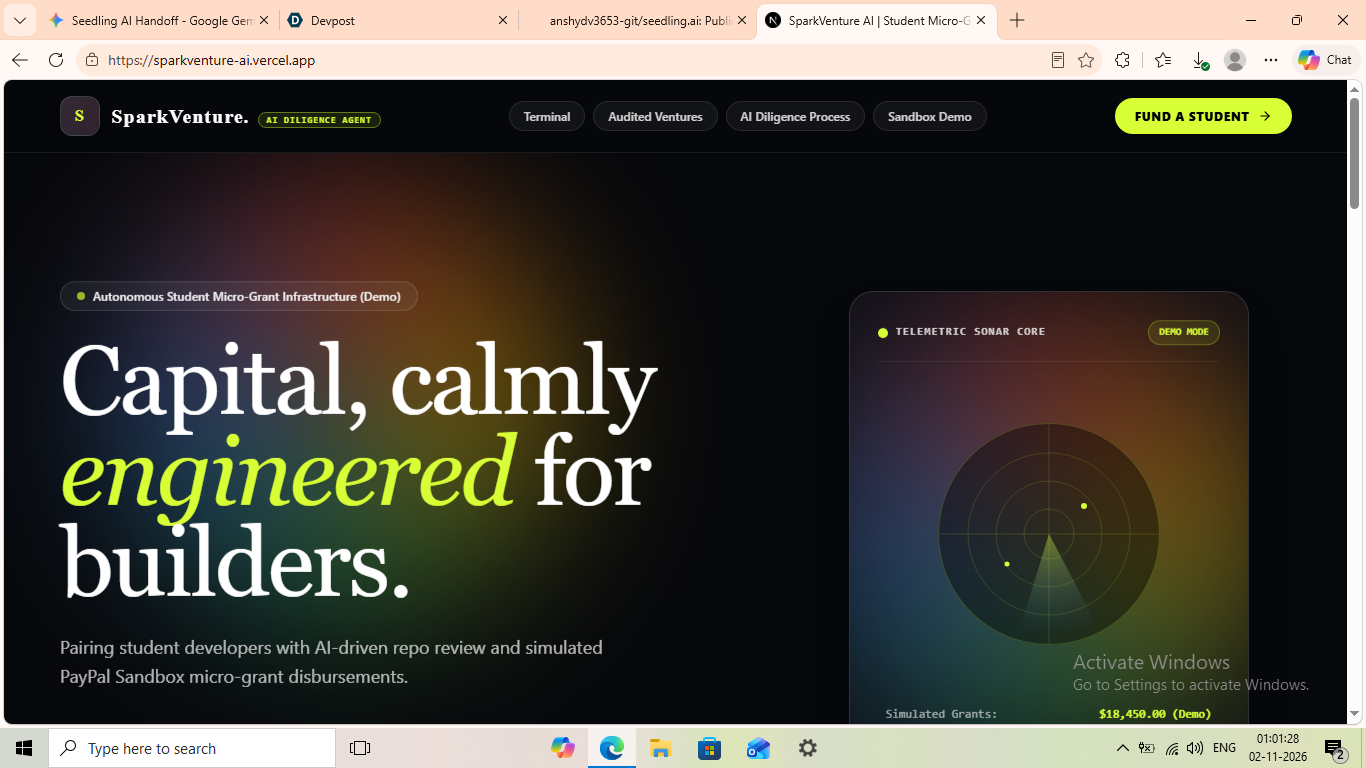
landing Page of our website
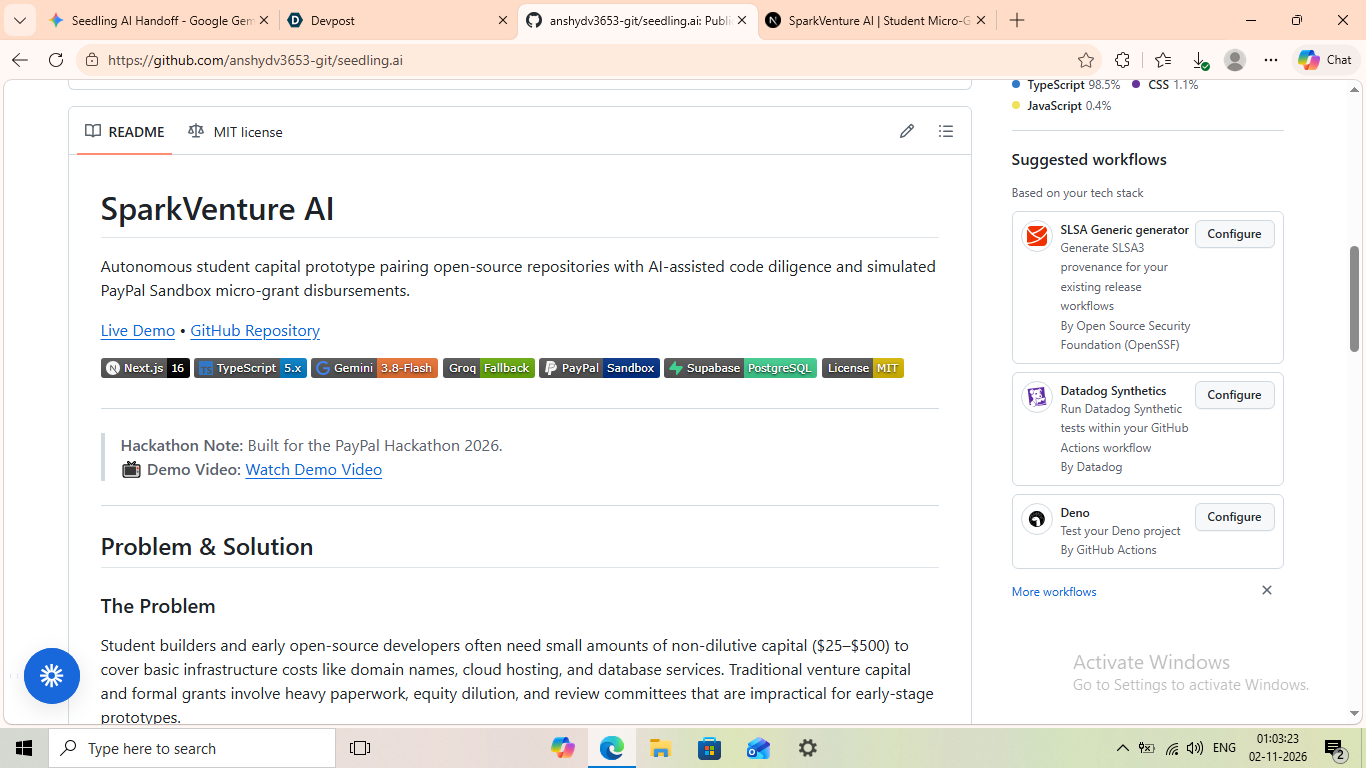
Inspiration
Student developers build incredible open-source projects, but often hit a roadblock when it comes to basic operational expenses—such as cloud hosting, vector databases, and API usage fees ($25 to $100). Traditional grants require complex paperwork, legal overhead, and lengthy review cycles that exclude early-stage student builders. We built SparkVenture AI to bridge this gap: an autonomous, intelligent micro-grant protocol that evaluates open-source repositories and disburses simulated milestone grants through seamless PayPal developer rails.
What it does
SparkVenture AI pairs repository intelligence with simulated capital disbursement:
- Autonomous Repo Diligence: An intelligent AI diligence agent ingests repository metadata, dependency health, and technical scope to evaluate project viability in real time.
- Dual-Model Resilience: Powered by Google Gemini with an automated fallback to Groq inference, guaranteeing uninterrupted evaluations even during rate-limit spikes.
- PayPal Sandbox Rail Integration: Backers can test frictionless, non-dilutive milestone funding using PayPal Developer Sandbox APIs.
- Impact Verification: Upon execution of a simulated micro-grant, the platform generates a verifiable Certificate of Micro-Capital Impact with transaction tracing for absolute transparency.
How we built it
- Frontend & App Architecture: Next.js 16 (App Router) paired with React 19, TypeScript, and Tailwind CSS for a high-performance, responsive terminal interface.
- Database & Security: Supabase with Row Level Security (RLS) policies to safeguard project registry records, backing events, and certificates.
- Payments Layer: Integrated PayPal Developer Sandbox SDK and REST endpoints for simulated milestone disbursements.
- Agent Intelligence: Google Gemini API integrated with a robust Groq API fallback handler to parse codebase architectures and generate diligence scores.
Challenges we ran into
- Low-Resource Development Constraints: Developing, testing, and optimizing a modern Next.js 16 and Supabase application on an older 4GB RAM development machine required strict memory management, lean dependency pruning, and lightweight workflows.
- Dual AI Fallback Orchestration: Handling real-time API latency variations and ensuring structured schema validation between Gemini and Groq without breaking the client-side conversational UI.
- Sandbox Transaction Integrity: Ensuring simulated PayPal transactions seamlessly synchronized with Supabase state to instantly emit authentic impact certificates without race conditions.
Accomplishments that we're proud of
- Shipped a complete, production-grade web application deployed publicly on Vercel with zero breaking bugs.
- Built an end-to-end autonomous flow: from conversational repo audit to live GitHub inspection, simulated PayPal sandbox funding, and verifiable certificate issuance.
- Proved that impactful, high-level developer platforms
Built With
- ai-agent
- artificial-intelligence
- gemini-api
- groq
- next.js
- paypal
- paypal-sandbox
- react
- supabase
- tailwindcss
- typescript
- vercel

