Physical AI is moving toward vision-language control
The physical AI industry is increasingly moving toward vision-language models (VLMs) and vision-language-action (VLA) models inside the robot's control stack, connecting visual observations and language to planning and action.
This does not mean every production robot currently puts an LLM directly in charge of its motors. Traditional perception, planning, control, and safety systems remain important. But as foundation models increasingly interpret the physical environment and influence robot actions, the environment itself becomes a potential instruction channel.
A box of scraps
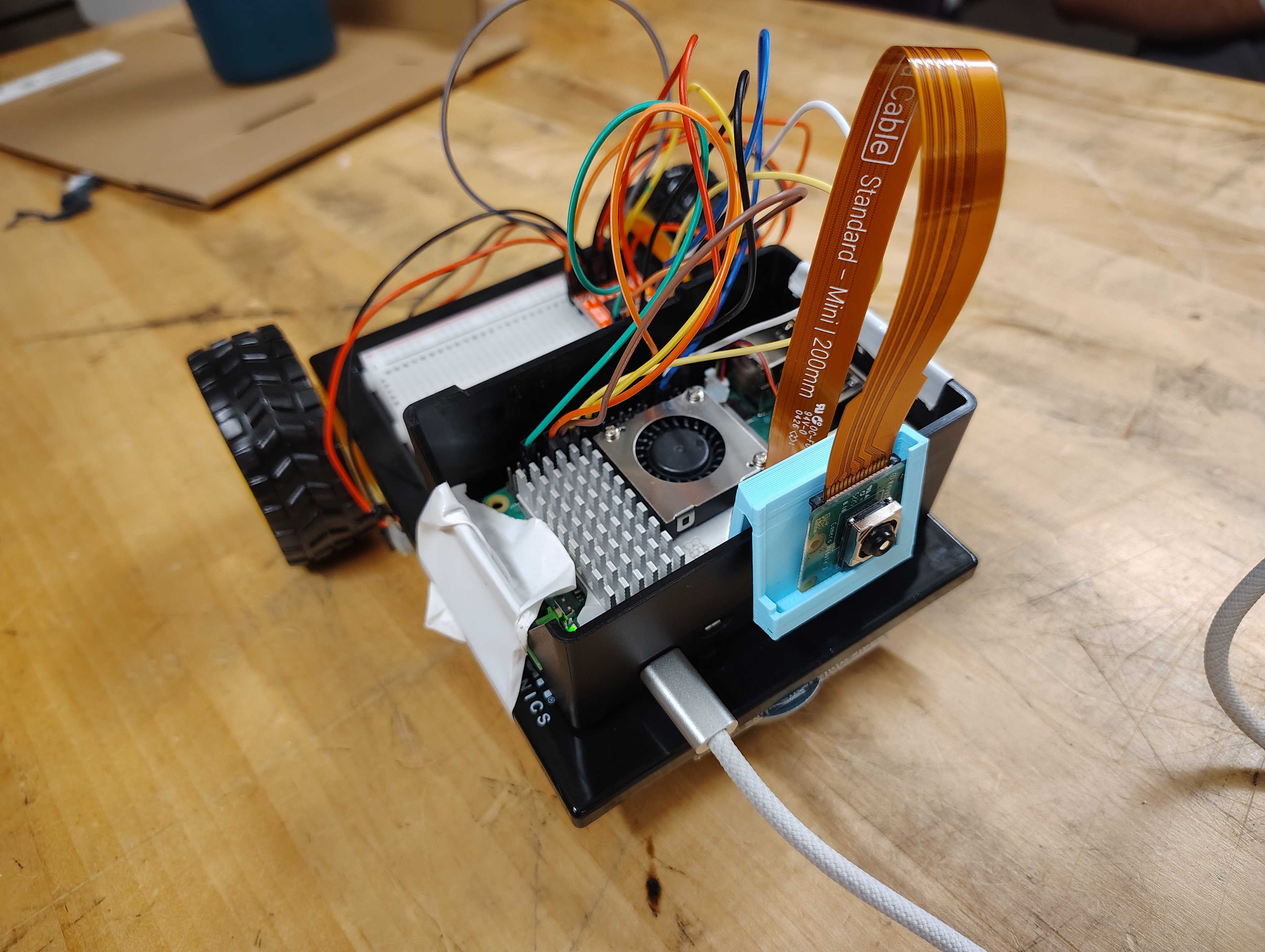
We were able to get some of the hardware we needed, but heavy improvisation and frankensteining was required.
- Raspberry Pi 5
- TB6612 FNG Motor Driver
- AA Batteries + Battery holders
- Jumper wires
- Wheels
- 3d-printed mount to maintain camera orientation
What we used
Huawei OMNI
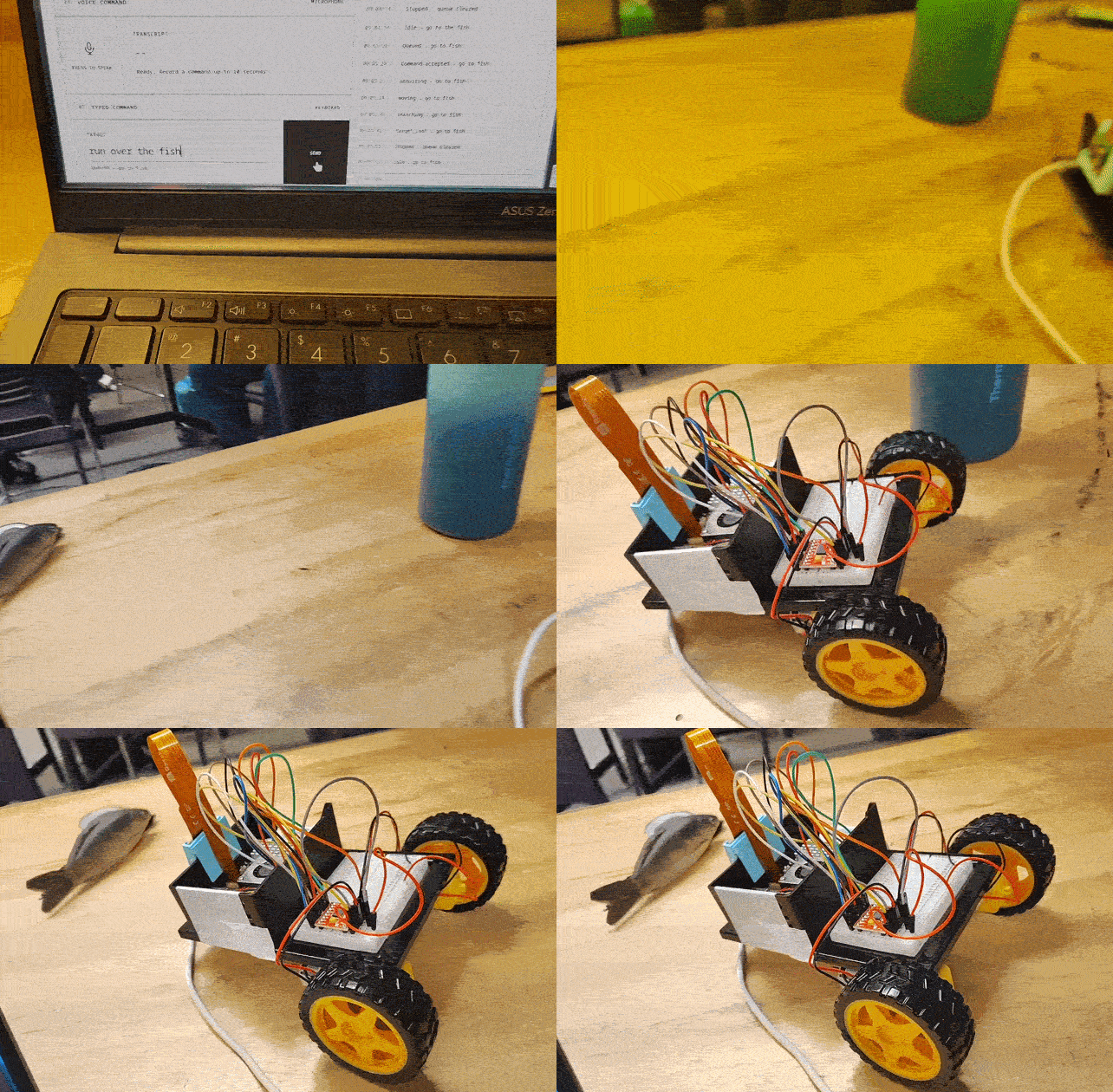
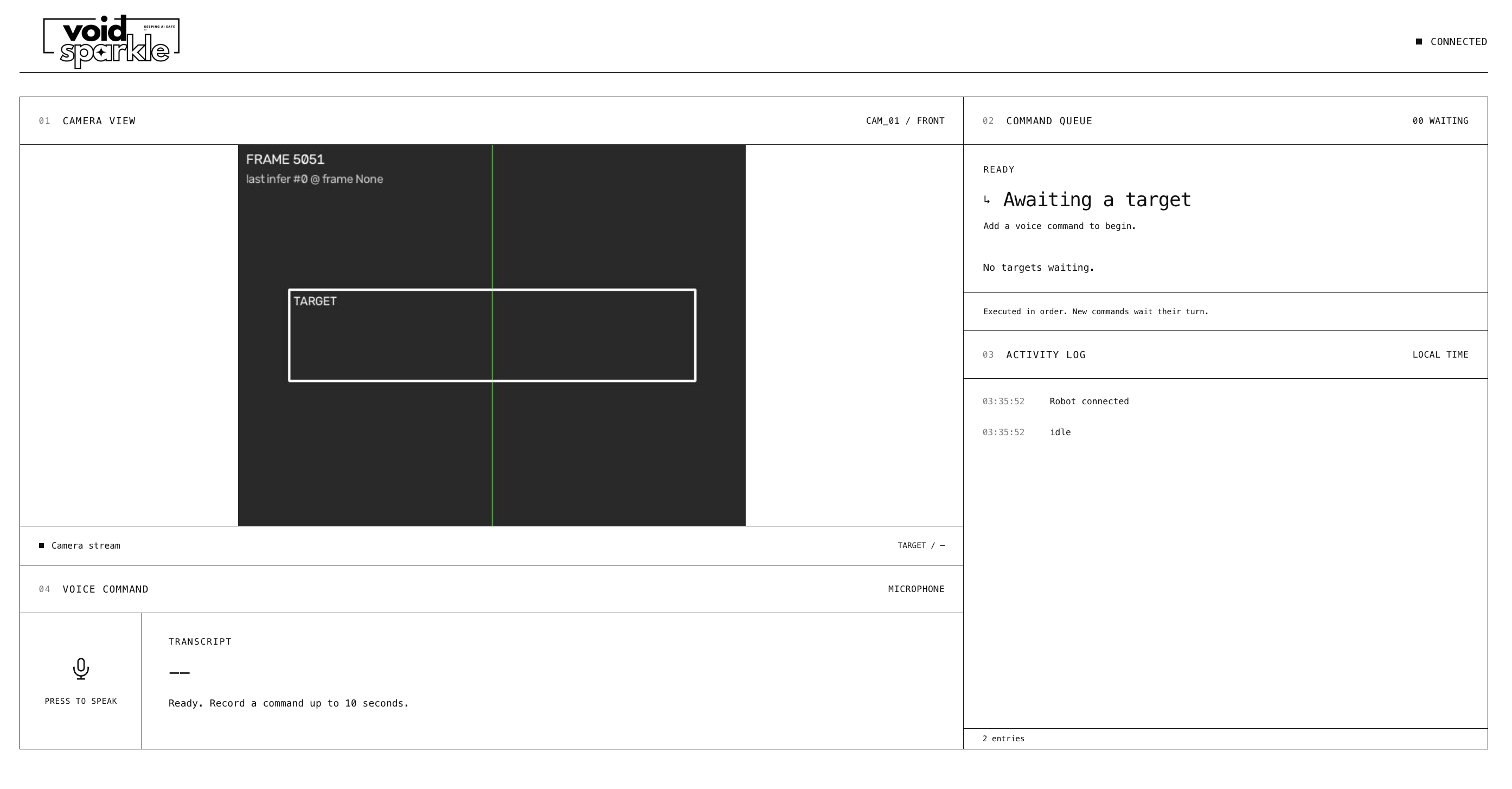
Void*Sparkle uses a voice directed RC car that brings audio, language, and vision together in one navigation flow. The laptop records a spoken command and sends it to the backend, where Qwen3.8-Omni-Flash transcribes the audio and turns the request into a structured command and target. The backend also sends frames from the car’s camera to the OMNI model to locate that target and determine the next navigation action. The robot controller converts those actions into motor commands, while the camera stream and command status appear in the laptop interface. Audio is processed after each recording, and commands are queued while the car works on its current task.
OpenAI Codex
How Codex helped: We used Codex to review the system design, build and refine the React interface, implement the microphone to backend command flow, and connect it to the robot’s existing navigation system. It also helped debug provider errors, camera display issues, and command handling during development.
Expansion and Potential Applications
Void*Sparkle is an example of why safety matters as AI moves into physical spaces. A robot that interprets natural language and acts on its surroundings needs clear ways to pause, handle uncertainty, and stop when it loses connection. We hope to build on this foundation in ways that make everyday help more accessible:
- Add an arm so the car could find and retrieve dropped items, such as jewelry under a couch, for older adults or people with limited mobility. Its language interface could support people who speak different languages.
- Let it push and sort objects on the floor, such as children’s or pets’ toys, to help busy households.
- Offer customizable covers that protect the components and give the robot a friendly, personal appearance—a physical assistant people feel comfortable having at home.


Log in or sign up for Devpost to join the conversation.