-
-
1
-
2
-
3
-
4
-
5
-
6
-
7
-
8
-
9
-
10
-
11
-
12
-
13
-
14
-
15
-
16
-
17
Inspiration
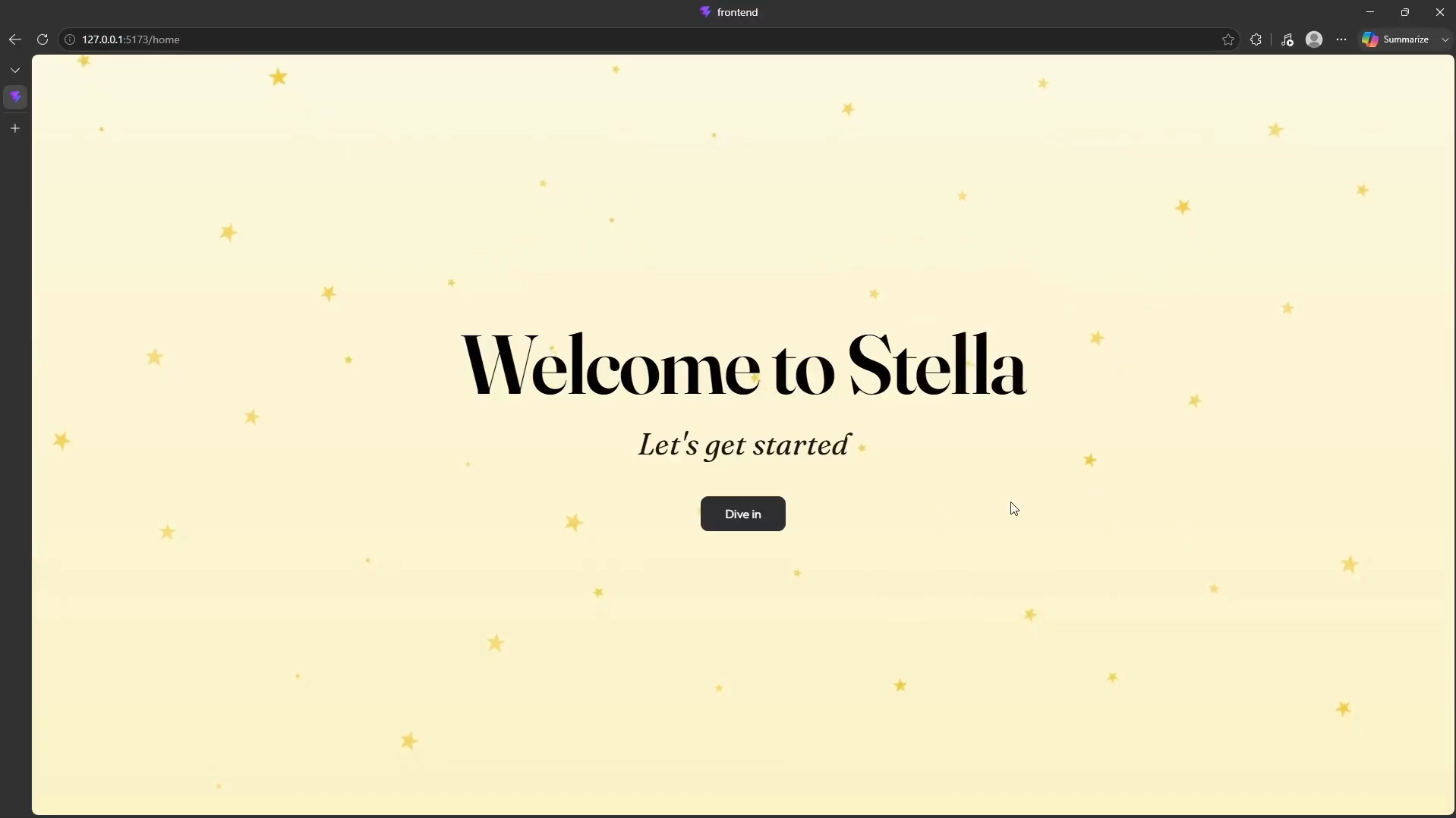
We embrace the Zero-to-One challenge because we believe great ideas deserve a chance to become reality. An idea in the mind is just a recipe; once documented, it becomes a list of ingredients. But only when you put on your apron and start cooking does it become a dish. Very few people have the determination to gather their ingredients, and even fewer have the courage to light the stove. Most of us simply look at the recipe, imagining what could be, only to regret never trying. We want no regrets. Stella exists to help people take that first real step, transform ambition into action, and stay by their side until their ideas become reality.
What it does
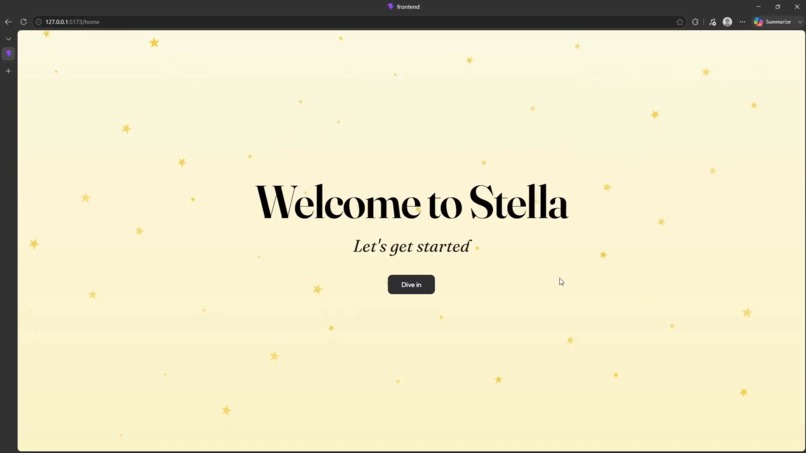
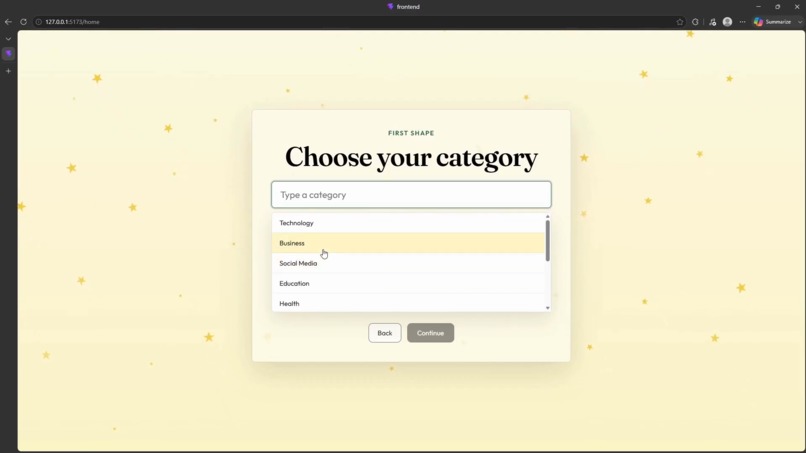
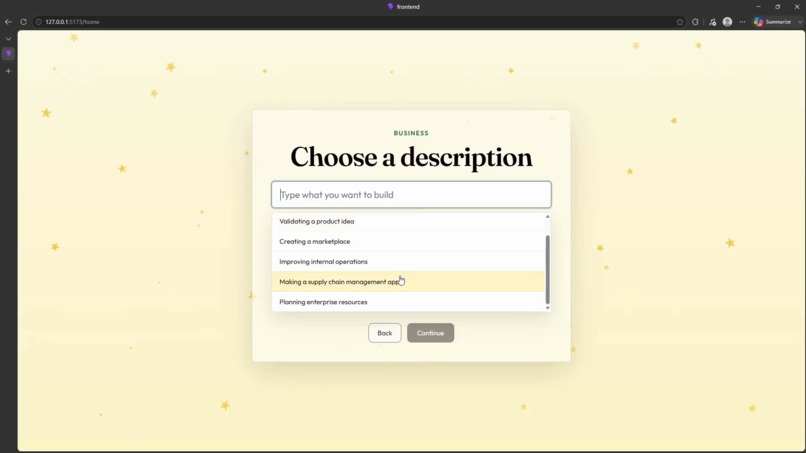
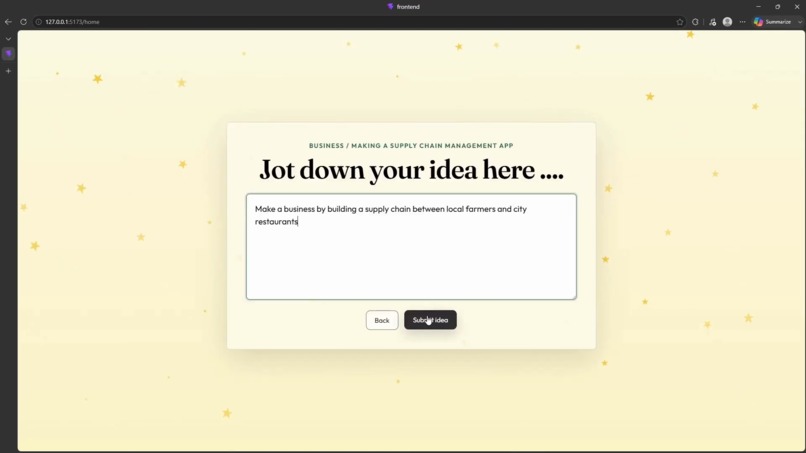
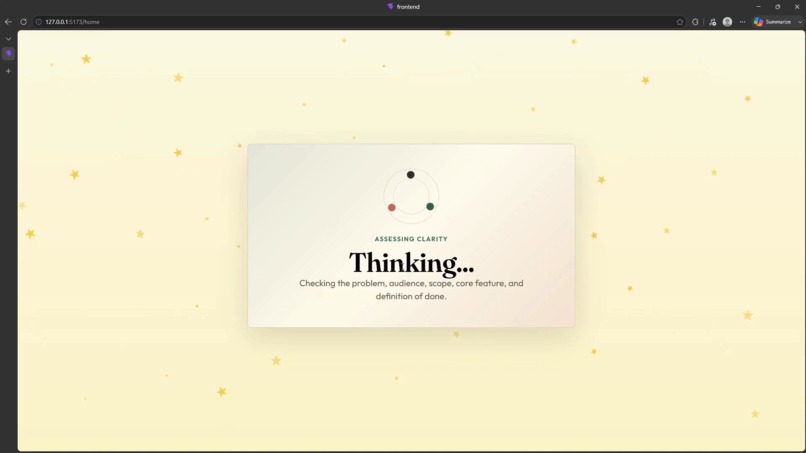
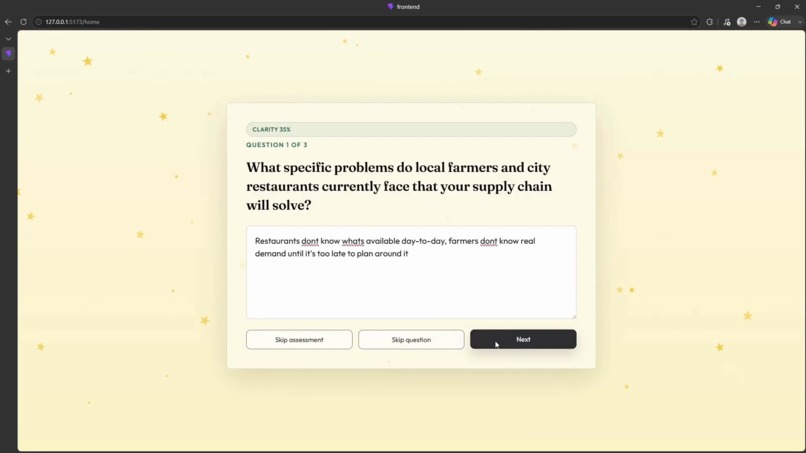
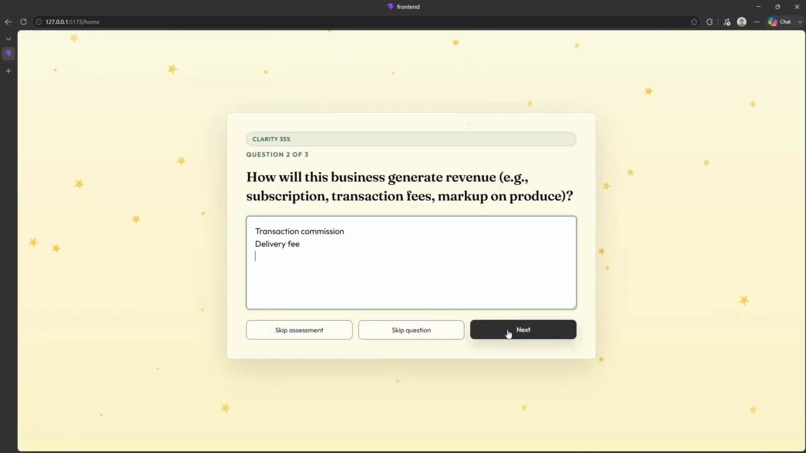
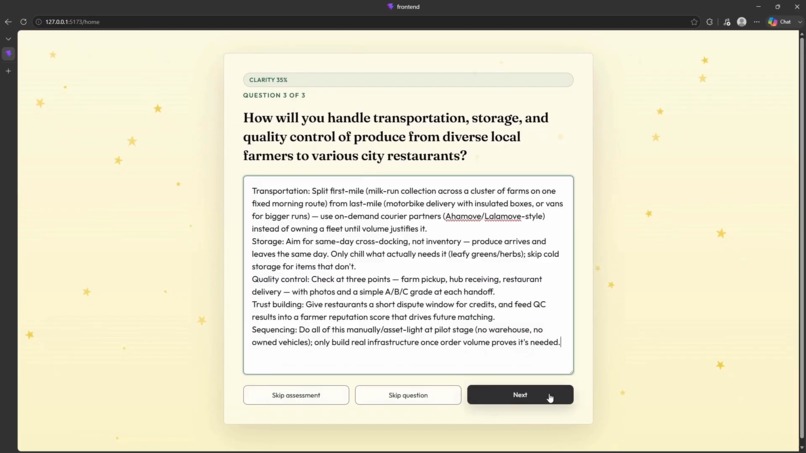
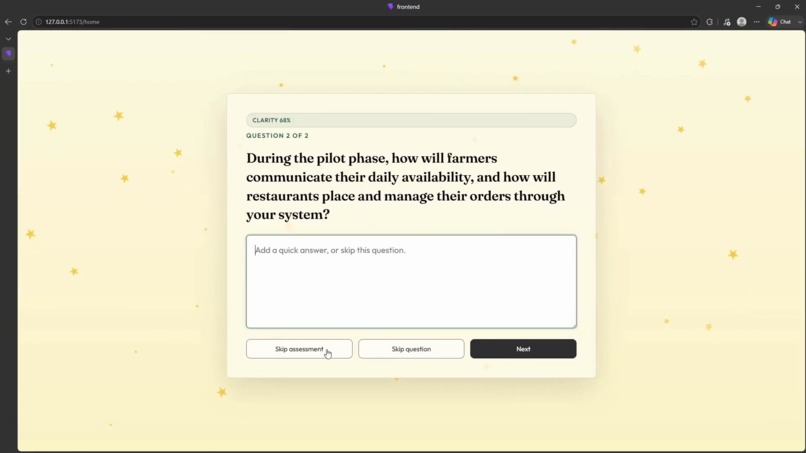
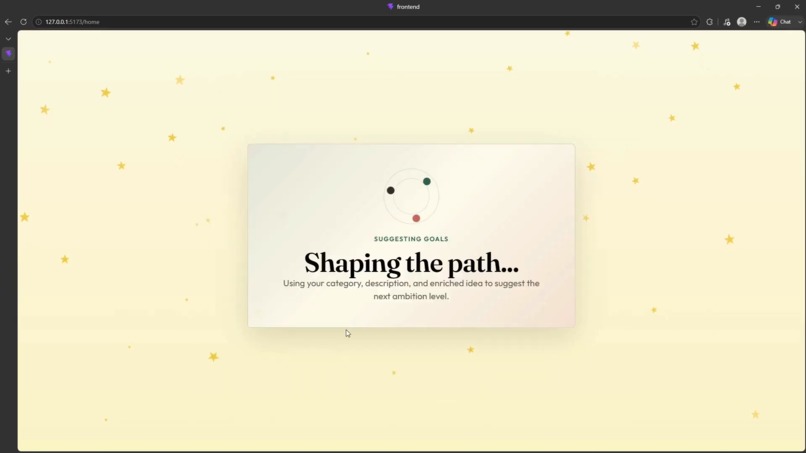
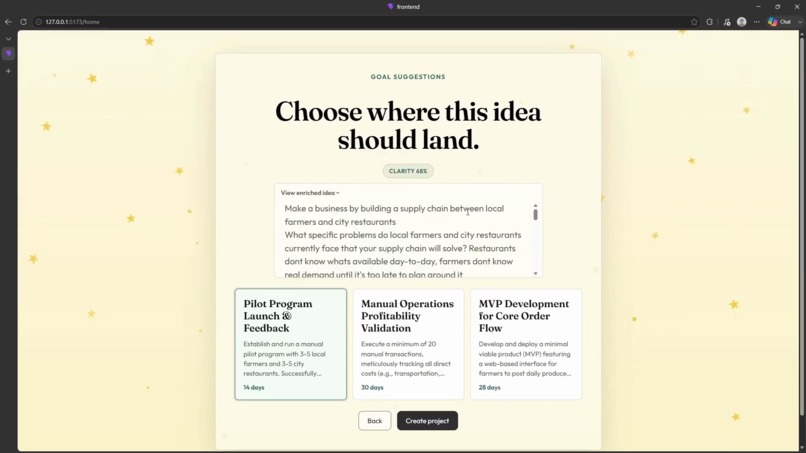
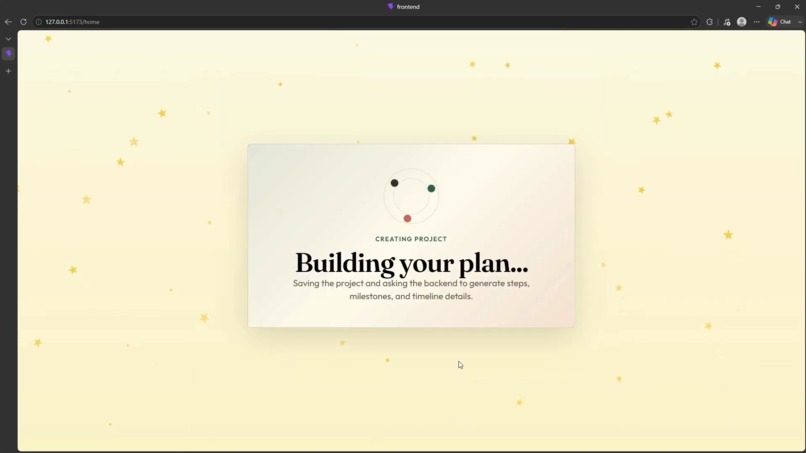
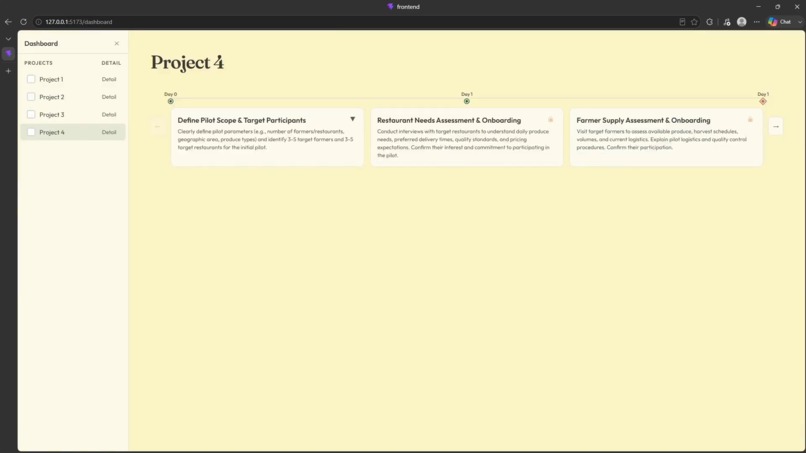
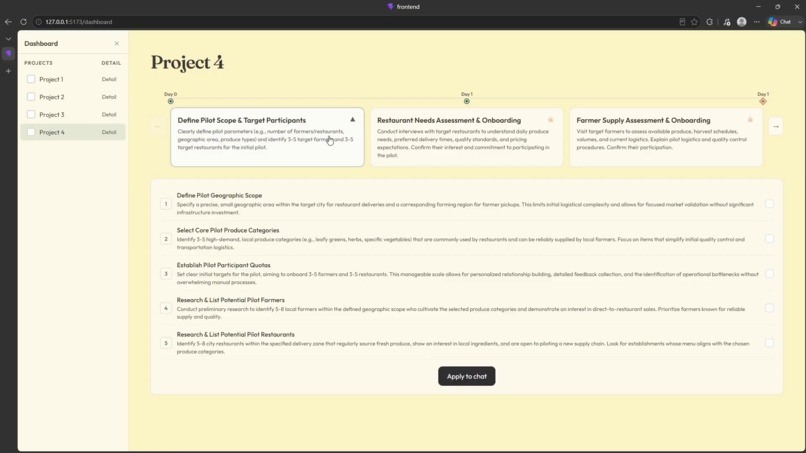
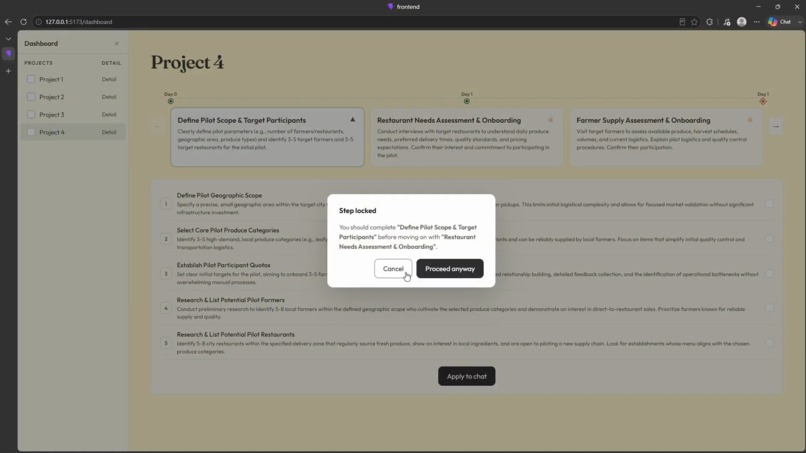
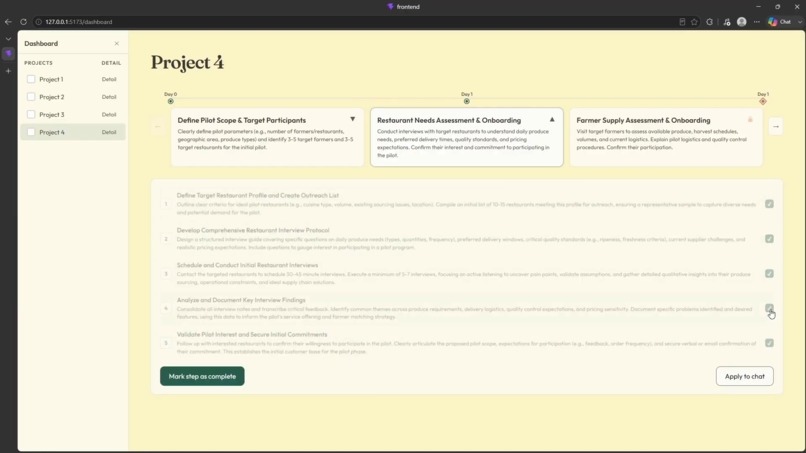
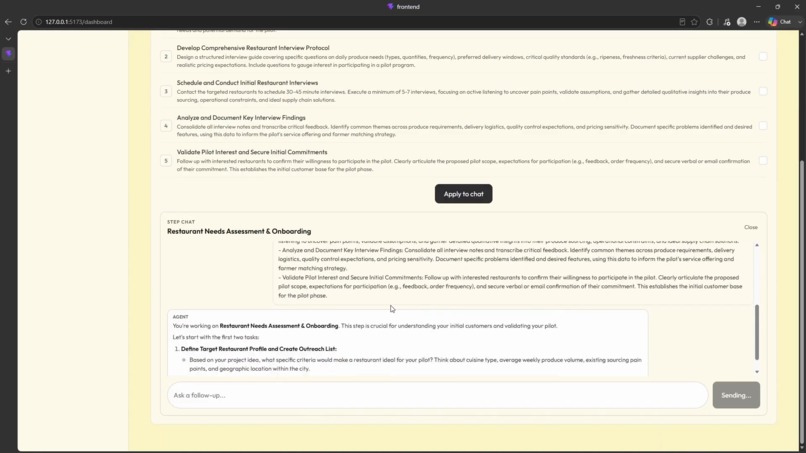
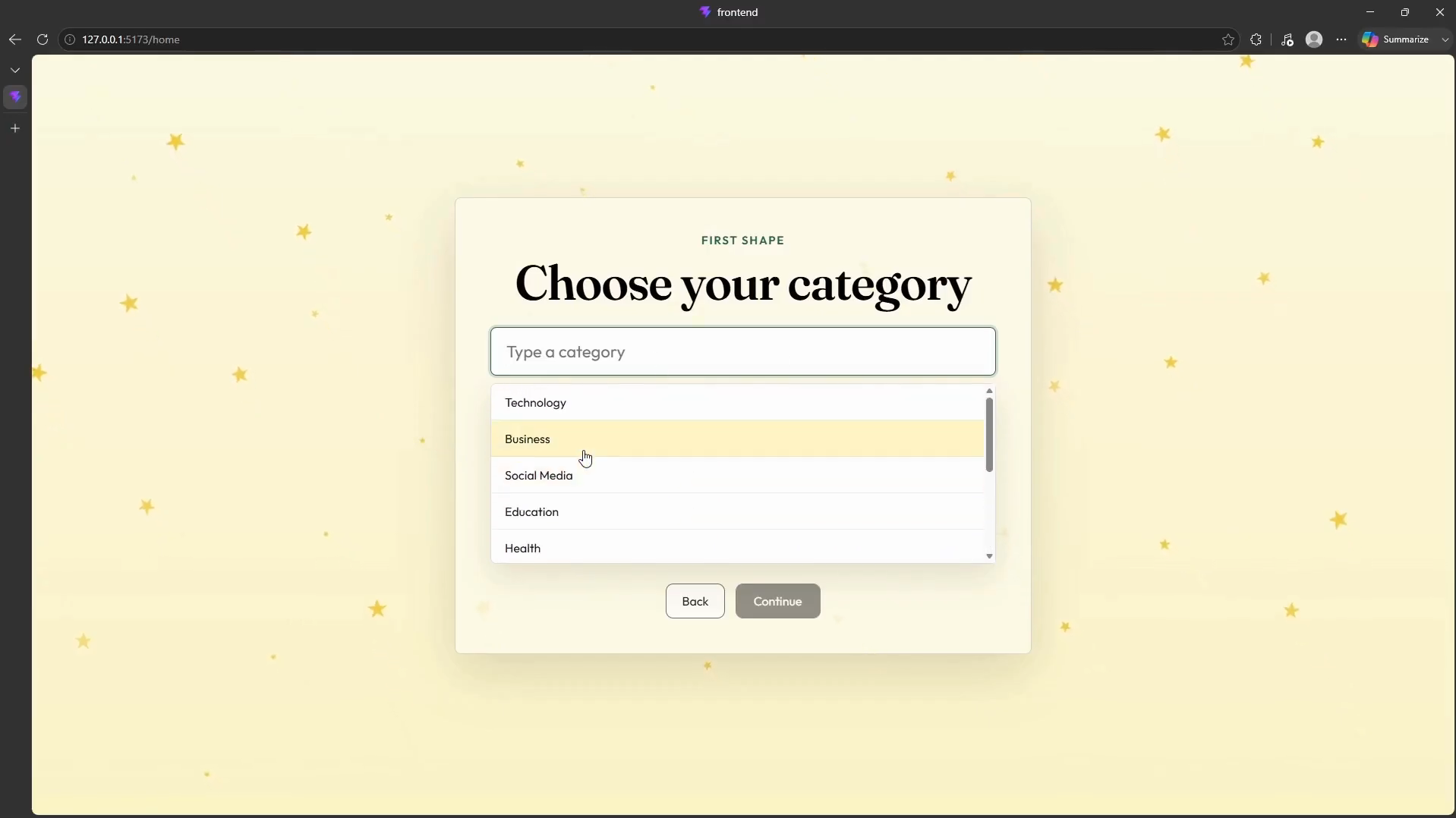
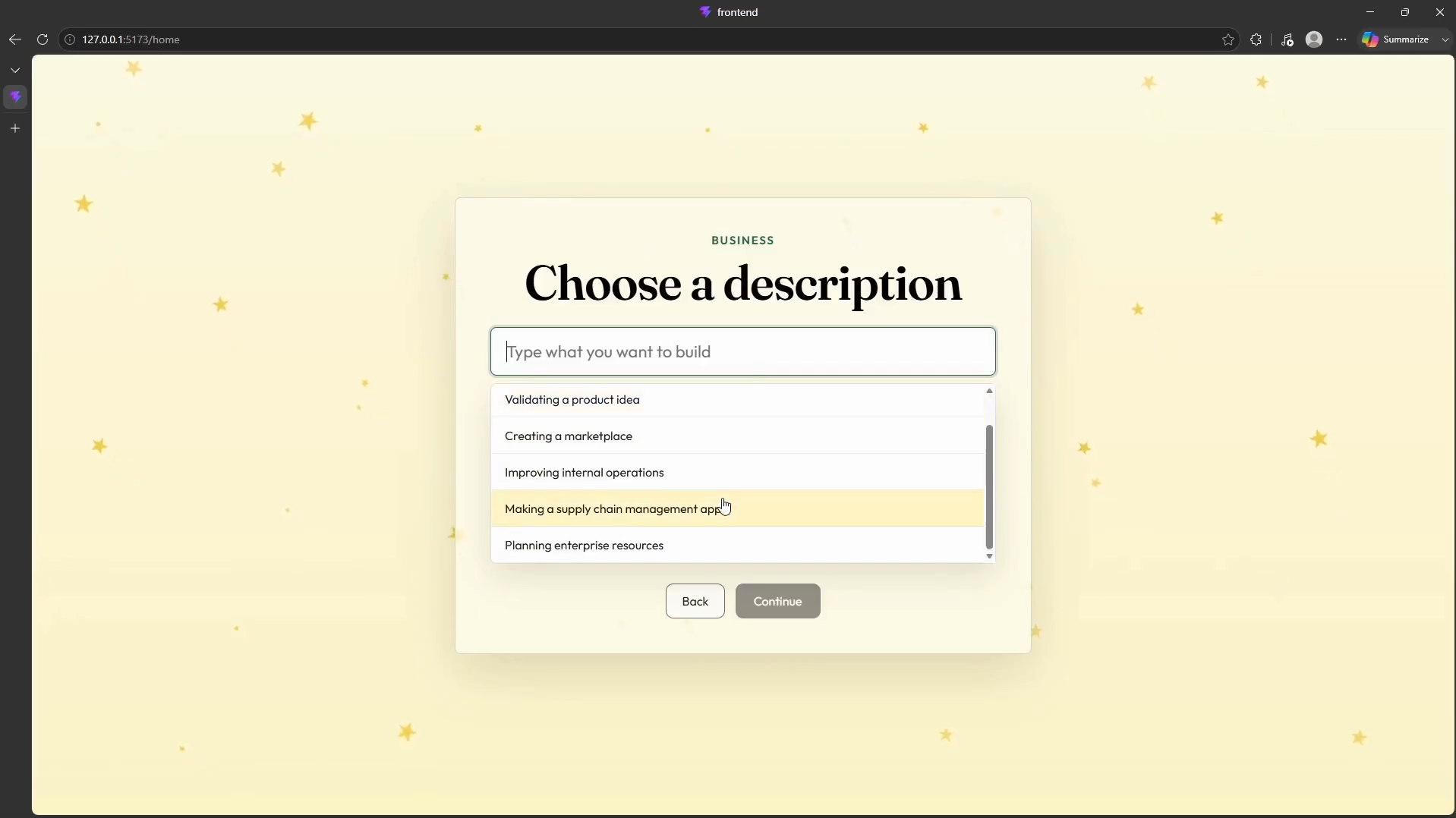
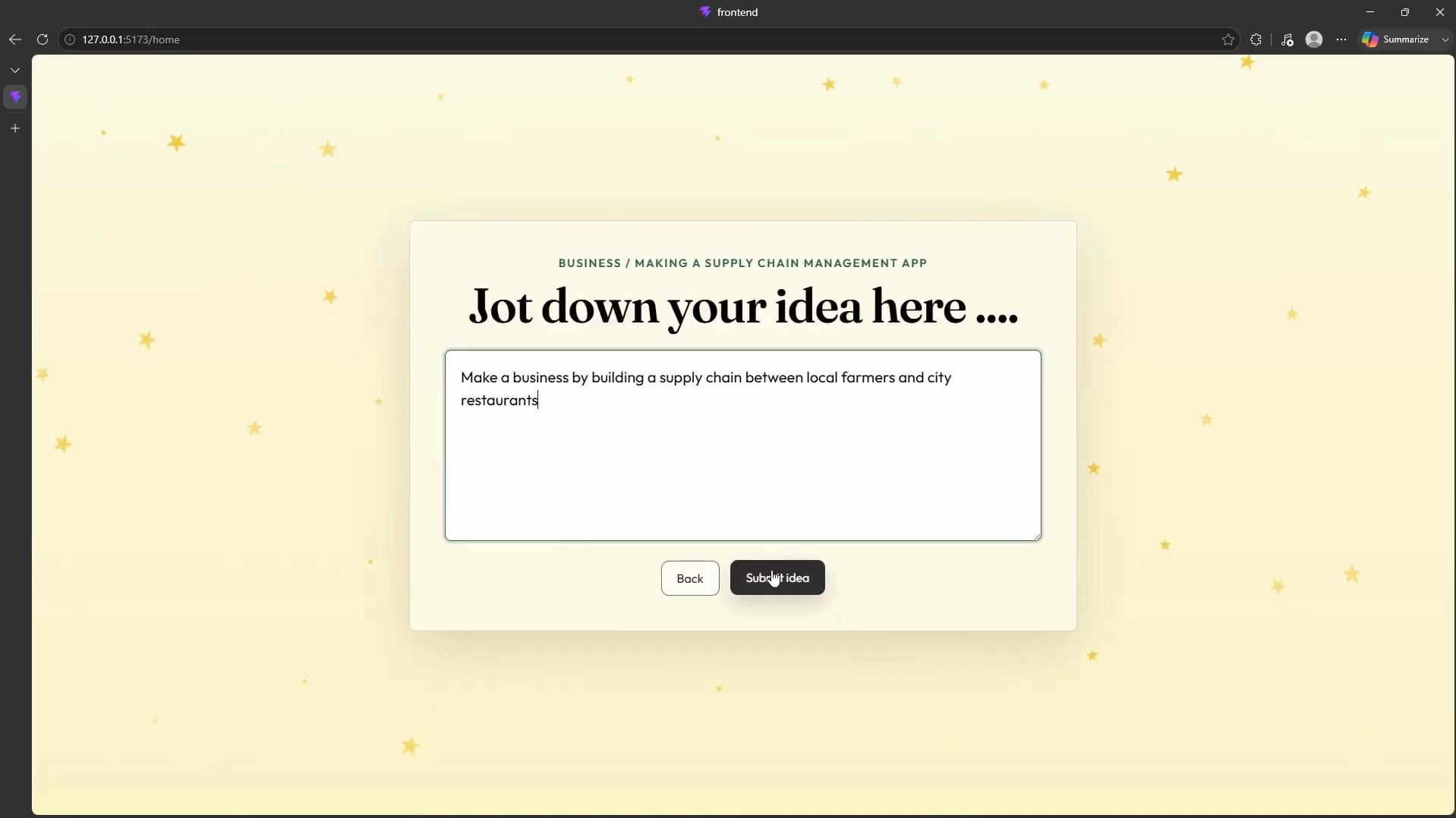
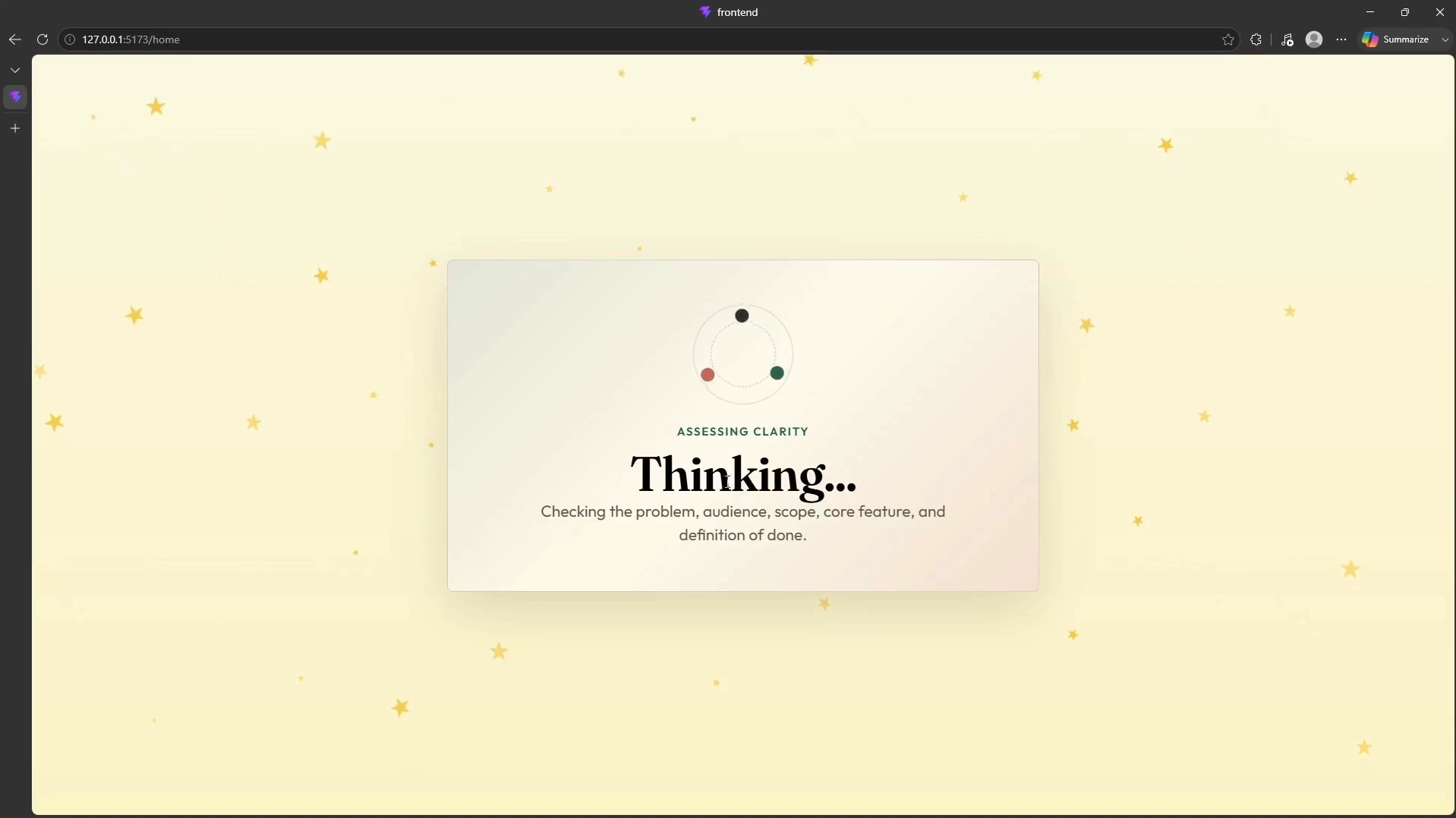
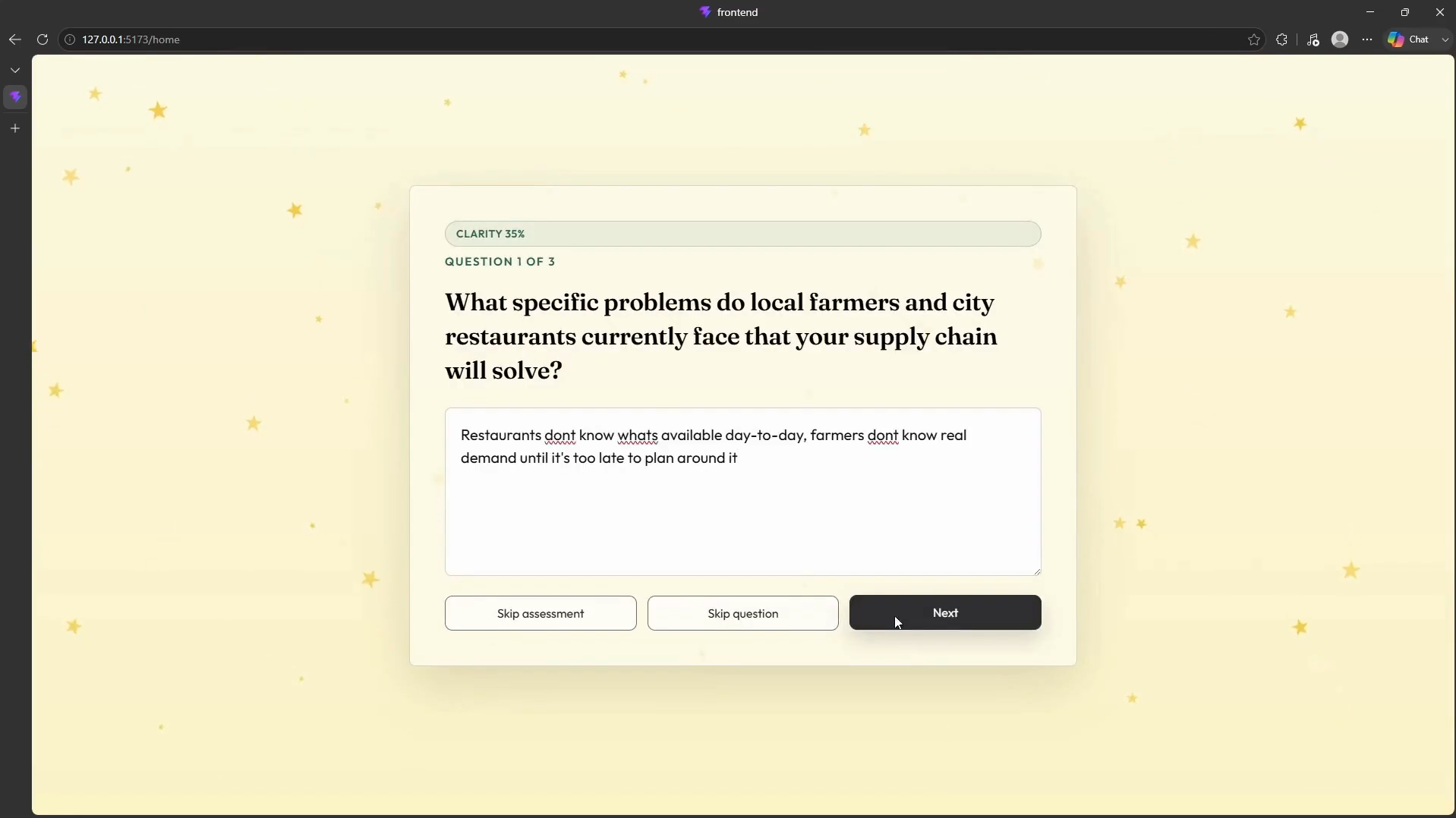
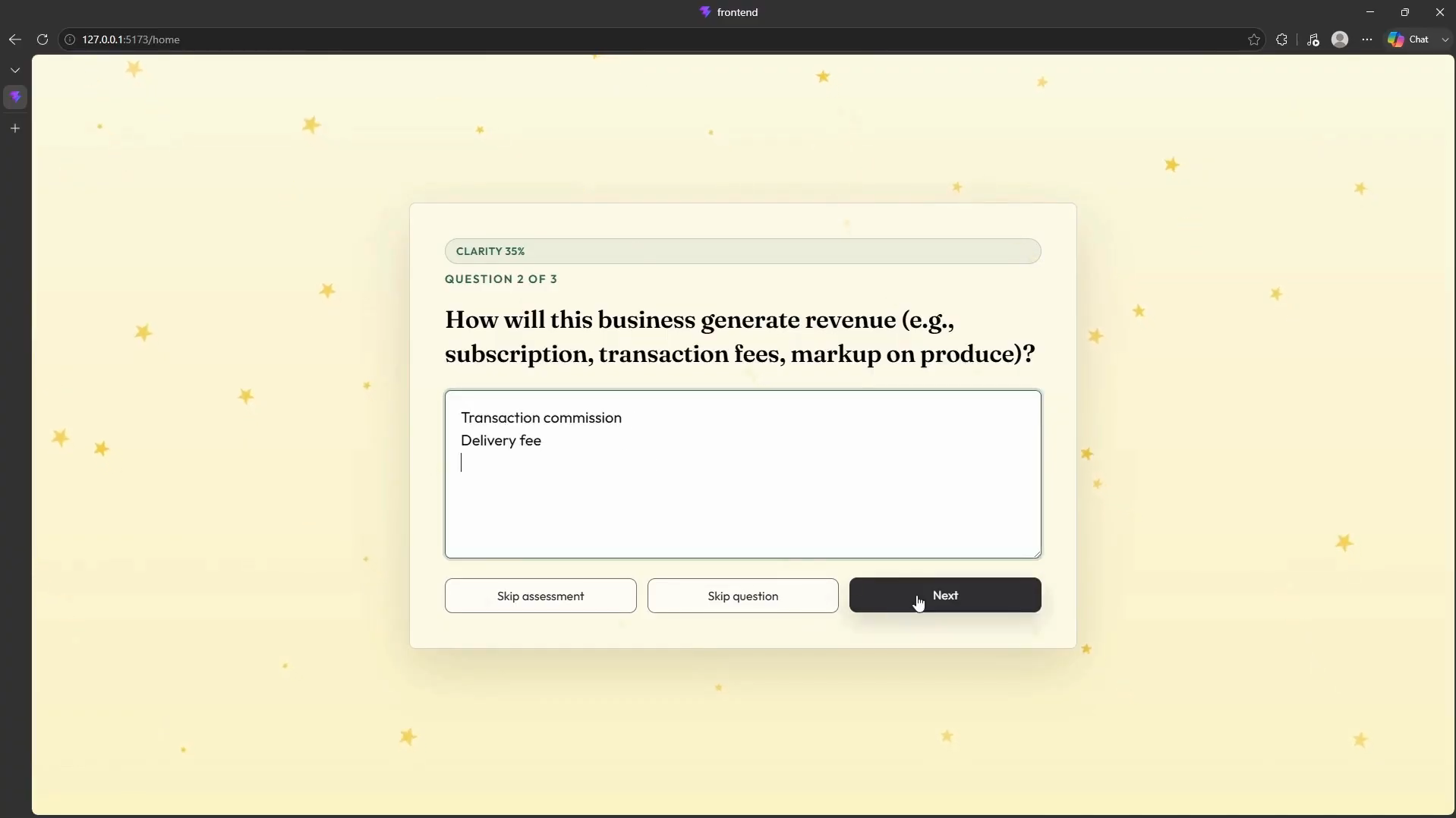
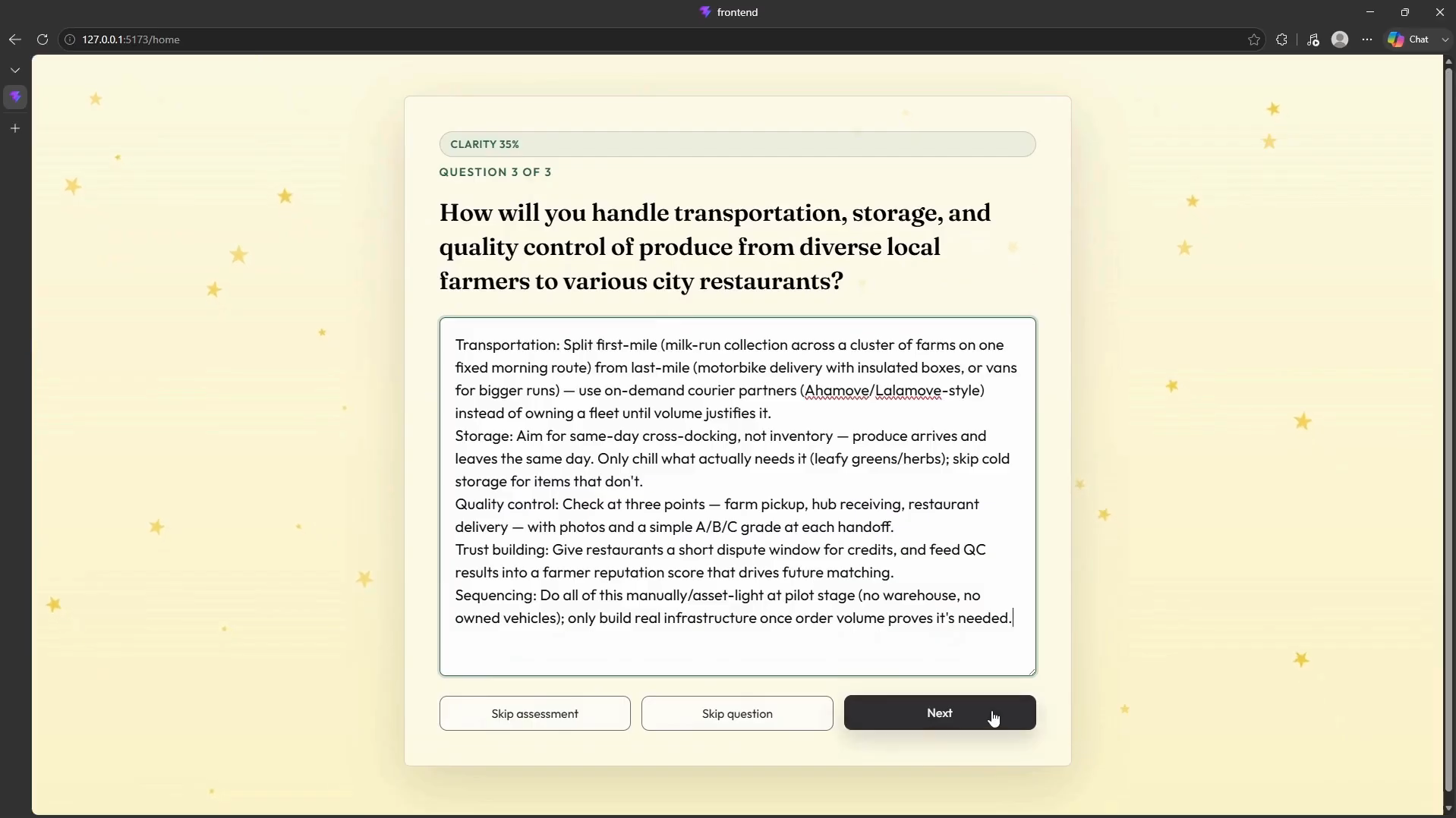
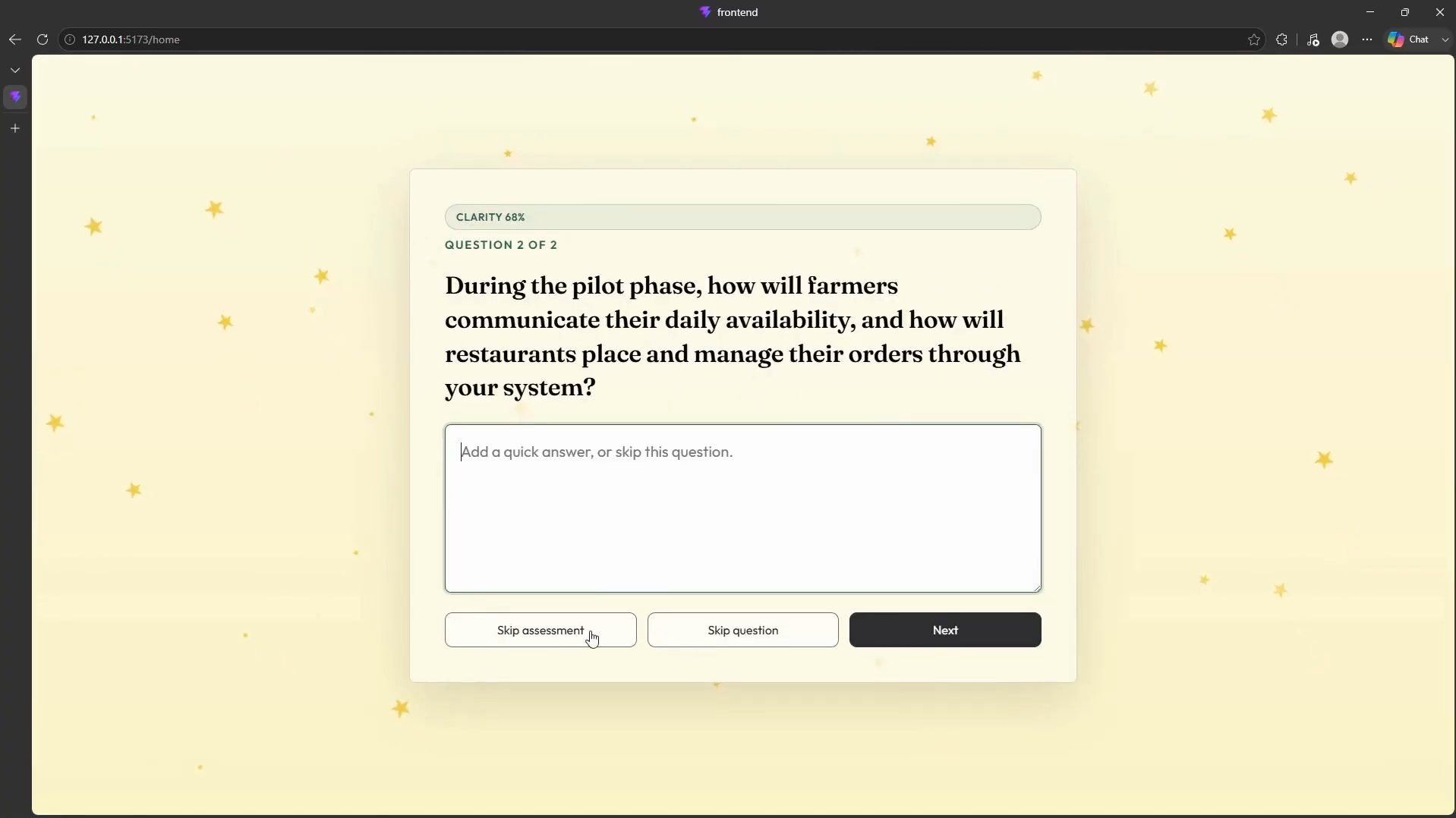
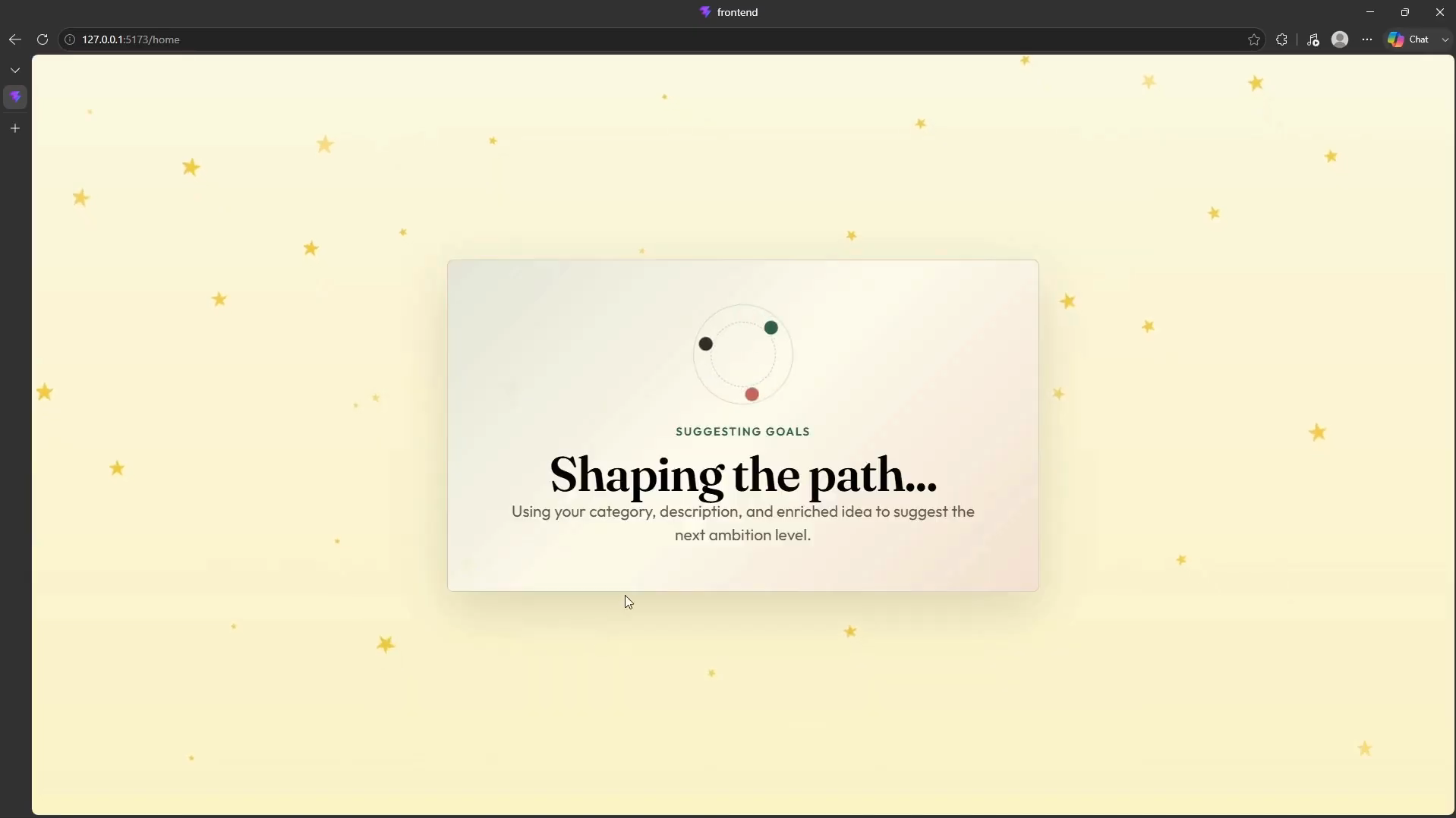
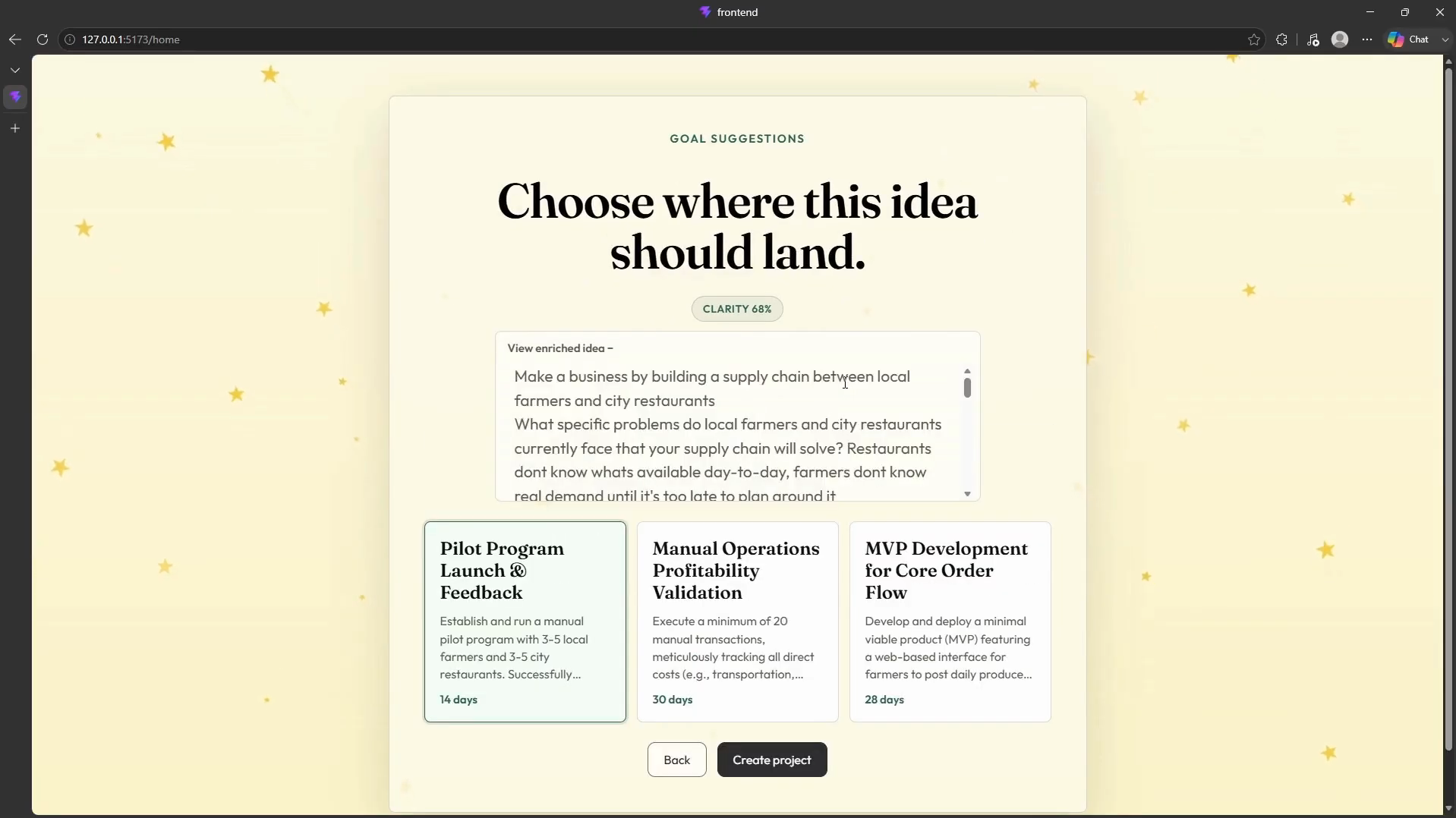
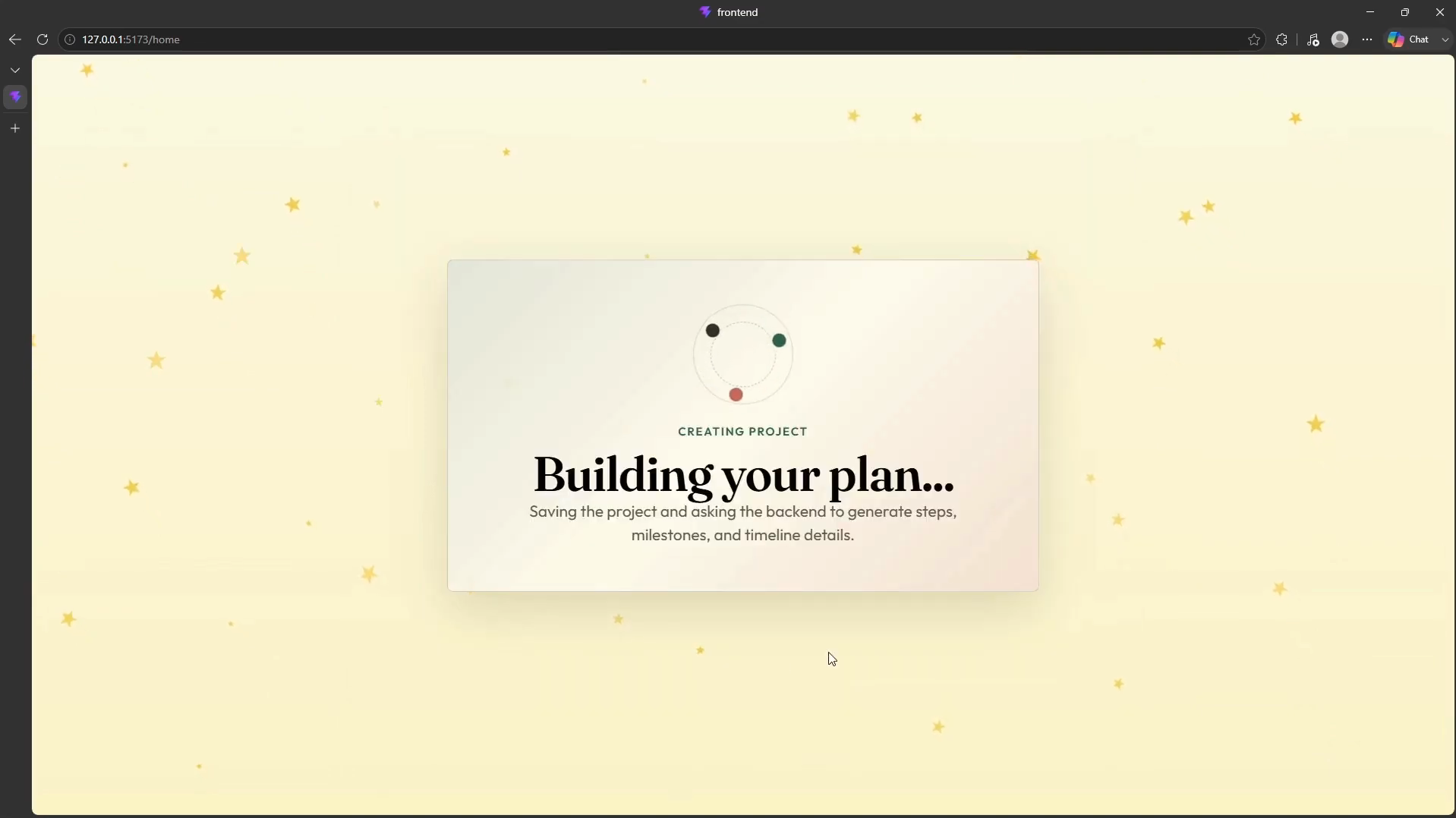
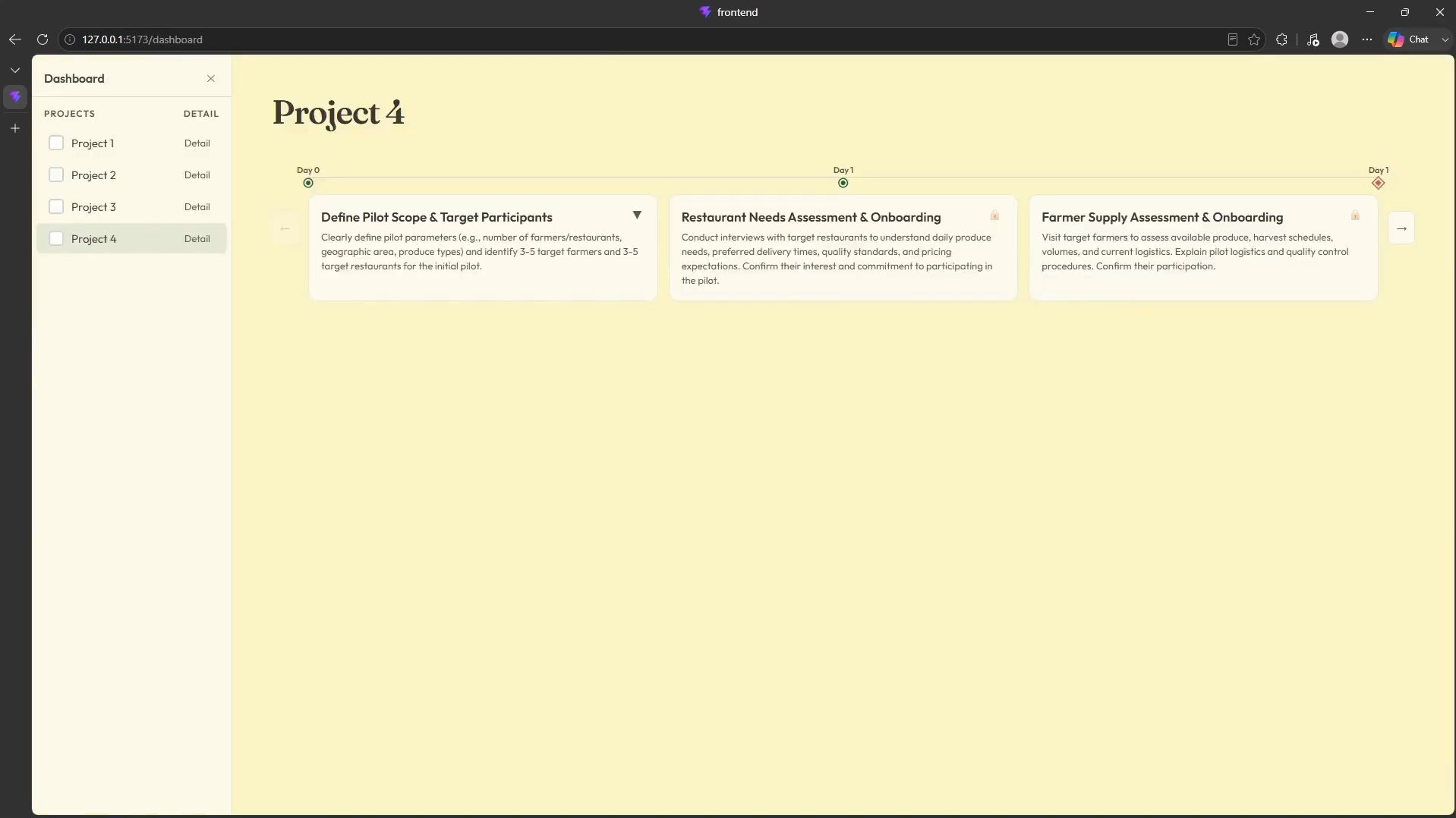
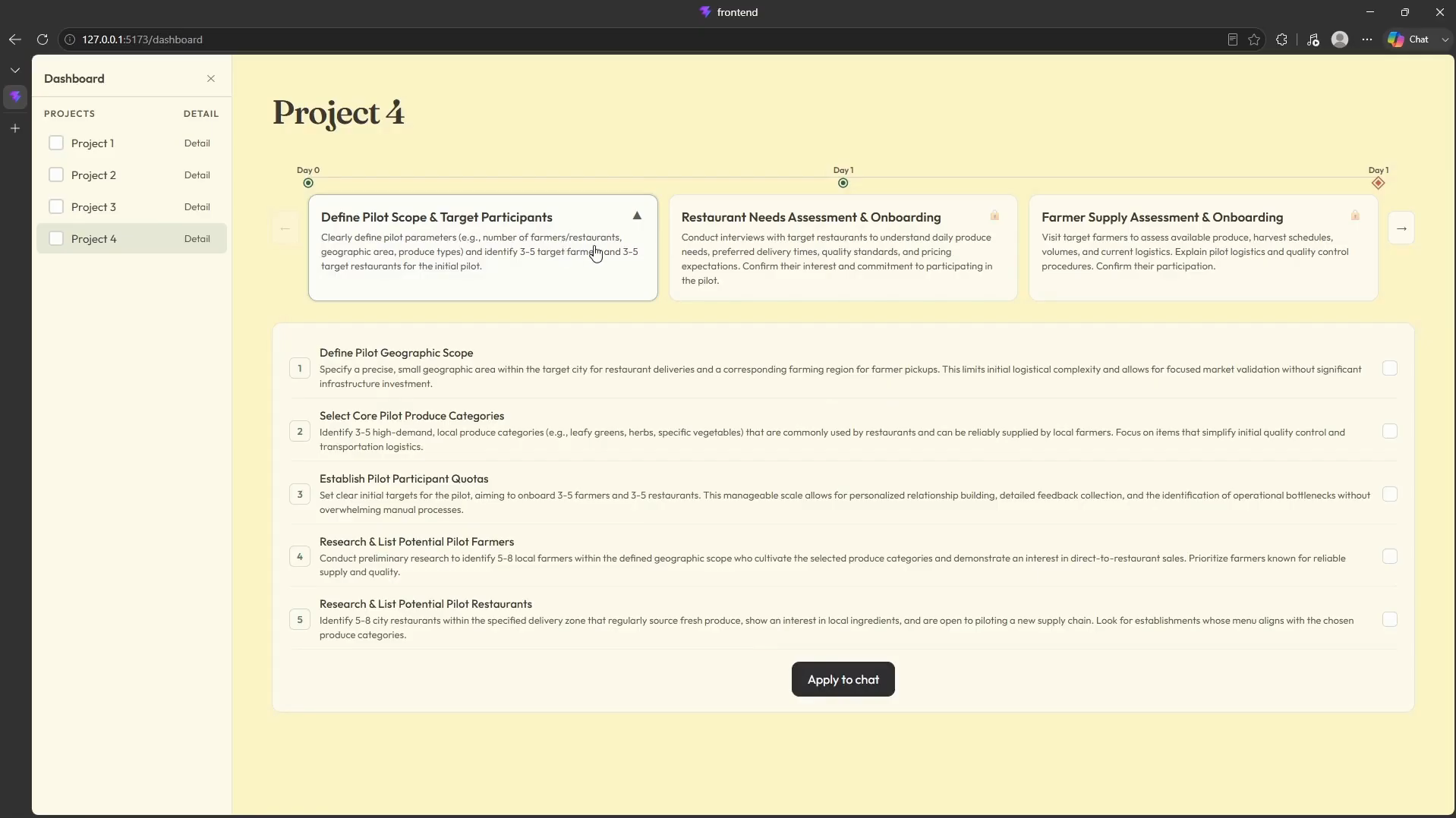
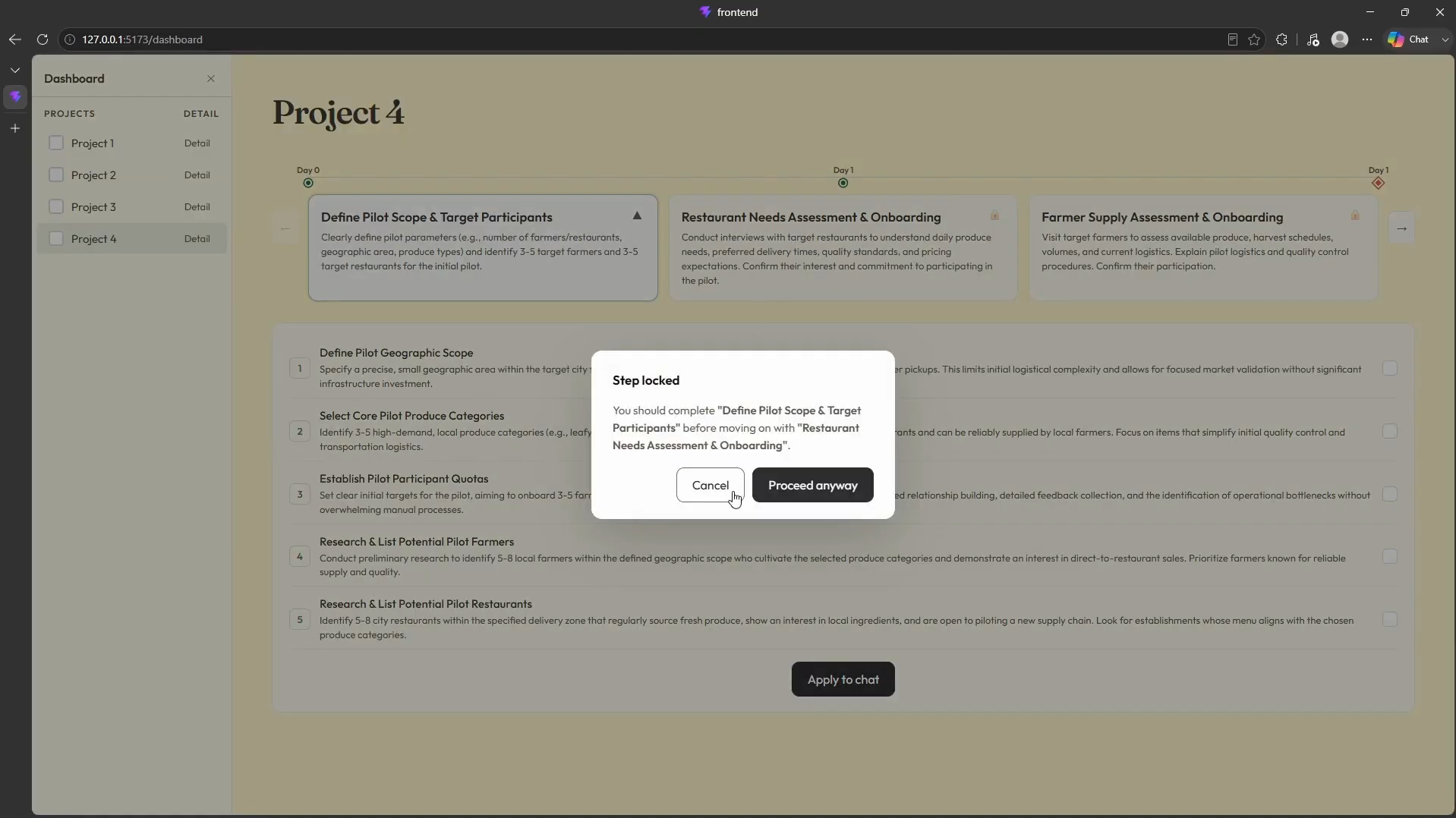
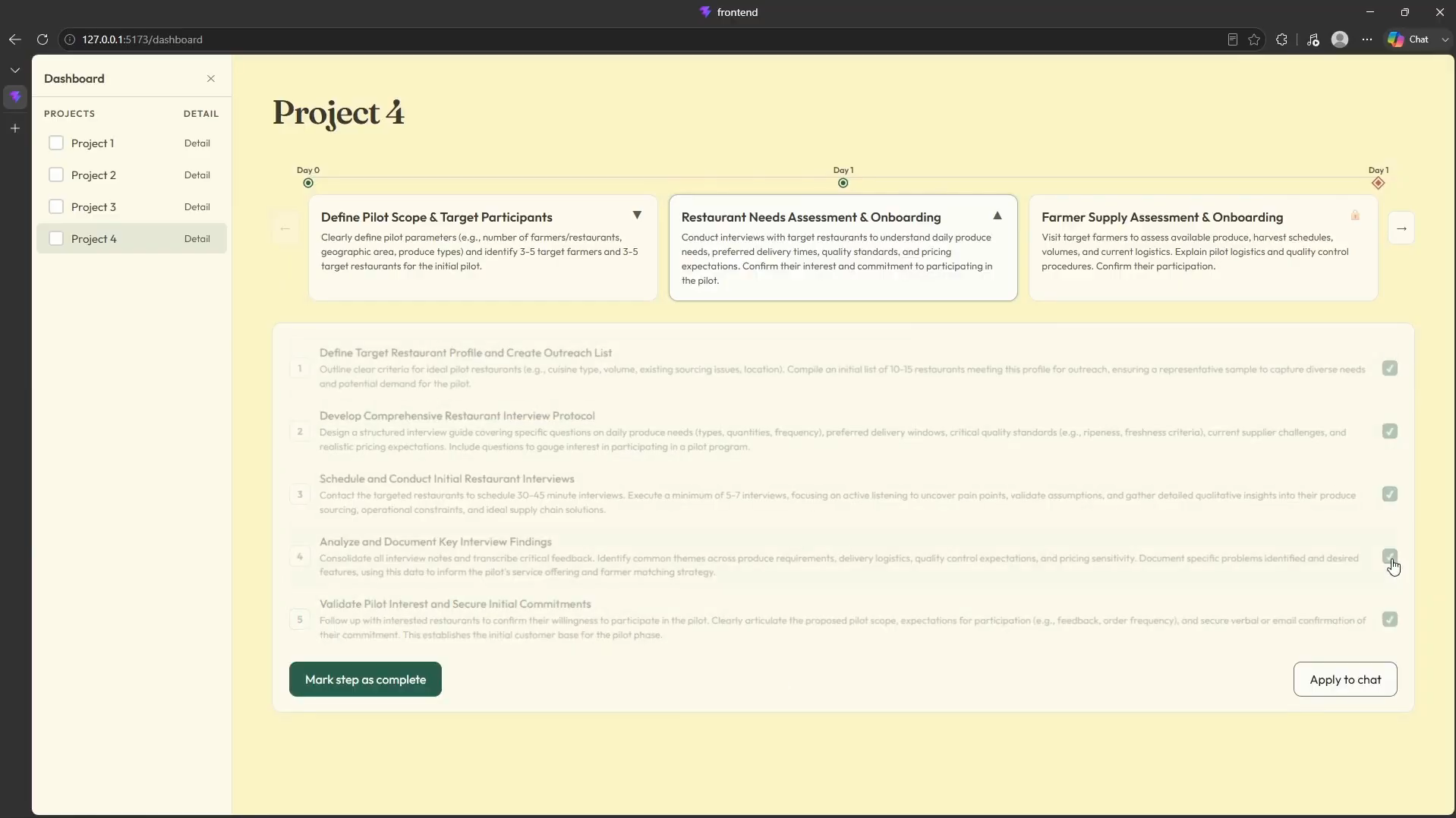
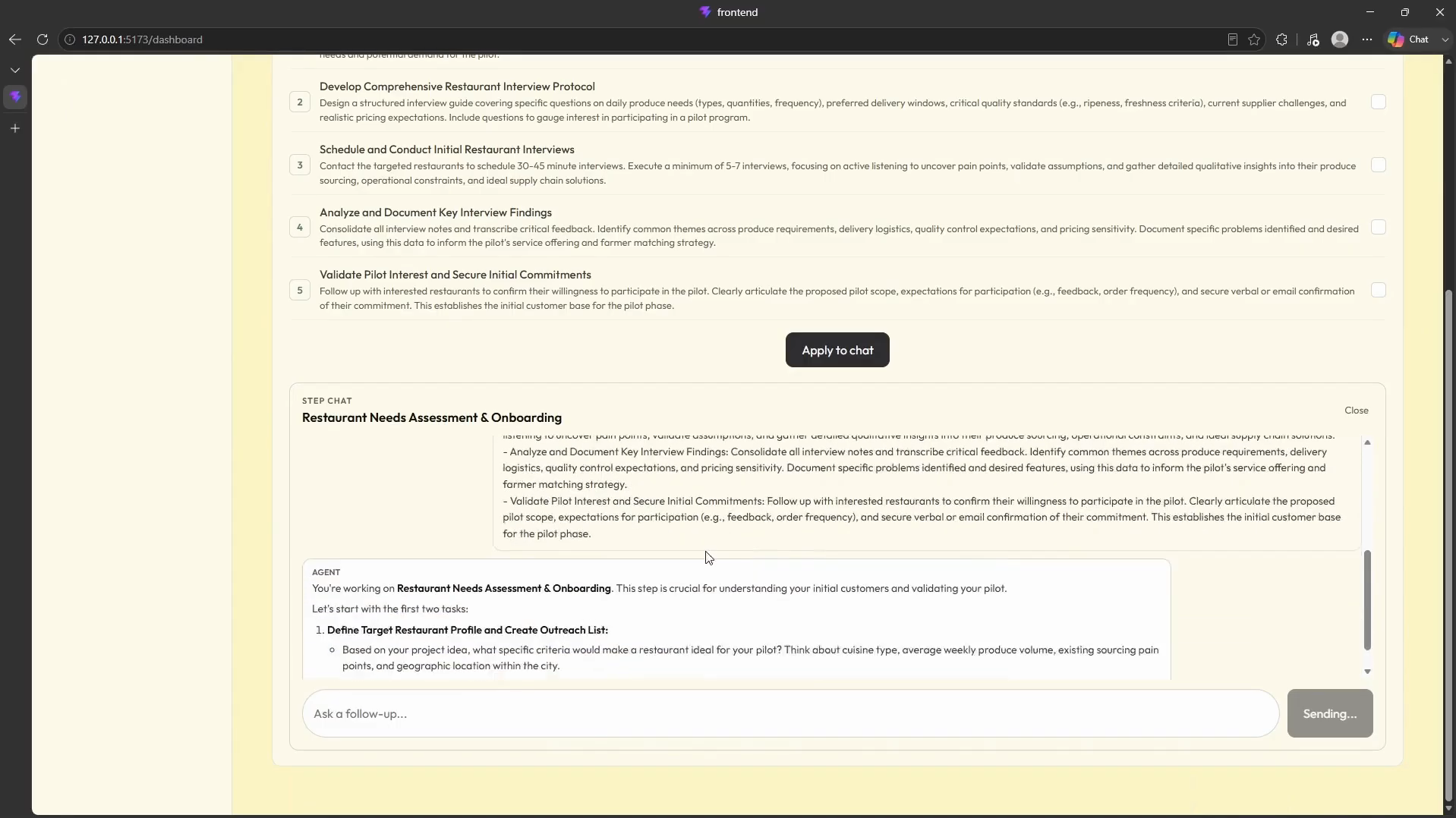
A lot of ideas start poor, lacking clarity and details, so the first thing Stella does is help clarifying the original idea. It does this by asking clarifying questions to help itself and the user understand the initial idea more. From the enriched idea, the agent generate suitable goals for the user to choose from. Based on that goal, a project plan is generated, with specific timeline, steps, and milestones. Each step is AI-focused on its own, allowing continual guidance.
How we built it
We built three separate components that work together, Frontend, Backend, and Agent. The Frontend displays UI/UX, parse and format data, and request and post data to Backend, while the Backend request LLM response from Agent.
Challenges we ran into
We had to consider multiple tradeoffs that separates a demo to an actual product, for instance the scope of the idea, the LLM memory management, data storage,... It's a hard choice between simplicity and actual functionality. Ultimately, we agreed to strip off stretched features that lie outside of the core inspiration of our product, like authentication & authorization, and focus more on scalability features like memory, making sure that our product can make actual impact.
Accomplishments that we're proud of
First, we're proud to finish all the requirements, which is our goal coming to this hackathon, for some of us the first. We all had other personal commitments during the one week, but still came through and complete the hackathon. Next, we're proud of our integrity to make a product that can actually work and make an impact, not just for one single demo video. Finally, we're proud to have applied our AI knowledge passionately into a product that will definitely be developed in the future.
What we learned
Through this challenge, we're proud to say that we've learnt how to build an end-to-end product. Most of us are already familiar with AI agents and AI frameworks, but to integrate it into a complete system, it's the first time for all of us. Professionalism is also a new trait that is learnt and showcased throughout the working process. We met everyday during the week, discussing and developing like professionals, and even though we're close friends outside, meetings are strictly for business, and we all understood that.
What's next for Stella
We have a lot of functionalities in mind that is not yet in the current version of Stella. The first thing we'd add is the user's ability to modify agent's given plan, or communicate with the agent to create a more personalized plan. Next, scaling the product for multiple users would require a different strategy of database management, authentication and authorization. Token management and optimization for LLM use is also an important aspect for future consideration.
Built With
- fastapi
- gemini
- openapi
- pytest
- react
- sqlalchemy
- sqlite
- sse
- tailwind
- tanstack
- typescript
- vite


Log in or sign up for Devpost to join the conversation.