-
-
Who We Are
-
Technology Used
-
Iterations
Inspiration
As we began to look at the TreeHacks 10 tracks, all team members were immediately drawn to the sustainability track. In a world with increasing temperatures, excessive greenhouse gas emissions, biodiversity loss, and pollution, among numerous other ecological challenges, we know we all have an individual responsibility to help preserve and revitalize our environment. As a result, we began brainstorming how we could individually help contribute to a more sustainable future. Our first thoughts centered around how we could encourage contributions to environmental nonprofits. Still, we struggled to name localized organizations that could impact on an individual scale.
With three of us originally from Iowa, we did a quick Google search to find potential organizations whose mission aligned with our goal and found over 20 (including 3 within 20 minutes of our hometown) around the state that could utilize resources from people in various ways. The contributions they were seeking primarily consisted of people volunteering and monetary donations. If this was the case in Iowa, we knew most other states would likely have even more available opportunities. But how could we make people aware of them? Looking at the communities of people we know, it’s clear there is no shortage of people interested in environmental sustainability. But just being passionate about an issue doesn’t lead to improvement. A streamlined way to identify tangible ways to catalyze change, though? That is what’s needed to bridge the gap between someone’s desire to make change and their ability to follow through. We realized our platform’s goal: to allow organizations to make themselves known to those people who already have a planted spark and want to help preserve their environment for future generations.
What it does
Your spark can create change.
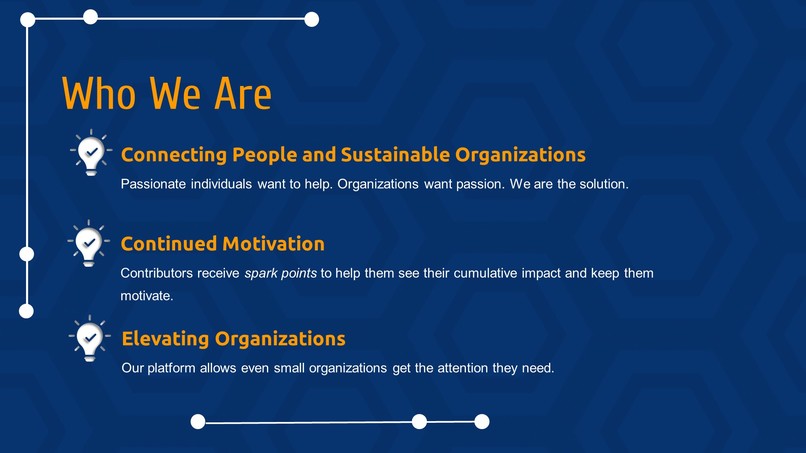
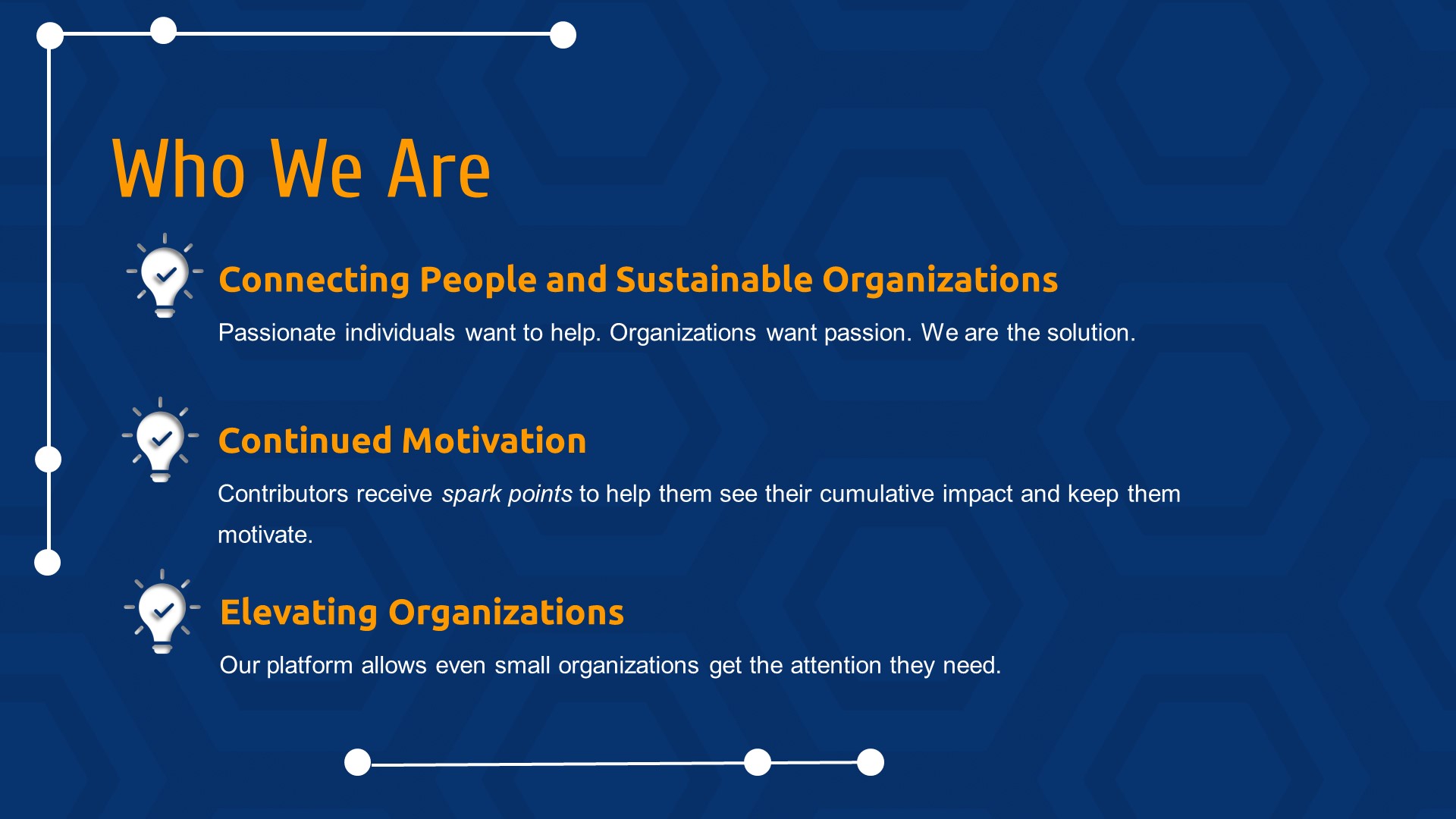
Spark is a platform that allows environmental organizations to create a campaign outlining their mission, vision, and goals to encourage people with an existing spark who don’t know what to do with their desire to make a difference to join their projects. Our platform works in two parts. First, organizations post their campaign, which is then added to a database holding all posted campaigns. Next, contributors can browse available campaigns to find one(s) that resonate with their goals. Once they identify organizations that do so, they can identify which of the organization’s goals they are inspired to contribute to and gain spark points. These spark points work to (1) allow contributors to see the tangible impact they are having as a continuous endeavor and (2) motivate these individuals to continue their contributions with more organizations.
How we built it
Iterations:
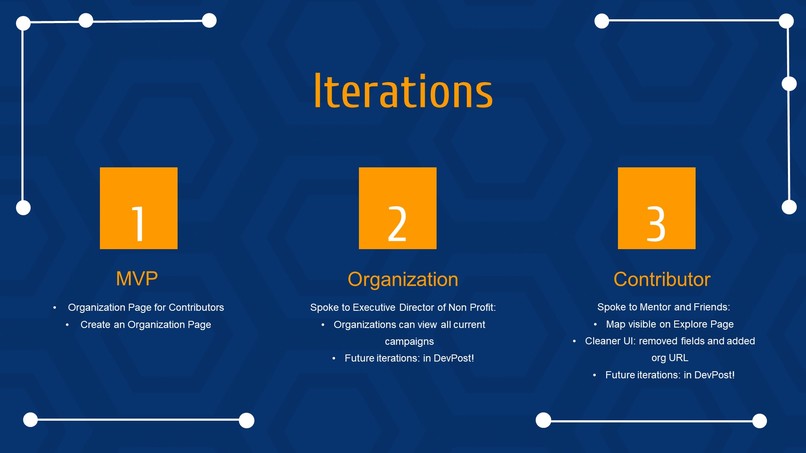
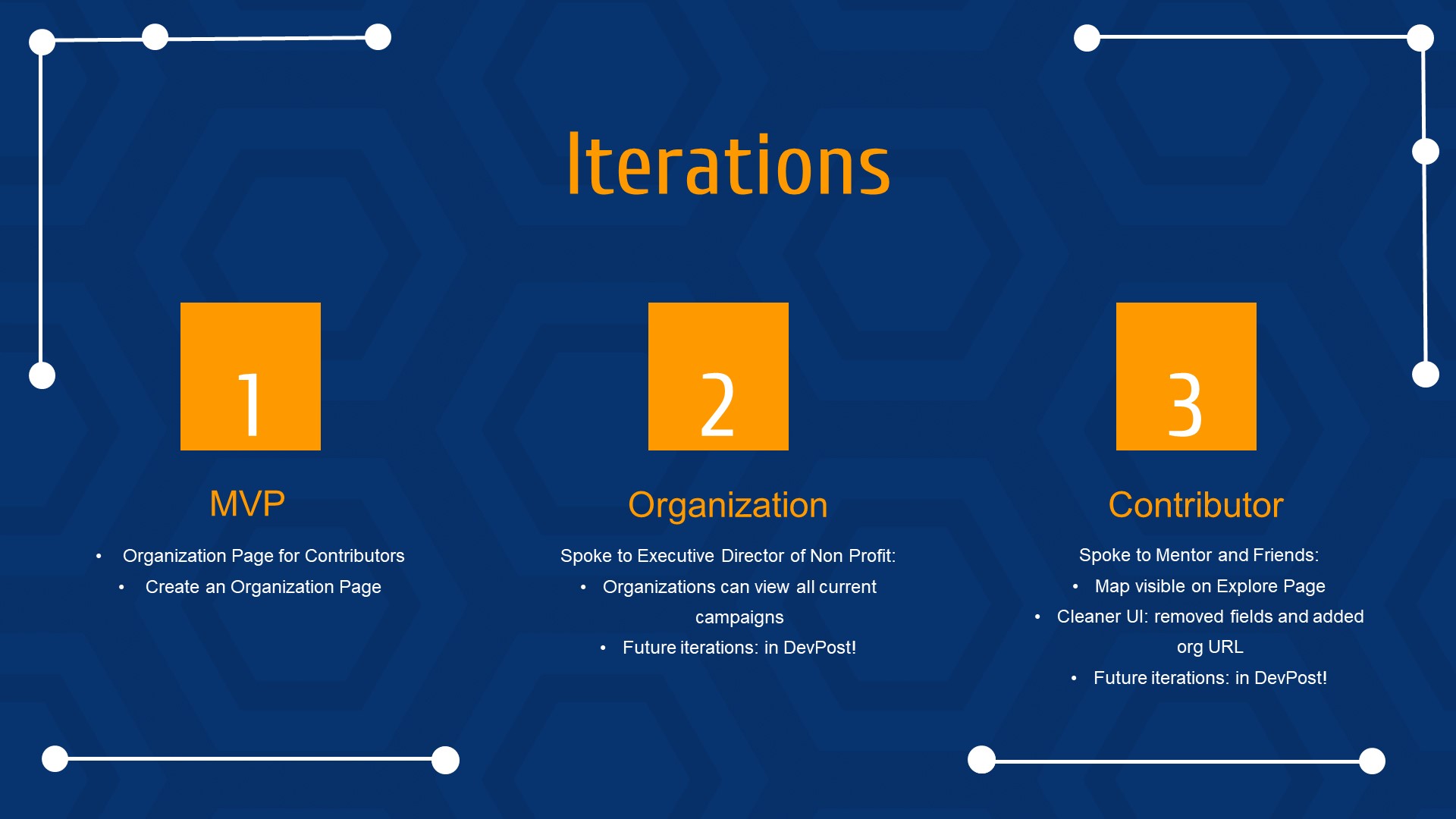
- We started with a basic outline of listing an organization and its needs and allowing an individual to sign up to help.
- To explore the broader stakeholders beyond just contributors, we spoke to an Executive Director at a nonprofit local to us (someone who may make a campaign page). We learned what features would make this platform more useful for them:
- “Because it is so hard for nonprofits to receive funding [as the application process is often long and rarely fruitful because of the number of competitors], individual contributions go a long way,” so we made the monetary donation aspect the first built-out type of contribution with future plans to build out a page showing all volunteering opportunities
- Within the organization’s dashboard view, they should be able to view and manage all of their own campaigns, so we added this functionality
- “Nonprofits benefit greatly from being able to receive feedback from participants,” so in a future iteration, we hope to allow some form of communication between participants and the organization (if valuable and often not used, this may be required for someone to earn their spark points)
- We then showed our product to a hackathon mentor to gain more feedback on how to address the pain points of a potential user
- She suggested the usefulness of being able to “visually” observe opportunities “physically nearby.” We used this feedback and incorporated the Google Maps API to display the physical locations of the opportunities. She also noted this would remind users “how accessible” it is to make change.
- After speaking to friends (people who would hold a future contributor role), we added in a few more features that could make our platform better encourage people:
- A link to the non-profit website, if applicable, to allow for deeper learning. To encourage an easy-to-use UI (especially for those more tech-averse), we wanted to avoid a cluttered card and instead redirect contributors to the organization's website.
- The ability to favorite a non-profit for future engagements, which we hold as a goal for a future iteration
- Rotating information on our home page to serve as motivation for contributors (also not yet implemented but planned for next iteration)
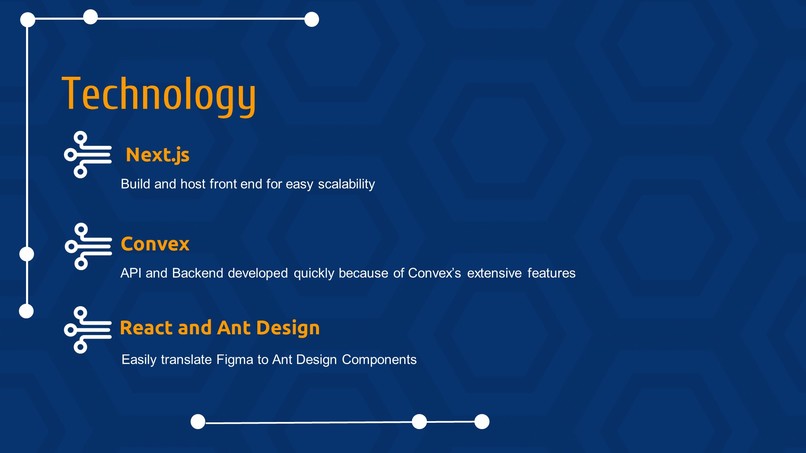
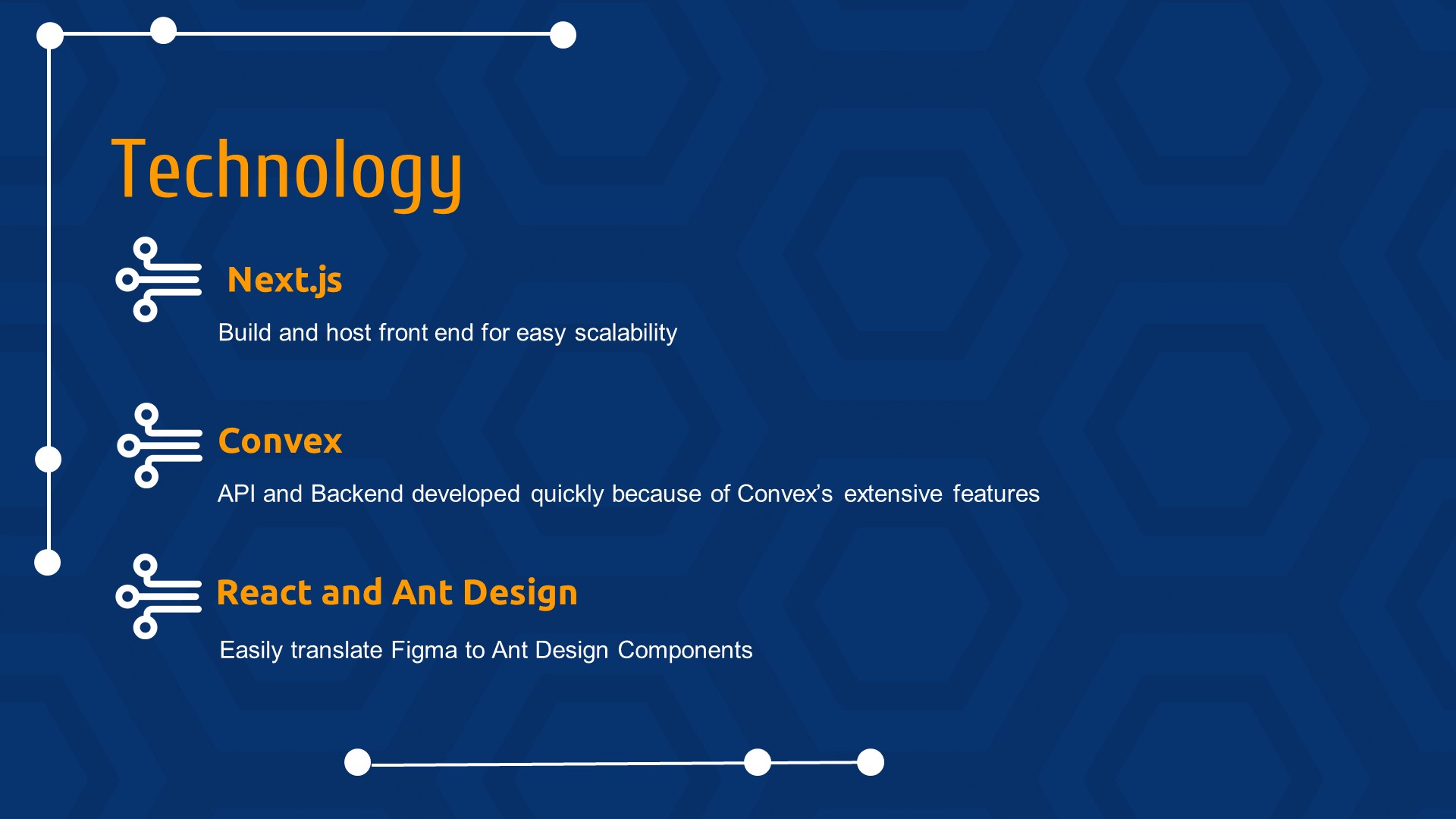
Technology Used: (1) We used Next.js to build and host the front-end portion of our application. This decision allowed us to scale easily with a growing user base. Next.js is a very popular framework with a lot of open-source support that made our ability to build a website quickly. (2) We use Convex for our API and backend. We enjoyed their presentation during the opening ceremony, which convinced us to use its extensive functionality. Its lightweight nature helped us develop much more quickly than what would’ve been required with other software. (3) Ant Design is a very popular UI framework and made it easy to translate our Figma designs into our final product with a clean, modern interface. (4) Visual Studio Code + Extensions to make development environment easier
What makes us different
The main features of Spark that set it apart from existing services can be grouped into three main parts:
- The focus on individual contributions to environmental challenges
- We couldn’t find any existing websites that were focused on sustainability. Many environmental organizations had their donation and/or funding pages in hard to find places and with little tangible impact associated with it.
- The motivation through point earning
- This feature is a unique motivator we didn’t find in other platforms. People like to do things when they feel like it is worthwhile. Providing an ability to track the “significance” of their cumulative – not just one-time – contributions does precisely that.
- Allowing individuals to see that their monetary or physical donations are tied to specific goals, not just a cause
- By having organizations outline why they’re asking for contributions in a certain manner, people are more aware of their individual part in these large-scale problems. A general donation fund or volunteering list is less valuable for contributing individuals.
Challenges we ran into
- Configuration and integration challenges like getting things to talk to each other, installing libraries
- Agreeing with design and idea choices like UI, brand, and features
- Working through exhaustion, stress, and frustration at times
- Navigating a new environment of learning and networking
Accomplishments that we're proud of
- Our app successfully makes roundtrips! Data is rendered from the database to our front end, and we can successfully demonstrate our MVP
- 3/4 of our team's first hackathon project!
- We met new people with great ideas and enjoyed sharing them throughout the weekend
- We got the chance to learn and experiment with technologies new to us (Next and Convex) and were successful in making them work
- We had fun!!!
- We were a successful team and enjoyed collaborating together :D
What we learned
About Sustainability:
(1) What do nonprofits and organizations need when looking for support?
- Access to a large user base: This can be especially key for smaller organizations and the funding of their projects
- Passionate contributors: they are the key to spreading ideas through word of mouth, and this is our target demographic for our platform
(2) How beneficial individual change can be
- Ecological organizations have already done the research: they know what needs to be done to improve our environments. Once they’ve identified useful ways to use people, getting people to them is the new important goal.
- The more involved people are individually, the better equipped they are to elect representatives that can further change on a more national and even global scale. Individuals spark greater contributions.
About Technology:
(3) The web development space is constantly evolving
- Many tools out there are robust for scaling applications with growing users. Frameworks for the backend like Convex make spinning up a cloud server a breeze, with frameworks like Next.js ensuring that front-end applications are production-ready.
- It’s crucial that before starting a project, the needs of the project are evaluated to find the right tech stack to handle them. Additionally, when encountering bugs or issues, evaluate the simplest potential culprits first, as the technologies being used are well-tested and are unlikely to be the issue.
What's next for Spark
We want to see Spark develop into a general platform for all kinds of organizations and allow them to receive support in ways not currently built into the website. While our motivation started out with achieving improvements in ecology, we learned that many nonprofits and small organizations also struggle with their day-to-day costs for small things, even as simple as needed plates or cups. Schools have underprivileged students who struggle to receive the school supplies they need. Both of these cases could be solved by having an additional contribution mode: purchasing individual items.
Spark has the potential to become _ the _ platform for social good: you want to help a specific industry, that industry, and your ability to contribute is _ literally _ at your fingertips.
Once this generalization is implemented, we hope to add a recommendation feature that will allow contributors to be matched with projects that they will likely find fulfilling based on their previous interests and engagements.
Broader Stakeholders, Context, and Ethicality
Accessibility:
While this is hosted online, the requirements of people are nothing other than their time or money. While money can be a barrier to contributing to projects one resonates with, our platform encourages people to give their time if that is more accessible to them. While not everyone has access to the internet from their homes, they can easily access this platform from a public source (ex., library), allowing them to make individual contributions in whichever way they see as most suitable to their desire and ability.
Our “add a campaign” process is extremely simple for an organization that may not have tech-savvy employees. Organizations have to provide as little information as they want to, and in a few simple clicks, they will be listed with minimal technology required. Additionally, existing organizations may see Spark as a competition. Still, Spark works to elevate the organization’s existing issues to be helped by a broader range of people looking to better their community and environment.
Contributor Motivations:
A potential unintended consequence may be a motivation surrounding the gamification of the process through spark points and hours, but regardless of motivation, contributions are impactful. If people begin to look for ways to maximize their points or hours, they will ultimately create more change for the better.
Other Considerations and Research
Our largest stakeholders outside contributors are the organizations that post to Spark. By speaking with someone so involved with a non-profit, its funding, and difficulties finding volunteers and donors, we better understood the pain points of potential users on both ends of the platform.
Addressing environmental issues is the responsibility of all people. For one, poor environmental conditions disproportionately harm marginalized individuals. These communities are more likely to be exposed to lead, air pollution, hazardous waste, and extreme temperatures. We have individual responsibilities to improve the state of our environment to minimize this disproportionate impact, and it starts with awareness and individual contributions. Secondly, there is a moral obligation to leave the world livable for future generations. Without intervention and prioritizing of these projects, we don’t follow this ethical duty.
Projects identified by local organizations often occur where the need for better conditions is very visible: beach or park cleanups, invasive species removal, recycling, or food waste minimization, to name a few. They can also work to improve these places through projects such as tree planting or beautification in neglected neighborhoods. Improving living conditions is a social issue that can help decrease the disproportionate impacts faced by those living in areas identified by environmentally focused organizations.
There are potential ethical concerns that we also must consider with the creation of our platform:
- A bias in which organizations are displayed for prospective contributors. To combat this, we want to incorporate technology that cycles organizations' recommendations to individuals. Especially in larger cities, we wouldn’t want small organizations to lose their ability to gain contributors at the expense of larger organizations on name alone.
- The risk of greenwashing. Often, organizations looking to gain participation may falsely indicate an interest in ecological progress and then take away attention from organizations focused on improving sustainable practices. This would need to be handled delicately because if a vetting process to allow organizations to add a campaign is added, there may be bias in which types of organizations are filtered out or find the additional steps technologically challenging.
- Community displacement. Projects that take place in a community may displace the residents of that area. To prevent this, there may be terms and conditions requiring organizations to ensure that their projects meet specific standards that don’t cause issues in the areas they are working with. Largely, though, ecological organizations are very aware of the footprint they leave in places where they work and are careful to be considerate of these communities.
Sources: https://www.apha.org/Topics-and-Issues/Environmental-Health/Environmental-Justice
Built With
- ant-design
- convex
- figma
- javascript
- next.js
- react
- vscode


Log in or sign up for Devpost to join the conversation.