Inspiration
I’m currently a frontend developer proficient in React and Tailwind CSS. When I first thought of Spark, it honestly felt like a stretch—way beyond what I could pull off with my skills. But I couldn’t ignore it. I’ve been in those shoes: a student rushing between classes, struggling to make sense of half-finished notes, wishing learning was less about confusion and more about clarity. I knew I had to put the vision in motion, even if it meant building piece by piece.
The inspiration came from a simple but frustrating observation. Teachers spend hours preparing quizzes and grading papers, while students finish them in minutes and wait days (sometimes weeks) for feedback. By the time the answers return, the class has already moved on. That broken feedback loop isn’t just inefficient—it kills momentum in learning.
I thought: what if students could get feedback instantly, right when curiosity is fresh? What if teachers could save hours and focus on actually teaching instead of drowning in admin work? That’s where Spark was born—a project aiming to close that gap and make classrooms flow smarter.
What it does
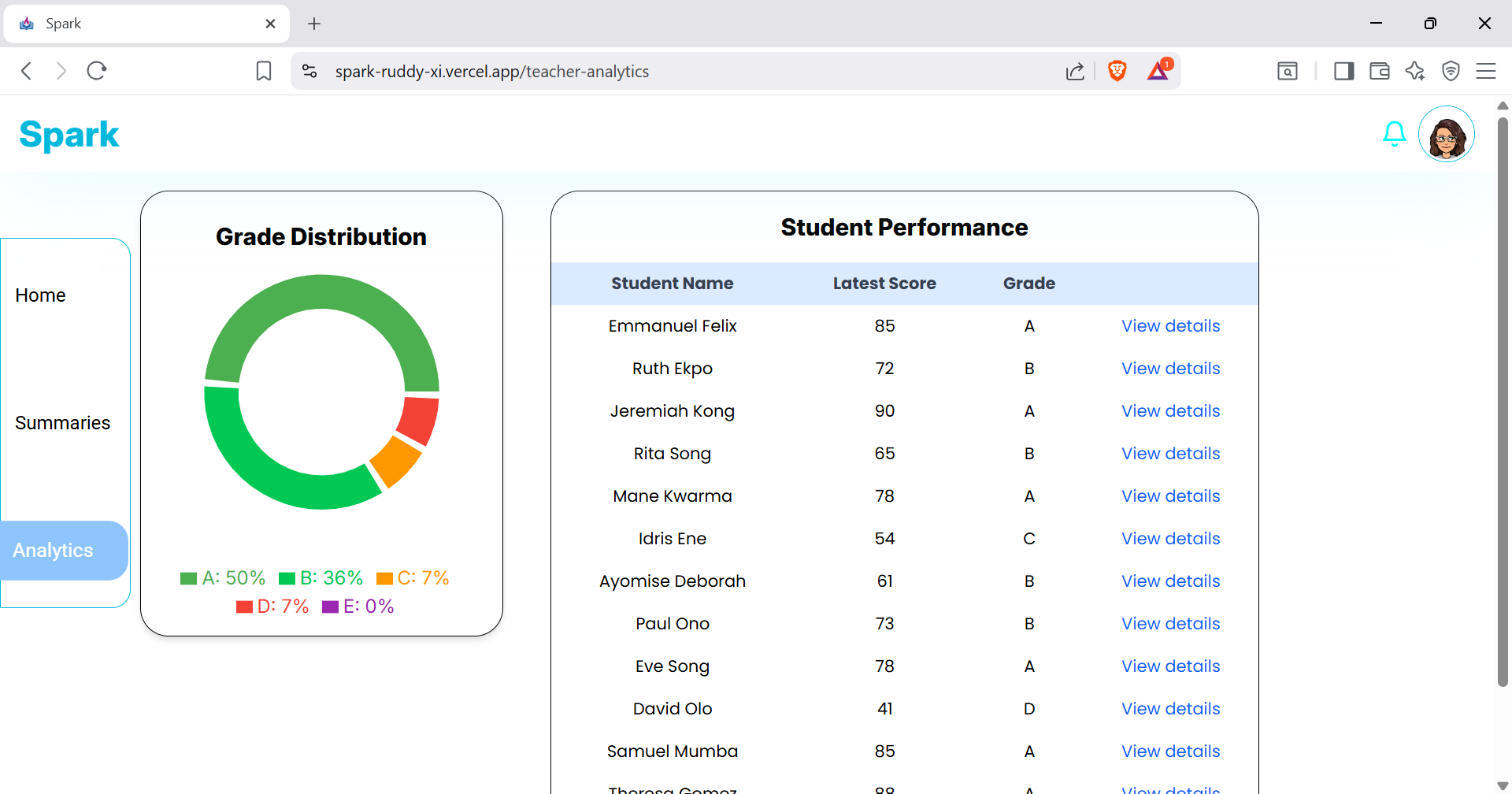
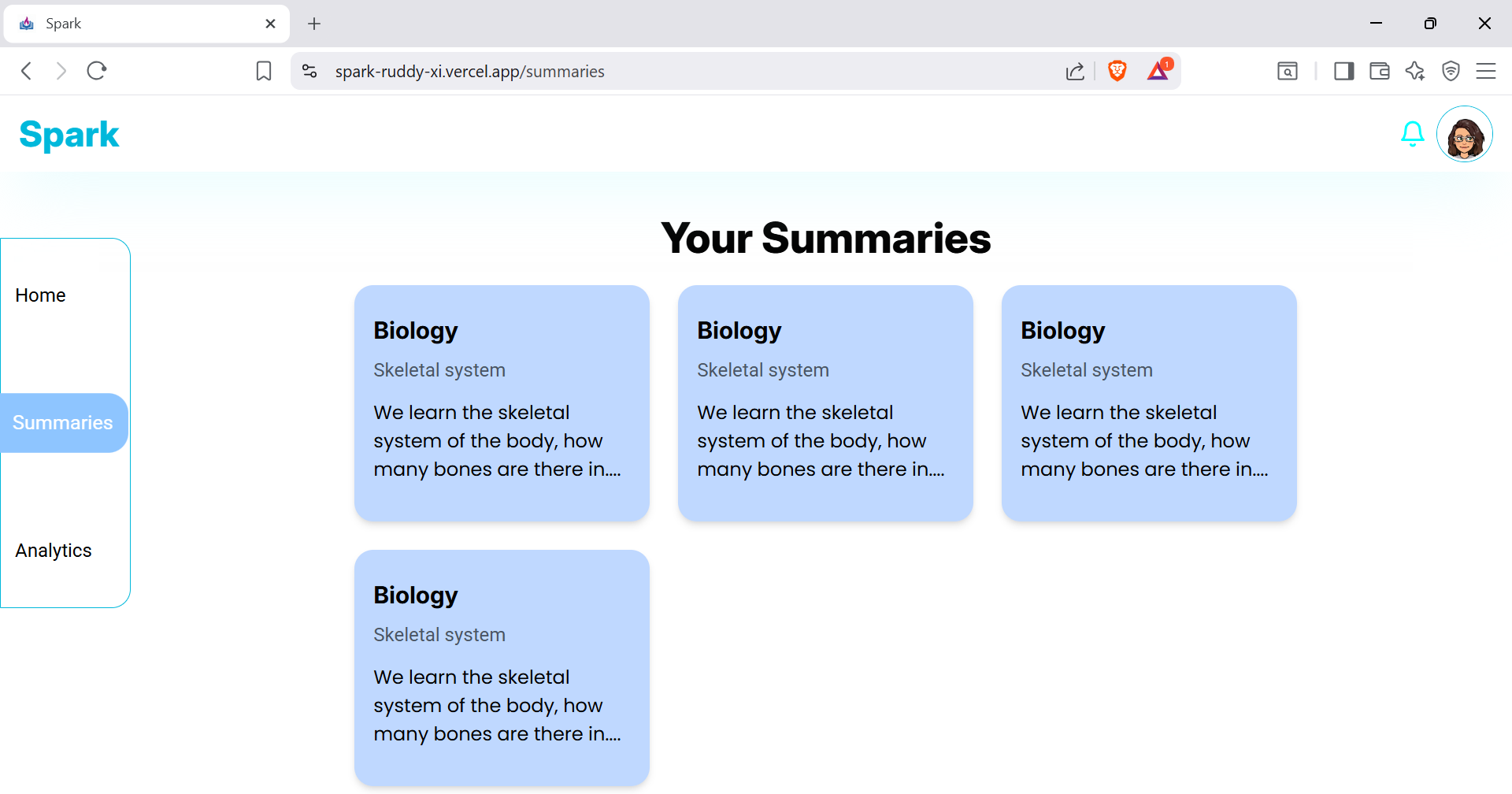
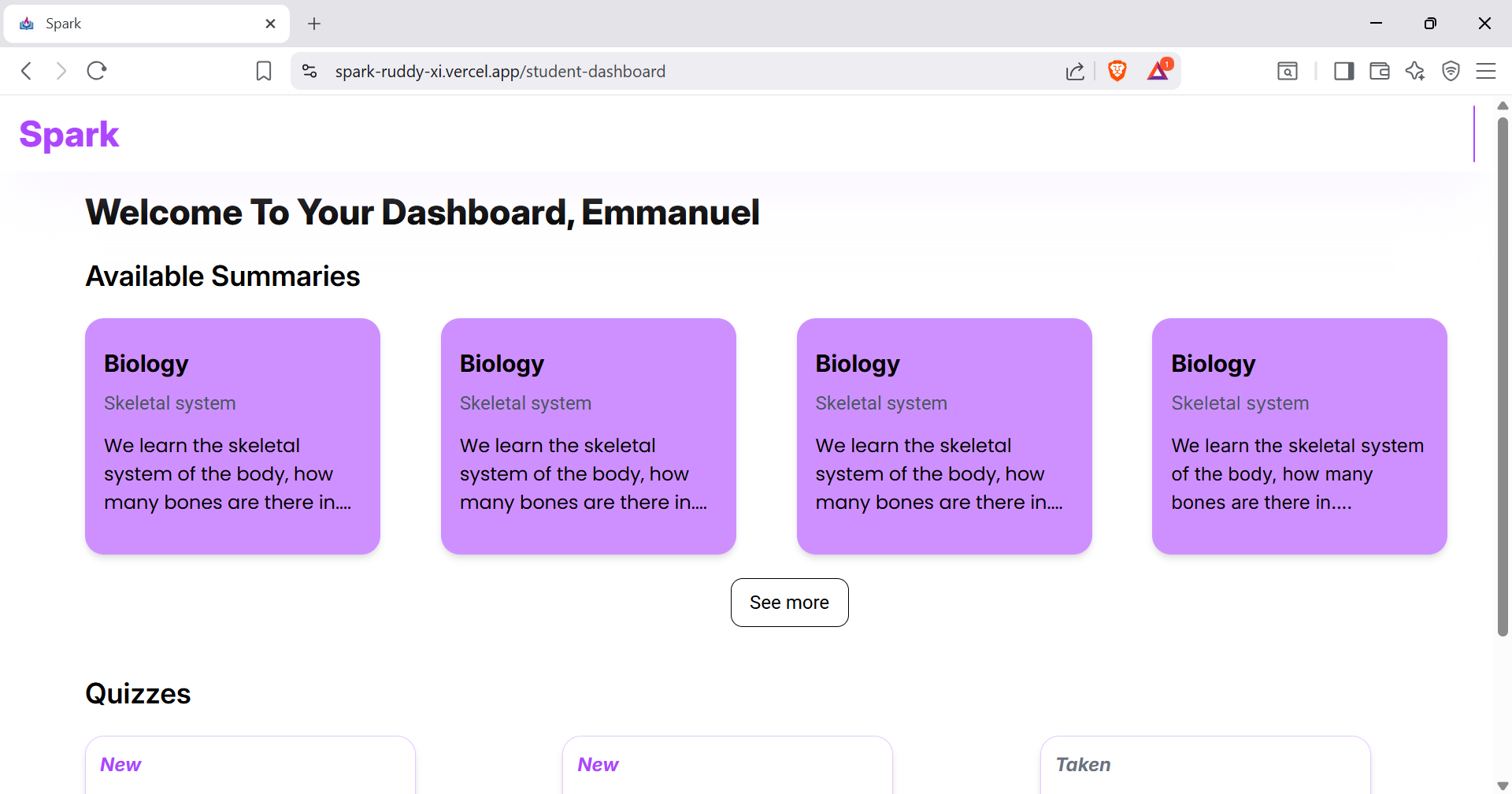
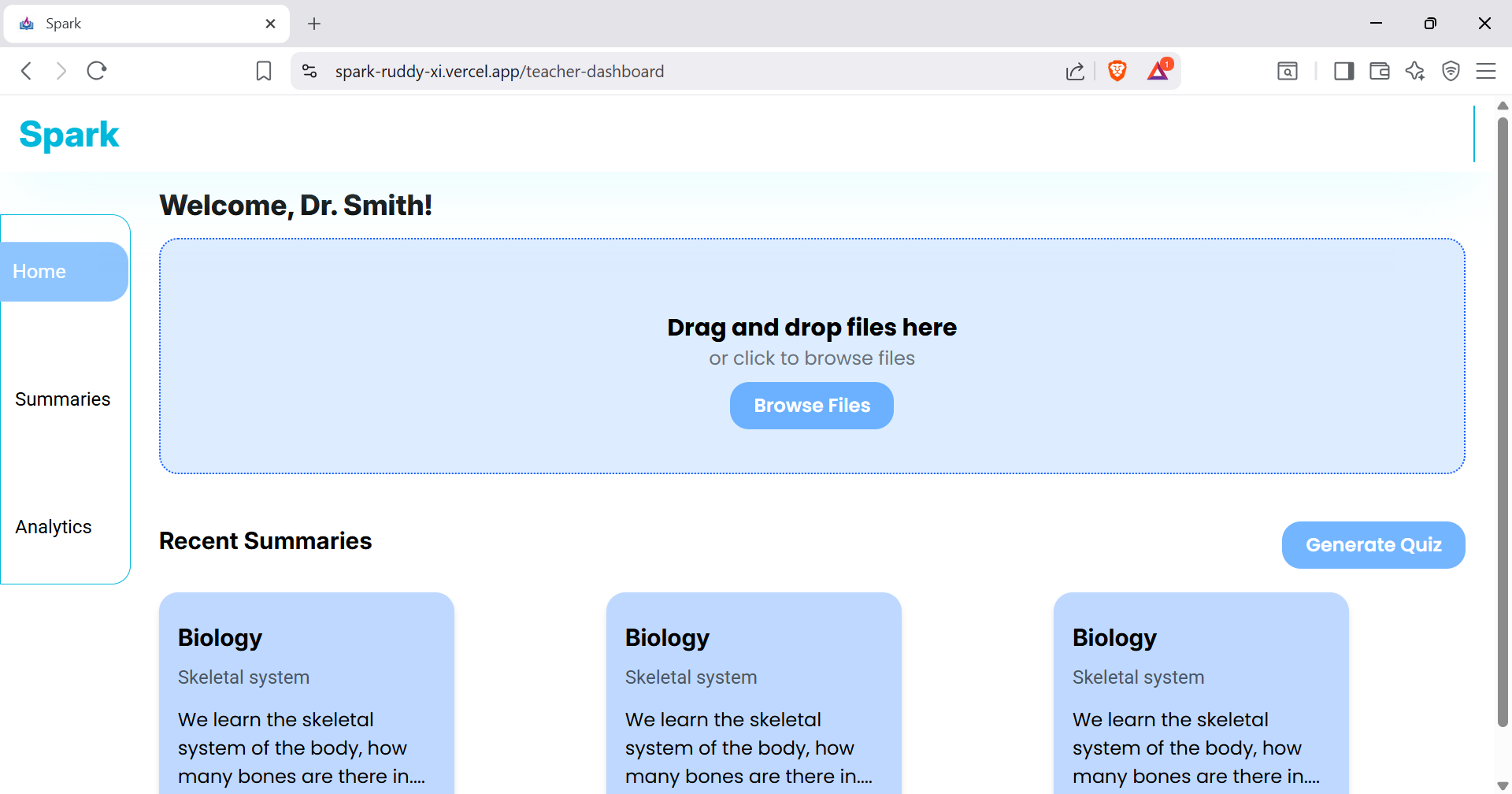
Spark is a platform designed to bridge the gap between students and teachers by reimagining quizzes and feedback. Teachers can set up quizzes effortlessly, and students can take them and receive instant responses.
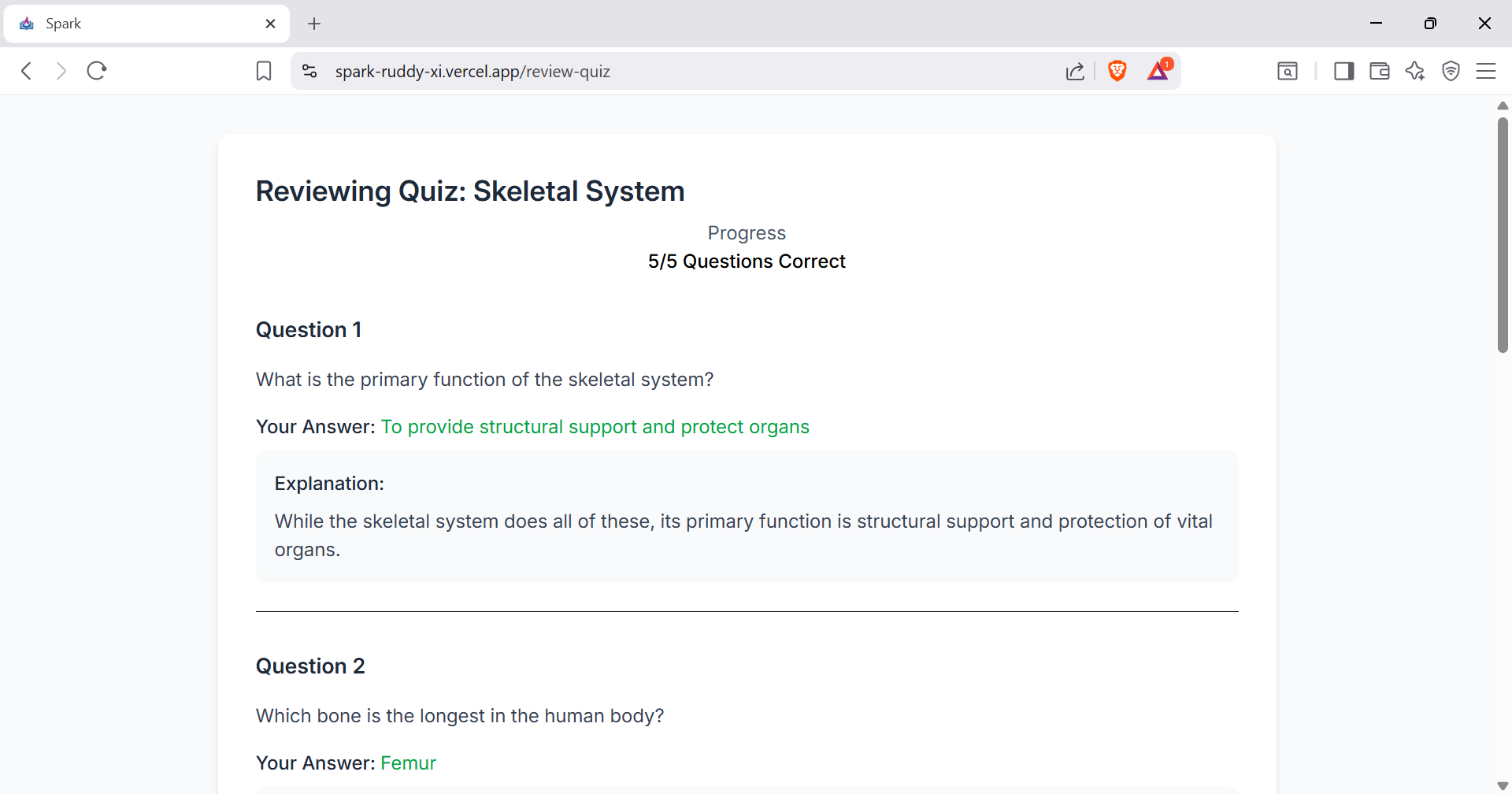
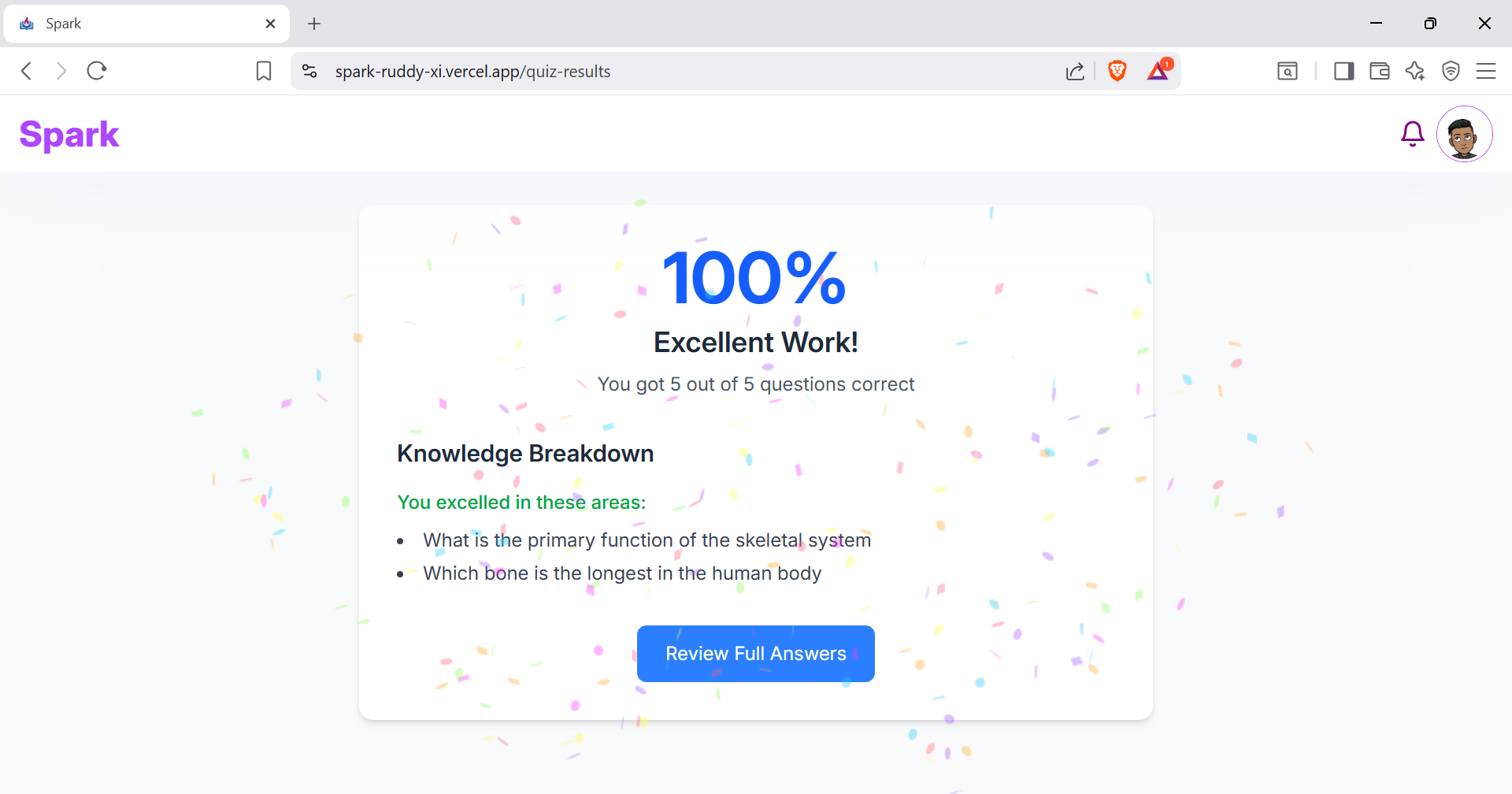
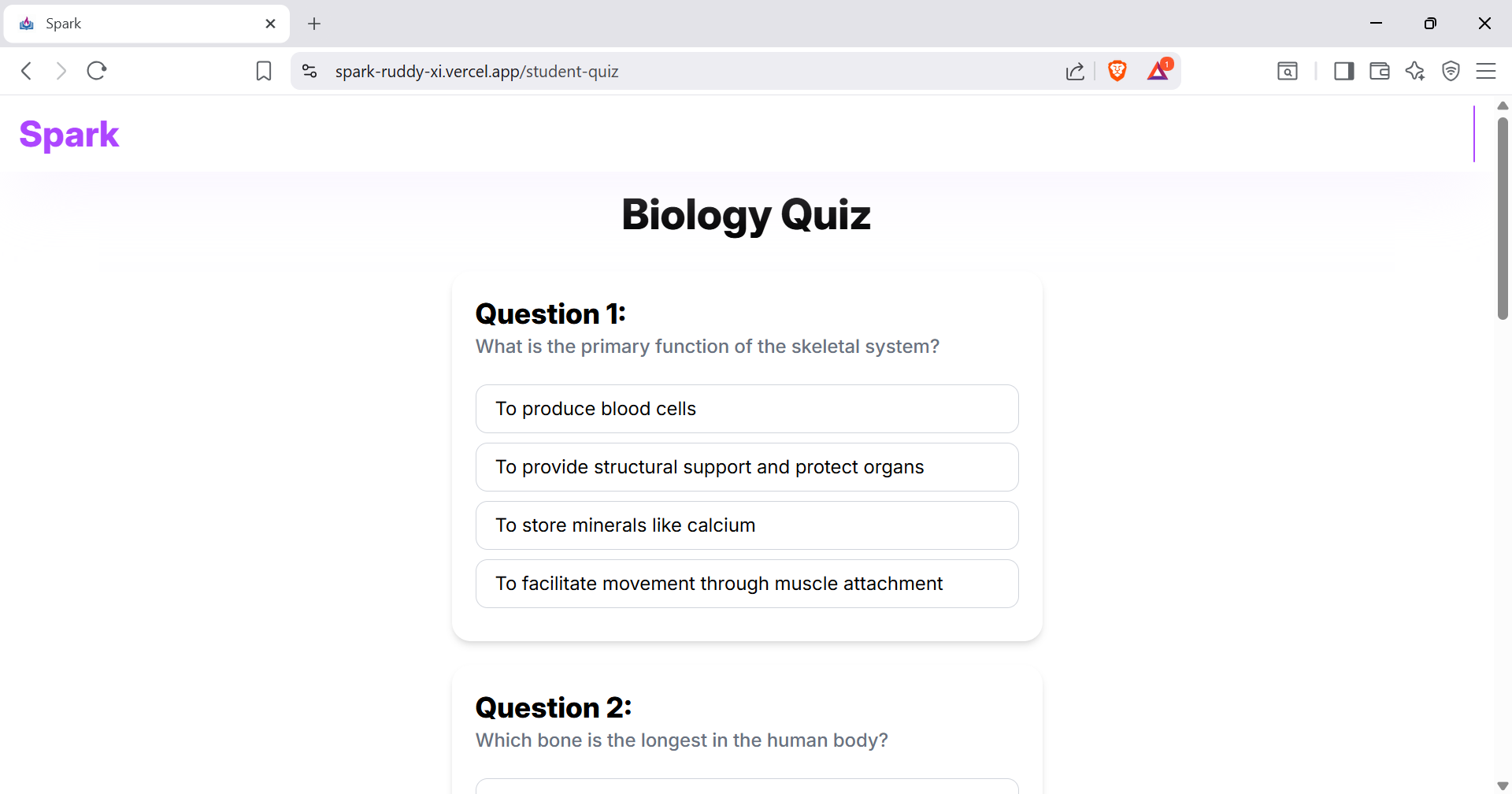
Right now, one part already works: the quiz-taking page. It’s hardcoded for now, but it breathes life into the project—students can answer questions and experience immediate results. That small spark of interactivity proves the vision is real.
The bigger picture is to make Spark a full ecosystem where teachers save time, students get clarity faster, and learning becomes smoother and more engaging.
How we built it
I built Spark using React and Tailwind CSS for the frontend. These are the tools I’m most confident in, and they let me move quickly on the design and structure. I focused on creating clean, responsive layouts that would make Spark intuitive for students and teachers alike.
Even though some parts are still prototypes, the process forced me to think like both a developer and a problem-solver. For example, I hardcoded a quiz to show proof of concept—so there’s at least one working piece that demonstrates Spark in action. That was important to me: I didn’t want Spark to feel like only skeleton screens.
Challenges we ran into
The biggest challenge was definitely scope. I had a grand vision for Spark, but my current skills could only take me so far in the limited hackathon time. There were moments where the project felt like it was slipping beyond my reach—especially backend logic, databases, and APIs.
Another challenge was balancing speed with clarity. I didn’t just want to throw together fancy screens that looked good; I wanted Spark to mean something, even if it was rough around the edges. That tension was tough but also motivating.
Accomplishments that we're proud of
Getting the quiz page to work—even if it’s hardcoded—because it adds life and shows the potential of Spark.
Taking an idea that felt “too big” and still pushing forward, instead of giving up because it wasn’t fully feasible.
Staying true to the vision. Spark might not be perfect yet, but every screen, every line of code points toward solving a real problem I’ve lived through.
What we learned
I learned that sometimes building isn’t about perfection; it’s about direction. Even a partial build can communicate a vision if it’s grounded in real problems and honest effort.
I also learned to stretch myself technically. Spark made me step outside my comfort zone as a frontend developer and think about things like backend integrations, databases, and scalability—even if I couldn’t implement them fully yet. That mindset shift was just as valuable as writing code.
What's next for Spark
Spark isn’t perfect now, but it’s only the beginning. The next steps are:
Turning the hardcoded quiz into a dynamic system where teachers can create, edit, and share quizzes easily.
Building a backend to store results and track student progress.
Expanding into features that streamline teacher workload while keeping students engaged.
At its core, Spark is about creating a smoother classroom experience—one where teachers save time, students get instant clarity, and learning becomes a cycle of momentum instead of delay. The hackathon might be over, but Spark’s journey is just getting started.
Built With
- confetti
- framer-motion
- google-fonts-(inter
- javascript/jsx
- poppins
- react
- react-router
- sweetalert2
- tailwind-css
- vite

Log in or sign up for Devpost to join the conversation.