-
-
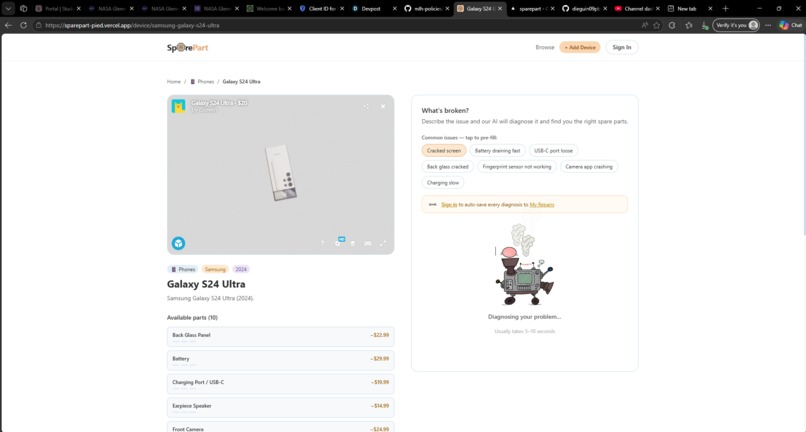
AI Diagnosing Problem
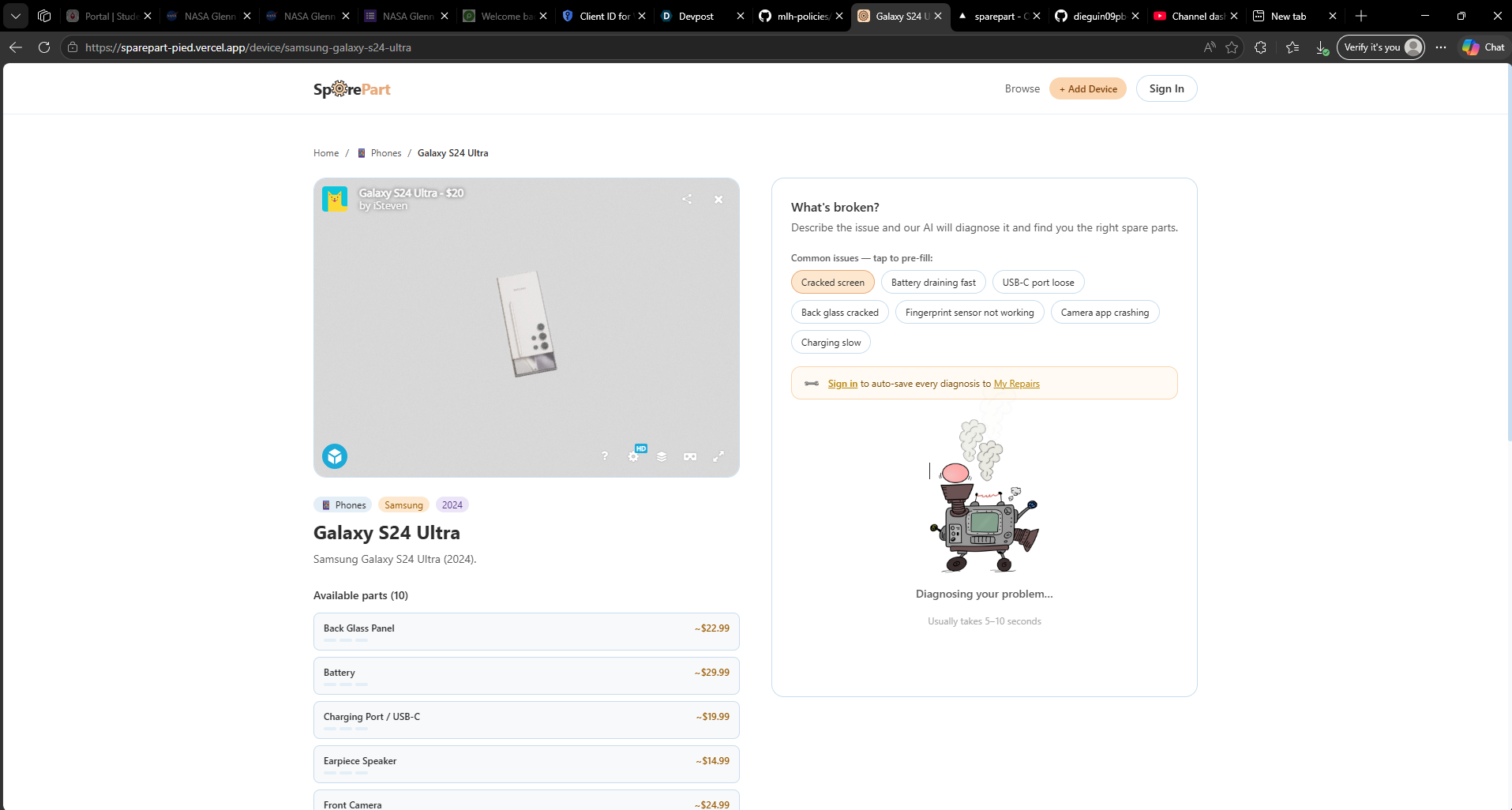
I grew up always trying to fix what I would break rather than buying it again. This was partly because I thought that fixing it required intellect and partly because it saved me and my family money. Xbox controllers with stick drift were the worst as they felt impossible to fix. The frustrating videos and parts not matching what you had were the worst. All of that is what inspired me to make a website specifically for fixing what has been broken.
Building this app came with its own challenges. Claude Code and its ability to do repetitive tasks was especially useful. Sourcing and integrating 3D models for 60+ devices (using SketchFab) was especially annoying. Deployment was the most unexpectedly painful part: Vercel wasn't recognizing the project as Next.js, cloud builds were failing, and Windows symlink restrictions blocked local builds entirely. I ended up going directly into the Vercel API to fix the project configuration.
What I learned is that the gap between something working locally and working for real users is where most of the actual engineering happens. I came away with a much stronger grasp of full-stack architecture, AI prompt design, database constraints, and deployment pipelines. But more than the technical side, I believe in what this does. Every year millions of repairable devices get thrown away because fixing them feels too hard. SparePart makes it feel possible by streamlining the process.
Built With
- claude-(anthropic)
- google-oauth
- next.js
- openai-gpt-4o
- postgresql
- react-three-fiber
- sketchfab
- supabase
- tailwind-css
- typescript
- vercel

Log in or sign up for Devpost to join the conversation.