-
-
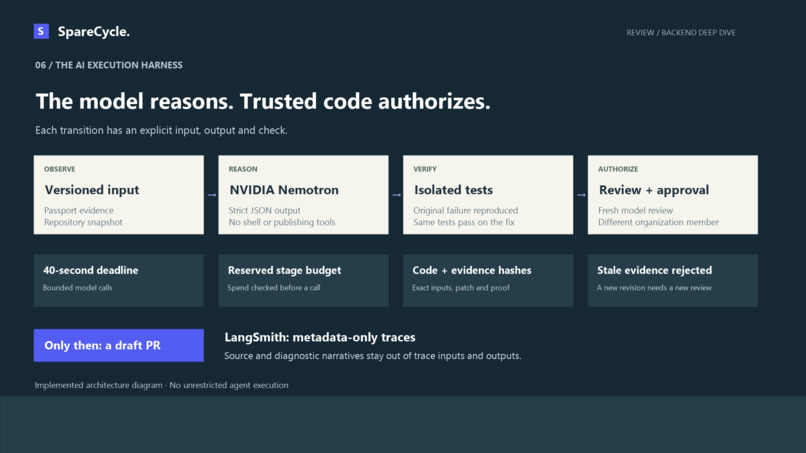
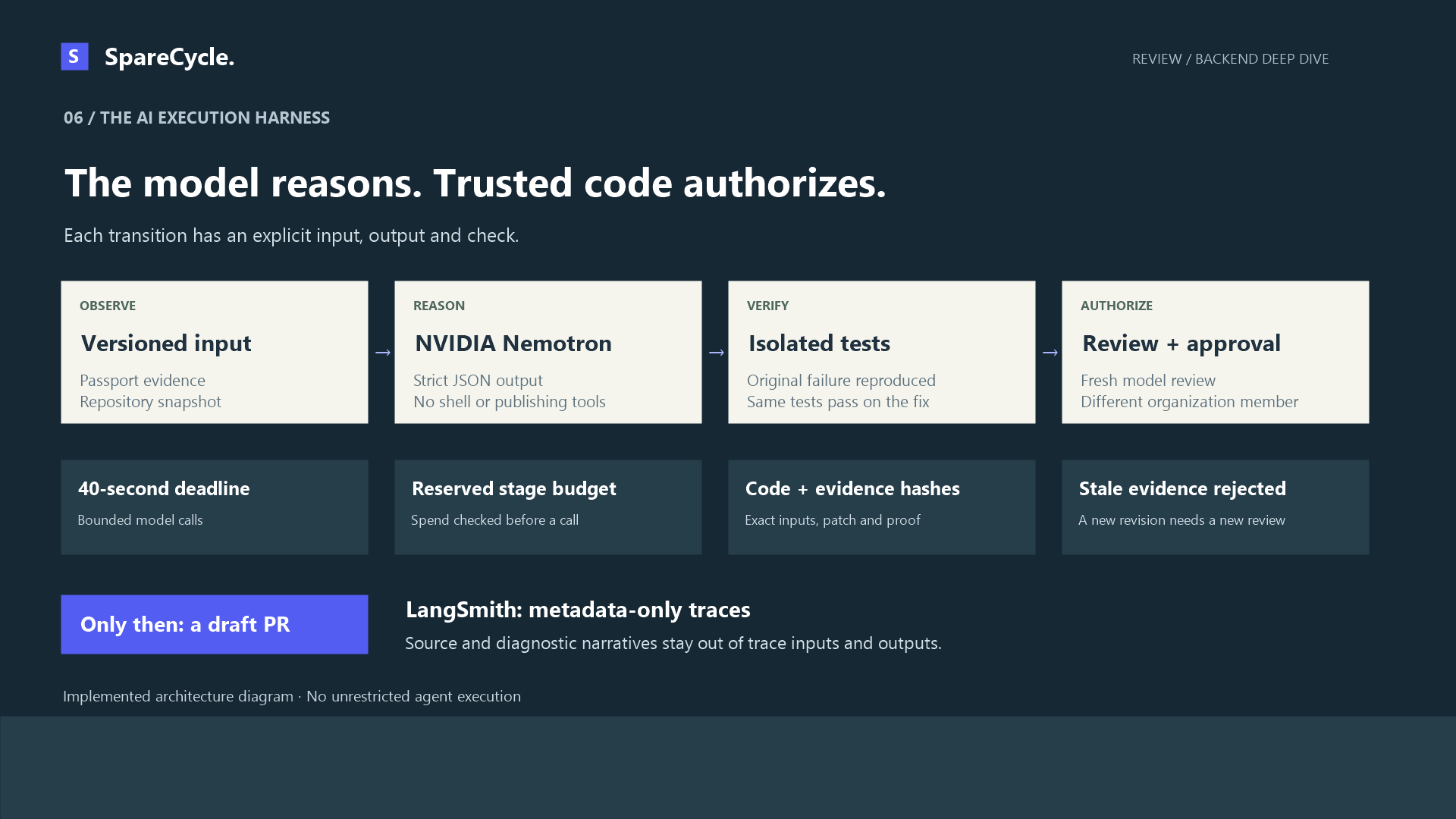
Nebius Nemotron harness: bounded stages, unchanged tests and separate human approval.
-
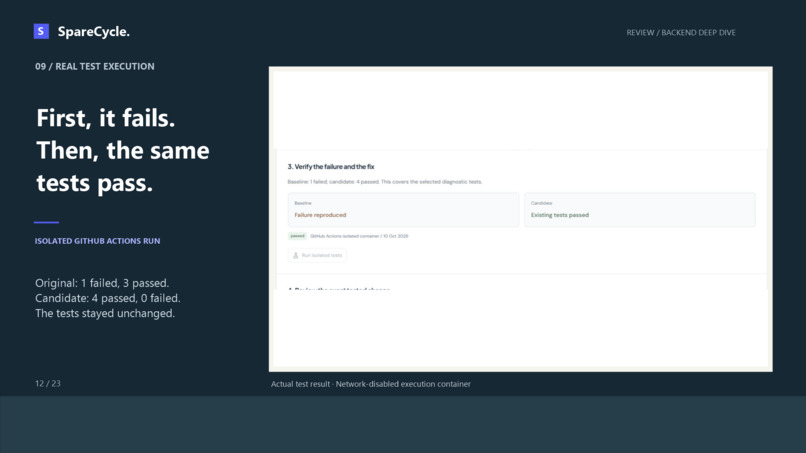
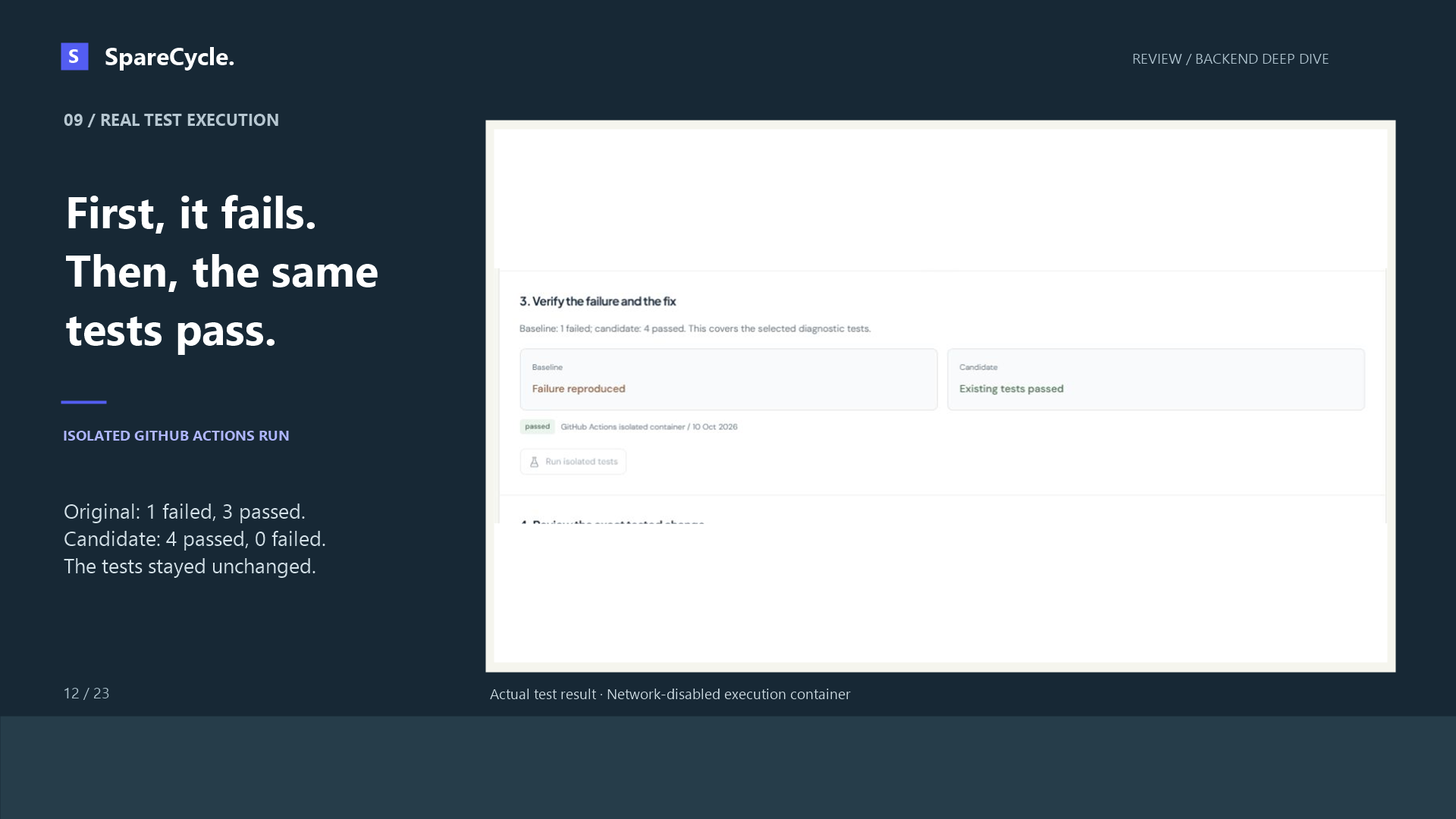
Recorded verification: original 3 pass / 1 fail; candidate 4 pass against the same tests.
-
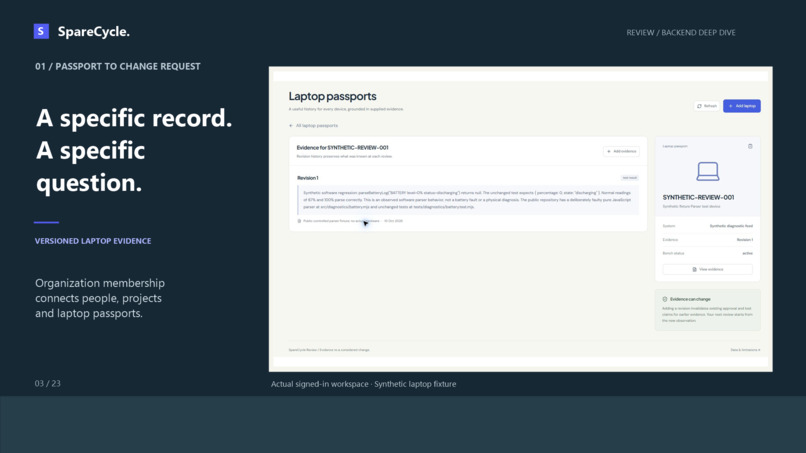
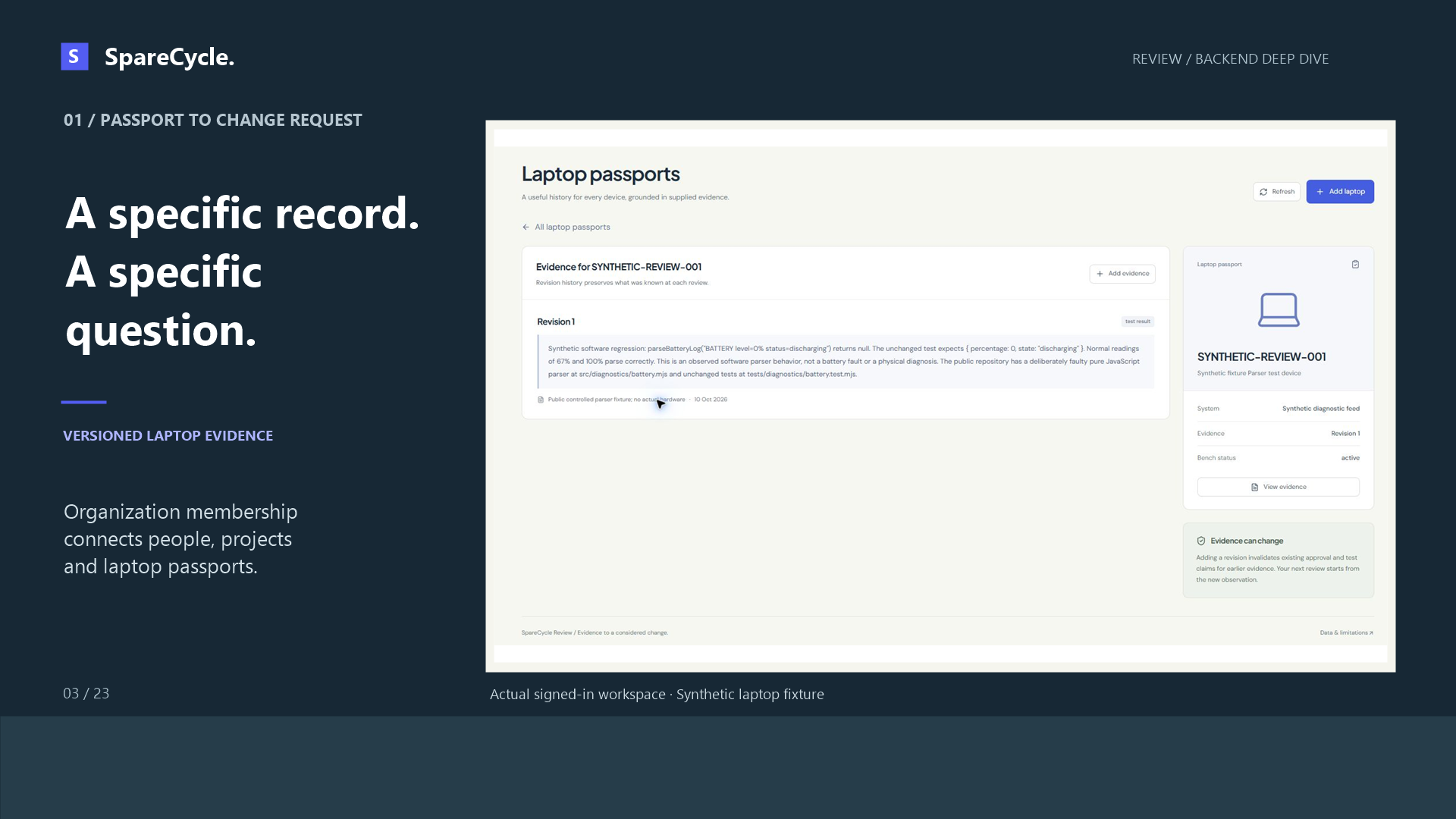
Laptop passport evidence: synthetic records tied to one reproducible diagnostic defect.
-
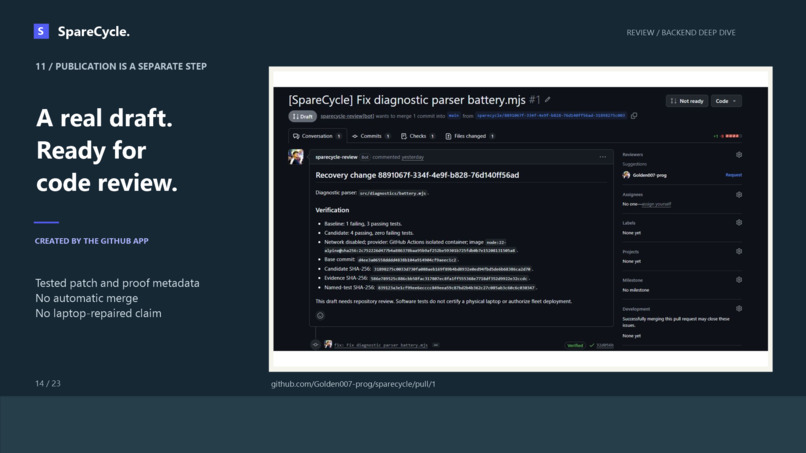
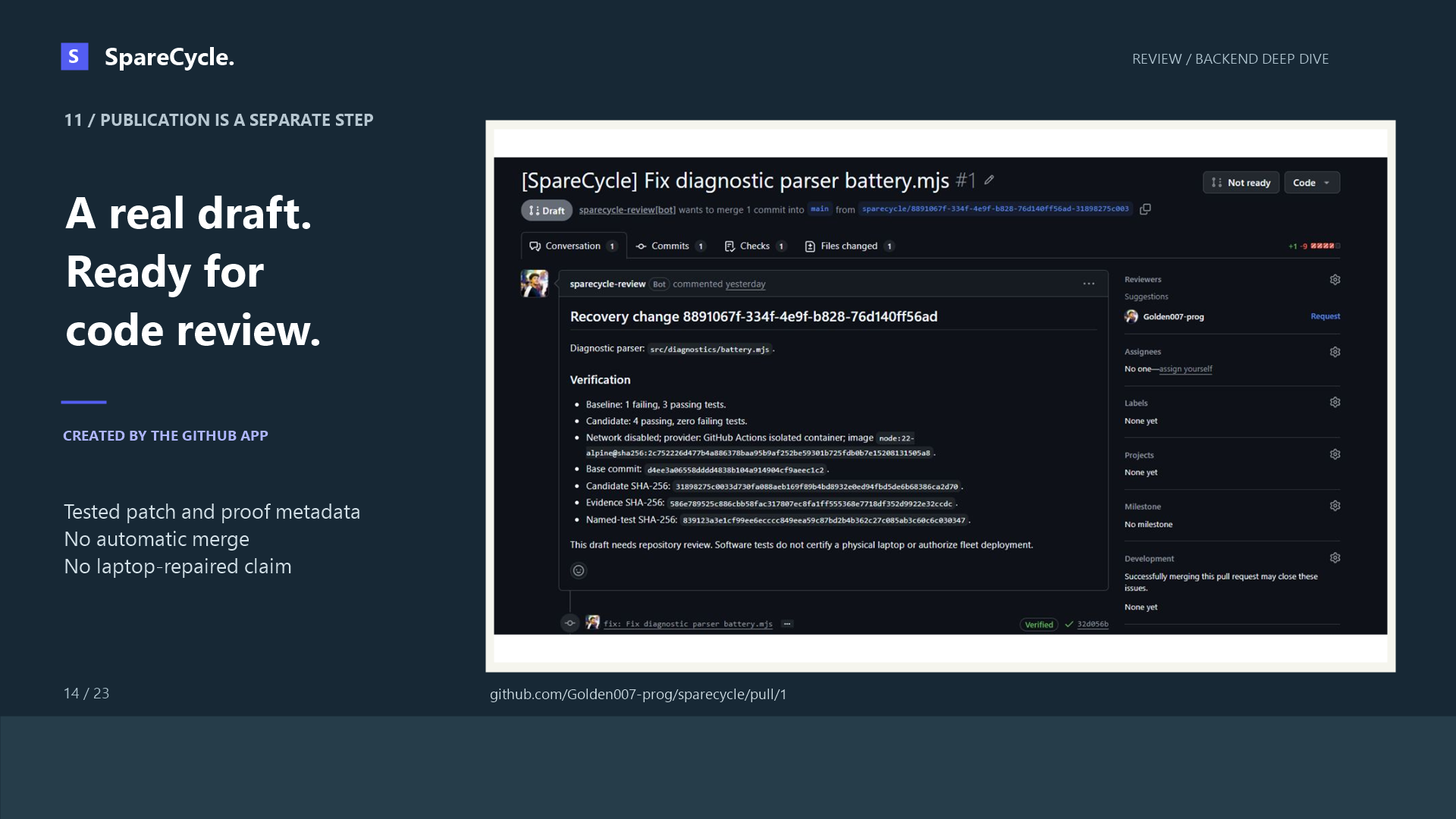
Actual public draft PR: one parser change, test evidence and human review.
Inspiration
A valid laptop reading can become a false alarm when diagnostic software interprets it incorrectly. The person at the repair bench has the observation; the engineer needs a reproducible defect; the reviewer needs evidence that a proposed change actually addresses it.
SpareCycle Review connects that handoff. Its first customer hypothesis is a refurbishment or IT asset recovery team that maintains its own diagnostic software. The aim is an inspectable path from a laptop's evidence to an accountable software change, while keeping physical repair decisions with qualified technicians.
What it does
A team creates an organization, registers a laptop passport and records sourced evidence. It connects a selected GitHub repository and one supported diagnostic parser with its existing tests.
Nebius-hosted NVIDIA Nemotron investigates the case. Hardware findings stop for technician review; missing evidence stops for clarification. A supported software finding can proceed through patch generation, isolated testing and a fresh model review. A different organization member must approve the exact tested candidate before the GitHub App creates a draft pull request.
The demonstrated defect is concrete: a parser treats a valid zero-percent battery reading as missing data. The original code passes three tests and fails one; the candidate passes all four unchanged tests. The real public draft PR changes only the parser. A separate private-repository pilot completed the same chain using encrypted dispatch to a pinned verifier in that private repository.
The records and reviewer accounts are synthetic. The inference calls, tests and draft PRs are real. The workflow does not merge code or certify that a physical laptop was repaired.
The Research desk makes a runtime Tavily Search call for public manufacturer references, filters sources for the exact model, then uses Nebius-hosted Nemotron Lightning to produce a cited brief with uncertainty. A real production request returned five matching T480 sources, including the official hardware maintenance manual. Research does not send passport evidence or private code to Tavily. The Pilot desk tracks browser-local assignments, actual effort, blocks and manual release checks. Developer review adds queue filters, evidence/test-reference checks and redacted handoffs.
How it was built
React and TypeScript provide the organization, passport and review interface. Vercel hosts the application. Supabase Auth and PostgreSQL row-level security scope evidence, jobs and approvals to organization members.
Every AI call runs through Nebius Token Factory. Lightning investigated the public demonstration; Nano investigated the private pilot. Super generated the patches and reviewed them in fresh context. Ultra completed a separate investigation check; that check is not evidence of better patch quality.
The harness requires structured output, bounds time and spend, and rejects changes outside a restricted pure JavaScript diagnostic profile. Code, evidence, tests and approval are bound to exact versions. GitHub Actions runs original and candidate code in isolated, network-disabled containers against unchanged tests. Trusted server code controls publication; the model has no publishing tool. LangSmith records operational metadata with model input/output capture disabled.
Challenges
A plausible patch is not a verified fix. Early integration work exposed malformed generated source, hash differences caused by JSON key ordering, and review that needed the original evidence to assess the reported defect. Executable-code checks, canonical hashing and evidence-grounded review addressed those problems.
Private execution also needed explicit organization/repository binding, pinned verifier identity and a dedicated transport key. Interrupted external calls are treated as uncertain rather than silently repeated.
Accomplishments
- A complete, deployed evidence-to-draft workflow with real Nebius inference and inspectable public test/PR evidence.
- A real private synthetic pilot with unchanged tests, separate-account approval and one parser file changed.
- Rejected outsider access and self-approval in the recorded integration checks.
- A release with 249 automated tests and a passing production build, plus desktop and narrow-screen checks. These are scoped validation results, not enterprise certification.
- A real deployed Tavily-to-Nebius research request, with model-matched sources and explicit limits; a designed 14-page project dossier and updated narrated demonstrations.
What was learned
Useful agent autonomy depends on knowing when to stop. New evidence must invalidate stale approval. Passing tests only establish covered behavior. A fresh model review helps inspection but can share the writer's mistakes; unchanged tests and human accountability still matter.
The product's value must ultimately be measured in accepted fixes and better technician handoffs, not model counts or generated lines of code.
What's next
Run supervised design-partner pilots alongside reliability work. Measure accepted fixes, regressions, technician effort and total cost, including failed attempts. Complete customer email delivery, membership lifecycle and guided private setup; then add durable job recovery, enforced company identity and evaluated execution profiles.
The separate SpareCycle Workshop plans repairs from declared parts, time and budget. Its inventory and new Pilot work/QA declarations are browser-local today; shared inventory, trustworthy physical observations and cross-team synchronization are future work. The 200-capability balanced expansion plan is planned delivery scope, not 200 shipped features. Google login works, but managed company SSO is not enforced. Private setup still requires an operator-approved verifier and key. No customer revenue, field savings or physical recovery improvement is claimed. The investment roadmap defines measurable gates for the next phase.
Try the project
Start with the live app. The Research desk runs a real Tavily search and Nebius synthesis. The Workshop lets you change the synthetic batch and recalculate a plan; Pilot operations records local work and release declarations. Review offers a labeled sample preview; authenticated execution requires organization access.
Read the 14-page project dossier or watch the supporting deep dive. The primary competition video remains under three minutes.
Built With
- docker
- github-actions
- github-apps
- langsmith
- nebius
- node.js
- nvidia-nemotron
- postgresql
- react
- supabase
- tavily
- typescript
- vercel
- vite
- zod

Log in or sign up for Devpost to join the conversation.