-
-
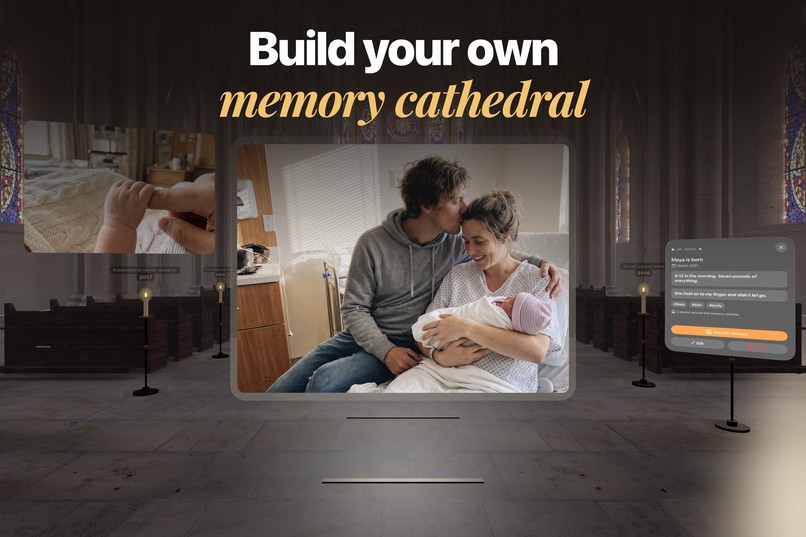
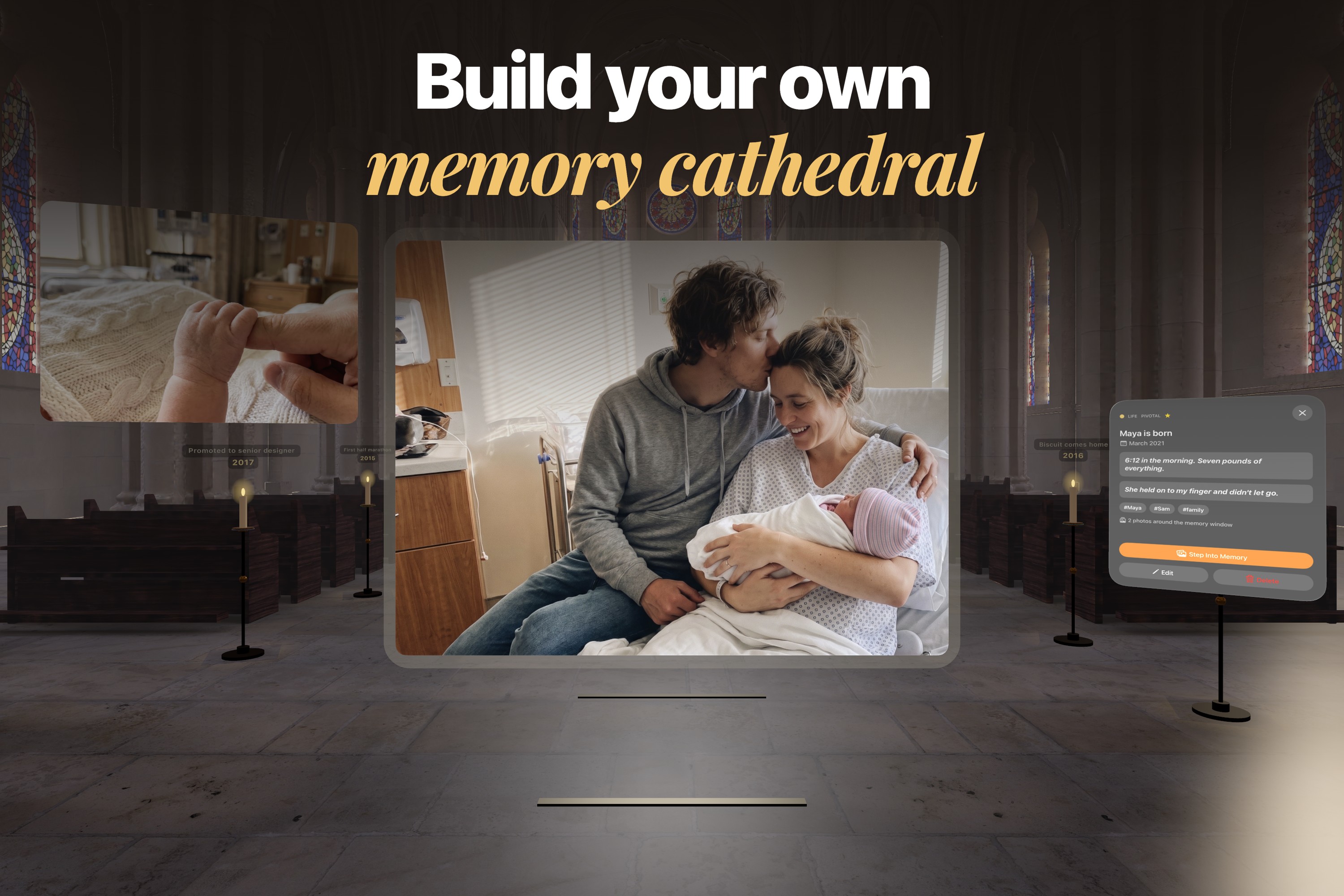
Build your own memory cathedral from the photos you already have.
-
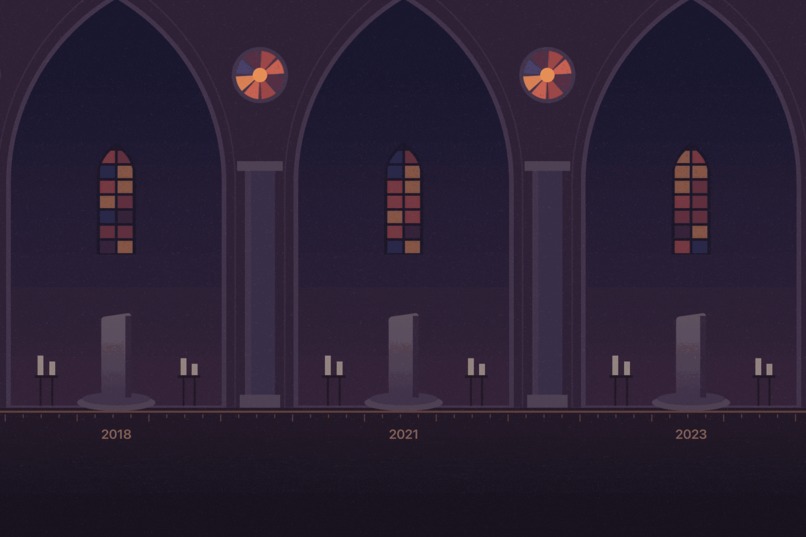 GIF
GIF
Your life along a candlelit nave, one memory per candle, the years that mattered standing tallest.
-
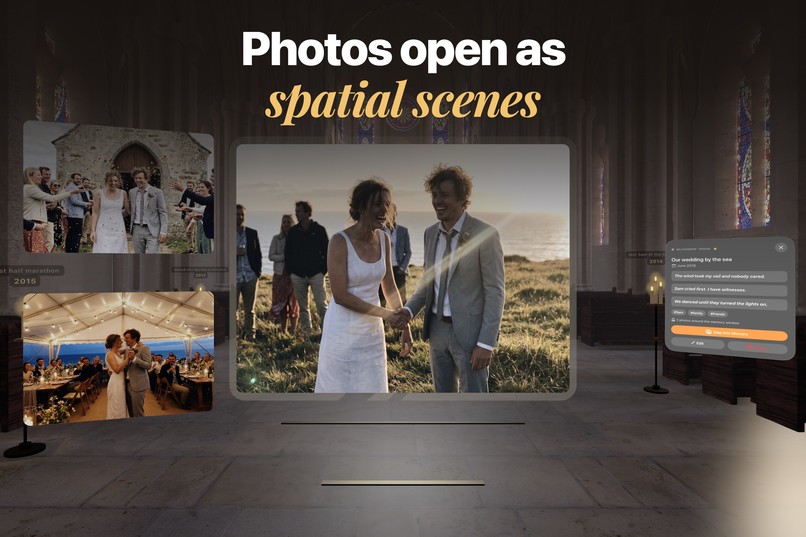
Photos open as spatial scenes you can step into.
-
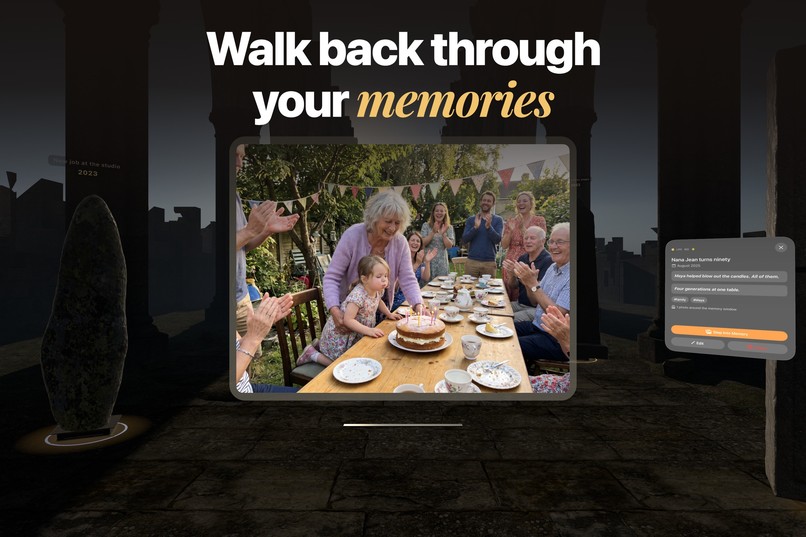
Walk back through your memories, here in a moonlit abbey ruin.
-
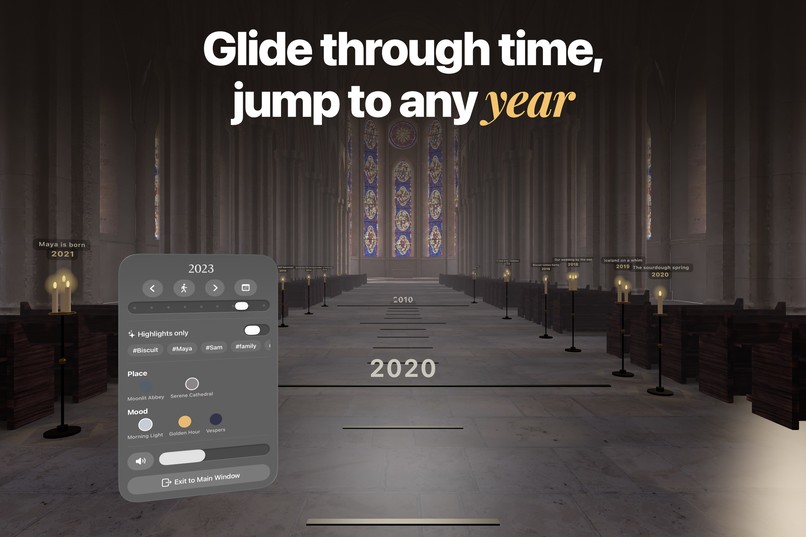
Glide through time and jump to any year.
-

Found in your Photos and Calendar on the headset. Nothing is added until you approve it.
-
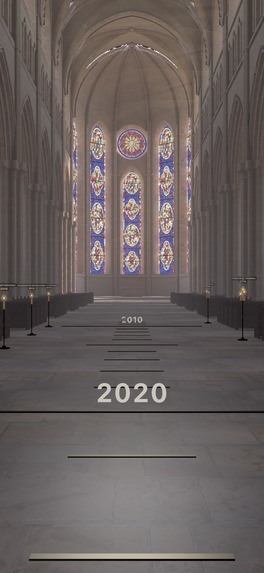
Frameless screenshot: the cathedral nave, with every memory standing at its date.
-
App icon, 1024 x 1024.
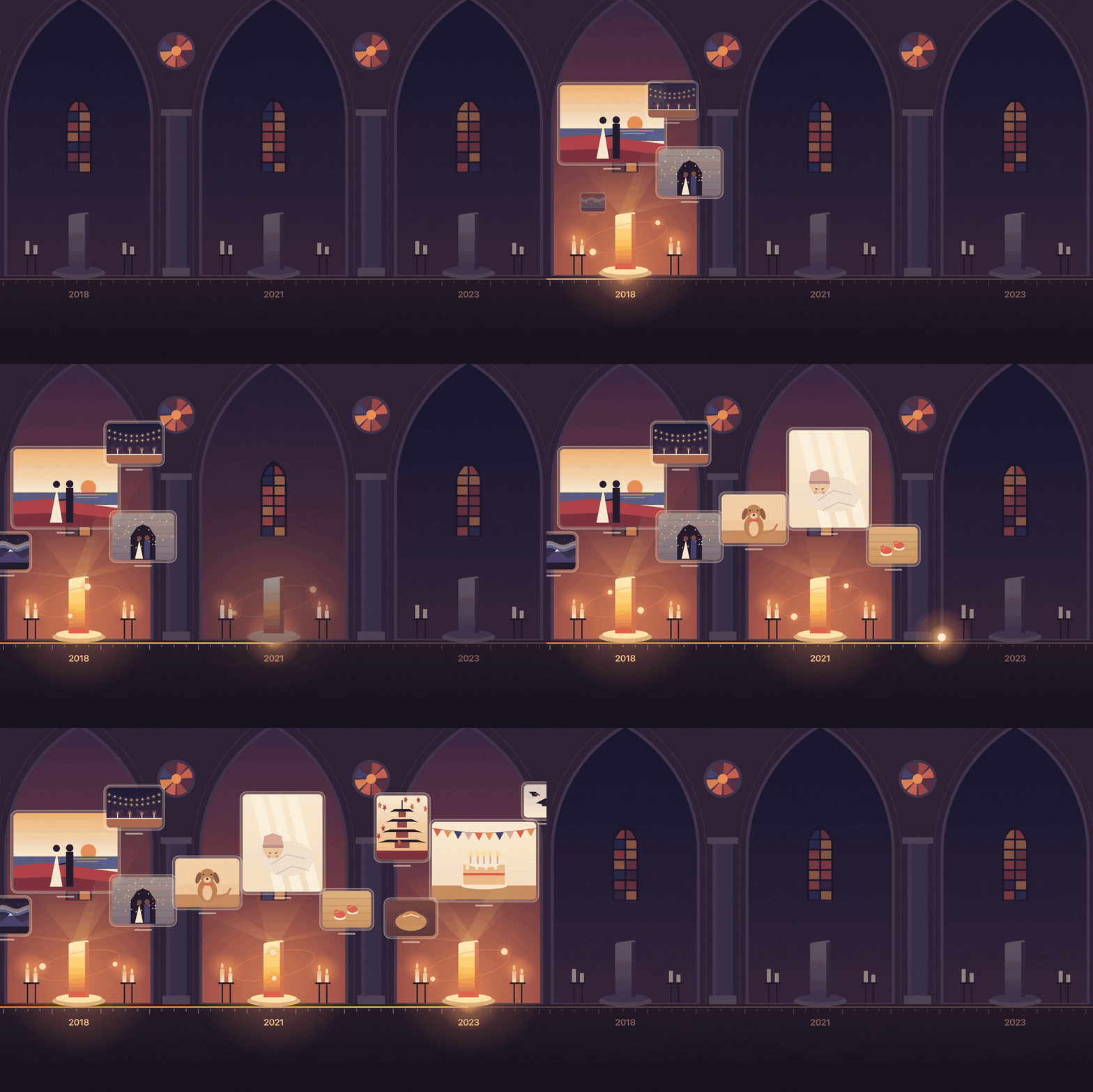
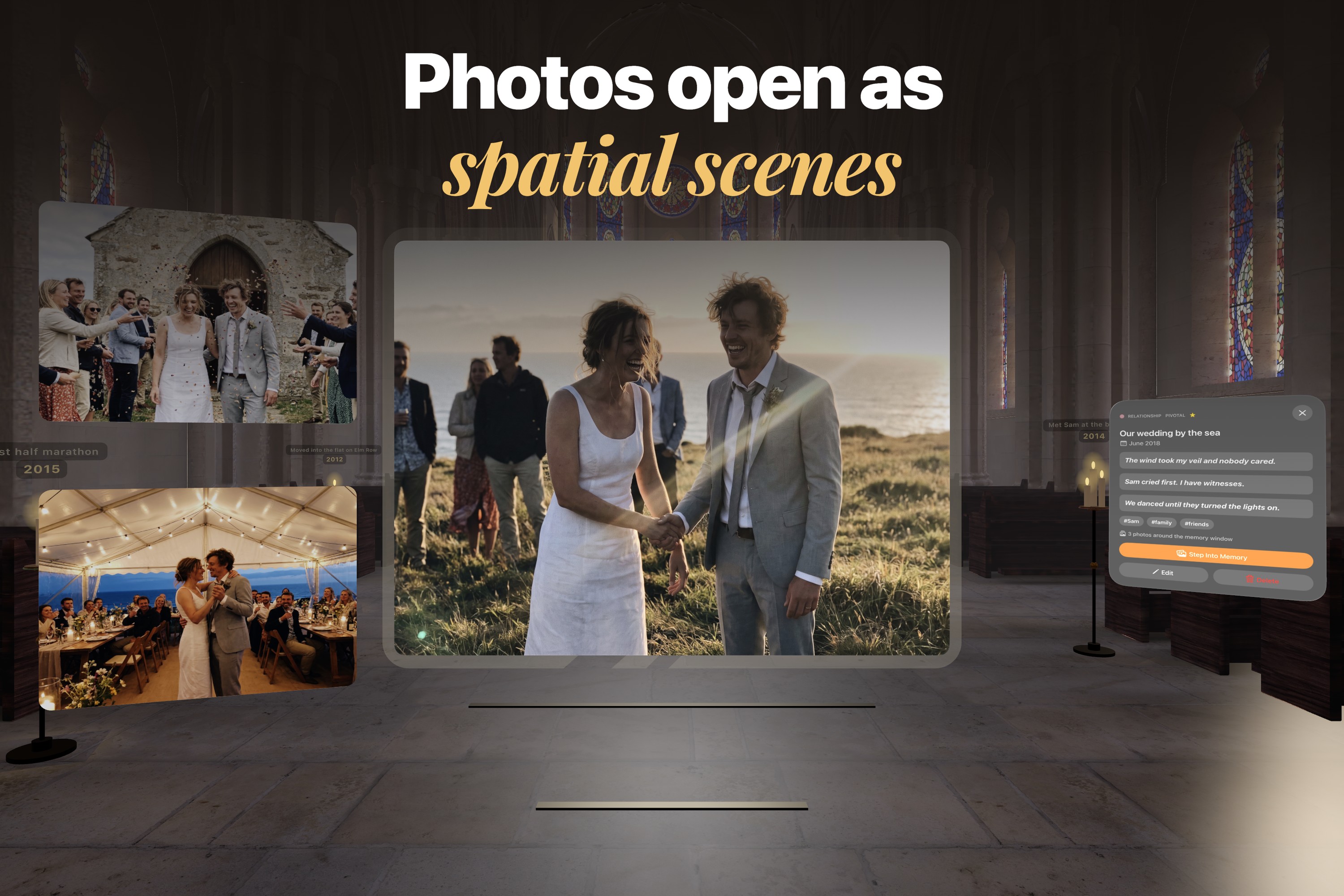
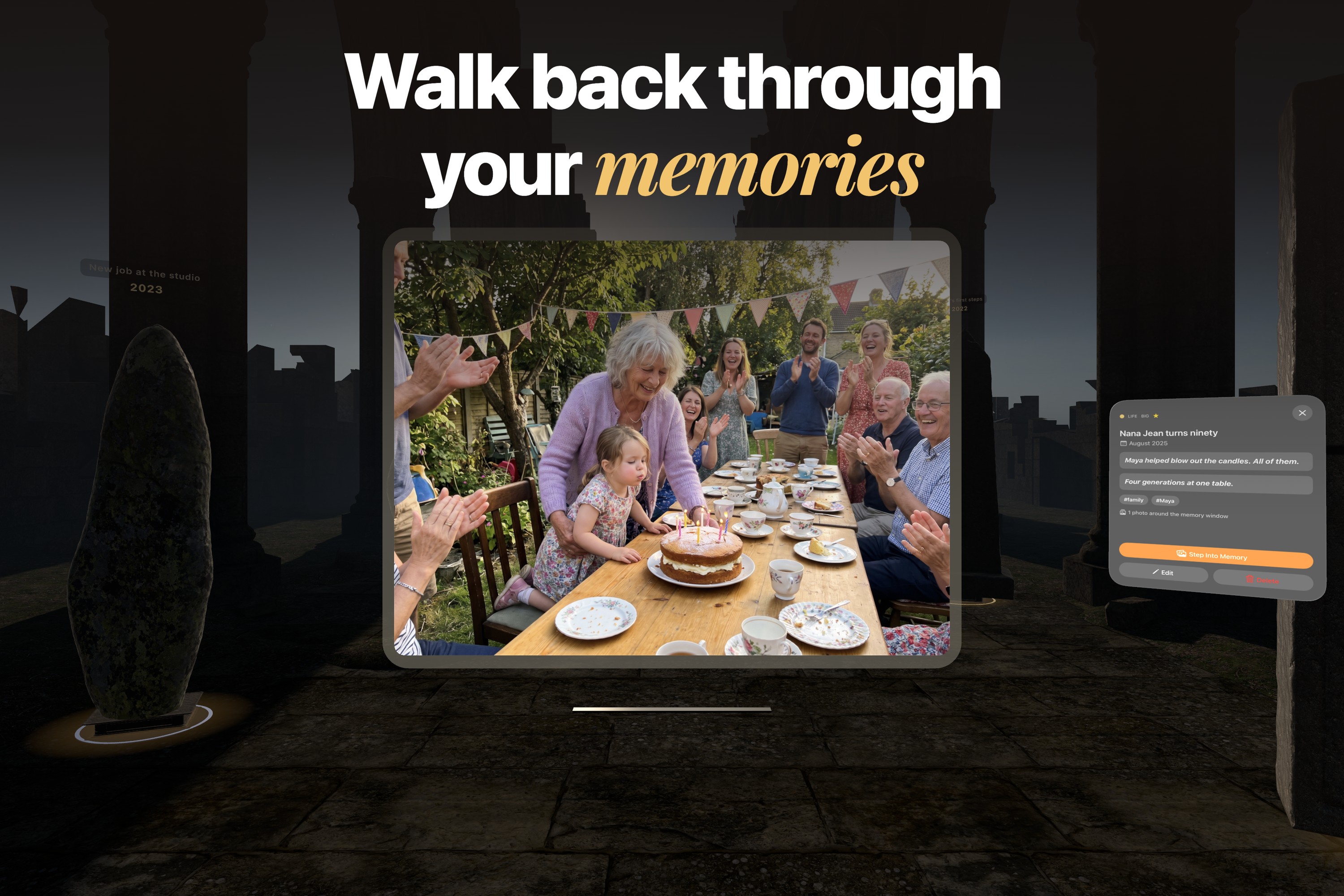
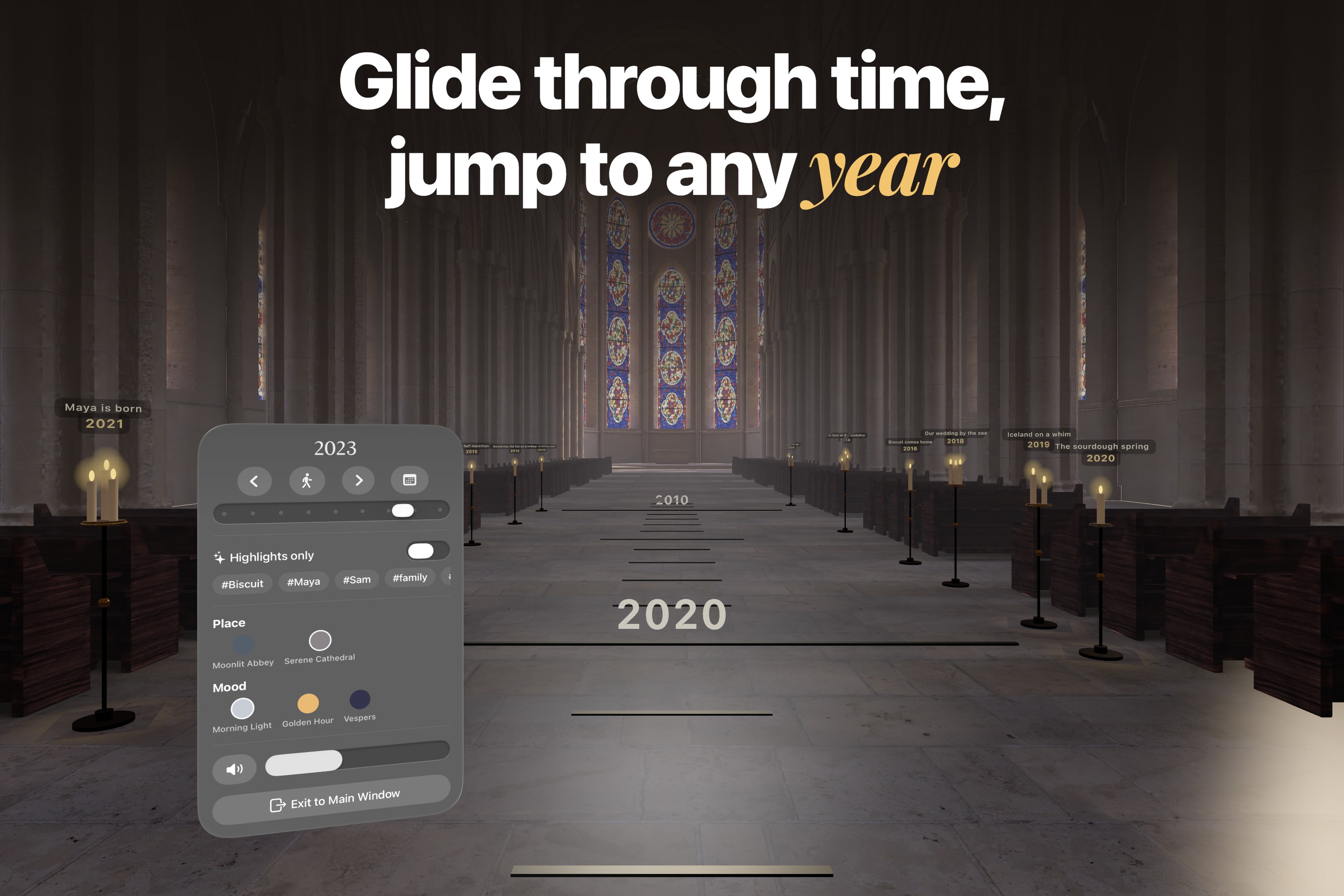

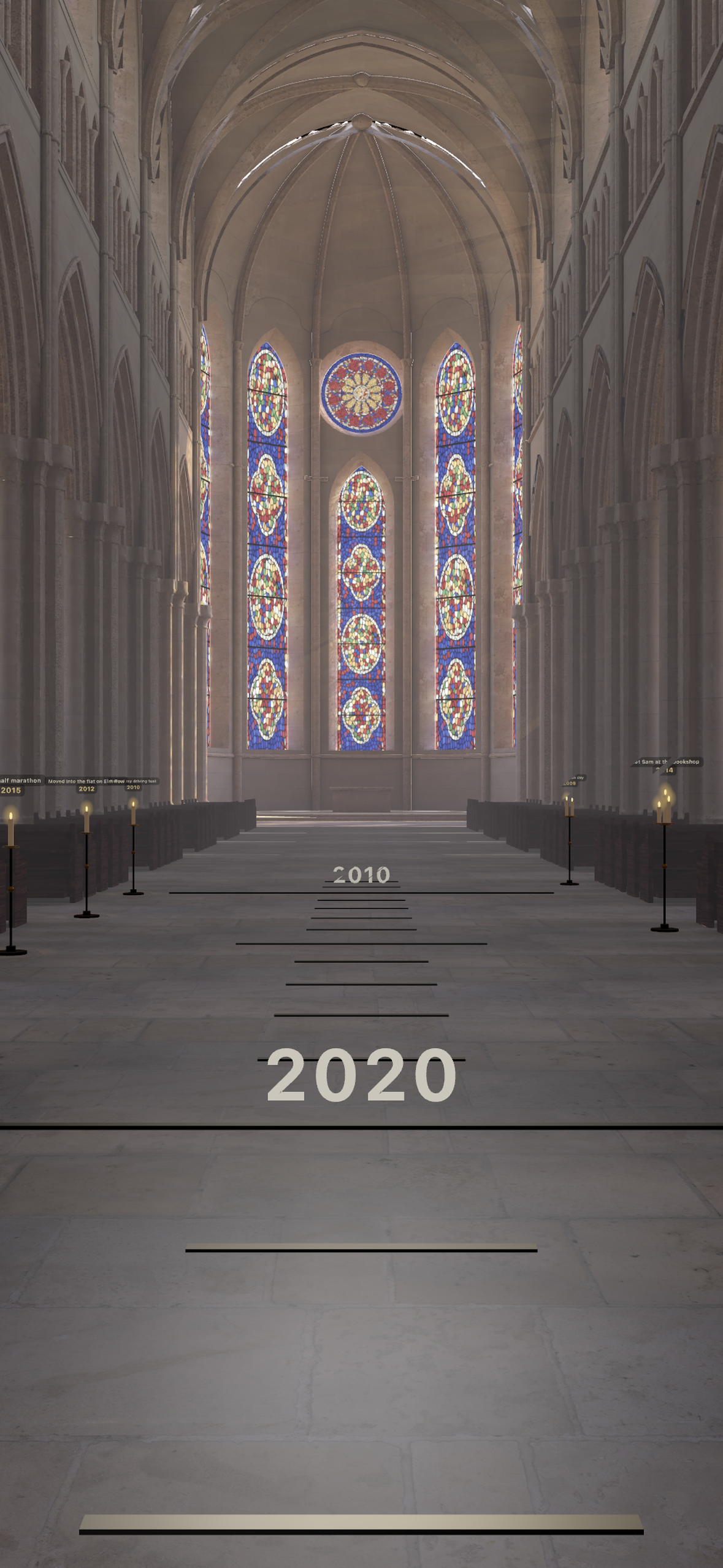
Span turns your camera roll into a cathedral you can walk through. Put on Vision Pro and your life stands along the nave, one memory per candle, in date order. Pinch your wedding and the photo becomes a 3D scene you can step into.
The problem. We take more photos than any generation before us and look at almost none of them. A phone shows them as an endless grid, plus the odd "memory" an algorithm picked because it contains a beach. The day your daughter was born gets the same square as a photo of a parking space.
The job Span does. When you want to look back (a birthday, an anniversary, the end of a year, missing someone), Span gives you your life in order, makes the moments that mattered stand out, and puts them in a place calm enough to stay a while.
Who it's for. Anyone with years of photos they never revisit, families marking milestones, and Vision Pro owners looking for something personal to do with it.
Inspiration
I have more than twenty thousand photos on my phone. They are the biggest record of my life I own, and I use them the way everyone does: scroll, pinch, give up somewhere in 2019.
Vision Pro promised to fix this and delivered a bigger letterbox: photos floating in a window, beautiful and inert.
Halfway through the design I realised I was rebuilding the memory palace, a technique people have used since antiquity: put what you want to remember inside a building, then walk through the building to get it back. It always needed you to imagine the building and invent the images. Your camera roll already has the images, and a headset can build the building.
What it does
- Finds your memories for you. Span looks through Photos and Calendar on the headset and suggests trips, weddings, graduations and other milestones. Nothing is added until you approve it, and you can add your own.
- Puts your life in order. Walk forward and the years pass. Recent years are close; old ones fade into the haze ahead. Bigger memories get taller stones or more candles, so a glance down the nave shows the shape of your life.
- Opens a memory as a place. Pinch one and its photo rises to eye height with the rest of that memory around it. Videos play. "Step Into Memory" turns the photo into a 3D scene.
- Two places, six moods. A gothic cathedral with stained glass, from morning light to evening vespers, or a roofless abbey ruin under the moon.
- Stays private. No account and no cloud. Your photos never leave the headset, and Span never changes anything in Photos or Calendar.
- Works for everyone. VoiceOver can read every memory in the 3D space, and Reduce Motion stops all movement.
How I built it
I built Span alone. It runs entirely on Apple Vision Pro. The cathedral and the abbey were modelled and lit ahead of time, the way a film set is, and the ambient sound and bell are generated live. SwiftUI and RealityKit for the app, RevenueCat for the subscription. The app is available in eight languages.
Challenges I ran into
- What shape is a life? A gallery with photos on the walls felt like a screensaver within thirty seconds. A globe with pins turned my life into an airline route map and erased the years I stayed in one city. A plain timeline was the camera roll again, in 3D. What worked was a corridor of objects with weight, sized by how much each memory mattered.
- Comfort. Moving someone through a long space in full immersion can make them feel sick. In Span the world glides past you rather than you through it, long glides dim the edges of your view, and Reduce Motion removes movement completely.
- Trust. A memory app reads the most private data on your device. So everything happens on the headset, every suggested memory waits for your approval, and nothing is ever written back.
Accomplishments that I'm proud of
- A photo library you can walk through, where your wedding is a place instead of a thumbnail.
- No account, no server, no upload.
What I learned
Photos only started to feel like memories once something with weight was holding them. That was the lesson of the failed gallery prototype, and every decision after it follows from it.
What's next
More places and moods, and sharing a corridor with the people in it, so a family can walk through a grandparent's life together.

Log in or sign up for Devpost to join the conversation.