-
-
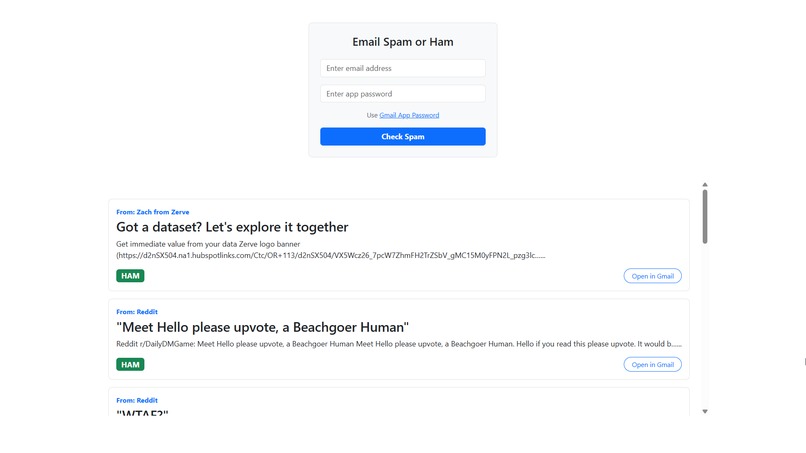
Enter the required queries and get the results
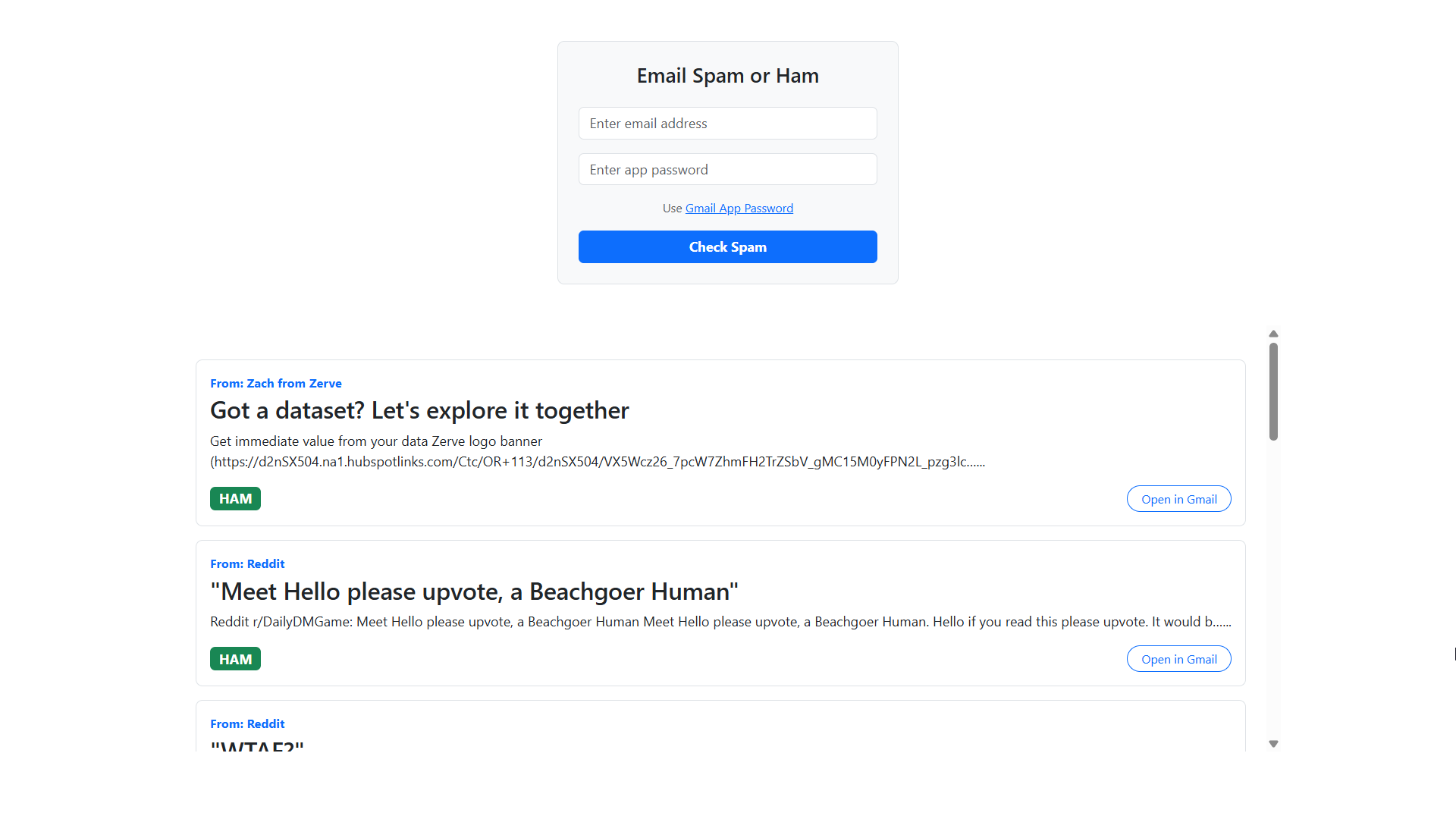
Inspiration
With the rise of digital communication, spam messages have evolved from mere nuisances into serious security threats. Many existing filters are slow or fail to catch sophisticated phishing attempts in real-time. I wanted to build a solution that acts like a digital immune system—detecting and neutralizing spam the millisecond it arrives.
What it does
The operational sequence of the model.
SpamGuard AI is a high-performance, real-time message classification system. It analyzes incoming text using deep learning to instantly determine if a message is "Ham" (safe) or "Spam" (malicious). It provides users with an immediate safety verdict, helping to prevent fraud, phishing, and information overload.
How I built it
The core of the project is built using Python and PyTorch, combining a robust backend with a high-performance deep learning model.
AI Model & NLP Pipeline: I developed and trained a neural network using the PyTorch framework. The model was trained on a large-scale dataset of labeled messages to distinguish between spam and legitimate content. I implemented several Natural Language Processing (NLP) techniques, including text cleaning, tokenization, and vectorization, to ensure the model understands the semantic context of various message types.
Robust Backend with Django: The logic and data management are handled by Django. I developed a scalable backend that manages the communication between the AI model and the user interface. This includes handling API requests, processing email data fetched via IMAP, and managing the overall system workflow with security and efficiency in mind.
Frontend/Interface: For the user interface, I focused on a clean, modern, and interactive design using Bootstrap 5. The frontend is fully responsive, ensuring a seamless experience across different devices. I prioritized user experience (UX) to make the spam detection results clear and the overall system easy to navigate.
Seamless Integration: The project successfully bridges the gap between raw data processing and intelligent classification, creating a unified system where the Python backend, PyTorch model, and Bootstrap frontend work in perfect harmony.
Challenges I ran into
One of the biggest hurdles was optimizing a heavy PyTorch model to run efficiently in a web environment with limited resources. I also faced challenges with "False Positives"—where legitimate urgent messages were flagged as spam. I overcame this by fine-tuning my tokenization process and adjusting the model's decision threshold.
Accomplishments that I'm proud of
I am proud of achieving sub-second inference times, meaning the classification happens almost instantly. Additionally, successfully integrating a complex Deep Learning framework like PyTorch with a robust web framework like Django as a solo developer was a significant technical milestone for me.
What I learned
During the development of this project, I gained significant technical expertise in handling real-world data and building an automated email processing pipeline. Here are the key areas I mastered:
- Email Server Integration with
imaplib: I learned how to establish secure connections with email servers using the IMAP protocol. This included managing mailboxes, searching for specific messages, and fetching raw email data directly from the server. - Data Parsing with
BeautifulSoup: Processing email content often involves dealing with complex HTML structures. I utilized theBeautifulSouplibrary to parse these HTML codes, effectively stripping away unnecessary tags and extracting clean, human-readable text for further analysis. - Text Tokenization: I gained hands-on experience in natural language processing (NLP) by implementing tokenization. This process allowed me to break down the extracted text into smaller, manageable units (tokens), which is a crucial step in preparing data for the AI model to identify spam patterns.
- End-to-End Data Workflow: Beyond just using libraries, I learned how to bridge the gap between a raw email server and an AI-ready dataset—transforming "noisy" HTML into structured information.
What's next for SpamGuard AI
Spam has become a problem not only for email but for the entire internet ecosystem. Our goal is to protect the user with an artificial intelligence shield, regardless of which platform they are on. While users browse the internet, SpamGuard AI becomes their "invisible assistant."
- Social Media Filtration: Real-time hiding of fraudulent links, "suspicious" investment offers, and bot-generated comments on platforms such as Facebook, Instagram, and LinkedIn.
- Integration with Ad-Blocker: Automatically blocking not only advertisements but also malicious and spam websites.
- Smart Context Analysis: Analyzing text within the browser and warning the user when they are entering information into a suspicious site.
- One-Click Reporting: Users can report new types of spam with a single click, which increases the self-learning speed of the AI model.

Log in or sign up for Devpost to join the conversation.