-
-
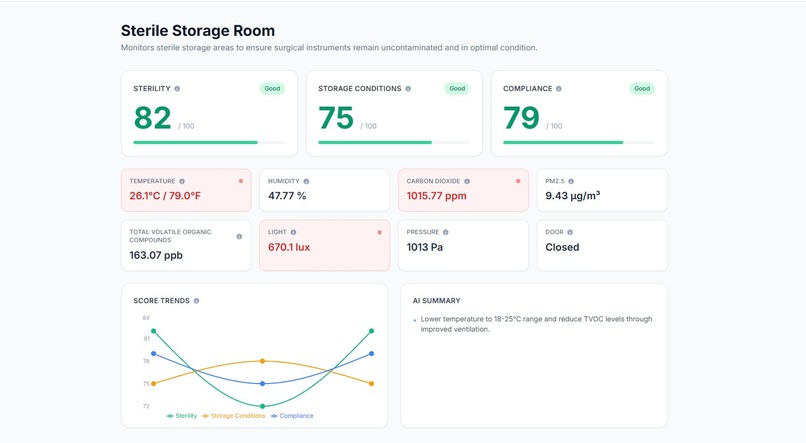
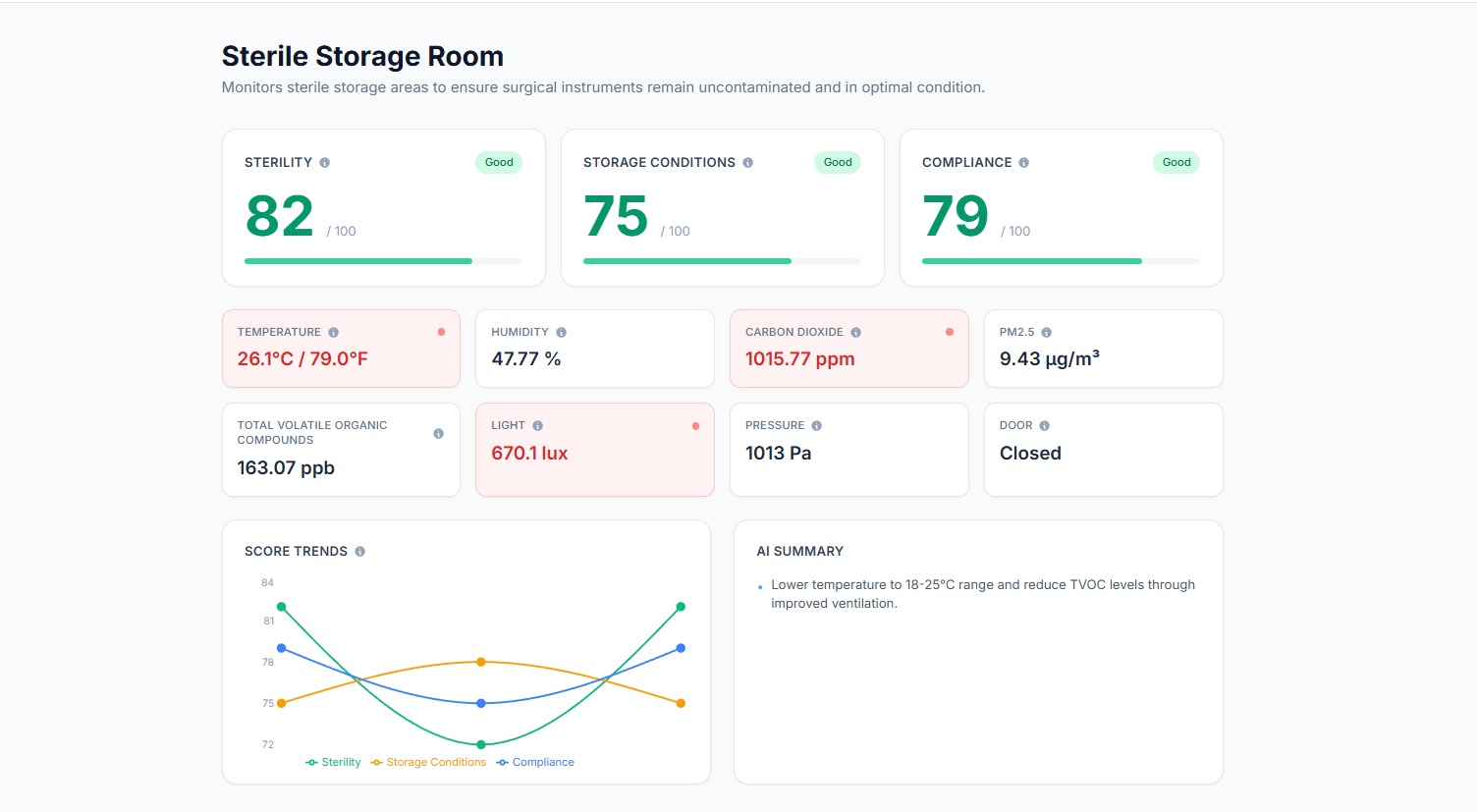
Dashboard with AI recommendation and analysis tools
-
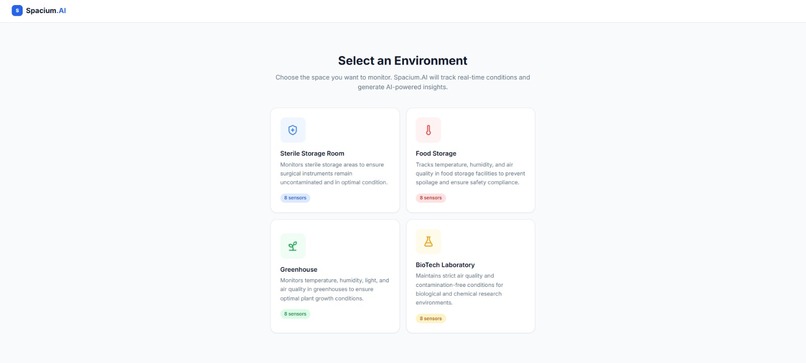
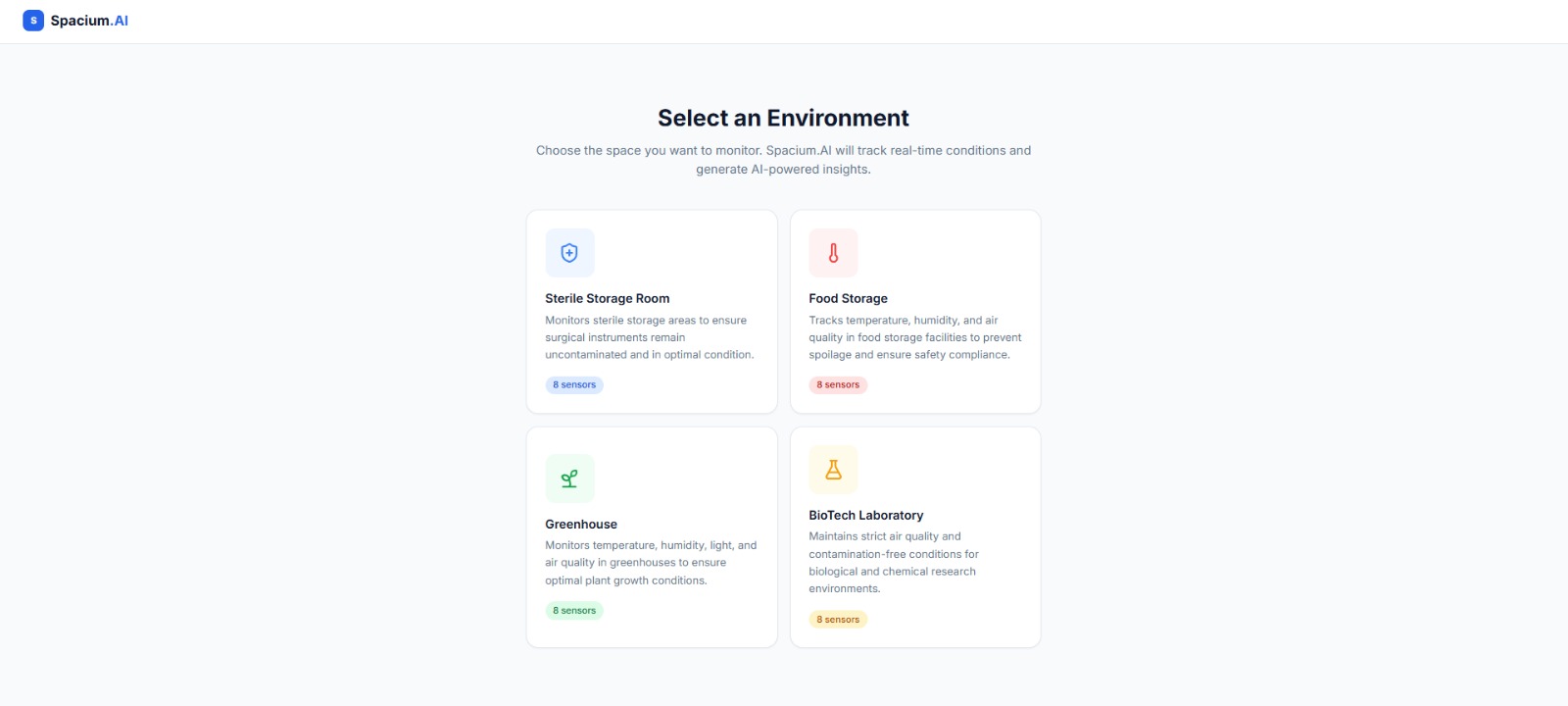
Entry point for environment location
Spacium.AI
Features
- Real-time collection of sensor data (temperature, humidity) + filler data
- Automatic calculation of environmental scores (0–100)
- Safe thresholds detection and alert system
- JSON output for easy integration with back-end systems
- Handles missing or extra sensor fields gracefully
- Supports multiple readings for trend analysis
Inspiration
Safety and professionalism are values that deeply align with our group's morals. Having an ideal direction of what to build before the start of the event, narrowing it down with the company challenges gave us the foundation for a solid project.
What it does
This project is an environmental monitoring and analysis tool for surgery rooms. It collects sensor data such as temperature, humidity, CO2, PM2.5, TVOC, pressure, and light, then:
- Compares readings against medical/surgical standards
- Calculates sterility, storage, and compliance scores
- Flags unsafe conditions with alerts
- Provides actionable recommendations for maintaining safe environmental conditions
- Outputs results in machine-readable JSON suitable for dashboards, AI analysis, or alerting systems
How we built it
- Backend: Python / FastAPI
- Database: Supabase for storing sensor readings and AI analysis
- AI Analysis: Claude for automated evaluation and recommendations
- Frontend: React Dashboard for visualization (React)
Challenges we ran into
Sensor setup, AI/API integrations, http requests between front and back-end
Accomplishments that we're proud of
Working with real sensor data for accurate analysis in different room types, with recommendation systems and alerts through AI integration
What we learned
Through this project, the team was able to refine their program architecture skills. It was a great the team's first hackathon and presented plenty of opportunities to depthen our skills and develop across multiple fields
What's next for Spacium.AI
Spacium.AI has proven to be a promising and powerful tool for management of different environment types. It has the potential to be improved on through broader sensor and situation integration. It can be utilized across multiple fields in professional settings and personal home monitoring.
Setup
This project relies on the use of a SHT45 Adafruit Trinkey sensor for the collection of temperature and humidity data. Other dependencies for the use of the sensor are Thonny IDE and PythonCircuit. Supabase was used for the SQL database and FastAPI was used alongside Uvicorn for http requests. Pydantic for data validation and Anthropic for AI API calls.
Challenges
Arthrex, Blue Sparq, FGCU
Built With
- fastapi
- python
- react.js
- supabase


Log in or sign up for Devpost to join the conversation.