Inspiration
Apartment hunting can be surprisingly frustrating. Photos might make a place look perfect, but it's hard to know whether your existing furniture will actually fit, how you would arrange everything, or how much extra money you'd need to spend furnishing the space.
We wanted to make that process less of a guessing game. That's why we came up with SpaceSwap, a tool that helps people look beyond an apartment's photos and rent price to understand whether it would actually work for them.
What It Does
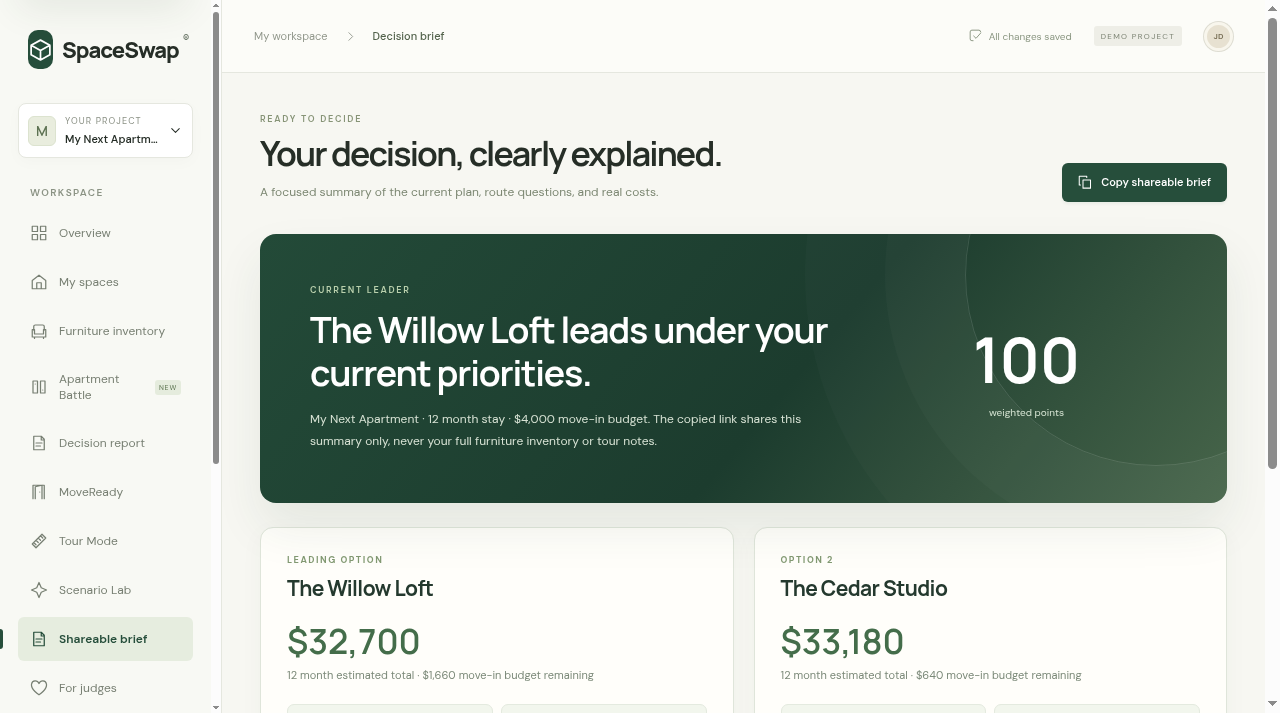
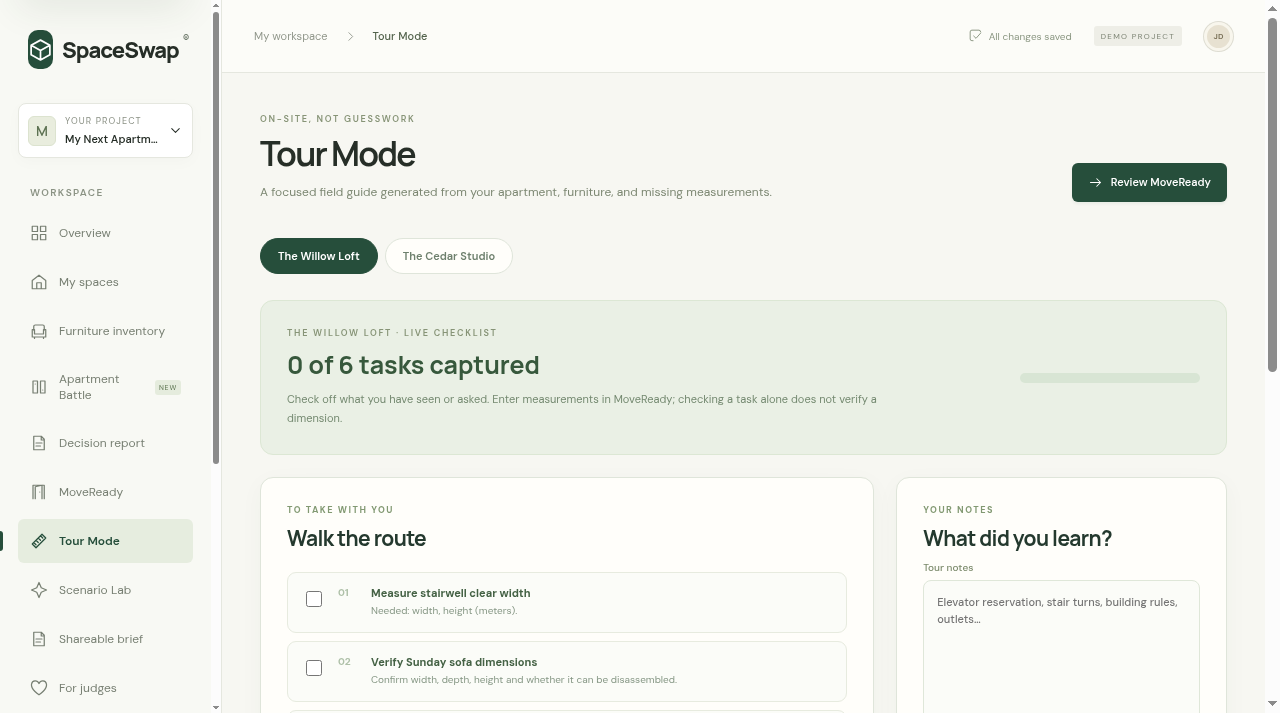
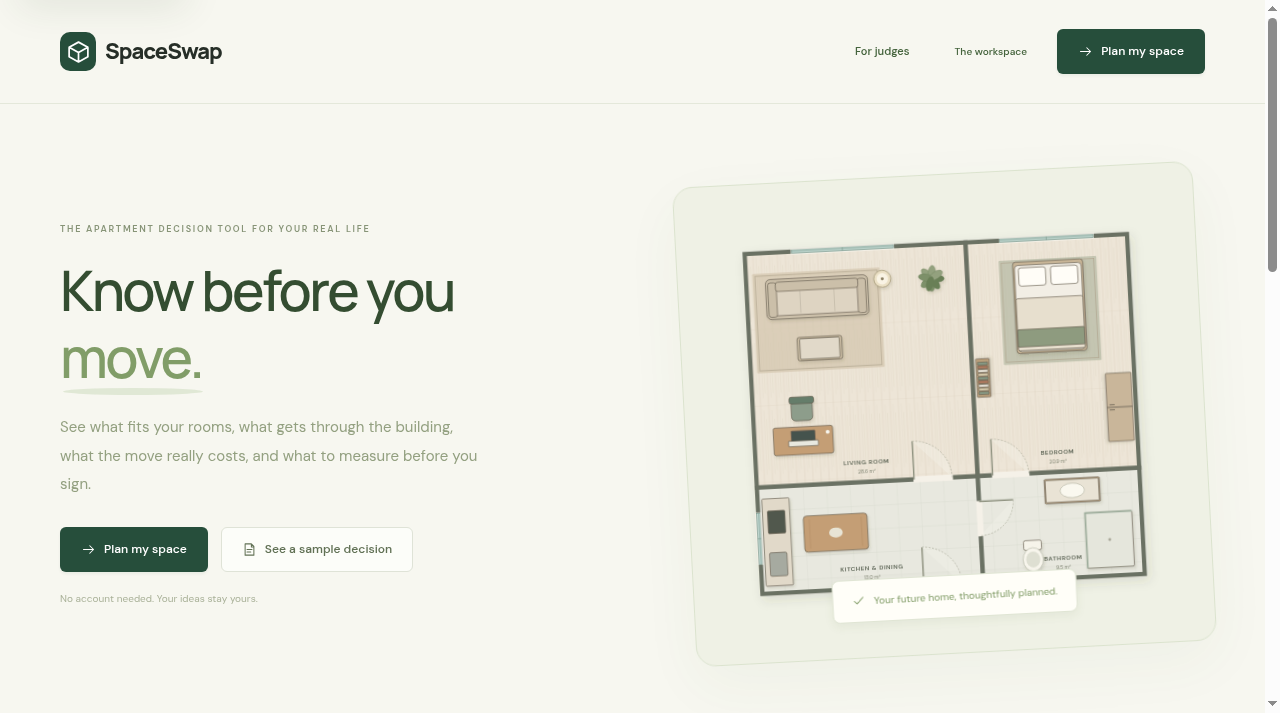
SpaceSwap brings apartment planning and decision-making into one place. Instead of mentally imagining how furniture might fit, users can plan a room, visualize the layout, and compare different apartments before making a decision.
Our main features include:
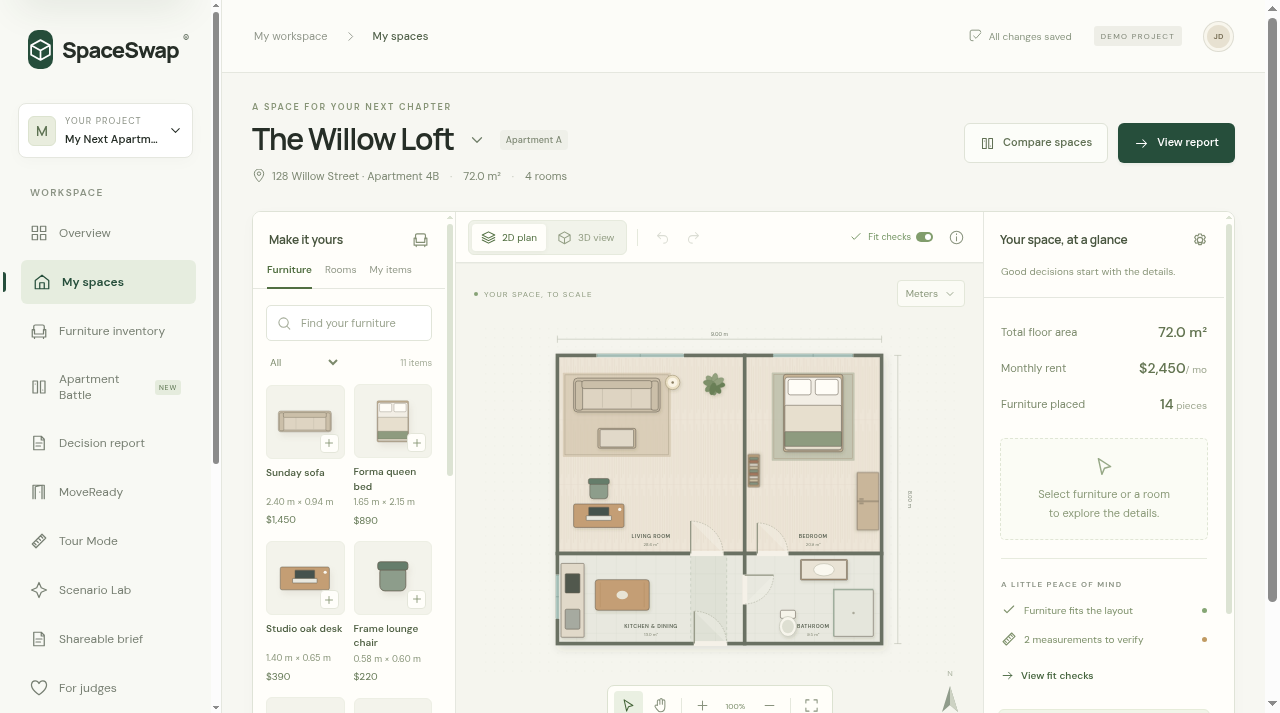
- 2D Floor Plan Editor: Arrange, move, and rotate furniture to experiment with different room layouts.
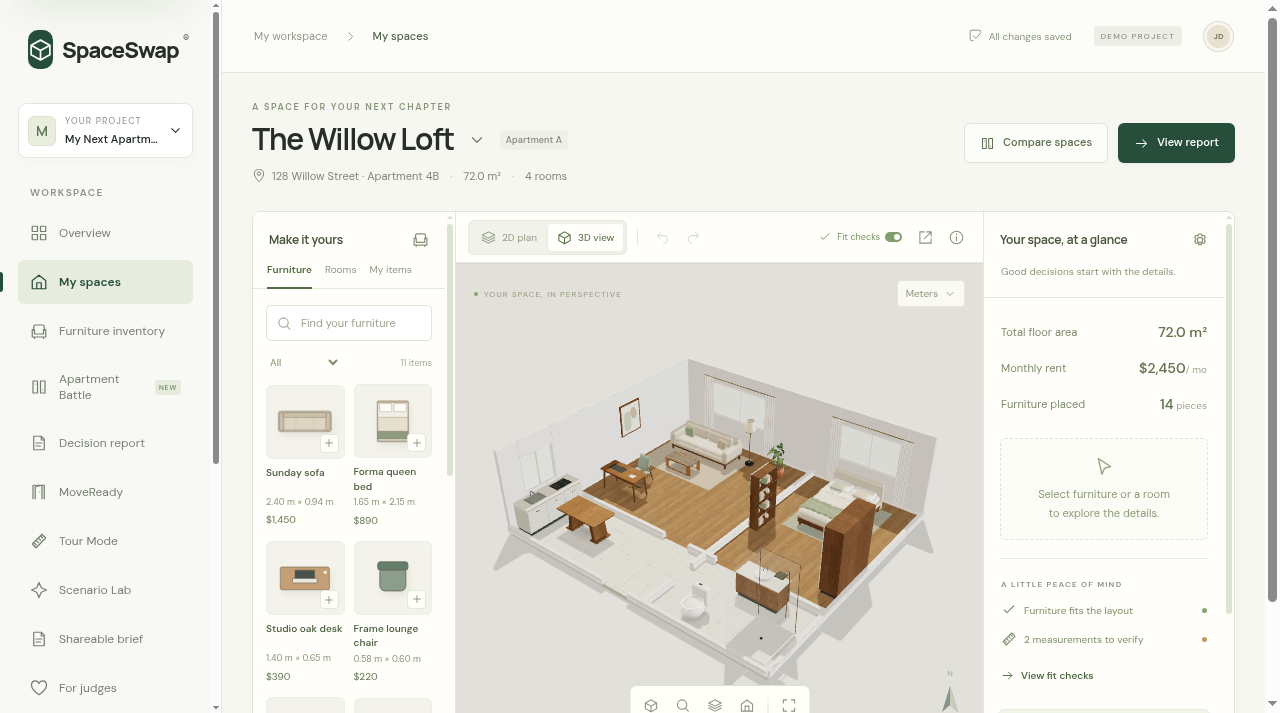
- 3D Visualization: Explore a furnished space from a 3D perspective and get a better sense of how the layout comes together.
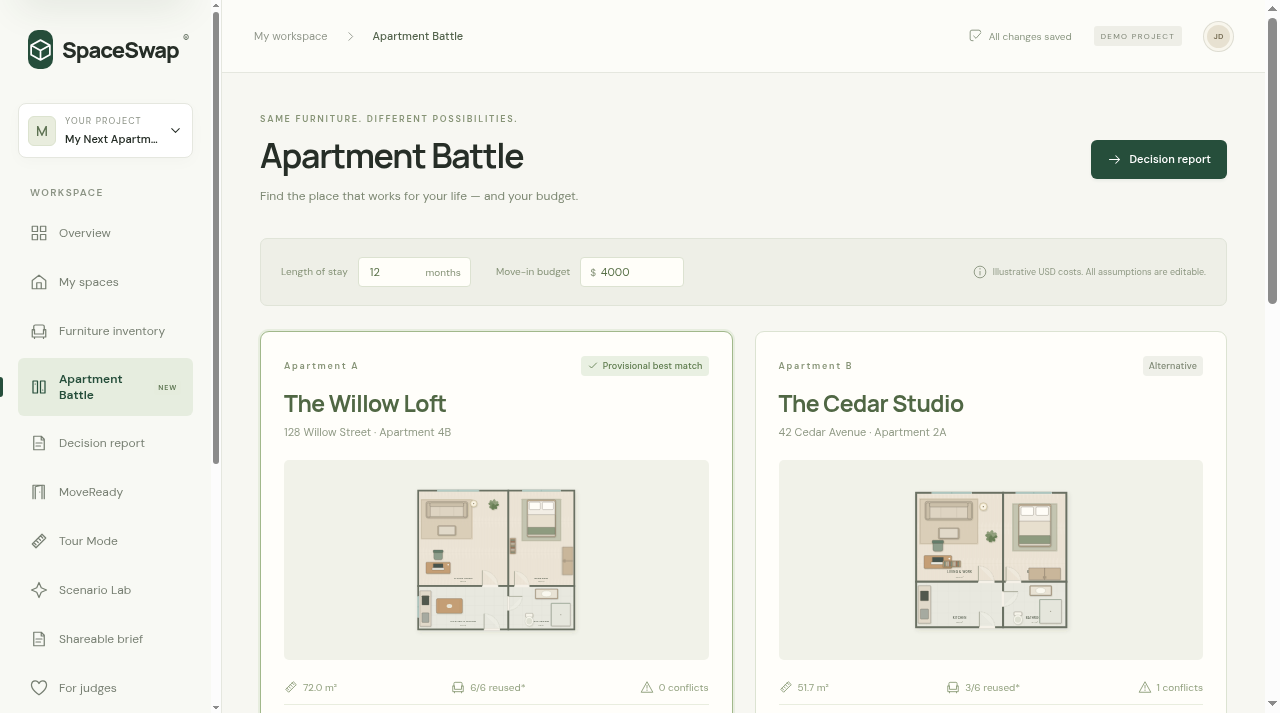
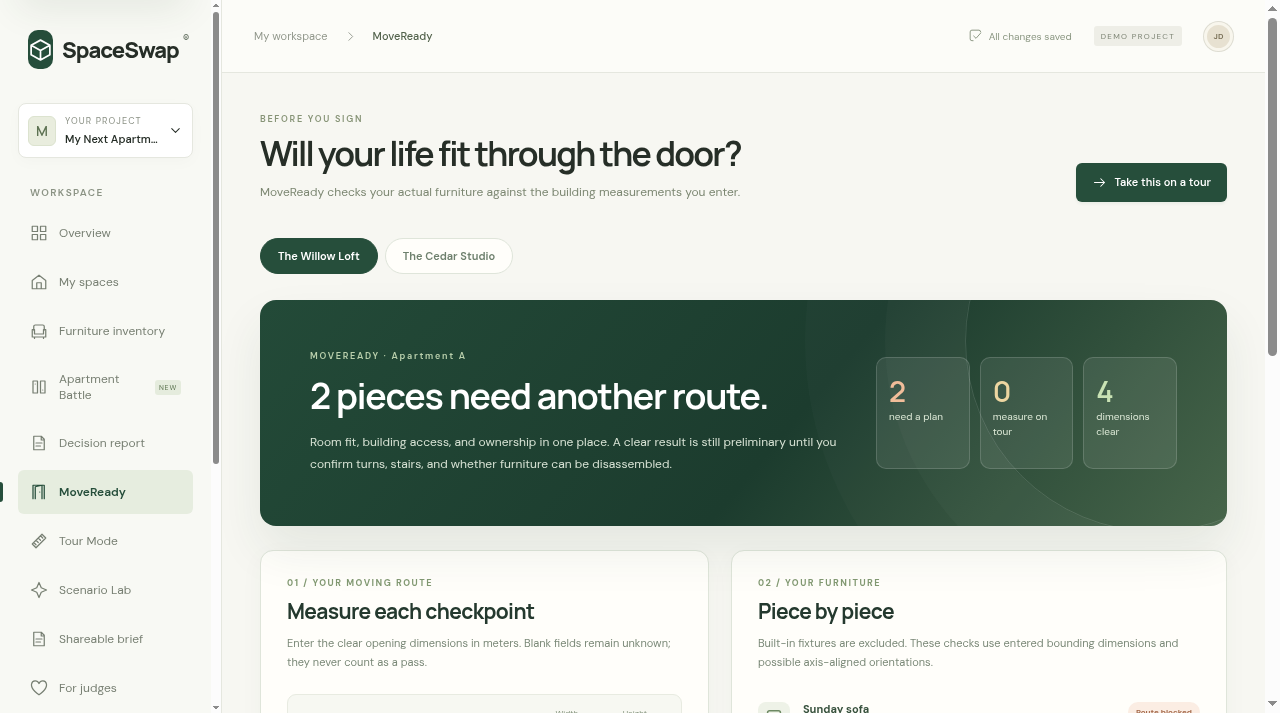
- Furniture Fit Checks: Check for potential overlaps and furniture extending beyond room boundaries.
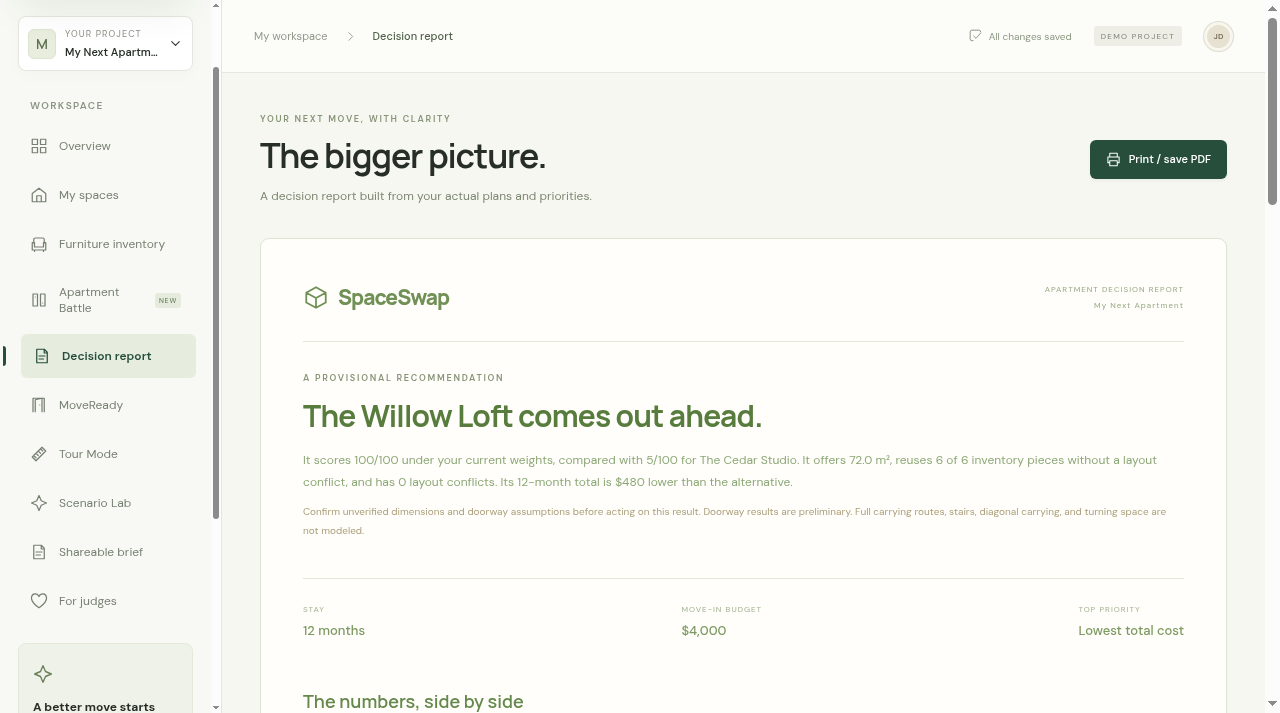
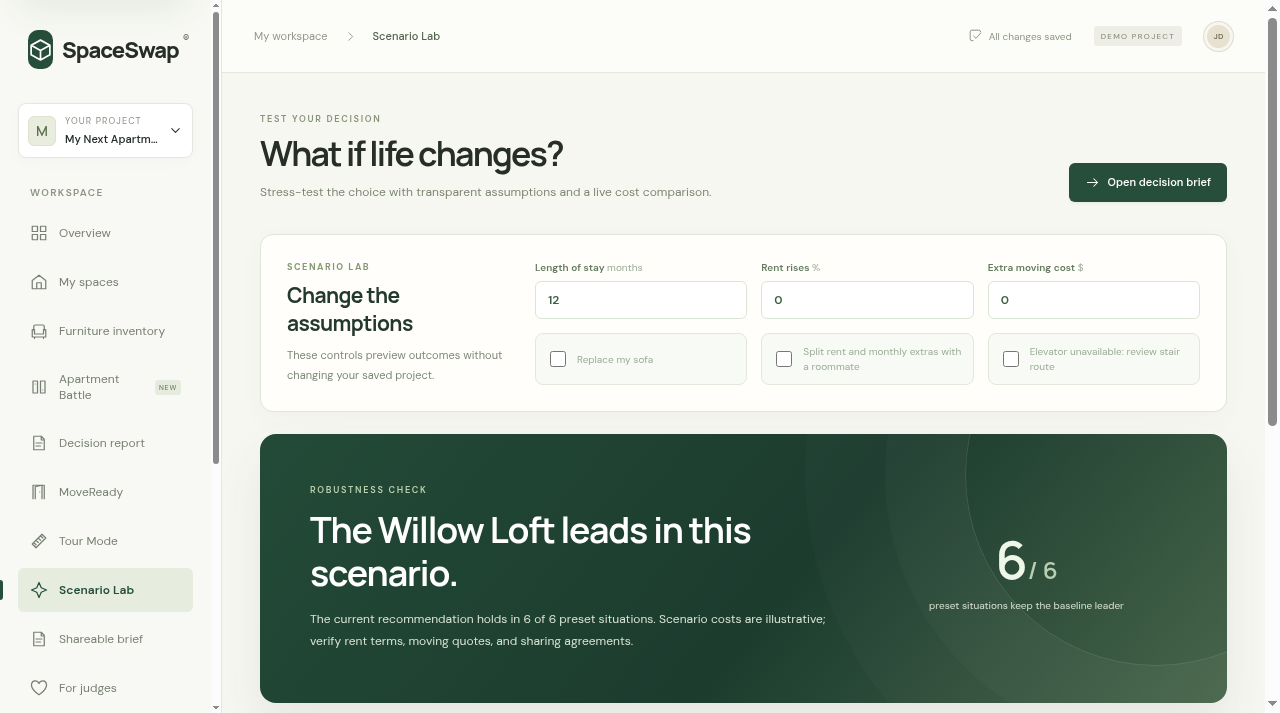
- Apartment Battle: Compare two apartments side by side, considering furniture compatibility, estimated furnishing costs, and practical trade-offs.
- Cost Estimates: Understand potential furnishing expenses instead of comparing apartments by rent alone.
The idea is simple: the best apartment isn't necessarily the biggest or cheapest one. It's the one that makes the most sense for your needs, your furniture, and your budget.
How We Built It
We approached SpaceSwap as both a visualization problem and a decision-making problem. The visual side helps users understand a space, while the calculation side helps them evaluate it.
The application connects room layouts with furniture dimensions and positions. This allows geometric checks to identify potential placement issues rather than relying on an AI-generated guess. The goal is for the 2D floor plan and 3D view to represent the same underlying layout, so changes feel consistent across both views.
We also designed the apartment comparison around a practical question: Which apartment works better for me overall? Looking at furniture fit and estimated costs together can reveal trade-offs that rent and square footage alone might miss.
Challenges We Faced
One of our biggest challenges was balancing visual quality with practical functionality. A room can look great in a 3D visualization, but that doesn't mean the furniture actually fits. We needed to think about dimensions, positioning, room boundaries, and how those details translate between 2D and 3D.
Another challenge was deciding what makes an apartment comparison genuinely useful. Simply comparing rent would not be enough, so we focused on furniture compatibility and additional costs as part of the decision.
We also had to think about making the experience understandable for someone who isn't an architect or interior designer. The tool should make planning feel approachable rather than overwhelming.
What We Learned
Building SpaceSwap taught us that a useful application needs more than an attractive interface. The visual experience matters, but the underlying logic needs to support what the interface promises.
We also learned to think about the problem from the user's perspective. Someone choosing an apartment doesn't just need another floor planner; they need help making a decision with real financial and practical consequences.
What's Next
We'd like to expand SpaceSwap with floor-plan importing, more furniture options, improved cost estimates, and better ways to account for measurements that aren't completely reliable. We also want to make apartment comparisons more personalized, so users can prioritize what matters most to them.
Our long-term goal is to make SpaceSwap a practical tool people can use before signing a lease—not just a way to visualize a room, but a way to make a more confident housing decision.
Built With
- ai
- capcut
- chatgpt
- css
- elevenlabs
- fiber
- gemini
- javascript
- react
- tailwind
- three
- three.js
- typescript
- vite

Log in or sign up for Devpost to join the conversation.