-
-
-
-
-
-
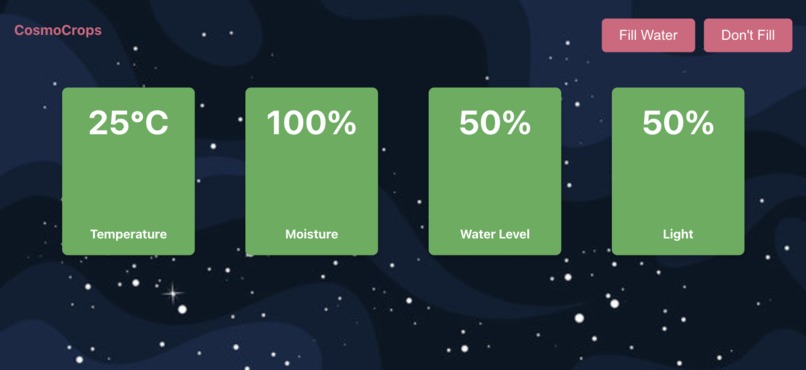
The monitoring metrics
-
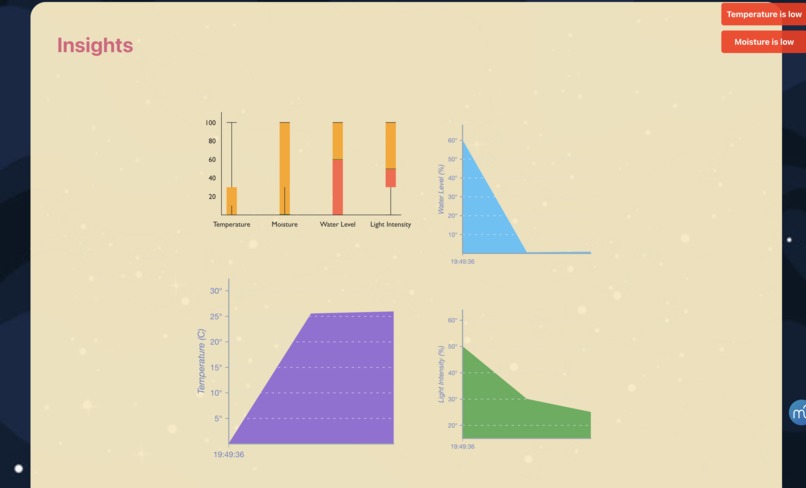
Data analytics and tracking
-
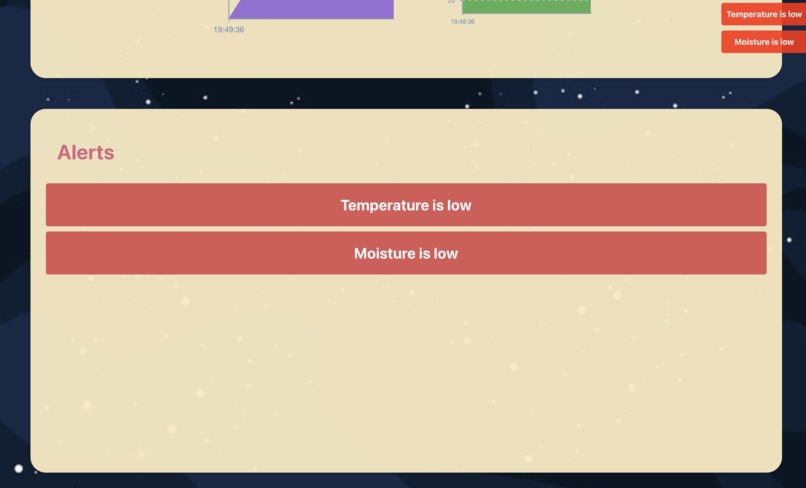
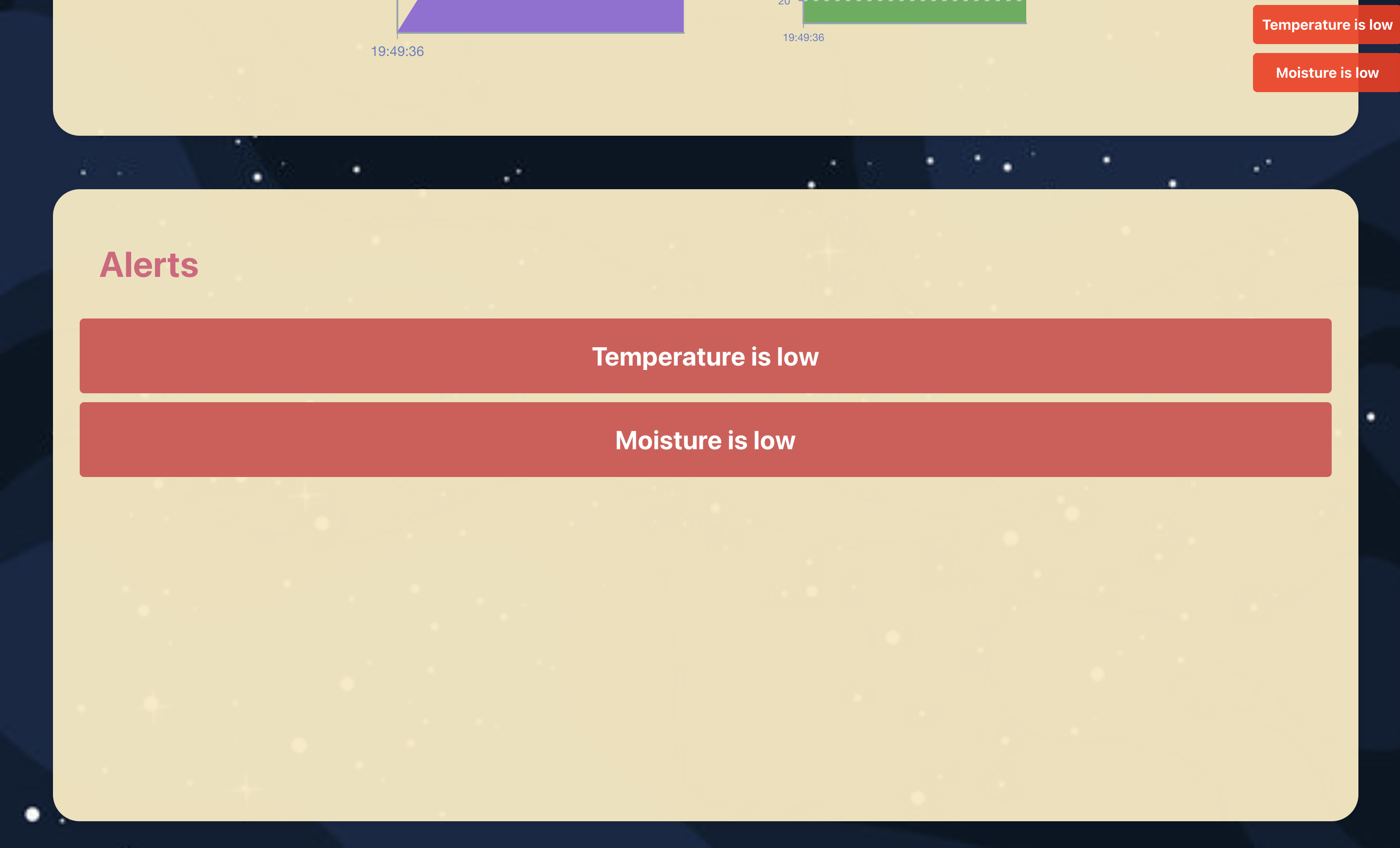
CosmoCrops on-device alert system
-
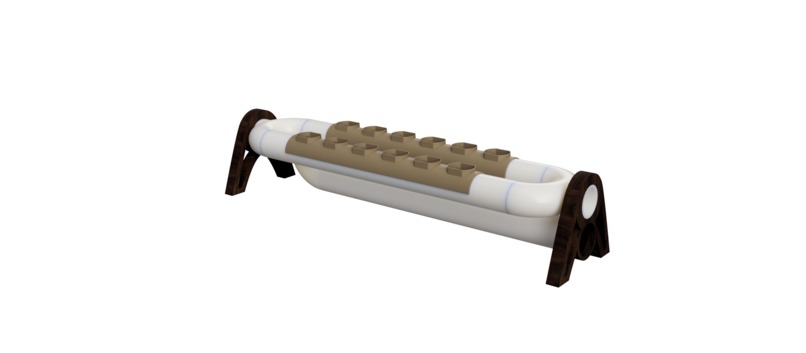
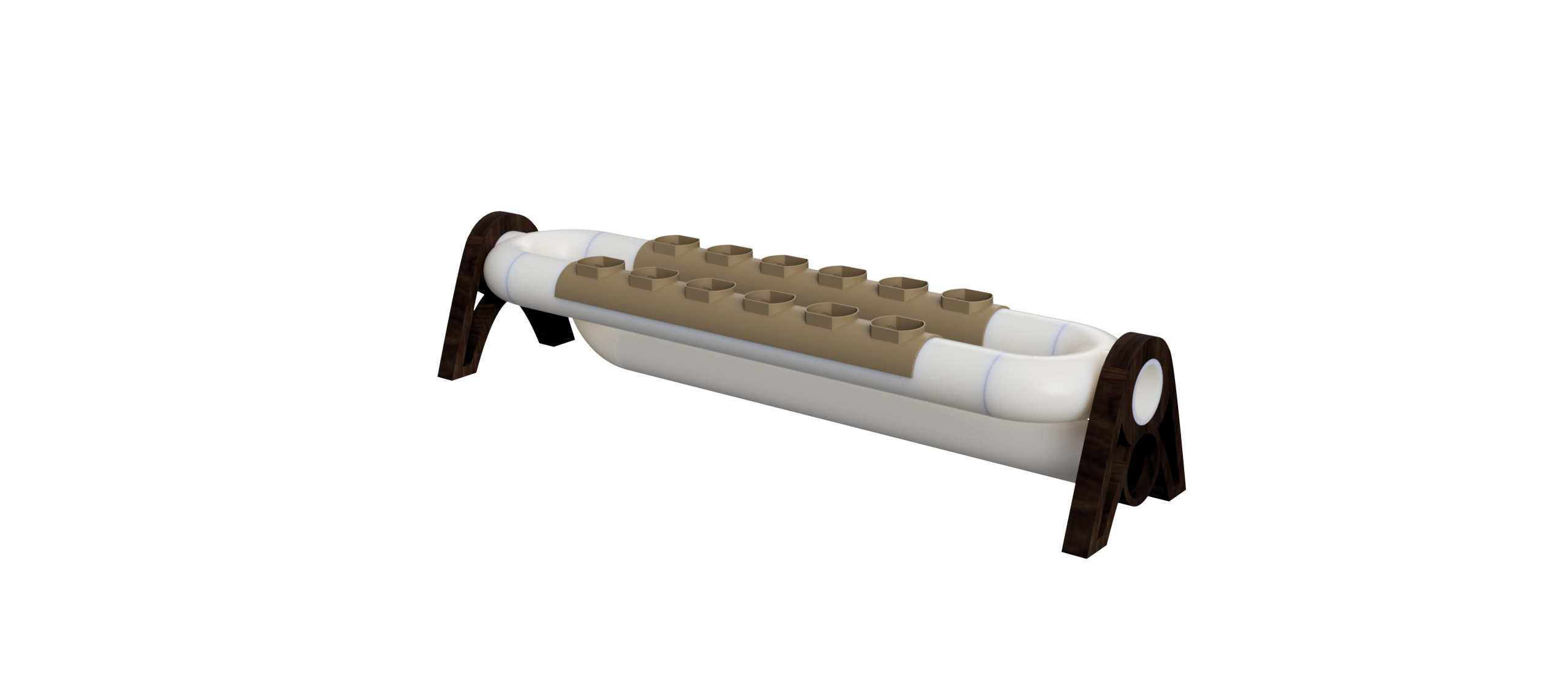
CAD file
-
-
Inspiration
Imagine stepping into the shoes of Mark Watney from "The Martian" – stranded on a distant planet, where the thin line between survival and demise rests on the ability to grow your own food. Unlike Watney's desperate improvisation, envision a future where astronauts, or even the first colonists on Mars, don't just survive but thrive, thanks to the marvels of automated greenhouse systems designed specifically for space habitats.
This project draws inspiration from the urgent need for sustainable, efficient food production mechanisms in extraterrestrial environments, where traditional agriculture is a challenge, if not impossible. The dream is to create a self-sustaining ecosystem that not only supports human life but also contributes to the broader vision of making life multiplanetary.

Project Overview
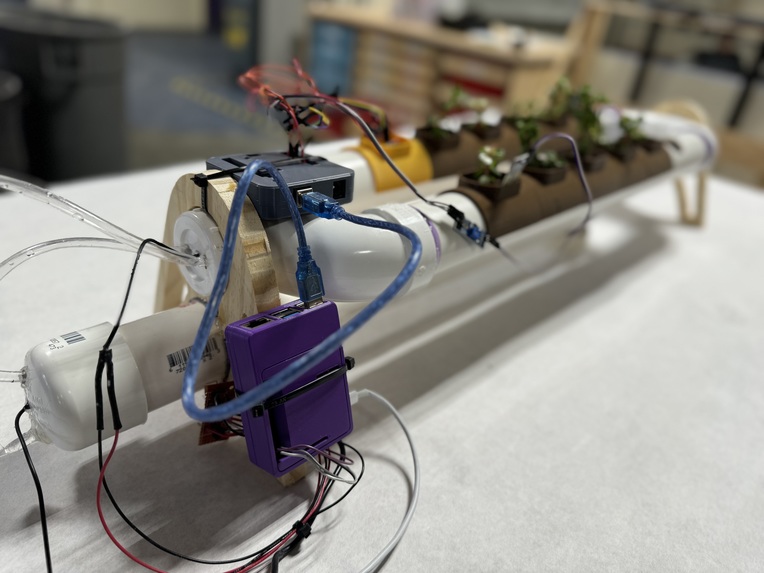
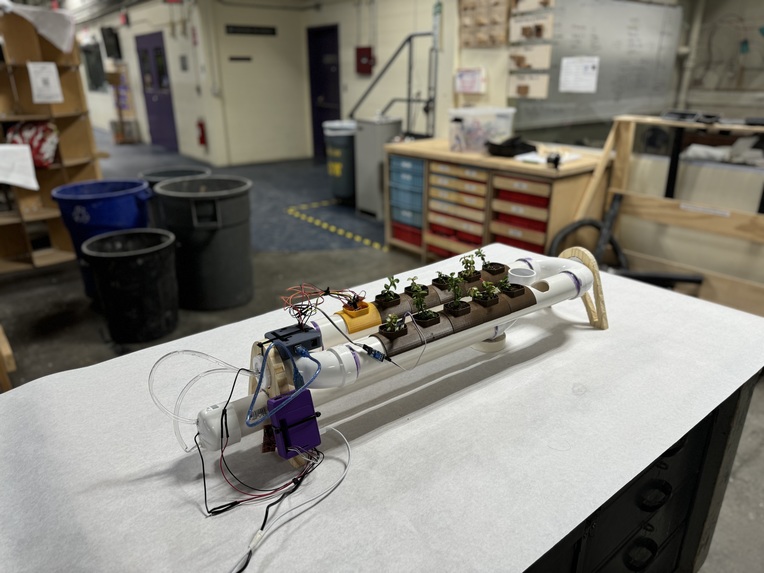
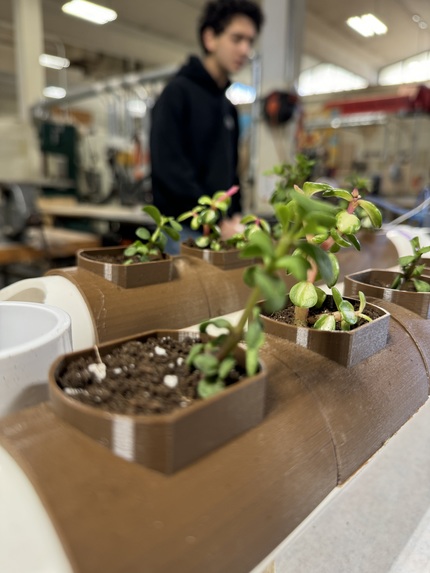
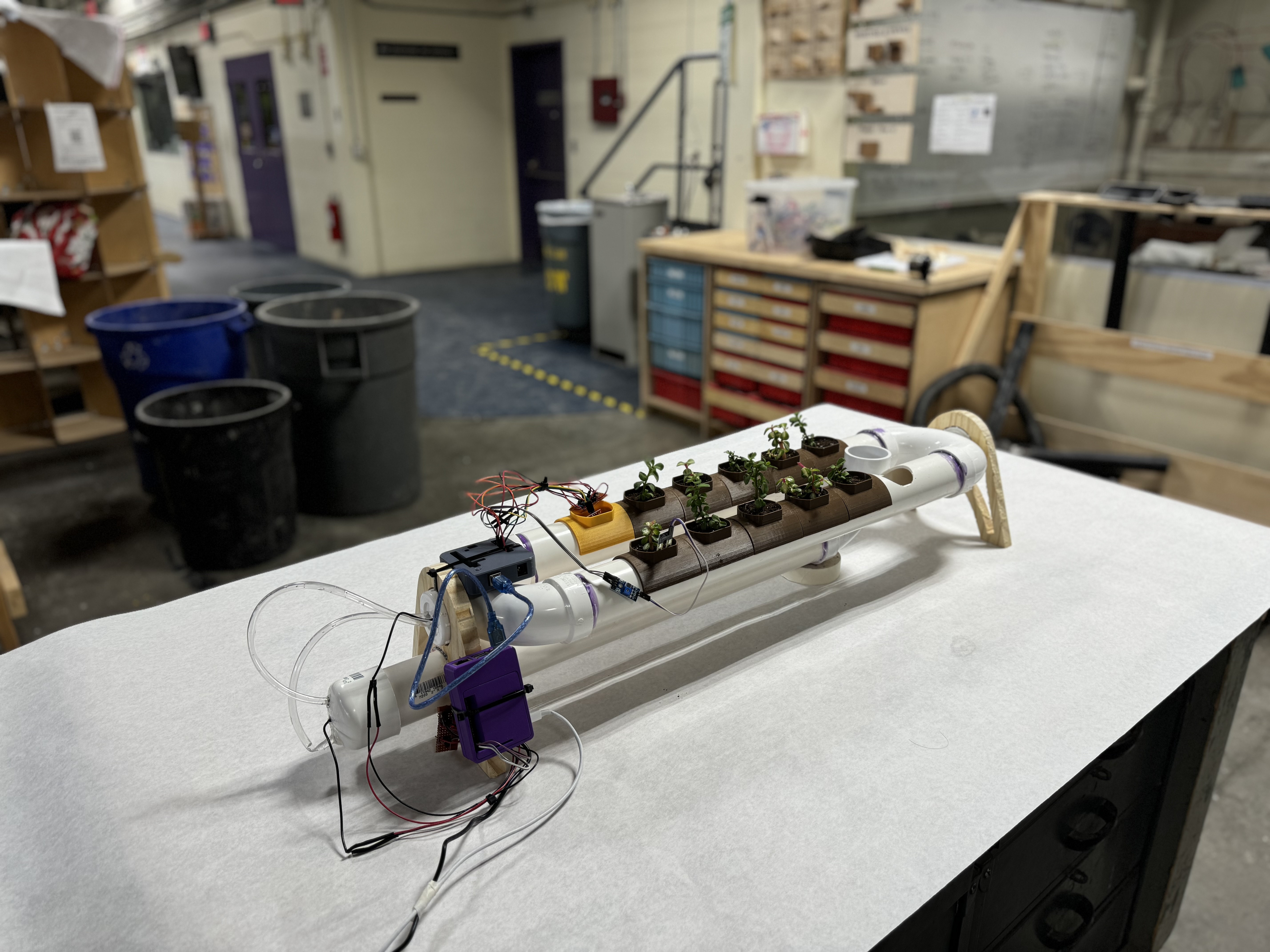
CosmoCrops is an automated greenhouse system designed for the harsh conditions of space. It uses Arduino sensors to monitor critical growth conditions and a Raspberry Pi to serve as the system's backend, processing data and managing the greenhouse's microclimate to optimize crop growth. This project not only addresses the vital need for food production in space but also pioneers the use of technology in making extraterrestrial agriculture a reality.
Key Metrics Monitored
Our system meticulously measures four key environmental metrics essential for plant growth:
- Water Level: Ensures that plants receive the optimal amount of water, crucial for their growth in low-gravity environments.
- Humidity/Moisture: Monitors the air and soil moisture levels to maintain the perfect balance for plant health.
- Temperature: Regulates the internal temperature of the greenhouse to match the ideal conditions for different crop types.
- Light Intensity: Adjusts artificial lighting conditions to simulate the perfect day/night cycles, promoting photosynthesis.
Hardware
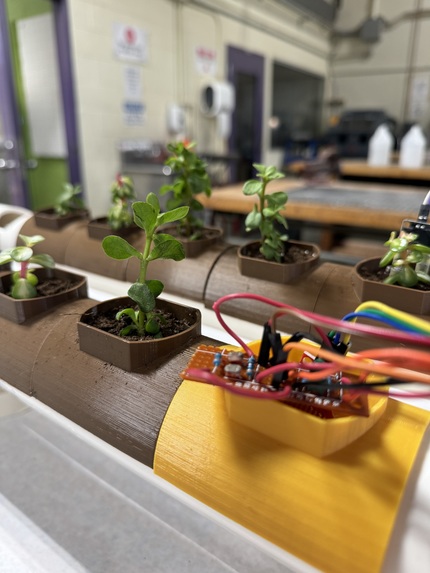
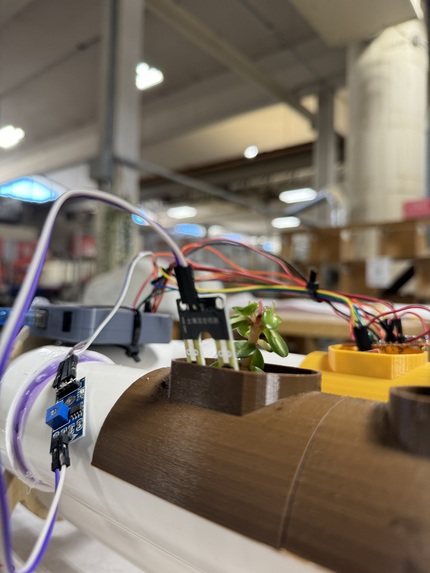
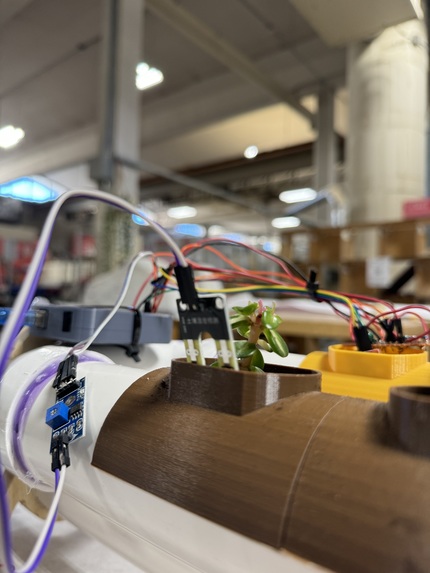
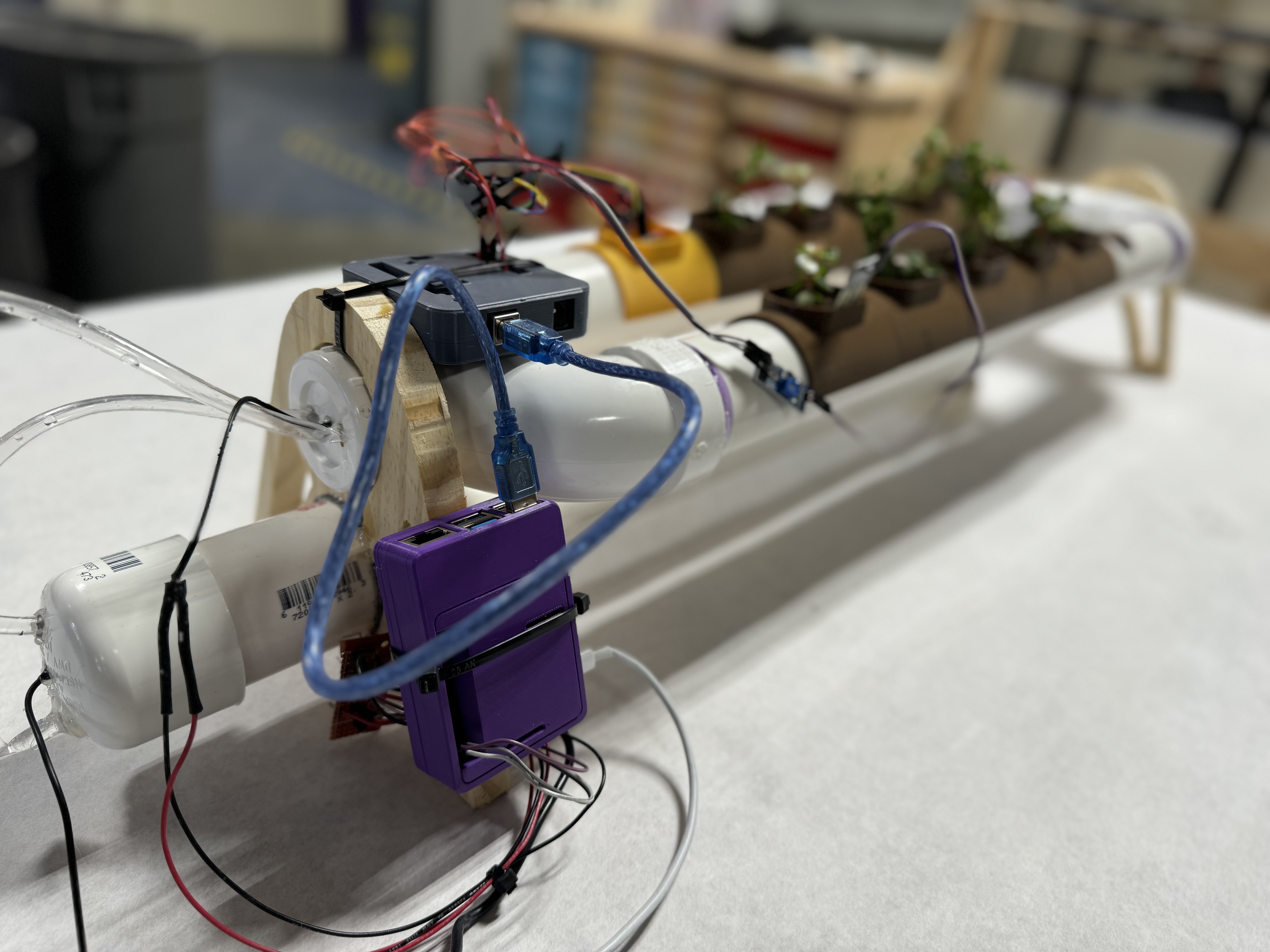
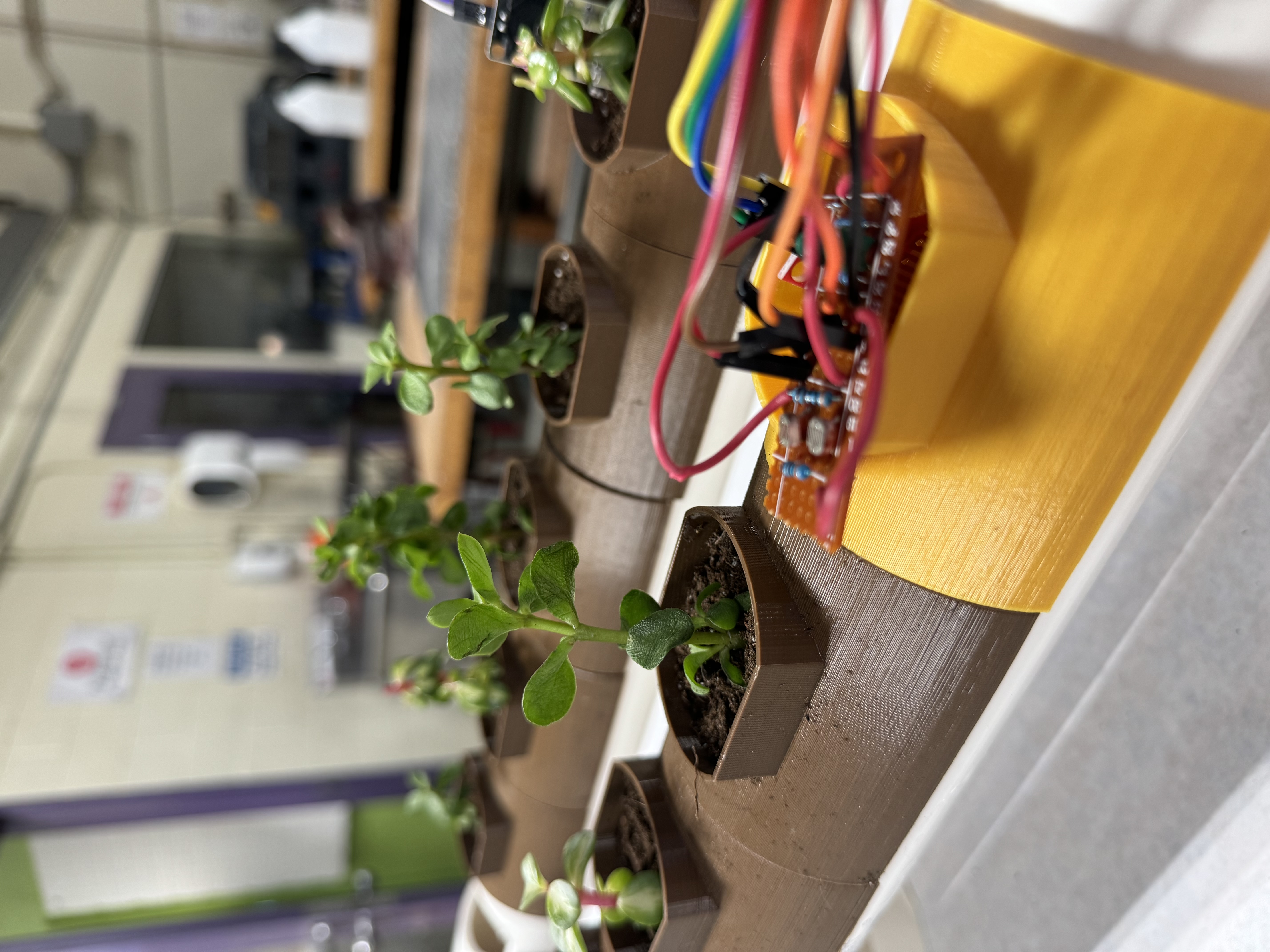
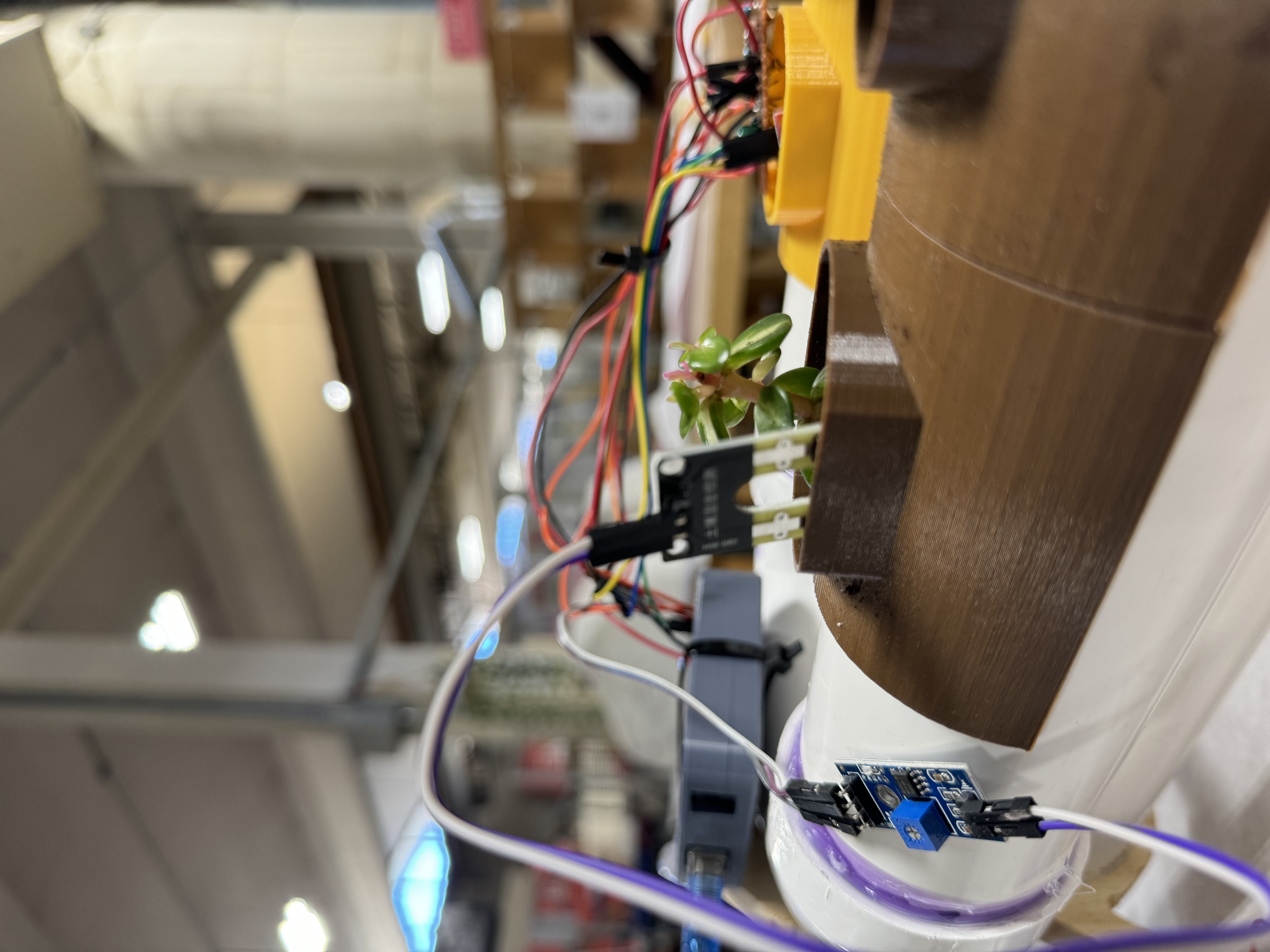
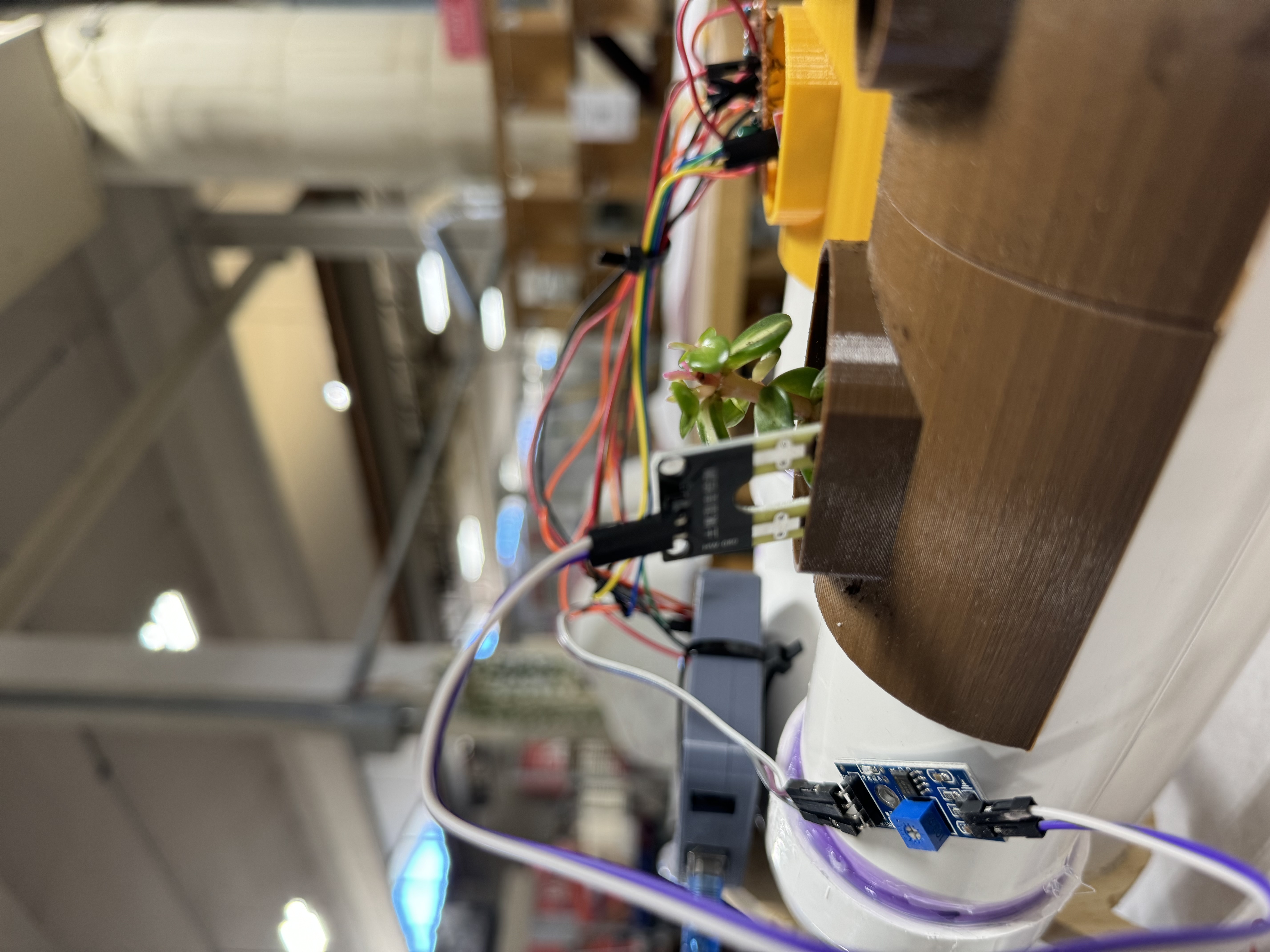
In addition to the use of a Raspberry Pi to control all systems across the product, there is also an onboard Arduino Uno that is used specifically for collecting data from the various sensors on board. These sensors include a water sensor, moisture sensor, thermistor, and photoresistor (in a Wheatstone configuration). The two water pumps are controlled logically with the Pi via two transistors in order to allow for a separate power source (to reduce current draw from critical sensor systems).
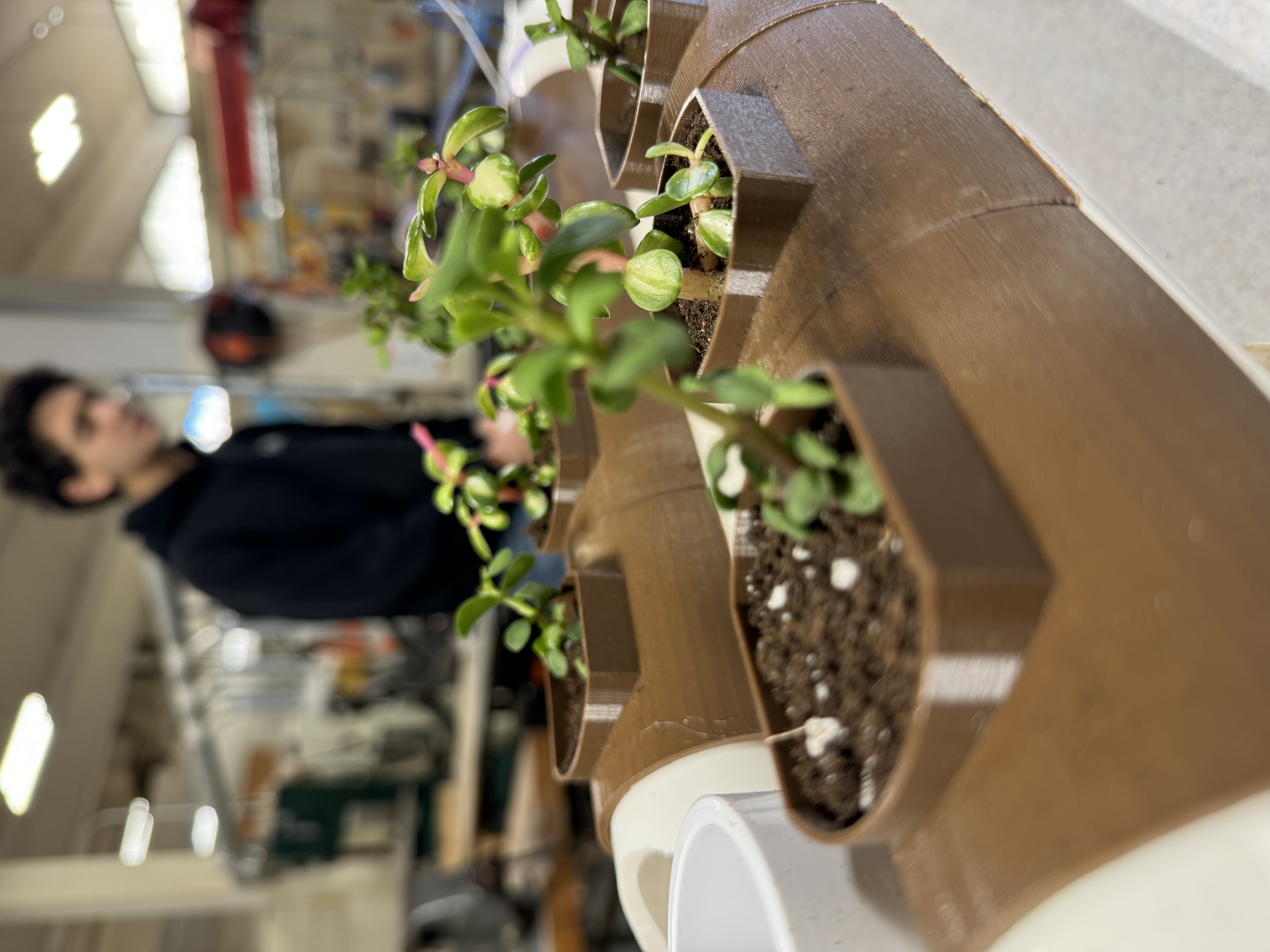
The actual model was prototyped in CAD using Fusion 360. The legs were then machined using the BDW's Shopbot CNC, and the PVC was milled with a Tormach CNC. All other components were 3D printed on a Prusa MK3S.
Backend & Frontend Integration
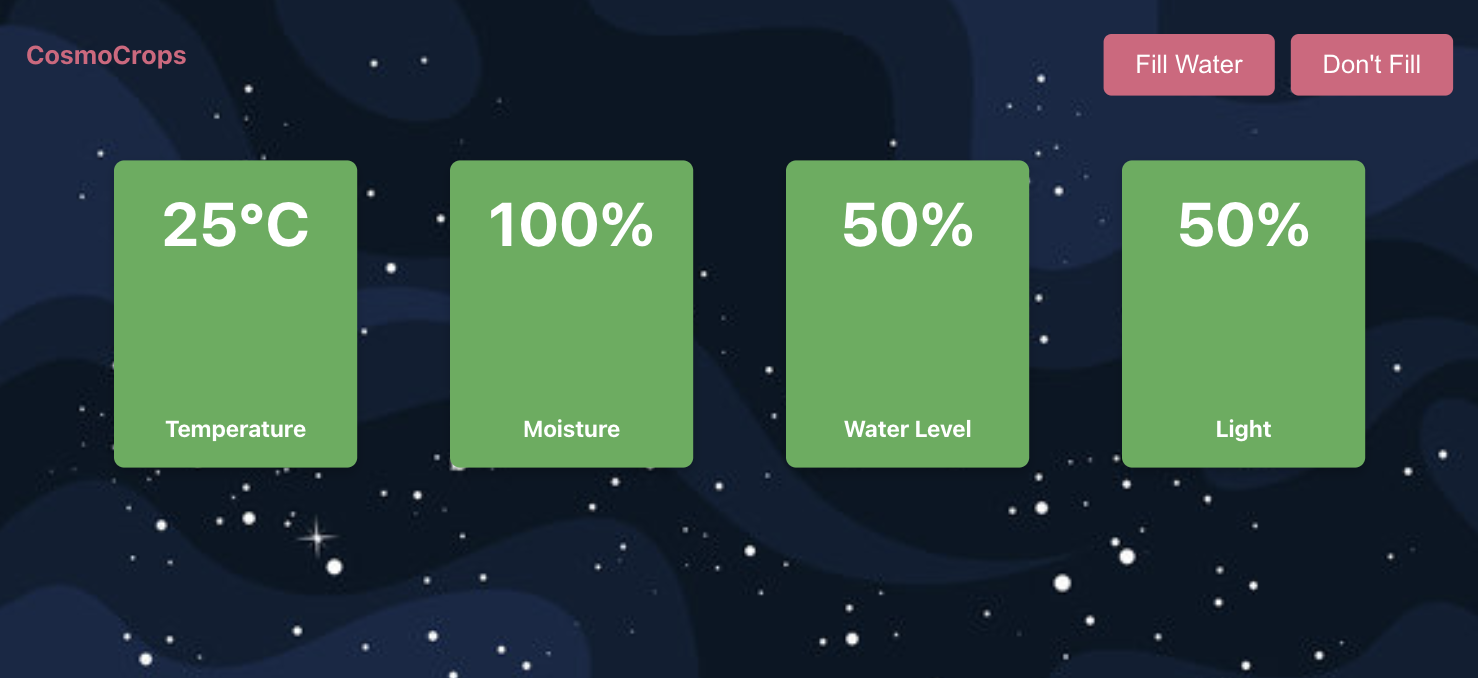
The Raspberry Pi acts as the heart of CosmoCrops, processing sensor data to ensure the greenhouse operates within optimal parameters. This data is then served to a React-based frontend through a Flask web-server, presenting a real-time dashboard of the greenhouse's status. The interface is designed for clarity and ease of use, allowing astronauts or remote operators to monitor and adjust settings as needed.
Handheld Monitoring & Alert System
Understanding the importance of mobility and immediate response in space missions, CosmoCrops includes a mobile monitoring solution. Astronauts can access the system's dashboard through a device attached to their wrist, similar to a smartphone. This ensures they are always informed of the greenhouse's status and can receive alerts if any metric goes outside of the predefined safe ranges. We also include a button to adjust the water levels in the system, that has the Raspberry Pi emit a GPIO signal to the pumps
Data Science Integration
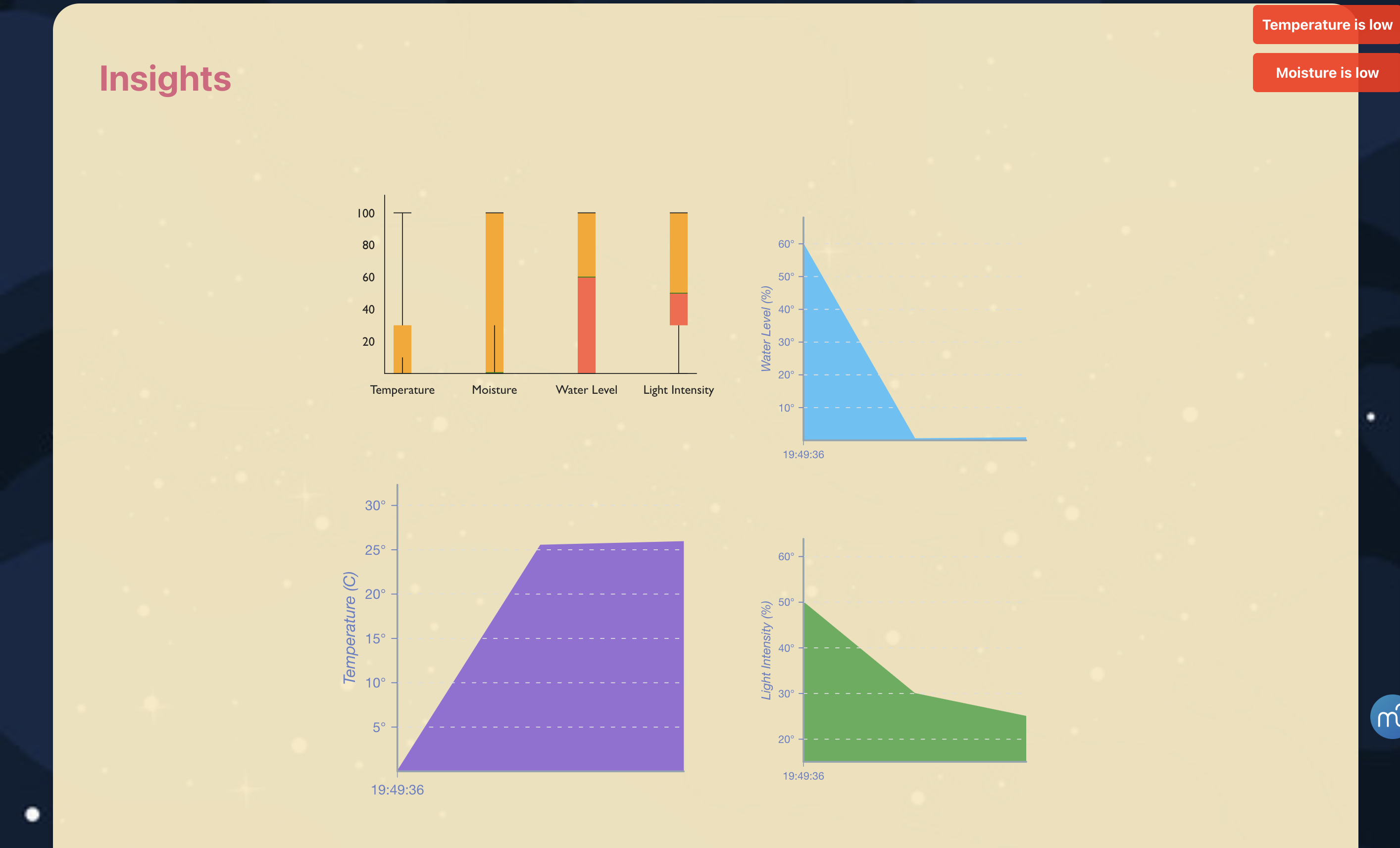
At its core, CosmoCrops employs data science and analysis techniques to predict potential issues before they arise. By analyzing historical sensor data, the system can identify patterns that may indicate future problems, allowing for preventative measures to be taken. This predictive maintenance approach ensures the longevity and reliability of the greenhouse, reducing the risk of crop failure. After research on ideal levels for temperature, moisture, light, and other conditions for plant growth, we normalized data obtained from sensors and set optimal ranges for each metric. Using our stream of values updating in real-time, we displayed supporting graphs and visuals for our project, including box plots to compare measurements with their ideal ranges and live line graphs for measuring ongoing changes. Victory, a React library for modular charting and data visualization, was the primary tool used for visualization tasks.
Lastly, our data monitoring system enables the Martian to decide the right time to send water over to his crops or to troubleshoot!
Challenges we ran into
Sensor Integration and Calibration: Ensuring that our Arduino sensors accurately measured the environmental conditions in a simulated space habitat was challenging. Calibrating these sensors to work in unison and provide reliable data required extensive testing and adjustments.
Real-time Data Processing: Designing the system to process and analyze data in real-time, with minimal latency, was crucial for the system's responsiveness. Optimizing our backend for speed without sacrificing accuracy was a significant hurdle.
Frontend Accessibility on Handheld Devices: Creating a React frontend that was both informative and easily navigable on small, wrist-mounted devices presented design challenges. Ensuring that astronauts could quickly access and understand the data required innovative UI/UX solutions.
Data Visualization: Real time data visualization provided several challenges. Creating a system to store and discard relevant data required a lot of trial and error. Making sure the data was best formatted and presentable for the user took a lot of time as well. We had to ensure that our models were accurate and could operate efficiently with the limited computational resources available on a Raspberry Pi.

What we learned
We all pushed ourselves in an incredibly resourceful but tiring way this hackathon weekend. There were a number of challenges with bad data, connection issues of all types: wires, ssh, wifi. To fully build out the hardware, the front end stack and the glue that connects it all together in such a short time span, we had to truly learn what it means to hack.
What's next for CosmoCrops
Looking forward, the vision for CosmoCrops extends beyond the prototype we've developed. The next steps would mean improving our system based on the feedback and data collected during this initial phase. We're looking to enhance sensor accuracy, streamline data processing, and improve the user interface for even more intuitive UI/UX.
The scalability of CosmoCrops is a critical focus area. We plan to explore how our system can be expanded or adapted to support larger-scale food production, not just for space habitats but also for harsh or resource-scarce environments on Earth. This includes integrating advanced AI and machine learning models to further improve predictive analytics and automation levels.
Another exciting direction is the potential for collaboration with space agencies, research institutions, and other tech companies. Partnerships like these could provide valuable resources, knowledge exchange, and opportunities to test CosmoCrops in simulated or actual space conditions, paving the way for its deployment in future space missions.



Log in or sign up for Devpost to join the conversation.