-
-
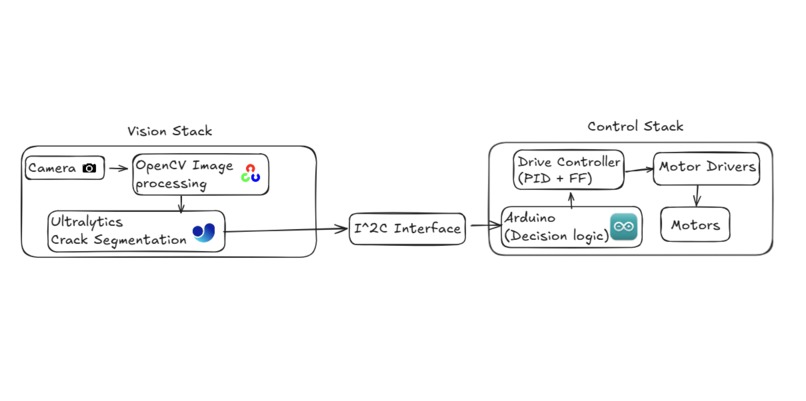
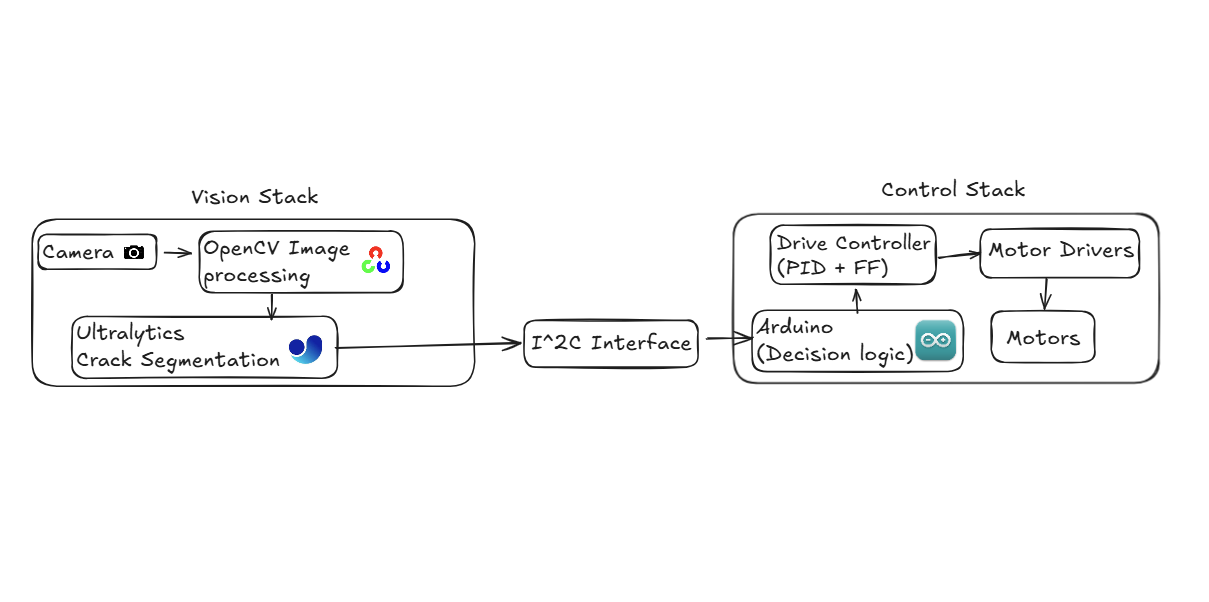
Tech Stack
-
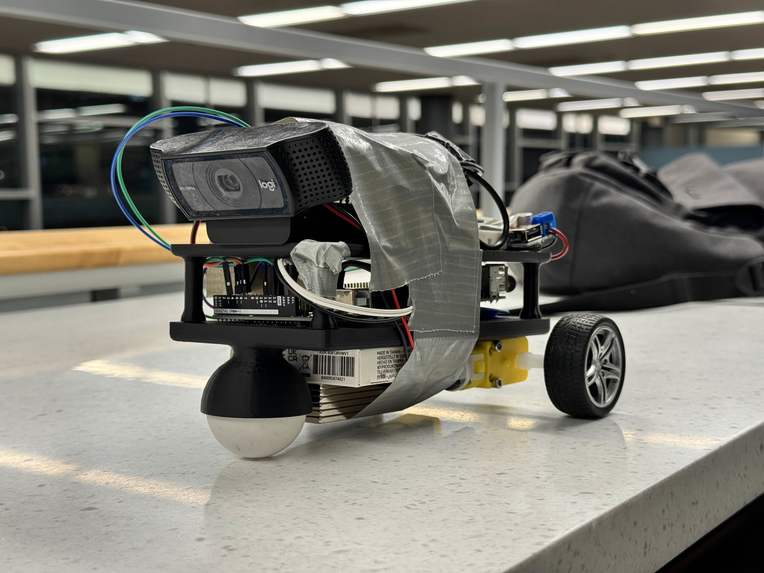
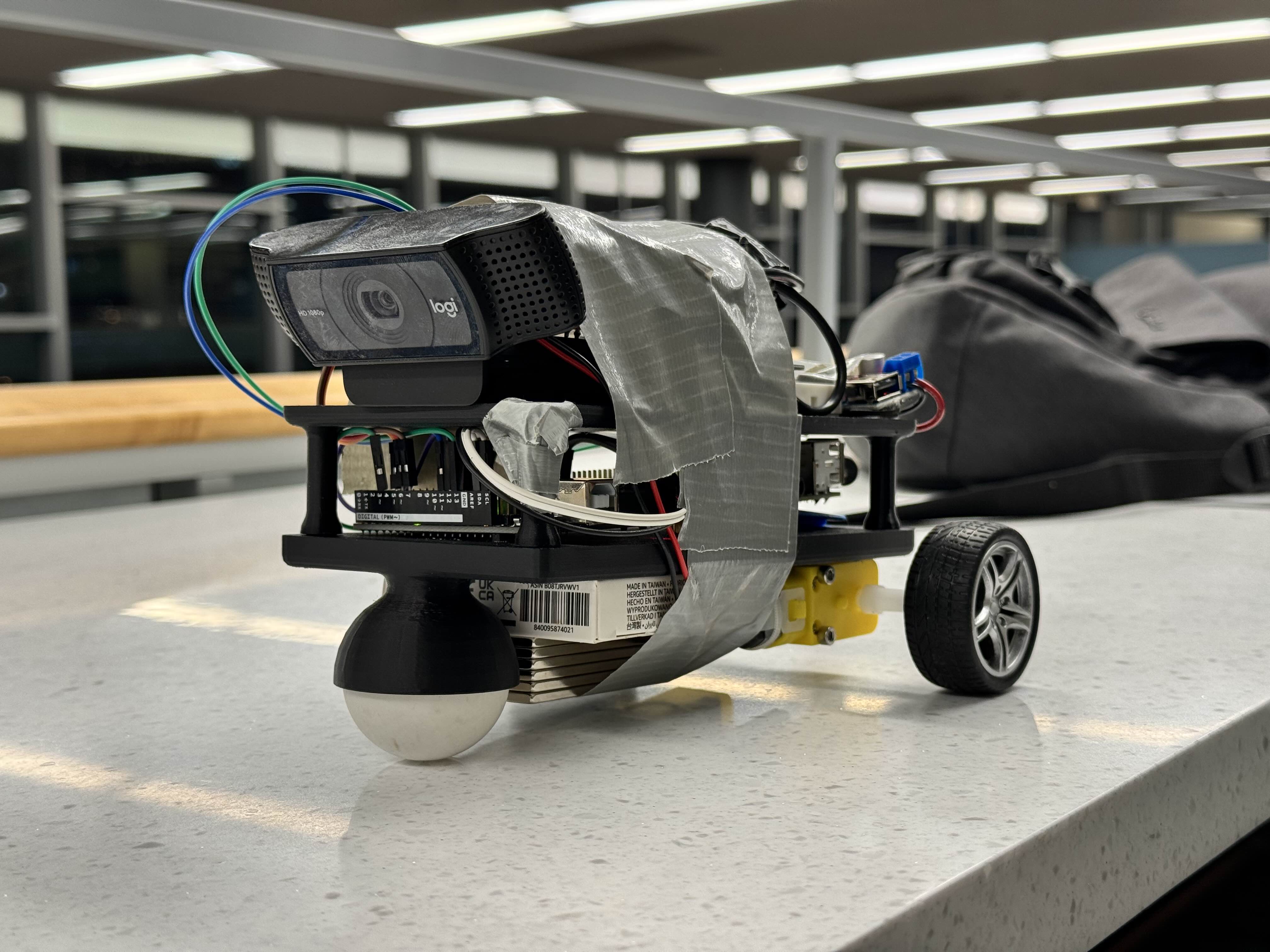
Final robot!
-
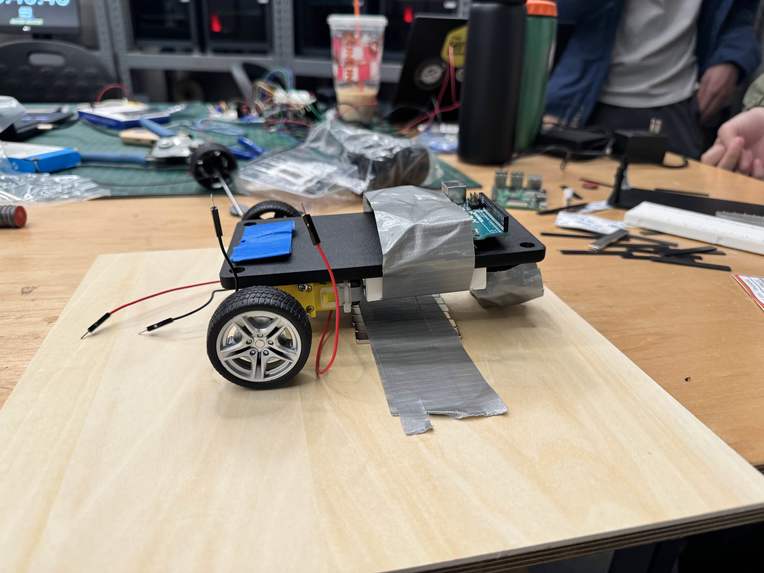
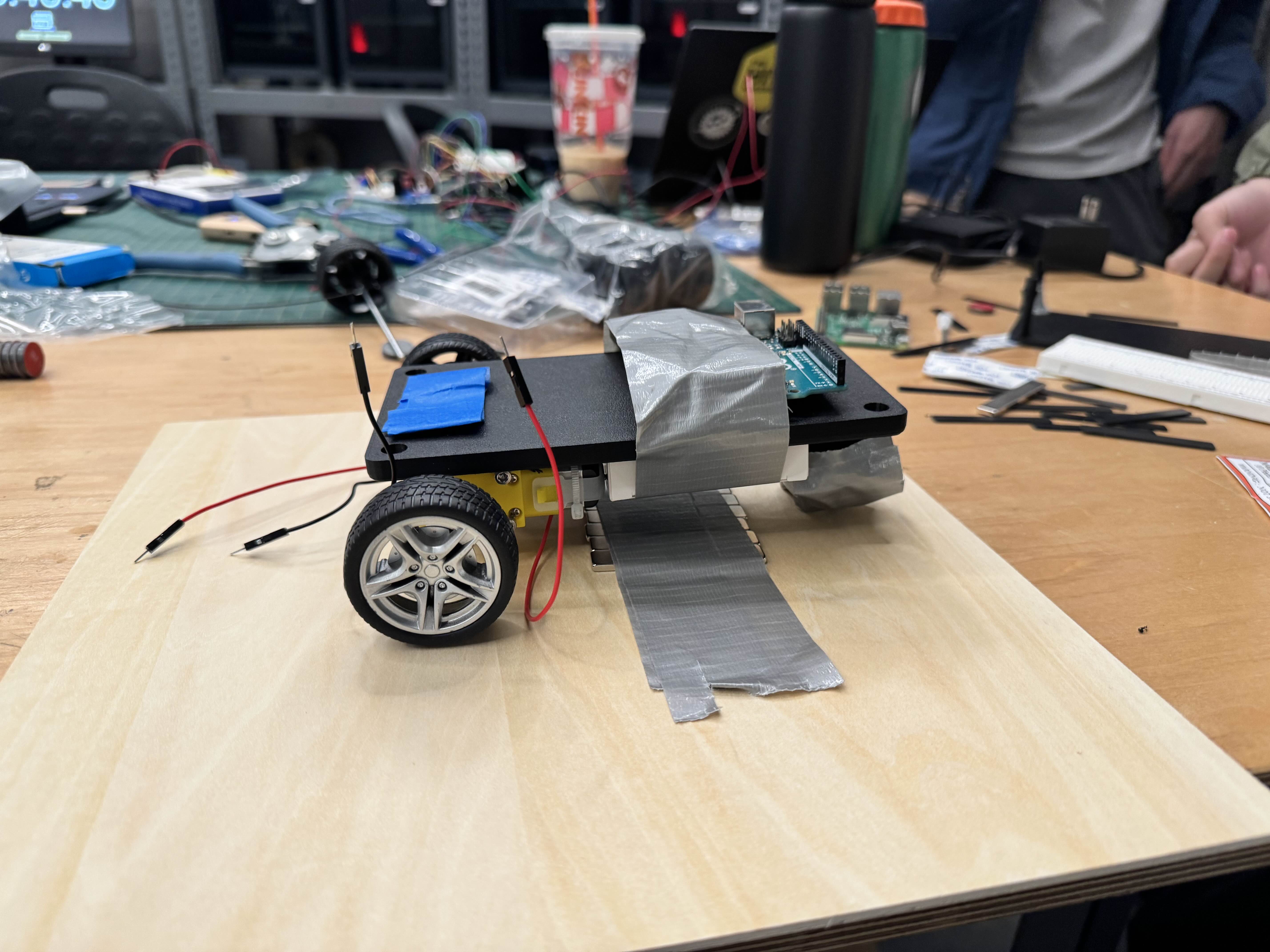
Integrating Arduino with Chassis
-
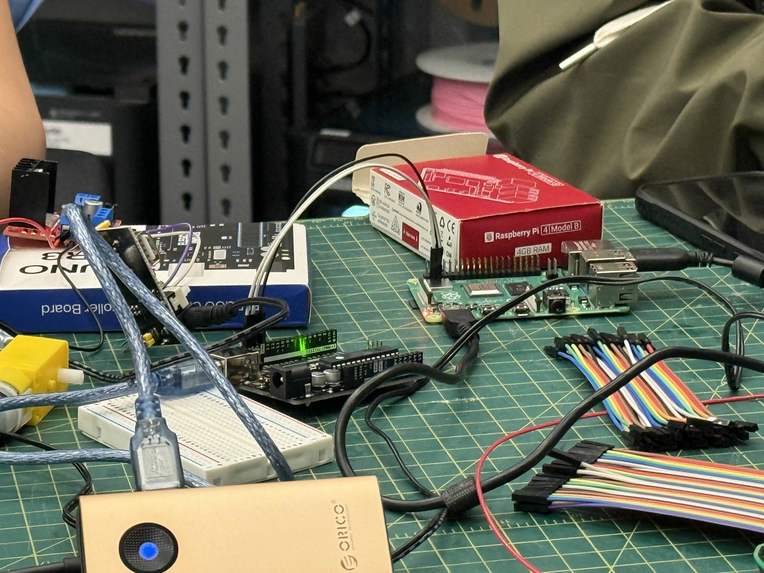
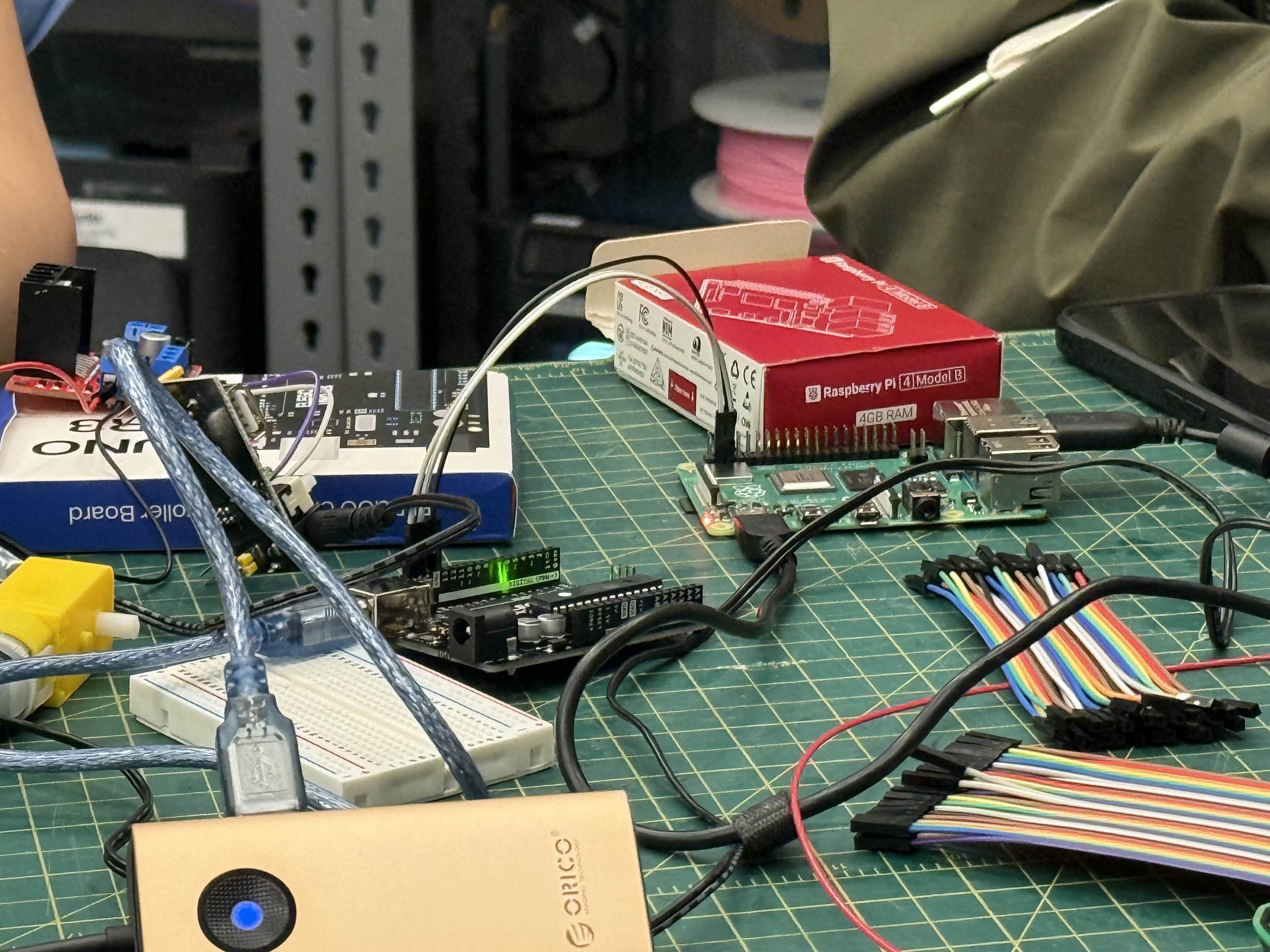
Electrical prototype
-
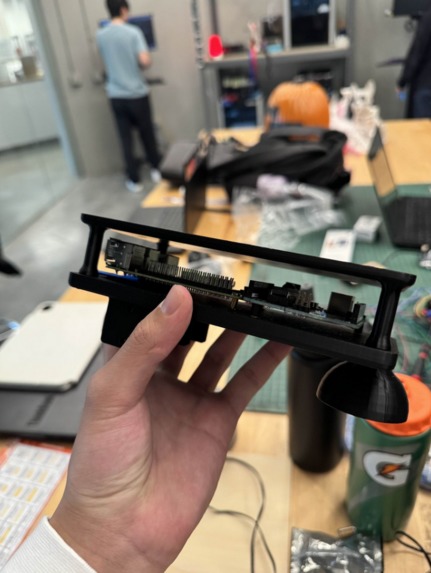
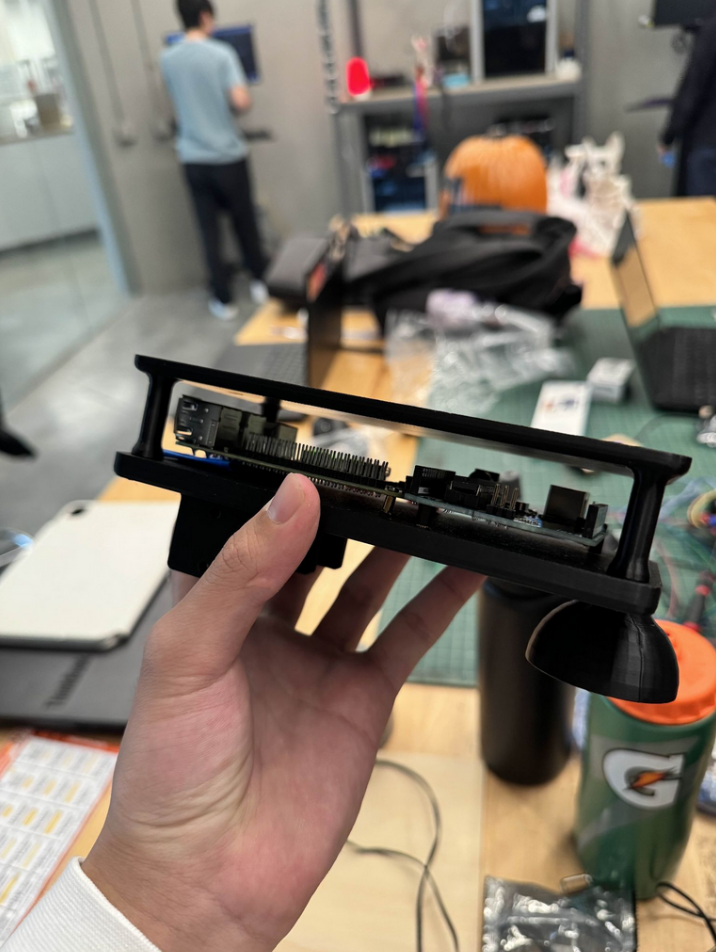
Chassis prototype
Inspiration
Space travel is risky. Beyond obvious debris, friction heat and microscopic orbital particles cause unavoidable hull damage that accumulates over time. This damage can be almost undetectable until it's too late. NASA lists external dangers like these as one of the top five biggest risks threatening space exploration.
That's where Voidrix comes in. Our robot can proactively scan the hull with no risk to human life, find damaged portions of the hull, and notify the crew so they can repair the damage and continue operations with peace-of-mind.
What it does
This bot is an early warning system for damage. It scours the hull, using a magnetic belly to stay attached to the ship, and scans it using a crack detection system. It can then transmit the data to an onboard computer for the crew to be able to locate the damage.
How we built it
Hardware: Our robot uses a simple two-wheel drive system with a freely rotating 360-degree ball caster in the front, allowing smooth movement and a full range of motion. Most structural components were 3D-printed, with electrical parts secured using heat-set inserts, screws, and, when necessary, generous amounts of duct tape. To enable surface attachment, we mounted magnets to the underside of the robot, allowing it to adhere to metallic surfaces with magnetic properties.
Software:
- Vision Input (Logitech Webcam) Captures live video stream of the robot’s surroundings. Provides real-time visual data for downstream processing.
- Image Processing (OpenCV) Performs basic preprocessing such as resizing and filtering. Standardizes frames for consistent model inference speed and accuracy.
- Crack Segmentation (Ultralytics) Runs a segmentation model to detect and localize surface cracks in real time. Outputs structured detection data (e.g., crack presence and location).
- Communication Bridge (I²C Module) Packages vision outputs into compact messages. Transmits detection data from the vision stack to the Arduino with low latency. Serves as the interface connecting high-level perception to low-level control.
- Microcontroller Interface (Arduino) Receives I²C messages from the vision pipeline. Translates perception data into motion-level commands.
- Drive Control (PID + Feedforward Controller) Computes stable velocity and steering commands based on incoming inputs. Helps smooth motion despite noisy detections and limited tuning time.
- Actuation (Motor Drivers) Executes control commands to drive the motors. Enables responsive and continuous robot movement.
Challenges we ran into
Hardware limitations were one of our biggest obstacles. With only 36 hours, rapid prototyping and iteration on part designs was extremely limited, leaving little room to correct mechanical flaws. Our restricted access to manufacturing tools and spare components meant that once a design decision was made, we were often locked into it. As a result, assembling the robot became increasingly difficult, with minor misalignments or part incompatibilities turning into major blockers.
Integration hell quickly followed. Bringing together hardware, firmware, and software proved far more challenging than expected due to our limited parts inventory and the inability to source replacements or alternatives. Each subsystem depended tightly on the others, so a single hardware constraint could cascade into firmware workarounds and software compromises. With minimal testing time and no margin for redesign, integration became a process of constant debugging and adaptation under pressure.
Accomplishments that we're proud of
Successfully delivered a fully functional final product that tightly integrates our magnetic chassis with the full software stack.
Built a fully autonomous crack-detecting robot, combining real-time vision, control, and actuation within a 36-hour timeframe.
Demonstrated strong adaptability under constraints, continuously adjusting our design and implementation to limited time, hardware, and resources while still achieving our core goals.
What we learned
Adaptability is a core engineering skill. When ideal solutions failed, we learned to pivot quickly, prioritize robustness, and aim for “good enough to work.”
Communication is as critical as code. Clear ownership, fast feedback, and constant synchronization were essential to making progress within 36 hours.
What's next for Voidrix
Voidrix may expand its role to include in-situ repairs, safer deployment with redundant tethers, and more advanced sensing capable of identifying a wider range of damage types.

Log in or sign up for Devpost to join the conversation.