-
-
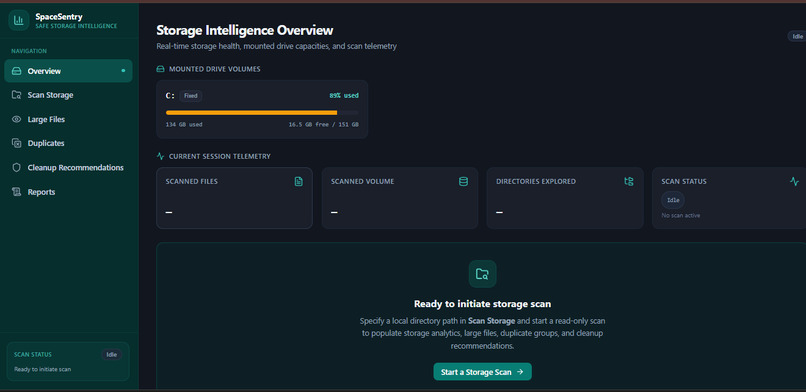
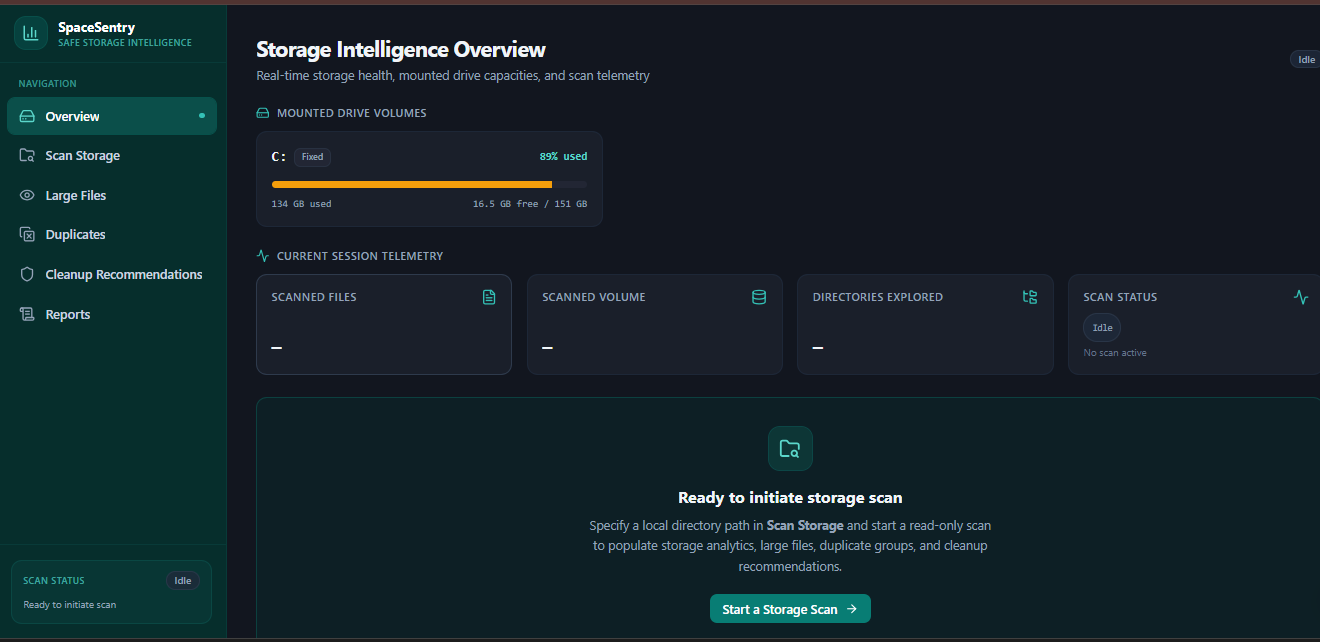
Overview
-
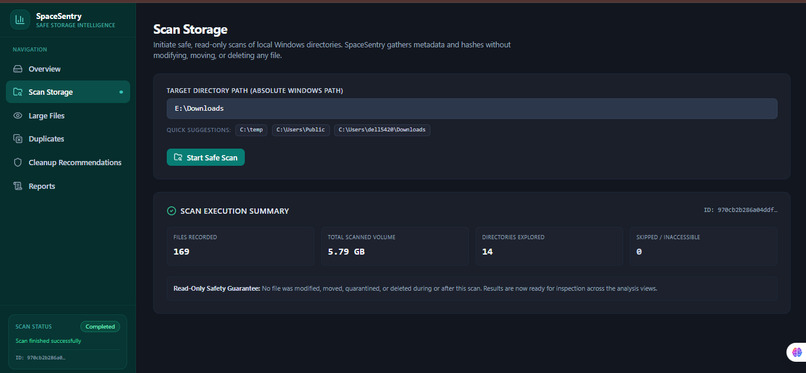
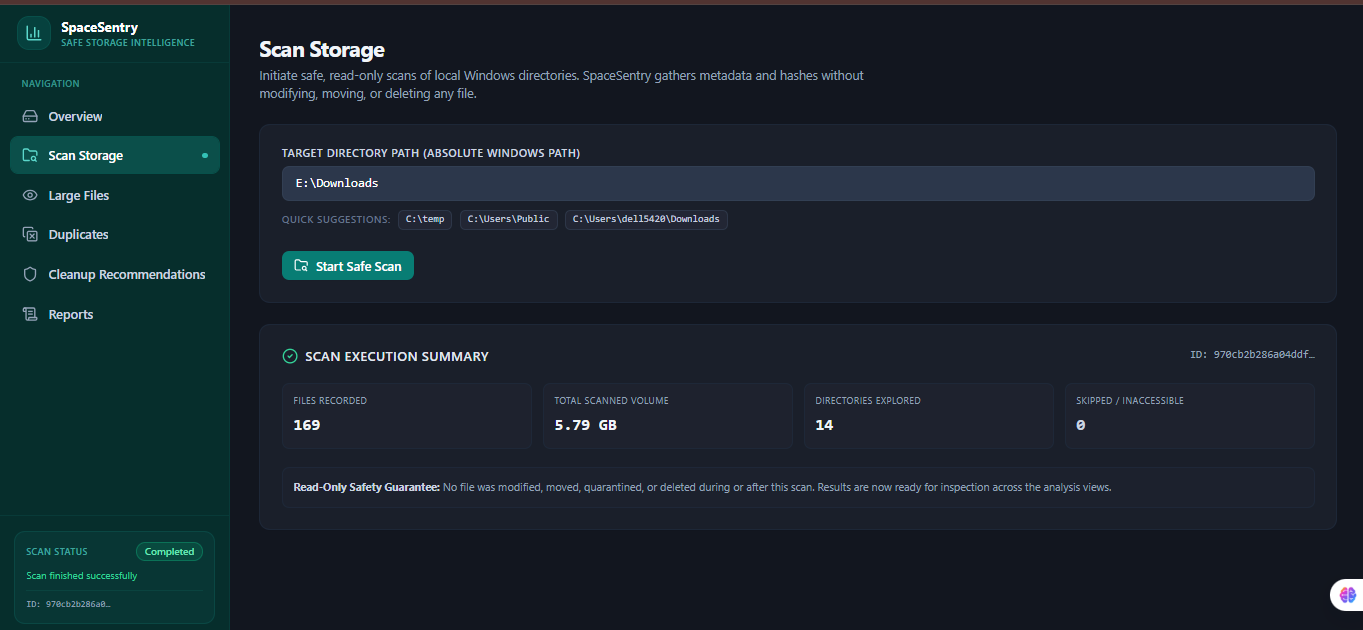
Scan Storage
-
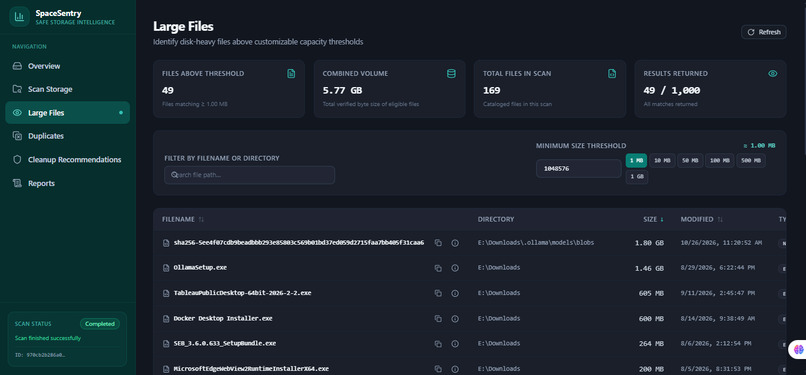
Large files
-
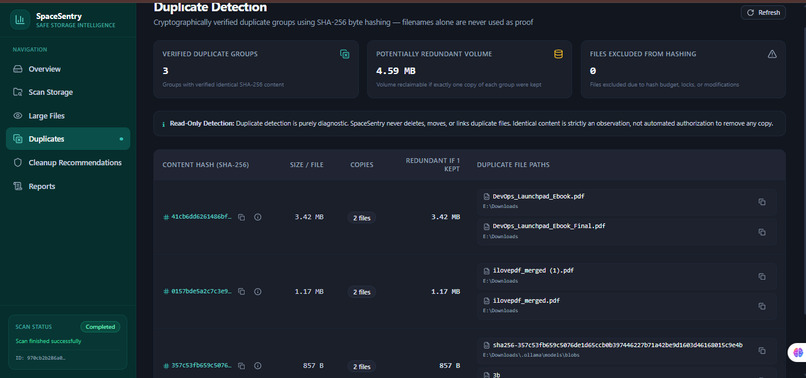
Duplicate Detection
-
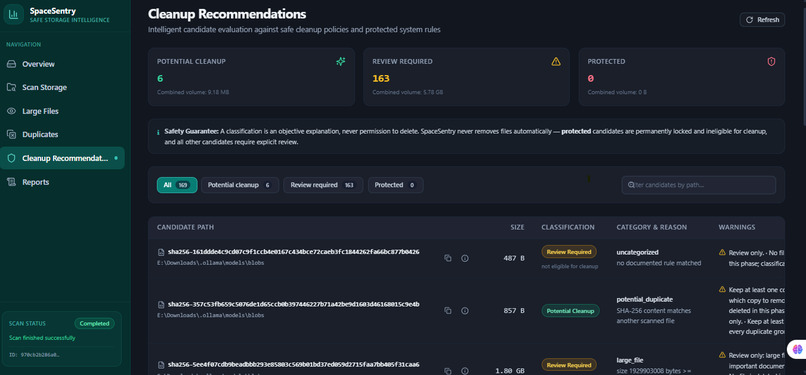
CleanUP Recommendation
-
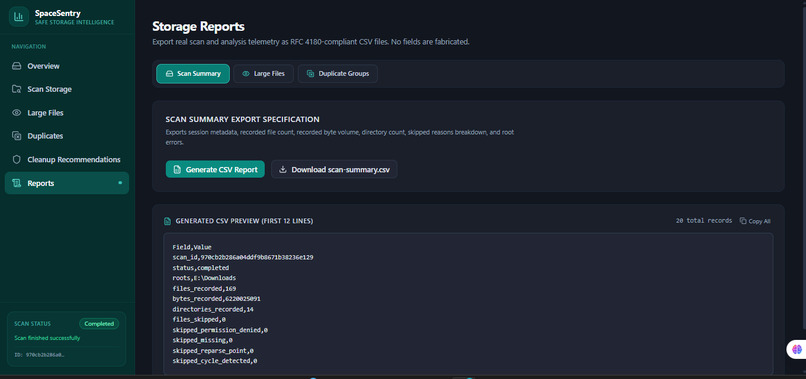
Storage Reports
SpaceSentry — Safe Storage Intelligence
Inspiration
Running out of disk space is a common problem for students and developers. Development caches, build artifacts, temporary files, duplicate downloads, and forgotten large files can gradually consume valuable storage. The difficult part isn't just finding large files — it's knowing which files might be safe to remove without accidentally losing important data.
We built SpaceSentry to make storage cleanup more transparent, measurable, and safer.
What it does
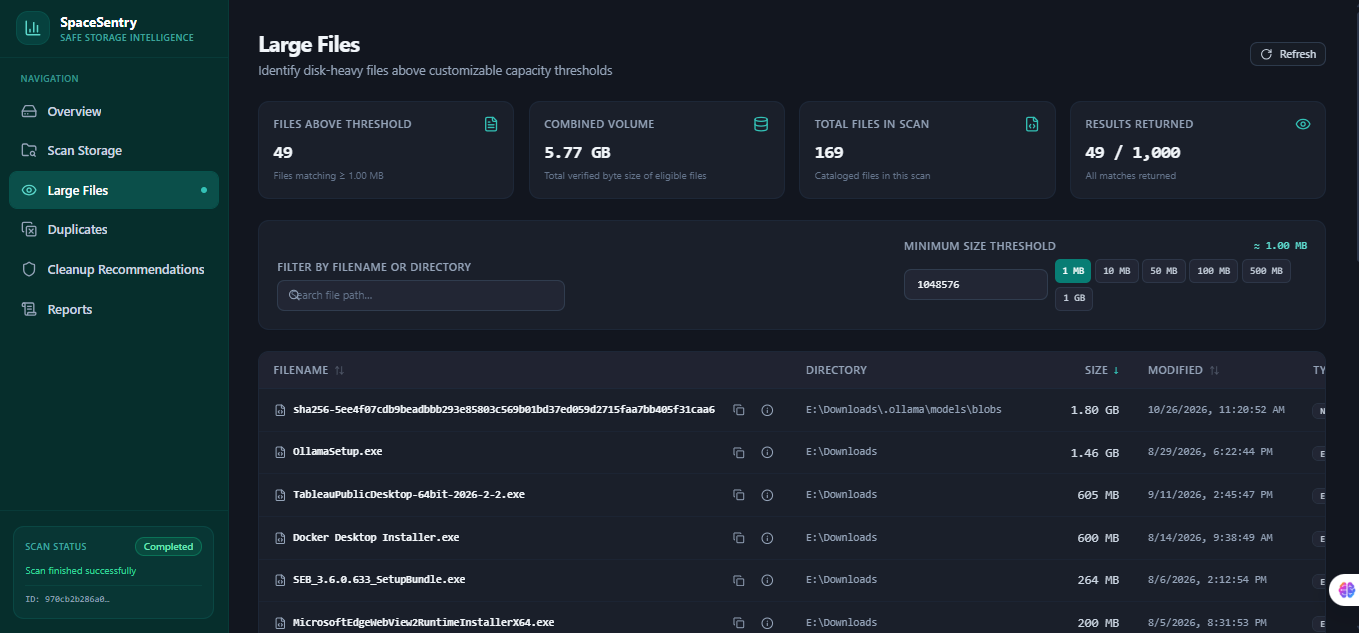
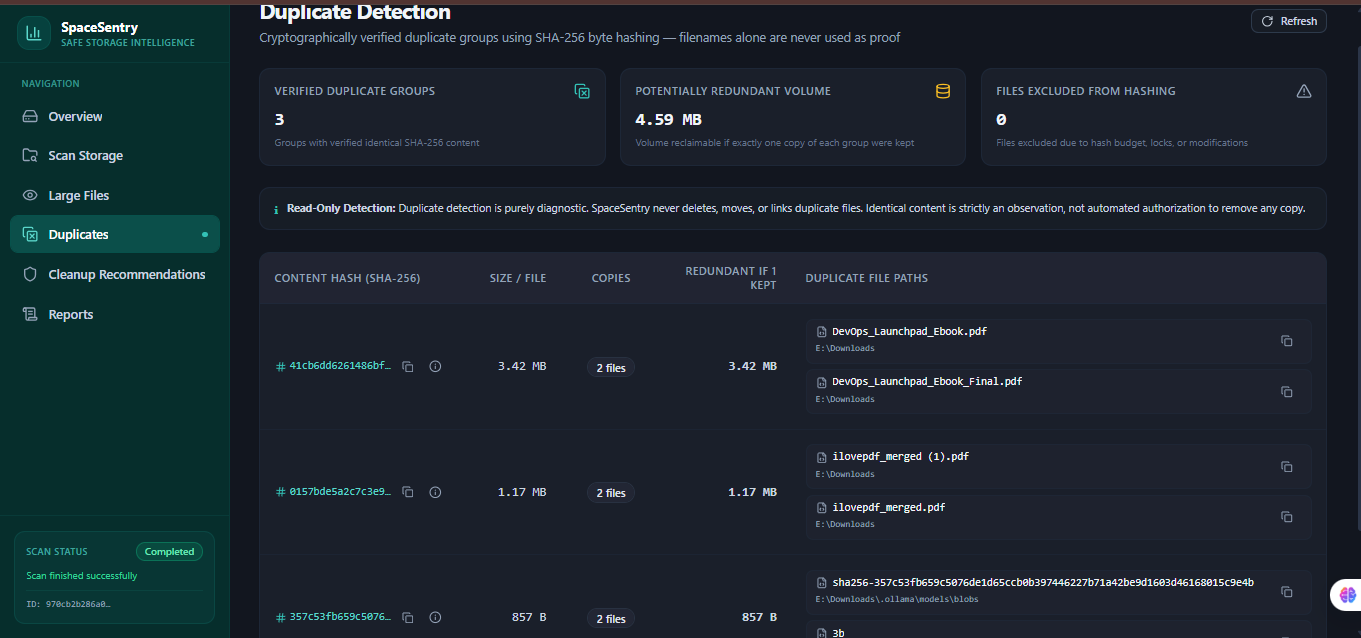
SpaceSentry is a local-first storage analysis and cleanup assistant for Windows users. It scans user-selected directories, identifies large files, verifies potential duplicates using SHA-256 content hashing, categorizes storage findings with transparent rules, and explains why files are flagged for review.
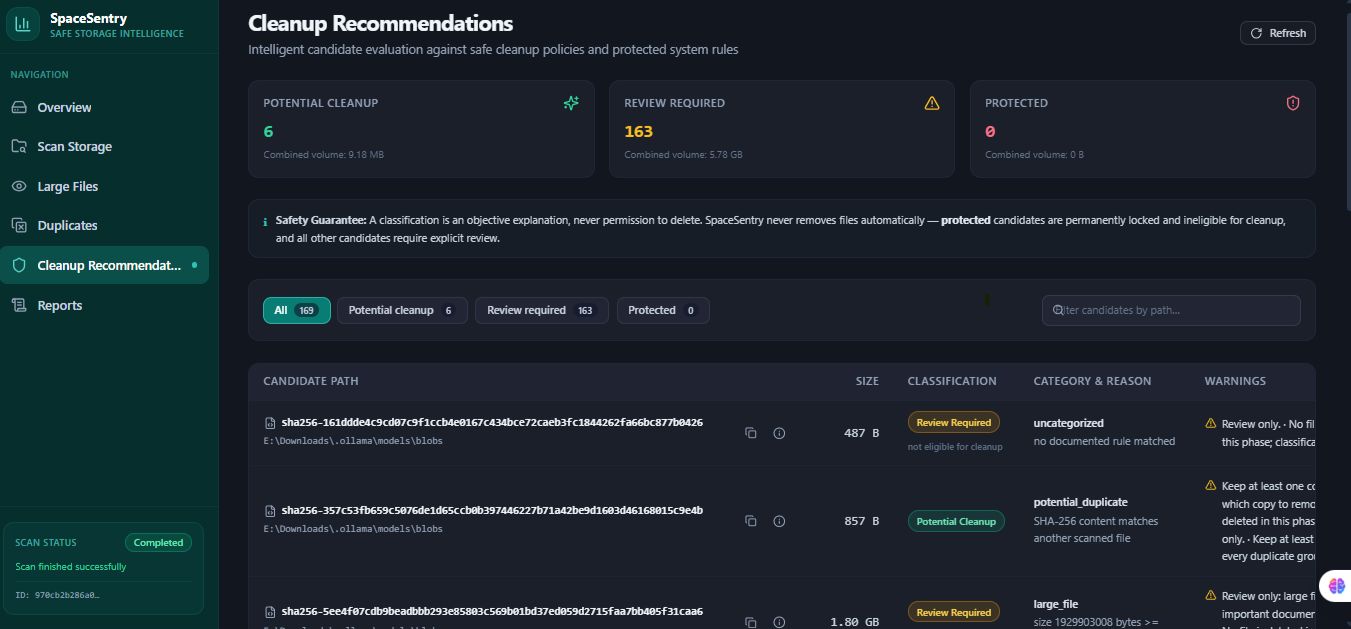
Instead of treating every large or old file as unnecessary, SpaceSentry distinguishes between potential cleanup candidates, items requiring review, and protected files. The goal is to help users make informed decisions using evidence from their own filesystem.
How we built it
We developed SpaceSentry using React, TypeScript, Vite, Python, and FastAPI.
The backend performs read-only filesystem scanning, records file metadata, handles inaccessible files, and avoids following symbolic links and reparse points by default. A separate analysis layer ranks large files, verifies duplicate content using streamed SHA-256 hashing, and applies documented categorization and path-protection rules.
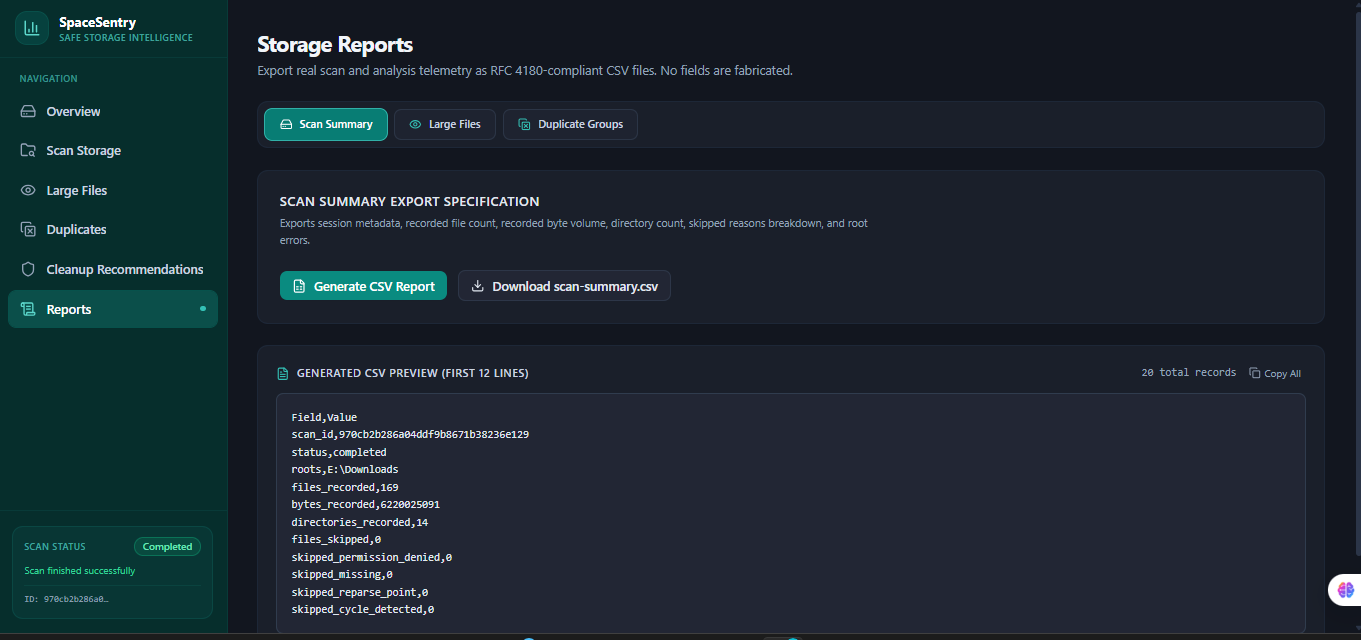
The frontend presents scan results through a dark-mode dashboard with storage summaries, searchable file tables, duplicate analysis, cleanup recommendations, and CSV reports. The application communicates with a local backend rather than uploading filesystem contents to a cloud service.
We built the project in stages: first the scanner, then the analysis engine and safety policies, and finally the dashboard and API integration. We added automated tests throughout development to catch correctness and security issues.
Challenges we faced
One major challenge was handling files that change or disappear while a scan or hash operation is running. We addressed this with metadata validation, error handling, and revalidation during analysis.
Another challenge was distinguishing genuine duplicates from files that merely share a name or size. SpaceSentry uses SHA-256 content hashes rather than filenames alone.
We also had to design conservative path-protection rules and make incomplete scans explicit, because recommendations based on incomplete or stale data can be misleading.
Finally, integrating the frontend with a local filesystem backend required careful API validation and clear loading, empty, partial, and error states.
What we learned
Building SpaceSentry reinforced that useful developer tools need more than a polished interface. Accurate data, transparent reasoning, conservative defaults, and meaningful tests are essential — particularly when software interacts with a user's files.
We learned to separate detection from authorization, distinguish estimated reclaimable space from space actually freed, and treat filesystem operations as security-sensitive rather than routine UI actions.
Future plans
We plan to improve storage visualizations, add more configurable cleanup rules, expand platform support, and strengthen quarantine and restoration workflows. Future releases will continue to prioritize explicit user approval, transparent reporting, and protection against unintended file operations.
SpaceSentry: Find wasted storage. Reclaim space safely.
Built With
- cybersecurity
- developer-tools
- fastapi
- filesystem-analysis
- open-source
- python
- react
- sha-256
- sqlite
- storage-management
- tailwind-css
- typescript
- vite
- windows

Log in or sign up for Devpost to join the conversation.