-
-
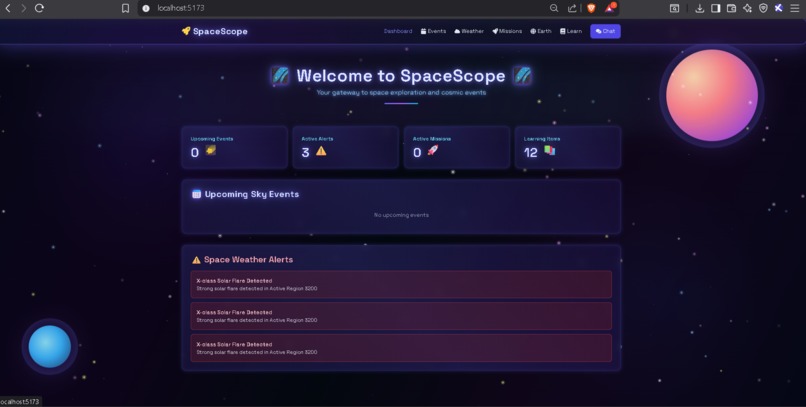
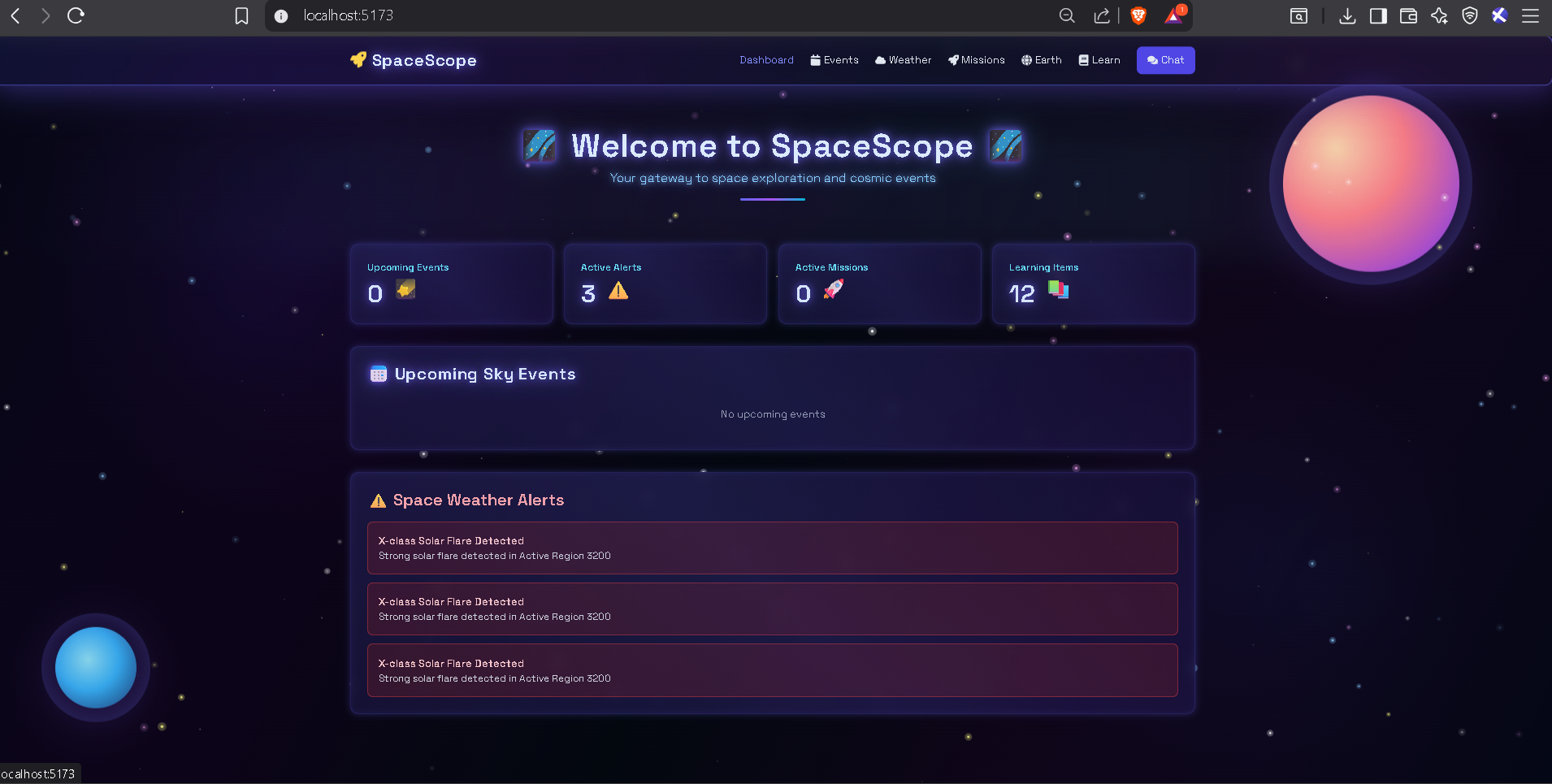
Dashboard/Homepage
-
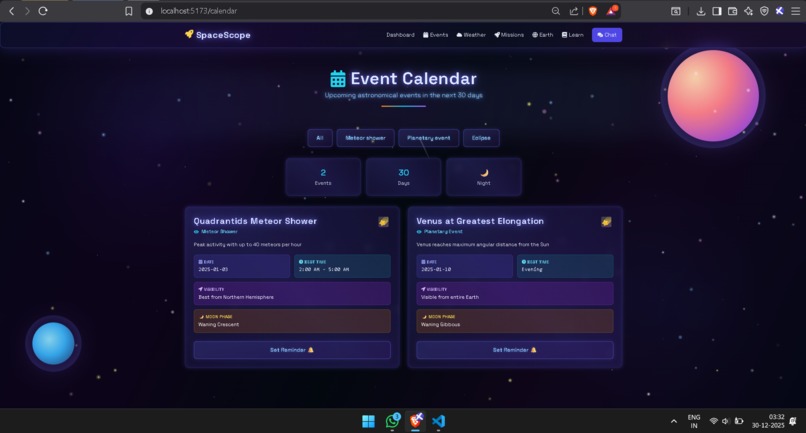
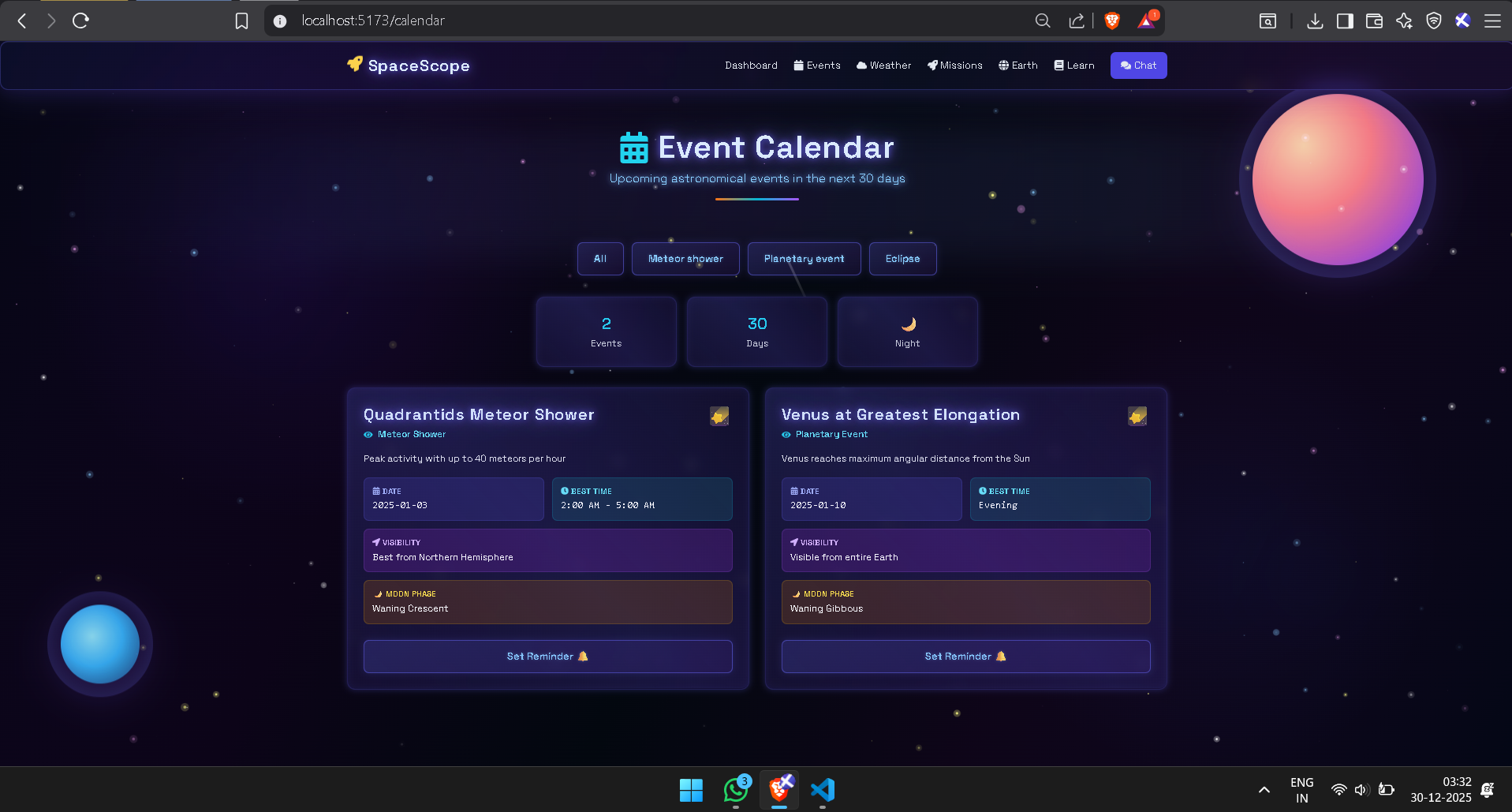
Event Calender Page
-
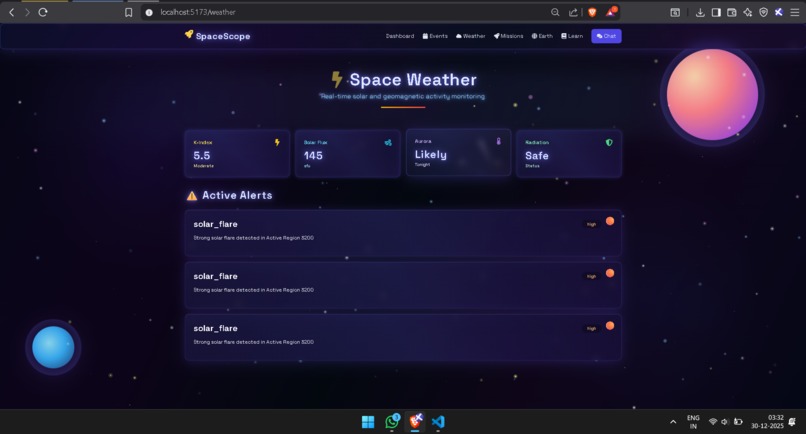
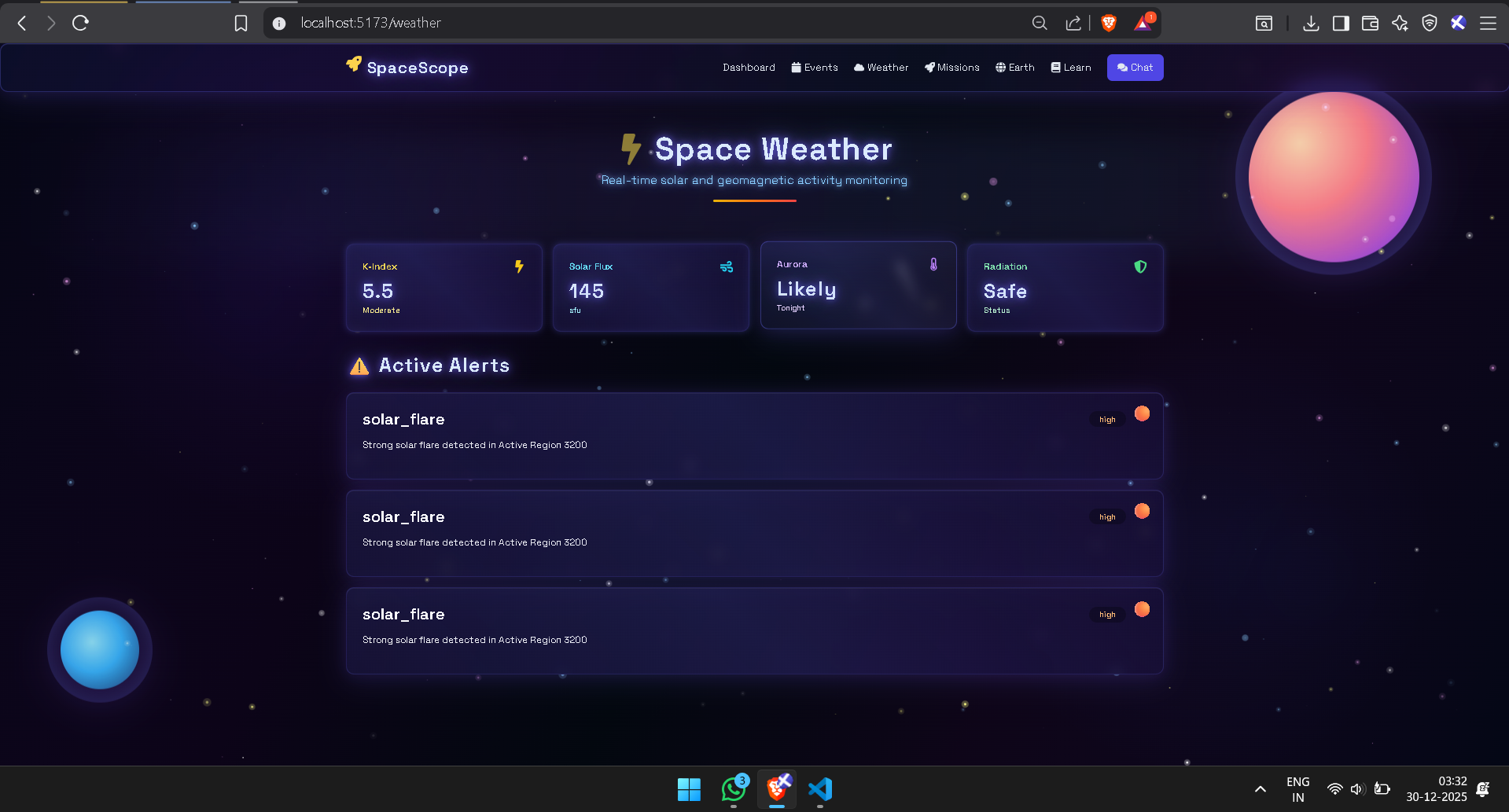
Space Weather Page
-
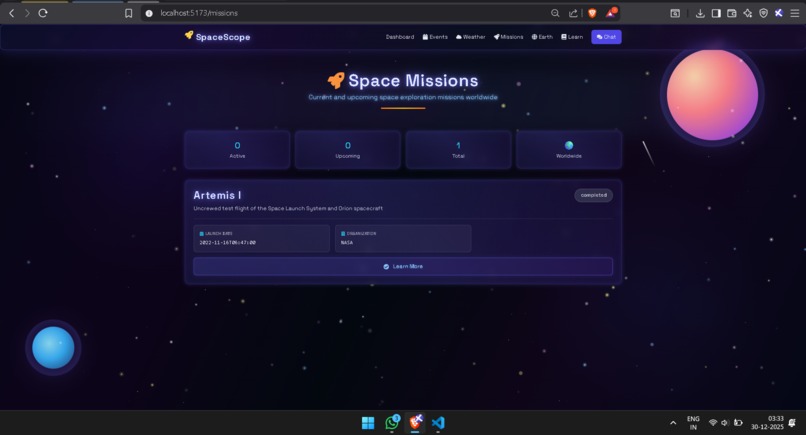
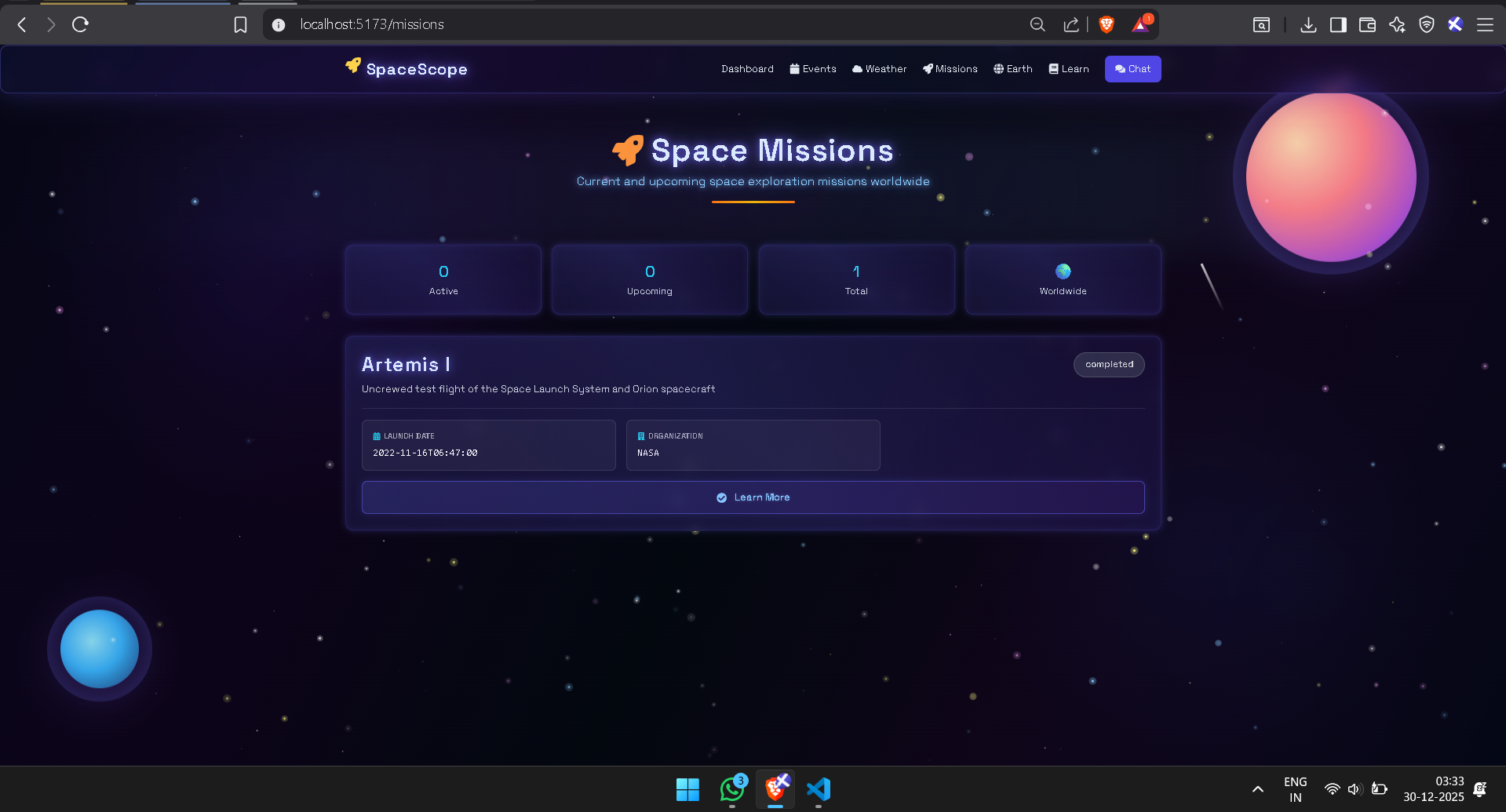
Space Mission Info Page
-
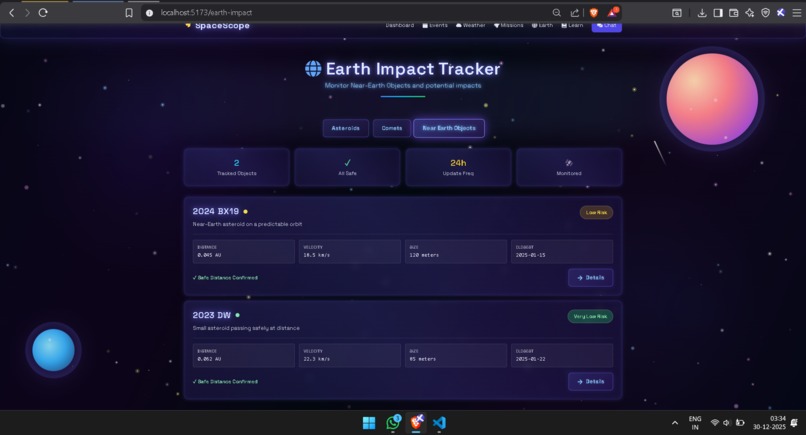
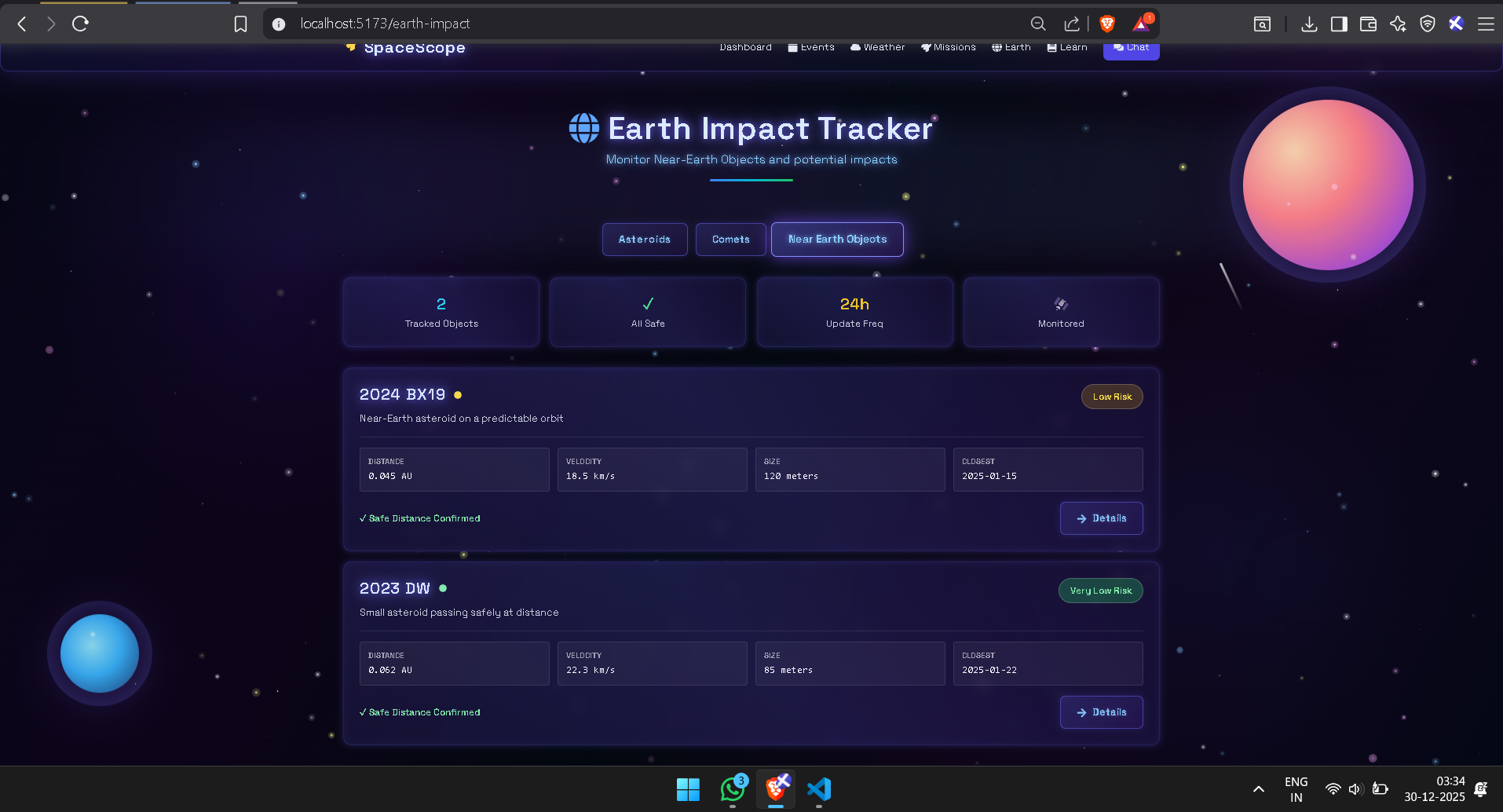
Earth Impact Page
-
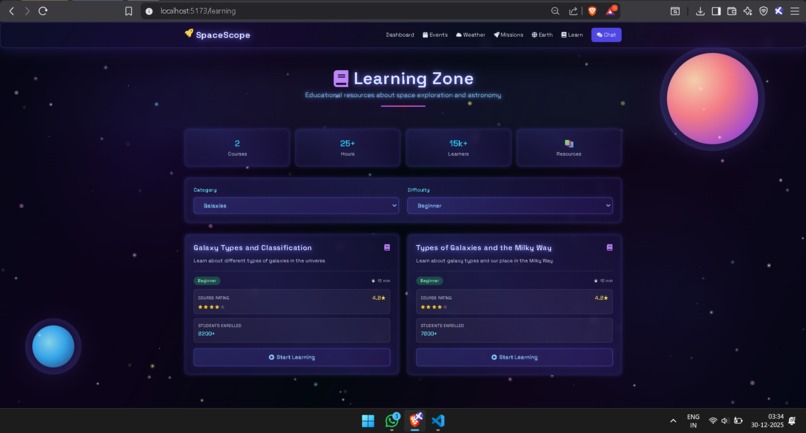
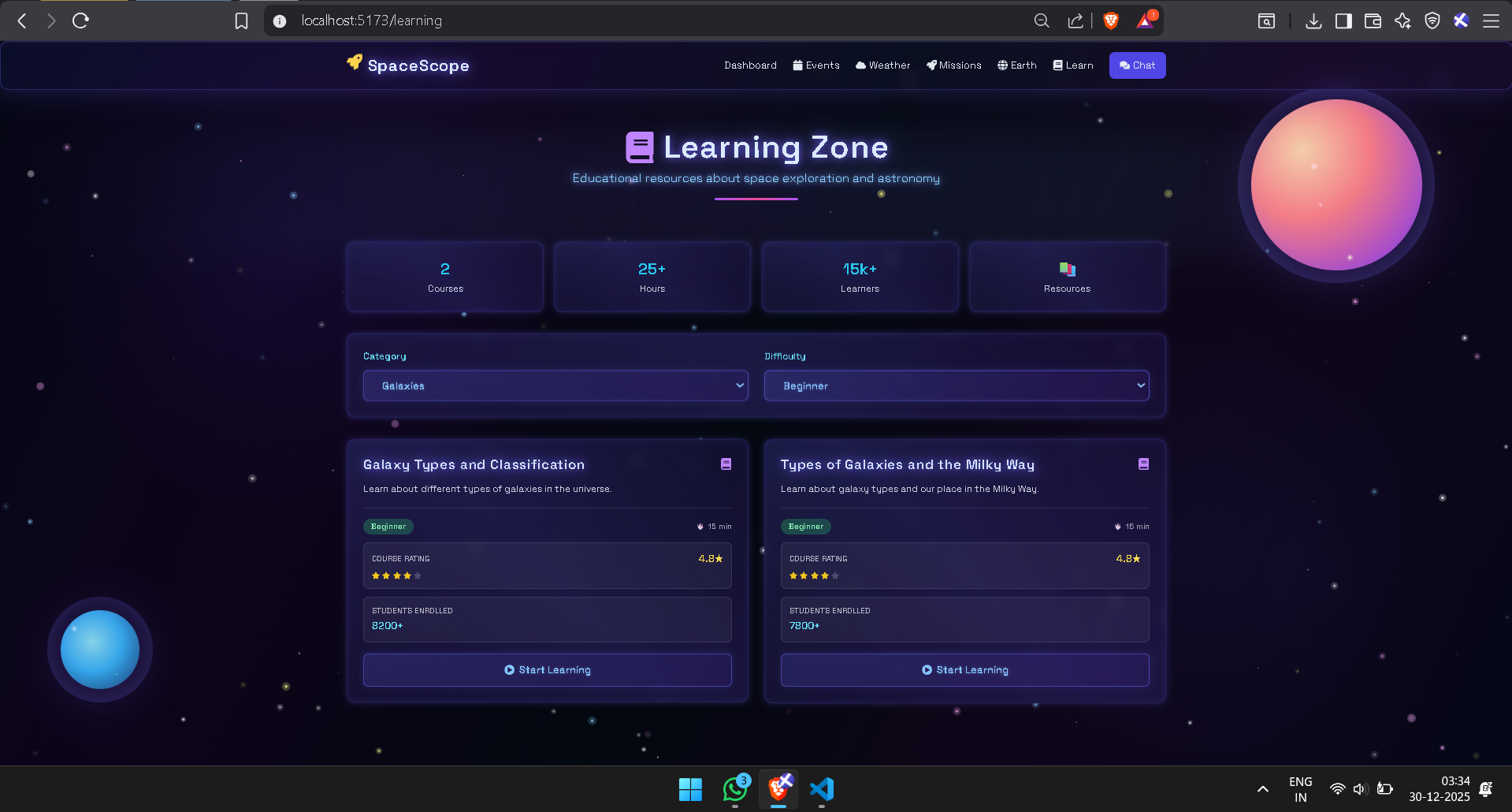
Learning Zone Page
-
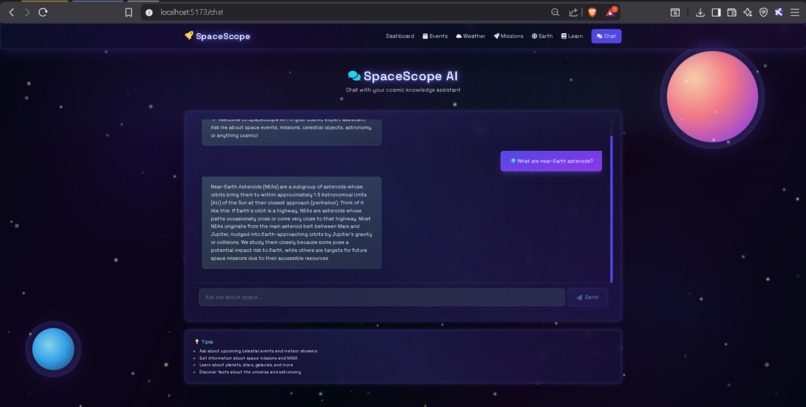
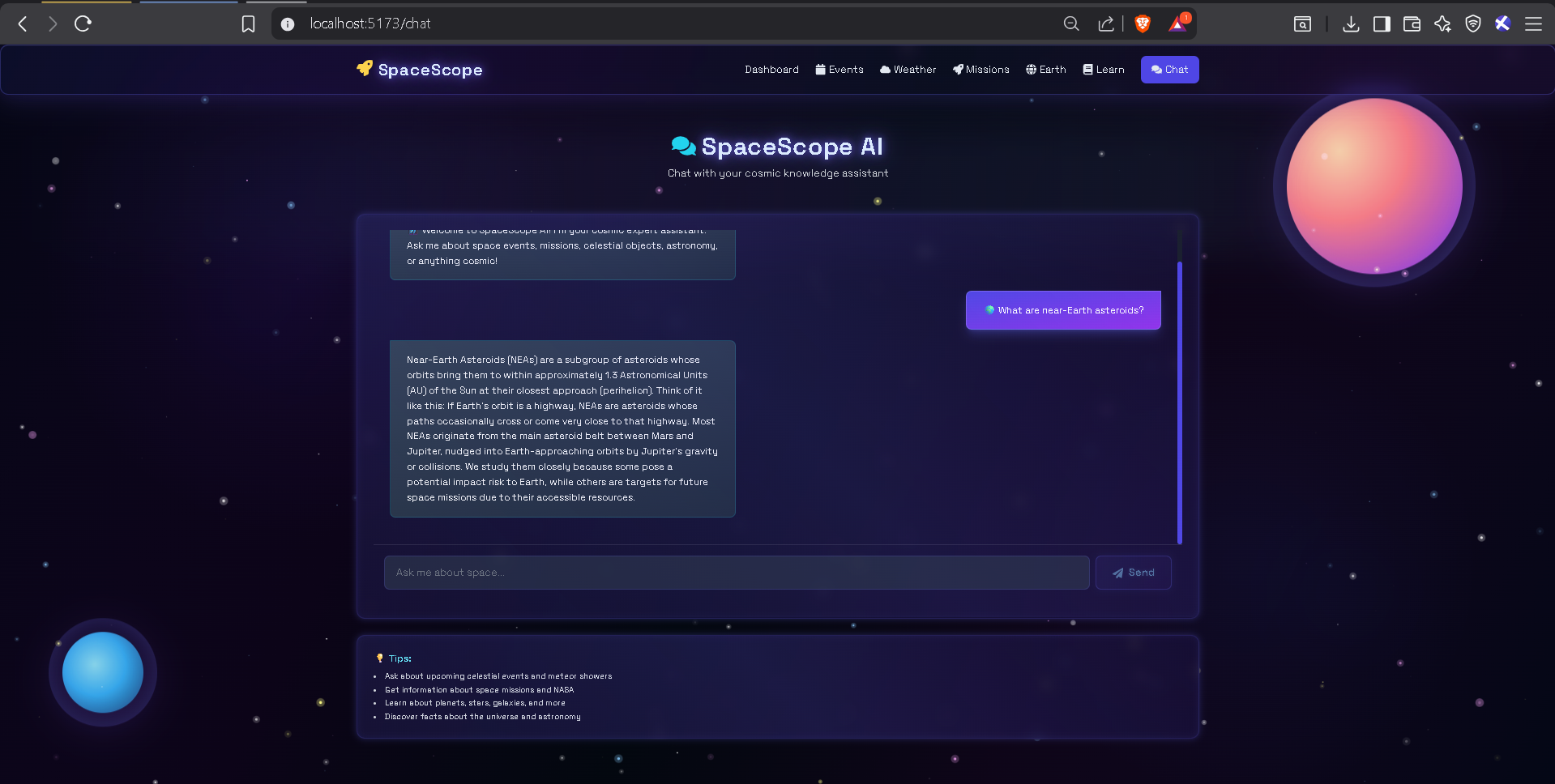
Chatbot Page
Inspiration
Space data is powerful, but it is scattered, technical, and inaccessible to most people. From satellite climate data to solar storm alerts and space missions, valuable information exists — but rarely in one connected, understandable place.
We were inspired by the idea of making space data human-readable and practically useful. We wanted to build something that bridges astronomy, Earth science, and AI into a single system that helps people see, learn, and understand how space affects our planet and daily life.
SpaceScope was born from the question:
“How can we turn complex space data into something meaningful for everyone?”
What it does
SpaceScope is an AI-powered platform that:
- Aggregates space-related data (sky events, space weather, missions, satellite observations)
- Monitors Earth impacts such as climate, agriculture, and pollution using satellite metrics
- Predicts upcoming events like auroras, meteor showers, and solar storms
- Explains space phenomena in simple language using AI
- Allows users to explore space through a chat-based learning interface
It acts as a space intelligence hub that connects cosmic events with their impact on Earth.
How we built it
SpaceScope is built as a full-stack, modular system:
- Backend: FastAPI for API services
- Database: PostgreSQL for structured storage
- Async tasks: Celery + Redis for background ingestion and processing
- AI layer: Gemini API for explanations and contextual chat
- Frontend: React + Vite for interactive dashboards and learning UI
- External data: NASA and satellite APIs
The system is split into services for ingestion, storage, AI processing, and user interaction to keep it scalable and maintainable.
Challenges we ran into
- Normalizing different scientific datasets with varying formats and update rates
- Handling asynchronous pipelines for ingestion and prediction reliably
- Designing schemas that were both scientifically accurate and developer-friendly
- Making AI outputs factual, safe, and context-aware rather than generic or misleading
- Balancing scientific depth with usability and clarity
Accomplishments that we're proud of
- Built a complete end-to-end system from ingestion to AI explanations
- Successfully integrated multiple data domains (space, Earth, AI) into one platform
- Created a flexible API architecture that can scale with new data sources
- Designed an interface that is educational, interactive, and accessible
- Turned raw scientific data into understandable insights
What we learned
- How to design distributed systems with background workers and real-time APIs
- How to structure scientific data for both machines and humans
- How to responsibly integrate AI into educational and informational systems
- How much work goes into making data actually useful — not just collected
- How to collaborate across backend, frontend, and AI design
What's next for SPACESCOPE - The AI x Space Project
- Add live satellite feeds and real-time visualization
- Expand prediction models for climate, auroras, and disasters
- Introduce user personalization and alert subscriptions
- Build interactive simulations and 3D visualizations
- Partner with educators and research institutions
- Open the platform for citizen science contributions
Our long-term vision is to make SpaceScope a global platform for space awareness, education, and Earth monitoring.
Built With
- axios
- celery
- docker
- fastapi
- git
- google-gemini-api
- javascript
- nasa-open-apis
- node.js
- postgresql
- pydantic
- python
- react
- redis
- rest-apis
- sqlalchemy
- tailwind-css
- vite

Log in or sign up for Devpost to join the conversation.