-
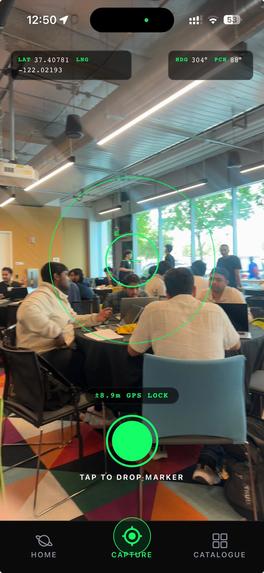
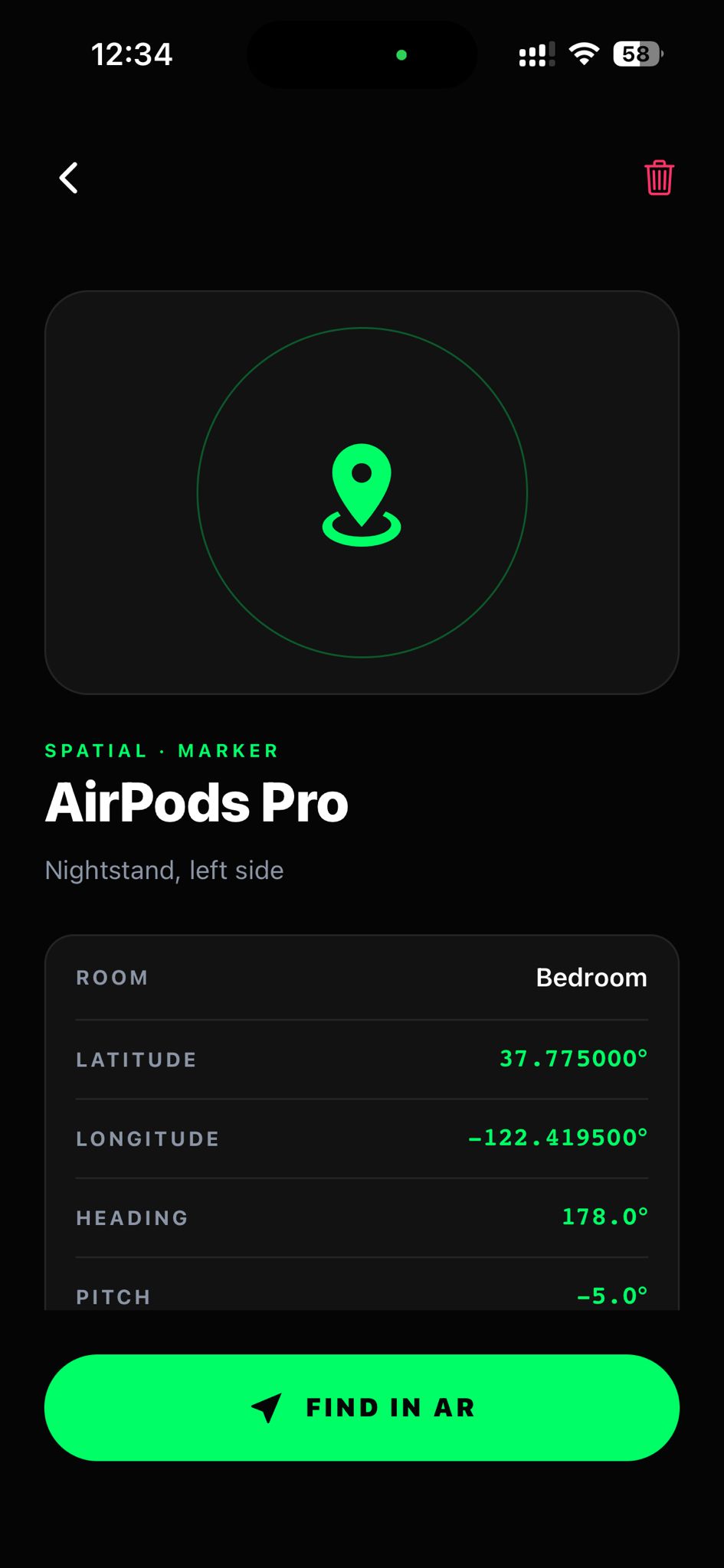
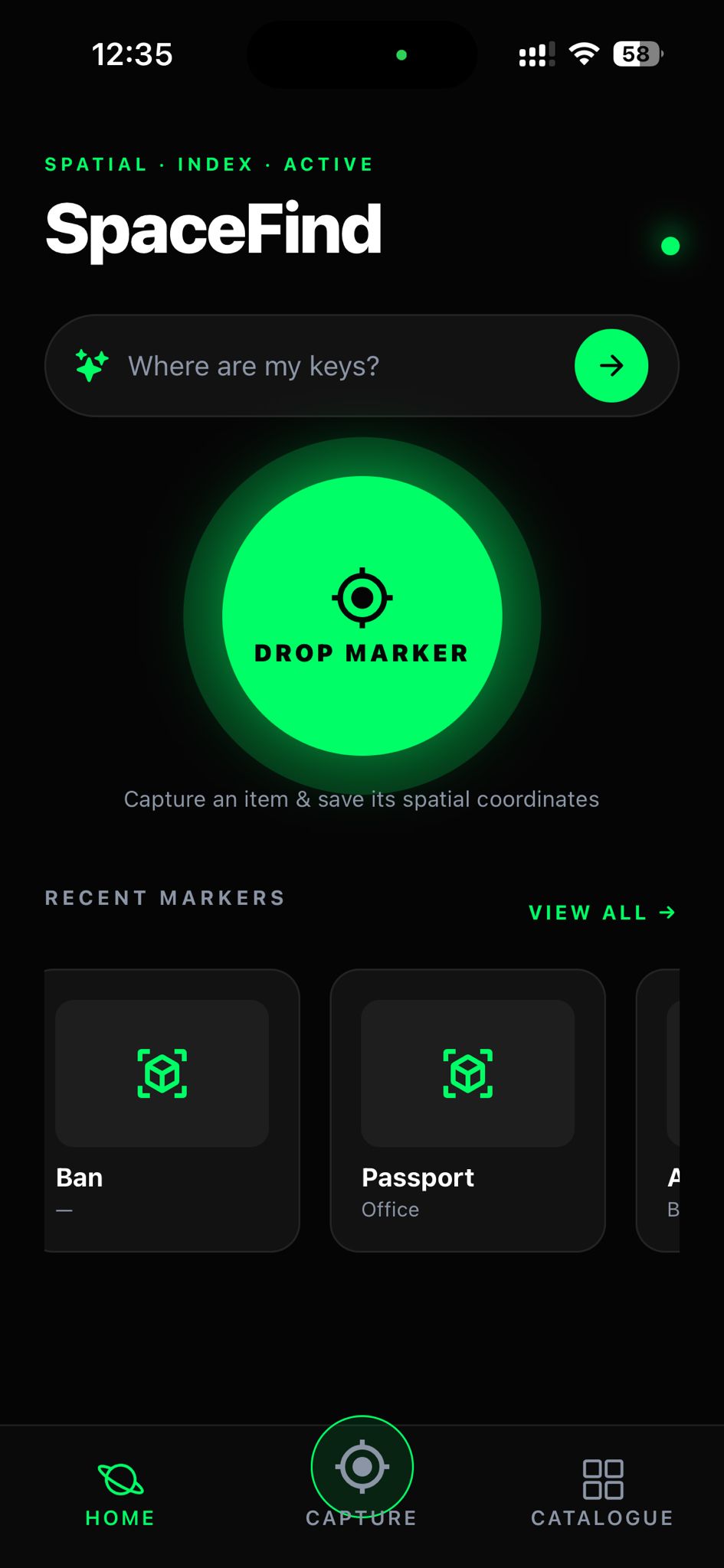
marking items in spacial space and storing location
-
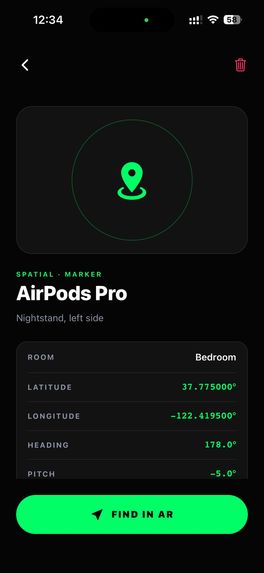
spacial marker for every selected item
-
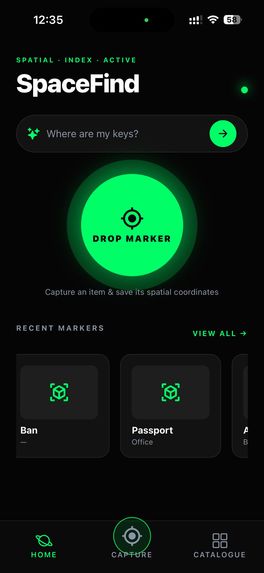
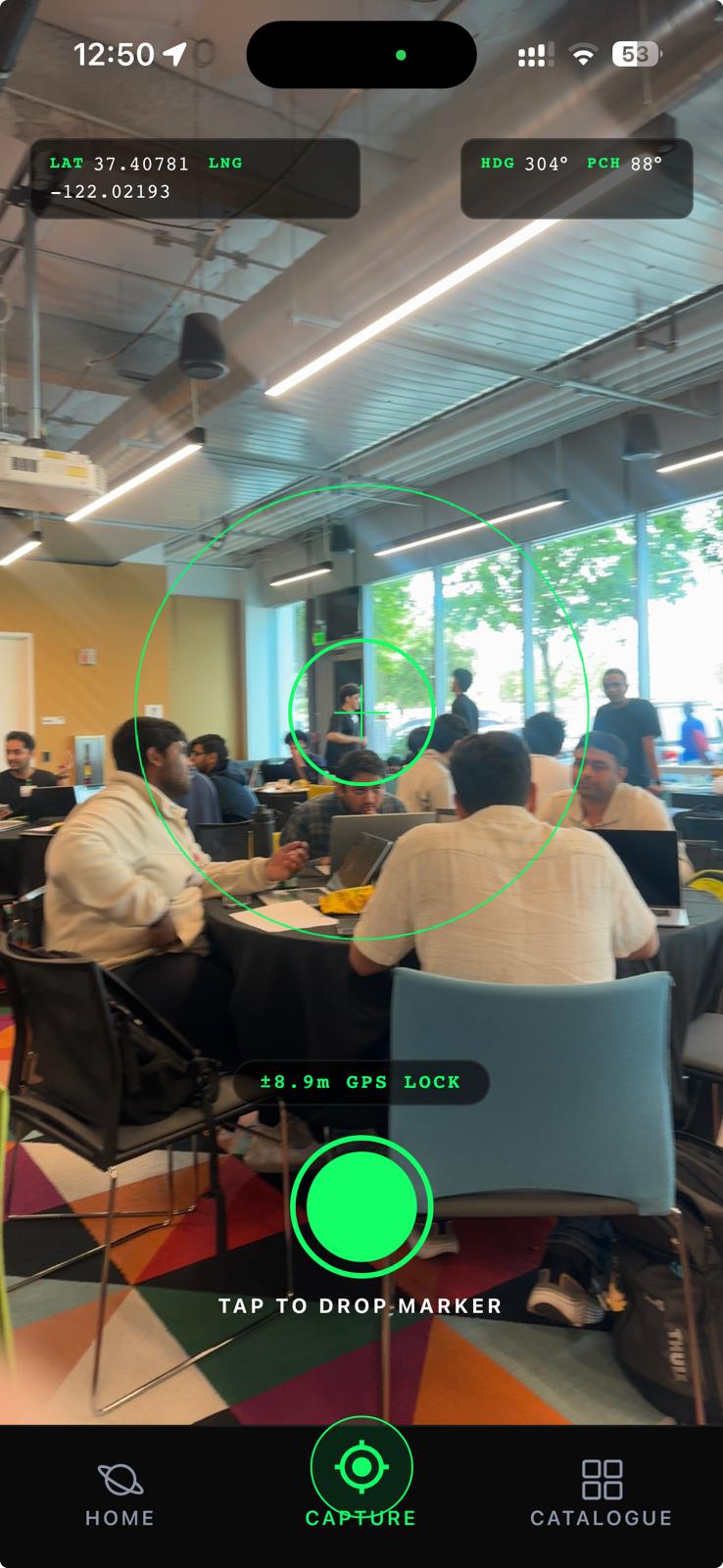
drop marker functionality to set markers for new items
-
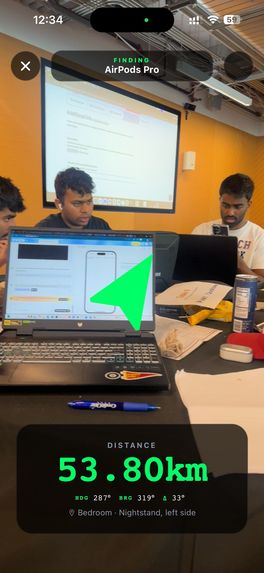
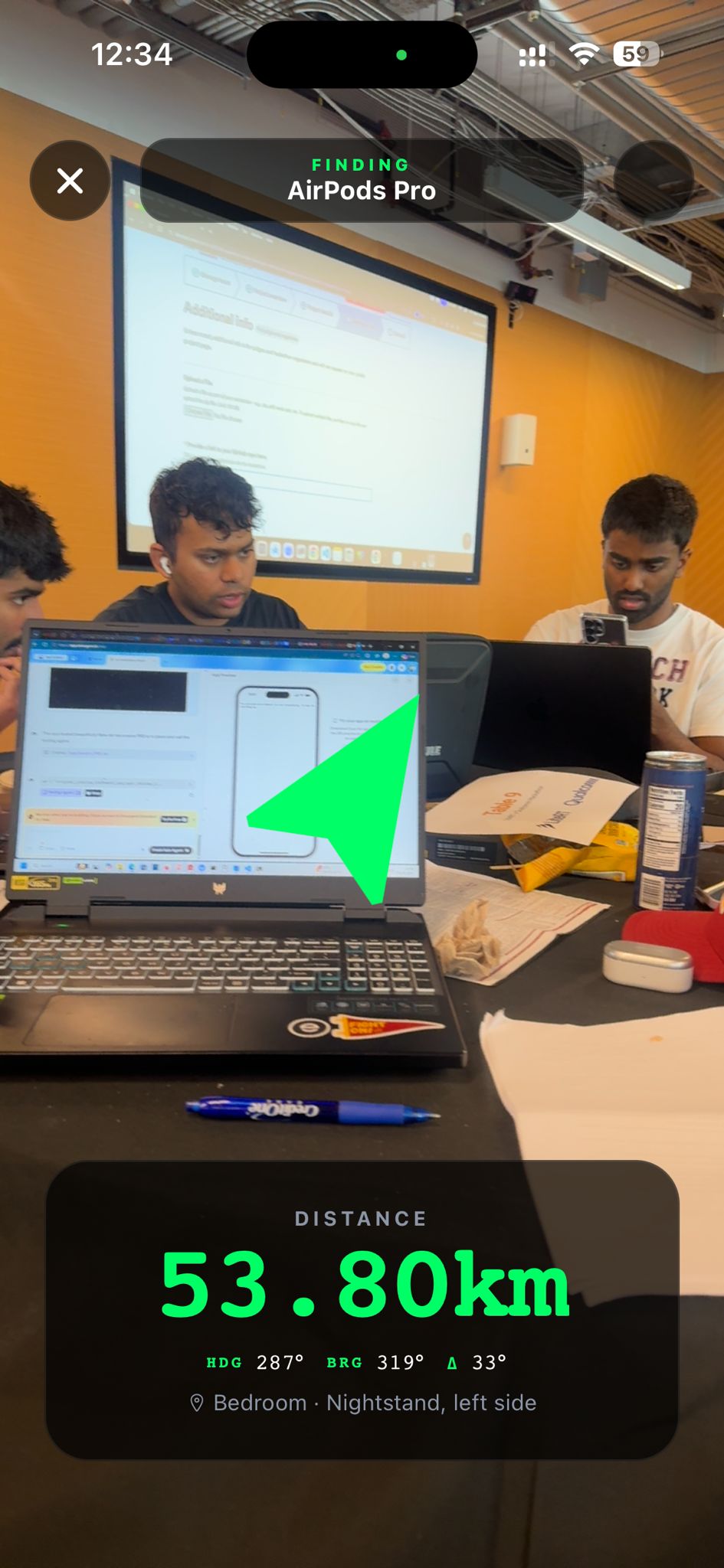
direction and distance from the marker in AR to find it
-
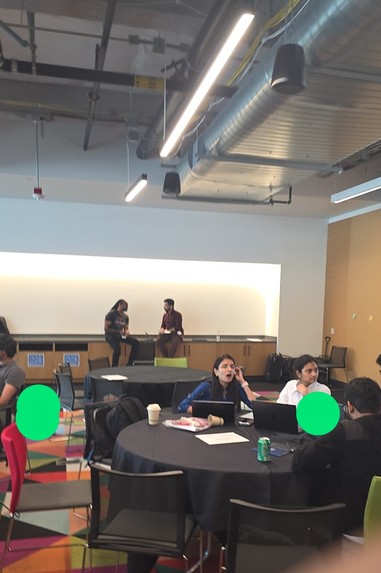
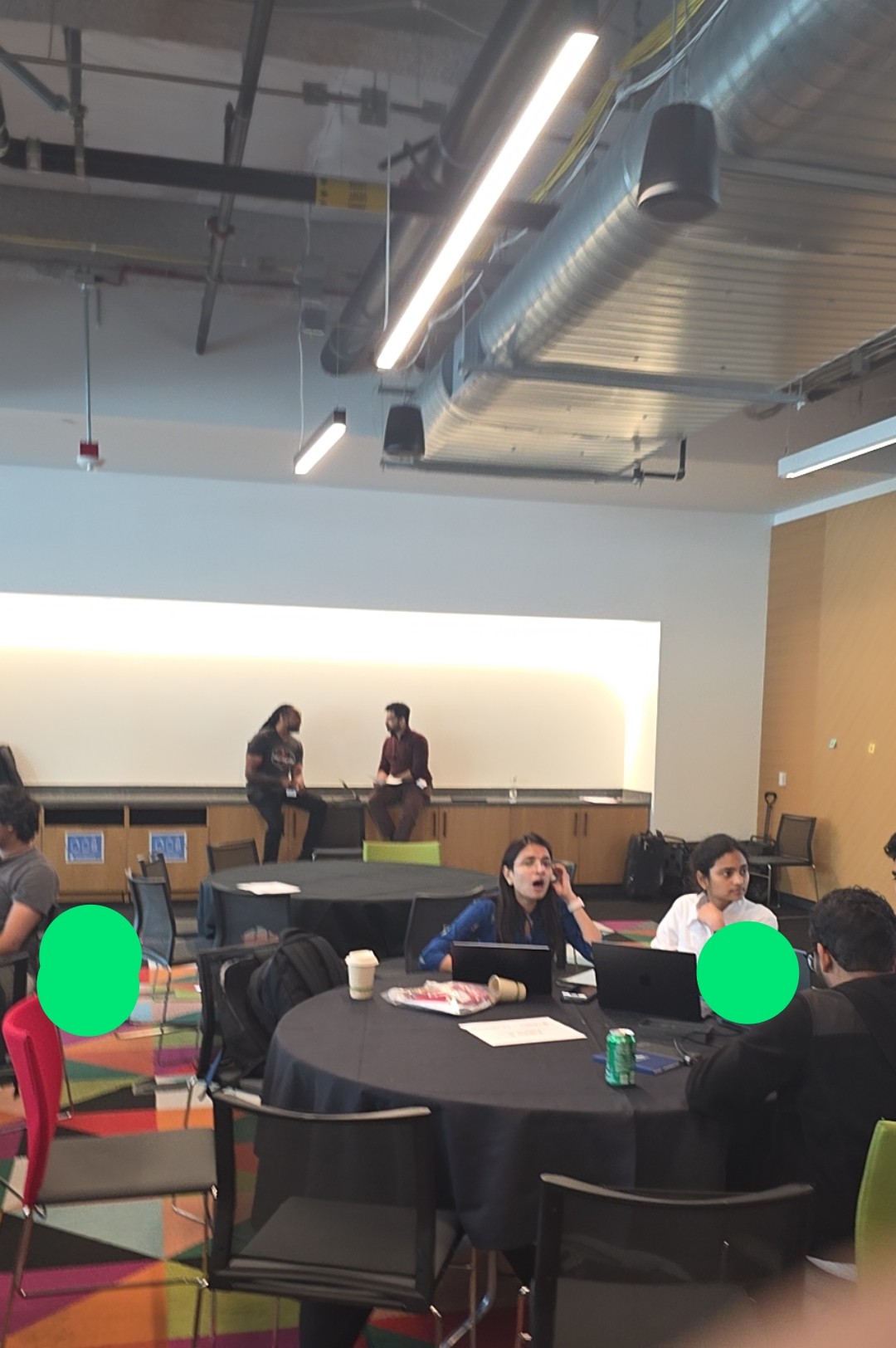
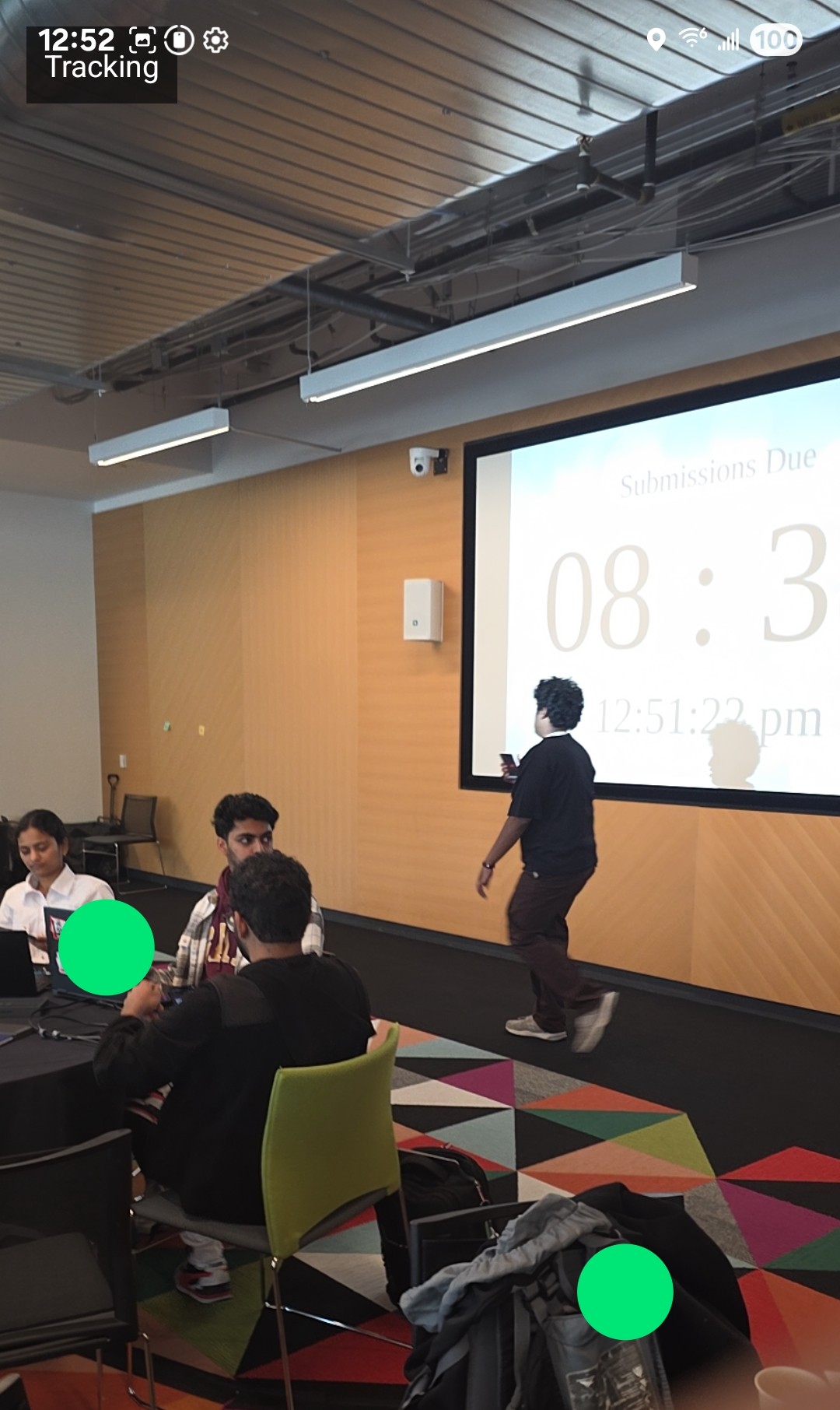
Live AR marking for each item
-
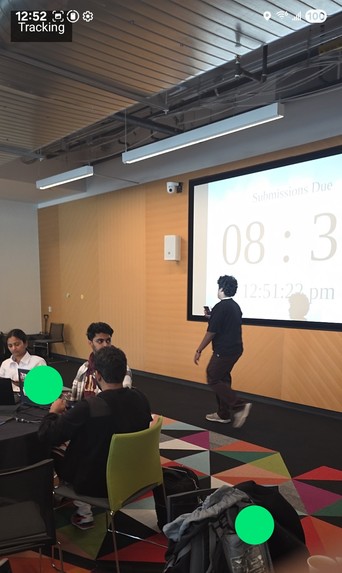
Live AR marking for each item
Inspiration
It started with a universal frustration: the frantic hunt for a wallet and keys right when we needed to head out for the hackathon. We realized that while we can find a single word in a thousand-page document instantly using Ctrl+F, finding a physical object in a messy room still requires manual labor. We wanted to bridge this gap, bringing the power of digital search to the physical world to eliminate "search time" from our daily lives.
What it does
SpaceFind is a "Command+F" for reality. It is a spatial database with integrated AR that allows users to index physical items in real-time. As you move through a space, the app identifies objects and saves their 3D coordinates into a vector database. When you lose an item, you simply ask the app, "Where is my screwdriver?" or "Find my badge." SpaceFind retrieves the location and provides an augmented reality path—a visual breadcrumb trail—leading you directly to the lost item.
How we built it
SpaceFind is built at the intersection of Computer Vision, Spatial Computing, and Vector Databases.
- The Index: We utilized Vision-Language Models (VLM) to process live camera feeds, identifying objects and converting them into high-dimensional embeddings.
- The Memory: These embeddings are stored in a vector database, which allows for semantic searching. This means the system understands context, allowing for searches like "the heavy tool" or "the red pouch."
- The Guidance: By integrating AR frameworks, we anchor items to specific 3D coordinates. The app then calculates the path from the user's current position to the item's stored location.
Challenges we ran into
The biggest hurdle was spatial persistence. Maintaining a digital marker's exact position as a user moves through different rooms required precise coordinate mapping and handling "drift" in the AR environment. We also had to optimize our vision pipeline to ensure that indexing happened in real-time without overwhelming the device’s hardware, balancing high-accuracy VLM processing with the need for low-latency feedback.
Accomplishments that we're proud of
We are incredibly proud of achieving real-time semantic retrieval. It was a major win to move beyond simple keyword tags and create a system that can find an object based on its visual description. Seeing the AR path accurately snap to a hidden object for the first time felt like watching science fiction become a functional tool.
What we learned
This project taught us that the future of productivity lies in Spatial Intelligence. We learned how to transform unstructured visual data into a searchable, structured database of reality. On a technical level, we gained deep experience in managing vector embeddings and optimizing on-device AI for mobile environments.
What's next for SpaceFind
We want to expand SpaceFind for enterprise and industrial use. Imagine a warehouse where new employees can find any tool among thousands of bins using AR, or a hospital where nurses can locate life-saving equipment instantly. We also plan to integrate "multi-user syncing," allowing a team to maintain a shared spatial catalog where if one person sees an item, everyone knows where it is.
Built With
- android-speech-recognition-&-tts
- androidx
- backend
- djl/sentencepiece-for-tokenization
- kotlin-android-app-with-arcore
- litert-+-litert-lm-on-qualcomm-npu-(qnn)
- opengl-camera-preview

Log in or sign up for Devpost to join the conversation.