Inspiration
As a lifelong space enthusiast, I’ve always craved a way to make the wonders of space exploration accessible to everyone – not just experts. Watching missions from ESA, NASA, and SpaceX unfold, I wanted to create a platform that turns abstract orbital mechanics and distant planetary data into something tangible, interactive, and fun. The idea was born from late nights stargazing, wondering how to bridge the gap between casual curiosity and deep cosmic understanding.
What it does
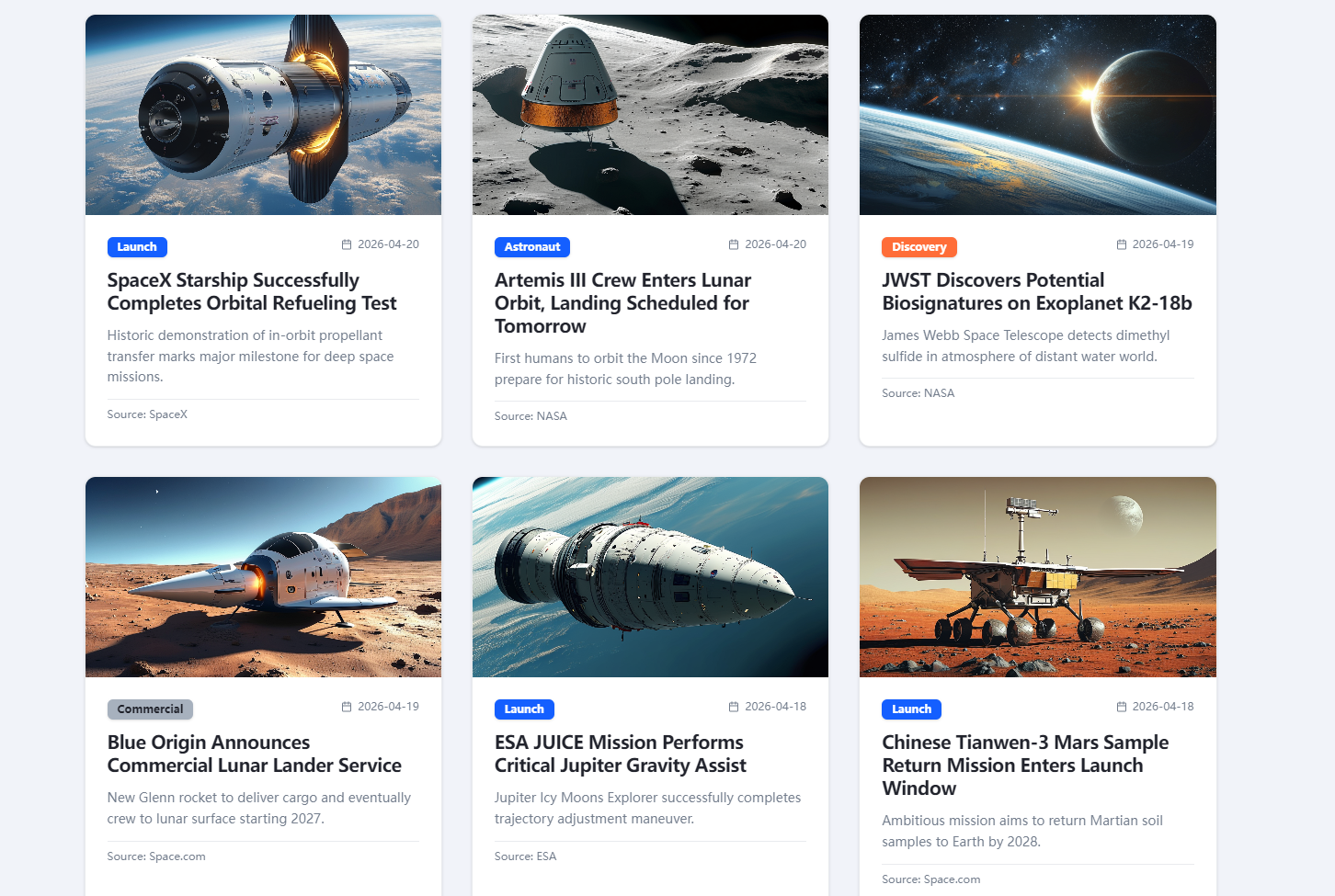
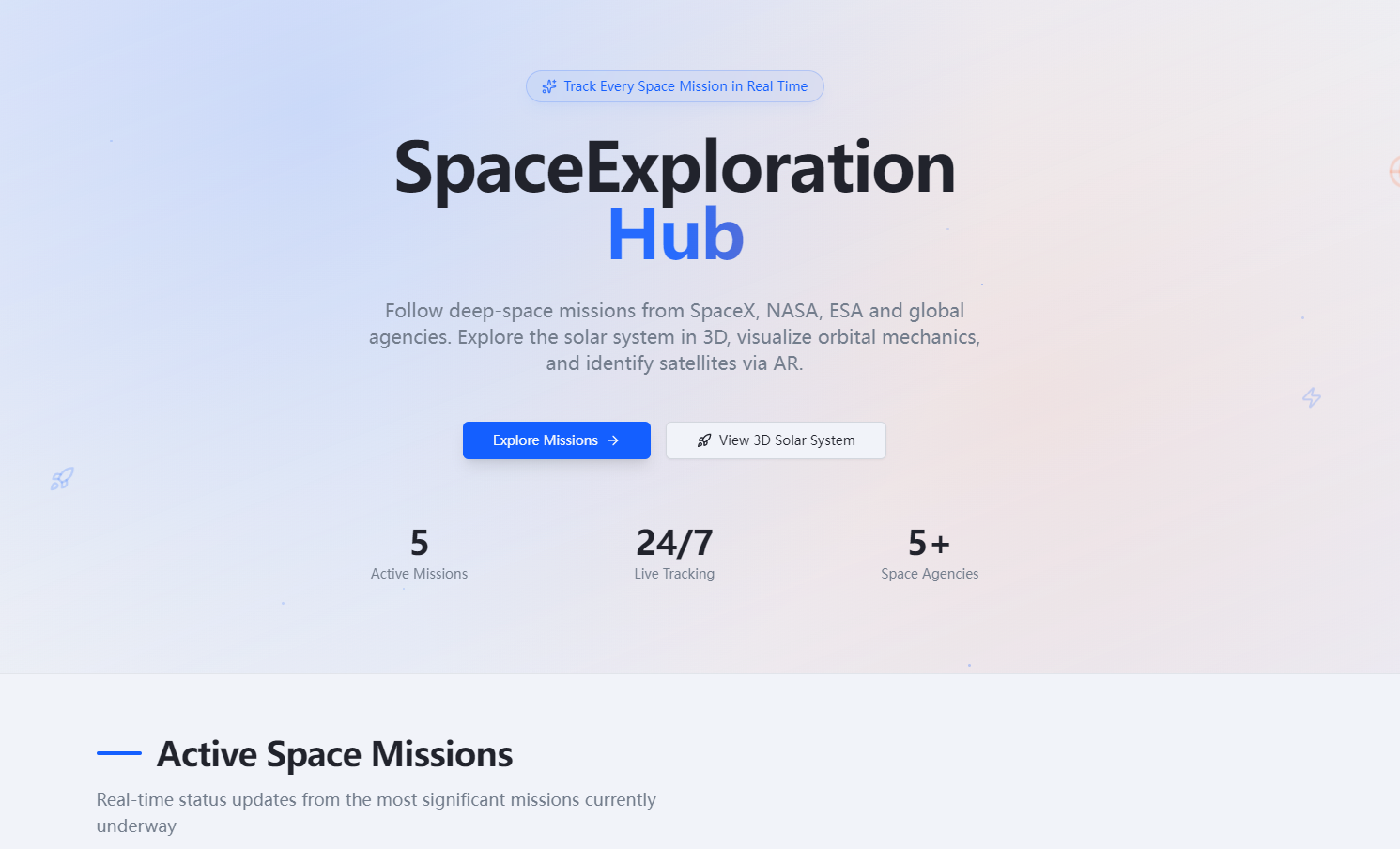
SpaceExploration Hub is a visual, interactive space intelligence platform that lets users track active space missions, explore the solar system through smooth 3D interactions, visualize satellite and space station orbits (in 2D/3D), browse curated space news, and use AR to identify satellites in the sky – no login needed, just instant access to cosmic exploration.
How we built it
I started by mapping out core user journeys, prioritizing intuitive navigation with a bottom bar for the five key sections (Missions, 3D Solar System, Orbits, News, AR). I used React for the frontend framework to ensure responsiveness, Three.js to build the 3D solar system with camera controls for rotation/zoom, and AR.js to integrate the sky recognition feature. For data visualization, Chart.js powered mission progress bars and orbital path overlays, while Firebase handled lightweight content hosting for curated news feeds.
Challenges we ran into
The biggest hurdle was balancing smooth 3D interactions with mobile performance – ensuring the solar system and orbital visualizations didn’t lag on different devices required optimizing WebGL render settings and simplifying high-res textures without losing detail. Another challenge was refining the AR sky recognition to accurately label objects and display context (altitude, speed) without overwhelming users.
Accomplishments that we're proud of
Creating a seamless, intuitive experience where users can go from tracking a SpaceX mission to exploring Jupiter’s moons in 3D to spotting the ISS in the sky – all with zero friction. The non-intrusive premium tier (unlocking high-res textures, advanced orbital tools) also struck the right balance between free access for all and value for dedicated users.
What we learned
I deepened my expertise in 3D rendering and AR integration, but more importantly, learned to prioritize user experience over technical complexity. Iterating on feedback, I realized that even the most impressive cosmic data means nothing if users can’t interact with it easily – simplicity was key to making space exploration approachable.
What's next for this project
I plan to expand the solar system to include more minor planets and asteroids, enhance orbital prediction tools, and partner with space agencies to add more mission-specific insights. I also want to refine the AR mode to include historical mission landmarks and make the platform compatible with more devices, so even more people can explore the cosmos.

Log in or sign up for Devpost to join the conversation.