-
-
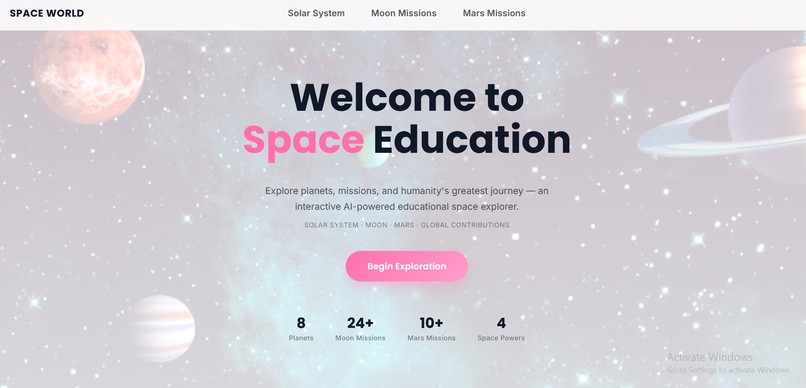
Front-page
-
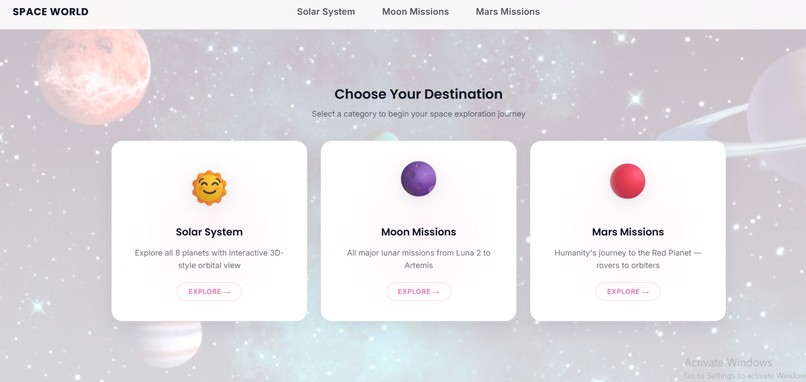
Second-page
-
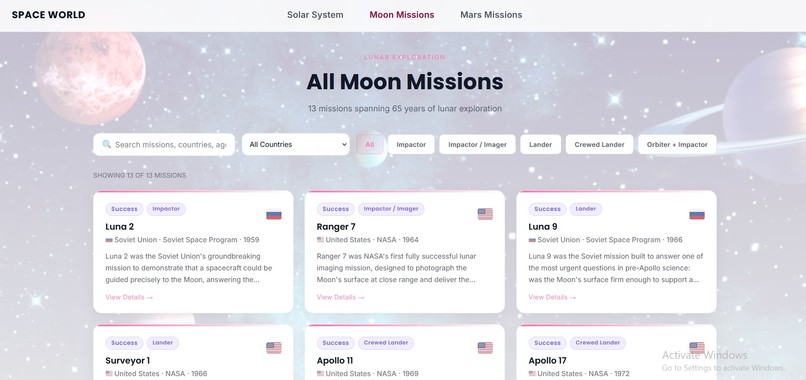
Page - 3
-
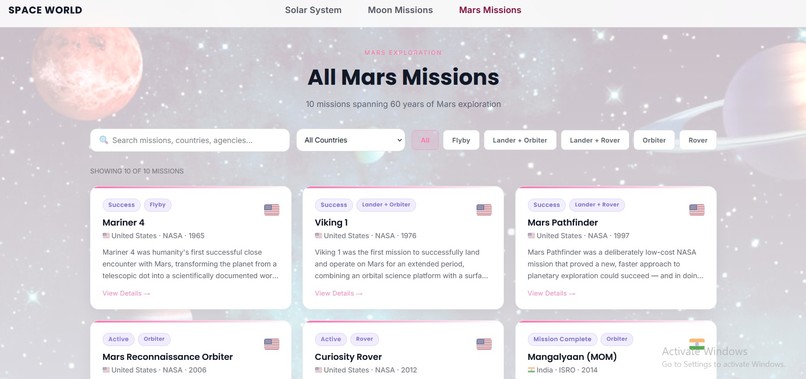
Page - 4
-
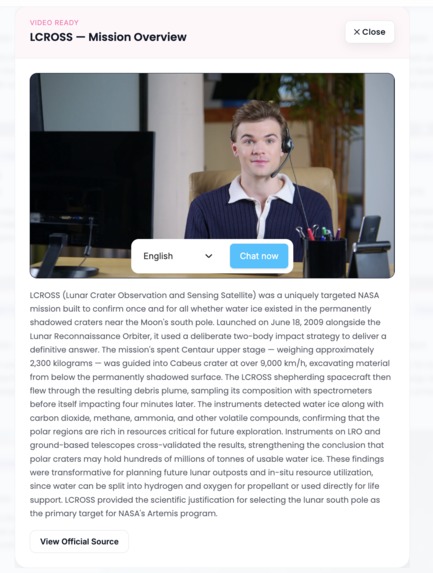
Ai_ Avatar
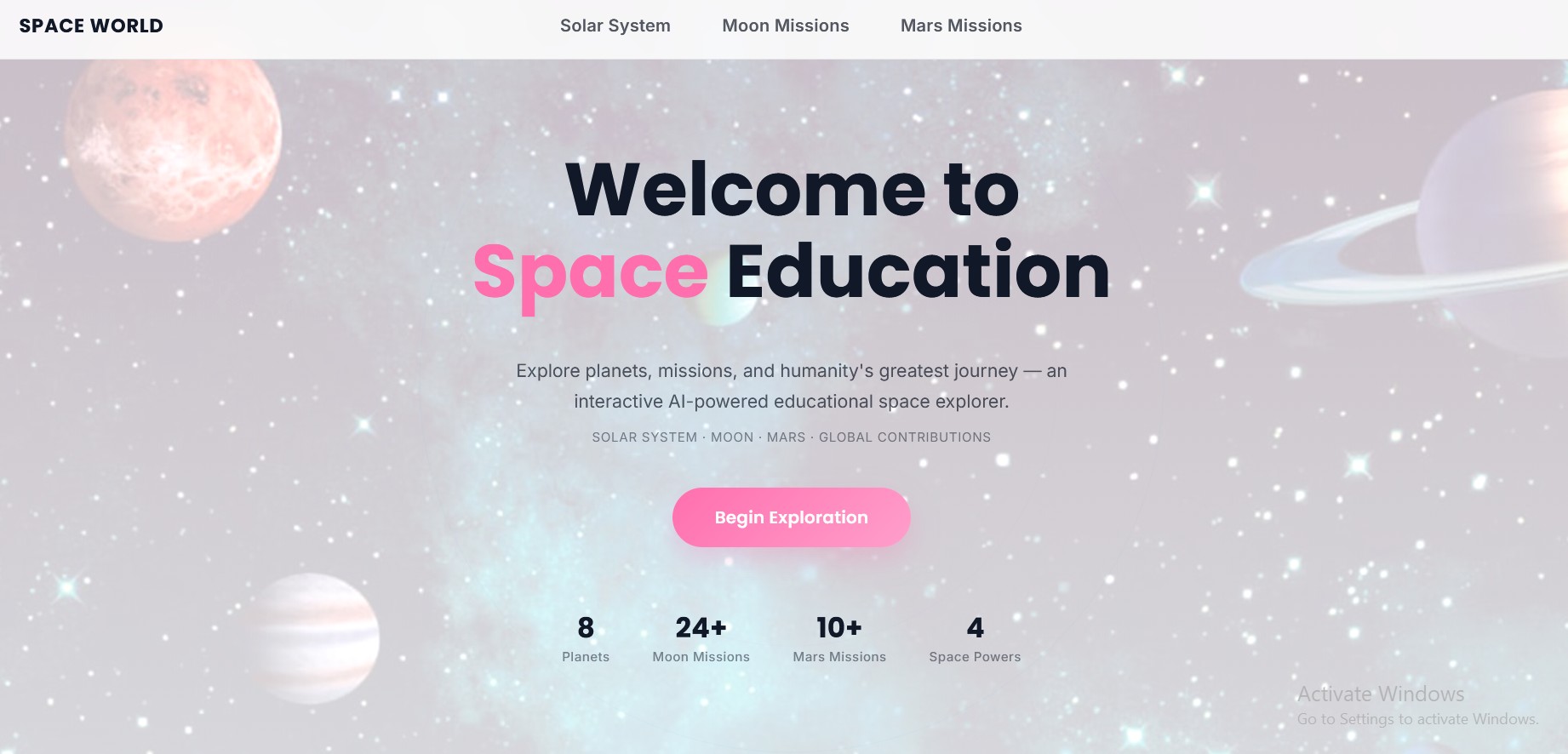
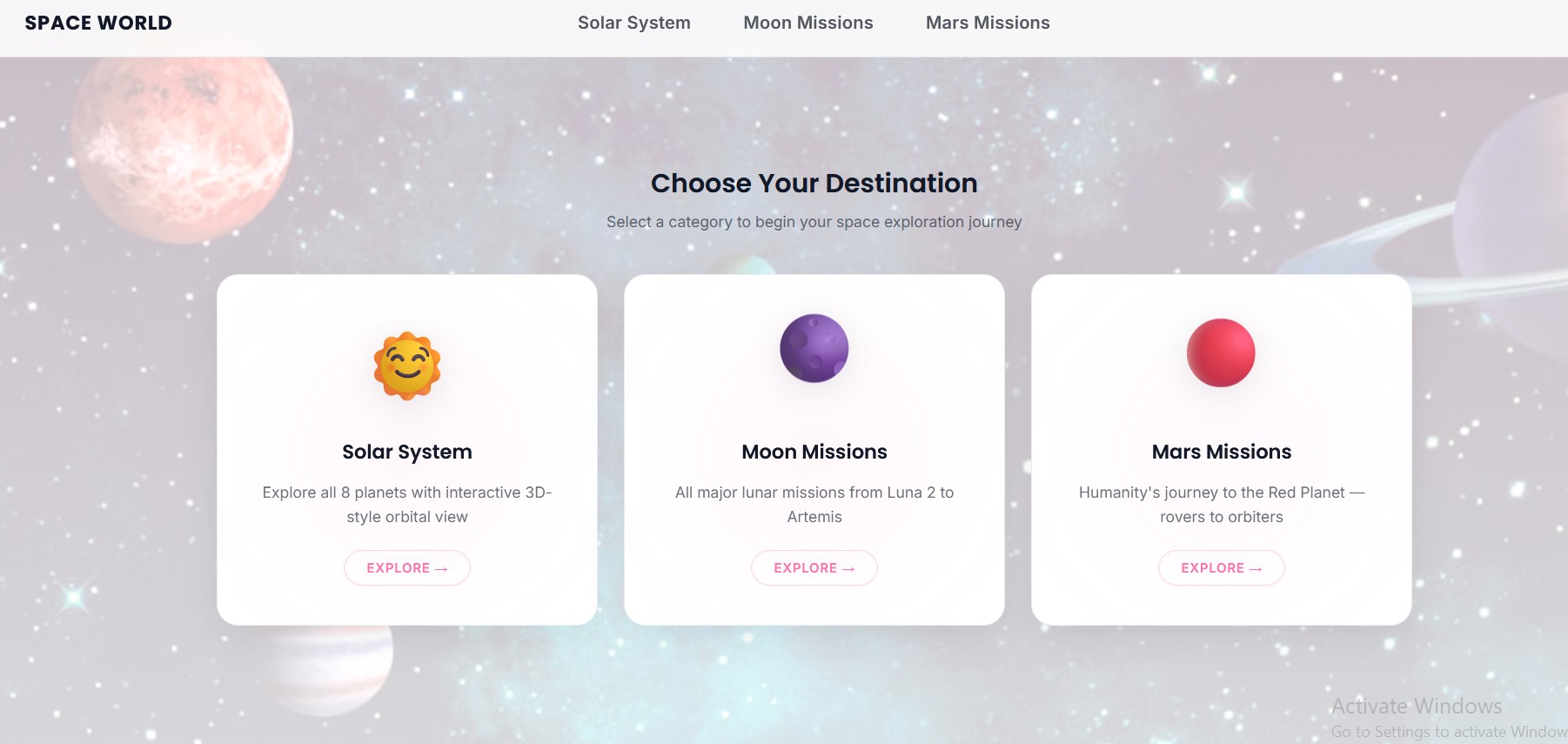
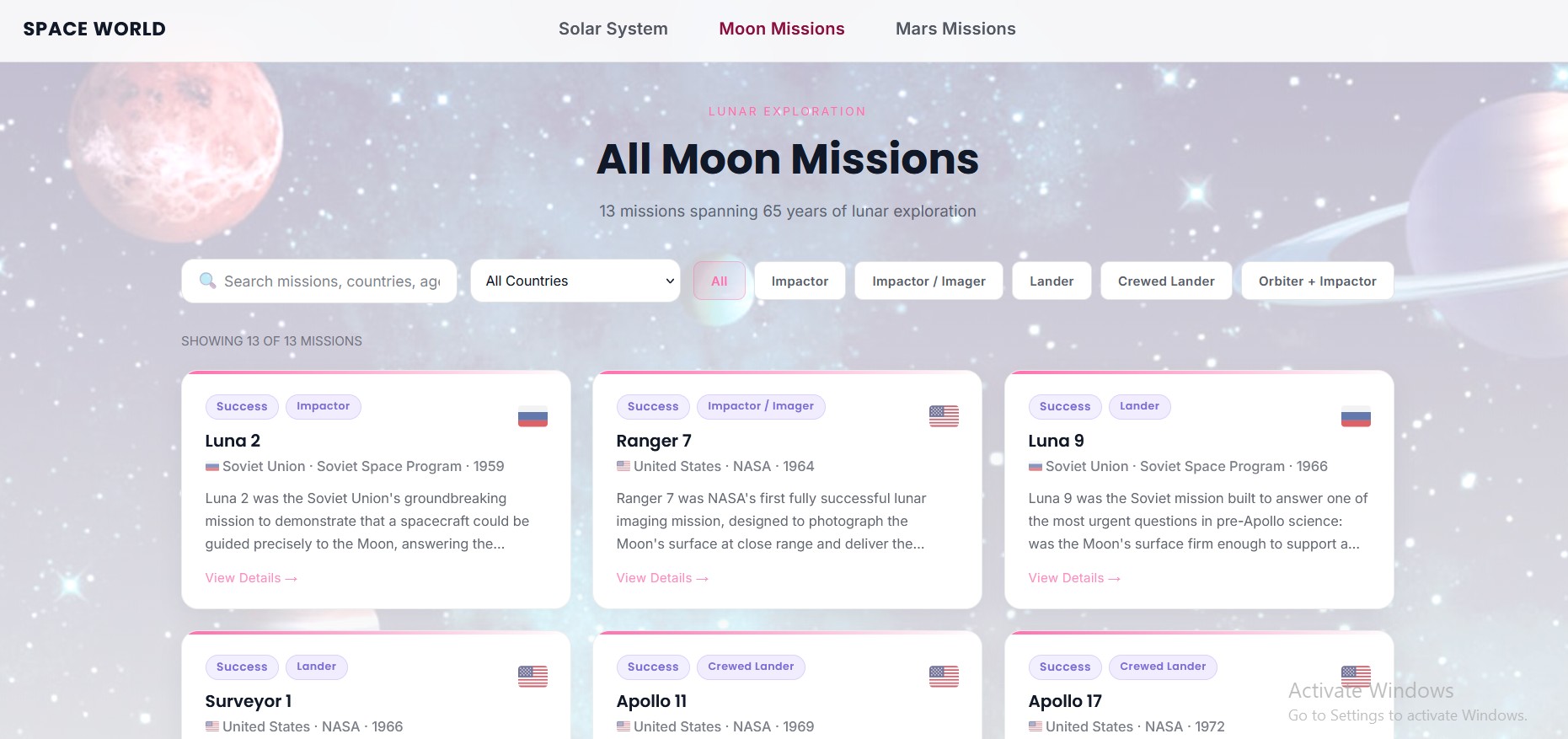
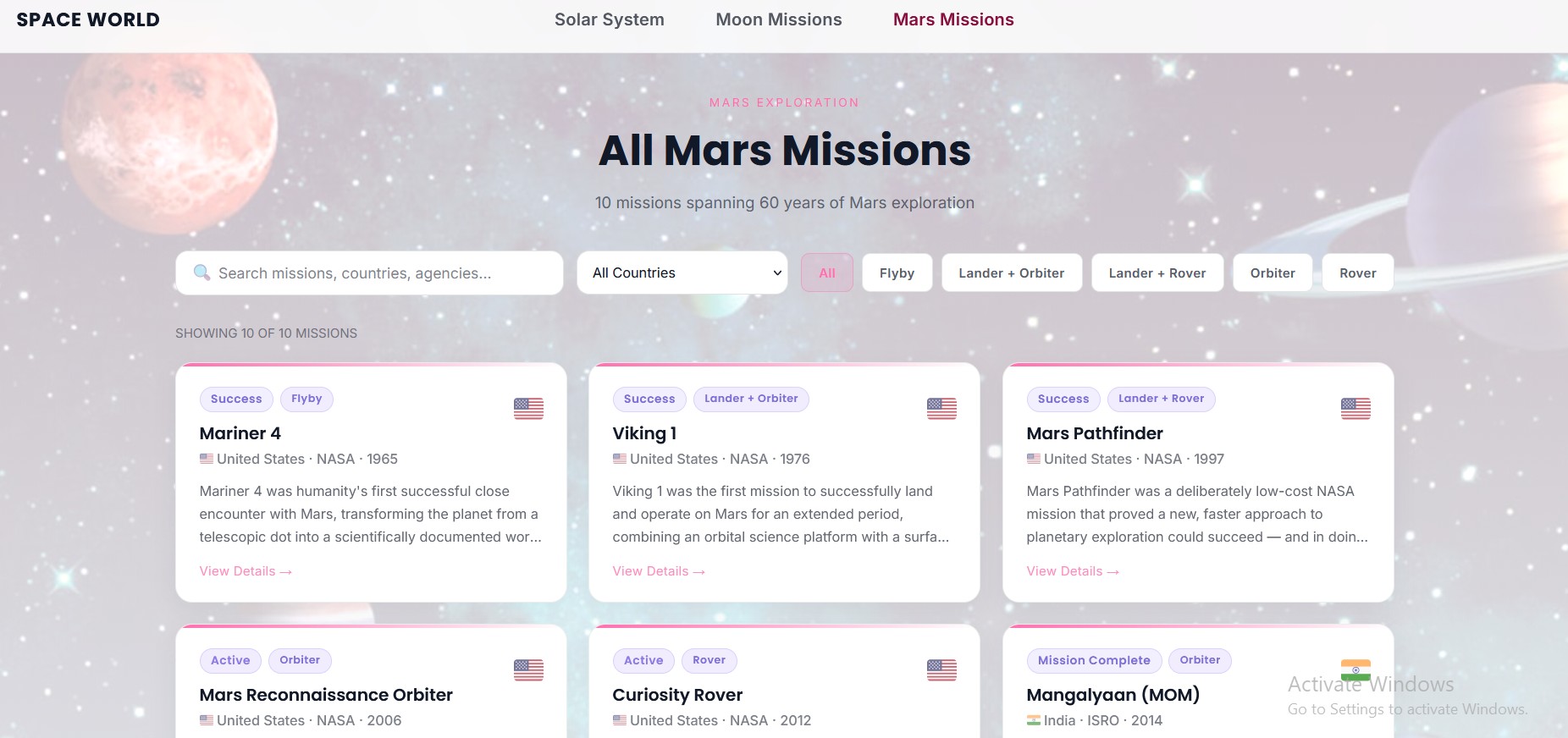
AI Power Space Education is an interactive learning platform that transforms traditional space education into an immersive, AI-driven experience. The inspiration behind this project came from the idea that space exploration often feels abstract and static in textbooks or websites. We wanted to make it engaging, visual, and conversational—like exploring the universe with a personal guide.
Inspiration We were inspired by NASA missions, planetary exploration, and the rapid advancement of AI technologies such as real-time avatars and generative models. The goal was to combine authentic space data with modern AI interaction to make learning about space feel more alive and intuitive.
How We Built It We built the platform using React (Vite) for the frontend and Node.js + Express for the backend. The application includes three main sections: Solar System exploration with interactive planets Moon missions with detailed historical data Mars missions with rover and orbital mission insights
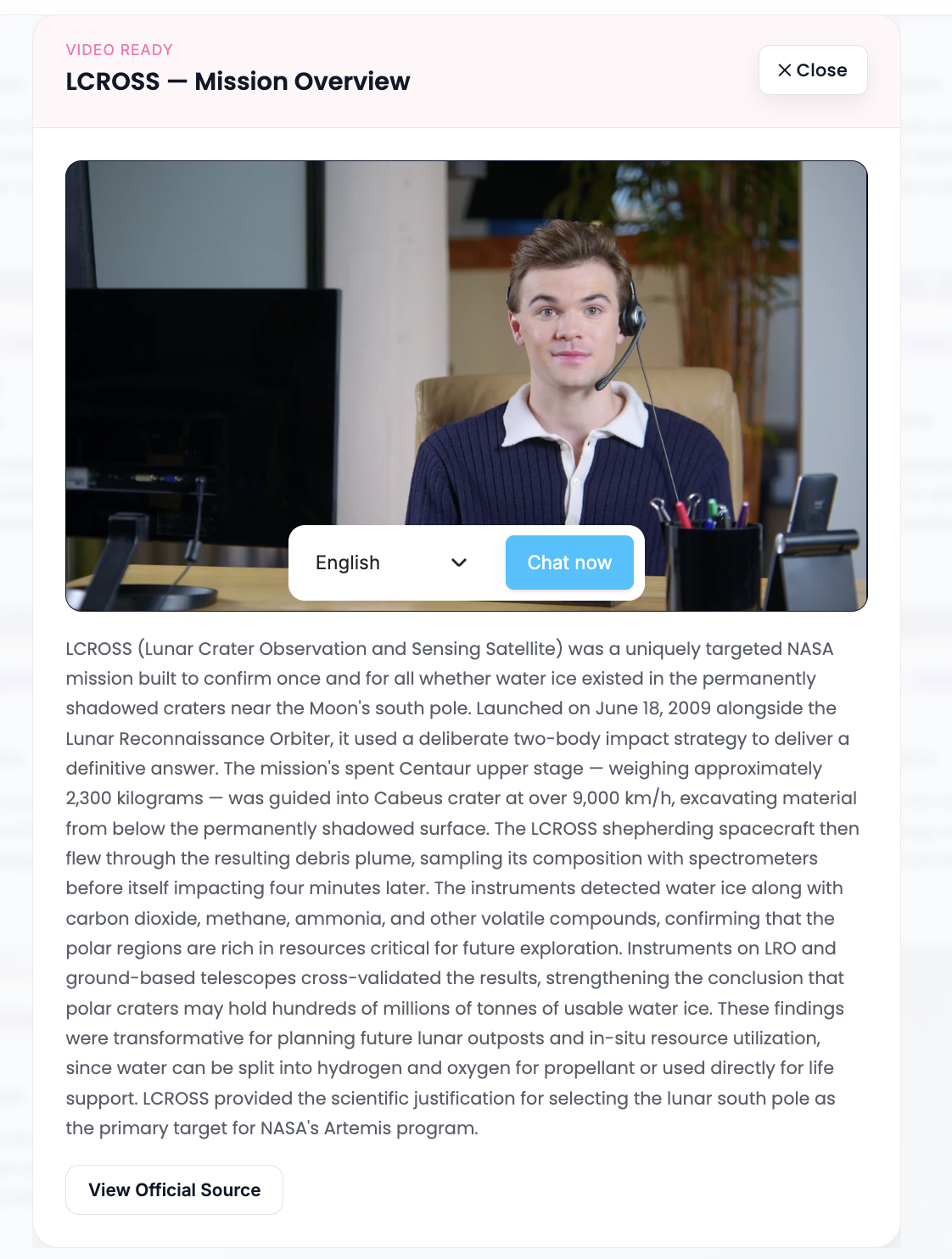
We integrated the LiveAvatar API to power an AI Space Guide that generates spoken explanations of planets and missions. When a user clicks “Watch AI Video Summary,” our backend builds a structured script from mission data and sends it to the LiveAvatar API, which returns a live avatar experience embedded inside the app. We also used NASA official mission sources and YouTube references to ensure educational accuracy and reliability.
What We Learned This project helped us deeply understand: Full-stack API integration and debugging real-world issues Handling asynchronous workflows like session creation and video generation Structuring data-driven UI for educational content Working with external AI services and managing API limitations Improving UI/UX design for interactive learning experiences
Challenges We Faced One of the biggest challenges was integrating the LiveAvatar API correctly. We encountered multiple issues such as missing session parameters, incorrect payload structures, and 400 Bad Request errors. Debugging these required careful logging, validation, and understanding of API session flows. We also faced UI complexity when trying to balance a visually rich solar system with usability. Ensuring clarity while maintaining an immersive experience required multiple iterations of design adjustments.
Final Outcome The final product is a modern AI-powered space education platform that combines interactive visualization, real NASA mission data, and real-time AI avatar explanations. It transforms passive learning into an engaging exploratory experience where users can see, click, and learn about space like never before.


Log in or sign up for Devpost to join the conversation.