Nook
Find your focus. Find your people.
Inspiration: Every UT student knows the struggle: you walk to the library, it’s packed, the outlets are taken, and you walk somewhere else. Google tells you a place exists, but not whether you can actually study there right now. We wanted an app that answers “where can I focus right now?” and that makes studying a little less lonely.
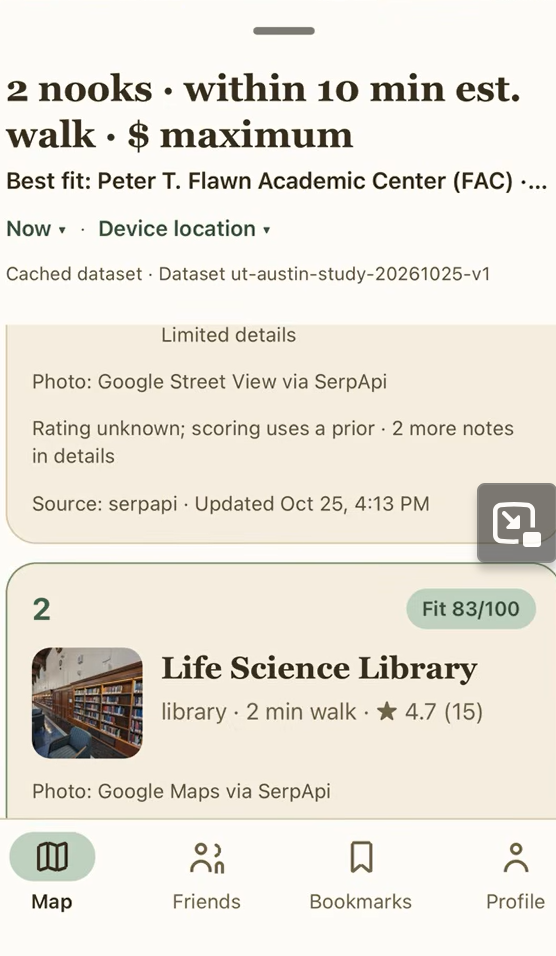
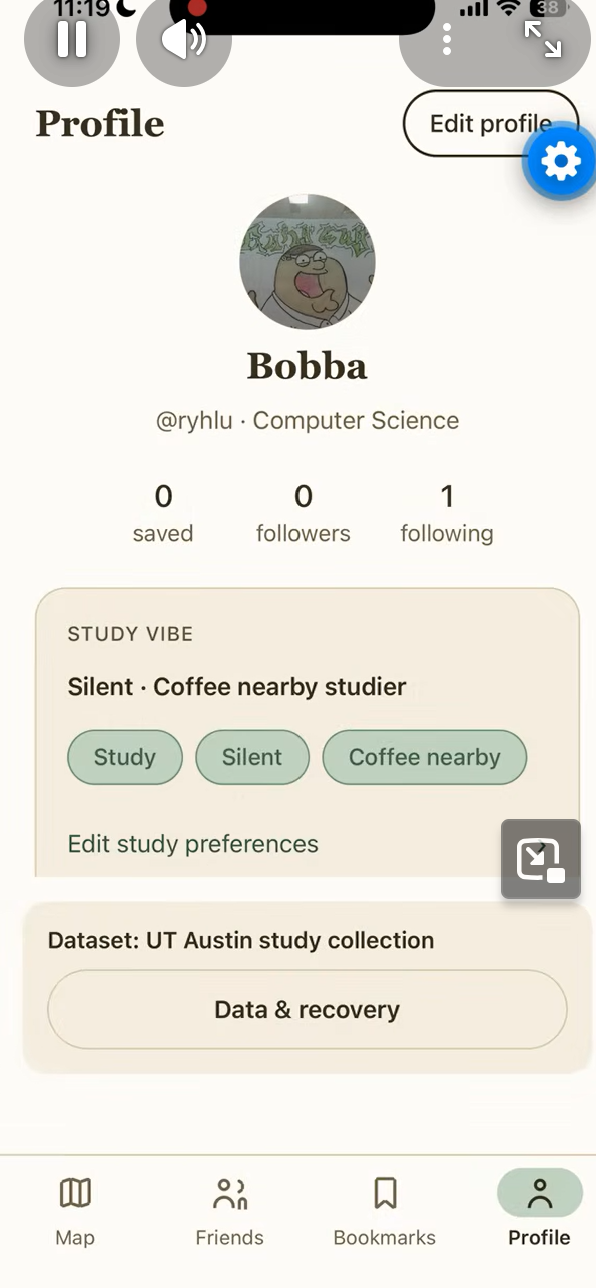
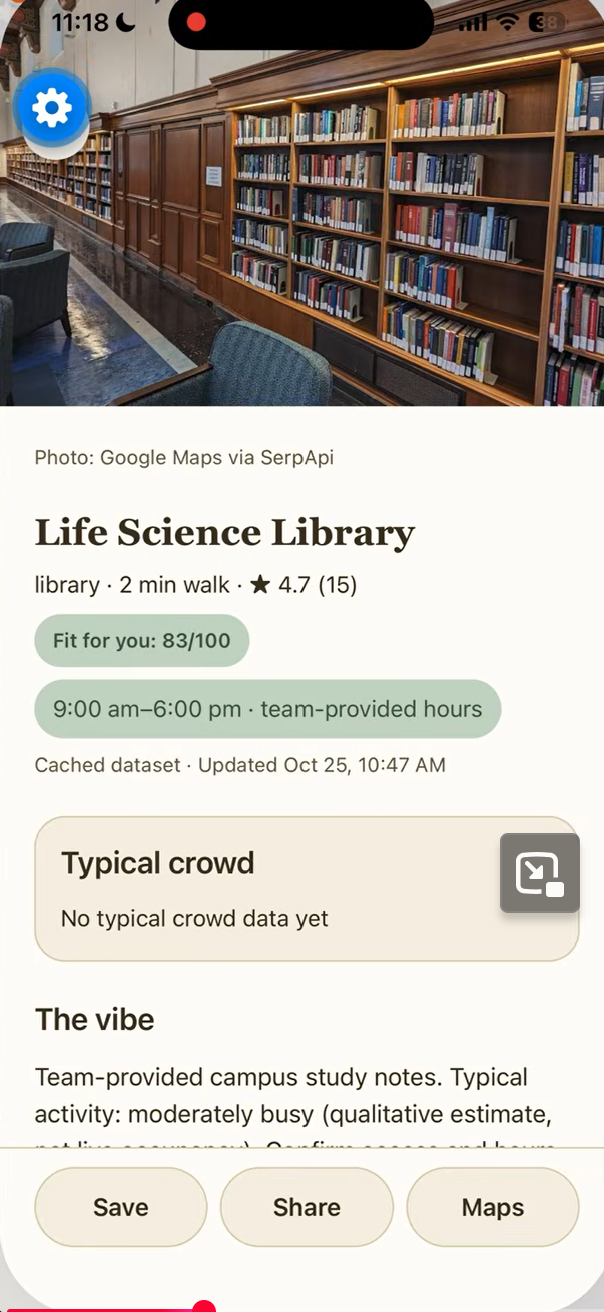
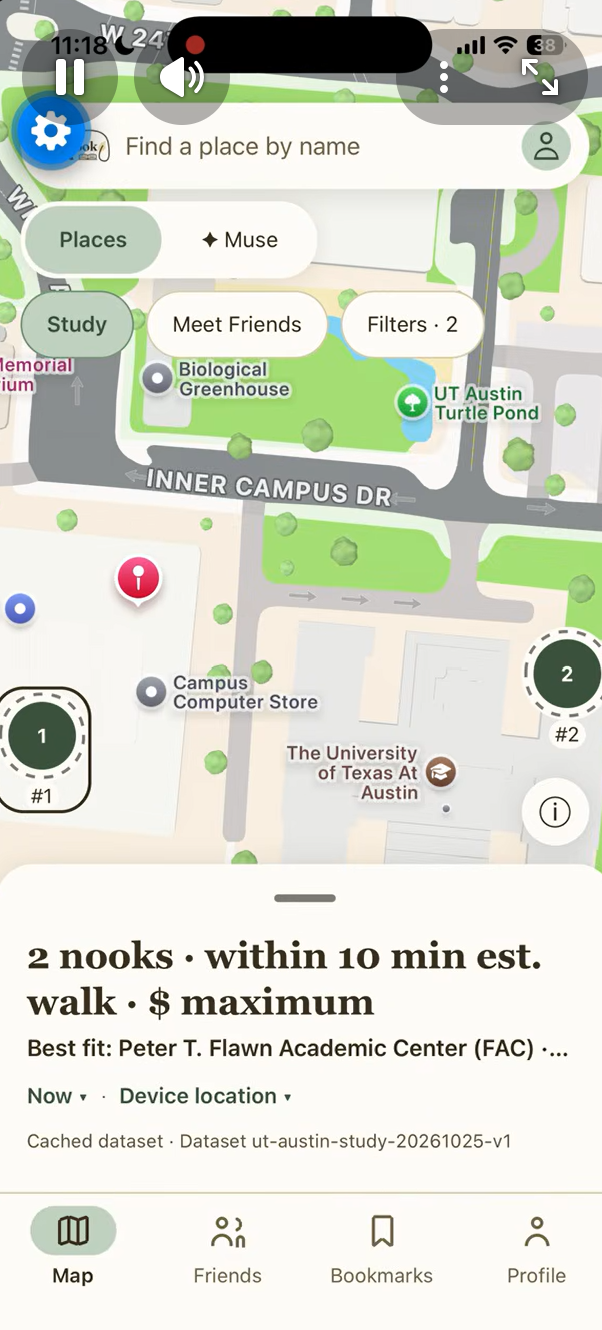
What it does: Shows a map of popular study spots, such as libraries or coffee shops, colored by how well they match the user's study preferences. The app ranks spots by your study style: silent, loud, outlets, open late, solo or group. Each spot page shows hourly busyness, a short AI summary of the vibe from real reviews, and where that information comes from. Social: follow friends, see where they’re studying, bookmark spots, and find people who study like you.
How we built it:
- Mobile app: Expo / React Native, with a shared design system built in Figma
- Place data: SerpApi’s Google Maps APIs for places, popular times, photos, and reviews.
- AI: Meta’s Muse Spark turns reviews into vibe tags and summaries, writes each user’s “study vibe,” and provides a chatbot to answer the user's questions.
- Backend: Supabase
Challenges we ran into:
- Splitting the work across four people on Windows and Mac, with shared contracts so everyone could build in parallel.
- Expo Go version mismatches, plus venue Wi-Fi blocking phone-to-laptop connections.
- Getting the UI to look smooth and proportional.
Accomplishments that we’re proud of:
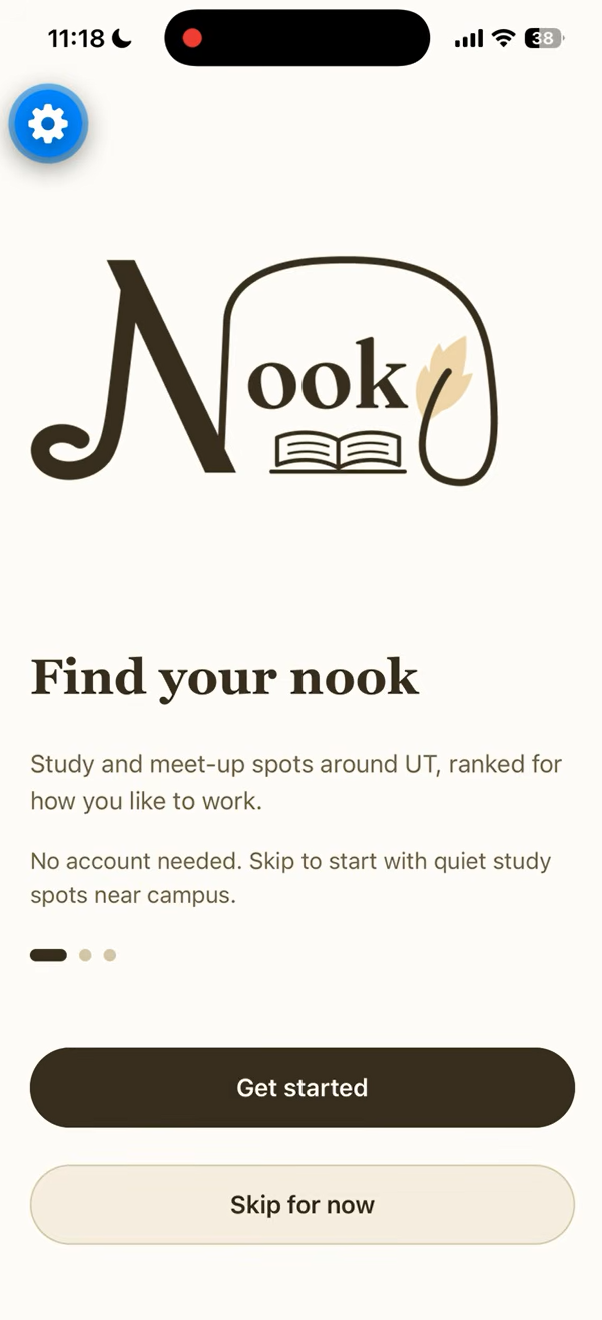
- A complete visual identity and design system in one night, including a custom logo drawn from a whiteboard sketch.
- Creating a tool that utilizes APIs and AI in a variety of ways.
What we learned:
- How to coordinate PRs between four people.
- How to effectively split up work between people.
- How to plan more effectively.
What’s next for Nook:
- Live “I’m here” check-ins that improve busyness data.
- Study-buddy matching.
- Reviews
Built With
- built-with:-expo
- figma
- meta-muse
- react-native
- serpapi
- typescript


Log in or sign up for Devpost to join the conversation.