-
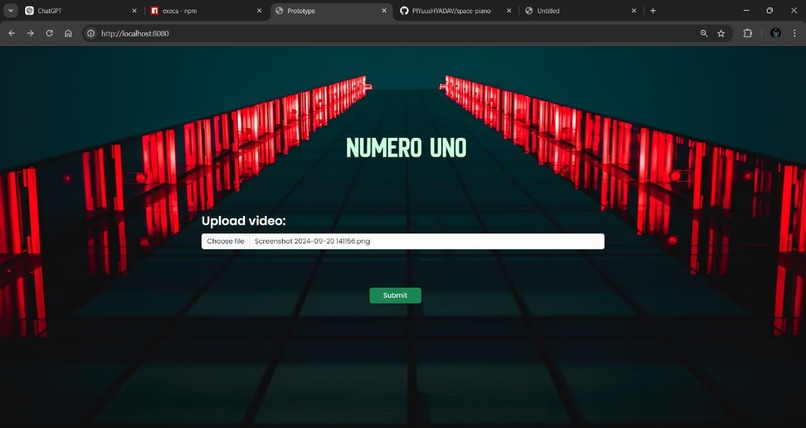
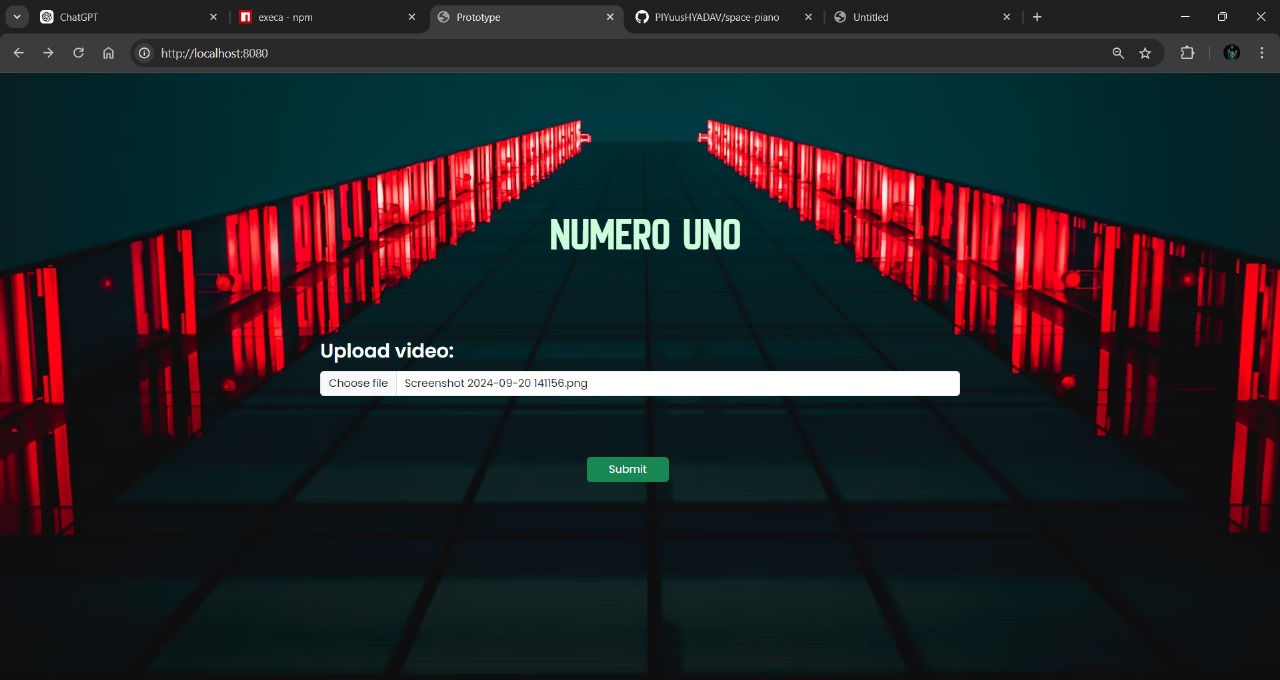
Front home page of our website.
Inspiration The inspiration for Space Piano came from the idea of blending the beauty of space with the art of music. Space, with its vastness and intricate phenomena, offers a captivating visual experience. We wanted to take it a step further and ask, "What would space sound like?" By converting space images into musical notes, our goal was to create a unique way to experience the universe through sound, making the cosmos more accessible and artistic.
What it does Space Piano takes images of space—such as stars, planets, and galaxies—and transforms them into musical compositions. Each feature of the space image, like brightness, color, and position, is translated into sound characteristics, such as pitch, tone, and volume. The result is a musical interpretation of the visual data, creating an immersive audio experience that allows users to hear space in a way they've never imagined before.
How we built it We built Space Piano using a combination of machine learning algorithms and image-to-sound mapping techniques. First, we analyzed space images to extract key features, such as color intensity and pixel patterns. These features were then mapped to sound attributes using custom algorithms that convert visual data into musical notes. We used Python, TensorFlow, and various sound synthesis libraries to fine-tune the generated audio and ensure it reflects the complexity of the space images.
Challenges we ran into One of the biggest challenges we faced was ensuring that the conversion from image to sound produced meaningful and pleasant results. Creating an intuitive mapping between visual and auditory data required numerous iterations to balance scientific accuracy and musical harmony. Another challenge was managing the wide range of image features and scaling them effectively into a sound format, especially when working with high-resolution space images.
Accomplishments that we're proud of We’re proud of the seamless integration between space images and music, where each visual feature finds its auditory counterpart in a coherent and enjoyable way. Additionally, we developed an intuitive user interface that allows anyone to upload space images and generate sounds easily. We are also thrilled with how our project bridges the gap between art and science, creating a unique way to engage with space exploration.
What we learned Throughout the project, we learned a great deal about the relationship between visual and auditory data. It pushed us to think creatively about how to interpret images beyond the traditional sense. We also gained valuable experience in sound design, machine learning for image analysis, and the intricacies of converting one type of sensory data into another. Our interdisciplinary approach helped us appreciate the possibilities that arise when art, science, and technology come together.
What's next for Space Piano The next step for Space Piano is to enhance the complexity of the audio generation by incorporating more sophisticated musical patterns and deeper image analysis. We also plan to expand the platform to allow real-time sound generation during space explorations or live astronomical events. Additionally, we aim to collaborate with educators and artists to use Space Piano as an educational tool in schools and museums, offering new ways to explore the universe through both sight and sound.


Log in or sign up for Devpost to join the conversation.