SPACE MAESTRO
Create your own musical galaxy with your hands.
Inspiration
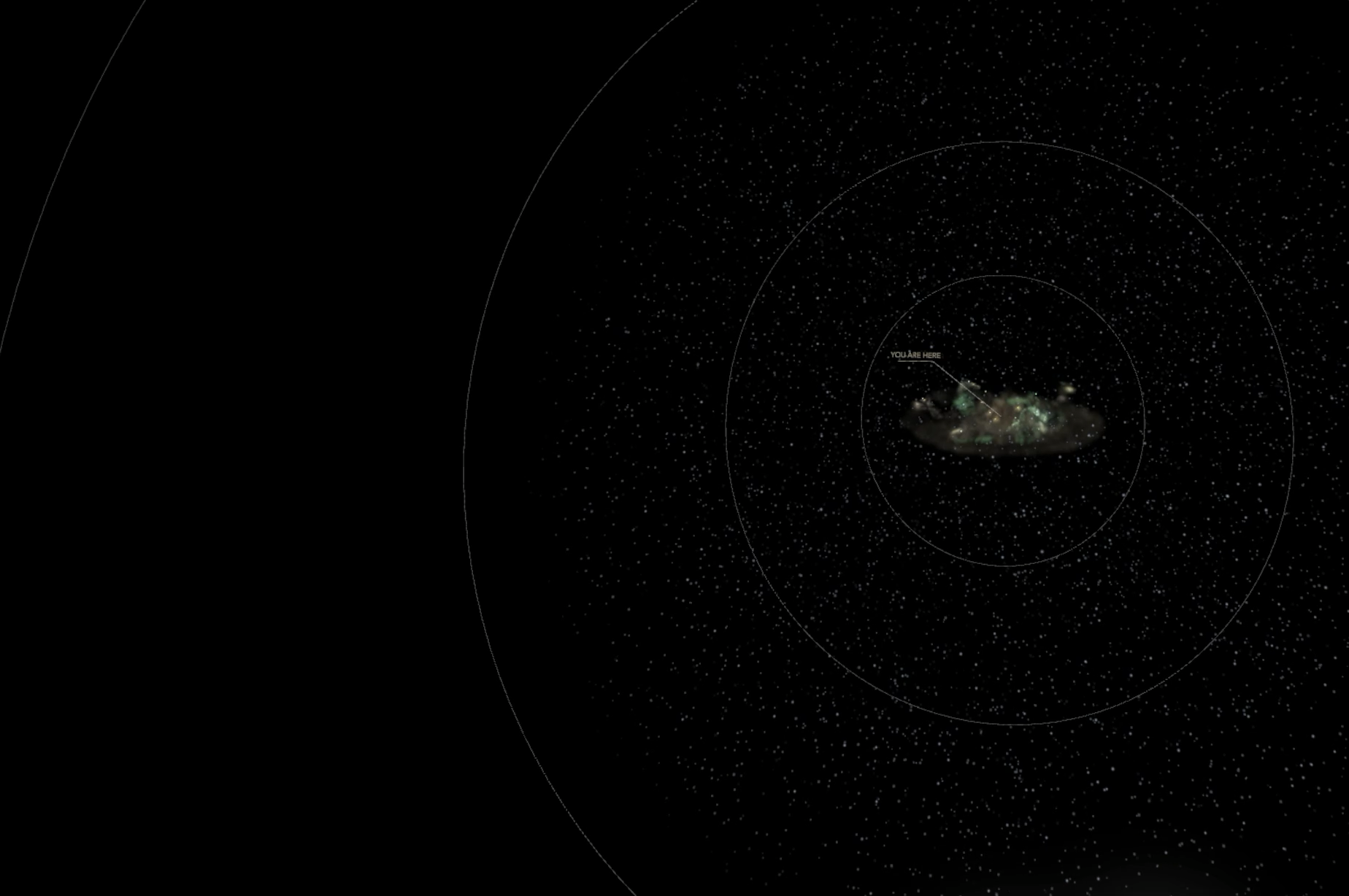
We are incredibly small in the vastness of the universe, yet we are also part of it. The very atoms that make up our bodies were once born inside stars. This sense of cosmic connection has always fascinated me.
I wanted to create an experience that lets people feel this connection rather than simply understand it.
Music was another major inspiration, particularly post-rock and its emotional progression: simple musical phrases gradually building upon each other, rising toward an overwhelming climax, suddenly falling into silence and loneliness, then soaring again into euphoria.
What if we could experience this emotional journey not just by listening to music, but by creating it ourselves through movement?
That question became SPACE MAESTRO, my graduate thesis project at USC in 2013.
Originally developed using Microsoft Kinect, and later prototyped for VR with Leap Motion, the project remained unfinished for more than a decade due to technical limitations, limited resources, and the challenges of translating such an abstract experience into something intuitive and expressive.
Thirteen years later, with standalone VR technology and AI-assisted development, I finally had the opportunity to bring it back to life.
What It Does
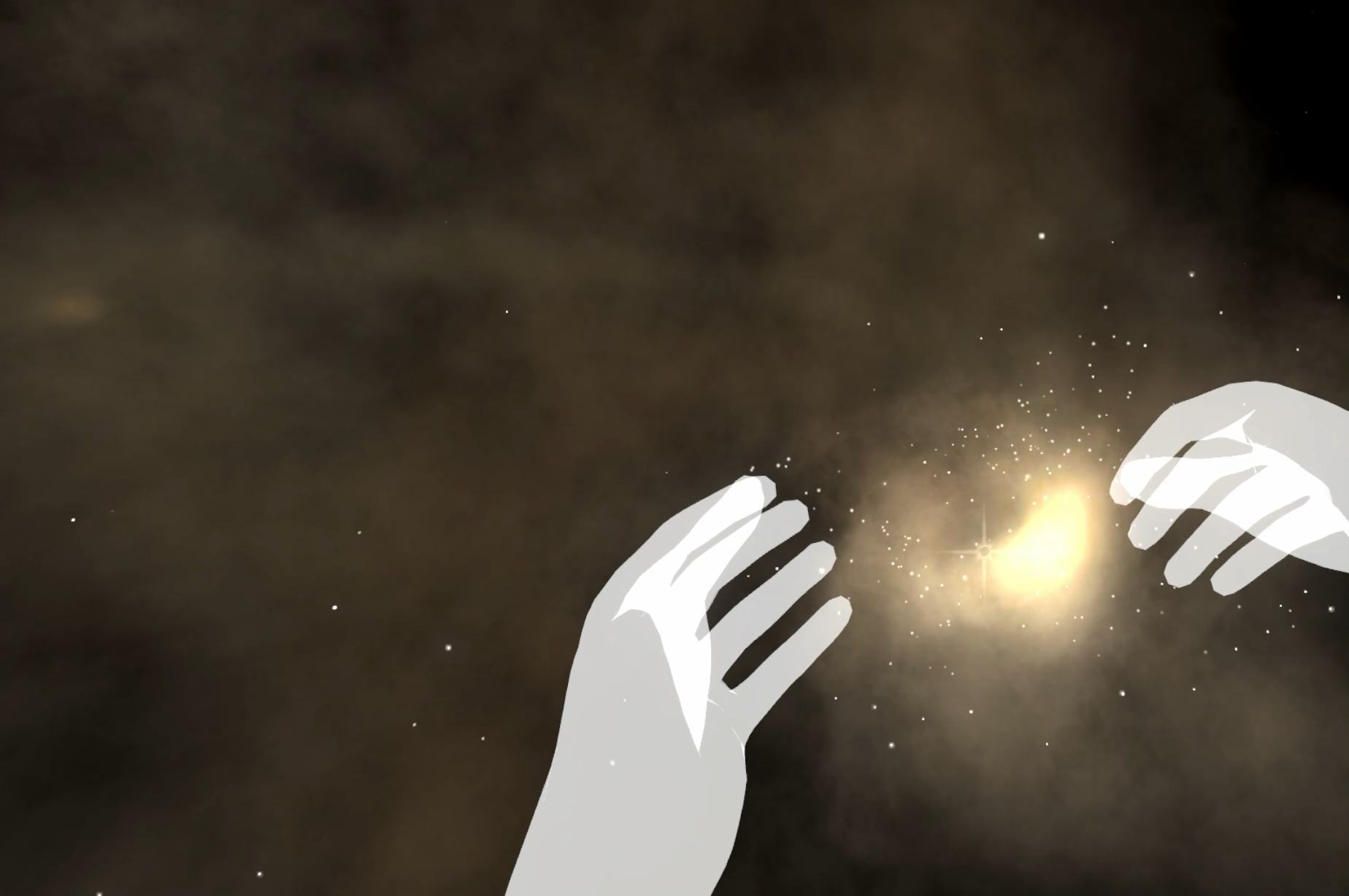
SPACE MAESTRO is an interactive VR experience where you create your own musical galaxy by moving your hands like a conductor.
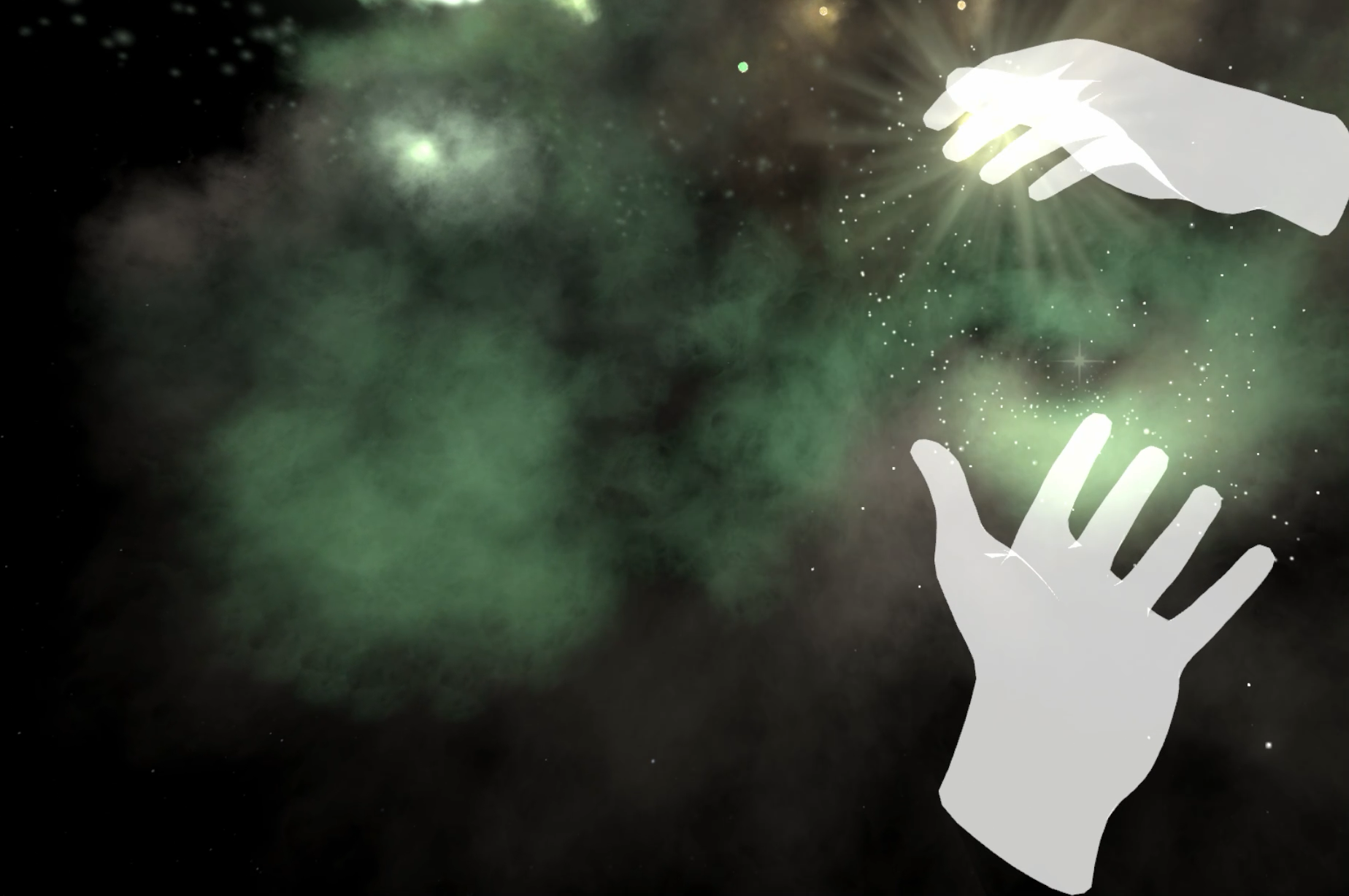
You begin surrounded by clouds of cosmic gas. With your hands, you gather and manipulate these clouds, concentrating their energy until a star is born.
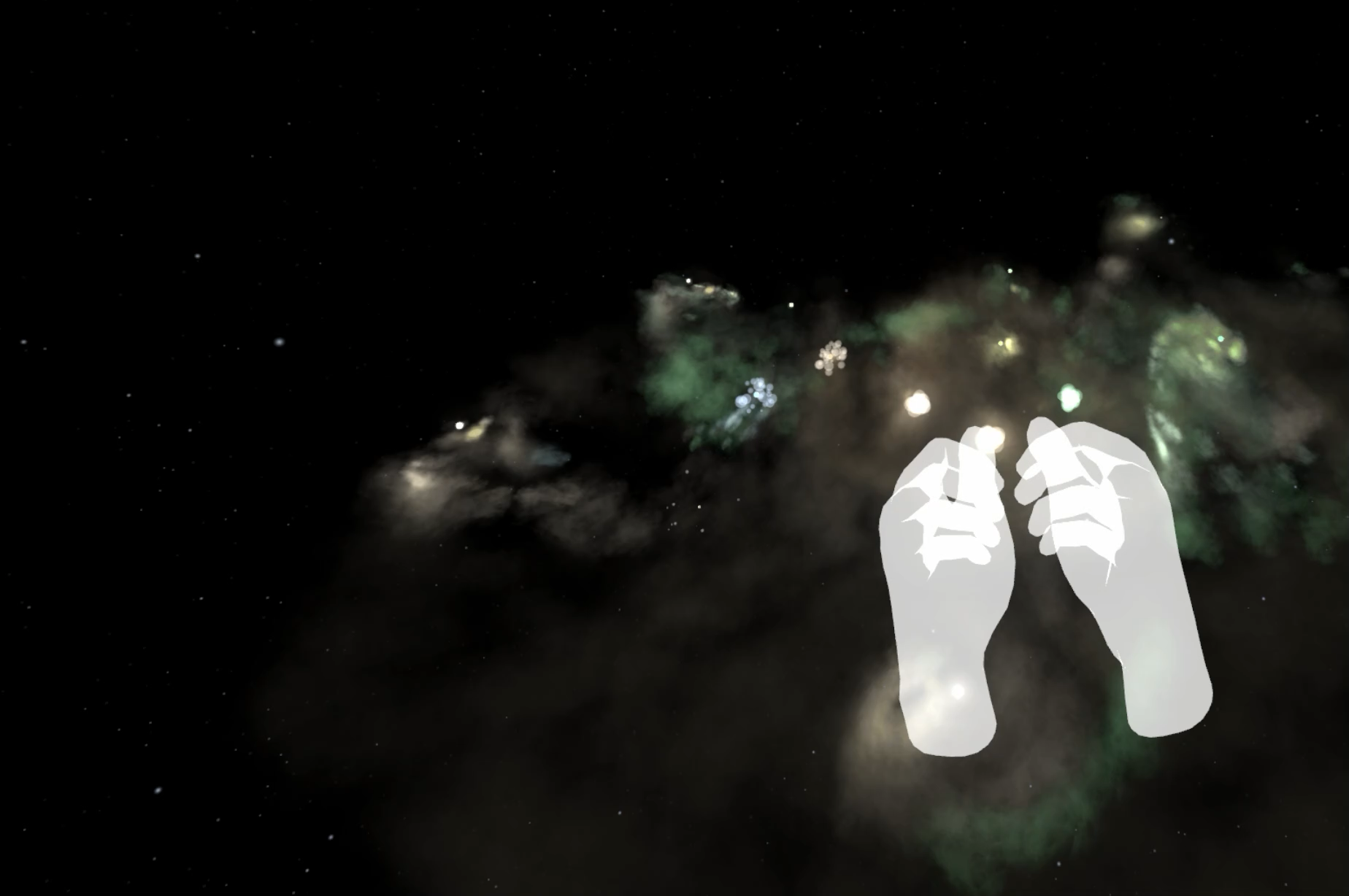
Each star becomes part of your growing galaxy.
Brushing your hands against the stars triggers musical phrases, or stingers, which combine into an evolving soundscape. Your movements and choices influence both the visual composition of your galaxy and the music you hear.
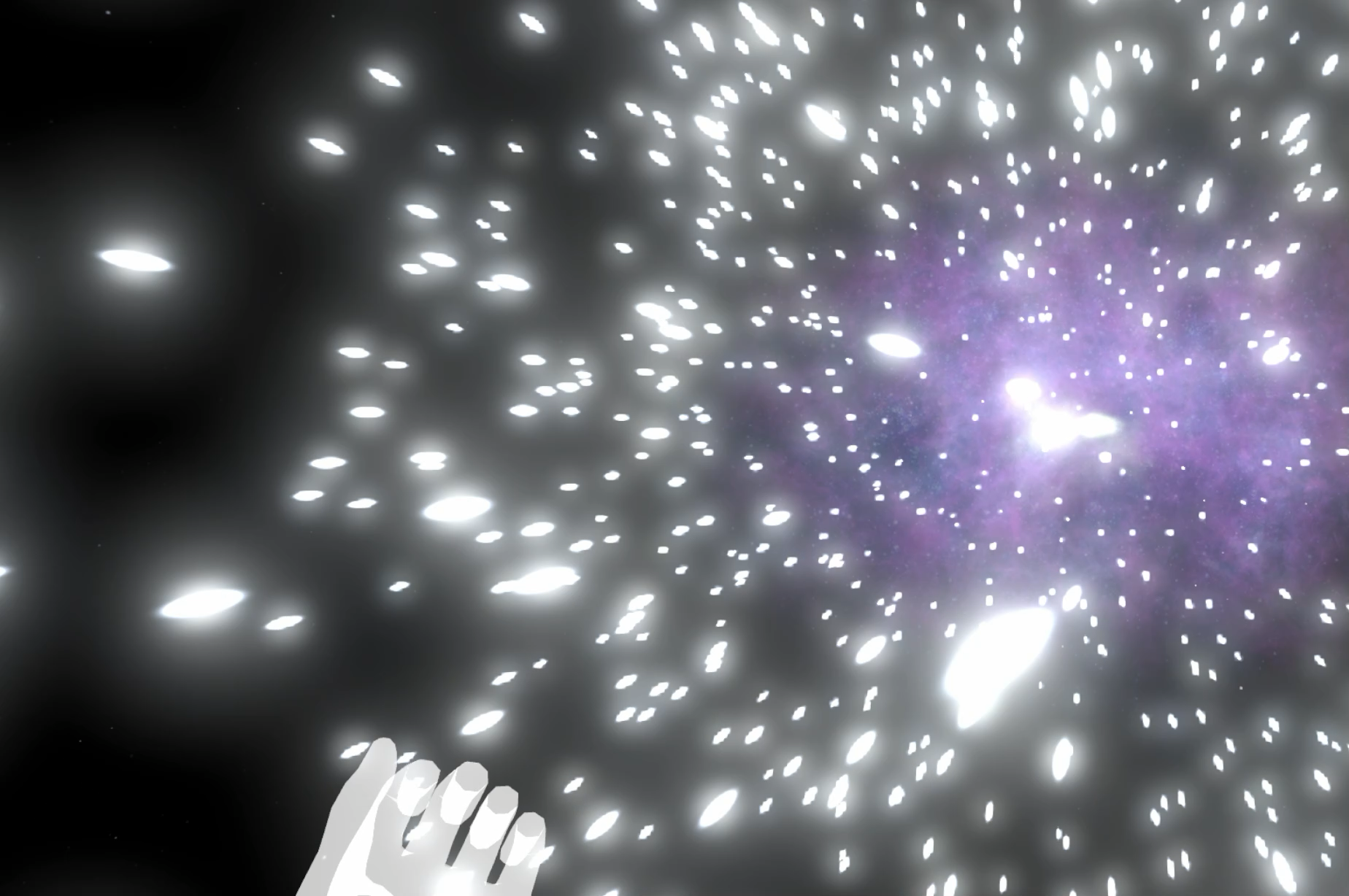
You can also trigger a supernova, causing a star to explode and scatter its energy back into the surrounding space as new gas clouds, ready to form new stars.
The experience is a continuous cycle of creation, transformation, and rebirth.
There are no enemies to defeat or scores to chase. Instead, SPACE MAESTRO invites you to explore, experiment, and express yourself through an intimate connection between movement, music, and the cosmos.
Every player's galaxy can become a unique expression of their own journey.
How I Built It
The current version is developed in Unity for standalone Meta Quest, using hand tracking as the primary interaction method.
Rather than treating hand movements as conventional input commands, I wanted the gestures themselves to feel meaningful. Gathering clouds, forming a gravitational center, igniting stars, and triggering supernovae should feel like natural acts of creation.
The visual systems use GPU-driven particle effects, Unity's Visual Effect Graph, and custom rendering techniques to depict flowing nebulae, gravitational attraction, stellar ignition, and supernova explosions while working within the performance constraints of standalone VR.
The musical foundation builds upon the original compositions and interactive audio assets created with talented collaborators during the earlier development of SPACE MAESTRO.
AI-assisted development played a significant role in reviving the project. What began as a casual experiment to port an old Unity project quickly became an opportunity to revisit ideas that had been technically impractical or beyond my capabilities thirteen years ago.
AI dramatically accelerated implementation and iteration, allowing me to spend more time experimenting, evaluating the results, and refining the experience.
Challenges
The greatest challenge has never been simply making stars appear or producing beautiful visual effects. It has been making the player feel that they are genuinely creating something.
Early iterations often produced spectacular results, but the system sometimes felt as though it was acting on its own rather than responding to the player's intentions.
I spent considerable time refining hand gestures, particle behavior, energy accumulation, and the timing of each transformation to give players a stronger sense of agency.
Another challenge was translating the scale and richness of cosmic phenomena into an intimate, real-time experience running on a standalone VR headset.
Music presents an equally interesting challenge. Unlike a linear composition, interactive music cannot assume exactly when or how a player will act. The original project explored techniques such as horizontal sequencing and vertical layering to balance musical coherence with player freedom. Finding the right balance between a carefully composed emotional journey and spontaneous interaction remains central to the project.
What I Learned
Revisiting SPACE MAESTRO after thirteen years has been a surprisingly personal experience.
At first, I assumed the project had remained unfinished mainly because of the limitations of technology and my own development capabilities at the time.
But as I started rebuilding it, I realized something else.
This was a project that needed countless cycles of creating, experiencing, discovering, questioning, and refining.
Many of the most important design decisions could only emerge through the process of actually experiencing what I had created.
AI has made that process dramatically more accessible. While it has introduced enormous uncertainty into the creative industries, it has also given me something I deeply appreciate: the freedom to experiment again, bringing back a creative curiosity that had been dormant for years.
What's Next
My long-term vision is to create a shared virtual Cosmos, where each player's unique galaxy can become part of a collective gallery of player-created universes.
I also want to continue exploring how movement, musical expression, and visual creation can become more deeply interconnected, allowing each player to shape an increasingly personal and emotionally meaningful experience.
Ultimately, SPACE MAESTRO is about more than creating stars.
It is about the feeling that, although we are infinitely small in the universe, we are not separate from it.
We are part of the cosmos, and through creation, we connect with it — and with one another.
Built With
- codex
- unity


