-
-
-
-
-
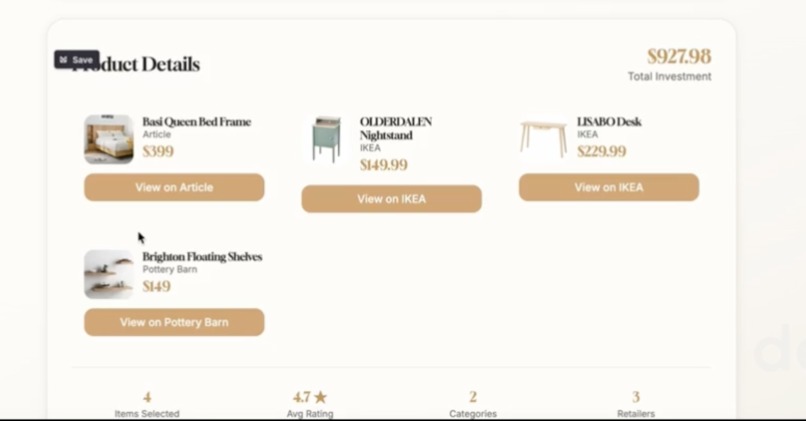
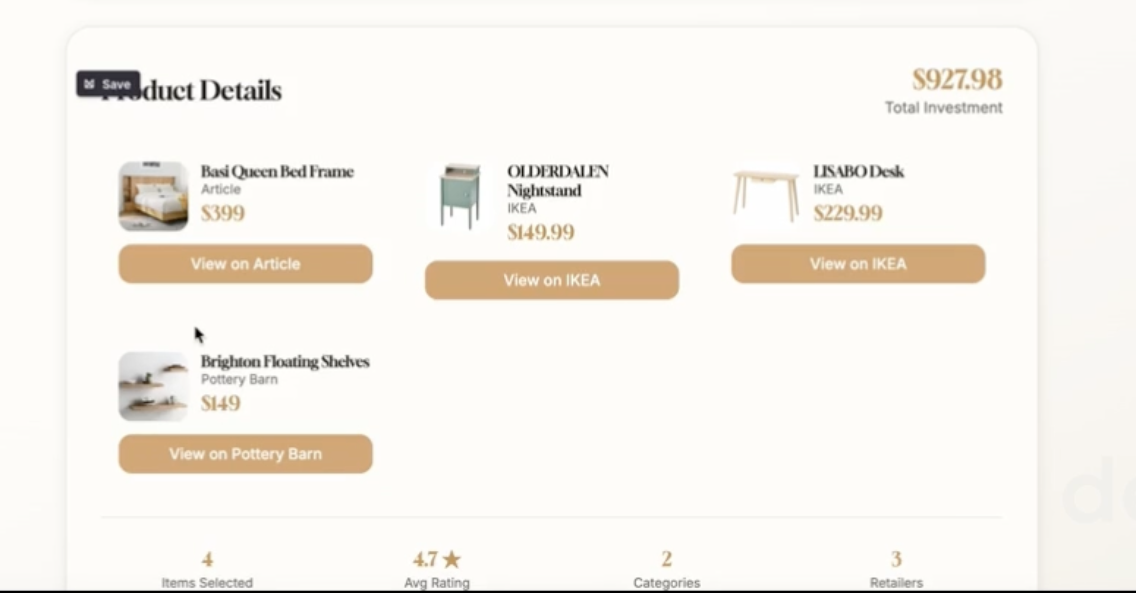
Products used to generate mockup
Inspiration
This project was inspired by two key moments.
The first was when I moved into my first apartment and had to furnish it from scratch. The process of searching for furniture, comparing prices, and trying to visualize how different pieces would fit together in my actual space was exhausting. I had tabs open everywhere, bought things incrementally, and constantly second-guessed whether everything would feel cohesive once it all arrived.
The second inspiration came from a prompt I saw going viral, where people would upload furniture collages or moodboards and ask AI to generate dream room mockups. The results were beautiful, but I thought about how to take it a step forward
That got me thinking: what if I could combine both experiences the real-world complexity of designing a home with the intelligence and creativity of AI?
What it does
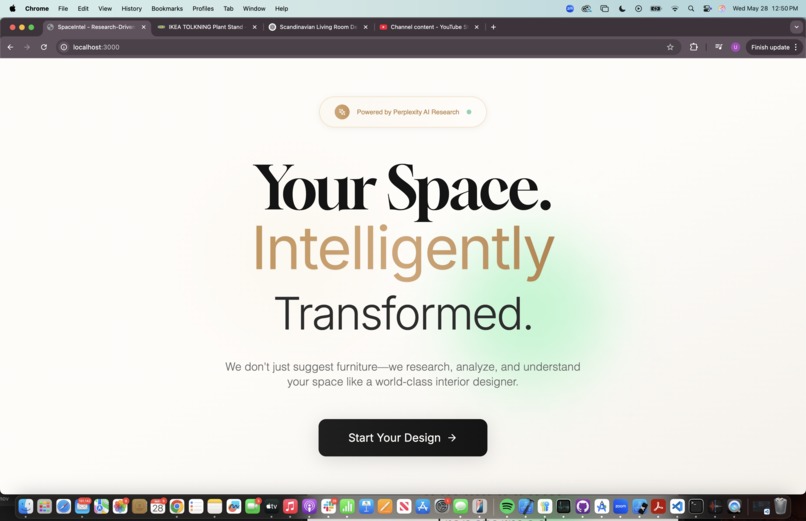
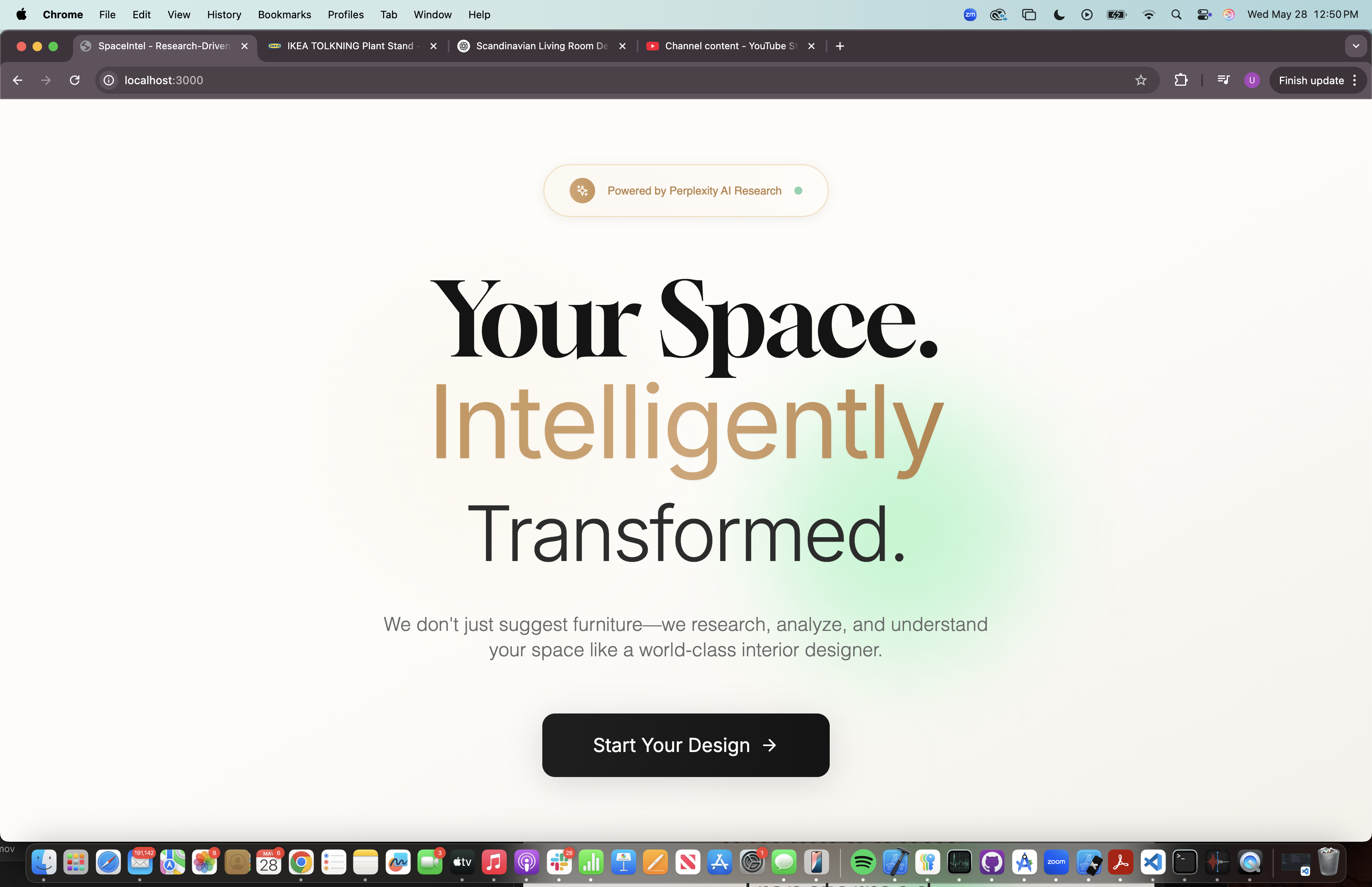
SpaceIntel is a personal AI design assistant that helps people transform their living spaces using a single room photo and a few simple inputs.
Users upload a photo of their room, describe what they’re looking for whether that’s adding a desk, keeping the couch, or creating a cozy reading nook and then SpaceIntel takes care of the rest. It recommends curated products that fit their lifestyle, style preferences, and budget using Perplexity’s Sonar Deep Research API.
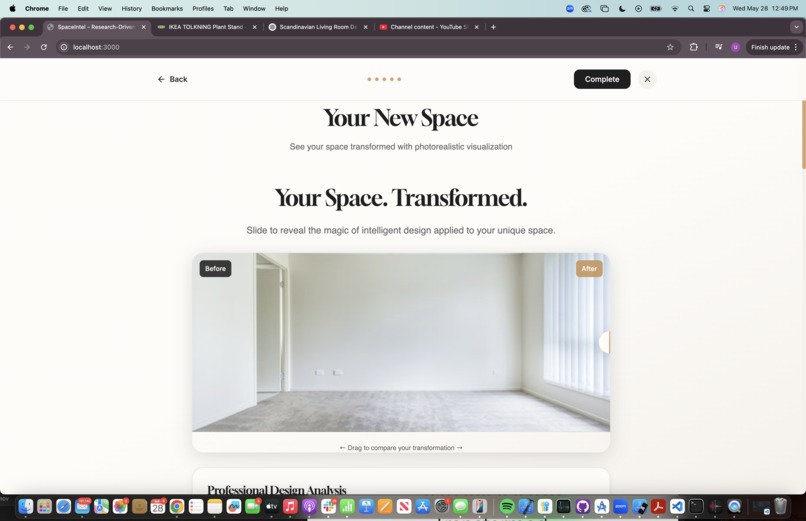
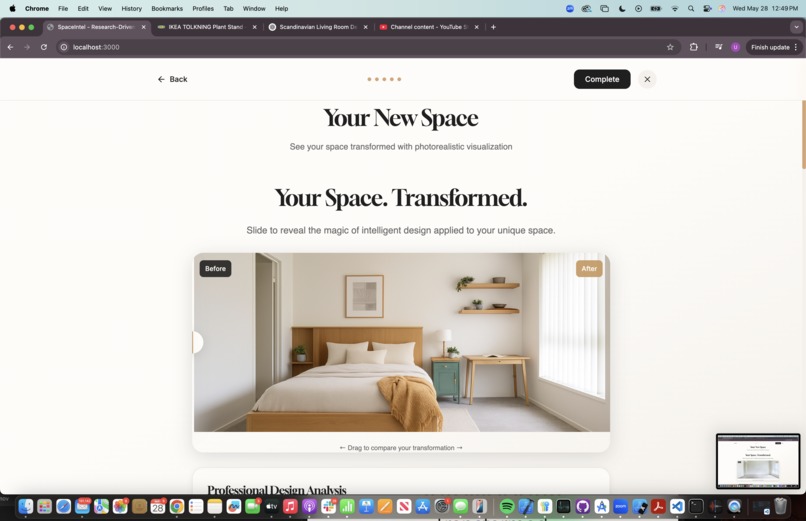
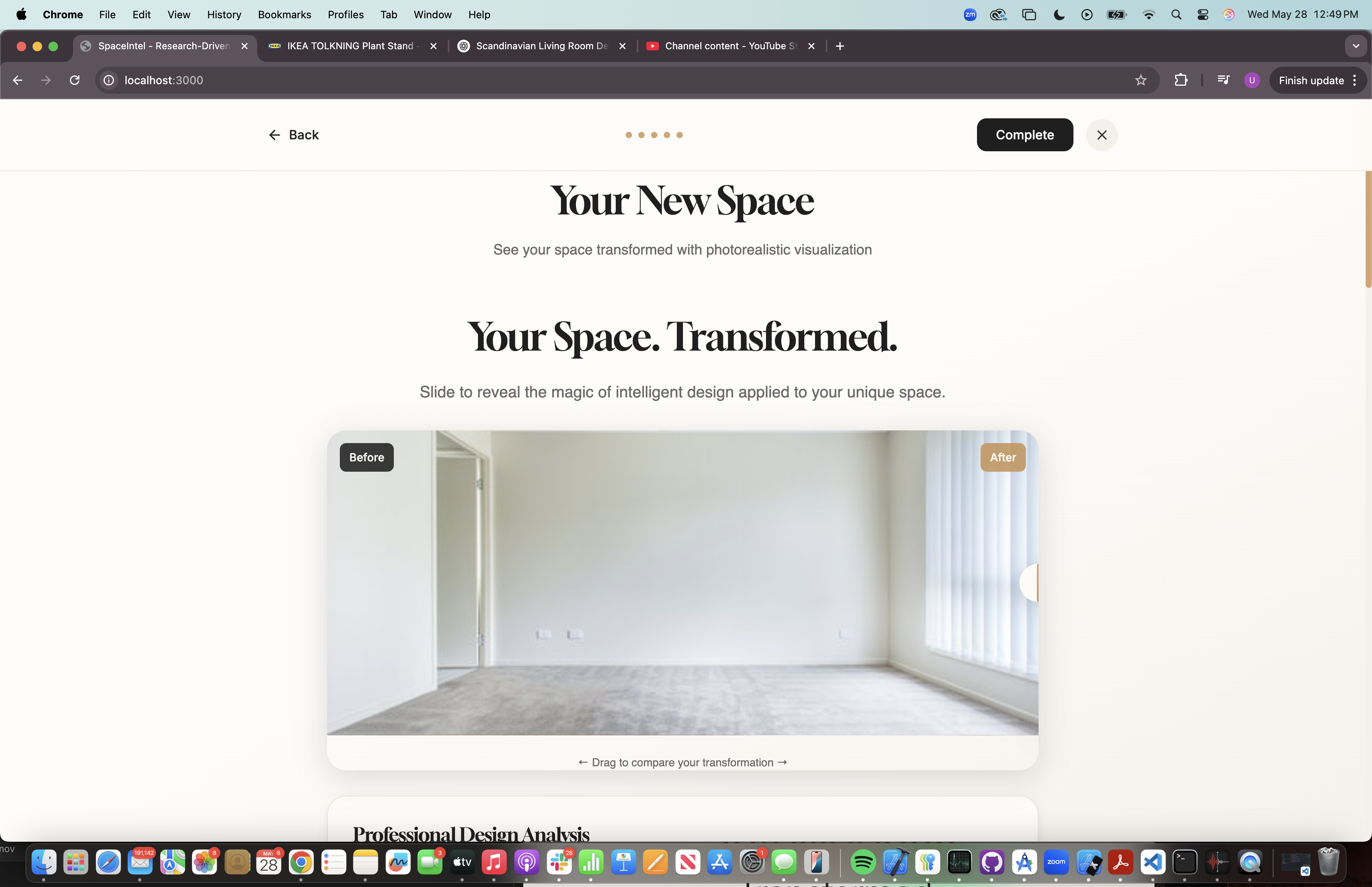
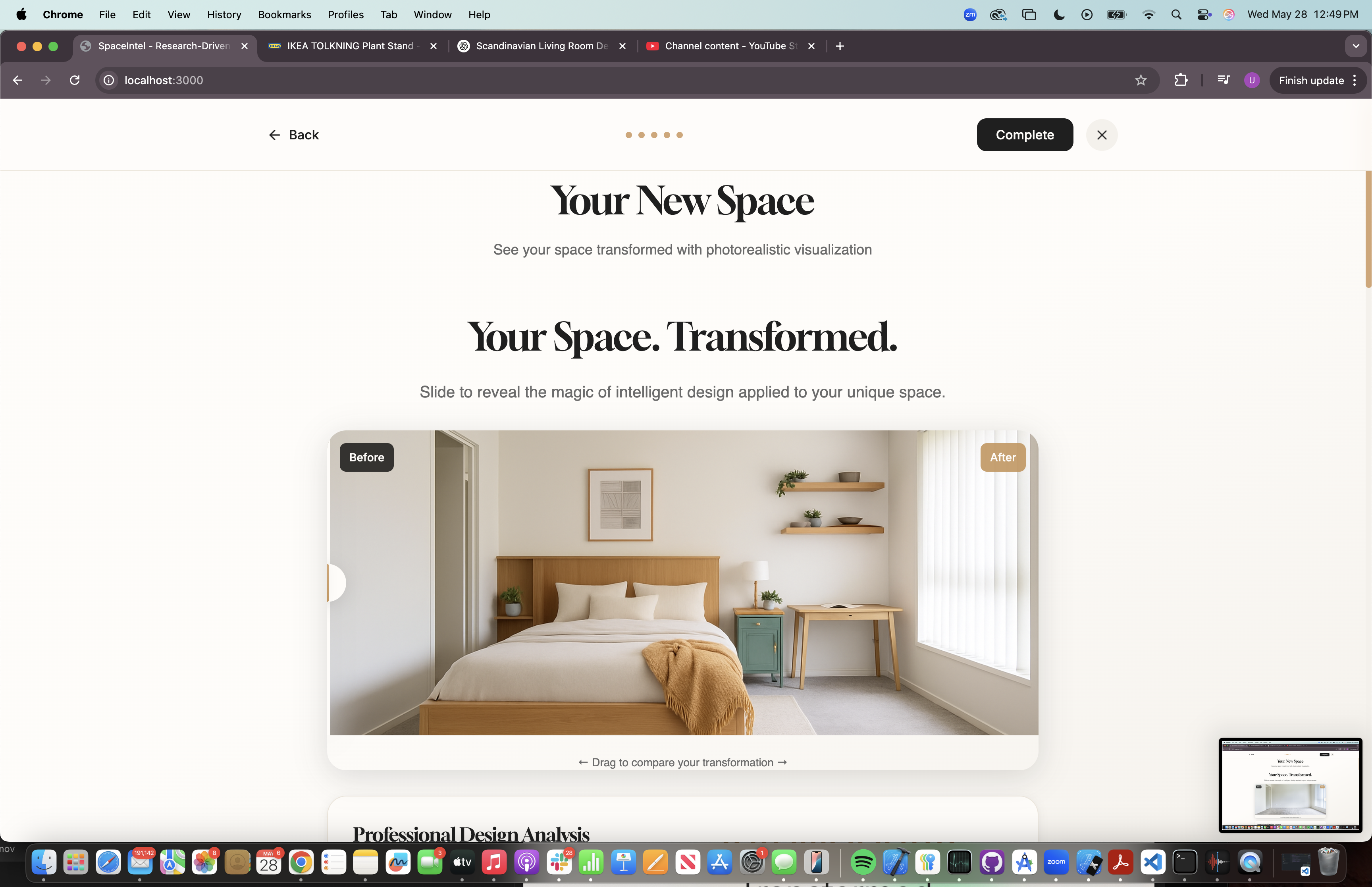
Once products are selected, SpaceIntel generates a photorealistic image of the redesigned room using OpenAI’s image generation models. The final output includes a visualization that respects the room layout, lighting, and the user’s original instructions, plus a shoppable product list and a design critique explaining what was chosen and why.
How we built it
The frontend is built in React and the backend uses Express. I used OpenAI to handle the room visualizations and Perplexity’s Sonar API to handle product research and intelligent recommendations.
The app was built with a step-by-step interface that guides users through uploading their room, entering design context, setting their preferences, and reviewing AI-powered recommendations. I used Claude to help refine some of the prompting logic and ensure both the research output and the image generation stayed true to user intent.
Challenges we ran into
One of the biggest challenges was structuring the output from Perplexity in a way that matched user expectations. I started with Sonar Reasoning Pro, but ultimately switched to Sonar Deep Research because I found it returned more structured and relevant results, especially when I needed schema-like output.
Another challenge was figuring out how to guide OpenAI’s image generation to use not just the user’s room photo, but also product images and natural language constraints to build something visually accurate. Getting the right level of prompt strictness took a lot of trial and error.
Accomplishments that we're proud of
I’m proud that it works consistently. From uploading a room image to visualizing the redesign, the experience feels smooth, smart, and visually compelling.
Seeing a user’s real space reimagined with AI, while preserving their intent and preferences, feels like something truly useful and exciting.
What we learned
I learned a lot about Perplexity’s Sonar API and how powerful it can be when paired with the right context. It was also fun to explore how image generation can move beyond inspiration and actually become part of the reasoning and decision-making process.
Working across tools and models helped me think more holistically about user experience and technical architecture.
What's next for SpaceIntel
The next step is to move the app from local to live and start getting feedback from real users.
I also want to explore adding drag-and-drop furniture planning, support for multiple rooms, smarter feedback loops, and style detection from uploaded photos.
There’s a lot of potential to expand SpaceIntel into something that makes AI-powered interior design more accessible, personal, and fun.
Built With
- react
- sonar

Log in or sign up for Devpost to join the conversation.