-
-

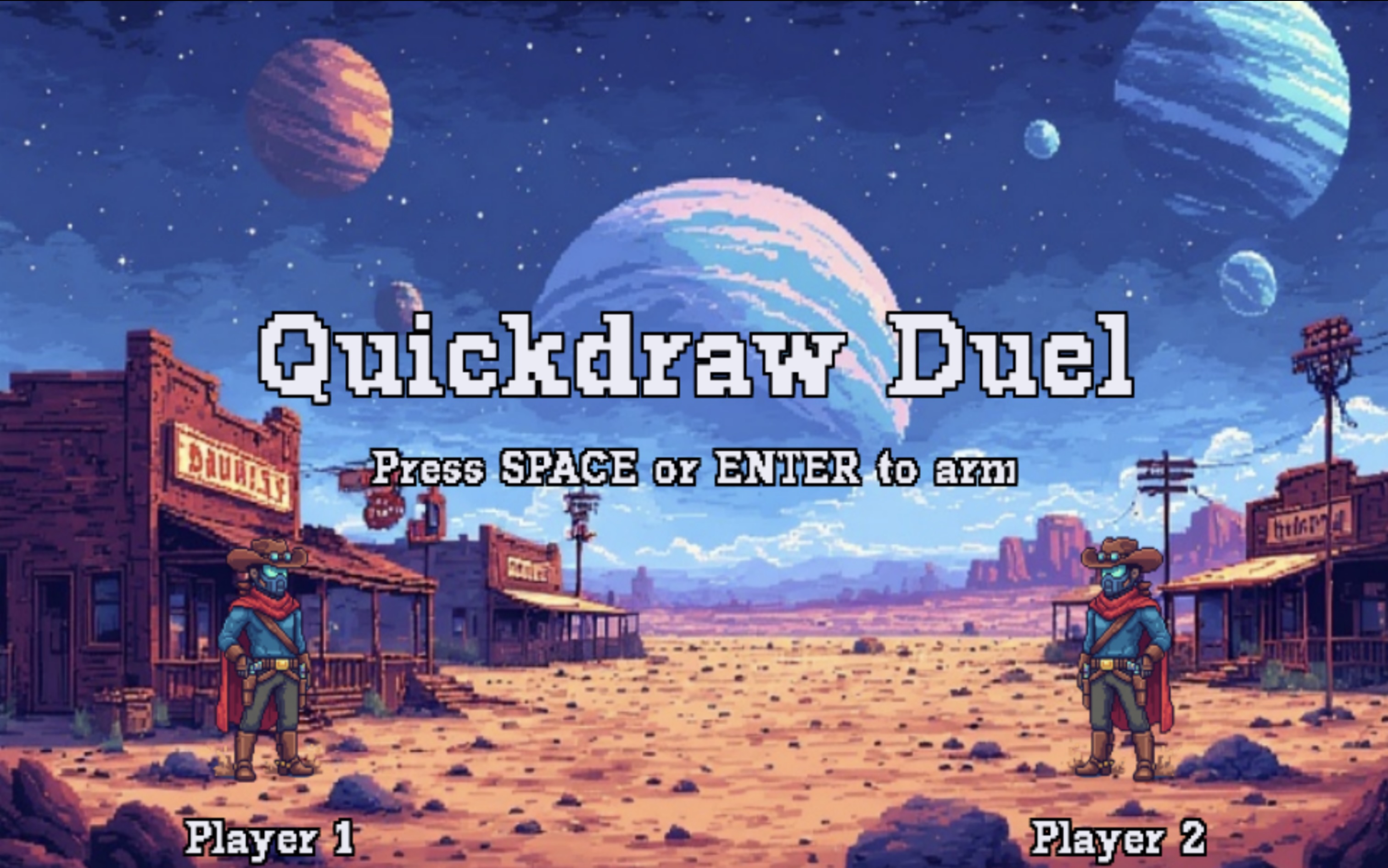
Quickdraw! Be quick or be shot!
-

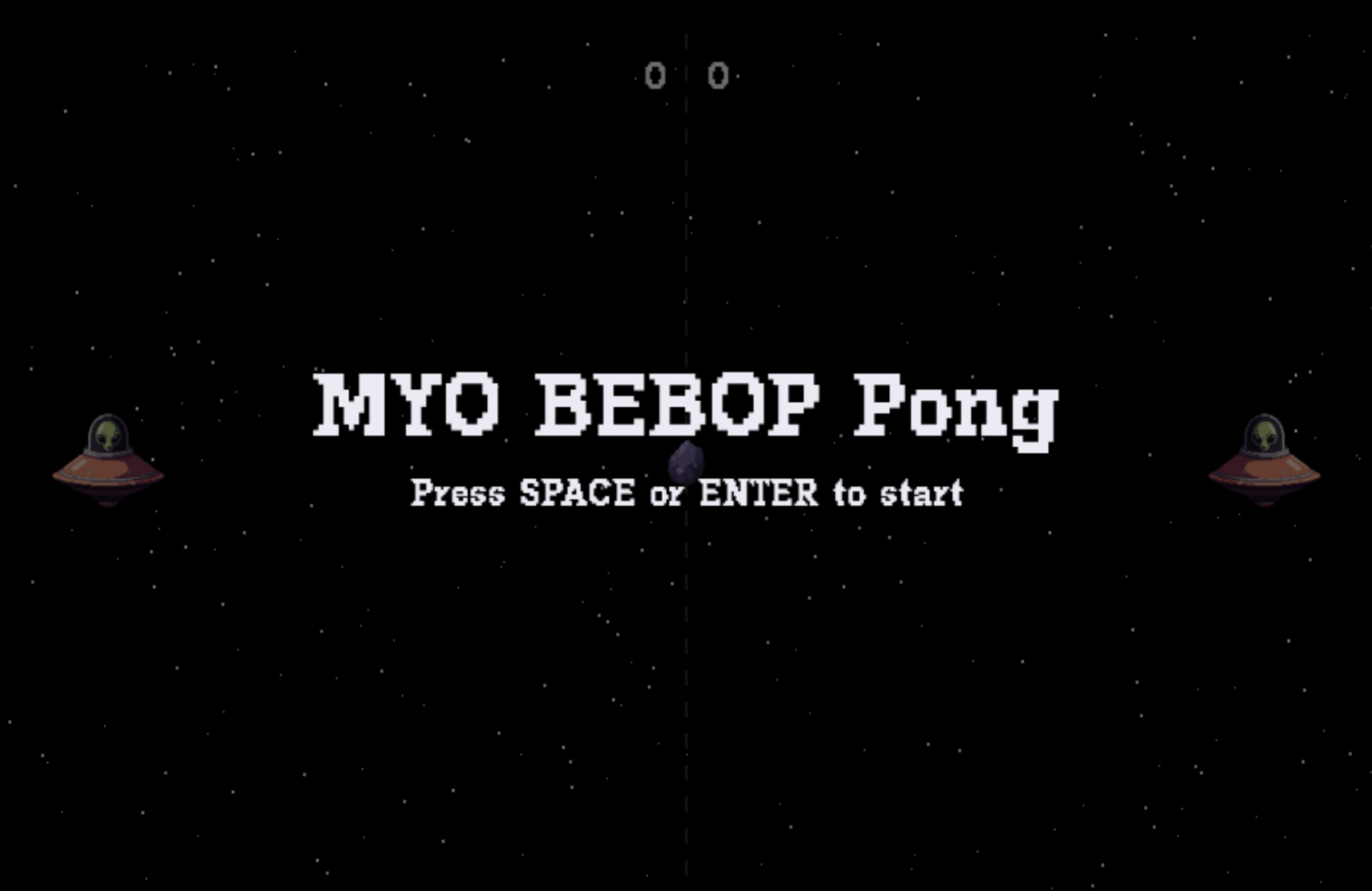
These little aliens love their galactic sport.
🎮 Myobebop: Cowboys in Space
🚀 Overview
Myobebop is a pair of EMG-driven 1v1 games designed to showcase the capabilities of our in-house electromyography (EMG) sensors. It’s where hardware engineering, signal processing, and neuroscience come together in a game.
With Myobebop, we set out to prove that biosignals can be more than data, they can be an intuitive, exciting way to play.
🧠 Product Description
Myobebop transforms muscle activity into a direct interface for gameplay. Players control every move, block, and shot through muscle contractions alone — no buttons, no controllers.
The platform currently features two games:
👾 Space Pong A space-themed reimagining of the classic arcade game. Paddle movement is dictated by EMG amplitude, offering precise, analog-style control through muscle activity.
🤠 Quickdraw A fast-paced 1v1 Western duel focused on speed. Players use EMG inputs to shoot as quickly as possible, testing reflexes and reaction time in high-pressure showdowns.
🌞 Twin Suns A strategic duel where players balance attack and parry using a shield mechanism. Timing, positioning, and EMG-controlled actions determine who dominates the battlefield.
Both titles run on our proprietary custom EMG hardware, demonstrating real-time responsiveness and the potential for biosignal-driven entertainment.
⚙️ Engineering & Architecture
At the heart of Myobebop is our custom EMG sensor platform, built from the ground up for responsiveness, signal clarity, and wireless integration.
Hardware: In-house designed EMG modules powered by the nRF52840 SoC, featuring integrated BLE communication and onboard signal conditioning. Each unit captures raw muscle activity, filters it, and transmits clean, low-latency data to the host system.
Signal Processing: The custom EMG board handles most of the denoising, filtering, and signal conditioning on-board, delivering clean data over BLE. On the host side, Python reads the incoming data and applies a lightweight AI layer to map signals to gameplay actions, ensuring intuitive and responsive control.
Game Engine: Developed in Pygame, our game engine interprets EMG signals in real time, mapping biological input to responsive game mechanics. Every paddle movement, parry, and shot is controlled through live muscle data.
This integration demonstrates the seamless bridge between biological signals and interactive software — a key proof of concept for the next generation of human–computer interfaces.
⚡ Challenges
Developing Myobebop pushed both our hardware and software capabilities:
Hardware Assembly: Soldering and assembling our custom EMG sensors was tricky, and mistakes often required rework to get reliable connections.
Wireless Integration: BLE on the nRF52840 was sometimes unreliable, causing intermittent drops and data loss that we had to debug carefully.
Software Stability: Ensuring smooth, real-time gameplay required fixing latency issues, synchronizing inputs, and resolving bugs in Pygame and the data pipeline.
🌟 Key Achievements
- Built and assembled a working EMG sensor platform that reliably captures muscle signals
- Achieved real-time BLE control with low latency for smooth gameplay
- Developed two fully playable EMG-controlled games
- Demonstrated how engineering and neuroscience can create a fun, interactive experience
🔮 Next Steps
- Expand the game library to support new EMG-driven experiences
- Integrate machine learning calibration for personalized input profiles
- Develop a multiplayer online mode for remote EMG competition
- Explore rehabilitation, adaptive gaming, and VR/AR control applications
🧩 Tech Stack
Hardware: Custom EMG sensors, nRF52840 BLE microcontroller Software: Python, Pygame, Serial/BLE communication Core Disciplines: Electrical engineering, signal processing, neuroscience, human–computer interaction
👥 Team
Sergio Romero, SJ Duque, and Aren Ramirez


Log in or sign up for Devpost to join the conversation.