Inspiration
We wanted to create a mobile strategy game where simple actions lead to satisfying decisions: place a defender, watch how the formation holds, and improve it for the next wave. Space Candy Battle brings that idea to a playful candy arena, with a jelly heart to protect from invading sourlings. Our design question was whether one compact battlefield could support a complete, replayable tactical experience.
What it does
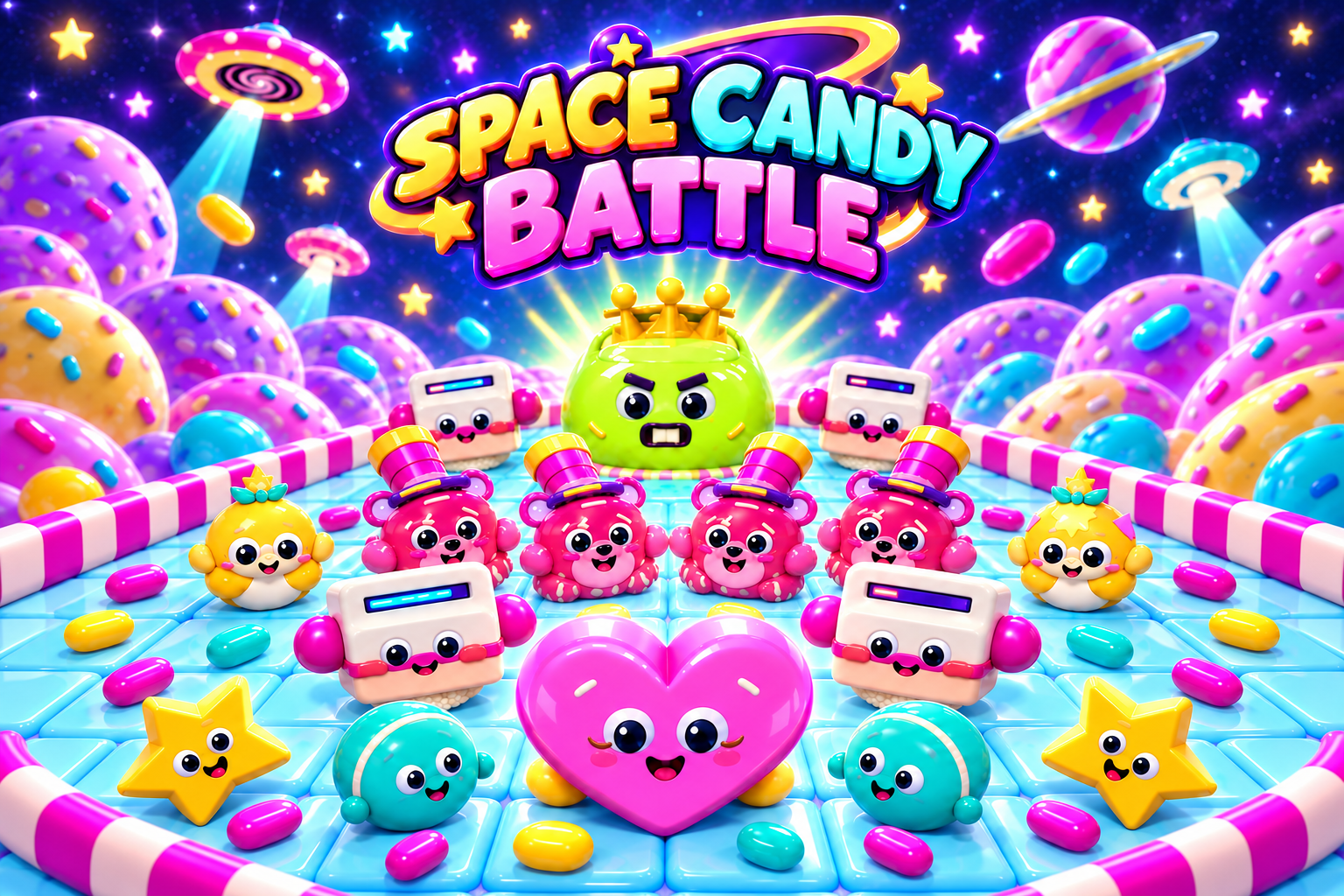
Space Candy Battle is a single-player, fixed-portrait Three.js/HTML5 prototype in the Tower Defense & Strategy genre. Its core loop is plan, spend, defend, and reinvest. Players tap a candy card and a tile to deploy defenders across five vertical lanes. Shooters attack, blockers buy time, and income generators fund future purchases. Recruitment, upgrades, and repairs compete for the same currency, so investing in future income can leave a lane vulnerable now. Twelve waves introduce new defenders, tougher enemies, and bosses within one session. Clear the final wave to win; lose all five hearts and restart with a different strategy. Range previews, health bars, and battle reports help players understand their results. The optional Rush mechanic accelerates enemy arrivals for a larger clear reward, turning confidence in a formation into a deliberate risk. Branching evolutions and between-wave remixes create new combinations to explore.
How we built it
We built Space Candy Battle by prompting AI in Codex to generate and refine the game. Our prompts described the gameplay, portrait layout, candy characters, and player experience. Follow-up prompts added features, fixed bugs, improved controls, and tuned the balance. Codex generated the code using JavaScript, Three.js, HTML, and CSS, and ran automated gameplay tests. We guided the design and used test results and visual reviews to shape further prompts, documenting changes and verification in the build log.
Challenges we ran into
Our biggest challenge was making placement and spending matter throughout a run. We refined firing ranges, wave pressure, support effects, and rewards so defenders needed useful positions and complementary roles. Phone readability also required repeated work. We improved tile selection, moved notices outside the battlefield, and added an opening guide that teaches players by having them build their own first formation.
Accomplishments that we're proud of
We're proud of delivering a complete start-to-finish session on one board, with eight distinct defender roles and escalating boss encounters. Its depth comes from how placement, income, upgrades, and enemy pressure interact. Campaign simulations tested both active strategies and neglected defenses, helping us check that success depends on player decisions. We also verified phone layouts, actual input interactions, and saved-run recovery.
What we learned
We learned that strategic depth depends on understandable consequences. Limited attack range only creates a useful decision when players can see it and understand why their defender is waiting. Working with Codex reinforced the value of small, verifiable changes. Automated tests reveal broken interactions and balance patterns; fresh-player playtests are still needed to judge fairness, clarity, and enjoyment.
What's next for Space Candy Battle
Our next step is testing with new players and on physical mobile devices, then refining onboarding, difficulty, and Rush rewards from that feedback. Once the core loop is validated, we want to explore new board layouts and boss patterns. If selected, we would carry those findings into a rebuild using Meta’s Early Access creation tools.
Built With
- codex


Log in or sign up for Devpost to join the conversation.